Global Commercial District Heating Market Forecast to 2034: Key Insights
According to our latest study on "Global Commercial District Heating Market – Global and Regional Share, Trend, and Growth Opportunity Analysis – by Heat Source, Plant Type, and Geography," the commercial district heating market size was valued at US$ 78.66 billion in 2025 and is expected to reach US$ 119.01 billion by 2034. The commercial district heating market is estimated to register a CAGR of 4.5% during 2026–2034. The rise of Fifth-Generation District Heating and Cooling (5GDHC) networks is expected to act as a future commercial district heating market trend.
One of the main commercial district heating market trends is the rise of Fifth-Generation District Heating and Cooling (5GDHC) networks, commonly referred to as neutral loops. These innovations are able to work at very low, almost ambient, temperatures (~5–35?°C). They thus can easily accommodate many different industries' external heat sources, making them not only eco-friendly but also efficient and flexible in terms of the commercial heating and cooling decarbonization process.
Commercial District Heating Market
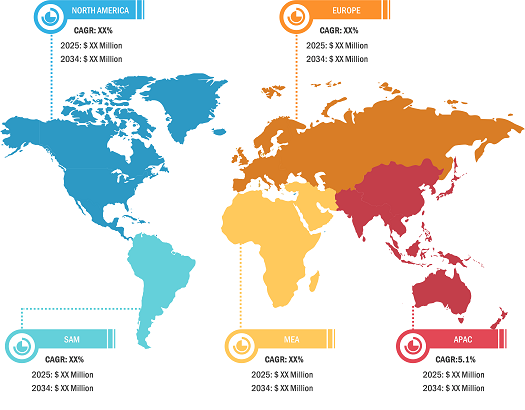
Commercial District Heating Market Share & Growth by 2034
Download Free SampleCommercial District Heating Market Size and Forecast (2021 - 2034), Global and Regional Share, Trend, and Growth Opportunity Analysis Report Coverage: By Heat Source (Coal, Natural Gas, Oil and Petroleum Products, and Others), Plant Type (Boiler, Combined Heat and Power, and Others), and Geography (North America, Europe, Asia Pacific, Middle East and Africa, and South America)
Networks with decentralized heat pumps provide the link between buildings and a common thermal loop, which delivers both heating and cooling from one system. The technology captures waste heat from cooling processes and redirects it to buildings’ heat pumps, thus the heating and cooling loads of the buildings become less. The technology also paves the way for the utilization of low-temperature as well as ambient heat sources, such as near-surface geothermal energy, supplying heat from sewage, or using river and lake water.
In Europe, Germany and Switzerland are highly adopting 5GDHC, In 2022, more than 100 districts of Europe had been transformed with the installation of 5GDHC networks where simply two pipes are providing heating and cooling at the same time. Such a layout ensures the even delivery of thermal energy among various commercial buildings, including offices, hospitals, hotels, and malls, while the electricity and heat sectors are integrated through the use of decentralized heat pumps.
The installation of heat storage boosts the overall system flexibility. In this way, electrical grid stability can be supported, and also peak power demand can be responded to. 5GDHC networks are more economical, less energy-consuming, and environmentally friendly than conventional district heating systems. As required by commercial districts, integrated and low-carbon solutions, 5GDHC networks are expected to propel the commercial district heating market growth during the forecast period.
Urbanization & Growing Commercial Infrastructure Drives Global Commercial District Heating Market Growth
The adoption of commercial district heating systems is growing due to rapid urbanization and the development of commercial infrastructure. The city's expansion leads to a major increase in the number of offices, business parks, hospitals, retail centers, hotels, and mixed-use developments. The greater building density means that the total heating demand is larger, so centralized heating becomes more practical, efficient, and cost-effective than individual heating systems.
India is a perfect example that highlights the connection between infrastructure-led urban growth and centralized energy solutions. Infrastructure development has been a major factor in economic growth, enhancing connectivity, trade, and general living conditions, as stated by the Government of India (February 2025). India, which has now positioned itself as the fifth-largest economy in the world, has seen a huge increase in infrastructure investments, with total expenditure growing significantly and the budget for FY 2023–2024 being ~US$ 110 billion INR 10 lakh crore. These investments have been turning the country into a hub of new commercial zones, industrial corridors, logistics facilities, and smart cities, which require high and constant heating.
The PM Gati Shakti National Master Plan (NMP), introduced in 2021, has been a good example of how the government brings various ministries and states to work on a common goal of integrated infrastructure development. As of October 2024, the program had already brought 44 central ministries and 36 states/UTs, and was evaluating large infrastructure projects worth INR 15.39 lakh crore. This coordinated urban and infrastructure planning is allowing the establishment of commercial clusters, which are very suitable for district heating networks.
As commercial infrastructure expands within dense urban environments, district heating systems offer scalable, reliable, and cost-effective heating solutions. They support energy efficiency, reduce emissions, and align with long-term urban sustainability goals, driving market growth for commercial district heating.
Global Commercial District Heating Market: Segmental Overview
Based on heat source, the global commercial district heating market report is divided into coal, natural gas, oil and petroleum products, and others. The natural gas segment held the largest global commercial district heating market share in 2024. Coal-based district heating can offer consistent commercial heating solutions, but has fewer applications owing to emission levels that contravene stringent environmental regulations. The wide availability of natural gas and its cost-effective pricing compared to other fuel sources contributes to natural gas segment in commercial district heating market share .
Global Commercial District Heating Market Analysis: Competitive Landscape and Key Developments
The global commercial district heating market report highlights factors driving market growth and the key developments of prominent players. Danfoss AS; Veolia; Fortum Corp; ENGIE; LOGSTOR Denmark Holding ApS; Siemens AG; Statkraft AS; Vattenfall AB; Shinryo Corporation; and Vital Energi Ltd. are among the prominent players profiled in the report. Market players focus on new product launches, expansion, diversification, and acquisition strategies to capitalize on prevailing business opportunities.
- Vattenfall assesses ownership of district heating operations: In March 2025, Vattenfall started a process to assess the ownership of its district heating portfolio. As part of its continuous portfolio evaluation, Vattenfall will assess future options for its district heating operations in the UK, Sweden, and the Netherlands, including potential divestment.
- Statkraft is seeking new owners for district heating operations: In May 2024, Statkraft is exploring opportunities to find new owners for its district heating business. The company informed its approximately 150 employees in the district heating sector in Norway and Sweden.
Contact Us
Phone: +1-646-491-9876
Email Id: sales@theinsightpartners.com