Use of Advanced Corrosion-Resistant Materials Fuels Slip-On Flanges Market Growth
According to our latest study, "Slip-On Flanges Market Size and Forecast (2021–2034), Global and Regional Share, Trend, and Growth Opportunity Analysis – by Material, Industry, and Geography," the market was valued at US$ 1.13 billion in 2025 and is expected to reach US$ 2.12 billion by 2034; it is estimated to register a CAGR of 7.3% during 2026–2034. The report includes prospects owing to the slip-on flanges market trends and their foreseeable impact during the forecast period.
Slip-on flanges are used in piping systems for oil and gas, chemical processing, power generation, water treatment, and marine applications, where exposure to moisture, chemicals, and extreme temperatures can quickly degrade conventional materials. The adoption of advanced alloys such as duplex stainless steel, super duplex stainless steel, nickel-based alloys, and corrosion-resistant composites helps address these challenges by offering superior resistance to pitting, crevice corrosion, and stress corrosion cracking. As industries operate in harsher environments—such as offshore drilling platforms, subsea pipelines, and high-pressure chemical reactors—the demand for more durable flange connections continues to increase. This shift is reducing maintenance costs and downtime and enhancing operational safety, which is a critical concern in high-risk sectors. The integration of advanced coatings and surface treatments, including anti-corrosive linings and nano-coatings, boosts the performance of slip-on flanges, making them suitable for longer service cycles without frequent replacement. This technological evolution is enabling manufacturers to differentiate their offerings in a competitive market by providing value-added, high-performance solutions. Regulatory pressures and stricter industry standards related to environmental protection and asset integrity are pushing end users toward corrosion-resistant materials to ensure compliance and reduce leakage risks. Emerging economies investing in infrastructure modernization and industrial expansion are accelerating adoption, as they prioritize long-term durability over initial cost savings. The use of advanced corrosion-resistant materials is enhancing the functional reliability of slip-on flanges and unlocking new opportunities by widening their applicability in demanding operating conditions across industrial sectors.
Slip-On Flanges Market Forecast
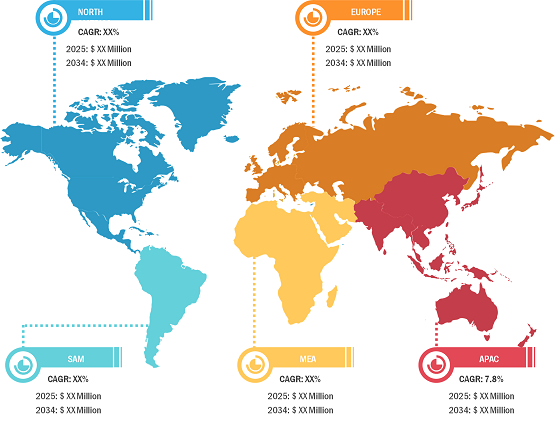
Slip-On Flanges Market Trends, Share & Demand by 2034
Download Free SampleSlip-On Flanges Market Size and Forecast (2021 - 2034), Global and Regional Share, Trend, and Growth Opportunity Analysis Report Coverage: By Material (Stainless Steel, Carbon Steel, Alloy Steel, and Others), Industry (Oil & Gas, Chemical & Petrochemical, Power Generation, Manufacturing, Water Management, Food & Beverages, and Others), and Geography
Slip-On Flanges Market Report
As industries such as oil and gas, chemical processing, water treatment, marine, and power generation prioritize environmental responsibility, manufacturers are under pressure to design components that reduce material consumption, energy use, and carbon footprint. Slip-on flanges, known for their simple design and ease of installation, are evolving to meet these demands through the adoption of lighter materials such as stainless steel alloys, duplex steels, and advanced composites. These materials reduce the weight of piping systems and contribute to improved operational efficiency by lowering transportation and installation costs. In large-scale industrial projects, even marginal weight reductions can lead to significant savings in structural support requirements and fuel consumption during logistics, making lightweight flange solutions attractive. Sustainability-focused regulations and corporate ESG (Environmental, Social, and Governance) commitments are pushing companies to adopt components that extend service life and reduce maintenance frequency. Slip-on flanges designed with corrosion-resistant and durable yet lightweight materials help minimize replacement cycles, reducing waste generation and resource depletion over time. The recyclability of modern metals used in these flanges aligns with circular economy principles, enhancing their appeal in environmentally conscious markets. Industries are adopting modular and prefabricated piping systems where lightweight slip-on flanges simplify assembly and disassembly, supporting reuse and reconfiguration of infrastructure. This adaptability reduces downtime and material wastage during upgrades or expansions. The convergence of sustainability goals and demand for lightweight engineering solutions is reshaping procurement strategies and encouraging innovation in flange design, boosting the slip-on flanges market growth.
The slip-on flanges market analysis is performed by considering the following segments: material and industry. On the basis of material, the market is classified into stainless steel, carbon steel, alloy steel, and others. The alloy steel segment held the largest slip-on flanges market share in 2025. By industry, the market is categorized into oil & gas, chemical & petrochemical, power generation, manufacturing, water management, food & beverages, and others. The oil & gas segment held the largest slip-on flanges market share in 2025. Slip-on flanges are used in the oil and gas industry due to their cost-effectiveness, ease of installation, and reliable performance in moderate-pressure piping systems. In upstream, midstream, and downstream operations, pipelines require frequent assembly and disassembly during maintenance, inspection, or modification. Slip-on flanges allow pipes to be inserted easily and welded both inside and outside, providing sufficient strength for non-critical and low-to-medium pressure applications. It reduces fabrication time compared to other flange types, including weld neck flanges. In refineries and offshore platforms, where downtime is extremely expensive, the simplicity of slip-on flanges helps accelerate maintenance schedules. They are advantageous in systems carrying crude oil, natural gas, and refined products where vibration and thermal expansion are moderate. Their lower initial cost makes them attractive for large-diameter piping networks. Slip-on flanges improve operational efficiency while maintaining acceptable safety and durability standards in controlled oil and gas environments.
AFG Holdings Inc, General Flange & Forge LLC, FLANGE WORKS BEBITZ GMBH, Armetal Stainless Pipe, Metalfar Prodotti Industriali S.p.A., Coastal Flange, Inc., London Fittings & Flanges Ltd, Kerkau Manufacturing Inc, KME Germany GmbH, and Texas Flange are among the leading companies profiled in the slip-on flanges market report.
Contact Us
Phone: +1-646-491-9876
Email Id: sales@theinsightpartners.com