
Dialysis Market Size, Growth & Trends by 2034
Coverage: By Type (Hemodialysis, Peritoneal Dialysis); Product & Services (Equipment, Consumables, Drugs, Services); End User (In-center Dialysis, Home Dialysis) , and Geography (North America, Europe, Asia Pacific, and South and Central America)
- Status : Data Released
- Report Code : TIPRE00008763
- Category : Life Sciences
- No. of Pages : 150
- Available Report Formats :


- Last update date : July 08, 2026


2025 Market Size
US$ 121.51 Bn
Base year value
2034 Forecast
US$ 207.12 Bn
Projected by 2034
CAGR 2026-2034
6.11 %
Growth rate
Addressable Market
US$ 1,488.39 Bn
(2026-2034)
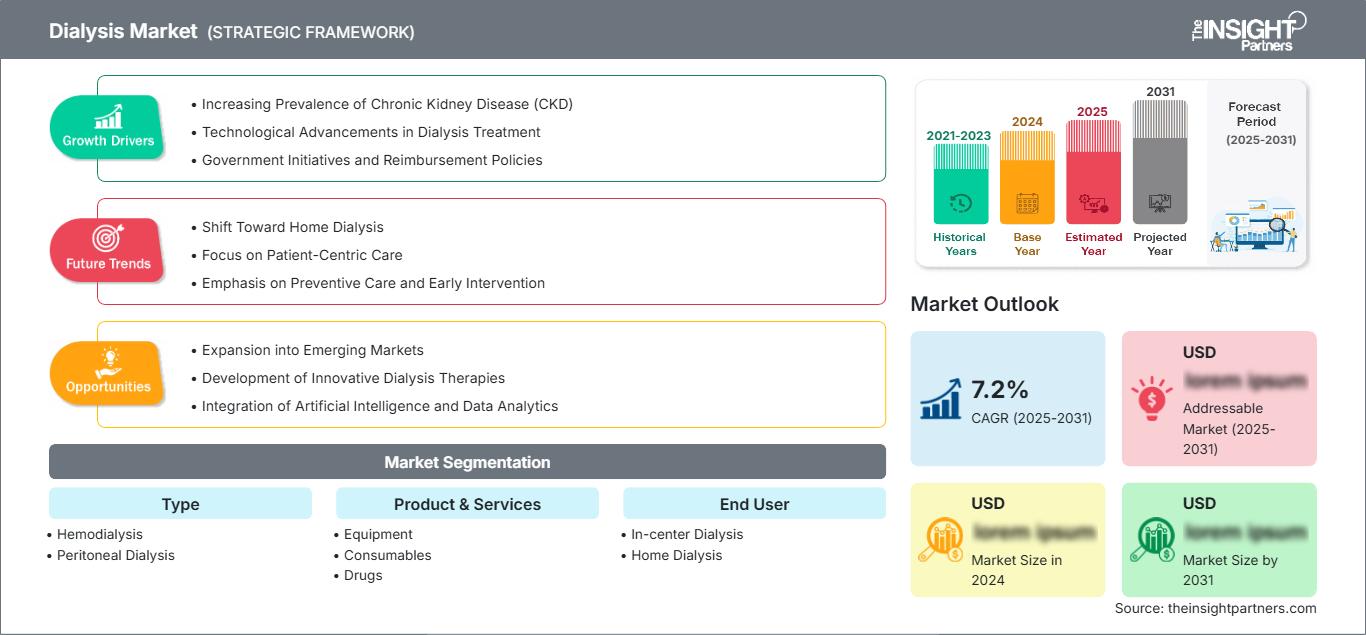
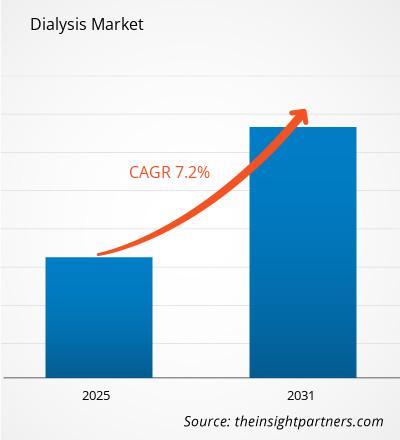
The dialysis market was valued at US$ 121.51 billion in 2025 and is projected to reach US$ 207.12 billion by 2034, advancing at a CAGR of 6.11% during 2026–2034. Market expansion is being shaped by the rising prevalence of chronic kidney disease (CKD), growing incidence of diabetes and hypertension, and continuous advancements in renal replacement technologies. Increasing treatment accessibility, expanding healthcare infrastructure, and greater adoption of home-based care models continue to influence the long-term trajectory of the market.
North America remains a pivotal contributor to the dialysis market and is estimated to expand at a CAGR of approximately 5.8% through 2034. The region benefits from a large end-stage renal disease patient population, favorable reimbursement frameworks, and widespread availability of advanced dialysis technologies. Growing emphasis on home dialysis programs and integrated kidney care initiatives is further supporting treatment adoption and improving patient outcomes across the region.
Dialysis Market Assessment and Insights
- North America: North America accounted for 37–41% share in 2025 and is anticipated to expand at a CAGR of 5.4%–5.8% during 2026–2034. Favorable reimbursement policies, increasing adoption of home dialysis, and the rising prevalence of chronic kidney disease continue to support regional market leadership.
- U.S.: The U.S. represented 84–88% of the North American dialysis market size in 2025 and is projected to register a CAGR of 5.5%–5.9% during 2026–2034, supported by expanding home dialysis utilization, strong reimbursement coverage, and increasing demand for renal replacement therapies.
- Europe: Europe held 26–30% of the dialysis market share in 2025 and is expected to grow at a CAGR of 5.2%–5.6% during 2026–2034. Germany, the United Kingdom, and France remain the leading regional markets due to mature renal care infrastructure and growing elderly populations.
- Asia Pacific: Asia Pacific accounted for 24–28% share in 2025 and is forecast to expand at a CAGR of 6.8%–7.2% during 2026–2034. China, Japan, and India continue to drive regional growth through increasing healthcare investments and expanding access to dialysis services.
- Largest Segment: Type – Hemodialysis represented the largest market segment and is expected to record a CAGR of 5.9%–6.3% during 2026–2034, reflecting established clinical infrastructure, widespread patient adoption, and continued use as the primary renal replacement therapy.
- High Growth Segment: Type – Home Dialysis is projected to grow at a CAGR of 7.3%–7.7% during 2026–2034, driven by technological advancements, greater patient convenience, and supportive reimbursement initiatives.
- Key companies analyzed in detail: Asahi Kasei Medical Co., Ltd.; B. Braun SE; Baxter International Inc.; Diaverum AB; Fresenius Medical Care AG; Nipro Corporation; NIKKISO CO., LTD.; Medtronic plc; Toray Medical Co., Ltd.; and Nikkiso Medical Holdings.
Source: The Insight Partners' analysis based on proprietary research, government publications, company annual reports, investor presentations, industry databases, and expert interviews.
The dialysis market report has evolved from a hospital-centered treatment ecosystem toward a broader care continuum that incorporates home therapies, digital monitoring, and patient-centric disease management. Technological improvements in dialysis machines, dialyzers, water treatment systems, and consumables have enhanced treatment efficiency while supporting improved quality of life for patients requiring long-term renal replacement therapy.
Over the coming years, dialysis market participants are expected to focus on integrated care models, automation, and personalized treatment pathways. Increasing healthcare investments in emerging economies, combined with policy support for chronic disease management, are likely to strengthen market penetration. Industry participants are also pursuing innovation in wearable and portable dialysis technologies to address growing patient demand for convenience and mobility.
Dialysis Market Report Scope
| Report Attribute | Details |
|---|---|
| Market size in 2025 | US$ 121.51 Billion |
| Market Size by 2034 | US$ 207.12 Billion |
| Global CAGR (2026 - 2034) | 6.11% |
| Historical Data | 2021-2024 |
| Forecast period | 2026-2034 |
Dialysis Market Analysis
Rising global prevalence of chronic kidney disease remains the primary force influencing the dialysis market. Increasing rates of obesity, hypertension, diabetes, and aging populations continue to elevate the number of patients progressing to end-stage renal disease. As kidney transplantation remains constrained by donor shortages, dialysis serves as the principal treatment option for a substantial patient population worldwide.
The market ecosystem encompasses equipment manufacturers, consumable suppliers, pharmaceutical providers, dialysis service operators, healthcare institutions, and reimbursement agencies. Collaboration across this value chain supports treatment delivery while creating opportunities for innovation in monitoring systems, patient management software, and advanced filtration technologies that improve operational efficiency and clinical outcomes.
Competition within the market is characterized by a combination of vertically integrated service providers and specialized medical device manufacturers. Companies such as Fresenius Medical Care AG & Co. KGaA, Baxter, Nipro Corporation, B. Braun Melsungen AG, NIKKISO CO., LTD., Asahi Kasei Medical Co., Ltd., Toray Medical Co., Ltd., Medtronic, DIAVERUM, and Medivators Inc. continue to strengthen their positions through product innovation, geographic expansion, and strategic partnerships.
Investment activity increasingly targets home dialysis technologies, remote patient monitoring solutions, and advanced dialysis membranes. Market participants are directing resources toward automation, artificial intelligence-enabled clinical decision support, and connected care platforms. These initiatives are expected to improve patient adherence, optimize resource utilization, and enhance long-term profitability across the dialysis care ecosystem.
● REPORT CUSTOMIZATION
Tailor This Report To Align With Your Specific Business Requirements
This report can be customized to align precisely with your business objectives, scope, and target markets. Customization options include tailored segmentation, geography, competitive analysis, and strategic insights to support informed decision-making.
Customize This Report →WHAT YOU CAN ADJUST
- ● Segmentations
- ● Geography
- ● Competitive Analysis
- ● Language Preferences
Dialysis Market: Strategic Insights
Regional Insights
North America Dialysis Market
North America accounts for the largest share of the dialysis market and is projected to grow at a CAGR of approximately 5.8% through 2034. High disease prevalence, sophisticated healthcare infrastructure, and established reimbursement mechanisms create favorable conditions for sustained treatment demand. Growing awareness regarding early kidney disease detection further contributes to patient identification and therapy initiation.
The region also benefits from rapid adoption of home dialysis programs and value-based kidney care initiatives. Increased deployment of digitally connected treatment systems, remote monitoring tools, and advanced hemodialysis technologies continues to improve care delivery. These structural advantages reinforce North America's leadership position within the global dialysis market.
U.S. Dialysis Market
The U.S. is the dominant national market in North America and is expected to grow at a CAGR of approximately 5.7% during the forecast period. The country contributes approximately 75–80% of regional dialysis revenue due to its large ESRD patient population, extensive provider network, and favorable reimbursement environment.
Major industry participants, including Fresenius Medical Care AG & Co. KGaA, Baxter, Nipro Corporation, and B. Braun Melsungen AG, maintain significant operational footprints across the country. Demand is increasingly shifting toward home-based dialysis, remote patient monitoring, and integrated kidney disease management programs. These trends are encouraging providers to develop flexible treatment pathways while improving patient convenience and long-term clinical outcomes.
Europe Dialysis Market
Europe accounts for approximately 25–30% of the global dialysis market and is forecast to record a CAGR of around 5.5% through 2034. Strong public healthcare systems, aging demographics, and increasing chronic disease prevalence continue to support treatment demand. Germany remains the leading country market due to its advanced nephrology infrastructure and high treatment accessibility.
The trend towards modernization in health care, together with patient-centered care, is making home dialysis programs in the UK more popular. Improved telemedicine technology and chronic disease management make care more efficient and expand access to renal care services.
Germany stays ahead of other European countries due to large investments in health care, a wide network of dialysis clinics, and the presence of major producers. Further innovations and investments in the field of digital health care help to promote further market development in Germany.
France, Italy, and Spain create a substantial demand because of the increasing number of elderly people and prevalence of CKD. Healthcare programs, increased attention to the prevention of nephrological diseases, and investment in dialysis help drive market growth in these countries.
APAC Dialysis Market
Asia Pacific is expected to register the fastest growth globally, advancing at a CAGR of approximately 7.4% through 2034. The region accounts for roughly 20–25% of global dialysis market revenue and benefits from a large patient pool, expanding healthcare access, and rising awareness of kidney disease management. China represents the largest market within the region.
Moreover, China is investing significantly in healthcare infrastructure development, dialysis centers, and chronic disease management programs. Increased rates of diagnosis and insurance coverage have facilitated access to treatment services. Further government efforts to improve healthcare delivery are helping to boost market growth.
Japan, South Korea, India, and Australia play an important role in driving regional market demand through technological and healthcare advancements. An increase in diabetes prevalence, a positive policy environment, and investments in home dialysis and telemedicine solutions are creating a favorable environment in the Asia-Pacific region.
Middle East & Africa Dialysis Market
The Middle East & Africa dialysis market is projected to expand at a CAGR of approximately 6.3% during the forecast period. Rising incidence of diabetes and hypertension, coupled with ongoing healthcare infrastructure development, is supporting demand for renal replacement therapies. Saudi Arabia is currently the leading market in the region.
These nations remain committed to making investments in healthcare modernization programs, specialized kidney clinics, and treatment technology. They are enhancing access to care while tackling the challenges posed by the increasing prevalence of chronic illnesses in the Gulf region.
South Africa and the rest of the MEA region are witnessing gradual expansion in dialysis capacity. Healthcare investments associated with broader infrastructure development and economic diversification strategies are creating opportunities for equipment suppliers, service providers, and healthcare operators seeking long-term market growth.
Segmentation Analysis
Type
- Hemodialysis: Dominates global treatment volumes due to established clinical protocols, extensive provider networks, and suitability for managing advanced kidney failure. Continuous innovations in machines and dialyzers further strengthen adoption.
- Peritoneal Dialysis: Gains traction through home-based treatment flexibility, lower infrastructure requirements, and increasing policy support. Improved patient independence and technological advancements are expanding utilization across developed and emerging markets.
Product & Services
- Equipment: Includes dialysis machines, water treatment systems, and monitoring technologies. Demand is supported by facility expansion, technology upgrades, automation trends, and increasing investments in connected healthcare infrastructure.
- Consumables: Represents a recurring revenue category encompassing dialyzers, tubing, concentrates, and related supplies. Growth is directly linked to rising treatment volumes and increasing patient populations worldwide.
- Drugs: Encompasses medications used for anemia management, mineral balance regulation, and treatment-related complications. Growing focus on comprehensive kidney care supports sustained pharmaceutical demand.
- Services: Covers in-center treatment delivery, patient monitoring, maintenance, and clinical support. Service revenues benefit from long-term patient dependence on recurring dialysis sessions and integrated care models.
End User
- In-center Dialysis: Remains the predominant treatment setting due to clinical supervision, specialized equipment availability, and suitability for patients requiring complex care management and frequent monitoring.
- Home Dialysis: Experiences accelerating adoption driven by convenience, healthcare cost optimization, remote monitoring technologies, and growing emphasis on patient-centered treatment approaches.
Opportunity Snapshot
| End User | Revenue Contribution | Trend Tag | Adoption Stage |
| In-center Dialysis | High | Clinical Networks | Mature |
| Home Dialysis | Medium | Remote Care | Scaling |
Dialysis Market Growth Drivers and Impact Analysis
Rising Global Burden of Chronic Kidney Disease
The increasing prevalence of chronic kidney disease represents the most influential growth driver for the dialysis market. Rapid urbanization, changing dietary habits, sedentary lifestyles, and growing rates of diabetes and hypertension are contributing to kidney dysfunction across both developed and emerging economies. As disease progression advances to end-stage renal disease, many patients require lifelong renal replacement therapy, creating sustained demand for dialysis products and services.
The effect is pervasive across the entire market ecosystem. Equipment manufacturers will see higher demand due to the need for expanded treatment capacity, whereas consumables companies will experience periodic demand owing to the frequency of treatments. There continues to be a greater emphasis on investing in more dialysis units, personnel, and patient management systems. The government and insurance companies will begin focusing on kidney disease management initiatives to curb rising healthcare costs. This expanding patient base creates long-term revenue visibility and supports investment in innovative treatment technologies.
Expansion of Home-Based Dialysis Programs
Healthcare systems across the globe are increasingly inclined to recommend home dialysis to improve patient health and reduce the burden on healthcare institutions. Improvements in technology, including mobile equipment, easy-to-use interfaces, and remote monitoring services, have increased the number of people eligible for such treatment.
The resulting impact goes beyond the simple selling of equipment in the market. Companies offering services are developing programs, including training, remote monitoring, and digital platforms, to help patients succeed at home. The manufacturers have been responding to this trend by creating small systems with connectivity options. The change has resulted in more income sources and innovation driven by patient convenience and efficiency.
Technological Advancements in Renal Replacement Therapy
Innovations in dialysis technology continue to change treatment delivery and enable market growth. New-generation membranes, improved filters, automation of treatments, and digital innovations are ensuring greater treatment efficiency and minimizing process complexity.
There are notable business implications resulting from these industry innovations. Health facilities can improve treatment efficiency and resource use, while patients receive better treatment and greater convenience. Innovation in next-generation dialysis platforms will enable companies to differentiate themselves. The integration of connectivity, analytics, and remote monitoring capabilities is also creating new possibilities for personalized kidney care and long-term patient management.
Dialysis Market Future Trends
Integration of Digital Health and Connected Dialysis Ecosystems
Digital transformation is emerging as one of the dominant trends in the dialysis industry. There is increasing use of connected dialysis machines that can send real-time patient information to healthcare professionals. Technologies such as remote monitoring, predictive analytics, and cloud-based management will facilitate better oversight of treatments and intervention measures in clinical settings.
Looking ahead, the integration of dialysis within the broader healthcare system is expected to become increasingly seamless. Artificial intelligence may support personalized treatment approaches and more efficient operational planning. As value-based care gains greater importance across healthcare systems, dialysis market trends indicate that digital dialysis ecosystems will assume a more significant role in enhancing patient outcomes and care delivery.
Growing Focus on Patient-Centric Renal Care Models
There is a gradual shift from the current market landscape toward a treatment regimen in which patient convenience and quality of life become important factors. Home treatments, flexible treatment timing, and bundled support services drive this. In the future, there will be a trend towards greater application of the framework of personalized care.
Future market trends may include greater availability of remote consultations, electronic education systems, and disease management services. It may result in a change in the structure of service delivery and provide opportunities for companies that can help deliver such care.
Dialysis Market Opportunities
Expansion into Underserved Emerging Healthcare Markets
Many developing nations are still suffering from issues related to access to dialysis treatment despite the increasing incidence rates of chronic kidney disease. The problem is caused by inadequate health facilities, a shortage of skilled personnel, and unequal geographic availability of treatment.
There is substantial potential for companies prepared to invest in this sector. Establishing partnerships with local healthcare providers, implementing localized manufacturing approaches, and delivering cost-effective therapies can improve accessibility and support strong market penetration. In line with the dialysis market forecast, companies that adapt their offerings to meet regional healthcare requirements will be better positioned to achieve sustained growth and long-term success.
Development of Portable and Next-Generation Dialysis Technologies
Patients' desire for mobility and treatment flexibility is creating new avenues for innovation beyond dialysis machines. Developments in miniaturization, wearable technologies, and automated devices are sparking interest among stakeholders such as providers, insurers, and patients.
Research and development in next-generation technologies can alter the competitive landscape. Companies that successfully market portable, patient-friendly, and clinically viable innovations will tap into new market segments. The key to success here will be the ability to turn innovations into commercial successes.
Recent Developments
- December, 2025: Nikkiso launched the DBB-06 PRO hemodialysis system, its first U.S.-targeted dialysis machine featuring full assist functionality, designed to enhance clinical workflow efficiency and patient safety.
- June, 2025: Fresenius Medical Care AG & Co. KGaA launched its FME Reignite strategy, outlining plans to establish new standards of kidney care through innovation, profitability improvements, and introduction of the 5008X dialysis machine in the U.S. The initiative includes substantial capital investment, expanded efficiency programs, and a strengthened innovation roadmap for renal care delivery.
- February, 2025: Baxter separated its kidney care business into a new standalone entity, Vantive, focused entirely on dialysis and organ support therapies. This restructuring strengthens strategic focus on renal care technologies and services.
Frequently Asked Questions

- Comprehensive Market Sizing and Forecast Analysis
- Detailed Segmentation Analysis
- In-Depth Market Dynamics Assessment
- Regional and Country-Level Insights
- Competitive Landscape and Company Benchmarking
- Strategic Business Intelligence
Recent Reports
Testimonials

The Insight Partners provided valuable market intelligence that supported our global go-to-market strategy. Their team was professional, responsive, and attentive to our feedback, providing thoughtful analysis and helpful methodological clarifications throughout the project.
Junmo Kim Chief Financial Officer (CFO), Enertech Co., Ltd.
The Insight Partners' SCADA System Market report is comprehensive, with valuable insights on current trends and future forecasts. The team was highly professional, responsive, and supportive throughout. We are very satisfied and highly recommend their services.
RAN KEDEM Partner, Reali Technologies LTDs
I requested a report on a very specific software market and the team produced the report in a few days. The information was very relevant and well presented. I then requested some changes and additions to the report. The team was again very responsive and I got the final report in less than a week.
JEAN-HERVE JENN Chairman, Future Analytica
We worked with The Insight Partners for an important market study and forecast. They gave us clear insights into opportunities and risks, which helped shape our plans. Their research was easy to use and based on solid data. It helped us make smart, confident decisions. We highly recommend them.
PIYUSH NAGPAL Sr. Vice President, High Beam Global
The Insight Partners delivered insightful, well-structured market research with strong domain expertise. Their team was professional and responsive throughout. The user-friendly website made accessing industry reports seamless. We highly recommend them for reliable, high-quality research services
YUKIHIKO ADACHI CEO, Deep Blue, LLC.
This is the first time I have purchased a market report from The Insight Partners.While I was unsure at first, I visited their web site and felt more comfortable to take the risk and purchase a market report.I am completely satisfied with the quality of the report and customer service. I had several questions and comments with the initial report, but after a couple of dialogs over email with their analyst I believe I have a report that I can use as input to our strategic planning process.Thank you so much for taking the extra time and making this a positive experience.I will definitely recommend your service to others and you will be my first call when we need further market data.
JOHN SUZUKI President and Chief Executive Officer, Board Director, BK Technologies
I wish to appreciate your support and the professionalism you displayed in the course of attending to my request for information regarding to infectious disease IVD market in Nigeria. I appreciate your patience, your guidance, and the fact that you were willing to offer a discount, which eventually made it possible for us to close a deal. I look forward to engaging The Insight Partners in the future, all thanks to the impression you have created in me as a result of this first encounter.
DR CHIJIOKE ONYIA MANAGING DIRECTOR, PineCrest Healthcare Ltd.Reason to Buy
- Informed Decision-Making
- Understanding Market Dynamics
- Competitive Analysis
- Identifying Emerging Markets
- Customer Insights
- Market Forecasts
- Risk Mitigation
- Boosting Operational Efficiency
- Strategic Planning
- Investment Justification
- Tracking Industry Innovations
- Aligning with Regulatory Trends





 Get Free Sample for