
Acute Sinusitis Market Size, Share & Trends by 2034
Coverage: By Type (Acute Sinusitis, Chronic Sinusitis, Sub-acute Sinusitis); Diagnosis (Nasal Endoscopy, Laboratory Tests, Allergy Testing, Imaging Tests); Treatment (Saline Nasal Spray, Nasal Corticosteroids, Decongestant, OTC Pain Relievers, Allergy Shots, Antibiotics,, Others); End-User (Hospitals and Clinics, ENTC Specialists, Research Institutes, Others), and Geography (North America, Europe, Asia Pacific, and South and Central America)
- Status : Data Released
- Report Code : TIPRE00014851
- Category : Life Sciences
- No. of Pages : 150
- Available Report Formats :


- Last update date : July 27, 2026


2025 Market Size
US$ 3.28 Bn
Base year value
2034 Forecast
US$ 6.01 Bn
Projected by 2034
CAGR 2026-2034
6.96 %
Growth rate
Addressable Market
US$ 41.95 Bn
(2026-2034)
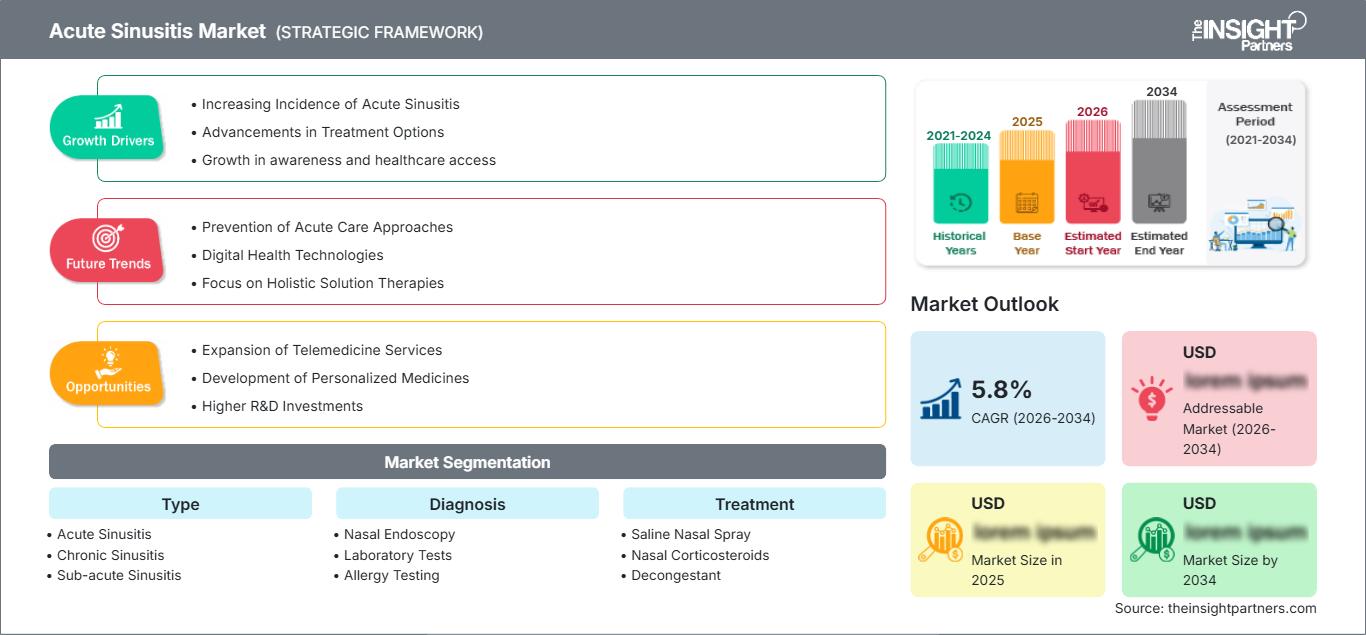
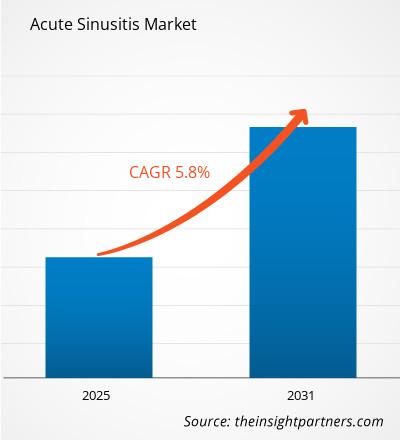
The Acute Sinusitis Market was valued at US$ 3.28 Billion in 2025 and is projected to reach US$ 6.01 Billion by 2034, registering a CAGR of 6.96% during 2026–2034. The market reflects increasing demand for effective diagnosis and treatment solutions due to rising sinus infections, improved healthcare access, and expanding therapeutic options. Advances in nasal delivery systems and targeted treatments are influencing product development strategies.
North America represents a significant regional contributor, supported by established healthcare infrastructure, higher diagnostic awareness, and strong adoption of prescription and over-the-counter therapies. The Acute Sinusitis Market size expansion in the region is influenced by increasing ENT consultations, improved reimbursement frameworks, and ongoing research activities, with estimated regional growth expected at a CAGR range of 6.20%–7.10% between 2026–2034.
Acute Sinusitis Market Assessment and Insights
- North America The region maintains a leading position with a 34–38% share in 2025, supported by advanced healthcare systems and treatment availability. It is expected to grow at a CAGR range of 6.20–7.10% during 2026–2034.
- US The country represents a major contributor within North America, accounting for a 27–31% share in 2025. Increasing ENT diagnosis rates and pharmaceutical innovation support a CAGR range of 6.30–7.20%.
- Europe held a 25–29% share in 2025, driven by Germany, the UK, France, Italy, and Spain. Standardized clinical practices and rising treatment adoption are expected to support a CAGR range of 5.80–6.70%.
- Asia Pacific Asia Pacific accounted for a 20–24% share in 2025, with China, Japan, India, South Korea, and Australia contributing to expansion. Healthcare modernization and increasing awareness support a CAGR range of 7.10–8.20%.
- Largest Segment Treatment represents the largest segment with a 38–42% market share in 2025, supported by broad therapeutic usage and increasing preference for symptom management solutions, growing at a CAGR range of 6.70–7.60%.
- High Growth Segment Diagnosis is the high growth segment with an 18–22% market share in 2025, driven by improved testing technologies and clinical adoption, expanding at a CAGR range of 7.40–8.30%.
- Key companies analyzed in detail: Bayer AG, AstraZeneca, Eli Lilly and Company, Bristol Myers Squibb Company, Sanofi, Abbott, Merck & Co., Inc., Dr. Reddy’s Laboratories Ltd., Novartis AG, Teva Pharmaceutical Industries Ltd.
Source: The Insight Partners' analysis based on proprietary research, government publications, company annual reports, investor presentations, industry databases, and expert interviews.
The Acute Sinusitis Market has evolved through improvements in diagnostic precision, pharmaceutical formulations, and patient-centric treatment approaches. Modern nasal delivery technologies, enhanced corticosteroid formulations, and evidence-based antibiotic stewardship have reshaped treatment pathways. Pharmaceutical manufacturers are focusing on improving efficacy profiles while addressing concerns related to resistance and unnecessary antibiotic use. Increasingly, the use of imaging methods and endoscopy for treating difficult cases has led to a rise in demand from the diagnostics and treatments categories. Innovation in this area is further driven by the safety, efficacy, and patient compliance requirements of the regulatory authorities. Such trends have prompted companies to focus on enhancing their supply chain efficiencies, manufacturing processes, and reach of their specialized drugs in both developed and emerging healthcare markets.
Factors impacting future market growth include higher spending on healthcare, growth in specialty care clinics, and improved access to diagnostic services in developing countries. Regulatory backing for better treatment methods and the use of digital healthcare solutions are anticipated to provide opportunities in the coming years. Emerging economies of the Asia Pacific and Latin America can see a rise in demand owing to improved awareness levels and healthcare infrastructure. Collaboration between the pharmaceutical firms and healthcare organizations can aid innovation in therapy and diagnostic solutions. The market potential will remain linked to innovation in customized treatment methods and the availability of healthcare services for ENT disorders.
Acute Sinusitis Market Report Scope
| Report Attribute | Details |
|---|---|
| Market size in 2025 | US$ 3.28 Billion |
| Market Size by 2034 | US$ 6.01 Billion |
| Global CAGR (2026 - 2034) | 6.96% |
| Historical Data | 2021-2024 |
| Forecast period | 2026-2034 |
Acute Sinusitis Market Analysis
Demand for the Acute Sinusitis Market growth is driven by increasing prevalence of sinus-related disorders, expanding outpatient care services, and greater patient awareness regarding early diagnosis. The ecosystem includes pharmaceutical manufacturers, diagnostic technology providers, healthcare professionals, pharmacies, and distribution networks. Consistent supply of the above-mentioned treatments is based on the supply chain involving nasal sprays, corticosteroids, antibiotics, and relief medicines for symptoms. Rising awareness regarding antimicrobial stewardship has resulted in the development of effective treatment plans that provide better results without using unnecessary amounts of antibiotics.
Value chain support is provided through research institutions, governmental agencies, and healthcare organizations, which impact the approval of medicine use. Manufacturing potential, availability of ingredients, and formulation skills still play an important role in supply dynamics. Companies invest in more effective methods and products that would improve their market presence. Growth in regional healthcare systems, particularly in underdeveloped countries, plays an important role in increasing supply.
The Acute Sinusitis Market analysis indicates that competitive positioning is shaped by product portfolios, regulatory approvals, geographic presence, and investment in therapeutic innovation. Major participants such as Bayer AG, AstraZeneca, Eli Lilly and Company, Bristol Myers Squibb Company, Sanofi, Abbott, Merck & Co., Inc., Dr. Reddy’s Laboratories Ltd., Novartis AG, and Teva Pharmaceutical Industries Ltd. continue to focus on strengthening respiratory and pharmaceutical portfolios. Companies are adopting strategies involving partnerships, pipeline development, and portfolio diversification to address changing clinical requirements.
Investment activities are increasingly directed toward advanced formulations, combination therapies, and patient adherence solutions. Market participants are evaluating opportunities in emerging regions where healthcare accessibility is improving. The Acute Sinusitis Market analysis also highlights the importance of regulatory compliance, manufacturing efficiency, and evidence-based product development. Strategic positioning depends on balancing innovation with affordability while maintaining strong distribution capabilities across hospitals, specialty clinics, retail pharmacies, and online channels.
● REPORT CUSTOMIZATION
Tailor This Report To Align With Your Specific Business Requirements
This report can be customized to align precisely with your business objectives, scope, and target markets. Customization options include tailored segmentation, geography, competitive analysis, and strategic insights to support informed decision-making.
Customize This Report →WHAT YOU CAN ADJUST
- ● Segmentations
- ● Geography
- ● Competitive Analysis
- ● Language Preferences
Acute Sinusitis Market: Strategic Insights
Regional Insights
North America Acute Sinusitis Market
North America held a 34–38% share in 2025, supported by strong healthcare infrastructure, advanced ENT services, and high awareness regarding sinus disorder management. The market for this area is anticipated to grow with a CAGR of 6.20-7.10%. The USA is the biggest market in terms of contribution as there are numerous prescription drugs, diagnostics and pharmaceutical networks available in this region. There will be further contributions to the growth of the regional market from Canada in terms of improvement in the accessibility of specialized health care services and adoption of preventive health care measures.
There is a constant development in healthcare technologies, clinical studies and treatment of patients in the market of this region. The usage of nasal endoscopy, imaging modalities and allergy tests is helping to improve the precision in diagnosing. There are pharmaceutical companies that are expanding their distribution networks through retail as well as other distribution networks like hospitals and clinics.
U.S. Acute Sinusitis Market
The U.S. accounted for 27–31% Acute Sinusitis Market share in North America in 2025 and is expected to grow at a CAGR range of 6.30–7.20% during 2026–2034. High healthcare expenditure, advanced diagnostic infrastructure, and broad availability of ENT specialists contribute to its dominant regional position. Companies including Bayer AG, AstraZeneca, Abbott, Merck & Co., Inc., and Teva Pharmaceutical Industries Ltd. maintain significant pharmaceutical presence through respiratory and therapeutic portfolios.
Increasing outpatient visits for sinus-related conditions and rising adoption of minimally invasive diagnostic procedures are supporting market development. Hospitals and specialty clinics increasingly utilize advanced evaluation methods, including nasal endoscopy and imaging tests, to improve treatment selection. Growth is also influenced by increasing consumer access to over-the-counter therapies through retail and online pharmacies. The country’s established reimbursement environment and emphasis on clinical effectiveness continue shaping product innovation strategies.
Europe Acute Sinusitis Market
Europe represented a 25–29% share in 2025 and is anticipated to register a CAGR range of 5.80–6.70% between 2026–2034, according to the Acute Sinusitis Market report. Germany leads the regional market due to advanced healthcare systems, strong pharmaceutical manufacturing capabilities, and broad access to ENT treatment services. The UK, France, Italy, and Spain also contribute significantly through established clinical networks and increasing adoption of evidence-based sinus disorder management.
The UK market benefits from structured healthcare delivery and a growing focus on efficient diagnosis pathways. Germany maintains leadership through pharmaceutical innovation and specialist healthcare availability. France, Italy, and Spain are witnessing increased demand for nasal therapies, diagnostic testing, and outpatient treatment solutions. European healthcare policies emphasizing responsible antibiotic use and improved patient care standards are influencing treatment approaches. Growing adoption of advanced diagnostic tools and expanding pharmaceutical distribution networks are expected to support regional growth.
APAC Acute Sinusitis Market
APAC accounted for a 20–24% share in 2025 and is expected to grow at a CAGR range of 7.10–8.20% during 2026–2034. China represents a leading contributor, supported by healthcare modernization, expanding medical facilities, and increasing awareness of ENT disorders. Japan, South Korea, India, and Australia are also supporting regional expansion through improved diagnostic capabilities and treatment accessibility.
Government healthcare initiatives, rising urbanization, and increased investment in medical infrastructure are shaping market development. Growing adoption of specialty clinics and digital healthcare platforms is improving patient access to diagnosis and therapies. Pharmaceutical companies are expanding their regional presence through partnerships and distribution agreements to address the increasing demand for sinus treatment solutions.
Middle East & Africa Acute Sinusitis Market
The Middle East & Africa region accounted for an estimated 8–12% share in 2025 and is projected to grow at a CAGR range of 5.50–6.40% during 2026–2034. Saudi Arabia represents a key contributor due to healthcare infrastructure expansion and increasing investment in specialized medical services. The UAE and South Africa are also improving access to ENT diagnosis and treatment facilities.
Healthcare modernization programs, infrastructure development, and rising private healthcare investments are supporting regional demand. The Rest of the MEA region is gradually adopting improved diagnostic services through hospital expansion and healthcare partnerships. Increasing awareness of respiratory and sinus conditions, combined with improved pharmaceutical distribution networks, is expected to strengthen market penetration. Regional growth is influenced by efforts to enhance healthcare accessibility and establish advanced clinical care systems.
Segmentation Analysis
Type
The Type segment includes Acute Sinusitis, Chronic Sinusitis, and Sub-acute Sinusitis. This segment is expected to expand at a CAGR range of 6.40–7.20% during 2026–2034. The Acute Sinusitis Market scope within this segment is influenced by disease prevalence, recurring infections, and increasing demand for accurate classification of sinus conditions. Healthcare professionals are adopting improved diagnostic approaches to differentiate disease categories and optimize treatment strategies.
- Acute Sinusitis remains a significant category due to short-term infections requiring timely diagnosis and treatment. Increasing outpatient consultations and demand for symptom management therapies support its continued clinical importance across healthcare settings.
- Chronic Sinusitis represents a persistent treatment demand area due to recurring symptoms and long-term management requirements. Growing use of corticosteroids and diagnostic monitoring approaches contributes to segment relevance.
- Sub-acute Sinusitis maintains demand among patients experiencing prolonged symptoms between acute and chronic conditions. Improved diagnosis and personalized treatment approaches support adoption across specialty care environments.
Diagnosis
The Diagnosis segment of the Acute Sinusitis Market comprises Nasal Endoscopy, Laboratory Tests, Allergy Testing, and Imaging Tests. This segment is projected to grow at a CAGR range of 7.20–8.10% during 2026–2034. Increasing emphasis on accurate disease identification, reduced misdiagnosis, and improved treatment selection is supporting the adoption of diagnostic technologies. Healthcare providers are integrating multiple diagnostic methods to enhance clinical outcomes and patient management.
- Nasal Endoscopy provides detailed visualization of nasal passages and sinus structures, supporting specialist evaluations. Increasing adoption among ENT professionals strengthens its role in accurate diagnosis and treatment planning.
- Laboratory Tests assist clinicians in identifying infections and inflammatory conditions. Their application remains important for supporting clinical decisions and improving understanding of patient-specific disease characteristics.
- Allergy Testing supports the identification of underlying triggers associated with sinus conditions. Rising awareness of allergy-related disorders is increasing demand for testing services within specialized healthcare settings.
- Imaging Tests offer a detailed structural assessment through advanced visualization methods. Their use is important for complex cases requiring deeper evaluation and treatment guidance.
Treatment
The Treatment segment includes Saline Nasal Spray, Nasal Corticosteroids, Decongestant, OTC Pain Relievers, Allergy Shots, Antibiotics, and Others. The segment is estimated to register a CAGR range of 6.70–7.50% during 2026–2034. Growing preference for effective symptom relief and targeted therapies continues to influence treatment adoption. The Acute Sinusitis Market is experiencing broader therapeutic diversification as healthcare providers balance medication effectiveness, safety, and patient adherence.
- Saline Nasal Spray supports symptom relief through nasal moisture restoration and congestion management. Its accessibility and frequent use in supportive care contribute to sustained demand.
- Nasal Corticosteroids are widely used for reducing inflammation and improving sinus symptoms. Their role in evidence-based treatment protocols supports continued clinical adoption.
- Decongestant products provide temporary relief from nasal blockage and related symptoms. Consumer familiarity and availability through pharmacies maintain segment importance.
- OTC Pain Relievers support the management of discomfort associated with sinus conditions. Their broad availability makes them an important component of supportive treatment strategies.
- Allergy Shots address allergy-related contributors affecting sinus symptoms. Increasing focus on underlying causes supports their application in specialized treatment pathways.
- Antibiotics remain relevant for bacterial infections requiring medical intervention. Responsible prescribing practices are influencing their appropriate utilization.
End-User
The End-User segment includes Hospitals and Clinics, ENTC Specialists, Research Institutes, and Others. This segment is expected to grow at a CAGR range of 6.50–7.30% during 2026–2034. Increasing patient visits, expanding specialty care services, and improved healthcare access are supporting demand across end-user categories. Hospitals and specialist facilities remain central to diagnosis and treatment delivery.
- Hospitals and Clinics represent major care locations due to the availability of diagnostic equipment, specialists, and treatment facilities. Increasing outpatient services strengthens their importance.
- ENTC Specialists provide focused evaluation and management of sinus disorders. Their expertise supports advanced diagnosis and individualized treatment approaches.
- Research Institutes contribute through clinical studies and therapeutic development activities. Their role supports innovation and understanding of disease mechanisms.
Opportunity Snapshot
| Segment Name | Revenue Contribution | Trend Tag | Adoption Stage |
|---|---|---|---|
| Hospitals and Clinics | High | Integrated Care | Mature |
| ENTC Specialists | Medium | Specialist Care | Scaling |
| Research Institutes | Low | Clinical Research | Emerging |
| Others | Low | Community Care | Emerging |
Acute Sinusitis Market Growth Drivers and Impact Analysis
Increasing Adoption of Advanced Diagnostic Procedures
The increased use of nasal endoscopy, imaging techniques, and allergy tests has led to greater accuracy in diagnosing sinusitis. Medical professionals have started making use of advanced diagnostic tools to distinguish between acute infection and chronic inflammation, aiding effective treatment decision-making. This approach has minimized the unnecessary use of drugs and helped improve patient outcomes. Diagnostic facilities equipped with new diagnostic technology are being established by hospitals and specialized centers due to an increase in the number of patients. Improved clinical diagnostic capabilities have also encouraged drug manufacturers to manufacture medicines based on patient requirements. Efficient diagnosis is one of the key factors that will drive the growth of the market in the future.
Rising Demand for Targeted Treatment Solutions
Increased patient preferences for highly effective and convenient methods of treatment are also shaping the direction in which drug developments are headed. The increased use of nasal corticosteroids, saline sprays, pain relief drugs, and targeted treatments is a manifestation of the shift in approach towards managing symptoms and improving patient compliance. Medical practitioners are placing more emphasis on the selection of the right method of treatment that is determined by the severity of the disease, the patient and other factors. For their part, pharmaceutical companies are increasingly paying attention to issues such as formulations, delivery systems and safety features to meet the new health care needs.
Expansion of Healthcare Access in Emerging Economies
Healthcare infrastructure improvements in developing countries are increasing opportunities for accessing diagnosis and treatment facilities for sinus conditions. The development of hospitals, specialist centers, and medicine supply chains helps to expand the availability of respiratory healthcare solutions. The increase in knowledge about ENT diseases is observed in the countries belonging to the Asia Pacific region and other developing countries due to the expansion of the healthcare infrastructure and patient education. The mentioned trends promote early detection and the use of available therapy solutions. The healthcare organizations are also adopting internationally accepted treatments and new diagnostic approaches to increase the effectiveness of the procedures. Expansion of the healthcare infrastructure will generate sustainable demand for sinus solutions.
Acute Sinusitis Market Future Trends
Digital Healthcare Integration in Sinus Disease Management
It is projected that the use of digital health care technology will help in the management of sinus disorders in the future due to improvements in patient monitoring, availability of consultations, and coordination of treatment. Telemedicine platforms, EHRs, and remote consultation systems have enabled healthcare professionals to conduct proper evaluations. This might help in enhancing follow-ups and better communications between the patients and specialists. The integration of technology with the diagnostic information will enable informed treatment decisions and better management of recurrent symptoms. It has become evident that healthcare organizations are trying to adopt technology-powered healthcare models.
Development of Patient-Centric Therapeutic Approaches
Future treatment strategies are expected to focus increasingly on patient-specific approaches that consider disease severity, underlying causes, and treatment response. Pharmaceutical companies are exploring improved formulations and delivery methods designed to enhance convenience and compliance. The Acute Sinusitis Market trends indicate increasing attention toward therapies that provide effective symptom management while supporting safety considerations. Research activities are likely to emphasize reducing treatment limitations through innovative approaches and improved understanding of inflammatory mechanisms. Collaboration between healthcare providers, researchers, and pharmaceutical developers may accelerate the development of next-generation solutions. These evolving approaches are expected to influence product strategies and healthcare decision-making over the coming years.
Acute Sinusitis Market Opportunities
Expansion of Specialty Healthcare Networks
Growing investment in specialty healthcare networks presents opportunities for companies involved in diagnosis and treatment solutions. Expansion of ENT-focused clinics and specialized medical centers can improve access to advanced sinus management services. Companies can strengthen market presence by developing partnerships with healthcare providers and improving distribution capabilities. The Acute Sinusitis Market Forecasts indicate that opportunities will emerge through enhanced availability of specialized care in developing regions where healthcare infrastructure is improving. Investment in training programs, clinical support services, and patient education initiatives can further increase adoption. Businesses focusing on integrated solutions combining diagnosis, treatment, and follow-up care may gain strategic advantages as healthcare delivery models continue evolving.
Innovation Through Advanced Drug Delivery Systems
The development of new drug delivery mechanisms presents avenues for growth for pharmaceutical firms striving to provide better patient care. Innovative drug delivery mechanisms, novel formulations, and easy modes of drug delivery may lead to improved effectiveness and user-friendliness of the drugs. Companies with R&D budgets will be able to fill the gaps that exist in adherence, action on target, and safety in therapy. Increased regulatory support for innovative healthcare products may prompt increased investments in novel therapies. Collaborations between pharmaceutical companies and research facilities may speed up the time to such products. Opportunities also exist through geographic expansion into countries where healthcare spending is on the rise, especially in relation to sinus conditions.
Recent Developments
- January 2026: AstraZeneca announced continued expansion of its respiratory and immunology portfolio through research initiatives focused on improving treatment approaches for inflammatory and respiratory conditions. The company strengthened scientific programs supporting next-generation therapies and healthcare innovation. The development reflects AstraZeneca’s ongoing focus on respiratory disease management and advanced therapeutic research.
- September 2025: Bayer AG highlighted continued investment in healthcare innovation and consumer health solutions, including products addressing respiratory and allergy-related conditions. The company continued strengthening its healthcare portfolio through research, product development, and global market initiatives. These activities support broader access to symptom management solutions across multiple healthcare channels.
- March 2025: Teva Pharmaceutical Industries Ltd. reported ongoing efforts to expand its specialty medicines portfolio and strengthen global pharmaceutical access. The company continued focusing on affordable healthcare solutions and product availability across international markets. Its initiatives support treatment accessibility through diversified pharmaceutical offerings and established distribution networks.
Frequently Asked Questions

- Comprehensive Market Sizing and Forecast Analysis
- Detailed Segmentation Analysis
- In-Depth Market Dynamics Assessment
- Regional and Country-Level Insights
- Competitive Landscape and Company Benchmarking
- Strategic Business Intelligence
Recent Reports
Testimonials

The Insight Partners' SCADA System Market report is comprehensive, with valuable insights on current trends and future forecasts. The team was highly professional, responsive, and supportive throughout. We are very satisfied and highly recommend their services.
RAN KEDEM Partner, Reali Technologies LTDs
I requested a report on a very specific software market and the team produced the report in a few days. The information was very relevant and well presented. I then requested some changes and additions to the report. The team was again very responsive and I got the final report in less than a week.
JEAN-HERVE JENN Chairman, Future Analytica
We worked with The Insight Partners for an important market study and forecast. They gave us clear insights into opportunities and risks, which helped shape our plans. Their research was easy to use and based on solid data. It helped us make smart, confident decisions. We highly recommend them.
PIYUSH NAGPAL Sr. Vice President, High Beam Global
The Insight Partners delivered insightful, well-structured market research with strong domain expertise. Their team was professional and responsive throughout. The user-friendly website made accessing industry reports seamless. We highly recommend them for reliable, high-quality research services
YUKIHIKO ADACHI CEO, Deep Blue, LLC.
This is the first time I have purchased a market report from The Insight Partners.While I was unsure at first, I visited their web site and felt more comfortable to take the risk and purchase a market report.I am completely satisfied with the quality of the report and customer service. I had several questions and comments with the initial report, but after a couple of dialogs over email with their analyst I believe I have a report that I can use as input to our strategic planning process.Thank you so much for taking the extra time and making this a positive experience.I will definitely recommend your service to others and you will be my first call when we need further market data.
JOHN SUZUKI President and Chief Executive Officer, Board Director, BK Technologies
I wish to appreciate your support and the professionalism you displayed in the course of attending to my request for information regarding to infectious disease IVD market in Nigeria. I appreciate your patience, your guidance, and the fact that you were willing to offer a discount, which eventually made it possible for us to close a deal. I look forward to engaging The Insight Partners in the future, all thanks to the impression you have created in me as a result of this first encounter.
DR CHIJIOKE ONYIA MANAGING DIRECTOR, PineCrest Healthcare Ltd.Reason to Buy
- Informed Decision-Making
- Understanding Market Dynamics
- Competitive Analysis
- Identifying Emerging Markets
- Customer Insights
- Market Forecasts
- Risk Mitigation
- Boosting Operational Efficiency
- Strategic Planning
- Investment Justification
- Tracking Industry Innovations
- Aligning with Regulatory Trends





 Get Free Sample for