
Animal Prescription Drugs Market Size, Share and Growth by 2034
Coverage: By Type (Anti-Infective, Anti-Inflammatory, Parasiticides) ; End-User (Companion Animal, Livestock Animal) , and Geography (North America, Europe, Asia Pacific, and South and Central America)
- Status : Data Released
- Report Code : TIPRE00008610
- Category : Life Sciences
- No. of Pages : 150
- Available Report Formats :


- Last update date : August 05, 2026


2025 Market Size
US$ 48.22 Bn
Base year value
2034 Forecast
US$ 80.08 Bn
Projected by 2034
CAGR 2026-2034
5.80 %
Growth rate
Addressable Market
US$ 581.42 Bn
(2026-2034)
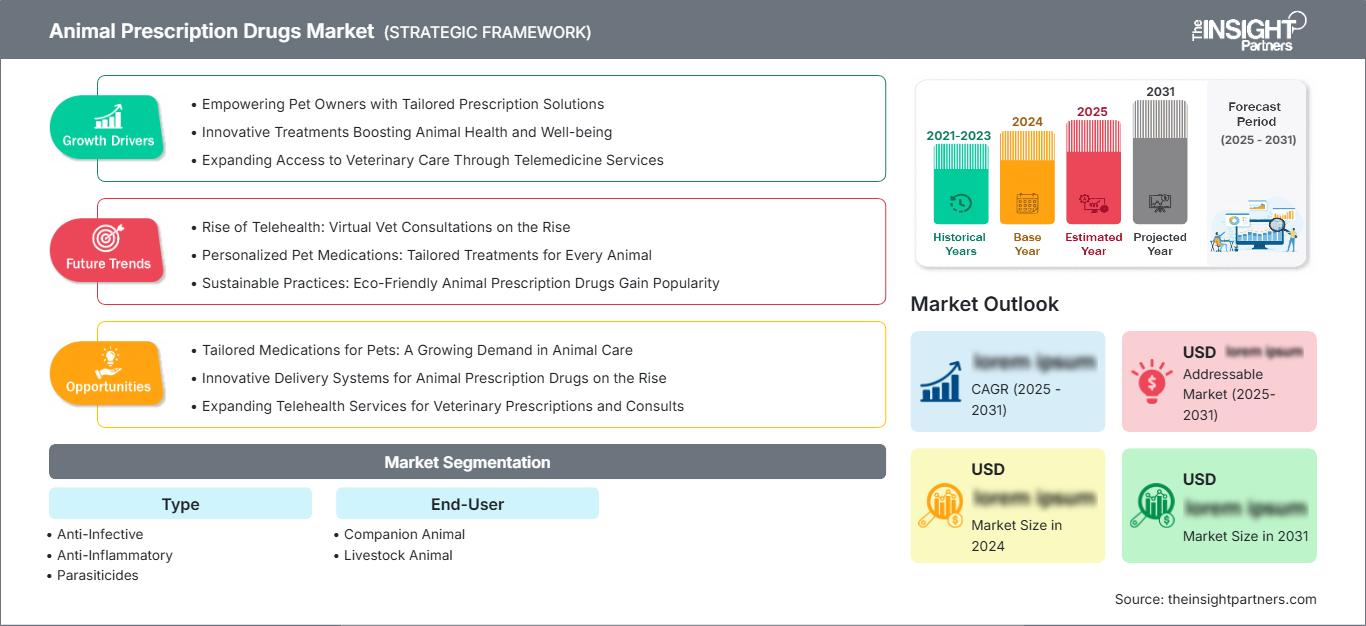
The animal prescription drugs market is projected to grow from US$ 48.22 Billion in 2025 to US$ 80.08 Billion by 2034, registering a CAGR of 5.80% during 2026–2034. Demand is being shaped by veterinary diagnosis, chronic disease treatment, livestock health management, prescription parasiticide adoption, and wider access to regulated medicines across companion animal and food-producing animal care settings.
Across North America, veterinary practice consolidation and high pet medication adherence are supporting the animal prescription drugs market size, with the region expected to grow at a CAGR range of 5.2–5.8% during 2026–2034. Structural demand is reinforced by prescription-only pain, infection, cardiovascular, dermatology, and parasite control therapies, alongside livestock protocols focused on productivity, withdrawal compliance, and disease prevention.
Animal Prescription Drugs Market Assessment and Insights
- North America held 39–42% share in 2025 and is expected to grow at a CAGR between 2026–2034 of 5.2–5.8%, supported by veterinary prescription channels, pet insurance use, and livestock disease-control programs.
- US accounted for 82–85% of North America in 2025 and is projected to grow at a CAGR between 2026–2034 of 5.3–5.9%, led by companion animal therapeutics.
- Europe represented 28–31% share in 2025 and is expected to grow at a CAGR between 2026–2034 of 4.8–5.4%, with Germany, France, the UK, Italy, and Spain leading.
- Asia Pacific captured 20–23% share in 2025 and is forecast to grow at a CAGR between 2026–2034 of 6.6–7.3%, led by China, India, Japan, Australia, and South Korea.
- Largest Segment Parasiticides held 37–41% market share in 2025 and is expected to expand at a CAGR range of 5.4–6.0% during 2026–2034 due to recurring prevention demand.
- High Growth Segment Companion Animal held 55–59% market share in 2025 and is projected to grow at a CAGR range of 6.2–6.9% during 2026–2034, supported by pet medicalization.
- Key companies analyzed in detail: Elanco Animal Health Incorporated, Ceva Santé Animale S.A., Merck & Co., Inc., Zoetis Inc., Virbac S.A., Dechra Pharmaceuticals Limited, Vetoquinol S.A., Animalcare Group plc, Ouro Fino Saúde Animal Participações S.A., Boehringer Ingelheim International GmbH.
Source: The Insight Partners' analysis based on proprietary research, government publications, company annual reports, investor presentations, industry databases, and expert interviews.
The clinical practice shift has taken the market for animal prescription medications from episodic care to continuous therapy for the management of pain, infections, dermatology, cardiology, endocrinology, and parasitic preventive care. The production process is becoming more reliant on active pharmaceutical ingredient regulation, dosage precision, palatability, injections, pharmacovigilance, and safety data based on species. There will be greater emphasis on lifecycle management in terms of new indications, chewable tablets, combination products, and improved formulation in order to achieve adherence.
The growth during the forecast period will be influenced by pet humanization, productivity needs within livestock, antimicrobial stewardship, and increased veterinary capacity in developing countries. Investment will occur in therapeutic areas where diagnosis rate and duration of treatment are high. Regulatory tailwind will benefit medications that are residue managed, prescription-controlled, have adverse effects monitored, and strong clinical data available especially among anti-infectives and food-producing animals.
Animal Prescription Drugs Market Report Scope
| Report Attribute | Details |
|---|---|
| Market size in 2025 | US$ 48.22 Billion |
| Market Size by 2034 | US$ 80.08 Billion |
| Global CAGR (2026 - 2034) | 5.80% |
| Historical Data | 2021-2024 |
| Forecast period | 2026-2034 |
Animal Prescription Drugs Market Analysis
Demand is driven by increased veterinary visits, identification of diseases, better health planning for animals and increased likelihood of owners treating their pets of age-related problems. Growth of the market for animal prescription drugs becomes apparent where veterinarians diagnose early infections, inflammatory diseases, heart ailments, endocrine issues and parasites presence in animals. WHO and WOAH priorities of antimicrobial stewardship emphasize the importance of prescription drugs and controlled usage of the medicines.
Value chain comprises researchers, API suppliers, formulators, regulators, wholesale suppliers, clinics, livestock integrators, pharmacy and refill service providers. Supply is impacted by quality of production, cold chain considerations, controlled distribution, patent protection and regulatory inspections. Unlike feed supplements and wellness products, prescription medicines need clinical diagnostics and labeling, which makes veterinarians the key decision makers in product selection and purchase.
Portfolio breadth, therapy focus, geographic presence, and evidence generation contribute to competitive positioning. In terms of animal prescription drugs market report, Zoetis Inc., Merck & Co., Inc., Boehringer Ingelheim International GmbH, Elanco Animal Health Incorporated, Virbac S.A., and Ceva Santé Animale S.A. position themselves using portfolio breadth of companions and livestock, and Dechra Pharmaceuticals Limited, Vetoquinol S.A., Animalcare Group plc, and Ouro Fino Saúde Animal Participações S.A. rely on niche therapies and geographic presence.
Long-acting injections, dermatology, pain management, cardiology, feline medicines, and combination parasiticides will be the focus of investment. Competitive advantage will require more effort in providing veterinary practitioners with education on diagnostics, adherence, pharmacovigilance, and prescribing guidelines. Those companies that find the right balance between innovation and affordability have potential to grow in emerging regions while protecting premium brands in mature markets due to higher expectations from pet owners.
● REPORT CUSTOMIZATION
Tailor This Report To Align With Your Specific Business Requirements
This report can be customized to align precisely with your business objectives, scope, and target markets. Customization options include tailored segmentation, geography, competitive analysis, and strategic insights to support informed decision-making.
Customize This Report →WHAT YOU CAN ADJUST
- ● Segmentations
- ● Geography
- ● Competitive Analysis
- ● Language Preferences
Animal Prescription Drugs Market: Strategic Insights
Regional Insights
North America animal prescription drugs market
North America held 39–42% share in 2025 and is expected to grow at a CAGR range of 5.2–5.8% during 2026–2034. The animal prescription drugs market share is supported by high pet care spending, advanced diagnostic use, and strong prescription compliance in clinics. Livestock medicine demand is sustained by cattle, swine, poultry, and dairy programs designed around disease prevention and productivity protection.
FDA-approved drug formulations, specialized veterinary chains, online pharmacies with refill services, and well-being programs ensure better repeat prescriptions. Companion animals drive the value creation, whereas livestock drugs continue to be indispensable in treating ailments like pain, respiratory disorders, reproduction issues, and parasitic infections. Increasingly, the growth trends depend on the treatment of chronic diseases instead of acute illnesses.
U.S. animal prescription drugs Market
The U.S. accounted for 82–85% of North America in 2025 and is projected to grow at a CAGR range of 5.3–5.9% during 2026–2034. Its leadership reflects large pet populations, high veterinary clinic density, pet insurance expansion, and strong acceptance of prescription medicines for pain, allergy, heart disease, infection, parasite prevention, and endocrine disorders.
Presence of the companies is quite widespread, as companies such as Zoetis Inc., Merck & Co., Inc., Elanco Animal Health Incorporated, Boehringer Ingelheim International GmbH, Virbac S.A., and Ceva Santé Animale S.A. target companion and livestock segments. Trends in the application are towards chewable medications, injections, medications for kidneys and heart conditions, medications for cats, and livestock medications with information about withdrawal period.
Europe animal prescription drugs Market
Europe had a 28–31% share in 2025 and is forecasted to register growth in the range of 4.8–5.4% CAGR during 2026–2034. Germany will lead on account of well-developed infrastructure, structure of pet healthcare, and regulations on livestock medicines. The UK helps in fulfilling prescriptions on the basis of companion animal health care, equine health care, and high-level treatment.
The two major economies which add value to the region are Germany and France. Germany focuses on prescribers who follow EBM and pharmaceuticals, while France is driven by demand in pets, dairy, poultry, swine, and ruminant species. Both the countries focus on antimicrobial stewardship and pharmacovigilance and veterinarian regulations.
Italy and Spain add value to the region due to their increasing companion animal population, livestock diseases, and growing demand for parasiticides and anti-inflammatory drugs. The Nordics focus on maintaining high welfare standards and prudent prescription regulations. Europe’s market is mature and innovation-oriented and is focused towards growth in the areas of chronic disease management in pets, generics, and antimicrobial reduction strategies.
APAC animal prescription drugs Market
Asia Pacific had a market share of 20-23% in 2025 and is projected to register a CAGR between 6.6-7.3% from 2026 to 2034. China is the dominant country due to growing pet clinics, modern livestock and availability of regulated veterinary drugs. Japan and South Korea focus on high-end companion animal drugs.
India and Australia present different drivers for growth. India presents growth opportunities in volume terms in dairy, poultry, companion animals, and veterinary pharmacies. Australia needs robust livestock and companion animal prescription services. The regional growth is driven by increasing incomes, demand for animal proteins and digitalclinic records, and stronger enforcement of prescription controls in urban veterinary markets.
Middle East & Africa animal prescription drugs Market
The ME&A region is expected to witness growth in the CAGR range of 5.7% - 6.4% between 2026 and 2034, with South Africa being an early adopter through companion animals clinics, cattle farming, equine veterinary practices, and wildlife veterinarians. Premium veterinary services, food security spending, and demand for more regulated medicines are being fueled by Saudi Arabia and UAE.
Demand from rest of ME&A countries remains patchy since the coverage in terms of veterinary services, cold chain, and cost vary from one country to another. Nevertheless, efforts to curb livestock diseases and dairy investments as well as increasing urban pet ownership have been helping to enhance accessibility to prescription medicine route.
Segmentation Analysis
Type
The Type segment is expected to grow at a CAGR range of 5.5–6.1% during 2026–2034. The animal prescription drugs market scope by type is shaped by disease burden, regulatory oversight, diagnostic capacity, treatment duration, and recurring prevention protocols. Parasiticides remain the largest value pool, anti-infectives require tighter stewardship, and anti-inflammatory drugs are gaining importance as veterinarians manage pain, mobility, post-surgical recovery, and chronic conditions.
- Anti-Infective medicines remain essential for bacterial and selected protozoal diseases, but growth is increasingly governed by diagnostic confirmation, antimicrobial stewardship, prescription controls, and food-chain residue compliance.
- Anti-Inflammatory drugs are used across surgery, osteoarthritis, injury, respiratory inflammation, and livestock fever management, making safety profile, species tolerability, and veterinarian monitoring central to adoption.
- Parasiticides lead value because flea, tick, heartworm, mite, and internal parasite prevention is recurring, compliance-sensitive, and increasingly delivered through prescription combinations for pets and livestock.
End-User
The End-User segment is expected to grow at a CAGR range of 5.7–6.3% during 2026–2034. Companion animal demand generates higher value through chronic care, preventive prescriptions, and owner willingness to pay, while livestock animal use is driven by herd health economics and food supply assurance. Adoption patterns differ sharply, as pet owners seek convenience and comfort, while producers evaluate return, residue rules, and production losses.
- Companion Animal users drive premium prescription spending through dogs, cats, and horses needing parasiticides, pain relief, anti-infectives, cardiac medicines, dermatology products, and chronic disease therapies.
- Livestock Animal users require regulated medicines to manage respiratory disease, inflammation, parasites, reproductive conditions, and herd productivity while complying with withdrawal periods and veterinary supervision.
Opportunity Snapshot
| End User | Revenue Contribution | Trend Tag | Adoption Stage |
|---|---|---|---|
| Companion Animal | High | Chronic Care | Scaling |
| Livestock Animal | High | Herd Therapy | Mature |
Animal Prescription Drugs Market Growth Drivers and Impact Analysis
Rising Chronic Disease Treatment in Companion Animals
Companion animal medicalization is a major driver as dogs and cats live longer and owners increasingly pursue diagnosis and treatment for chronic conditions. Cardiac disease, osteoarthritis, dermatology, kidney disease, endocrine disorders, and pain management are creating repeat prescription demand beyond vaccination or acute infection visits. The real-world impact is visible in higher use of long-term tablets, oral solutions, injectables, and refill programs. Veterinary clinics benefit from recurring therapeutic monitoring, while manufacturers gain durable demand for differentiated products. This driver is strongest in urban North America, Europe, Japan, South Korea, and Australia, where pet owners accept ongoing treatment costs and expect clinical outcomes comparable to human healthcare standards.
Responsible Anti-Infective Use and Prescription Governance
Antimicrobial stewardship is reshaping prescription demand because veterinarians must balance effective infection treatment with resistance management. WHO and WOAH continue to emphasize prudent antimicrobial use, and national authorities increasingly require veterinary oversight for antibiotics used in food-producing animals. This does not reduce the need for anti-infectives; it shifts demand toward diagnosis-led prescribing, narrower use cases, and better compliance documentation. The market impact includes greater value for approved products with clear labels, residue guidance, and safety evidence. Livestock producers must plan therapeutic use within veterinary-client-patient relationships, while companion animal clinics increasingly rely on culture testing, treatment algorithms, and follow-up visits to justify prescribing.
Expansion of Veterinary Infrastructure in Emerging Economies
Veterinary infrastructure growth is expanding access to prescription medicines in markets where animal care was historically fragmented. New clinics, livestock service networks, diagnostic laboratories, and digital pharmacy channels are improving treatment availability across Asia Pacific, Latin America, and parts of the Middle East. The impact is strongest where rising income, pet ownership, and animal protein demand converge. Livestock producers gain access to regulated medicines for respiratory disease, parasites, fever, and reproductive issues, while pet owners begin treating chronic and specialist conditions. Suppliers benefit when they combine affordable formulations with veterinarian education, compliant distribution, and local pharmacovigilance systems that build trust in prescription medicines.
Animal Prescription Drugs Market Future Trends
Precision Prescribing and Diagnostic-Led Therapy
The next phase of animal prescription drugs market trends will involve tighter linkage between diagnostics, digital records, and prescribing decisions. Clinics will increasingly use lab results, imaging, wearable data, and electronic medical records to select therapies, monitor response, and adjust dosing. This movement will strengthen demand for medicines supported by biomarkers, clinical evidence, and clear patient segmentation. Livestock systems will also use herd-level diagnostics to guide anti-infective and anti-inflammatory use. Over time, manufacturers will differentiate products through decision-support tools, pharmacovigilance dashboards, and studies showing which animals benefit most. Precision prescribing will improve outcomes while supporting regulatory expectations for responsible medicine use.
Long-Acting and Compliance-Focused Drug Formats
Long-acting and compliance-focused formats are expected to reshape treatment design across companion and livestock care. Monthly injectables, extended-release implants, palatable chewables, and easier oral liquids can reduce missed doses and improve owner or producer adherence. These formats are valuable in chronic disease, parasite prevention, pain management, and livestock treatment where repeated handling is difficult. Manufacturers will need to prove duration, safety, reversibility, and convenience advantages against established formulations. Veterinary clinics may benefit from clinic-administered products that strengthen oversight and reduce misuse. This trend will favor companies able to combine formulation science with practical workflows.
Animal Prescription Drugs Market Opportunities
Companion Animal Chronic Care Portfolios
Companion animal chronic care represents a strong investment opportunity because treatment duration is longer and monitoring creates repeat clinic engagement. animal prescription drugs market Forecasts indicate that portfolios focused on cardiology, dermatology, pain, kidney disease, and endocrine conditions can outperform episodic therapies when paired with diagnostics and refill support. Companies should invest in species-specific dosing, palatable formats, owner education, and practice management integration. The opportunity is strongest for older dogs and cats in markets with high veterinary access. Suppliers that support adherence reminders and outcome tracking can improve real-world effectiveness while strengthening premium positioning.
Livestock Prescription Access With Stewardship Support
Livestock prescription access offers an opportunity for companies that can combine approved medicines with stewardship tools. Producers need effective therapies for respiratory disease, fever, parasites, inflammation, and reproductive conditions, but buyers increasingly require residue compliance and responsible antimicrobial documentation. Suppliers can differentiate through veterinary training, withdrawal calculators, herd treatment protocols, and digital record systems. This is particularly relevant in Asia Pacific, Latin America, and the Middle East, where production intensification is raising demand for reliable medicines. Investment should focus on compliant distribution, practical packaging, and technical field support that helps farms treat disease efficiently without compromising food safety requirements.
Recent Developments
- May 2026: Zoetis Inc. received FDA approval for a supplemental indication for SYNOVEX ONE GROWER, supporting increased rate of weight gain for up to 200 days in growing beef steers and heifers in a dry lot. The approval reflects continued regulatory activity in prescription-linked livestock productivity products and food-producing animal therapeutic oversight.
- April 2026: Ceva Santé Animale S.A. received FDA approval for AMODIP amlodipine besylate tablets for the control of systemic hypertension in cats. The approval strengthened prescription options for feline cardiovascular care and highlights rising attention to chronic disease treatment in companion animal medicine.
- January 2026: Boehringer Ingelheim International GmbH announced FDA approval of VETMEDIN pimobendan chewable tablets and oral solution to delay onset of congestive heart failure in dogs with Stage B2 preclinical myxomatous mitral valve disease. The company stated that heart disease affects about 10% of dogs in their lifetime.
Frequently Asked Questions

- Comprehensive Market Sizing and Forecast Analysis
- Detailed Segmentation Analysis
- In-Depth Market Dynamics Assessment
- Regional and Country-Level Insights
- Competitive Landscape and Company Benchmarking
- Strategic Business Intelligence
Recent Reports
Testimonials

The Insight Partners' SCADA System Market report is comprehensive, with valuable insights on current trends and future forecasts. The team was highly professional, responsive, and supportive throughout. We are very satisfied and highly recommend their services.
RAN KEDEM Partner, Reali Technologies LTDs
I requested a report on a very specific software market and the team produced the report in a few days. The information was very relevant and well presented. I then requested some changes and additions to the report. The team was again very responsive and I got the final report in less than a week.
JEAN-HERVE JENN Chairman, Future Analytica
We worked with The Insight Partners for an important market study and forecast. They gave us clear insights into opportunities and risks, which helped shape our plans. Their research was easy to use and based on solid data. It helped us make smart, confident decisions. We highly recommend them.
PIYUSH NAGPAL Sr. Vice President, High Beam Global
The Insight Partners delivered insightful, well-structured market research with strong domain expertise. Their team was professional and responsive throughout. The user-friendly website made accessing industry reports seamless. We highly recommend them for reliable, high-quality research services
YUKIHIKO ADACHI CEO, Deep Blue, LLC.
This is the first time I have purchased a market report from The Insight Partners.While I was unsure at first, I visited their web site and felt more comfortable to take the risk and purchase a market report.I am completely satisfied with the quality of the report and customer service. I had several questions and comments with the initial report, but after a couple of dialogs over email with their analyst I believe I have a report that I can use as input to our strategic planning process.Thank you so much for taking the extra time and making this a positive experience.I will definitely recommend your service to others and you will be my first call when we need further market data.
JOHN SUZUKI President and Chief Executive Officer, Board Director, BK Technologies
I wish to appreciate your support and the professionalism you displayed in the course of attending to my request for information regarding to infectious disease IVD market in Nigeria. I appreciate your patience, your guidance, and the fact that you were willing to offer a discount, which eventually made it possible for us to close a deal. I look forward to engaging The Insight Partners in the future, all thanks to the impression you have created in me as a result of this first encounter.
DR CHIJIOKE ONYIA MANAGING DIRECTOR, PineCrest Healthcare Ltd.Reason to Buy
- Informed Decision-Making
- Understanding Market Dynamics
- Competitive Analysis
- Identifying Emerging Markets
- Customer Insights
- Market Forecasts
- Risk Mitigation
- Boosting Operational Efficiency
- Strategic Planning
- Investment Justification
- Tracking Industry Innovations
- Aligning with Regulatory Trends





 Get Free Sample for