
Animal Therapeutics and Diagnostics Market Trends, Size & Growth by 2034
Coverage: By Product Type(Animal Diagnostic Products and Animal Therapeutics product.); Animal Type(Companion animals, Cattle, Pigs, Poultry and Sheep), and Geography (North America, Europe, Asia Pacific, and South and Central America)
- Status : Data Released
- Report Code : TIPRE00003720
- Category : Life Sciences
- No. of Pages : 150
- Available Report Formats :


- Last update date : August 06, 2026


2025 Market Size
US$ 40.39 Bn
Base year value
2034 Forecast
US$ 44.59 Bn
Projected by 2034
CAGR 2026-2034
1.24 %
Growth rate
Addressable Market
US$ 386.81 Bn
(2026-2034)
The animal therapeutics and diagnostics market stood at US$ 40.39 Billion in 2025 and is estimated to grow to US$ 44.59 Billion by 2034, recording a CAGR of 1.24% from 2026 to 2034. Market shows consistent demand for disease prevention, chronic condition management, and diagnostic testing in the case of companion and livestock animals.
In North America, the growth of the animal therapeutics and diagnostics market size is influenced by established veterinary infrastructure, high penetration of pet insurance, and increased expenditure on preventive healthcare services. The region will experience a CAGR range of 1.20% to 1.50% from 2026 to 2034 due to animal wellness initiatives and biosecurity measures for cattle, pigs, and poultry industries.
Animal Therapeutics and Diagnostics Market Assessment and Insights
- North America is estimated to hold 39–42% share in 2025, growing at a CAGR range of 1.20–1.50% during 2026–2034, supported by preventive pet healthcare, diagnostics adoption, and livestock disease surveillance.
- US accounts for 78–82% of North America in 2025 and is projected to grow at a CAGR range of 1.20–1.45% during 2026–2034, driven by clinic networks and product innovation.
- Europe holds 26–29% share in 2025, growing at a CAGR range of 1.00–1.30% during 2026–2034, with Germany, France, the UK, Italy, and Spain leading regulated veterinary medicine demand.
- Asia Pacific represents 21–24% share in 2025 and is expected to grow at a CAGR range of 1.50–1.90% during 2026–2034, led by China, Japan, India, Australia, and South Korea.
- Largest Segment Animal Therapeutics product holds 67–71% market share in 2025, growing at a CAGR range of 1.00–1.25% during 2026–2034, supported by vaccines, parasiticides, and anti-infectives.
- High Growth Segment Animal Diagnostic Products holds 29–33% market share in 2025, growing at a CAGR range of 1.65–2.10% during 2026–2034, driven by point-of-care testing and surveillance.
- Key companies analyzed in detail: Bayer AG, Eli Lilly and Company, Boehringer Ingelheim International GmbH, Merck & Co., Inc., Zoetis Inc., Ceva Santé Animale S.A., Sanofi S.A., Nutreco N.V., Virbac S.A., Elanco Animal Health Incorporated, IDEXX Laboratories, Inc., Dechra Pharmaceuticals Limited.
Source: The Insight Partners' analysis based on proprietary research, government publications, company annual reports, investor presentations, industry databases, and expert interviews.
The incorporation of technology is now playing a role in shaping the market for animal therapeutics and diagnostics through the use of quick diagnostic tests, electronic documentation, and preventive plans. Changes are also occurring within the production environment where there is increased focus on the use of vaccines, parasiticides, and particular therapeutics in an effort to minimize mortality rates. Despite the resilience of the companion animal segment, the food animal segment must now comply with certain factors.
During the forecast period, the newly developing regions will add additional volume due to increasing access to veterinary services outside of large cities. Capital is being directed towards reliable cold chains, partnerships for local distribution, and diagnostics that allow reducing the treatment decision time. The tailwind in terms of vaccination policies, disease tracking, and responsible antimicrobial use will support those companies with wide product offerings and sound pharmacovigilance capabilities.
Animal Therapeutics and Diagnostics Market Report Scope
| Report Attribute | Details |
|---|---|
| Market size in 2025 | US$ 40.39 Billion |
| Market Size by 2034 | US$ 44.59 Billion |
| Global CAGR (2026 - 2034) | 1.24% |
| Historical Data | 2021-2024 |
| Forecast period | 2026-2034 |
Animal Therapeutics and Diagnostics Market Analysis
Animal therapeutics and diagnostics growth is driven by two demand segments – pet wellness and food production animals. The demand drivers among pet owners include early diagnosis, pain relief, dermatology, and preventive treatment, while the farmers require means of decreasing production losses caused by diseases. The value chain consists of manufacturers, vet clinics, laboratories, distributors, farms, shelters, and regulatory agencies.
The supply side is well-structured because biological products, vaccines, and regulated pharmaceuticals should undergo validation in manufacturing, cold chain, and post-market. The companies combine successful portfolios of anti-infective treatments with rapidly growing diagnostics and precise therapies. Animal therapeutics and diagnostics market report has several positive factors in the form of WOAH disease surveillance priorities and FAO-OECD forecast for animal source foods demand.
Portfolios are characterized by competitive intensity through the parameters of portfolio scope, species range, clinical experience, and geographical presence. Competitors in the analysis of animal therapeutics and diagnostics include Zoetis Inc., Merck & Co., Inc., Boehringer Ingelheim International GmbH, Virbac S.A., Ceva Santé Animale S.A., and Elanco Animal Health Incorporated, all competing via innovation, product life cycle management, and clinic relationships.
There is a move to strategic positioning involving diagnostic-related therapeutics, longer lasting products, and compliance assistance for veterinarians. IDEXX Laboratories, Inc. enhances the diagnostic environment, whereas Dechra Pharmaceuticals Limited works on specialty therapeutics. Nutreco N.V. plays a role through its nutritional animal health provision. Legacy pharmaceutical companies like Bayer AG, Eli Lilly and Company, and Sanofi S.A. have significance within their portfolios historically.
● REPORT CUSTOMIZATION
Tailor This Report To Align With Your Specific Business Requirements
This report can be customized to align precisely with your business objectives, scope, and target markets. Customization options include tailored segmentation, geography, competitive analysis, and strategic insights to support informed decision-making.
Customize This Report →WHAT YOU CAN ADJUST
- ● Segmentations
- ● Geography
- ● Competitive Analysis
- ● Language Preferences
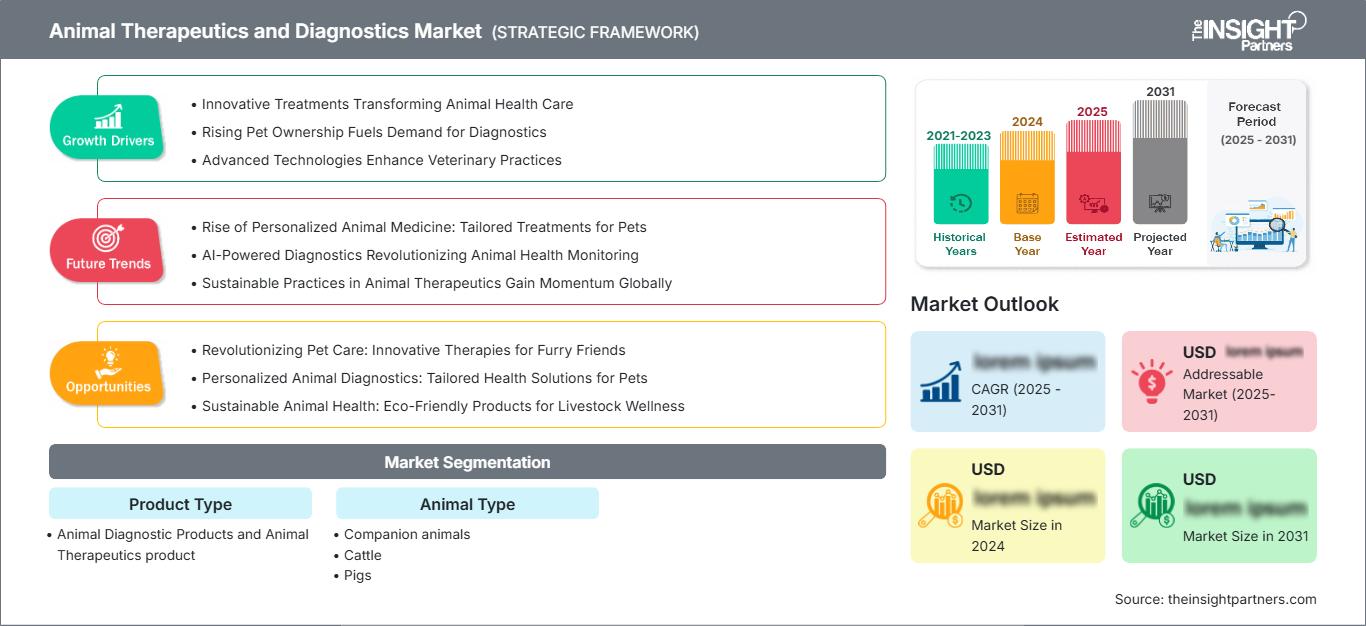
Animal Therapeutics and Diagnostics Market: Strategic Insights
Regional Insights
North America animal therapeutics and diagnostics market
North America is estimated to hold 39–42% of global revenue in 2025, expanding at a CAGR range of 1.20–1.50% during 2026–2034. The region’s animal therapeutics and diagnostics market share is supported by dense veterinary clinic networks, high companion animal medicalization, and established livestock health protocols across cattle, swine, and poultry systems. Demand is also supported by pet insurance uptake, corporate veterinary groups, and structured preventive care plans. Livestock producers in the US and Canada are investing in vaccination, parasite control, and rapid diagnostics to protect throughput. The region’s slower but stable expansion reflects maturity, pricing discipline, and continuing replacement of broad empirical treatment with confirmed diagnostic pathways.
U.S. animal therapeutics and diagnostics Market
The US accounts for 78–82% of North America in 2025 and is projected to grow at a CAGR range of 1.20–1.45% from 2026 to 2034. Companion animal clinics drive recurring demand for parasiticides, dermatology medicines, chronic pain therapies, and in-clinic diagnostics, while food animal operators use vaccines and disease monitoring to protect productivity. Company presence is broad, with Zoetis Inc., Merck & Co., Inc., Elanco Animal Health Incorporated, IDEXX Laboratories, Inc., and Boehringer Ingelheim International GmbH maintaining strong commercial platforms. Applications are increasingly linked to wellness panels, vector-borne disease testing, poultry automation, and cattle genomics. The US market remains innovation-led but sensitive to veterinary visit volumes and household affordability.
Europe animal therapeutics and diagnostics Market
Europe holds 26–29% share in 2025 and is projected to grow at a CAGR range of 1.00–1.30% during 2026–2034. Germany is the leading country because of structured veterinary dispensing, livestock productivity standards, and strong pharmaceutical manufacturing capabilities. The UK market is oriented toward companion animal therapeutics, diagnostics, and corporate veterinary services. Germany benefits from regulated antimicrobial stewardship and demand for herd health programs. France combines companion animal care with poultry, swine, and ruminant health needs, supported by the presence of Ceva Santé Animale S.A. and Virbac S.A. Italy and Spain show steady demand linked to livestock production, parasite control, and expanding diagnostics use in private clinics.
APAC animal therapeutics and diagnostics Market
APAC represents 21–24% share in 2025 and is forecast to grow at a CAGR range of 1.50–1.90% during 2026–2034. China is the leading country, supported by large-scale pork and poultry systems, biosecurity investments, and rising pet ownership in urban centers. Japan and South Korea emphasize premium companion animal care and diagnostics, while India adds volume through cattle, poultry, and expanding veterinary access. Australia contributes through livestock disease control and companion animal spending. Policy focus on food security, vaccination, and residue control supports gradual formalization of veterinary product demand.
Middle East & Africa animal therapeutics and diagnostics Market
The Middle East & Africa market is projected to grow at a CAGR range of 1.30–1.70% during 2026–2034. Saudi Arabia is the leading country, supported by food security programs, poultry capacity expansion, and veterinary infrastructure investment. The UAE prioritizes high-value companion animal care and import-reliant livestock biosecurity, while South Africa anchors regional demand through mixed farming and companion clinics. Rest of MEA adoption is uneven but improving as cold-chain logistics, farm services, and disease surveillance programs expand across livestock corridors.
Segmentation Analysis
Product Type
Product Type is projected to grow at a CAGR range of 1.15–1.45% during 2026–2034. The animal therapeutics and diagnostics market scope under this segment is shaped by the balance between mature medicine categories and expanding diagnostic confirmation. Therapeutics dominate revenue because routine vaccination, parasite control, pain management, and anti-infective use remain essential, while diagnostics gain relevance through faster clinical decisions.
- Animal Diagnostic Products are strategically important because they enable early disease confirmation, treatment selection, and surveillance. Demand is strongest in clinics, reference laboratories, production farms, and outbreak-sensitive livestock operations.
- Animal Therapeutics product maintains the largest position through vaccines, parasiticides, dermatology products, pain therapies, and anti-infectives. Its importance is reinforced by recurring usage across companion animals and food-producing species.
Animal Type
Animal Type is projected to grow at a CAGR range of 1.10–1.40% during 2026–2034. Segment dynamics differ by clinical intensity, ownership economics, and production value. Companion animals generate higher spending per patient, while cattle, pigs, poultry, and sheep depend on farm economics, herd size, disease pressure, and regulatory requirements for responsible medicine use.
- Companion animals generate strong value through wellness testing, chronic disease treatment, dermatology, parasiticide use, and owner willingness to pursue higher standards of care in urban and suburban clinics.
- Cattle demand is tied to milk yield, beef productivity, reproductive performance, respiratory disease control, and parasite management, making prevention-led herd health programs commercially important.
- Pigs require vaccination, intestinal health support, respiratory disease control, and biosecurity-linked diagnostics, especially in integrated production systems exposed to trade and disease disruption risks.
- Poultry represents a high-volume channel where vaccines, hatchery health tools, and rapid disease detection protect flock productivity, processing efficiency, and food supply continuity.
- Sheep demand is smaller but strategically relevant for parasite control, vaccination, reproductive health, and disease prevention in regions with established wool, meat, and dairy sheep production.
Opportunity Snapshot
| Animal Type | Revenue Contribution | Trend Tag | Adoption Stage |
|---|---|---|---|
| Companion animals | High | Wellness Panels | Mature |
| Cattle | High | Herd Health | Scaling |
| Pigs | Medium | Gut Health | Scaling |
| Poultry | High | Hatchery Automation | Scaling |
| Sheep | Low | Parasite Control | Emerging |
Animal Therapeutics and Diagnostics Market Growth Drivers and Impact Analysis
Rising preventive care in companion animal clinics
The trend towards preventive health care has become an important source of stable income streams for veterinarians due to the growing demand for testing, parasite prevention, vaccination, oral examinations, and monitoring of chronic diseases. This trend enables the frequent application of diagnostic products and treatments in lieu of the occasional application following the onset of disease symptoms. The impact of the trend is high in North America, Europe, Japan, Australia, and cities in APAC where there is organized wellness care for pets in households. Companies with extensive clinic portfolios can reap benefits since a diagnosis could be a direct link to treatment, refill, and follow-ups.
Biosecurity pressure across food animal production
Producers of livestock and poultry continue to have risk of respiratory disease, enteric infection, parasite attack, and disruptions caused by outbreaks in terms of trade. There is therefore an increased need for biosecurity programs to be combined with immunization, on-site diagnostics, and specific treatments. It is apparent among hatcheries for poultry, swine facilities, dairy farms, and beef feedlots, because a single disease occurrence has an impact on the performance and increases costs of treating the animals. Pressure from regulators in regard to reduction of inappropriate antimicrobial use will drive need for confirmed diagnostics and preventive practices.
Shift toward diagnostics-led treatment decisions
Decision support in veterinary medicine is evolving from symptom-based therapies to diagnostic-led processes, particularly in the internal medicine of pets, testing of infectious diseases, and herd level surveillance. Analytical devices in point-of-care, reference laboratory test panels, and on-farm tests increase the degree of certainty prior to administration of therapies. Such an approach decreases unnecessary medication administration and helps with the objectives of antimicrobial stewardship initiatives that are backed by the veterinary and public health communities. From the business perspective, it connects the use of diagnostic products with proper medication choice to open possibilities for joint sales strategies.
Animal Therapeutics and Diagnostics Market Future Trends
Integrated diagnostic and therapeutic pathways
Integrated care pathways will define animal therapeutics and diagnostics market trends as manufacturers, laboratories, and clinics connect testing results with treatment algorithms. Instead of selling diagnostics and medicines as separate categories, suppliers will increasingly position them as linked clinical solutions. This trend will be important in dermatology, vector-borne disease, respiratory conditions, metabolic disorders, and livestock outbreak management. Data generated from test results can guide product use, improve adherence, and support pharmacovigilance. Over time, companies with analytics capability, clinical education programs, and interoperable platforms will gain an advantage over suppliers relying only on single-product promotion.
Precision animal health and longer-duration formulations
Precision animal health will expand as genomics, digital monitoring, and better diagnostic baselines help veterinarians and producers tailor interventions. In livestock, genetic and health data can identify animals with higher disease risk or productivity potential. In companion animals, longer-duration therapies and improved chronic care protocols can reduce clinic burden while improving compliance. The trend favors investment in biologics, specialty medicines, predictive tools, and delivery systems that extend treatment intervals. Adoption will be gradual because cost, training, and workflow integration remain barriers, but the direction is clear across premium clinics and advanced production systems.
Animal Therapeutics and Diagnostics Market Opportunities
Localized access models in emerging veterinary markets
Emerging markets offer attractive animal therapeutics and diagnostics market Forecasts for companies willing to build localized access models. The opportunity is not limited to product registration; it requires distributor training, cold-chain assurance, affordable pack sizes, and clinic education. India, Southeast Asia, parts of Latin America, and selected African markets need reliable vaccines, parasiticides, and practical diagnostics for both pets and livestock. Companies can improve adoption by pairing products with disease awareness, farm advisory programs, and digital ordering. This investment approach supports sustainable growth while reducing dependence on mature markets with slower volume expansion and pricing constraints.
Farm-level surveillance and preventive health programs
Farm-level surveillance creates an actionable opportunity for suppliers to move from transactional product sales to preventive health partnerships. Poultry, swine, dairy, and beef producers need early warning systems that combine sampling, diagnostics, vaccination schedules, and treatment protocols. Companies can develop integrated programs with veterinarians, feed partners, and producer groups to demonstrate lower mortality, better feed conversion, and improved compliance. This model is especially relevant where food security policies and export requirements are strengthening. It also supports premium positioning because producers are more likely to pay for solutions that protect throughput and reduce outbreak-related losses.
Recent Developments
- July 2026: Ceva Santé Animale S.A. announced an accelerated companion animal’s strategy with a stronger focus on the United States, signaling greater investment in one of the world’s most valuable pet health markets. The initiative aligns with Ceva’s broader ambition to expand specialty products, improve local proximity to veterinarians, and strengthen its competitive position in companion animal therapeutics and wellness solutions.
- June 2026: Merck & Co., Inc. announced that Merck Animal Health had signed a definitive agreement to acquire TARGAN, a poultry biodevice specialist. The transaction is intended to add high-speed hatchery technologies, including WingScan for chick gender identification and precision vaccine delivery capabilities, strengthening Merck Animal Health’s position in poultry productivity, automation, and integrated livestock health solutions.
- March 2026: Zoetis Inc. entered into a definitive agreement to acquire Neogen Corporation’s animal genomics business for US$ 160 million, subject to customary closing adjustments. The acquisition is intended to expand Zoetis’ precision animal health capabilities by adding genotyping, sequencing, and data solutions used across cattle and other species to guide breeding, productivity, and health decisions.
Frequently Asked Questions

- Comprehensive Market Sizing and Forecast Analysis
- Detailed Segmentation Analysis
- In-Depth Market Dynamics Assessment
- Regional and Country-Level Insights
- Competitive Landscape and Company Benchmarking
- Strategic Business Intelligence
Recent Reports
Testimonials

The Insight Partners' SCADA System Market report is comprehensive, with valuable insights on current trends and future forecasts. The team was highly professional, responsive, and supportive throughout. We are very satisfied and highly recommend their services.
RAN KEDEM Partner, Reali Technologies LTDs
I requested a report on a very specific software market and the team produced the report in a few days. The information was very relevant and well presented. I then requested some changes and additions to the report. The team was again very responsive and I got the final report in less than a week.
JEAN-HERVE JENN Chairman, Future Analytica
We worked with The Insight Partners for an important market study and forecast. They gave us clear insights into opportunities and risks, which helped shape our plans. Their research was easy to use and based on solid data. It helped us make smart, confident decisions. We highly recommend them.
PIYUSH NAGPAL Sr. Vice President, High Beam Global
The Insight Partners delivered insightful, well-structured market research with strong domain expertise. Their team was professional and responsive throughout. The user-friendly website made accessing industry reports seamless. We highly recommend them for reliable, high-quality research services
YUKIHIKO ADACHI CEO, Deep Blue, LLC.
This is the first time I have purchased a market report from The Insight Partners.While I was unsure at first, I visited their web site and felt more comfortable to take the risk and purchase a market report.I am completely satisfied with the quality of the report and customer service. I had several questions and comments with the initial report, but after a couple of dialogs over email with their analyst I believe I have a report that I can use as input to our strategic planning process.Thank you so much for taking the extra time and making this a positive experience.I will definitely recommend your service to others and you will be my first call when we need further market data.
JOHN SUZUKI President and Chief Executive Officer, Board Director, BK Technologies
I wish to appreciate your support and the professionalism you displayed in the course of attending to my request for information regarding to infectious disease IVD market in Nigeria. I appreciate your patience, your guidance, and the fact that you were willing to offer a discount, which eventually made it possible for us to close a deal. I look forward to engaging The Insight Partners in the future, all thanks to the impression you have created in me as a result of this first encounter.
DR CHIJIOKE ONYIA MANAGING DIRECTOR, PineCrest Healthcare Ltd.Reason to Buy
- Informed Decision-Making
- Understanding Market Dynamics
- Competitive Analysis
- Identifying Emerging Markets
- Customer Insights
- Market Forecasts
- Risk Mitigation
- Boosting Operational Efficiency
- Strategic Planning
- Investment Justification
- Tracking Industry Innovations
- Aligning with Regulatory Trends





 Get Free Sample for