
Anti-Infective Endotracheal Tube Market Growth, Trends & Demand by 2034
Coverage: by Product Type ( Silver Coated Endotracheal Tube, Drug Coated Endotracheal Tube ); End-User ( Hospital, Medical Centers ) Type ( Plants, Animals, Microbes ), and Geography (North America, Europe, Asia Pacific, and South and Central America)
- Status : Data Released
- Report Code : TIPRE00010930
- Category : Life Sciences
- No. of Pages : 150
- Available Report Formats :


- Last update date : August 13, 2026


2025 Market Size
US$ 120.79 Mn
Base year value
2034 Forecast
US$ 182.58 Mn
Projected by 2034
CAGR 2026-2034
4.7 %
Growth rate
Addressable Market
US$ 1,377.39 Mn
(2026-2034)
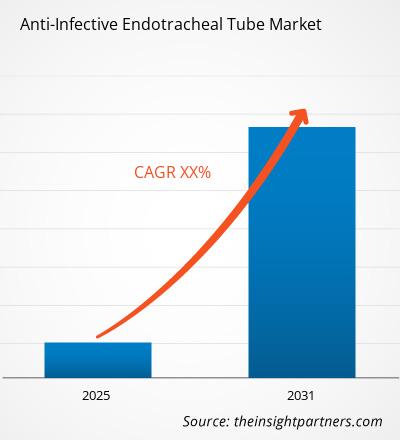
The global Anti-Infective Endotracheal Tube market was valued at US$ 120.79 million in 2025 and is expected to reach US$ 182.58 million by 2034; it is estimated to record a CAGR of 4.7% during 2026-2034.
Anti-Infective Endotracheal Tube Market Assessment and Insights
- North America held 37–40% share in 2025 and is growing at a CAGR of 4.8–5.3% between 2026–2034, supported by ICU capacity, infection-control protocols, and advanced airway management procurement.
- US represented 84–88% share of North America in 2025 and is growing at a CAGR of 4.7–5.2% between 2026–2034, driven by critical-care utilization and device standardization.
- Europe accounted for 27–30% share in 2025 and is growing at a CAGR of 4.5–5.0% between 2026–2034, led by Germany, the UK, France, Italy, and Spain.
- Asia Pacific captured 22–25% share in 2025 and is growing at a CAGR of 6.2–6.8% between 2026–2034, led by China, Japan, India, South Korea, and Australia.
- Largest Segment silver coated endotracheal tube held 55–60% market share in 2025, growing at a CAGR of 4.9–5.4% between 2026–2034, due to established antimicrobial evidence.
- High Growth Segment drug coated endotracheal tube held 40–45% market share in 2025, growing at a CAGR of 6.0–6.7% between 2026–2034, supported by targeted anti-biofilm innovation.
- Key companies analyzed in detail: Allvivo Vascular, Inc., Becton, Dickinson and Company, Brio Device, LLC, C. R. Bard, Inc., Ceragenix Pharmaceuticals, Inc., Fogless International AB, Hollister Incorporated, Medtronic plc, Smiths Medical, Inc., and Teleflex Incorporated.
Source: The Insight Partners' analysis based on proprietary research, government publications, company annual reports, investor presentations, industry databases, and expert interviews.
The development of technology has moved from basic intubation tubes to coated, infection-resistant, and workflow-compatible airway devices designed to solve the problem of biofilm and microbial colonization. In terms of manufacturing process dynamics, it is essential to pay attention to uniformity of coating, material compatibility, sterilization testing, cuff properties, and correct tube design. It is important to provide the right balance between an antimicrobial effect and the safety of airway devices, ventilation effectiveness, and insertion ease.
In terms of forward demand for devices, it is necessary to mention hospital-acquired infection surveillance, expansion of critical-care beds in developing countries, and cost-effectiveness through linking prevention results with device cost. Biocompatibility, extractables, leachables, and antimicrobial efficacy have become more critical regulatory issues for suppliers.
Anti-Infective Endotracheal Tube Market Report Scope
| Report Attribute | Details |
|---|---|
| Market size in 2025 | US$ 120.79 Million |
| Market Size by 2034 | US$ 182.58 Million |
| Global CAGR (2026 - 2034) | 4.7% |
| Historical Data | 2021-2024 |
| Forecast period | 2026-2034 |
Anti-Infective Endotracheal Tube Market Analysis
Anti-infective endotracheal tube growth drivers are defined by the clinical and financial implications of ventilator-associated pneumonia, prolonged intubation, and biofilm-mediated airway contamination. Healthcare providers are looking at airway devices as part of a wider suite of infection prevention strategies that encompass oral hygiene, subglottic secretion drainage, cuff pressure measurement, sedation practices, and antibiotic stewardship. Markets with significant ICU penetration and systems of payment tied to preventable complications will drive more demand.
The supply chain includes tubing materials, silver or drug coatings, antimicrobial technologies, cuff materials, radiopaque markers, sterilization, packaging, hospital distribution, and respiratory therapy support. Supply chain considerations will be impacted by coating validation, raw material uniformity, and documentation requirements. The need for reliability is important as airway devices are essential consumables, and substitution risk is low in emergencies or ICU surge scenarios.
Anti-infective Endotracheal Tube Market Analysis reveals that the market has a competitive structure where key players include leading airway device manufacturers, antimicrobial coating providers, and general critical care suppliers. Teleflex Incorporated and Medtronic plc represent airway device portfolios, while Becton, Dickinson and Company and C. R. Bard, Inc. leverage their presence at hospitals through infection prevention expertise.
Airway device and respiratory consumables manufacturers such as Allvivo Vascular, Inc., Brio Device, LLC, Ceragenix Pharmaceuticals, Inc., Fogless International AB, Hollister Incorporated, and Smiths Medical, Inc. will play an important role in this market via antimicrobial coating technology and respiratory devices. The positioning strategy will rely on clinical evidence, regulatory approval, coating longevity, price sensitivity, and cooperation with infection control committee at hospitals.
● REPORT CUSTOMIZATION
Tailor This Report To Align With Your Specific Business Requirements
This report can be customized to align precisely with your business objectives, scope, and target markets. Customization options include tailored segmentation, geography, competitive analysis, and strategic insights to support informed decision-making.
Customize This Report →WHAT YOU CAN ADJUST
- ● Segmentations
- ● Geography
- ● Competitive Analysis
- ● Language Preferences
Anti-Infective Endotracheal Tube Market: Strategic Insights
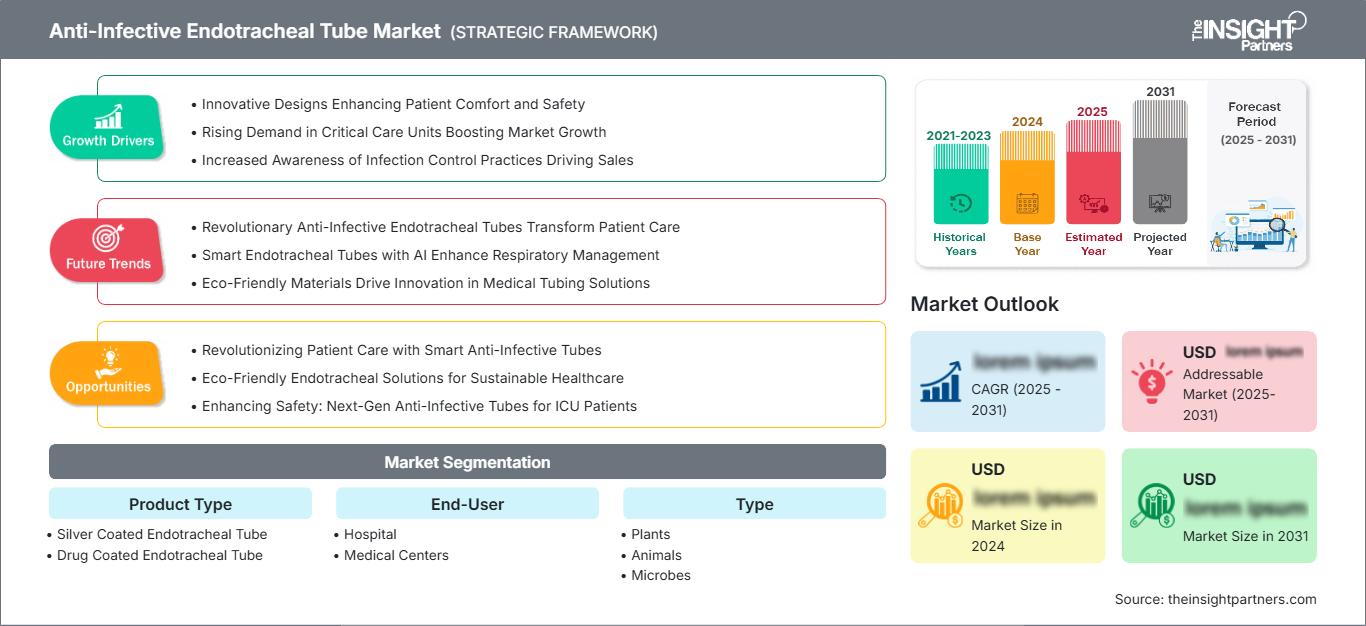
Regional Insights
North America anti-infective endotracheal tube market
North America accounted for 37–40% share in 2025, giving the region the largest anti-infective endotracheal tube market share globally. The region is growing at a CAGR of 4.8–5.3% during 2026–2034, supported by advanced ICU infrastructure, established respiratory therapy teams, and infection-prevention programs that track ventilator-associated complications in acute-care hospitals.
The region’s structural advantage comes from standardized device evaluation, stronger clinical documentation, and rapid adoption of products aligned with patient safety priorities. Demand is concentrated in the US, while Canada contributes through public hospital purchasing and intensive-care modernization. Hospitals increasingly compare coated tubes by antimicrobial durability, cuff sealing, tube visibility, suction compatibility, and total infection-prevention value.
U.S. anti-infective endotracheal tube Market
The US accounted for 84–88% share in North America in 2025 and will have a CAGR of 4.7–5.2% from 2026 to 2034. The adoption is highest in larger hospitals, trauma centers, academic ICUs, and respiratory care centers where patients on ventilators are given prevention bundles and airway assessment.
There are many players, such as Teleflex Incorporated, Medtronic plc, Becton, Dickinson and Company, Smiths Medical, Inc., and Hollister Incorporated, who provide their products to hospitals nationwide. Adoption trends are moving to using devices based on patient risk factors, which include long ventilation time, immune compromised, emergency intubations, and infection control reporting units.
Europe anti-infective endotracheal tube Market
Europe held 27–30% share in 2025 and is growing at a CAGR of 4.5–5.0% during 2026–2034. National Health Service infection control criteria, critical care procurement models, and clinical governance with regards to ventilator-associated pneumonia have all contributed to consistent adoption within the UK. Airway devices are normally changed after the hospital has ensured safety, usability, and cost relevance.
Germany leads, with help from the ICU capacity, hospital technology standards, and robust medical device assessment programs. Anti-infective tubes are evaluated along with ventilator circuits, humidification, suction systems, and airway accessories. Countries such as France, Italy, and Spain provide volume in terms of tertiary hospitals, ventilations following surgery, and the slow adoption of infection prevention consumables.
European growth hinges on demonstrating that coated tubes decrease avoidable infections without making intubation difficult or airway injuries. Antimicrobial properties, lifecycle cost, training issues, and standardization among anesthesiology, emergencies, and ICUs are included in device tenders.
APAC anti-infective endotracheal tube Market
APAC accounted for 22–25% share in 2025 and is expanding at a CAGR of 6.2–6.8% during 2026–2034, the fastest regional pace. China is the leading country by hospital scale, while Japan and South Korea lead in premium critical-care device adoption.
India and Australia add momentum through private hospital expansion, emergency medicine development, and infection-control awareness. Industrial drivers include regional medical device manufacturing and cost-optimized coated tube development. Policy focus on ICU capacity, antimicrobial resistance, and hospital quality is increasing demand for safer airway consumables.
Middle East & Africa anti-infective endotracheal tube Market
Middle East & Africa is growing at a CAGR of 5.5–6.1% during 2026–2034, with Saudi Arabia as the leading country. The UAE remains a premium hospital hub, supported by private healthcare investment, medical tourism, and adoption of international critical-care standards.
South Africa and the Rest of MEA show more gradual uptake, with demand concentrated in tertiary hospitals and better-equipped private facilities. Energy-linked healthcare infrastructure investment in Gulf markets supports ICU procurement, while broader regional expansion depends on affordability, distributor reliability, respiratory therapist training, and access to coated airway products.
Segmentation Analysis
Product Type
The Product Type segment is growing at a CAGR of 5.1–5.7% during 2026–2034. The anti-infective endotracheal tube market scope by product type is determined by antimicrobial mechanism, clinical evidence, material compatibility, and cost tolerance. Silver coated products retain the largest position because silver-based antimicrobial action is familiar to infection-control teams, while drug coated products are gaining attention for targeted biofilm suppression.
- Silver Coated Endotracheal Tube products maintain strong clinical relevance because silver coatings offer broad antimicrobial activity, established hospital familiarity, and compatibility with infection-prevention protocols in ventilated patient care.
- Drug Coated Endotracheal Tube products are strategically important where hospitals seek targeted anti-biofilm action, differentiated coating chemistry, and longer-duration protection for patients requiring extended mechanical ventilation.
End-User
The End-User segment is growing at a CAGR of 5.2–5.8% during 2026–2034. Hospitals dominate because intubation, mechanical ventilation, emergency airway management, and ICU infection surveillance are concentrated in acute-care settings. Medical centers are gaining relevance where specialized respiratory, surgical, and trauma services support higher adoption of advanced airway products.
- Hospital demand is driven by intensive-care units, operating rooms, emergency departments, and infection-prevention committees that evaluate airway devices within quality, safety, and utilization programs.
- Medical Centers are important where specialty surgery, trauma stabilization, and respiratory care programs require dependable, coated tubes, standardized training, and procurement flexibility across multiple departments.
Type
The Type segment is growing at a CAGR of 4.9–5.5% during 2026–2034. This segmentation reflects source or biological relevance in antimicrobial development, where plant-derived compounds, animal-derived biomaterial concepts, and microbe-targeting technologies shape coating research. Adoption is still determined by regulatory acceptability, reproducibility, sterilization stability, and proven airway safety rather than origin alone.
- Plants are relevant to antimicrobial research through phytochemical compounds, surface-active extracts, and bio-inspired coatings, although clinical translation depends on standardized potency and validated tube compatibility.
- Animals relate to biomaterial-derived concepts used in medical technology research, including surface interaction and biocompatibility studies, but airway use requires strict safety and sourcing controls.
- Microbes represent a key focus because tube coatings must limit bacterial adhesion, biofilm formation, and colonization by pathogens associated with ventilator-linked respiratory infections.
Opportunity Snapshot
| Segment Name | Revenue Contribution | Trend Tag | Adoption Stage |
|---|---|---|---|
| Hospital | High | ICU Bundles | Mature |
| Medical Centers | Medium | Specialty Airway | Scaling |
Anti-Infective Endotracheal Tube Market Growth Drivers and Impact Analysis
Ventilator-Associated Infection Prevention Priorities
Ventilator-associated respiratory infections remain a persistent concern because intubated patients are exposed to biofilm formation, impaired airway clearance, repeated suctioning, and prolonged ICU stays. Anti-infective tubes attack the most vulnerable site within the ventilation route, hence their applicability for infection control groups and critical care units. The practical market impact is evident for hospitals that measure ventilator-acquired pneumonia and rate device selection as part of prevention packages. The product lines that demonstrate bacterial killing without causing airway damage will command high prices based on decreased complication rates, reduced lengths of stay in the ICU, and less exposure to antibiotics.
Rising Critical-Care and Emergency Intubation Volumes
Increase in the number of patients requiring care in intensive-care units, emergency medicine procedures, trauma cases, and more complex surgeries is driving up the need for dependable endotracheal tubes. In many cases, the at-risk patient population will need to be on ventilators for prolonged periods, which increases the chances of colonization and biofilm development on tube surfaces. Antimicrobial solutions become useful where there is a requirement to have a consistent supply of the product in planned surgery, ICU admissions, and emergency airways management. The importance of this solution is evident from purchase requirements in terms of availability, tube size, cuff functioning, and compatibility with suction systems.
Improved Antimicrobial Coating and Material Engineering
Progress in coating science, surface bonding, polymer compatibility, and validation of sterilization processes is making anti-infective airway products more feasible. Issues such as coating longevity, migration, and variable antimicrobial effect have been solved using improved testing procedures and regulatory validation. This increases confidence on the side of clinicians and purchasing departments. The business implication is increased design freedom when it comes to silver, drug, and combination coatings directed at microbial colonization while maintaining flexibility and safety of airway devices. Companies that have validated their production processes will gain competitive advantage by providing reproducibility, storage stability, and clinically proven performance. Technical advances allow extending product lines.
Anti-Infective Endotracheal Tube Market Future Trends
Evidence-Linked Infection-Control Procurement
The next phase of anti-infective endotracheal tube market trends will center on procurement models that require clinical evidence, post-market surveillance, and measurable infection-control value. Hospitals are expected to compare coated tubes on microbial reduction, ventilator-associated pneumonia relevance, adverse-event profile, and compatibility with existing care bundles. This trend will reduce reliance on broad antimicrobial claims and favor suppliers that can provide data packages for infection-control committees. It will also encourage real-world evidence programs using ICU registries, respiratory therapy feedback, and hospital quality dashboards. Manufacturers that connect product performance to measurable patient safety metrics will gain stronger tender positioning.
Hybrid Coatings and Biofilm-Resistant Designs
Future product development is expected to move toward hybrid coatings that combine antimicrobial action with surface designs that physically limit biofilm attachment. These products may integrate silver, drug-eluting compounds, hydrophilic surfaces, or micro-patterned polymers to improve durability under ventilation, suctioning, and humidification. The trend is important because biofilm resistance depends on both chemistry and surface behavior. Suppliers will need to show that innovation does not compromise cuff sealing, tube rigidity, radiopacity, or ease of intubation. Hybrid designs may also support product differentiation in high-risk ICU populations where standard tubes are viewed as insufficient for extended ventilation.
Anti-Infective Endotracheal Tube Market Opportunities
High-Risk ICU Patient Protocol Integration
Protocol integration offers a strong opportunity because anti-infective tubes can be targeted first to patients with the highest infection risk rather than deployed universally. The anti-infective endotracheal tube market Forecasts support adoption in long-duration ventilation, trauma, immunocompromised care, complex surgery, and high-risk pneumonia units. Suppliers can work with hospitals to define use criteria, staff training, and replacement guidelines. This approach improves budget acceptance because premium products are linked to defined clinical need. Commercial success will depend on generating evidence that helps hospitals identify where coated tubes deliver the strongest incremental value within existing ICU bundles.
Emerging Market Critical-Care Modernization
Emerging markets present actionable opportunity as governments and private providers expand ICU beds, respiratory care services, and infection-control capability. Manufacturers can introduce cost-balanced coated tubes through distributor partnerships, local clinical education, and tiered product portfolios. The strongest near-term opportunity is in urban tertiary hospitals in China, India, Southeast Asia, and Gulf countries, where ventilator use and quality expectations are rising. Products must be affordable, reliable, and simple to integrate into emergency and ICU workflows. Companies that combine regulatory support, local inventory, and training for anesthesiology and respiratory teams can build durable channel positions.
Recent Developments
- October 2025: Medtronic plc, through Covidien LLC, received FDA 510(k) clearance for Shiley Oral RAE and Nasal RAE tracheal tubes with cuffed, cuffless, Murphy Eye, and TaperGuard configurations. The clearance strengthened the company’s airway management portfolio and supported continued availability of differentiated endotracheal tube formats for surgical and critical-care use.
- April 2025: Teleflex Incorporated received FDA 510(k) clearance for LMA Fastrach ETT SU, classified under the anesthesiology endotracheal tube product code. The clearance reinforced Teleflex Medical’s active regulatory position in airway management and expanded its cleared device base serving hospitals that require reliable intubation products for acute and procedural care.
- March 2025: Smiths Medical, Inc. issued an urgent medical device correction for certain Portex Intubation ORAL/NASAL Endotracheal Tubes after identifying that selected 2.0, 2.5, 3.0, and 3.5 mm sizes could be smaller than expected, potentially affecting ventilation performance and requiring inventory checks and removal actions.
Frequently Asked Questions

- Comprehensive Market Sizing and Forecast Analysis
- Detailed Segmentation Analysis
- In-Depth Market Dynamics Assessment
- Regional and Country-Level Insights
- Competitive Landscape and Company Benchmarking
- Strategic Business Intelligence
Recent Reports
Testimonials

The Insight Partners' SCADA System Market report is comprehensive, with valuable insights on current trends and future forecasts. The team was highly professional, responsive, and supportive throughout. We are very satisfied and highly recommend their services.
RAN KEDEM Partner, Reali Technologies LTDs
I requested a report on a very specific software market and the team produced the report in a few days. The information was very relevant and well presented. I then requested some changes and additions to the report. The team was again very responsive and I got the final report in less than a week.
JEAN-HERVE JENN Chairman, Future Analytica
We worked with The Insight Partners for an important market study and forecast. They gave us clear insights into opportunities and risks, which helped shape our plans. Their research was easy to use and based on solid data. It helped us make smart, confident decisions. We highly recommend them.
PIYUSH NAGPAL Sr. Vice President, High Beam Global
The Insight Partners delivered insightful, well-structured market research with strong domain expertise. Their team was professional and responsive throughout. The user-friendly website made accessing industry reports seamless. We highly recommend them for reliable, high-quality research services
YUKIHIKO ADACHI CEO, Deep Blue, LLC.
This is the first time I have purchased a market report from The Insight Partners.While I was unsure at first, I visited their web site and felt more comfortable to take the risk and purchase a market report.I am completely satisfied with the quality of the report and customer service. I had several questions and comments with the initial report, but after a couple of dialogs over email with their analyst I believe I have a report that I can use as input to our strategic planning process.Thank you so much for taking the extra time and making this a positive experience.I will definitely recommend your service to others and you will be my first call when we need further market data.
JOHN SUZUKI President and Chief Executive Officer, Board Director, BK Technologies
I wish to appreciate your support and the professionalism you displayed in the course of attending to my request for information regarding to infectious disease IVD market in Nigeria. I appreciate your patience, your guidance, and the fact that you were willing to offer a discount, which eventually made it possible for us to close a deal. I look forward to engaging The Insight Partners in the future, all thanks to the impression you have created in me as a result of this first encounter.
DR CHIJIOKE ONYIA MANAGING DIRECTOR, PineCrest Healthcare Ltd.Reason to Buy
- Informed Decision-Making
- Understanding Market Dynamics
- Competitive Analysis
- Identifying Emerging Markets
- Customer Insights
- Market Forecasts
- Risk Mitigation
- Boosting Operational Efficiency
- Strategic Planning
- Investment Justification
- Tracking Industry Innovations
- Aligning with Regulatory Trends





 Get Free Sample for