
Aquaponics Market Size, Share & Demand by 2034
Coverage: by Production Type (Fish, Vegetables & Fruits, Herbs, and Others); Components (Rearing Tanks, Settling Basins, Sump, Biofilter, Hydroponics); Equipment (Grow Lights, Water Heaters, Pumps And Valves, Aeration Systems, and Others); and End User(Commercial, Home Food Production, Education & Research, and Others) , and Geography (North America, Europe, Asia Pacific, and South and Central America)
- Status : Data Released
- Report Code : TIPTE100000723
- Category : Manufacturing and Construction
- No. of Pages : 150
- Available Report Formats :


- Last update date : July 15, 2026


2025 Market Size
US$ 1.23 Bn
Base year value
2034 Forecast
US$ 2.98 Bn
Projected by 2034
CAGR 2026-2034
10.33 %
Growth rate
Addressable Market
US$ 18.69 Bn
(2026-2034)
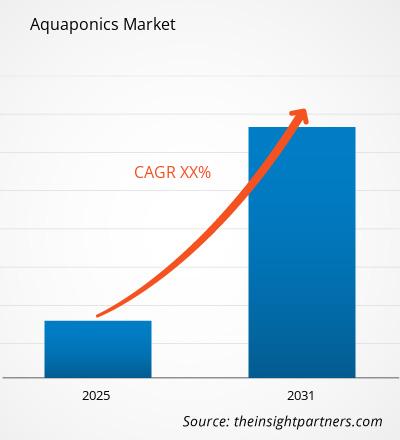
The growth of the aquaponics market size is anticipated from US$ 1.23 Billion in 2025 to US$ 2.98 Billion by 2034 at a CAGR of 9.40%. This market will show an increase due to the growing trend of implementing closed food production systems by integrating aquaculture and hydroponics for producing fish, vegetables, fruits, and herbs with the use of reused water.
As far as North America is concerned, it is an important demand center, and the aquaponics market share is estimated with a regional CAGR of 8.8% to 9.6% through 2034. In North America, this trend is influenced by the funding of urban farming projects in accordance with USDA, need for locally grown and pesticide-free food and automation of greenhouses improving fish survival rates and crop productivity.
Aquaponics Market Assessment and Insights
- North America accounted for 39–42% share in 2025 and is expected to grow at 8.8–9.6% CAGR between 2026–2034, led by commercial greenhouse adoption, USDA urban agriculture support, and strong retail demand for local produce.
- US represented 72–76% of North America in 2025 and is projected to expand at 8.7–9.5% CAGR between 2026–2034, supported by school farms, urban food programs, and technology suppliers.
- Europe held 24–27% share in 2025 and is forecast to grow at 8.2–9.0% CAGR between 2026–2034, with Germany, the UK, France, Italy, and Spain leading circular agriculture deployment.
- Asia Pacific captured 21–24% share in 2025 and is likely to grow at 10.5–11.6% CAGR between 2026–2034, driven by China, Japan, South Korea, India, and Australia addressing land and water constraints.
- Largest Segment Commercial end users held 56–60% market share in 2025 and are expected to grow at 9.1–9.8% CAGR between 2026–2034 due to scalable production and channel integration.
- High Growth Segment Herbs represented 17–20% market share in 2025 and are projected to grow at 10.8–11.8% CAGR between 2026–2034, supported by premium restaurant and direct-to-consumer demand.
- Key companies analyzed in detail: Ultrasonics Canada Corporation, Aquaponic Lynx LLC, Backyard Aquaponics Pty Ltd, ECF Farmsystems GmbH, Nelson and Pade Inc., Urban Farms AG, Greenlife Aquaponics, The Aquaponic Source, My Aquaponics, Colorado Aquaponics.
Source: The Insight Partners' analysis based on proprietary research, government publications, company annual reports, investor presentations, industry databases, and expert interviews.
The development of technology is now driving the aquaponics market from experimental farms to commercially run production facilities. The farmers are now using biofilters, circulating pumps, aerators, lighting, and digital monitoring in order to stabilize the nutrient cycles and minimize crop variations. There is currently a shift towards growing high-value vegetables, herbs, and tilapia because they are a combination that balances the growth cycle, feed conversion ratio, and demand.
Aquaponics market forecast indicates that positive progress will be seen in urban areas, desert locations, islands, and campuses where food security becomes the primary objective of procurement. The investments will now flow to modular farms, controls over aquaculture, and infrastructure supported by renewable energy. The regulatory incentives relating to sustainable aquaculture, circular resources, and minimized freshwater withdrawals will increase the financial viability of projects while educational and research users will provide standardization of operations.
Aquaponics Market Report Scope
| Report Attribute | Details |
|---|---|
| Market size in 2025 | US$ 1.23 Billion |
| Market Size by 2034 | US$ 2.98 Billion |
| Global CAGR (2026 - 2034) | 10.33% |
| Historical Data | 2021-2024 |
| Forecast period | 2026-2034 |
Aquaponics Market Analysis
Aquaponics market expansion demand is defined by water efficiency, planning of food security, and preference of consumers to local food free from pesticides. The Food and Agriculture Organization (FAO) and other national agricultural organizations prioritize the use of recirculating aquaponics to respond to freshwater scarcity, and urban farms incorporate stacked aquaponics to decrease land dependence. The value chain consists of fish seeds, fish feed, tanks, pumps, biofiltering equipment, sensors, grow beds, crop buyers, and training institutions.
Fragmentation characterizes the supply side, as most facilities have been designed locally based on climate, energy costs, crop types, and fish types. Increasingly, commercial purchasers demand reliable supply agreements, even as producers must contend with biological risks, water chemistry, and high energy requirements. High capital intensive aquaponics tend to be resilient compared to low capital ones.
Positioning is determined by the integration of technology, operator skills, farm layout, and after-sales service. Nelson & Pade Inc., ECF Farmsystems GmbH, Backyard Aquaponics Pty Ltd, and The Aquaponic Source compete through their system designs, knowledge, and enabling of projects while regional players like Greenlife Aquaponics and My Aquaponics cater to smaller commercial and domestic production requirements.
According to the aquaponics market analysis, the investments are being shifted from individual systems for hobby purposes towards professional farm operations that offer unit economics. Positioning is based on consistency in output, energy efficiency, selection of crops, and availability of distribution networks. The operators who are able to earn money through fish sales, high-end herbs, training services, and institutions are more likely to withstand the vagaries of the business.
● REPORT CUSTOMIZATION
Tailor This Report To Align With Your Specific Business Requirements
This report can be customized to align precisely with your business objectives, scope, and target markets. Customization options include tailored segmentation, geography, competitive analysis, and strategic insights to support informed decision-making.
Customize This Report →WHAT YOU CAN ADJUST
- ● Segmentations
- ● Geography
- ● Competitive Analysis
- ● Language Preferences
Aquaponics Market: Strategic Insights
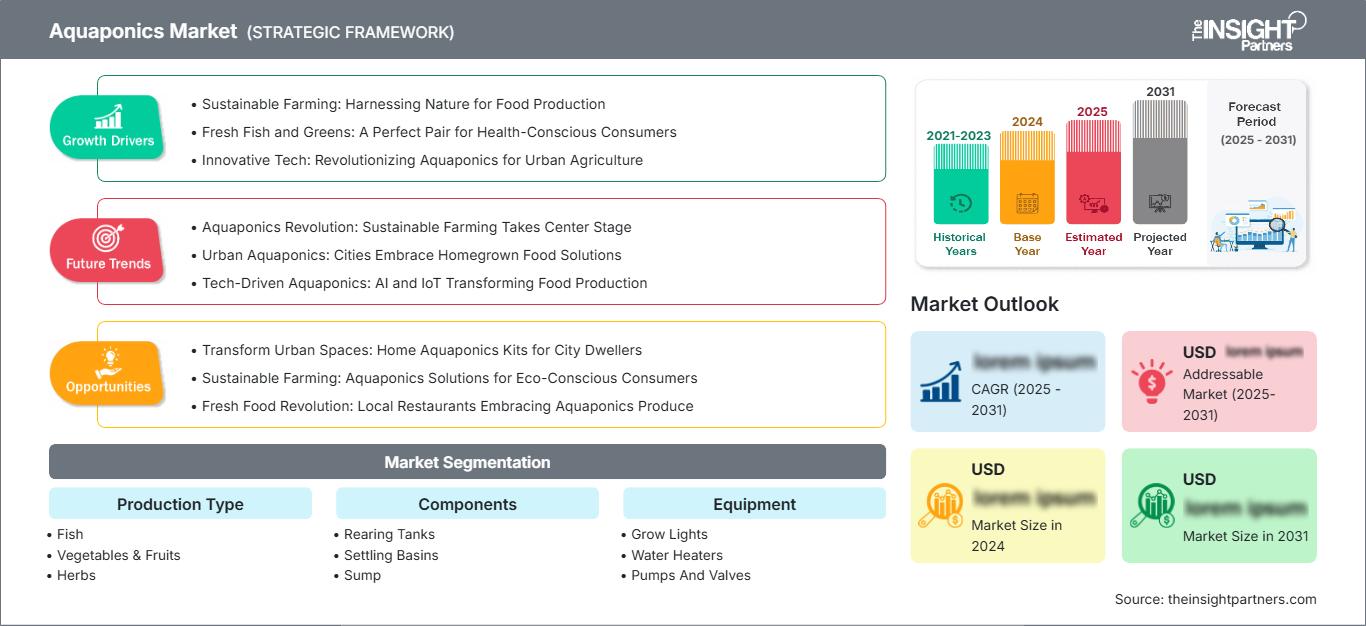
Regional Insights
North America Aquaponics Market
North America captured 39-42% share in 2025, thereby emerging as the largest base for market share by geography. The region is set to witness growth at 8.8-9.6% CAGR over 2026-2034 on account of investments in commercial greenhouses, sourcing of local food, and increased adoption of principles of recirculating aquaculture.
Structural drivers include USDA urban agriculture grants, university demonstration farms, and consumer demand for traceable produce. Commercial farms benefit from proximity to metropolitan grocery and food-service channels, while component suppliers improve reliability through sensors, pumps, biofilters, and modular systems. Energy costs remain a constraint, making efficient heating and lighting essential.
U.S. aquaponics Market
The U.S. represents 72–76% of North America in 2025 and will register a CAGR of 8.7–9.5% up until 2034. The practice is common in urban farms, learning institutions, greenhouse operators, and community food-related efforts where water recycling and regional sourcing inform purchasing decisions.
Company involvement is high in terms of design, training, and parts supplies. Nelson and Pade Inc., Aquaponic Lynx LLC, The Aquaponic Source, and Colorado Aquaponics are involved in projects including those at the household food production stage and institutional pilot programs. Current application trends include leafy greens, herbs, tilapia, and school projects where science learning and food production are integrated.
Europe aquaponics Market
Europe was valued at 24-27% market share in 2025 and is estimated to grow at 8.2-9.0% CAGR over 2026-2034. The leading country in Europe is Germany because of its high engineering, greenhouse technologies, and alignment with the circular economy. For the UK, the demand is driven by agricultural pilots, research farms, and retailers interested in low-mileage fresh products.
The other countries in the region are France, Italy, and Spain, where they develop their demands for vertical greenhouses through water-efficient horticulture, Mediterranean adaptation, and sustainable aquaculture policies. ECF Farmsystems GmbH shows the tendency in Europe to develop hybrid vertical greenhouses. The high cost of energy motivates companies to use heat recovery systems and solar panels.
APAC aquaponics Market
The APAC region is contributing 21-24% share in 2025 and is predicted to grow by 10.5-11.6% CAGR until 2034, the highest regional rate. China dominates in the implementation due to investments into smart agriculture. The countries like Japan and South Korea focus on precision in controlled environment.
India and Australia contribute through water shortages, aquaculture innovations and food security. The industrial factors include greenhouses, automation, sensor-based nutrient delivery and local production of proteins. The policy that supports efficient use of irrigation and circular agriculture makes aquaponics favorable for dense cities and arid interior zones.
Middle East & Africa aquaponics Market
Middle East and Africa is expected to grow at 9.4–10.4% CAGR during 2026–2034. Saudi Arabia and the UAE lead regional activity through food-security investment, greenhouse infrastructure, and interest in low-water agriculture suited to arid environments.
Adoption in South Africa and Rest of MEA is slow but progressing through education farms, community initiatives in foods, and integration of aquaculture and horticulture. Availability of energy sources, cooling, and quality of the infrastructure determine viability of the projects. Those with solar systems, efficient pumps, and water treatment systems are more probable to be adopted.
Segmentation Analysis
Production Type
Type of Production is estimated to witness growth in the range of 9.0-9.9% CAGR from 2026 to 2034. Aquaponic industry scope based on type of production depends on finding an equilibrium between fish biomass, crop nutrition and revenues. Fish usually serves as the foundation for system biology, while crops like vegetables, fruits, and herbs have shorter harvesting periods.
- Fish remains strategically important because it provides the nutrient base for plant growth, creates protein revenue, and supports system stability when stocking density, feed quality, and water oxygenation are controlled.
- Vegetables & Fruits attract commercial producers because leafy vegetables and selected fruiting crops fit retail channels, deliver frequent harvests, and benefit from controlled environments with reduced pesticide dependence.
- Herbs command premium pricing in restaurants and specialty retail, making them attractive for compact farms that prioritize freshness, aroma retention, quick turnover, and differentiated local supply.
Components
Components are projected to grow at CAGR of 8.8 to 9.7% during 2026-2034. Demand for components is contingent on the size of the system, water treatment needs, fish loading, and arrangement of crops. Dependable tanks, basins, sumps, biofilters, and hydroponics modules ensure biological equilibrium and effective operation of the system.
- Rearing Tanks form the biological foundation of the system, requiring durable materials, correct volume, fish welfare controls, and easy cleaning access for stable production and mortality reduction.
- Settling Basins remove suspended solids before water reaches plant roots, reducing clogging risk, improving oxygen transfer, and protecting biofilters from organic overload during higher feeding periods.
- Sump stabilizes water circulation and volume fluctuations, helping operators manage drainage, pump placement, emergency holding capacity, and smoother hydraulic performance across connected production units.
- Biofilter supports nitrifying bacteria that convert fish waste into plant-available nutrients, making it critical for water quality, fish health, and consistent crop nutrition.
- Hydroponics enables soilless plant cultivation using nutrient-rich aquaculture water, supporting dense production, easier harvesting, cleaner produce handling, and controlled crop scheduling.
Equipment
The growth rate of equipment is expected to be between 9.2% and 10.1% during 2026–2034. The expenditure on equipment increases due to farmers' shifting towards automation, round-the-year operation, and improved environmental control. The grow lights, heating system, pumps, valves, and aeration systems affect crop production and fish survival rates.
- Grow Lights support consistent plant growth in indoor and low-light settings, allowing producers to extend photoperiods, improve crop uniformity, and reduce seasonal output volatility.
- Water Heaters are essential in cooler climates and temperature-sensitive fish systems, helping maintain metabolic stability, feeding performance, and biological filtration efficiency.
- Pumps And Valves control circulation, drainage, and flow distribution, making them central to system reliability, oxygen delivery, water turnover, and maintenance efficiency.
- Aeration Systems protect fish and microbial health by sustaining dissolved oxygen levels, especially in high-density tanks and warm-water operations where oxygen demand rises quickly.
End User
The End User is projected to register a CAGR of 9.1% to 9.8% between 2026 and 2034. The commercial end-users hold a dominant share in the market owing to their ability to benefit from the fish and crops produced, whereas home and educational end-users help increase awareness about the product.
- Commercial users prioritize yield consistency, retail access, energy efficiency, and operational controls, making them the leading adoption group for scalable farms and technology-integrated production.
- Home Food Production attracts households seeking fresh produce and fish in compact settings, although adoption depends on affordability, training, space availability, and simplified maintenance.
- Education & Research supports curriculum, biology training, food-system studies, and pilot testing, creating long-term knowledge transfer that benefits commercial deployment and workforce development.
Opportunity Snapshot
| End User | Revenue Contribution | Trend Tag | Adoption Stage |
| Commercial | High | Retail Supply | Scaling |
| Home Food Production | Medium | Self Provision | Emerging |
| Education & Research | Medium | STEM Farms | Scaling |
Aquaponics Market Growth Drivers and Impact Analysis
Water Efficiency and Resource Circularity
Scarcity of water is an immediate factor since aquaponics is all about reusing the water used in the process and minimizing reliance on soil irrigation. All assessments by the Food and Agriculture Organization always point to agriculture being the biggest consumer of freshwater. Therefore, food production systems which recycle their water become important from a policy perspective. Farmers operating commercially may sell the idea of recycling water as a form of sustainability to retailers and institutions. This effect is more pronounced in dry lands, urban areas, and islands where traditional farming is not possible.
Controlled Environment Agriculture Expansion
Advances in the field of controlled-environment agriculture provide a stronger basis for aquaponic implementation. Sensors, climate control, irrigation systems, and artificial lighting are being utilized in greenhouses, vertical farms, and modular facilities, making the inclusion of fish-based fertilization cycles easier to achieve. The practical effect is the increase in year-round availability of quality vegetables and herbs for those cases when retail outlets demand a shortened supply chain. Producers enjoy advantages in the form of improved crop planning, less influence of the weather, and traceability. However, capital expenses are still considerable.
Local Food Procurement and Institutional Adoption
The procurement activities of both public and private entities emphasize freshness, localization, and the provenance of the food sources. The educational institutions such as schools, colleges, universities, hospitals and other organizations make use of aquaponics to bridge the gap between the production of food and their learning and nutritional goals. This driver adds to the consumer base of the systems since there are demonstration centers where people learn the use of this technology and are trained in operation.
Aquaponics Market Future Trends
AI-Led Nutrient and Fish Health Monitoring
Aquaponics market trends are expected to be heading towards artificial intelligence-based tracking systems of fish behavior, feed conversion rate, DO level, pH, temperature, and nutrient absorption by crops. In the future, these tracking systems will send predictive warnings before the levels of ammonia go up, pumps fail, and crops are stressed – all events that might affect earnings. Such a trend will help minimize the need for specialized knowledge, which is a significant challenge for newcomers to the industry. As prices of sensors drop, dashboard integration in medium-size farms will become widespread.
Hybrid Farms Linked to Renewable Energy
High-value herbs and greens can be the focus for investors in view of the regular harvesting period, dense farming, and high demand among buyers like restaurants, specialized groceries, and direct customers. According to the predictions for the aquaponics market, more successful projects are expected through the integration of income from crop production and fish breeding rather than solely on fish sales. The potential area is associated with modular farms in the proximity of large cities that allow charging premiums because of fresh products, reduced distance and sustainability marketing.
Aquaponics Market Opportunities
Commercial Herb and Premium Greens Production
High-value herbs and greens can be the focus for investors in view of the regular harvesting period, dense farming, and high demand among buyers like restaurants, specialized groceries, and direct customers. According to the predictions for the aquaponics market, more successful projects are expected through the integration of income from crop production and fish breeding rather than solely on fish sales. The potential area is associated with modular farms in the proximity of large cities that allow charging premiums because of fresh products, reduced distance and sustainability marketing.
Education and Training-as-a-Service Models
The system providers could further diversify their business scope by providing training services, educational packages, remote supervision, and maintenance contracts to schools, universities, research centers, and communal farms. This would generate a continuous income stream while ensuring minimal risks of failures among novices. Projects within the field of education would prove to be very beneficial from the point of view of strategy due to the development of technical awareness among young people, farmers, and governmental institutions.
Recent Developments
- September 2025, Innovasea announced ongoing collaboration with Forever Young Aquaponics. Forever Young Aquaponics is launching two fully recirculating aquaculture system (RAS) integrated aquaponic facilities in the United States. The two sites are in Colorado and Georgia, and both were equipped by Innovasea with design support offered throughout the process.
- June 2026, French startup Les Nouvelles Fermes opened a major aquaponics facility in Mérignac, near Bordeaux, marking one of the largest farms of its kind in Europe. The project builds on the company's first pilot farm established in Lormont in 2019 and reflects its ambition to expand sustainable urban food production.
Frequently Asked Questions

- Comprehensive Market Sizing and Forecast Analysis
- Detailed Segmentation Analysis
- In-Depth Market Dynamics Assessment
- Regional and Country-Level Insights
- Competitive Landscape and Company Benchmarking
- Strategic Business Intelligence
Recent Reports
Testimonials

The Insight Partners' SCADA System Market report is comprehensive, with valuable insights on current trends and future forecasts. The team was highly professional, responsive, and supportive throughout. We are very satisfied and highly recommend their services.
RAN KEDEM Partner, Reali Technologies LTDs
I requested a report on a very specific software market and the team produced the report in a few days. The information was very relevant and well presented. I then requested some changes and additions to the report. The team was again very responsive and I got the final report in less than a week.
JEAN-HERVE JENN Chairman, Future Analytica
We worked with The Insight Partners for an important market study and forecast. They gave us clear insights into opportunities and risks, which helped shape our plans. Their research was easy to use and based on solid data. It helped us make smart, confident decisions. We highly recommend them.
PIYUSH NAGPAL Sr. Vice President, High Beam Global
The Insight Partners delivered insightful, well-structured market research with strong domain expertise. Their team was professional and responsive throughout. The user-friendly website made accessing industry reports seamless. We highly recommend them for reliable, high-quality research services
YUKIHIKO ADACHI CEO, Deep Blue, LLC.
This is the first time I have purchased a market report from The Insight Partners.While I was unsure at first, I visited their web site and felt more comfortable to take the risk and purchase a market report.I am completely satisfied with the quality of the report and customer service. I had several questions and comments with the initial report, but after a couple of dialogs over email with their analyst I believe I have a report that I can use as input to our strategic planning process.Thank you so much for taking the extra time and making this a positive experience.I will definitely recommend your service to others and you will be my first call when we need further market data.
JOHN SUZUKI President and Chief Executive Officer, Board Director, BK Technologies
I wish to appreciate your support and the professionalism you displayed in the course of attending to my request for information regarding to infectious disease IVD market in Nigeria. I appreciate your patience, your guidance, and the fact that you were willing to offer a discount, which eventually made it possible for us to close a deal. I look forward to engaging The Insight Partners in the future, all thanks to the impression you have created in me as a result of this first encounter.
DR CHIJIOKE ONYIA MANAGING DIRECTOR, PineCrest Healthcare Ltd.Reason to Buy
- Informed Decision-Making
- Understanding Market Dynamics
- Competitive Analysis
- Identifying Emerging Markets
- Customer Insights
- Market Forecasts
- Risk Mitigation
- Boosting Operational Efficiency
- Strategic Planning
- Investment Justification
- Tracking Industry Innovations
- Aligning with Regulatory Trends





 Get Free Sample for