
Aromatherapy Oils Market Trends, Size & Forecast by 2034
Coverage: By Type (Lavender, Tea Tree, Rosemary, Lemon, Others); Category (Organic, Conventional); Distribution Channel (Supermarkets and Hypermarkets, Specialty Stores, Online Retail, Others) , and Geography (North America, Europe, Asia Pacific, and South and Central America)
- Status : Data Released
- Report Code : TIPRE00028168
- Category : Consumer Goods
- No. of Pages : 150
- Available Report Formats :


- Last update date : August 28, 2026


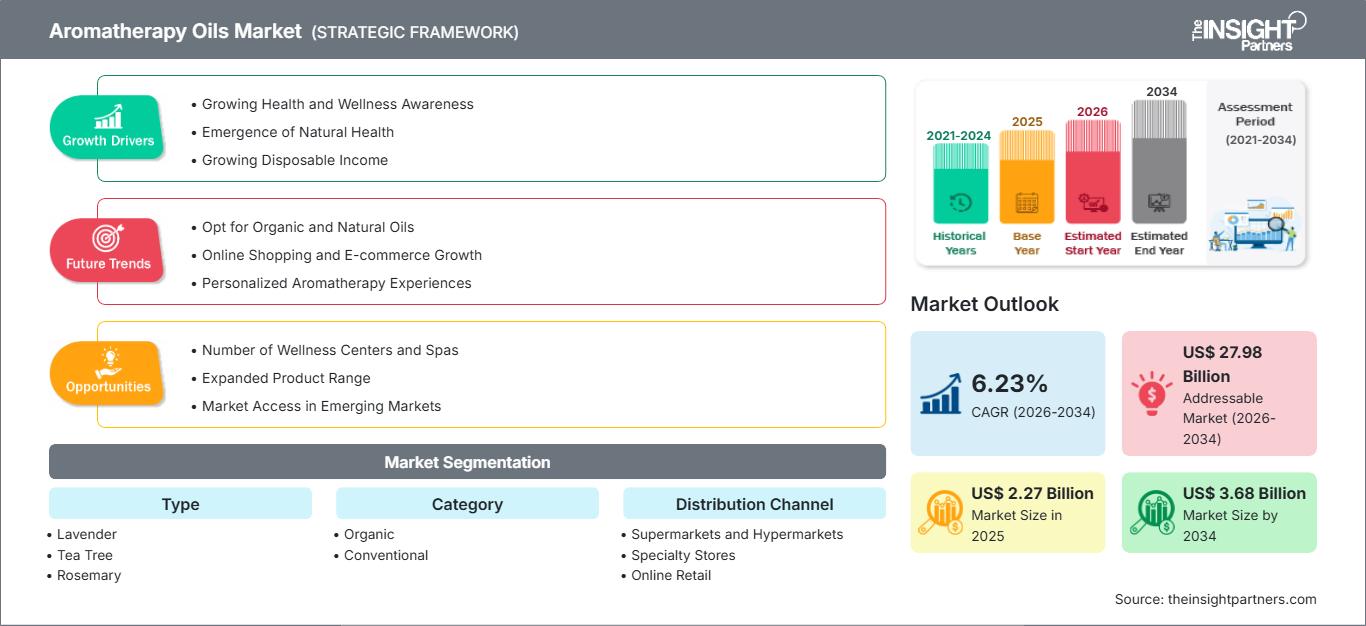
2025 Market Size
US$ 2.27 Bn
Base year value
2034 Forecast
US$ 3.68 Bn
Projected by 2034
CAGR 2026-2034
6.23 %
Growth rate
Addressable Market
US$ 27.98 Bn
(2026-2034)
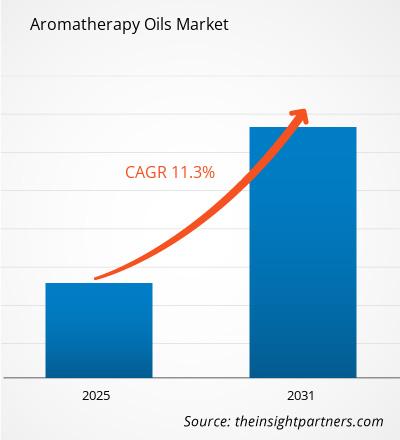
The aromatherapy oils market was valued at US$ 2.27 Billion in 2025 and is projected to reach US$ 3.68 Billion by 2034, registering a CAGR of 6.23% during 2026–2034. The market reflects steady adoption of essential oils across home wellness, personal care, spa, and therapeutic ambiance applications, supported by wider retail availability and rising consumer preference for plant-derived aromatic products.
Across North America, the aromatherapy oils market size is expected to expand at a CAGR range of 5.8–6.4% during 2026–2034, supported by structured wellness spending and high penetration of specialty health retail. Demand is reinforced by diffuser ownership, clean-label beauty routines, and growing use of lavender, tea tree, and citrus oils in stress-management, sleep-support, and household ambiance applications.
Aromatherapy Oils Market Assessment and Insights
- North America accounted for 34–37% share in 2025 and is projected to grow at a CAGR range of 5.8–6.4% during 2026–2034, supported by wellness retail maturity, high e-commerce penetration, and premium oil adoption.
- US represented 78–82% of North America in 2025 and is expected to grow at a CAGR range of 5.7–6.3% during 2026–2034, led by direct-to-consumer brands.
- Europe held 26–29% share in 2025 and is projected to grow at a CAGR range of 5.4–6.0% during 2026–2034, with Germany, the UK, and France leading natural wellness demand.
- Asia Pacific captured 23–26% share in 2025 and is projected to grow at a CAGR range of 6.8–7.5% during 2026–2034, led by China, Japan, India, South Korea, and Australia.
- Largest Segment: Lavender held 30–34% market share in 2025 and is projected to grow at a CAGR range of 5.9–6.5% during 2026–2034, due to sleep and relaxation positioning.
- High Growth Segment: Online Retail held 24–28% market share in 2025 and is projected to grow at a CAGR range of 7.4–8.2% during 2026–2034, driven by subscriptions and product education.
- Key companies analyzed in detail: Organic Aromas Inc., Edens Garden LLC, Puzhen Life Co. Limited, Greenair Inc., Ryohin Keikaku Co., Ltd., CAMPO Beauty LLC, Mountain Rose Herbs, Ltd., Plant Therapy Essential Oils LLC, Vitruvi US Corp., Frontier Co-op.
Source: The Insight Partners' analysis based on proprietary research, government publications, company annual reports, investor presentations, industry databases, and expert interviews.
Extraction and formulation practices in the aromatherapy oils market have shifted from commodity-style essential oil bottling toward verified purity, batch traceability, and application-specific blending. In the case of lavender, tea tree, and rosemary oils, steam distillation holds key importance, whereas the same goes for cold pressing for lemon and other citrus essential oils. Companies are focusing on GC/MS certification, reusable packs, waterless diffusions, and controlled sourcing for managing the issues associated with adulteration and volatility of these botanicals.
During the forecast period, the industry growth would be driven by the presence of growing urban wellness consumers in the Asia Pacific and affordable luxury consumers in North America and Europe. The favorable regulatory environment in terms of transparency in labeling, disclosure of allergens, and product safety would help those companies that have a lab-tested and responsibly sourced portfolio of essential oils.
Aromatherapy Oils Market Report Scope
| Report Attribute | Details |
|---|---|
| Market size in 2025 | US$ 2.27 Billion |
| Market Size by 2034 | US$ 3.68 Billion |
| Global CAGR (2026 - 2034) | 6.23% |
| Historical Data | 2021-2024 |
| Forecast period | 2026-2034 |
Aromatherapy Oils Market Analysis
Demand in the aromatherapy oils market growth cycle is being driven by consumer movement from occasional spa use toward recurring home-based rituals. Use of lavender oils is key for the purposes of relaxing and sleeping, while tea tree, rosemary, and lemon oils have applications for use in personal care, scalp care, and freshness of the home. Distribution is becoming increasingly more mixed, whereby supermarkets provide initial access opportunities, while specialty shops maintain trust through offering oils of premium quality.
The dynamics of supplies continue to be affected by the weather conditions, labor, and yield of the botanical oils. The production of lavender is affected by flowering conditions and distillation capabilities, tea tree supplies depend on cycles of Australian plantations, while lemon oil supply is related to production volumes of citrus products.
The aromatherapy oils market analysis shows a fragmented but brand-sensitive competitive landscape. Organic Aromas Inc. and Greenair Inc. compete through diffuser-led ecosystems, while Edens Garden LLC, Plant Therapy Essential Oils LLC, and Mountain Rose Herbs, Ltd. emphasize purity, education, and direct customer relationships. Ryohin Keikaku Co., Ltd. and Vitruvi US Corp. position aromatherapy within broader home lifestyle categories.
The investments are being made in digital merchandising, replenishment subscription, and high-end product architecture. CAMPO Beauty LLC invests in lifestyle-driven beauty and wellness positioning strategy, whereas Frontier Co-op relies on cooperatively sourced products, and Aura Cacia uses its strong distribution network to position itself. Puzhen Life Co. Limited is still pertinent in design-driven diffusion systems. The strategic positioning is becoming more dependent on credibility, safety communication, and repeat purchase economy.
● REPORT CUSTOMIZATION
Tailor This Report To Align With Your Specific Business Requirements
This report can be customized to align precisely with your business objectives, scope, and target markets. Customization options include tailored segmentation, geography, competitive analysis, and strategic insights to support informed decision-making.
Customize This Report →WHAT YOU CAN ADJUST
- ● Segmentations
- ● Geography
- ● Competitive Analysis
- ● Language Preferences
Aromatherapy Oils Market: Strategic Insights
Regional Insights
North America aromatherapy oils market
North America accounted for 34–37% share in 2025 and is projected to record a CAGR range of 5.8–6.4% during 2026–2034. The region benefits from established natural products retail, high household spending on wellness, and strong adoption of diffusers in urban homes. The aromatherapy oils market share in North America is also supported by spa chains, massage studios, and clean beauty brands integrating botanical oils into sensory wellness routines.
Third-party test expectations and consumer knowledge of USDA Organic, Leaping Bunny, and cruelty-free labels form the structural backbone of the market. Single oils and blends have become more readily available through online replenishment channels, while specialty retailers assist consumers in understanding proper dilution and application practices. High-end brands keep themselves differentiated with quality sourcing, quality reporting at the batch level, and blends targeting sleep, relaxation, seasonality, and aromatic purposes.
U.S. Aromatherapy Oils Market
The U.S. represented 78–82% of the North America Aromatherapy Oils Market in 2025 and is projected to grow at a CAGR range of 5.7–6.3% during 2026–2034. Demand is centered in e-commerce, natural specialty stores, spa treatments, and high-end wellness mass aisle ranges. Plant Therapy Essential Oils LLC, Edens Garden LLC, CAMPO Beauty LLC, Organic Aromas Inc., and Vitruvi US Corp. have a visible digital presence in terms of education, kits, and diffuser sets.
The application trends suggest that there is a higher demand for lavender oil in sleep routines, tea tree oil in skin and scalp care, and lemon oil for refreshing homes. American consumers are increasingly interested in waterless diffusers, roll-ons, and customized starter kits. Products that provide safety instructions, proper testing and consumer education will gain repeated sales because consumers are transitioning from artificial scents to natural scents for their homes.
Europe Aromatherapy Oils Market
Europe held 26–29% share of the Aromatherapy Oils Market in 2025 and is expected to expand at a CAGR range of 5.4–6.0% during 2026–2034. Germany takes the lead due to its knowledge of herbs, wellness products from pharmacies, and great acceptance of natural personal care products. Great UK consumers of sleep and stress support blends through its luxury home fragrance and good awareness of aromatherapy.
The French take advantage of their location near lavender and the history of perfumes, making them more trusting of botanical fragrance. The Italians and Spaniards are influenced by their closeness to the citrus and herb association of the Mediterranean, making them interested in lemon, rosemary, and lavender oils.
APAC Aromatherapy Oils Market
APAC held 23–26% share of the Aromatherapy Oils Market in 2025 and is projected to grow at a CAGR range of 6.8–7.5% during 2026–2034. China is the leading country, supported by expanding middle-income wellness spending, cross-border e-commerce, and interest in home ambiance products. Japan and South Korea contribute through beauty, relaxation, and design-led diffuser adoption.
India benefits from botanical traditions and expanding online wellness retail, while Australia contributes tea tree expertise and premium natural products positioning. Policy focus on domestic manufacturing, digital commerce, and wellness tourism supports broader adoption. Industrial drivers include essential oil extraction capacity, cosmetics formulation demand, and regional packaging innovation for small-volume premium products.
Middle East & Africa Aromatherapy Oils Market
The Middle East & Africa is projected to grow at a CAGR range of 5.2–5.8% during 2026–2034, with the UAE leading regional adoption. Demand is supported by premium hospitality, spa infrastructure, and high-end home fragrance preferences in Gulf markets. Saudi Arabia is expanding wellness retail as lifestyle destinations and tourism investments increase.
South Africa is seen as the most advanced market within the sub-Saharan region, where there is an existence of health shops that sell essential oils, in addition to the Internet. The energy and infrastructure environment in the region affects the development of luxury retail in terms of malls, hotels, and airports.
Segmentation Analysis
Type
Type is projected to grow at a CAGR range of 6.0–6.6% during 2026–2034. The aromatherapy oils market scope across types is shaped by therapeutic positioning, botanical familiarity, and formulation versatility. Lavender leads due to broad relaxation use, while tea tree and rosemary benefit from personal care applications. Lemon oil remains strategically important for freshness, cleaning, and uplifting ambiance blends.
- Lavender maintains the strongest market position due to its association with relaxation, sleep routines, massage blends, and diffuser use, making it a core SKU across premium and entry-level portfolios.
- Tea Tree attracts demand from skin care, scalp care, and hygiene-oriented formulations, supported by its established botanical identity and frequent use in natural personal care blends.
- Rosemary is strategically relevant in hair care, focus-oriented blends, and herbal wellness positioning, with demand supported by consumers seeking invigorating, green, and functional aroma profiles.
- Lemon performs strongly in household freshness, citrus diffusion, and cleaning-inspired blends, offering accessible pricing, familiar scent appeal, and strong compatibility with other essential oils.
Distribution Channel
Distribution Channel is projected to grow at a CAGR range of 6.2–6.9% during 2026–2034. Retail strategy is shifting from single-channel availability toward education-led omnichannel engagement. Supermarkets and hypermarkets support trial through affordability and visibility, specialty stores build confidence through guidance, and online retail accelerates repeat purchases through subscriptions, reviews, and bundle-based merchandising.
- Supermarkets and Hypermarkets support mainstream adoption by offering familiar brands, competitive prices, and convenient access, especially for basic lavender, lemon, tea tree, and starter blend purchases.
- Specialty Stores remain important for premium oils because trained staff, curated assortments, and quality-focused environments help consumers compare purity, sourcing, safety, and application formats.
- Online Retail is the fastest-scaling route as brands use education, reviews, subscriptions, bundled kits, and direct sampling to convert first-time buyers into repeat aromatherapy users.
Opportunity Snapshot
| Type | Revenue Contribution | Trend Tag | Adoption Stage |
| Lavender | High | Sleep Rituals | Mature |
| Tea Tree | Medium | Skin Care | Scaling |
| Rosemary | Medium | Hair Wellness | Scaling |
| Lemon | Medium | Fresh Homes | Mature |
| Others | Low | Custom Blends | Emerging |
Aromatherapy Oils Market Growth Drivers and Impact Analysis
Rise of Home-Based Wellness Rituals
Home wellness has become a durable purchasing behavior as consumers build routines around sleep, relaxation, ambiance, and self-care. This driver supports recurring demand because oils are consumable products that require replenishment, unlike diffusers that are replaced less often. The commercial impact is strongest for lavender, lemon, and blended oils positioned for evening routines, work-from-home focus, and seasonal freshness. Retailers benefit from starter kits that reduce adoption friction, while brands gain from subscription models and usage education. In the aromatherapy oils market, this pattern shifts demand away from occasional gifting toward repeat household consumption, improving customer lifetime value and supporting premium blends with clear functional positioning.
Expansion of Clean Beauty and Natural Personal Care
The trend towards clean beauty increases the application of essential oils in bath, body, hair, and skin care products. Tea tree oil and rosemary are especially favored since they resonate with the needs of individuals with scalp conditions, oily skin, and those seeking an herbal personal care regimen. Such a driver boosts the B2B requirements of formulators and private label brands who need reliable quality assurance, allergy-free documentation, and traceability of the sources. This can be seen through the reduction of packs for consumers and an increase in bulk purchases by formulators. Those companies that provide safety information and documentation have an upper hand due to the higher compliance with the ingredients.
Growth of E-Commerce Education and Direct Selling
The new digital shopping experience is changing how consumers find information about products, as the brands can offer information on where their oils come from, ways to use them, instructions for diluting them, and whether they work well with other fragrances. This eliminates confusion on the part of the customer and ensures that premium oils, which need more information than regular perfumes, sell better. Reviews, tutorial videos, reminders to buy on a subscription basis, and starter kits work best for new customers. The effects of the market include fast testing of products, good data gathering, and wider exposure outside specialty stores.
Aromatherapy Oils Market Future Trends
Smart and Waterless Diffusion Ecosystems
The aromatherapy oils market trends outlook points toward smart and waterless diffusion systems that deliver more controlled scent experiences with less maintenance. Schedule-based functionality using app technology, cartridge technology, and compact fragrance technology will place aromatherapy in a much better position as a connected wellness solution. This trend favors the high-quality oil since the controlled delivery system will minimize wastage while maximizing value per use. Ecosystem lock-in for design-driven brands is forecasted through the bundling of the device with curated oils. In the long run, collaborations between oil producers and diffusers are set to increase in sectors such as hospitality, office spaces, fitness centers, and luxury residences.
Traceable Botanical Sourcing and Verified Purity
Traceability is going to become a necessity for competition rather than a premium factor. People are becoming more conscious about contamination possibilities, and retailers require traceability to deal with quality and reputational risks. Future collections are probably going to comprise GC/MS tests per batch, stories of origin, regenerative agriculture, and details of cooperation with suppliers. Such an approach will define future procurement in favor of loyalty to growers and regional diversification. Organizations that will make investments in testing and communication ahead of time will be able to build better trust, especially in the case of lavender, tea tree, and citrus oils.
Aromatherapy Oils Market Opportunities
Premium Sleep and Stress-Relief Product Architecture
Premium sleep and stress-relief positioning offers a clear opportunity because consumers understand the use case and are willing to pay for convenience, sensory quality, and trust. Brands can build tiered portfolios around lavender-led blends, pillow sprays, roll-ons, and diffuser kits targeted at evening routines. The aromatherapy oils market Forecasts indicate that products tied to specific rituals can outperform generic single oils when supported by education and repeat-use packaging. Investment should focus on clinically cautious language, transparent safety guidance, and subscription replenishment. Retailers can strengthen margins through bundles that combine oils, diffusers, and refills for predictable household consumption.
Asia Pacific Digital Wellness Expansion
Asia Pacific offers an actionable opportunity for brands that localize scent profiles, packaging sizes, and e-commerce education. China, Japan, South Korea, India, and Australia each have distinct demand patterns, ranging from design-led home ambiance to natural beauty and botanical wellness. Companies entering the region should prioritize marketplace visibility, influencer-led education, and distributor partnerships with quality assurance controls. Smaller bottle sizes can improve affordability and trial, while premium kits can appeal to gift and lifestyle channels. Success will depend on adapting communication to local wellness norms without overstating therapeutic claims, especially as regulators increase scrutiny of health-related product positioning.
Frequently Asked Questions

- Comprehensive Market Sizing and Forecast Analysis
- Detailed Segmentation Analysis
- In-Depth Market Dynamics Assessment
- Regional and Country-Level Insights
- Competitive Landscape and Company Benchmarking
- Strategic Business Intelligence
Recent Reports
Testimonials

The Insight Partners' SCADA System Market report is comprehensive, with valuable insights on current trends and future forecasts. The team was highly professional, responsive, and supportive throughout. We are very satisfied and highly recommend their services.
RAN KEDEM Partner, Reali Technologies LTDs
I requested a report on a very specific software market and the team produced the report in a few days. The information was very relevant and well presented. I then requested some changes and additions to the report. The team was again very responsive and I got the final report in less than a week.
JEAN-HERVE JENN Chairman, Future Analytica
We worked with The Insight Partners for an important market study and forecast. They gave us clear insights into opportunities and risks, which helped shape our plans. Their research was easy to use and based on solid data. It helped us make smart, confident decisions. We highly recommend them.
PIYUSH NAGPAL Sr. Vice President, High Beam Global
The Insight Partners delivered insightful, well-structured market research with strong domain expertise. Their team was professional and responsive throughout. The user-friendly website made accessing industry reports seamless. We highly recommend them for reliable, high-quality research services
YUKIHIKO ADACHI CEO, Deep Blue, LLC.
This is the first time I have purchased a market report from The Insight Partners.While I was unsure at first, I visited their web site and felt more comfortable to take the risk and purchase a market report.I am completely satisfied with the quality of the report and customer service. I had several questions and comments with the initial report, but after a couple of dialogs over email with their analyst I believe I have a report that I can use as input to our strategic planning process.Thank you so much for taking the extra time and making this a positive experience.I will definitely recommend your service to others and you will be my first call when we need further market data.
JOHN SUZUKI President and Chief Executive Officer, Board Director, BK Technologies
I wish to appreciate your support and the professionalism you displayed in the course of attending to my request for information regarding to infectious disease IVD market in Nigeria. I appreciate your patience, your guidance, and the fact that you were willing to offer a discount, which eventually made it possible for us to close a deal. I look forward to engaging The Insight Partners in the future, all thanks to the impression you have created in me as a result of this first encounter.
DR CHIJIOKE ONYIA MANAGING DIRECTOR, PineCrest Healthcare Ltd.Reason to Buy
- Informed Decision-Making
- Understanding Market Dynamics
- Competitive Analysis
- Identifying Emerging Markets
- Customer Insights
- Market Forecasts
- Risk Mitigation
- Boosting Operational Efficiency
- Strategic Planning
- Investment Justification
- Tracking Industry Innovations
- Aligning with Regulatory Trends





 Get Free Sample for