
Bone Anchored Hearing Aids Market Growth, Demand & Size by 2034
Coverage: by Application (Sensorineural Hearing Loss, Conductive Hearing Loss, Mixed Hearing Loss, Single Sided Deafness); End User (Pediatrics, Adults, Geriatrics), and Geography (North America, Europe, Asia Pacific, and South and Central America)
- Status : Data Released
- Report Code : TIPRE00011287
- Category : Life Sciences
- No. of Pages : 150
- Available Report Formats :


- Last update date : July 29, 2026


2025 Market Size
US$ 236.51 Mn
Base year value
2034 Forecast
US$ 348.25 Mn
Projected by 2034
CAGR 2026-2034
4.96 %
Growth rate
Addressable Market
US$ 2,732.74 Mn
(2026-2034)
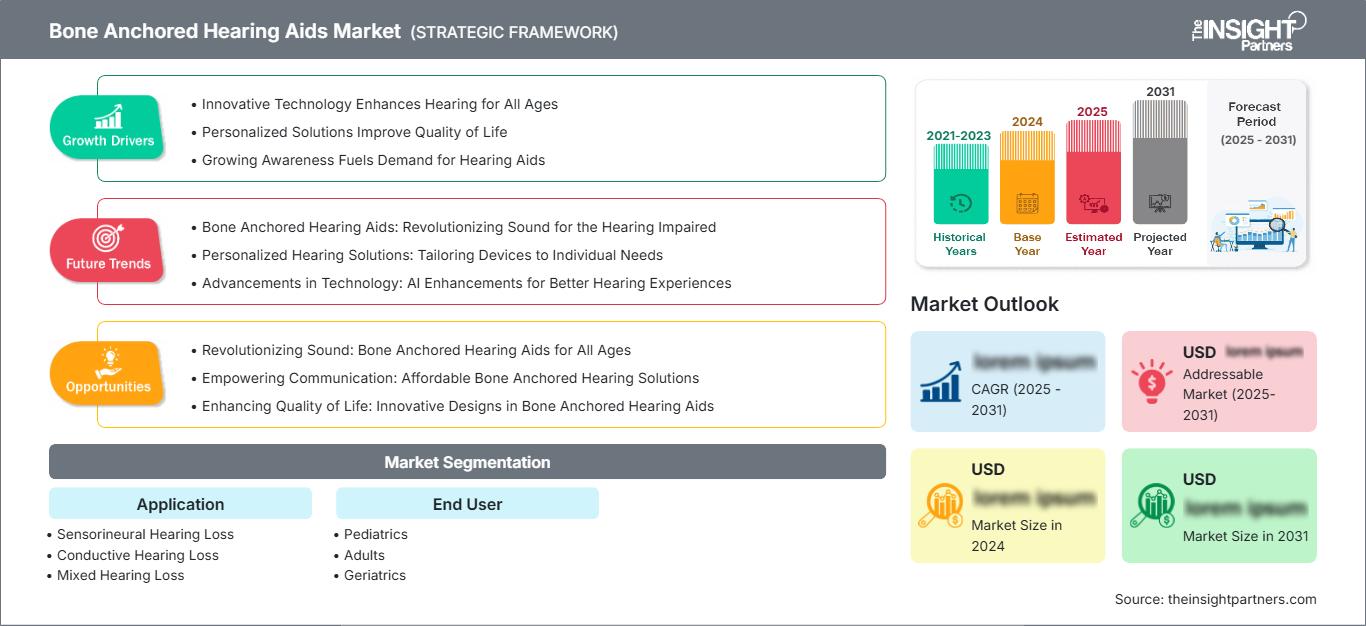
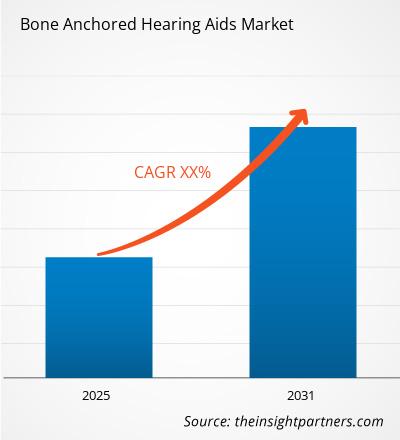
The Bone Anchored Hearing Aids Market was projected to witness a valuation of US$ 236.51 Million in 2025, and will further grow up to US$ 348.25 Million till 2034. The market will register a growth rate of CAGR of 4.96% from 2026 to 2034. Growth drivers include referral pathways of otolaryngology, awareness about conductive and mixed hearing losses, and development in implantable and non-implantable bone conduction systems.
In the case of North America, factors such as developed infrastructure in the field of audiology, presence of established implant centers, and ease of managing reimbursement processes in surgery based hearing solutions are driving the growth of the Bone Anchored Hearing Aids Market size in the region. The market is expected to grow at a CAGR ranging from 4.70–5.20% between 2026 to 2034.
Bone Anchored Hearing Aids Market Assessment and Insights
- North America held 38–42% Bone Anchored Hearing Aids Market share in 2025 and is projected to grow at a CAGR of 4.70–5.20% during 2026–2034, supported by specialist ENT networks, implant reimbursement coding maturity, and earlier intervention for pediatric conductive hearing loss.
- US accounted for 74–78% of North America in 2025 and is expected to expand at a CAGR of 4.80–5.30% during 2026–2034, led by hospital-based implant programs and branded processor upgrades.
- Europe represented 29–33% share in 2025 and is forecast to grow at a CAGR of 4.40–4.90% during 2026–2034, with Germany, the UK, France, Italy, and Spain leading adoption through structured otology care.
- Asia Pacific captured 20–24% share in 2025 and is anticipated to grow at a CAGR of 5.40–5.90% during 2026–2034, led by Japan, China, South Korea, India, and Australia as diagnosis access improves.
- Largest Segment Conductive Hearing Loss held 42–46% market share in 2025 and is projected to grow at a CAGR of 4.60–5.10% during 2026–2034 due to strong clinical fit.
- High Growth Segment Single Sided Deafness accounted for 16–20% market share in 2025 and is estimated to grow at a CAGR of 5.70–6.20% during 2026–2034 as awareness increases.
- Key companies analyzed in detail: Advanced Bionics LLC, Cochlear Limited, GN Hearing A/S, MED-EL Elektromedizinische Geräte GmbH, Natus Medical Incorporated, Phonak AG, Sivantos GmbH, Sonova Holding AG, Starkey Laboratories Inc., Oticon Medical A/S, and BHM-Tech Produktionsgesellschaft mbH.
Source: The Insight Partners' analysis based on proprietary research, government publications, company annual reports, investor presentations, industry databases, and expert interviews.
The progress in technology has shifted the market for Bone Anchored Hearing Aids from the conventional percutaneous abutments to active transcutaneous systems, pediatric soft trial bands, wireless streaming capabilities, rechargeable processors and smaller implants. The production still stays focused within the specialized suppliers of hearing implants, since acoustic tuning, titanium implant manufacturing, magnet anchoring solutions and product validation necessitate high technological expertise. The public health statistics showing more than 430 million people in need for rehabilitation of hearing disabilities confirm the sustainable demand for the differentiating bone conduction solutions.
In the future, the available patient pool will increase with the development of emerging countries in newborn screening, otitis media management and ENT referrals. The positive regulatory trends support devices with intact skin, MRIs compliance and tele-audiology solutions, while the investments are moving towards processor software and pediatric accessories. The Asia Pacific region and some Middle Eastern countries are expected to grow faster with the additional otological capabilities in tertiary hospitals and increasing insurance coverage of implantable hearing solutions.
Bone Anchored Hearing Aids Market Report Scope
| Report Attribute | Details |
|---|---|
| Market size in 2025 | US$ 236.51 Million |
| Market Size by 2034 | US$ 348.25 Million |
| Global CAGR (2026 - 2034) | 4.96% |
| Historical Data | 2021-2024 |
| Forecast period | 2026-2034 |
Bone Anchored Hearing Aids Market Analysis
Market demand will depend on individuals who have problems with getting the best benefit from their existing air conduction hearing aids as a result of diseases of the ear canal, atresia, mixed loss, or single sided deafness. Value chain includes audiologists, ENT surgeons, implant manufacturers, fitting software, accessories, reimbursement, and post-operative service providers. Supply discipline exists in the industry because there is always a need to balance the cycle of processor changes with the safety of the implant platform.
Evidence-based clinical decision-making also plays an important role. Trials of implants, soft bands, and bone conduction devices allow the doctors to assess the benefit the patient will get from the implant. Increasing number of public programs tie hearing rehabilitation with educational and employment outcomes of the patient. Thus, the companies that can provide preoperative assessment, pediatric fittings, remote services, and upgrade processors become more successful compared to hardware vendors.
Competition occurs based on product ecosystems and not processors individually. The Bone Anchored Hearing Aids Market analysis reveals that Cochlear Limited, Oticon Medical A/S, and MED-EL Elektromedizinische Geräte GmbH compete using implant design, fitting, digital processing technology, and clinician education programs. Sonova Holding AG, Phonak AG, Advanced Bionics LLC, GN Hearing A/S, Sivantos GmbH, Starkey Laboratories Inc., Natus Medical Incorporated, and BHM-Tech Produktionsgesellschaft mbH have adjacent solutions in hearing care, diagnostic, and amplification segments.
Strategic investments focus on connectivity, rechargeable power solutions, data logging, and patient support platforms. Players are planning their products for multi-reimbursement settings by providing surgical and non-surgical implant products, especially for children before final surgery. The market will be moderately consolidated as regulatory evidence, surgeons' trust, and brands weigh more than prices only. The strategy will rely on clinical results, processor's durability, fitting ability, and upgrade effectiveness among current users.
● REPORT CUSTOMIZATION
Tailor This Report To Align With Your Specific Business Requirements
This report can be customized to align precisely with your business objectives, scope, and target markets. Customization options include tailored segmentation, geography, competitive analysis, and strategic insights to support informed decision-making.
Customize This Report →WHAT YOU CAN ADJUST
- ● Segmentations
- ● Geography
- ● Competitive Analysis
- ● Language Preferences
Bone Anchored Hearing Aids Market: Strategic Insights
Regional Insights
North America Bone Anchored Hearing Aids Market
North America accounted for 38-42% of revenue share worldwide in 2025 owing to its high diagnosis rate, established otology centers, and payer familiarity with implantable hearing aid devices. The market in North America is bolstered by FDA-approved transcutaneous as well as percutaneous devices, craniofacial programs for children, and adult SSD clinics. The compound annual growth rate (CAGR) in this region between 2026-2034 is estimated to be 4.70-5.20%.
Growth drivers in North America include post-procedure follow-up network, processor replacement cycle, and patient awareness about non-surgical trials. North America gains from systematic newborn screenings and hearing intervention pathways within schools. Competitive strategy includes surgical education, fitting software, mobile applications, and reimbursement strength in hospital outpatient and specialized ENT departments.
U.S. Bone Anchored Hearing Aids Market
The U.S. market accounted for 74–78% of North American revenue in 2025 and is projected to grow at a compound annual growth rate of 4.80–5.30% from 2026 to 2034. The adoption occurs in academic hospitals, pediatric ENT clinics, independent audiology practices, and integrated health systems. Conductive deafness and mixed deafness are key applications; SSD assessment is becoming more popular among adults.
Key companies have a robust footprint; these include Cochlear Limited, MED-EL Elektromedizinische Geräte GmbH, Oticon Medical A/S, Sonova Holding AG, and other hearing aids companies. The FDA regulates and approves processor software updates and cochlear implant technology. American doctors use softband trials, image guidance, and tele-audiology tools to optimize candidacy and minimize unnecessary revision surgeries.
Europe Bone Anchored Hearing Aids Market
The Europe segment comprised 29-33% share in 2025 and forecasted to grow at a CAGR of 4.40-4.90% between 2026-2034. Germany continues to be a dominant player due to high ENT hospital infrastructure, reimbursement history, and expert audiology coverage. The United Kingdom is contributing through NHS driven assessment pathway, microtia treatment in children, and referrals for implanted hearing aids.
France, Italy, and Spain continue to demonstrate steady adoption for tertiary hospitals treating chronic otitis media, congenital ear defects, and complex mixed hearing loss. Adoption in Europe region is influenced by clinical evidence requirements, procurement practices, and post-market surveillance as per medical device regulations. Companies focusing on intact skin systems, MRI compatibility, and surgical efficiency are gaining traction.
Growth of the region is also influenced by increasing demographic population and rising awareness about hearing rehabilitation procedures. The market is positively impacted by network of otology providers and manufacturers' initiatives for professional training. Procedure volumes vary across countries depending on payer requirements, waiting time and implant budgets rather than clinical indications.
APAC Bone Anchored Hearing Aids Market
Asia-Pacific had 20%-24% market share in 2025 and is expected to register a CAGR of 5.40%-5.90% from 2026 to 2034. Japan holds the highest market share in the region due to the presence of sophisticated ENT facilities and acceptance of implantable technology. China, South Korea, India, and Australia are developing through hospital upgrades, specialty clinics, and pediatric hearing programs.
The industrial capacities in electronics, batteries, and high-quality component parts help establish business relationships with suppliers in the region. The policy factors are expanded screening, urban hospitals, and hearing aids in disability support policy framework. The access is uneven, but increased middle-class population and clinician training are improving referrals for bone conduction solutions.
Middle East & Africa Bone Anchored Hearing Aids Market
The Middle East and Africa region will grow at a CAGR of 4.20–4.70% from 2026–2034, with Saudi Arabia leading regional penetration. The UAE gets advantage from its specialist hospitals and medical tourism, whereas South Africa forms the backbone of demand with its private healthcare facilities and academics of ENT.
Gulf countries' energy-driven government expenditure helps in the growth of hospital infrastructure, surgery rooms, and specialist hiring. Growth will depend on the aspect of clear reimbursement, presence of audiologists, and awareness among pediatricians about congenital ear problems. Suppliers with training for surgeons, free samples, and after-sales service will aid in growth.
Segmentation Analysis
Application
The Application segment is projected to grow at a CAGR of 4.80–5.30% during 2026–2034. Bone Anchored Hearing Aids Market scope across application areas is defined by clinical indication, cochlear reserve, anatomical suitability, and patient preference. Conductive and mixed loss remain the main procedural base, while SSD is gaining strategic relevance as counseling tools better explain directional hearing and speech-in-noise benefits.
- Sensorineural Hearing Loss demand is selective because candidacy depends on residual cochlear function, contralateral hearing status, and clinical alternatives. Strategic relevance is highest when bone conduction supports complex unilateral or asymmetrical cases.
- Conductive Hearing Loss forms the largest application base, supported by chronic ear disease, atresia, and inability to tolerate conventional earmolds. It is clinically important because outcomes are predictable after successful trial fitting.
- Mixed Hearing Loss shows stable demand where both conductive and sensorineural components limit standard hearing aid performance. Manufacturers focus on higher-output processors, fitting flexibility, and long-term upgrade options.
- Single Sided Deafness is strategically important because patients seek better awareness from the affected side and improved communication in noise. Counseling, trial devices, and adult awareness campaigns support adoption.
End User
The End User segment is expected to grow at a CAGR of 4.90–5.40% during 2026–2034. Adoption differs by age because pediatric care emphasizes language development and craniofacial timing, while adults and geriatric patients prioritize communication, workplace function, and quality of life. Device design increasingly reflects age-specific needs, including soft retention, rechargeable use, and simpler fitting support.
- Pediatrics represents a high-value group because early auditory access supports speech, learning, and social development. Non-surgical bands and staged implant decisions are central to clinical strategy.
- Adults generate consistent demand through chronic ear conditions, SSD, and occupational communication needs. This group responds strongly to discreet designs, smartphone connectivity, and predictable post-surgical support.
- Geriatrics adoption is shaped by aging-related hearing complexity, dexterity needs, and caregiver involvement. Strategic focus includes lower-maintenance processors, rechargeable options, and coordinated ENT-audiology follow-up.
Opportunity Snapshot
| Segment Name | Revenue Contribution | Trend Tag | Adoption Stage |
| Sensorineural Hearing Loss | Low | Selective Candidacy | Emerging |
| Conductive Hearing Loss | High | Atresia Care | Mature |
| Mixed Hearing Loss | Medium | Output Range | Scaling |
| Single Sided Deafness | Medium | SSD Counseling | Scaling |
Bone Anchored Hearing Aids Market Growth Drivers and Impact Analysis
Rising Burden of Disabling Hearing Loss
The global burden of disabling hearing loss creates a durable clinical base for bone conduction systems, especially when conventional aids cannot be used because of ear canal malformation, chronic discharge, or repeated middle-ear disease. WHO estimates indicate that more than 430 million people require rehabilitation for disabling hearing loss, with nearly 2.5 billion projected to experience some degree of hearing loss by 2050. This epidemiological pressure raises the importance of specialized hearing pathways, not only mass-market amplification. The impact is strongest in tertiary ENT settings where surgical assessment, audiological trialing, and long-term fitting support can convert unmet need into treated demand.
Shift Toward Transcutaneous and Lower-Profile Systems
Patient and surgeon preference is moving toward systems that preserve skin integrity, reduce visible hardware, and lower daily maintenance burdens. Active transcutaneous platforms and compact processors address historical concerns related to abutment care, cosmetic sensitivity, and soft tissue complications. This matters commercially because candidates who previously hesitated over surgical visibility may become more willing to proceed after successful trialing. The market impact is visible in product messaging around MRI compatibility, fitting range, wireless streaming, and rechargeable operation. Suppliers that combine reliable implants with intuitive processors are positioned to improve procedure acceptance, particularly among children, younger adults, and SSD patients seeking discreet daily use.
Integration of Audiology Software and Remote Support
Digital fitting platforms, app-linked device management, and remote-care compatibility are becoming important purchase criteria for clinics managing installed user bases. Bone conduction patients require calibration, processor upgrades, troubleshooting, and counselling over many years, making service infrastructure central to retention. Data logging also helps clinicians understand device usage and adjust fitting strategies based on real-world patterns. The impact on the Bone Anchored Hearing Aids Market is a shift from one-time implant sales toward integrated ecosystems. Manufacturers with stronger software, accessories, training, and customer support can deepen clinician loyalty and reduce switching, while clinics benefit from more efficient follow-up and improved patient satisfaction.
Bone Anchored Hearing Aids Market Future Trends
Rechargeable and Connectivity-Led Processor Ecosystems
Bone Anchored Hearing Aids Market trends will increasingly center on processors that behave like connected medical wearables rather than standalone acoustic devices. Rechargeable batteries, Bluetooth LE Audio, Auracast-enabled public streaming, and mobile fitting interfaces will influence upgrade decisions across installed users. Over the forecast period, venues such as schools, airports, theatres, and lecture halls may strengthen the value proposition for direct-to-device streaming. This trend should also support pediatric and adult adherence because fewer battery changes and improved audio access reduce daily friction. Suppliers will need to balance connectivity with waterproofing, retention, battery life, and regulatory cybersecurity expectations.
Personalized Candidacy Pathways for SSD and Mixed Loss
Future growth will depend on more personalized candidacy pathways that combine audiometry, imaging, trial-device response, speech-in-noise testing, and patient lifestyle goals. SSD and mixed hearing loss patients often compare bone conduction systems with cochlear implants, conventional aids, or no treatment. Better counselling tools can clarify realistic outcomes before surgery, improving satisfaction and lowering abandonment risk. Clinicians are expected to use digital simulations, structured trial periods, and objective usage data to refine patient selection. This trend will favour manufacturers that provide education materials, verification protocols, and flexible portfolios covering both implantable and non-surgical bone conduction options.
Bone Anchored Hearing Aids Market Opportunities
Expansion in Pediatric Hearing Intervention Networks
Pediatric pathways offer a strong investment opportunity because early auditory access influences speech development, classroom participation, and family acceptance of long-term treatment. Manufacturers can support growth by partnering with craniofacial centers, newborn screening programs, and pediatric audiology teams to standardize referrals. Bone Anchored Hearing Aids Market Forecasts indicate that structured pediatric evaluation will become more important in countries expanding public hearing programs. Commercial execution should focus on softband trials, child-friendly retention accessories, caregiver education, and transition plans from non-surgical to implantable systems. This opportunity is especially relevant in Asia Pacific and the Middle East where hospital capacity is rising.
Service-Led Upgrade Models for Installed Users
A large opportunity lies in service-led upgrade models that convert existing users to newer processors with improved power, connectivity, and usability. Because implants remain in place for many years, processor refresh economics can create stable recurring revenue if payer pathways and clinic workflows are clear. Companies can invest in remote fitting, trade-in support, patient registries, and outcome tracking to identify upgrade-ready populations. This approach also helps clinics maintain engagement after surgery. For suppliers, the opportunity is to strengthen lifetime value while reducing dependence on new implant volume, particularly in mature markets where procedure penetration is already comparatively high.
Recent Developments
- July 2026: Cochlear Limited announced FDA clearance of the Cochlear Osia 3 Sound Processor, describing it as a fully rechargeable active bone conduction sound processor with up to 30 hours of battery life, expanded streaming options, and fitting capabilities up to 65 dB HL in mid-to-high frequencies.
- October 2025: Impilo agreed to acquire Oticon Medical from Demant A/S, positioning the company as a standalone bone-anchored hearing solutions specialist. The transaction was intended to support global growth, next-generation product development, and continued investment in Sentio and Ponto platforms.
- June 2025: Cochlear Limited commercially released the Baha 7 Sound Processor and Baha SoundBand in the U.S., adding Bluetooth LE Audio, Auracast broadcast audio compatibility, updated fitting software, and pediatric-oriented non-surgical fitting options for conductive, mixed, and single sided deafness applications.
Frequently Asked Questions

- Comprehensive Market Sizing and Forecast Analysis
- Detailed Segmentation Analysis
- In-Depth Market Dynamics Assessment
- Regional and Country-Level Insights
- Competitive Landscape and Company Benchmarking
- Strategic Business Intelligence
Recent Reports
Testimonials

The Insight Partners' SCADA System Market report is comprehensive, with valuable insights on current trends and future forecasts. The team was highly professional, responsive, and supportive throughout. We are very satisfied and highly recommend their services.
RAN KEDEM Partner, Reali Technologies LTDs
I requested a report on a very specific software market and the team produced the report in a few days. The information was very relevant and well presented. I then requested some changes and additions to the report. The team was again very responsive and I got the final report in less than a week.
JEAN-HERVE JENN Chairman, Future Analytica
We worked with The Insight Partners for an important market study and forecast. They gave us clear insights into opportunities and risks, which helped shape our plans. Their research was easy to use and based on solid data. It helped us make smart, confident decisions. We highly recommend them.
PIYUSH NAGPAL Sr. Vice President, High Beam Global
The Insight Partners delivered insightful, well-structured market research with strong domain expertise. Their team was professional and responsive throughout. The user-friendly website made accessing industry reports seamless. We highly recommend them for reliable, high-quality research services
YUKIHIKO ADACHI CEO, Deep Blue, LLC.
This is the first time I have purchased a market report from The Insight Partners.While I was unsure at first, I visited their web site and felt more comfortable to take the risk and purchase a market report.I am completely satisfied with the quality of the report and customer service. I had several questions and comments with the initial report, but after a couple of dialogs over email with their analyst I believe I have a report that I can use as input to our strategic planning process.Thank you so much for taking the extra time and making this a positive experience.I will definitely recommend your service to others and you will be my first call when we need further market data.
JOHN SUZUKI President and Chief Executive Officer, Board Director, BK Technologies
I wish to appreciate your support and the professionalism you displayed in the course of attending to my request for information regarding to infectious disease IVD market in Nigeria. I appreciate your patience, your guidance, and the fact that you were willing to offer a discount, which eventually made it possible for us to close a deal. I look forward to engaging The Insight Partners in the future, all thanks to the impression you have created in me as a result of this first encounter.
DR CHIJIOKE ONYIA MANAGING DIRECTOR, PineCrest Healthcare Ltd.Reason to Buy
- Informed Decision-Making
- Understanding Market Dynamics
- Competitive Analysis
- Identifying Emerging Markets
- Customer Insights
- Market Forecasts
- Risk Mitigation
- Boosting Operational Efficiency
- Strategic Planning
- Investment Justification
- Tracking Industry Innovations
- Aligning with Regulatory Trends





 Get Free Sample for