
Canine Arthritis Market Demand, Size & Forecast by 2034
Canine Arthritis Market Size and Forecasts (2021 - 2034), Global and Regional Share, Trends, and Growth Opportunity Analysis Report Coverage : by Treatment Type (Drugs, Supplements, Surgical Procedures); Arthritis Type (Osteoarthritis, Osteochondrosis, Rheumatoid Arthritis, Traumatic Arthritis); and Geography (North America, Europe, Asia Pacific, and South and Central America)
- Status : Data Released
- Report Code : TIPRE00040158
- Category : Life Sciences
- No. of Pages : 150
- Available Report Formats :


- Last update date : August 17, 2026


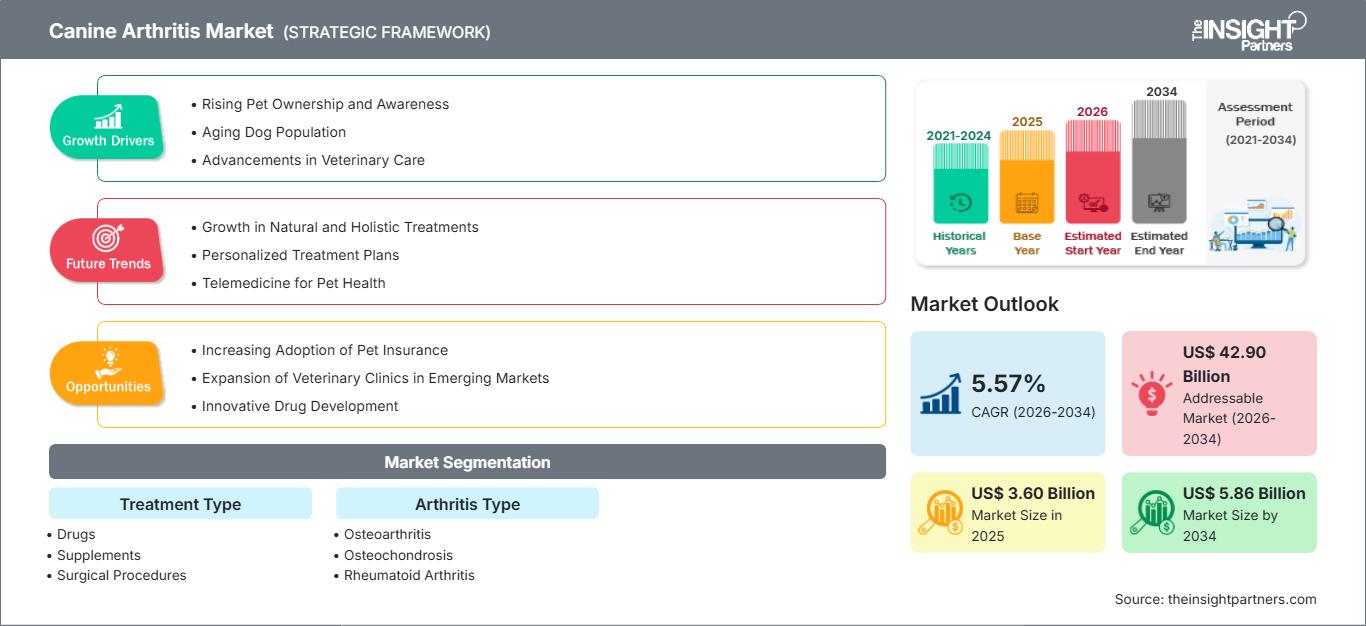
2025 Market Size
US$ 3.60 Bn
Base year value
2034 Forecast
US$ 5.86 Bn
Projected by 2034
CAGR 2026-2034
5.57 %
Growth rate
Addressable Market
US$ 42.90 Bn
(2026-2034)
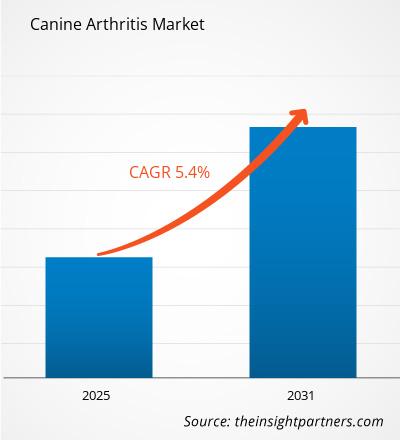
The Canine Arthritis Market size held a value of US$ 3.60 Billion in 2025 and is anticipated to attain a valuation of US$ 5.86 Billion by 2034 at a CAGR of 5.57% from 2026-2034. The market indicates growing awareness about chronic joint pain among dogs, increasing preference for multimodal treatment and availability of treatment options including pharmaceuticals, nutritional supplements, and surgeries.
North America is expected to drive the growth of the Canine Arthritis Market by its high rate of pet ownership, regular visits to veterinarians, and readiness to spend on mobility treatments. The region is forecasted to grow at a CAGR of 5.4-5.8% from 2026-2034 with its strong acceptance of prescription pain medications, nutraceuticals, physical therapy, and orthopedic treatments among pets with insurance and high income owners.
Canine Arthritis Market Assessment and Insights
- North America accounted for 39–42% Canine Arthritis Market share in 2025 and is expected to grow at a CAGR of 5.4–5.8% between 2026–2034, supported by mature veterinary infrastructure and premium pet healthcare spending.
- US represented 82–86% of North America in 2025 and is projected to grow at a CAGR of 5.3–5.7% between 2026–2034, driven by diagnosis-led treatment adoption.
- Europe held 26–29% share in 2025 and is expected to expand at a CAGR of 4.9–5.3% between 2026–2034, led by the UK, Germany, France, Italy, and Spain.
- Asia Pacific captured 19–22% share in 2025 and is expected to grow at a CAGR of 6.4–6.9% between 2026–2034, led by Japan, China, Australia, South Korea, and India.
- Largest Segment Drugs held 51–55% market share in 2025 and is projected to grow at a CAGR of 5.1–5.5% between 2026–2034 due to prescription-led pain management.
- High Growth Segment Supplements held 28–32% market share in 2025 and is projected to grow at a CAGR of 6.3–6.8% between 2026–2034 due to preventive joint care.
- Key companies analyzed in detail: Zoetis Inc., Vetoquinol S.A., Boehringer Ingelheim Animal Health USA Inc., Elanco Animal Health Incorporated, Merck Animal Health, Nutramax Laboratories, Inc., Pfizer Inc., Hill's Pet Nutrition, Inc., PetMed Express, Inc., Arthrex Vet Systems.
Source: The Insight Partners' analysis based on proprietary research, government publications, company annual reports, investor presentations, industry databases, and expert interviews.
The approach of clinical management has changed from episodic pain management to lifelong mobility planning, with a combination of NSAIDs, monoclonal antibodies, nutraceuticals, weight management, rehabilitation, and orthopedic corrections used by veterinarians. The production cycle is shifting to more attractive products such as palatable formulations, monthly injections, veterinary-exclusive supplements, and minimally invasive surgical platforms which lower compliance issues and improve treatment continuity in chronic canine joint diseases.
In the future, growth will be derived from new urban populations, insurance coverages, and approval of new pain pathways. Asia Pacific clinics are taking up diagnostic imaging and rehabilitation services faster than previous cycles, while Europe and North America will keep working on safety monitoring systems. Companies that invest in scientifically proven supplements, biologics, and orthopedic training will gain from the need of owners for early management of their companion dogs.
Canine Arthritis Market Report Scope
| Report Attribute | Details |
|---|---|
| Market size in 2025 | US$ 3.60 Billion |
| Market Size by 2034 | US$ 5.86 Billion |
| Global CAGR (2026 - 2034) | 5.57% |
| Historical Data | 2021-2024 |
| Forecast period | 2026-2034 |
Canine Arthritis Market Analysis
Canine Arthritis Market growth drivers include aging dogs, canine obesity, genetically linked orthopedic risk, and increased awareness among owners about gradual changes in their dogs' mobility. Canine arthritis patients get screened routinely during regular check-ups, teeth cleanings, and senior health screenings, which makes the treatment possible from the very early stages. There is a long value chain including drug producers, supplements specialists, veterinary hospitals, e-commerce pharmacies, rehabilitation centers, diagnostic tests providers, and orthopedic devices manufacturers.
The supply situation favors those pharmaceutical companies that are able to help veterinarians with proper dosing, safety data, consumer education, and logistics. Prescription drugs will continue to be at the core of the pain relief process, while supplements and special diets will be needed to maintain the treatment outside the clinic. The injections are good options for dogs that don't take oral pills.
According to the Canine Arthritis Market analysis, there is fierce competition in the industry among pharmaceutical innovators, dietary supplements, nutrition companies, and surgeons. The biologic pain management market in dogs has been boosted by the monthly injections introduced by Zoetis Inc., while the relevance of Boehringer Ingelheim Animal Health USA Inc. and Elanco Animal Health Incorporated still exists due to canine therapeutic offerings. Nutramax Laboratories, Inc. and Hill's Pet Nutrition, Inc. have positioned themselves in the market due to daily joint care and nutritional mobility programs.
Positioning strategies are becoming more dependent on the generation of evidence, education, and channel control. Refills are the key differentiator for PetMed Express, Inc. The company of Merck Animal Health provides clinician education through veterinary references. High-acuity cases are managed by Arthrex Vet Systems with the help of orthopedic instruments and orthobiologics. The relevance of Vetoquinol S.A. lies in professional engagement through osteoarthritis education. Pharmaceutical knowledge from Pfizer Inc. contributes to the pain therapy development.
● REPORT CUSTOMIZATION
Tailor This Report To Align With Your Specific Business Requirements
This report can be customized to align precisely with your business objectives, scope, and target markets. Customization options include tailored segmentation, geography, competitive analysis, and strategic insights to support informed decision-making.
Customize This Report →WHAT YOU CAN ADJUST
- ● Segmentations
- ● Geography
- ● Competitive Analysis
- ● Language Preferences
Canine Arthritis Market: Strategic Insights
Regional Insights
North America Canine Arthritis Market
North America constituted the 39-42% revenue share of the world in 2025 and is predicted to grow at a rate of CAGR of 5.4-5.8% until 2034. The market share of North America Canine Arthritis is attributed to good diagnostics availability, adoption of pet insurance plans, and the willingness to take up recurring prescriptions of medicines.
The region has a number of advantages like the availability of injectable biologics, NSAIDs, and supplements via veterinary clinics and online pharmacies. There is also sufficient capacity for surgical intervention in cases of cruciate ligament damage and traumatic arthritis. The demand will be limited to urban and suburban areas where dogs are treated as family pets and the owners can afford the treatment of their pets.
<h3> U.S. Canine Arthritis Market
The share of the United States in North America was 82-86% in 2025 and is estimated to have a CAGR of 5.3-5.7% from 2026 to 2034. High pet prevalence, availability of veterinary hospitals, and good e-commerce fulfillment help in the availability of treatment options. The clinics are increasingly adopting pain score systems, weight management strategies, and repeat dispensation methods for chronic OA treatment.
There is good company presence with major players such as Zoetis Inc., Boehringer Ingelheim Animal Health USA Inc., Elanco Animal Health Incorporated, Merck Animal Health, Nutramax Laboratories, Inc., Hill's Pet Nutrition, Inc., and PetMed Express, Inc. being present in clinical or retail settings. The trends in the application side include increased adoption of monthly injectables, glucosamine and chondroitin supplements, therapeutic foods, and orthopedic referrals.
Europe Canine Arthritis Market
The Europe region accounted for a 26–29% market share in 2025 and is predicted to expand at a CAGR of 4.9–5.3% from 2025 to 2034. This is primarily attributed to a high prevalence of insurance among companion animals and efficient referral networks, thus enabling early imaging, rehabilitation, and multimodal treatment planning. There is a prevalent prescription of analgesics and supplements among senior dogs.
In Germany, the growth is fueled by strict veterinary practices, excellent quality of pets' nutrition and the tendency to manage mobility in the long term. Clinics focus on safety management in chronic NSAID administration and weight loss program. Also, the country promotes growth in orthopedic surgery due to the desire to restore the functions rather than alleviate symptoms.
France, Italy, and Spain also drive the growth of the market due to increased expenditure among companion animals, active veterinary practitioners, and education programs on the detection of osteoarthritis. France benefits from the expertise of Vetoquinol S.A., while Italy and Spain demonstrate growth in the use of supplements and rehabilitation methods. All three countries provide a treatment approach combining pain prescription, diet, and surgery.
APAC Canine Arthritis Market
The Asia Pacific has been estimated to hold 19–22% share in 2025 and is expected to witness CAGR of 6.4–6.9% between 2026–2034. The leading country in the Asia Pacific region is Japan because of its aging pet population, superior quality veterinary services, and owners' preference for premium treatments of their pets.
The major factors driving policy and industry growth include increasing pet registration, increased access to imported pet medicines, and greater awareness about preventive wellness programs. In Australia, there is mature usage of rehabilitation and orthopedic referral services, while China and India provide scale as middle income families are now adopting structured veterinary care of their pets.
Middle East & Africa Canine Arthritis Market
Middle East & Africa is expected to grow at a CAGR of 4.6–5.0% during 2026–2034, with the UAE leading regional adoption. Saudi Arabia and the UAE benefit from premium veterinary clinics, expatriate pet ownership, and rising demand for imported companion animal therapeutics. South Africa provides the most developed African veterinary base for chronic mobility care.
Energy-linked income, urban infrastructure, and private veterinary investment shape regional demand more than public animal health programs. Rest of MEA markets remain price-sensitive, with supplements and intermittent drug therapy more common than advanced surgery. However, premium clinics in major cities are introducing diagnostics, nutrition plans, and referral orthopedics for owners seeking higher-care standards.
Segmentation Analysis
Treatment Type
Treatment Type is projected to grow at a CAGR of 5.4–5.8% during 2026–2034, reflecting sustained demand for multimodal arthritis care. The Canine Arthritis Market scope across this segment includes prescription drugs for active pain, supplements for daily joint support, and surgical procedures for structural joint failure. Adoption is strongest when veterinarians match treatment intensity to age, weight, disease stage, and owner compliance.
- Drugs remain the dominant treatment category because veterinarians rely on NSAIDs, targeted analgesics, and injectable biologics to reduce pain, improve mobility, and stabilize quality of life in diagnosed dogs.
- Supplements are widely used for long-term joint support, especially in aging, overweight, and large-breed dogs, owing to owner preference for daily preventive care and palatable formats.
- Surgical Procedures serve high-severity cases involving traumatic injury, cruciate ligament rupture, joint instability, or advanced degeneration where mechanical correction is necessary for functional recovery.
Arthritis Type
Arthritis Type is projected to grow at a CAGR of 5.2–5.6% during 2026–2034, as diagnosis becomes more precise across degenerative, developmental, immune-mediated, and injury-related conditions. Osteoarthritis dominates clinical volume because it is chronic, progressive, and closely linked to age, obesity, conformation, and prior joint injury. Other arthritis types require more specialized diagnostic assessment and tailored therapeutic pathways.
- Osteoarthritis represents the central demand pool because it affects adult and senior dogs across breeds, creating recurring needs for medications, supplements, imaging, weight control, and rehabilitation.
- Osteochondrosis is strategically important in young and large-breed dogs, where early diagnosis, nutrition control, and orthopedic intervention can reduce progression into chronic joint degeneration.
- Rheumatoid Arthritis remains a smaller but clinically complex category, requiring immune-focused assessment, long-term monitoring, and veterinary specialist involvement to manage inflammation and mobility loss.
- Traumatic Arthritis creates demand after fractures, ligament injuries, and joint instability, often linking emergency care, surgery, rehabilitation, and chronic pain management into one treatment pathway.
Opportunity Snapshot
| Segment Name | Revenue Contribution | Trend Tag | Adoption Stage |
| Drugs | High | Monthly Relief | Mature |
| Supplements | Medium | Daily Support | Scaling |
| Surgical Procedures | Medium | Joint Repair | Scaling |
Canine Arthritis Market Growth Drivers and Impact Analysis
Rising Diagnosis of Chronic Mobility Disorders in Dogs
Growing recognition of canine pain behavior is expanding treated populations beyond visibly lame senior dogs. Veterinarians increasingly educate owners that reduced jumping, slower walks, reluctance to climb stairs, irritability, and lower play activity can signal joint pain rather than normal aging. This improves case identification during wellness visits and creates earlier entry into treatment. Market impact is strongest in drugs and supplements because these categories are initiated before owners consider surgery. Earlier diagnosis also lengthens therapy duration, which supports recurring revenue through refills, monitoring, and nutrition plans. The effect is particularly important in large-breed and overweight dogs, where lifetime joint stress raises the probability of degenerative change.
Shift Toward Multimodal Veterinary Treatment Pathways
Arthritis management now combines pharmacologic pain control, weight reduction, supplements, therapeutic nutrition, controlled exercise, rehabilitation, and surgery when needed. This shift creates multiple revenue touchpoints across the same patient journey. A dog diagnosed with osteoarthritis may begin with NSAIDs or injectable therapy, add glucosamine-chondroitin support, receive a therapeutic diet, and later move to rehabilitation or orthopedic referral. The impact is a broader addressable spending pool per diagnosed dog. It also favors companies that offer veterinarian education, compliance aids, safety monitoring guidance, and evidence-backed products. Clinics benefit because multimodal programs build repeat visits and strengthen owner adherence over a chronic disease timeline.
Growing Owner Willingness to Fund Senior Pet Care
Dogs are increasingly treated as family members, and owners are more willing to spend on comfort, mobility, and quality of life in later years. This behavioral shift supports premium pain therapies, specialty supplements, diagnostic imaging, and elective orthopedic interventions. The impact is especially visible in North America, Western Europe, Japan, Australia, and high-income urban centers in Asia Pacific and the Middle East. Owners who previously accepted mobility decline as aging are now seeking clinical explanations and treatment plans. Pet insurance and wellness packages further ease recurring spending. As dogs live longer, treated duration expands, creating resilient demand even when economic conditions pressure discretionary categories.
Canine Arthritis Market Future Trends
Expansion of Targeted Biologic Pain Therapies
Canine Arthritis Market trends point toward greater use of targeted biologics that address pain signaling without relying solely on traditional oral anti-inflammatory pathways. Monthly injectable therapies can improve adherence because administration occurs in clinics and does not depend on daily owner dosing. Future adoption will depend on real-world safety monitoring, veterinarian confidence, regulatory review, and clear patient selection. Biologics are likely to become part of first-line or second-line protocols for dogs that cannot tolerate oral NSAIDs, have compliance challenges, or need sustained pain control. This trend will also encourage competitors to invest in monoclonal antibodies and other pathway-specific approaches.
Integration of Digital Mobility Monitoring
Wearables, smartphone-based gait videos, and clinic-linked mobility scoring tools are expected to influence treatment decisions over the forecast period. Objective activity data can help veterinarians detect gradual decline, compare response before and after therapy, and adjust treatment plans with stronger evidence. This trend will be useful for chronic osteoarthritis because owner impressions often understate early pain. Companies that connect therapies with monitoring platforms may improve adherence and demonstrate value to veterinarians, insurers, and owners. Digital tracking will also support remote follow-up models, particularly in urban markets where owners are comfortable using app-based pet health tools.
Canine Arthritis Market Opportunities
Earlier Intervention Programs for At-Risk Dogs
Veterinary groups and product companies can build opportunity around preventive pathways for large-breed, overweight, athletic, and post-surgical dogs. A structured program could combine body condition scoring, joint risk assessment, therapeutic nutrition, supplements, and owner education before severe lameness develops. Canine Arthritis Market Forecasts indicate stronger value creation when treatment begins earlier and continues through the dog’s life stage transitions. This approach supports supplement brands, diet manufacturers, and clinics offering annual mobility checks. It also reduces reliance on crisis-driven care by positioning arthritis management as a wellness category. The opportunity is strongest where pet owners already purchase preventive parasiticides, dental care, and senior screening.
Specialty Orthopedic and Rehabilitation Networks
Investment in orthopedic referral centers, hydrotherapy, physiotherapy, regenerative procedures, and post-surgical recovery services can unlock higher-value care for advanced cases. Many dogs with traumatic arthritis or cruciate ligament injury require more than medication, creating demand for integrated procedural and rehabilitation pathways. Device companies can partner with specialty clinics to train surgeons, standardize protocols, and improve outcomes reporting. Rehabilitation networks can also support non-surgical osteoarthritis patients through strength building and controlled activity. The commercial opportunity lies in connecting diagnosis, procedure, recovery, and long-term maintenance. This model is particularly attractive in metropolitan markets with high pet insurance coverage and owner willingness to fund quality-of-life care.
Recent Developments
- July 2026: Elanco Animal Health Incorporated released its 2025 Impact Report, highlighting US$ 892 million in 2025 revenue from recent innovation and a pipeline of 5–6 blockbuster-potential approvals by 2031. Although not limited to arthritis, the report signals continued companion animal investment capacity relevant to future chronic care and pain management portfolios.
- June 2025: Vetoquinol S.A. supported OA Xpertise 2025 in Porto, Portugal, focused on osteoarthritis management, pain behavior, and practical disease assessment. The program reinforced specialist-led education in companion animal joint disease and supported veterinarian engagement around multimodal care, earlier recognition, and structured management of osteoarthritis cases.
- April 2025: Zoetis Inc. published global pharmacovigilance findings for bedinvetmab, reporting 18,102,535 doses sold from first introduction through June 2024 and 17,162 adverse events in dogs. The analysis classified the most reported clinical signs as rare or very rare, strengthening post-approval evidence discussion around monoclonal antibody therapy.
Frequently Asked Questions

- Comprehensive Market Sizing and Forecast Analysis
- Detailed Segmentation Analysis
- In-Depth Market Dynamics Assessment
- Regional and Country-Level Insights
- Competitive Landscape and Company Benchmarking
- Strategic Business Intelligence
Recent Reports
Testimonials

The Insight Partners provided valuable market intelligence that supported our global go-to-market strategy. Their team was professional, responsive, and attentive to our feedback, providing thoughtful analysis and helpful methodological clarifications throughout the project.
Junmo Kim Chief Financial Officer (CFO), Enertech Co., Ltd.
The Insight Partners' SCADA System Market report is comprehensive, with valuable insights on current trends and future forecasts. The team was highly professional, responsive, and supportive throughout. We are very satisfied and highly recommend their services.
RAN KEDEM Partner, Reali Technologies LTDs
I requested a report on a very specific software market and the team produced the report in a few days. The information was very relevant and well presented. I then requested some changes and additions to the report. The team was again very responsive and I got the final report in less than a week.
JEAN-HERVE JENN Chairman, Future Analytica
We worked with The Insight Partners for an important market study and forecast. They gave us clear insights into opportunities and risks, which helped shape our plans. Their research was easy to use and based on solid data. It helped us make smart, confident decisions. We highly recommend them.
PIYUSH NAGPAL Sr. Vice President, High Beam Global
The Insight Partners delivered insightful, well-structured market research with strong domain expertise. Their team was professional and responsive throughout. The user-friendly website made accessing industry reports seamless. We highly recommend them for reliable, high-quality research services
YUKIHIKO ADACHI CEO, Deep Blue, LLC.
This is the first time I have purchased a market report from The Insight Partners.While I was unsure at first, I visited their web site and felt more comfortable to take the risk and purchase a market report.I am completely satisfied with the quality of the report and customer service. I had several questions and comments with the initial report, but after a couple of dialogs over email with their analyst I believe I have a report that I can use as input to our strategic planning process.Thank you so much for taking the extra time and making this a positive experience.I will definitely recommend your service to others and you will be my first call when we need further market data.
JOHN SUZUKI President and Chief Executive Officer, Board Director, BK Technologies
I wish to appreciate your support and the professionalism you displayed in the course of attending to my request for information regarding to infectious disease IVD market in Nigeria. I appreciate your patience, your guidance, and the fact that you were willing to offer a discount, which eventually made it possible for us to close a deal. I look forward to engaging The Insight Partners in the future, all thanks to the impression you have created in me as a result of this first encounter.
DR CHIJIOKE ONYIA MANAGING DIRECTOR, PineCrest Healthcare Ltd.Reason to Buy
- Informed Decision-Making
- Understanding Market Dynamics
- Competitive Analysis
- Identifying Emerging Markets
- Customer Insights
- Market Forecasts
- Risk Mitigation
- Boosting Operational Efficiency
- Strategic Planning
- Investment Justification
- Tracking Industry Innovations
- Aligning with Regulatory Trends





 Get Free Sample for