
Canine Influenza Treatment Market Share, Demand & Growth by 2034
Coverage: by : Type (Antibiotics, Nonsteroidal anti-inflammatory Drugs (NSAIDs), Antiviral Drugs, and Others); Distribution Channel (Veterinary Clinics, Veterinary Pharmacies, Online Pharmacies, and Others), and Geography (North America, Europe, Asia Pacific, and South and Central America)
- Status : Data Released
- Report Code : TIPRE00022898
- Category : Life Sciences
- No. of Pages : 150
- Available Report Formats :


- Last update date : August 17, 2026


2025 Market Size
US$ 166.06 Mn
Base year value
2034 Forecast
US$ 319.16 Mn
Projected by 2034
CAGR 2026-2034
7.53 %
Growth rate
Addressable Market
US$ 2,186.55 Mn
(2026-2034)
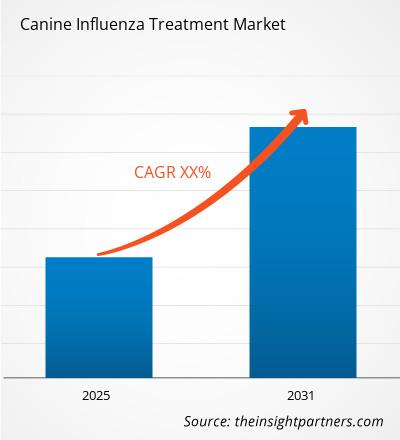
The Canine Influenza Treatment Market size is anticipated to reach US$ 319.16 Million by 2034 from US$ 166.06 Million in 2025, growing at CAGR of 7.53% in 2026–2034. The market indicates greater clinical interest in canine respiratory diseases, increasing veterinary expenditure on infectious disease care, and greater owner openness to treating the complications associated with influenza under the guidance of a veterinarian.
North America stays ahead as the most developed regional market owing to high pet medicalization rates, widespread veterinary diagnostics usage, and greater understanding of diseases in shelters, boarding, daycares, and travel services. Market growth in the region is expected at an estimated 7.2–7.8% CAGR, attributable to protocol-based treatment, respiratory disease monitoring, and presence of key players in companion animal health segment.
Canine Influenza Treatment Market Assessment and Insights
- North America accounted for 39–41% share in 2025 and is expected to grow at a CAGR between 2026–2034 of 7.2–7.8%, supported by 87.3 million U.S. dogs and high annual household veterinary spending.
- US represented 82–86% of North America in 2025 and is projected to record a CAGR between 2026–2034 of 7.1–7.7%, led by advanced diagnostics, higher insurance use, and dense veterinary clinic networks.
- Europe held 24–27% share in 2025 and is anticipated to grow at a CAGR between 2026–2034 of 6.6–7.2%, with the UK, Germany, France, Italy, and Spain shaping prescription demand and pharmacy access.
- Asia Pacific captured 18–21% share in 2025 and is estimated to grow at a CAGR between 2026–2034 of 8.1–8.8%, with China, Japan, South Korea, India, and Australia benefiting from urban pet ownership.
- Largest Segment Veterinary Clinics held 52–56% market share in 2025 and is projected to grow at a CAGR between 2026–2034 of 7.0–7.6%, reflecting physician-led respiratory case management.
- High Growth Segment Online Pharmacies held 12–15% market share in 2025 and is forecast to grow at a CAGR between 2026–2034 of 9.0–9.7%, supported by repeat prescriptions and refill convenience.
- Key companies analyzed in detail: Merck Animal Health, Pfizer Inc., Sanofi S.A., Zoetis Inc., Novartis AG, Bristol-Myers Squibb Company, Eli Lilly and Company, Boehringer Ingelheim International GmbH, F. Hoffmann-La Roche Ltd, GSK plc.
Source: The Insight Partners' analysis based on proprietary research, government publications, company annual reports, investor presentations, industry databases, and expert interviews.
While treatment has been largely symptomatic up until now, there are protocols being adopted now which are combining confirmatory diagnosis, isolation of the infection, anti-inflammatory medications, antibiotics against secondary bacterial infections, and the choice of antivirals when needed. Production dynamics have also changed and producers are concentrating more on companion animal respiratory treatments, smaller production batches, and cold chain reliability. Outbreaks drive demand surges in the Canine Influenza Treatment Market; however, its future growth will be determined by the responsible use of antimicrobials and differentiation between influenza and canine infectious respiratory disease.
In the coming years, treatment volumes will rise due to the development of pet care economies where more dogs will live in cities and there will be better-equipped veterinary clinics and pharmacy delivery services. Tailwinds with regard to the responsible use of antimicrobials will play into hands of more prescriptive approaches and treatment based on diagnosis.
Canine Influenza Treatment Market Report Scope
| Report Attribute | Details |
|---|---|
| Market size in 2025 | US$ 166.06 Million |
| Market Size by 2034 | US$ 319.16 Million |
| Global CAGR (2026 - 2034) | 7.53% |
| Historical Data | 2021-2024 |
| Forecast period | 2026-2034 |
Canine Influenza Treatment Market Analysis
The growth drivers of the market for the treatment of canine influenza include increasing dog ownership, increased interaction between dogs in pet facilities such as kennels and daycare facilities, and awareness of canine influenza as a unique respiratory disease. The Merck Veterinary Manual states that canine influenza spreads through aerosols, contaminated surfaces, and fomites, which result in treatment needs for outbreaks in a cluster of dogs.
Supply factors in the market include the veterinary industry value chain, which involves the diagnosis of respiratory diseases by clinics, filling of prescriptions by pharmacies, and manufacture of anti-infectives, anti-inflammatory, and antiviral medications. The treatment of canine influenza is under the domain of veterinarians owing to the similarity of symptoms with other respiratory illnesses.
Positioning in the market is driven by the strength of diverse animal companion portfolios instead of being focused on single-product positioning. Merck Animal Health and Zoetis Inc. are positioned through prevention and clinical care solutions for respiratory problems, while Boehringer Ingelheim International GmbH is a key player because of its size in canine health portfolios. Additional companies include Pfizer Inc., Sanofi S.A., Novartis AG, Bristol-Myers Squibb Company, Eli Lilly and Company, F. Hoffmann-La Roche Ltd, and GSK plc. They provide expertise in the pharmaceutical sector, supply system, and antimicrobial stewardship.
Investment in the sector is going into the practice of evidence-based medicine in respiratory care, practice education, and the development of distribution partnerships to increase availability during local epidemics. Positioning in the sector is getting increasingly connected to veterinarians' trust, availability of the drug, field presence, and compliance with the expectations of antimicrobial stewardship.
● REPORT CUSTOMIZATION
Tailor This Report To Align With Your Specific Business Requirements
This report can be customized to align precisely with your business objectives, scope, and target markets. Customization options include tailored segmentation, geography, competitive analysis, and strategic insights to support informed decision-making.
Customize This Report →WHAT YOU CAN ADJUST
- ● Segmentations
- ● Geography
- ● Competitive Analysis
- ● Language Preferences
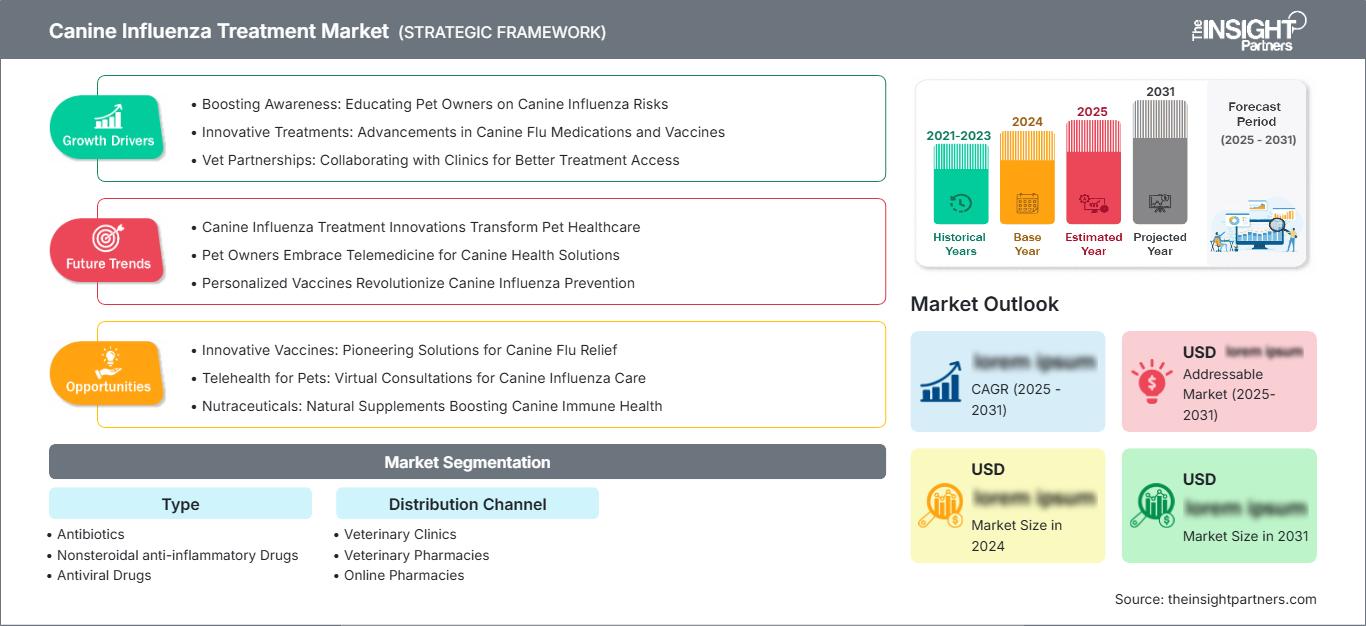
Canine Influenza Treatment Market: Strategic Insights
Regional Insights
North America Canine Influenza Treatment Market
North America had a 39-41% market share in 2025 and is estimated to grow at a CAGR of 7.2-7.8% in the period 2026-2034. North America has advantages of a high level of pet medicalization, extensive PCR testing, and monitoring of canine respiratory infections. For example, according to Merck Animal Health U.S. outbreak tracker, as of July 18, 2026, there were 17,804 tests started and 6 positives.
North American Canine Influenza Treatment Market share is also driven by high expenditures on household pets. According to APPA data, in 2025, the pet industry expenditure in the USA amounted to US$158 billion. High demand for veterinary medicine and diagnostics is also driven by high expenses on pet treatment. The key treatment method is veterinary clinics due to the complexity of diagnosis and prevention of secondary infection.
U.S. Canine Influenza Treatment Market
In 2025, the U.S. comprised 82–86% of North America, which is projected to grow at a CAGR of 7.1–7.7% from 2026 to 2034. AVMA recorded 56.3 million dog-owning households and 87.3 million dogs in the U.S. in 2025, which can form a significant clinical pool in the treatment of respiratory conditions. The average expenditure per dog-owning household on veterinary medicine at US$598 suggests that clinic-based treatments are affordable.
Business presence is focused on major distributors in the veterinary sector, national clinics chains, and technical service units. Merck Animal Health and Zoetis Inc. are prominent players in education related to respiratory diseases in dogs, whereas the online pharmacy channel enables refills for NSAIDs and antibiotics if required. Application trends suggest fast respiratory tests, early isolation recommendations, and follow-ups for dogs kept in daycare, boarding, shelter, and traveling situations.
Europe Canine Influenza Treatment Market
Europe held 24–27% share in 2025 and is forecast to grow at a CAGR of 6.6–7.2% during 2026–2034. FEDIAF reported more than 90 million pet dogs in Europe in its latest pet population data, creating a broad addressable base for veterinary respiratory care. The UK is the leading country, supported by strong insurance penetration, organized small-animal practices, and frequent owner use of pharmacy-based prescription fulfillment.
Germany benefits from dense veterinary infrastructure and high willingness to treat companion animals through clinically supervised medicines. France, Italy, and Spain add steady demand through urban pet ownership, expanding private clinics, and increased awareness of infectious respiratory disease in kennels and shelters. Treatment remains conservative and diagnosis-led, reflecting European antimicrobial stewardship expectations and prescription control across companion animal medicine.
APAC Canine Influenza Treatment Market
Asia Pacific captured 18–21% share in 2025 and is estimated to grow at a CAGR of 8.1–8.8% during 2026–2034. China is the leading country, supported by rapid pet clinic expansion and rising urban dog ownership, while Japan and South Korea show strong preventive care cultures.
India and Australia contribute through premiumization, online pharmacy expansion, and growing awareness of respiratory disease in boarding and grooming settings. Policy drivers include improved veterinary licensing, stronger companion animal diagnostics, and the gradual formalization of pet medicine distribution.
Middle East & Africa Canine Influenza Treatment Market
The Middle East & Africa market is expected to grow at a CAGR of 6.1–6.8% during 2026–2034. Saudi Arabia and the UAE lead regional demand as premium veterinary hospitals, pet relocation services, and expatriate ownership increase respiratory care utilization.
South Africa represents the most developed African market because of its established private veterinary network and pharmacy access. Energy-led infrastructure investment in Gulf countries indirectly supports premium pet services through higher urban retail development, cold-chain logistics, and digital appointment platforms.
Segmentation Analysis
Type
The Type segment is projected to grow at a CAGR of 7.1–7.7% during 2026–2034. The Canine Influenza Treatment Market scope across this segment is shaped by disease severity, secondary infection risk, and veterinarian preference for supportive therapy. Since most cases require symptom control and monitoring rather than direct viral elimination, prescribing patterns depend on diagnostic confidence and stewardship principles.
- Antibiotics address secondary bacterial complications, particularly pneumonia risk, but use is increasingly guided by clinical signs, diagnostic testing, and antimicrobial stewardship to avoid unnecessary exposure.
- Nonsteroidal anti-inflammatory Drugs are commonly used for fever, discomfort, and inflammation management, making them strategically important in outpatient treatment pathways under veterinary supervision.
- Antiviral Drugs remain a selective option where clinical judgment supports use, especially for severe or high-risk cases, but broader uptake depends on veterinary evidence and label clarity.
Distribution Channel
The Distribution Channel segment is projected to grow at a CAGR of 7.4–8.0% during 2026–2034. Market access depends on the speed of diagnosis, prescription fulfillment, owner compliance, and follow-up care. Veterinary clinics dominate initial therapy decisions, but pharmacies and online platforms are gaining importance for refills and treatment continuity.
- Veterinary Clinics remain the core channel because diagnosis, isolation advice, prescribing, and monitoring are integrated into one care pathway for dogs with cough, fever, or respiratory distress.
- Veterinary Pharmacies support reliable access to prescribed anti-infective and anti-inflammatory medicines, particularly where owners prefer professional dispensing guidance and documented refill history.
- Online Pharmacies are scaling through convenience, subscription models, and price transparency, although prescription validation and cold-chain reliability remain essential for treatment credibility.
Opportunity Snapshot
| Segment Name | Revenue Contribution (High/Medium/Low) | Trend Tag | Adoption Stage |
| Veterinary Clinics | High | Clinic Triage | Mature |
| Veterinary Pharmacies | Medium | Prescription Control | Scaling |
| Online Pharmacies | Medium | Digital Refills | Scaling |
Canine Influenza Treatment Market Growth Drivers and Impact Analysis
Rising Pet Medicalization and Respiratory Case Recognition
Increasing pet medicalization increases the chances that owners will take their dogs to a vet in case of coughing, fatigue, fever, or appetite loss. According to AVMA’s data from 2025, 42.6% of U.S. households have dogs, while annual expenditure per dog-owning household is US$598. Thus, the owners are willing to spend money on diagnostic and therapeutic services. Such a driving factor expands the market of Canine Influenza Treatment due to the increased probability of converting such symptoms into a visit to a vet, prescriptions, advice on isolation, and treatment. It motivates clinics to stock up on frequently prescribed medicines and establish respiratory guidelines. The effect is most noticeable in developed countries, but developing urban pet populations start adopting similar patterns thanks to the expansion of premium clinics and pet insurance.
Greater Exposure Through Boarding, Daycare, and Mobility
The disease is efficient at spreading in common areas because the sick dogs shed viruses even before displaying visible symptoms. According to the Merck Veterinary Manual, the places that often experience an outbreak of canine influenza include shelters, dog parks, and kennels, linking the mobility of dogs to the demand for treatment. Many dog owners have increasingly engaged in activities such as pet day care, traveling, and going to events involving other dogs. Pet mobility becomes a driver of increased demand for quick treatment, symptomatic treatment and the use of antibiotics in case of complications due to bacteria.
Improved Diagnostics Supporting Targeted Prescribing
New developments in respiratory tests are affecting the treatment process, which is now being aided by better differentiation of canine influenza from Bordetella, parainfluenza, viral pneumonia, and non-infectious cough in dogs. In cases where canine influenza does not have a readily available universal rapid test and PCR timing impacts sensitivity, diagnoses-based treatment routes have become very important for effective treatment. Improved testing helps to prescribe the right medication and also reduces the chances of overuse of antibiotics. This driver will affect the market directly as treatment based on confirmed or suspected infection requires a proper prescription program, isolation protocol, and monitoring.
Canine Influenza Treatment Market Future Trends
Protocol-Based Treatment Linked to Respiratory Panels
Over the forecast period, Canine Influenza Treatment Market trends will move toward protocol-based care anchored in multiplex respiratory panels, case severity scoring, and documented exposure history. Clinics are expected to segment dogs into mild outpatient, complication-risk, and urgent-care categories, improving consistency in NSAID, antibiotic, and supportive therapy decisions. This trend will reduce empirical prescribing while increasing the value of clinical guidelines and digital record integration. It will also help multi-site veterinary groups standardize treatment quality across locations. As respiratory testing becomes more accessible, suppliers that support education and decision workflows will gain stronger influence than companies competing only on product availability.
Digital Pharmacy Integration with Veterinary Oversight
Digital pharmacy integration will become more important as owners seek convenient refills and transparent pricing without bypassing veterinary control. Online platforms are expected to expand authenticated prescription verification, refill reminders, adverse event reporting, and route-to-owner delivery for supportive medicines. This trend can improve adherence, particularly when treatment extends beyond the initial clinic visit or when more than one dog in a household requires monitoring. The strongest growth will occur where clinics, distributors, and pharmacy platforms share reliable prescription workflows. Market participants that combine convenience with compliance safeguards will be better positioned than channels that rely only on discounted medicine access.
Canine Influenza Treatment Market Opportunities
Expansion of Clinic-Led Respiratory Care Packages
Veterinary groups can create care packages that combine respiratory examination, PCR testing, short-term therapy, isolation instructions, and follow-up checks for dogs exposed in high-risk settings. This opportunity aligns with Canine Influenza Treatment Market Forecasts because it converts uncertain owner concern into structured care episodes and improves treatment compliance. Clinics can also use packages to educate boarding facilities, shelters, and grooming centers on early referral criteria. The commercial value lies in bundling services while maintaining prescription integrity, rather than increasing medicine use alone. Suppliers can support this opportunity through training materials, diagnostic partnerships, and inventory planning for outbreak-prone periods.
Emerging Market Access Through Premium Pet Care Channels
Emerging markets offer opportunity as premium veterinary clinics, digital pharmacies, and companion animal diagnostics expand in large urban centers. China, India, Gulf countries, and selected Southeast Asian markets are developing higher-value pet care models that can support respiratory treatment protocols. Investors can prioritize partnerships with clinic chains, e-commerce pharmacies, and distributors that understand local prescription rules. The opportunity is not simply volume growth; it is the creation of reliable treatment pathways where owners previously relied on informal advice or delayed care. Companies that provide education, compliant formulations, and predictable supply can build early loyalty in these developing treatment ecosystems.
Recent Developments
- July 2025: Elanco Animal Health Incorporated received USDA approval for TruCan Ultra CIV H3N2/H3N8, a bivalent canine influenza vaccine using PureFil Technology. The company reported 100% virus neutralization against 33 current field isolates and zero lung lesions in vaccinated dogs after H3N2 challenge, strengthening respiratory prevention options that influence treatment planning.
- February 2026: Today’s Veterinary Practice published an update noting that two new canine influenza vaccines entered the market in 2025, TruCan Ultra by Elanco and Nobivac NXT by Merck Animal Health. The article stated both products showed significant disease-sparing responses in experimental infections, informing veterinary treatment and prevention decision-making.
- June 2024: Merck Animal Health received USDA approval for NOBIVAC NXT Canine Flu H3N2, described as the first and only RNA-particle technology vaccine for canine influenza. The product targets H3N2, uses a low-volume 0.5 mL dose, and was expected to be available in U.S. veterinary clinics later that summer.
Frequently Asked Questions

- Comprehensive Market Sizing and Forecast Analysis
- Detailed Segmentation Analysis
- In-Depth Market Dynamics Assessment
- Regional and Country-Level Insights
- Competitive Landscape and Company Benchmarking
- Strategic Business Intelligence
Recent Reports
Testimonials

The Insight Partners' SCADA System Market report is comprehensive, with valuable insights on current trends and future forecasts. The team was highly professional, responsive, and supportive throughout. We are very satisfied and highly recommend their services.
RAN KEDEM Partner, Reali Technologies LTDs
I requested a report on a very specific software market and the team produced the report in a few days. The information was very relevant and well presented. I then requested some changes and additions to the report. The team was again very responsive and I got the final report in less than a week.
JEAN-HERVE JENN Chairman, Future Analytica
We worked with The Insight Partners for an important market study and forecast. They gave us clear insights into opportunities and risks, which helped shape our plans. Their research was easy to use and based on solid data. It helped us make smart, confident decisions. We highly recommend them.
PIYUSH NAGPAL Sr. Vice President, High Beam Global
The Insight Partners delivered insightful, well-structured market research with strong domain expertise. Their team was professional and responsive throughout. The user-friendly website made accessing industry reports seamless. We highly recommend them for reliable, high-quality research services
YUKIHIKO ADACHI CEO, Deep Blue, LLC.
This is the first time I have purchased a market report from The Insight Partners.While I was unsure at first, I visited their web site and felt more comfortable to take the risk and purchase a market report.I am completely satisfied with the quality of the report and customer service. I had several questions and comments with the initial report, but after a couple of dialogs over email with their analyst I believe I have a report that I can use as input to our strategic planning process.Thank you so much for taking the extra time and making this a positive experience.I will definitely recommend your service to others and you will be my first call when we need further market data.
JOHN SUZUKI President and Chief Executive Officer, Board Director, BK Technologies
I wish to appreciate your support and the professionalism you displayed in the course of attending to my request for information regarding to infectious disease IVD market in Nigeria. I appreciate your patience, your guidance, and the fact that you were willing to offer a discount, which eventually made it possible for us to close a deal. I look forward to engaging The Insight Partners in the future, all thanks to the impression you have created in me as a result of this first encounter.
DR CHIJIOKE ONYIA MANAGING DIRECTOR, PineCrest Healthcare Ltd.Reason to Buy
- Informed Decision-Making
- Understanding Market Dynamics
- Competitive Analysis
- Identifying Emerging Markets
- Customer Insights
- Market Forecasts
- Risk Mitigation
- Boosting Operational Efficiency
- Strategic Planning
- Investment Justification
- Tracking Industry Innovations
- Aligning with Regulatory Trends





 Get Free Sample for