
Companion Animal Healthcare Market Share, Growth & Demand by 2034
Coverage: By Product Type (Therapeutics, and Diagnostics); Animal Type (Cats, Dogs, and Other Companion Animals), and Geography (North America, Europe, Asia Pacific, and South and Central America)
- Status : Data Released
- Report Code : TIPRE00020242
- Category : Life Sciences
- No. of Pages : 150
- Available Report Formats :


- Last update date : November 02, 2026


2025 Market Size
US$ 26.02 Bn
Base year value
2034 Forecast
US$ 50.75 Bn
Projected by 2034
CAGR 2026-2034
7.70 %
Growth rate
Addressable Market
US$ 345.59 Bn
(2026-2034)
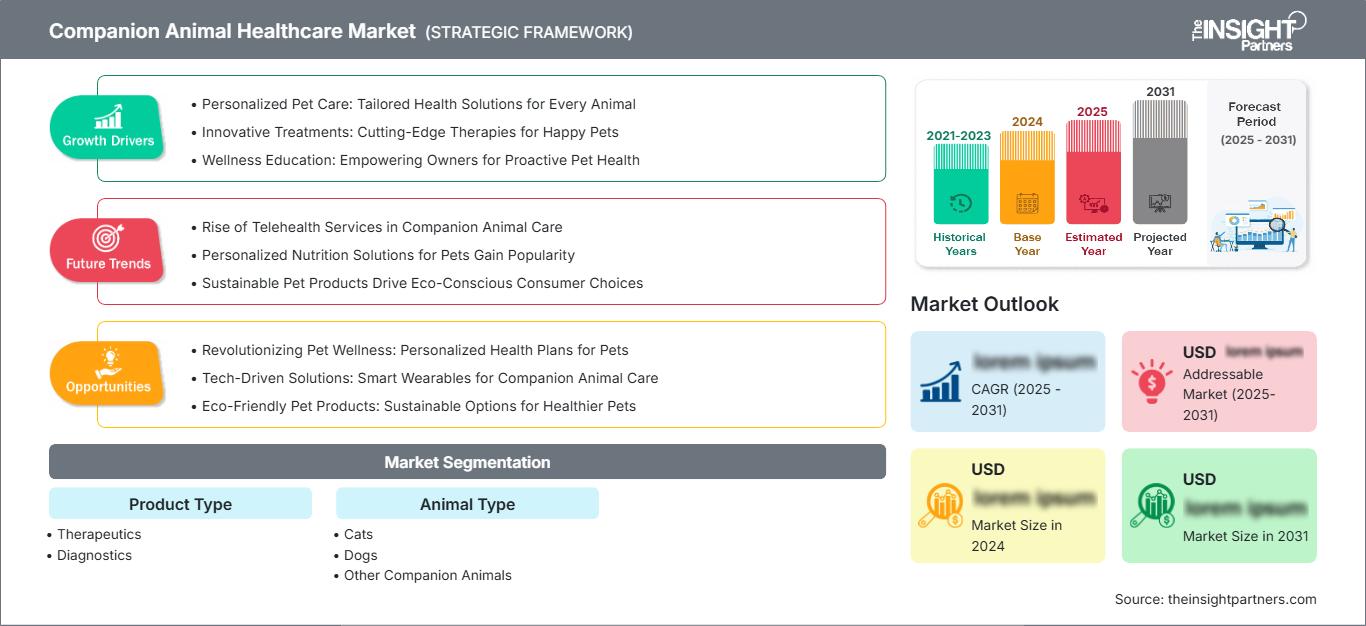
The Companion Animal Healthcare Market was valued at US$ 26.02 Billion in 2025 and is projected to reach US$ 50.75 Billion by 2034, registering a CAGR of 7.70% during 2026–2034. Expansion is supported by increasing pet ownership, greater spending on preventive care, rising diagnosis of chronic conditions, and wider availability of advanced veterinary medicines. Longer companion-animal lifespans are also increasing recurring demand for dermatology, cardiology, oncology, pain-management, and parasiticide products.
Across North America, the Companion Animal Healthcare Market size is expected to expand at approximately ~7% CAGR through 2034. Growth is supported by a large insured and self-paying pet population, established veterinary infrastructure, and rapid commercialization of biologics, long-acting parasiticides, and point-of-care testing systems. Veterinary practices are adopting integrated diagnostic and treatment workflows that improve case identification while supporting recurring pharmaceutical use for chronic and preventive care.
Companion Animal Healthcare Market Assessment and Insights
Regional Outlook
- North America: ~41% of the global market in 2025 | ~7% CAGR through 2034. Market position: The region leads through high veterinary spending, broad pet-insurance access, established clinical infrastructure, and strong commercialization of prescription medicines, vaccines, biologics, and in-clinic diagnostic platforms.
- US: ~87% of North American market revenue in 2025 | ~7% CAGR through 2034. Market position: The country anchors regional demand through its extensive pet-owning household base, concentrated corporate veterinary networks, high product-launch activity, and growing treatment of dermatology, parasitic, orthopedic, and chronic diseases.
- Europe: ~29% of the global market in 2025 | ~7% CAGR through 2034. Market position: Mature veterinary systems and substantial dog and cat populations support recurring demand. Germany leads the European market, followed by the UK and France, with Italy and Spain maintaining expanding clinical demand.
- Asia Pacific: ~23% of the global market in 2025 | ~10% CAGR through 2034. Market position: Asia Pacific is the fastest-growing region as urban pet ownership, veterinary-clinic investment, digital commerce, and premium pet-care expenditure expand across China, Japan, South Korea, India, and Australia.
Segment Outlook
- Therapeutics: ~74% Share in 2025 | ~7% CAGR through 2034. Market position: Recurring vaccination, parasiticide use, anti-infective treatment, dermatology management, and long-term medication for age-related diseases sustain the segment’s leading revenue contribution.
- Diagnostics: ~26% Share in 2025 | ~10% CAGR through 2034. Market position: Faster adoption reflects expanding point-of-care testing, molecular assays, imaging-supported workflows, preventive screening, and demand for earlier clinical decisions before therapeutic intervention.
Competitive Coverage
Elanco Animal Health Incorporated, Virbac S.A., Zoetis Inc., Merck & Co., Inc., Boehringer Ingelheim International GmbH, Ceva Santé Animale, Vetoquinol S.A., IDEXX Laboratories, Inc., Dechra Pharmaceuticals Limited, Phibro Animal Health Corporation
Methodology
The Insight Partners follows Data Collection & Secondary Research, Primary Research, Data Analysis, and Data Triangulation & Final Review to validate market estimates and insights.
Source: The Insight Partners' analysis based on proprietary research, government publications, company annual reports, investor presentations, industry databases, and expert interviews.
The approach to veterinary care is moving away from reactive treatment towards health maintenance through preventive medications, regular screenings, and disease-specific treatments. Advances in monoclonal antibodies, selective kinase inhibitors, long-acting drug delivery technologies, molecular tests, and intelligent diagnostic devices are contributing to better allergy, osteoarthritis, parasitic infection, and chronic illness management. Meanwhile, production facilities become increasingly specialized since vaccines, biologics, drugs, and diagnostics have different production, quality, cold chain, and regulatory needs.
Up to 2034, investment into the industry would go beyond already developed markets as companion animal keeping grows popular in cities of Asia and the Middle East. It would make sense for producers to focus on local licensing, regional distribution agreements, and product development in response to local parasitic challenges and economic conditions of pet owners. Acceptance of different clinical approaches, veterinarian education, and availability of diagnostics would increase demand, yet uneven clinic density and treatment affordability would play a role.
Companion Animal Healthcare Market Report Scope
| Report Attribute | Details |
|---|---|
| Market size in 2025 | US$ 26.02 Billion |
| Market Size by 2034 | US$ 50.75 Billion |
| Global CAGR (2026 - 2034) | 7.70% |
| Historical Data | 2021-2024 |
| Forecast period | 2026-2034 |
Companion Animal Healthcare Market Analysis
Companion Animal Healthcare Market growth is being shaped by the interaction of expanding pet populations, longer animal lifespans, and owners’ increasing willingness to fund clinically necessary care. Demand is particularly durable where preventive products generate repeat purchases and chronic conditions require continuing treatment. The ecosystem connects drug and vaccine developers, diagnostic-platform manufacturers, reference laboratories, distributors, veterinary hospitals, independent clinics, pharmacies, and digital channels.
The supply dynamics are quite diverse by product type. Drugs benefit from their scalable formulation and packaging processes; vaccines and monoclonal antibodies demand sophisticated biological manufacturing and handling. Suppliers of diagnostic tests need to have instruments, test menu, consumables, software, and technical support in place. As a result, suppliers who integrate testing and treatment in a single workflow can increase clinical acceptance and generate recurring revenue.
Companion Animal Healthcare Market Differentiation: Competitive Analysis shows that differentiation is increasingly based on clinical results, convenience of dosing, label range, and confidence of veterinarians rather than portfolio size. Leading competitors include: Zoetis Inc., Merck & Co., Inc., Elanco Animal Health Incorporated, and Boehringer Ingelheim International GmbH in major therapeutic classes and IDEXX Laboratories, Inc. in veterinary diagnostics. Virbac S.A., Ceva Santé Animale, Vetoquinol S.A., Dechra Pharmaceuticals Limited, and Phibro Animal Health Corporation provide additional competition with their distinctive portfolio and presence.
The focus areas in investments include the development of long-lasting parasiticides, dermatology biologics, oncology, analgesia, molecular diagnostic tests, and digital-linked clinical devices. The strategic positioning thus includes developing capacity for development, expanding the indications for already existing products, creating comparative clinical studies, and gaining access to veterinary clinics.
● REPORT CUSTOMIZATION
Tailor This Report To Align With Your Specific Business Requirements
This report can be customized to align precisely with your business objectives, scope, and target markets. Customization options include tailored segmentation, geography, competitive analysis, and strategic insights to support informed decision-making.
Customize This Report →WHAT YOU CAN ADJUST
- ● Segmentations
- ● Geography
- ● Competitive Analysis
- ● Language Preferences
Companion Animal Healthcare Market: Strategic Insights
Regional Insights
North America Companion Animal Healthcare Market
North America accounted for approximately ~41% of global revenue in 2025 and is expected to record a ~7% CAGR through 2034. The Companion Animal Healthcare Market share reflects high medicalization of pets, developed veterinary networks, routine preventive treatment, and strong access to innovative prescription products. Pet insurance and wellness plans can also reduce the immediate financial burden of recurring examinations, diagnostics, vaccines, and chronic-disease treatment.
The area offers a well-defined business environment for biologics, parasiticides, dermatology drugs, pain management products, and quick diagnostic tests. Canada makes its contribution in terms of increasing awareness about preventive care and increased urban pet ownership, while Mexico offers a developing market owing to private veterinary clinics and retail distribution. However, cost-consciousness and limited vet staff affect the rate of treatment outside large cities.
U.S. Companion Animal Healthcare Market
The U.S. represented approximately ~87% of North American revenue in 2025 and is projected to expand at a ~7% CAGR through 2034. Its strength lies in its 95 million pet owner households, which include 71 million dog owners and 53 million cat owners. The necessity to spend on veterinary services makes this a constant requirement despite the increasing value sensibility among households.
The market will be aided by the existence of such key players as Zoetis Inc., Elanco Animal Health Incorporated, Merck & Co., Inc., IDEXX Laboratories, Inc., among others. Increasing product adoption focuses on conditions such as allergic dermatitis, osteoarthritis, cardiovascular disease, parasitism, diabetes, and screening. Large corporate veterinary practices have an advantage in protocol standardization while independent practices influence prescription and testing decisions.
Europe Companion Animal Healthcare Market
Europe held approximately ~29% of global revenue in 2025 and is forecast to grow at a ~7% CAGR through 2034. Almost half of the households in Europe own at least one companion animal, thus creating a continual need for vaccinations, antiparasitic treatments, dermatological treatments, dentistry, and diagnostics. The matured regulations in the region favor scientifically proven products, but it is up to the manufacturer to manage country-specific aspects such as reimbursements, distribution, prescription, and pharmacovigilance.
The market leader in Europe is Germany, as a result of the high number of companion animals owned, veterinary services, purchasing power, and its strategic location in the distribution of pharmaceuticals. Another country in Europe that has a high dog population is the UK. The level of involvement of pets in insurance schemes is relatively high, thereby making it possible for treating complex and specialized conditions.
The large population of companion animals in Italy helps drive the need for parasiticides, vaccines, and general practice, but the difference in economies in regions impacts the use of high-end treatments. The Spanish market is reaping the rewards of increased awareness about the role of companion animals in the household and increased spending on vet services. In all five countries, antimicrobial stewardship, prevention, and early diagnosis are resulting in more specific treatment. The companies are competing through registrations and marketing to vets.
APAC Companion Animal Healthcare Market
Asia Pacific accounted for approximately ~23% of global revenue in 2025 and is projected to register the fastest regional CAGR of ~10% through 2034. There is growth in China due to its emergence as one of the leading markets in the Asia-Pacific region with rising urban pet ownership, online purchases, private sector investments in veterinary industry, and expensive prevention products. In the case of Japan, there are established market opportunities with geriatric pets and existing health care issues.
While South Korea and Australia are interested in diagnostic tests and medicines, India has huge future market potential because of the establishment of clinics, laboratories, and pet pharmacies. The policies of governments for educating veterinarians, establishing local pharmaceutical industries, and disease tracking will help in increased access, but infrastructure and affordability are major issues.
Middle East & Africa Companion Animal Healthcare Market
The Middle East & Africa market is projected to register a ~6% CAGR through 2034. The UAE is the leading country in the Middle East & Africa, supported by high-income urban households, imported veterinary products, specialist clinics, and growing demand for preventive care. Saudi Arabia is investing in urban services and veterinary capacity, creating opportunities for distributors and multinational suppliers.
South Africa maintains the region’s comparatively developed veterinary and diagnostic infrastructure, serving both household pets and specialist practices. Across the Rest of MEA, product access varies because cold-chain capacity, veterinarian availability, import dependence, and household affordability remain uneven. Distribution partnerships, smaller package sizes, and reliable vaccine logistics are therefore central to market development.
Segmentation Analysis
Product Type
Product Type defines the Companion Animal Healthcare Market scope across products used to prevent, identify, and manage diseases in household animals. Purchasing decisions depend on clinical effectiveness, speed of diagnosis, administration convenience, regulatory approval, and compatibility with veterinary workflows. Diagnostics are expected to record approximately ~10% CAGR during 2026–2034 as clinics adopt rapid testing and preventive screening to support evidence-based treatment.
- Therapeutics: Therapeutics generate recurring demand through vaccination, parasite prevention, anti-infective treatment, allergy management, pain control, and chronic-disease medication. Portfolio breadth, dosing duration, safety evidence, palatability, and veterinarian familiarity strongly influence prescribing and repeat purchasing.
- Diagnostics: Diagnostics support earlier identification of infectious, metabolic, endocrine, renal, and hematological conditions. Point-of-care instruments, reference-laboratory services, imaging workflows, and molecular assays improve clinical confidence and can facilitate timely selection or monitoring of therapy.
Animal Type
Animal Type segmentation reflects differences in population size, disease burden, owner spending, treatment compliance, and product availability. Dogs remain central to clinical demand because of frequent veterinary visits and broad exposure to dermatology, orthopedic, parasitic, and chronic conditions. Dogs are projected to expand at approximately ~8% CAGR during 2026–2034, supported by preventive care and longer lifespans.
- Cats: Cat healthcare demand is rising as owners pursue vaccination, parasite control, renal screening, diabetes management, dental treatment, and senior-care programs. Stress-sensitive handling and historically lower clinic attendance create opportunities for feline-friendly diagnostics and convenient formulations.
- Dogs: Dogs attract extensive pharmaceutical and diagnostic investment because their clinical needs span preventive care, infectious diseases, allergies, cardiovascular disorders, osteoarthritis, oncology, and behavioral conditions. Increasing use of long-acting therapies can improve treatment adherence.
- Other Companion Animals: This category covers household animals beyond cats and dogs, with demand concentrated in species-appropriate diagnostics, parasiticides, nutritional support, and specialist treatment. Limited approved-product availability makes veterinary expertise and careful off-label decision-making important.
Opportunity Snapshot
| Animal Type | Revenue Contribution | Trend Tag | Adoption Stage |
| Cats | Medium | Feline Screening | Scaling |
| Dogs | High | Chronic Care | Mature |
| Other Companion Animals | Low | Specialist Medicine | Emerging |
Companion Animal Healthcare Market Growth Drivers and Impact Analysis
Increasing Medicalization of Pets
Pet owners increasingly consider companion animals part of the household, changing the threshold for seeking diagnosis and treatment. This behavior supports expenditure on preventive examinations, vaccination, dental care, parasite control, and management of conditions previously left untreated. The impact extends beyond higher visit volumes because owners are also accepting specialist referrals, diagnostic imaging, laboratory testing, and long-term medication. Manufacturers benefit through recurring demand, while veterinary practices gain incentives to invest in equipment and clinical capabilities. Medicalization is strongest where household incomes, insurance access, and clinic density are favorable, but affordable generics and smaller treatment packs can extend participation in developing markets.
Longer Animal Lifespans Increase Chronic-Disease Treatment
Improved nutrition, vaccination, and preventive medicine are enabling more dogs and cats to reach older ages. Senior animals have higher exposure to osteoarthritis, renal disease, diabetes, cardiovascular disorders, endocrine conditions, cancer, and cognitive decline. These cases require repeated diagnostics, monitoring, prescription refills, and treatment adjustments rather than one-time intervention. The resulting revenue is comparatively recurring and supports investment in condition-specific therapeutics and screening panels. Veterinary providers are also building senior-wellness programs that combine physical examinations with laboratory testing. Suppliers that simplify administration, reduce dosing frequency, or provide measurable quality-of-life improvement are positioned to gain clinical acceptance.
Preventive Care and Point-of-Care Testing Expand
Routine screening is becoming more valuable as veterinarians seek to detect disease before visible symptoms become severe. Rapid immunoassays, hematology and chemistry analyzers, urinalysis systems, and molecular tests allow practices to make decisions during a single visit. Earlier identification can increase treatment success while generating downstream demand for medicines and monitoring. Instrument suppliers benefit from recurring reagent and consumable sales, whereas pharmaceutical companies gain from expanded diagnosis of treatable conditions. Adoption is influenced by test accuracy, turnaround time, workflow integration, technical service, and economics per result. Practices with sufficient case volume can justify broader in-house testing menus.
Companion Animal Healthcare Market Future Trends
Precision Veterinary Medicine and Connected Diagnostics
Companion Animal Healthcare Market trends will increasingly reflect the use of integrated diagnostic data to guide individualized treatment. Connected analyzers, electronic medical records, imaging software, wearable sensors, and clinical algorithms can combine longitudinal information that is difficult to interpret from isolated visits. Over time, these systems may improve risk stratification, treatment monitoring, and identification of deteriorating chronic conditions. Vendors will need to demonstrate clinical utility, protect data, and ensure interoperability rather than positioning connectivity as a standalone feature. Practices adopting integrated workflows could strengthen pet-owner engagement by presenting clearer evidence of disease progression and therapeutic response.
Long-Acting Biologics and Extended-Duration Formulations
Product development is moving toward treatments that reduce administration frequency and dependence on daily owner compliance. Monoclonal antibodies, sustained-release injectables, and extended-duration parasiticides can provide more consistent exposure while allowing veterinarians to supervise treatment. Through 2034, these formats may expand across dermatology, pain management, parasite prevention, and selected chronic diseases. Commercial success will depend on duration, safety, price, storage requirements, and measurable advantages over established oral products. Longer dosing intervals can increase convenience but may also concentrate purchasing into fewer clinic visits, requiring companies to communicate the full treatment-value proposition.
Companion Animal Healthcare Market Opportunities
Localized Portfolios for Emerging Urban Pet Markets
Manufacturers can build growth by adapting portfolios to the disease patterns, purchasing power, and veterinary infrastructure of emerging Asian, Latin American, and Middle Eastern cities. Companion Animal Healthcare Market Forecasts indicate attractive potential where pet ownership is expanding faster than access to standardized preventive care. Action priorities include local registration, regional manufacturing or packaging, reliable distributor training, and products addressing prevalent parasites and infectious diseases. Tiered pack sizes and clinically supported generic options can improve affordability without weakening quality. Partnerships with veterinary schools and organized clinic groups can further accelerate professional education and treatment adoption.
Integrated Diagnostic-to-Treatment Platforms
A significant opportunity exists in connecting diagnostic instruments, laboratory interpretation, treatment protocols, medicine supply, and follow-up monitoring. Companies can invest in software-enabled ecosystems that help veterinarians move efficiently from suspected disease to confirmed diagnosis and measurable response. Such models may generate recurring consumable, pharmaceutical, and service revenue while improving customer retention. The strongest platforms will remain open enough to fit existing clinical workflows and provide transparent evidence supporting recommendations. Strategic acquisitions and partnerships between diagnostic, digital-health, and therapeutic companies can shorten development timelines and broaden access to veterinary practices.
Recent Developments
- December 2025: Elanco Animal Health Incorporated – The company received U.S. Department of Agriculture approval for Befrena, an anti-IL-31 monoclonal antibody injection for canine allergic and atopic dermatitis. Recommended dosing at intervals of six to eight weeks expands Elanco’s dermatology portfolio alongside Zenrelia and strengthens competition in biologic treatment for canine itch and inflammation.
- July 2025: Merck & Co., Inc. – Merck Animal Health received U.S. Food and Drug Administration approval for BRAVECTO QUANTUM, an extended-release injectable fluralaner product providing 12-month treatment and prevention of flea infestations and control of specified tick species in eligible dogs. The veterinary-administered format addresses owner compliance and extends the company’s long-duration parasiticide strategy.
- June 2025: Boehringer Ingelheim International GmbH – Boehringer Ingelheim and Eko Health entered a collaboration to develop a canine-specific digital stethoscope algorithm for improved heart-murmur detection. The planned veterinary application combines canine cardiology expertise with artificial intelligence and digital auscultation, supporting earlier identification of heart disease and more informed referral or treatment decisions.
Frequently Asked Questions

- Comprehensive Market Sizing and Forecast Analysis
- Detailed Segmentation Analysis
- In-Depth Market Dynamics Assessment
- Regional and Country-Level Insights
- Competitive Landscape and Company Benchmarking
- Strategic Business Intelligence
Recent Reports
Testimonials

The Insight Partners provided valuable market intelligence that supported our global go-to-market strategy. Their team was professional, responsive, and attentive to our feedback, providing thoughtful analysis and helpful methodological clarifications throughout the project.
Junmo Kim Chief Financial Officer (CFO), Enertech Co., Ltd.
The Insight Partners' SCADA System Market report is comprehensive, with valuable insights on current trends and future forecasts. The team was highly professional, responsive, and supportive throughout. We are very satisfied and highly recommend their services.
RAN KEDEM Partner, Reali Technologies LTDs
I requested a report on a very specific software market and the team produced the report in a few days. The information was very relevant and well presented. I then requested some changes and additions to the report. The team was again very responsive and I got the final report in less than a week.
JEAN-HERVE JENN Chairman, Future Analytica
We worked with The Insight Partners for an important market study and forecast. They gave us clear insights into opportunities and risks, which helped shape our plans. Their research was easy to use and based on solid data. It helped us make smart, confident decisions. We highly recommend them.
PIYUSH NAGPAL Sr. Vice President, High Beam Global
The Insight Partners delivered insightful, well-structured market research with strong domain expertise. Their team was professional and responsive throughout. The user-friendly website made accessing industry reports seamless. We highly recommend them for reliable, high-quality research services
YUKIHIKO ADACHI CEO, Deep Blue, LLC.
This is the first time I have purchased a market report from The Insight Partners.While I was unsure at first, I visited their web site and felt more comfortable to take the risk and purchase a market report.I am completely satisfied with the quality of the report and customer service. I had several questions and comments with the initial report, but after a couple of dialogs over email with their analyst I believe I have a report that I can use as input to our strategic planning process.Thank you so much for taking the extra time and making this a positive experience.I will definitely recommend your service to others and you will be my first call when we need further market data.
JOHN SUZUKI President and Chief Executive Officer, Board Director, BK Technologies
I wish to appreciate your support and the professionalism you displayed in the course of attending to my request for information regarding to infectious disease IVD market in Nigeria. I appreciate your patience, your guidance, and the fact that you were willing to offer a discount, which eventually made it possible for us to close a deal. I look forward to engaging The Insight Partners in the future, all thanks to the impression you have created in me as a result of this first encounter.
DR CHIJIOKE ONYIA MANAGING DIRECTOR, PineCrest Healthcare Ltd.Reason to Buy
- Informed Decision-Making
- Understanding Market Dynamics
- Competitive Analysis
- Identifying Emerging Markets
- Customer Insights
- Market Forecasts
- Risk Mitigation
- Boosting Operational Efficiency
- Strategic Planning
- Investment Justification
- Tracking Industry Innovations
- Aligning with Regulatory Trends





 Get Free Sample for