
Dialysis Disposable Devices Market Demand, Size & Forecast by 2034
Coverage: By Product Type (Dialysis Catheters, Urethral Catheter, Dialysis Drainage Bag, Dialysis Care Kit, Dialysis Fistula Needle, Others); Application (Hospital, Clinic, Home Use) , and Geography (North America, Europe, Asia Pacific, and South and Central America)
- Status : Data Released
- Report Code : TIPRE00024682
- Category : Life Sciences
- No. of Pages : 150
- Available Report Formats :


- Last update date : July 03, 2026


2025 Market Size
US$ 11.34 Bn
Base year value
2034 Forecast
US$ 18.65 Bn
Projected by 2034
CAGR 2026-2034
5.68 %
Growth rate
Addressable Market
US$ 135.90 Bn
(2026-2034)
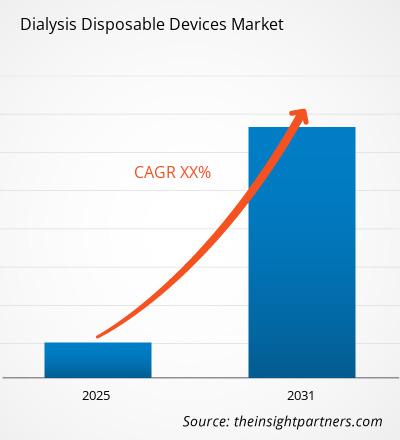
The Dialysis Disposable Devices market was valued at US$ 11.34 billion in 2025 and is expected to reach US$ 18.65 billion by 2034; it is estimated to record a CAGR of 5.68% during 2026-2034.
Dialysis Disposable Devices Market Assessment and Insights
- North America: North America represented 35–39% of the dialysis disposable devices market share in 2025 and is anticipated to grow at a CAGR of 5.9%–6.3% during 2026–2034. Growth is driven by reimbursement support mechanisms and a high prevalence of chronic kidney disease, which together sustain consistent demand for disposable medical devices across the region.
- U.S.: The U.S. represented 82–86% of the North American dialysis disposable devices market size in 2025 and is anticipated to register a CAGR of 6.0%–6.4% during 2026–2034, supported by advanced renal care infrastructure, strong reimbursement frameworks, and increasing patient demand for dialysis-related consumables.
- Europe: Europe held 25–29% share of the dialysis disposable devices market in 2025 and is expected to grow at a CAGR of 5.7%–6.1% during 2026–2034. Germany, the United Kingdom, and France remain key markets, supported by well-established dialysis networks and aging population demographics.
- Asia Pacific: Asia Pacific accounted for 24–28% share of the dialysis disposable devices market in 2025 and is forecast to expand at a CAGR of 7.2%–7.6% during 2026–2034. China, Japan, and India lead regional demand, driven by expanding dialysis infrastructure and a rising burden of chronic kidney disease.
- Largest Segment – Hospital Application: The hospital application segment accounted for the largest portion of the market and is projected to register a CAGR of 6.1%–6.5% during 2026–2034, according to the dialysis disposable devices market forecast, driven by substantial procedure volumes and well-established renal care infrastructure supporting treatment delivery across healthcare facilities.
- High Growth Segment – Home Use Application: The home use application segment is projected to register the fastest growth with a CAGR of 7.4%–7.8% during 2026–2034, driven by increasing adoption of home hemodialysis and patient-centric treatment models that enhance convenience and care accessibility.
- Key companies analyzed in detail: B. Braun Melsungen AG; Thermo Fisher Scientific Inc.; Poly Medicure Limited; Fresenius Medical Care AG; Medtronic plc; Becton, Dickinson and Company; Angiplast Private Limited; RENOLIT SE; Argon Medical Devices, Inc.; NxStage Medical, Inc.
Source: The Insight Partners' analysis based on proprietary research, government publications, company annual reports, investor presentations, industry databases, and expert interviews.
The dialysis disposables market has developed alongside changes in renal care delivery systems, patient awareness, and healthcare funding. The use of disposables has been critical in the provision of dialysis care by providing an opportunity for preventing contamination and facilitating the standardization of the process. Innovation in catheters, drainage systems, and procedure kits has facilitated efficiency in the process while improving patient outcomes at dialysis facilities and hospitals.
Looking ahead, the development of products is expected to reflect a patient-oriented approach in dialysis care management. Integration of home dialysis care programs, improvement of biocompatibility properties of materials used, and simplification of product design for disposables can be some factors influencing the buying decision.
Dialysis Disposable Devices Market Report Scope
| Report Attribute | Details |
|---|---|
| Market size in 2025 | US$ 11.34 Billion |
| Market Size by 2034 | US$ 18.65 Billion |
| Global CAGR (2026 - 2034) | 5.68% |
| Historical Data | 2021-2024 |
| Forecast period | 2026-2034 |
Dialysis Disposable Devices Market Analysis
The growing incidence of chronic kidney disease, diabetes, hypertension, and aging populations continues to generate sustained demand for dialysis treatment worldwide. As dialysis remains a life-sustaining therapy for patients with advanced renal dysfunction, disposable devices play a central role in maintaining procedural safety and treatment continuity. Hospitals and dialysis centers increasingly rely on single-use consumables to reduce infection risks and support regulatory compliance.
The dialysis disposable devices market ecosystem encompasses raw material suppliers, medical device manufacturers, distributors, dialysis service providers, and healthcare institutions. Product reliability, sterility assurance, regulatory approvals, and supply chain resilience remain critical factors influencing procurement decisions. The expansion of outpatient dialysis services and home treatment programs further broadens the application scope for disposable renal care products.
Competition remains concentrated among established medical technology companies with strong distribution networks and renal care expertise. Companies such as B. Braun Melsungen AG, Fresenius Medical Care, Medtronic, BD, Thermo Fisher Scientific, Polymedicure, Angiplast, RENOLIT SE, ARGON MEDICAL, and NxStage Medical, Inc. focus on product enhancement, geographic expansion, and manufacturing optimization to strengthen market positioning.
Investment activity increasingly targets advanced catheter technologies, sustainable material innovation, and digitally enabled dialysis care systems. Strategic partnerships between healthcare providers and device manufacturers are supporting product adoption across emerging markets. Companies that combine quality assurance, regulatory compliance, and scalable production capabilities are likely to maintain competitive advantages as dialysis demand continues to rise globally.
● REPORT CUSTOMIZATION
Tailor This Report To Align With Your Specific Business Requirements
This report can be customized to align precisely with your business objectives, scope, and target markets. Customization options include tailored segmentation, geography, competitive analysis, and strategic insights to support informed decision-making.
Customize This Report →WHAT YOU CAN ADJUST
- ● Segmentations
- ● Geography
- ● Competitive Analysis
- ● Language Preferences
Dialysis Disposable Devices Market: Strategic Insights
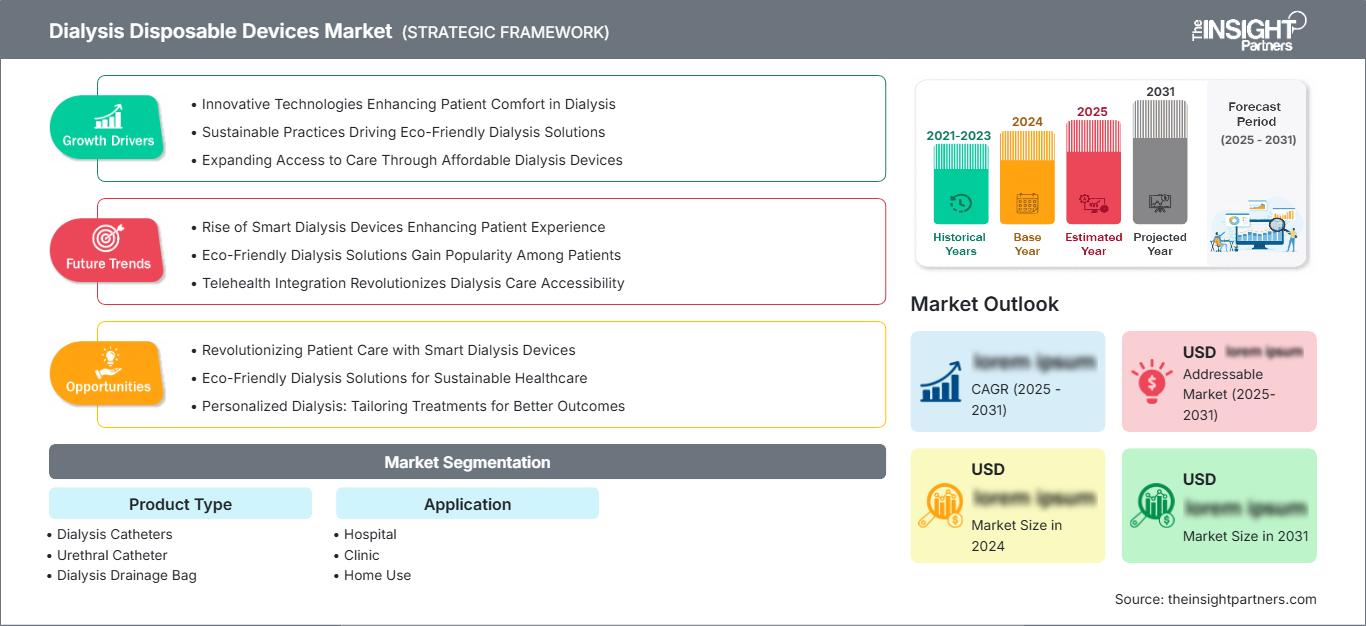
Regional Insights
North America Dialysis Disposable Devices Market
North America accounts for the largest share of the dialysis disposable devices market and is projected to grow at an estimated CAGR of approximately 5.9% through 2034. The region benefits from advanced healthcare infrastructure, high diagnosis rates of kidney disorders, and significant expenditure on renal replacement therapies. Strong reimbursement mechanisms support consistent utilization of disposable dialysis products across treatment facilities.
Demand is also being reinforced by increasing adoption of home dialysis programs and stricter infection-prevention requirements. Healthcare providers continue to prioritize disposable consumables that improve treatment consistency and reduce cross-contamination risks. Ongoing product innovation and the presence of major industry participants further strengthen regional market performance.
U.S. Dialysis Disposable Devices Market
The U.S. represents the dominant national market within North America and is anticipated to expand at a CAGR of approximately 5.8% through the forecast period. The country contributes an estimated 75–80% share of regional revenue, supported by a large dialysis patient population and widespread availability of specialized renal care facilities.
Major manufacturers, including Fresenius Medical Care, BD, Medtronic, and B. Braun Melsungen AG, maintain substantial operational and commercial footprints within the country. Hospitals, dialysis centers, and home-use applications increasingly utilize disposable catheters, fistula needles, and procedure kits to comply with quality standards while enhancing patient safety. Growth in home dialysis adoption is creating additional opportunities for specialized disposable device solutions.
Europe Dialysis Disposable Devices Market
Europe holds an estimated 25–30% share of global revenue and is forecast to grow at a CAGR of around 5.7% through 2034. The region benefits from established healthcare systems, comprehensive renal disease management programs, and high standards for infection control. Demand remains supported by aging populations and the increasing incidence of chronic kidney disease.
In the UK, the government is still working towards enhancing the availability of dialysis services while favoring the adoption of home care models. Healthcare organizations continue to look for single-use products that make the treatment process easy and ensure consistent results. The growth is still driven by public healthcare financing as well as technological modernization efforts.
In Germany, the dialysis disposable devices market is characterized by the highest growth due to the development of the medical industry in the region, a high dialysis prevalence rate, and the presence of medical device manufacturers. The country has been showing growing demand for dialysis catheters, fistula needles, and care kits due to an established system of reimbursement.
Together, France, Italy, and Spain provide huge market demand owing to the increase in renal care services and improvements in treatment quality.
APAC Dialysis Disposable Devices Market
Asia-Pacific is projected to register the fastest growth, with an estimated CAGR exceeding 7.5% through 2034, while accounting for approximately 22–27% of global revenue. Rising healthcare expenditures, growing awareness of kidney disease, and expanding dialysis infrastructure are accelerating the dialysis disposable devices market development across the region.
China continues to be the most dominant country because of the high number of patients, accessibility of dialysis, and investment in modernizing the healthcare industry. Initiatives by the government to ensure effective chronic disease management further drive the dialysis disposable devices market growth in the long run.
There are several contributors, including Japan, South Korea, India, and Australia, through the adoption of technology and expansion of kidney care services. The ongoing infrastructural development and chronic disease treatment policies in India and China present favorable conditions for disposables manufacturers.
Middle East & Africa Dialysis Disposable Devices Market
The Middle East & Africa dialysis disposable devices market is anticipated to expand at a CAGR of approximately 6.6% through 2034. Increasing healthcare investments, rising chronic disease prevalence, and gradual expansion of dialysis facilities are contributing to market development across the region.
Saudi Arabia retains its position as the key market because of the presence of numerous healthcare modernization schemes and considerable investment in treatment equipment. Rising knowledge about the treatment of kidneys helps increase demand for dialysis consumables, along with disposable products.
The UAE, South Africa, and other regions are experiencing more applications of new medical devices. Diversification policies in Gulf nations based on energy resources, as well as improvements in overall health care infrastructure, create conditions for the provision of dialysis treatments, which is beneficial for the producers and distributors of disposable renal care products.
Segmentation Analysis
Product Type
- Dialysis Catheters – Represent a foundational component of vascular access management, supporting both acute and chronic dialysis procedures. Continuous design improvements aimed at reducing infection risk and improving patient comfort sustain their strong market position.
- Urethral Catheter – Widely utilized in renal care settings for fluid management and patient monitoring. Demand is supported by increasing hospitalization rates and the need for sterile, single-use products across dialysis treatment environments.
- Dialysis Drainage Bag – Essential for fluid collection and waste management during dialysis procedures. Product adoption benefits from infection-control requirements and growing emphasis on safe handling of medical waste within healthcare facilities.
- Dialysis Care Kit – Combines multiple disposable components into standardized procedural packages that improve clinical workflow efficiency. Increasing demand for streamlined treatment protocols is driving utilization across hospitals and dialysis centers.
- Dialysis Fistula Needle – Critical for repeated vascular access during hemodialysis sessions. Manufacturers focus on needle design enhancements that improve patient comfort, safety, and treatment reliability.
Application
- Hospital – Continues to account for substantial demand due to high patient throughput, specialized renal treatment services, and extensive procurement of disposable dialysis products for infection prevention.
- Clinic – Benefits from growing outpatient dialysis volumes and increasing establishment of dedicated renal care centers focused on efficient and standardized treatment delivery.
- Home Use – Emerging as a high-potential segment as healthcare systems promote patient-centered dialysis care models that reduce facility dependence while enhancing convenience.
Opportunity Snapshot
| Application | Revenue Contribution | Trend Tag | Adoption Stage |
| Hospital | High | Acute Care | Mature |
| Clinic | High | Outpatient Dialysis | Scaling |
| Home Use | Medium | Home Therapy | Emerging |
Dialysis Disposable Devices Market Growth Drivers and Impact Analysis
Growing Global Burden of Chronic Kidney Disease
The increasing prevalence of chronic kidney disease and end-stage renal disease remains the most significant driver of demand for dialysis disposable devices. Rising rates of diabetes, hypertension, obesity, and aging populations are contributing to a larger patient base requiring long-term renal replacement therapy. Healthcare systems across both developed and developing economies continue to experience growing pressure to expand dialysis capacity and improve treatment accessibility.
As treatment volumes increase, healthcare providers require reliable supplies of disposable catheters, fistula needles, drainage bags, and procedure kits. Single-use devices help reduce infection risks and support regulatory compliance, making them essential components of modern dialysis practice. The expanding patient population directly influences procurement volumes across hospitals, clinics, and home-care settings. Manufacturers capable of ensuring supply continuity and maintaining quality standards are positioned to benefit from sustained demand growth throughout the forecast period.
Expansion of Home-Based Dialysis Programs
The healthcare industry is focusing more and more on providing home dialysis treatment as a means to increase patient convenience, maximize resource utilization, and decrease burden on central facilities. The trend has led to changes in demand dynamics in the dialysis disposable devices market. Convenience and safety are the key elements that have gained increasing significance due to the growing popularity of the treatment method at home.
The emerging trend of home dialysis opens up new possibilities in developing such products as special disposable kits, convenient catheter systems, and accessory devices. Product lines are adjusted by manufacturers to ensure self-treatment capabilities along with high effectiveness. As reimbursement policies change and the benefits of home dialysis become more known, the demand for specialized disposable devices will increase dramatically.
Rising Focus on Infection Prevention and Patient Safety
Infection control remains a critical priority within dialysis treatment environments due to the repetitive nature of procedures and the vulnerability of patients with chronic kidney disease. Disposable devices play a vital role in minimizing contamination risks and supporting standardized clinical practices. Healthcare institutions increasingly emphasize products that contribute to improved safety outcomes while meeting stringent regulatory requirements.
This focus encourages adoption of advanced disposable technologies featuring enhanced sterility, improved materials, and simplified handling characteristics. Procurement decisions increasingly prioritize quality assurance and performance consistency alongside cost considerations. The growing importance of patient safety initiatives is expected to sustain investment in disposable dialysis products, encouraging ongoing innovation and differentiation among market participants.
Dialysis Disposable Devices Market Future Trends
Integration of Advanced Materials in Disposable Components
Manufacturers have increasingly focused on integrating advanced biocompatible materials into disposable dialysis products. Enhanced material performance can help reduce complications related to vascular access while improving overall treatment effectiveness. At the same time, product developers are working on designs that simplify handling and usage for healthcare professionals. These developments reflect important dialysis disposable devices market trends aimed at improving both clinical outcomes and operational efficiency.
Future innovations are likely to address sustainability issues alongside clinical performance. As environmental concerns become a larger part of the procurement process in healthcare, manufacturers will look for options to use recyclable materials and more efficient production methods. Firms that can effectively combine both goals are likely to strengthen their competitiveness in the changing market environment.
Digital Enablement Supporting Home Dialysis Expansion
Digital healthcare technologies are increasingly important in the delivery of dialysis services, especially at home. The capabilities of remote monitoring, technological advancements in dialysis equipment, and data-driven care management are likely to drive demand for disposable devices that integrate with modern dialysis platforms.
There is an assumption that integrating digital healthcare with renal treatment will increase treatment adherence, facilitate early interventions, and individualize care. It is possible that the manufacturers of disposable devices will start collaborating with technology companies to deliver solutions for future home dialysis. This trend has the potential to reshape product design priorities and create new value propositions across the dialysis care continuum.
Dialysis Disposable Devices Market Opportunities
Untapped Potential in Emerging Healthcare Markets
Many emerging economies continue to experience underdiagnosis and undertreatment of chronic kidney disease despite rapidly growing patient populations. Improvements in healthcare infrastructure, expanding insurance coverage, and increased government investments in renal care are creating favorable conditions for the dialysis disposable devices market expansion. Manufacturers that establish strong local distribution networks and cost-effective product portfolios can benefit from significant long-term growth opportunities.
Some strategies companies may use to address these issues include localization, investment in regional manufacturing facilities, and partnerships within the health care industry. As dialysis becomes more accessible in developing regions, demand for disposable medical products will increase among multinational and regional companies.
Development of Procedure-Specific Disposable Care Solutions
Healthcare providers are now looking for solutions that streamline their workflows and standardize procedures. This is an opportunity for product makers to develop an all-in-one package that suits specific dialysis applications in particular environments. Standardized kits can improve efficiency, reduce preparation time, and support consistent clinical practices.
Custom product design and development are ways of adding value to a product while meeting customers’ changing demands. Solutions based on procedures will always be of interest to high-volume centers and home-care organizations. Companies that manage to combine procedure design and workflow optimization objectives may capture additional value and strengthen long-term customer relationships.
Recent Developments
- May, 2026: Fresenius Medical Care reported accelerated U.S. deployment of its 5008X CAREsystems, with the technology available in approximately 100 clinics and more than 100,000 treatments completed. The expansion demonstrates growing adoption of advanced dialysis platforms, and highlights continued investment in modernizing renal care infrastructure while supporting enhanced treatment efficiency and clinical outcomes.
- April, 2026: BD (Becton, Dickinson and Company announced the commercial launch of the BD CentroVena One Insertion System, the first all-in-one central venous catheter (CVC) insertion device on the market. The system is designed to simplify central line placement for clinicians and enhance patient safety by streamlining key steps and incorporating safety-focused design elements that support consistent, efficient care in high-pressure acute settings.
- June, 2025: Fresenius Medical Care announced broader U.S. commercialization of its 5008X CAREsystem after receiving FDA 510(k) clearance for an updated version of the platform. The rollout supports the introduction of high-volume hemodiafiltration therapy across selected Fresenius Kidney Care clinics, with broader deployment planned to expand advanced dialysis treatment access and improve patient outcomes in the U.S. market.
Frequently Asked Questions

- Comprehensive Market Sizing and Forecast Analysis
- Detailed Segmentation Analysis
- In-Depth Market Dynamics Assessment
- Regional and Country-Level Insights
- Competitive Landscape and Company Benchmarking
- Strategic Business Intelligence
Recent Reports
Testimonials

The Insight Partners' SCADA System Market report is comprehensive, with valuable insights on current trends and future forecasts. The team was highly professional, responsive, and supportive throughout. We are very satisfied and highly recommend their services.
RAN KEDEM Partner, Reali Technologies LTDs
I requested a report on a very specific software market and the team produced the report in a few days. The information was very relevant and well presented. I then requested some changes and additions to the report. The team was again very responsive and I got the final report in less than a week.
JEAN-HERVE JENN Chairman, Future Analytica
We worked with The Insight Partners for an important market study and forecast. They gave us clear insights into opportunities and risks, which helped shape our plans. Their research was easy to use and based on solid data. It helped us make smart, confident decisions. We highly recommend them.
PIYUSH NAGPAL Sr. Vice President, High Beam Global
The Insight Partners delivered insightful, well-structured market research with strong domain expertise. Their team was professional and responsive throughout. The user-friendly website made accessing industry reports seamless. We highly recommend them for reliable, high-quality research services
YUKIHIKO ADACHI CEO, Deep Blue, LLC.
This is the first time I have purchased a market report from The Insight Partners.While I was unsure at first, I visited their web site and felt more comfortable to take the risk and purchase a market report.I am completely satisfied with the quality of the report and customer service. I had several questions and comments with the initial report, but after a couple of dialogs over email with their analyst I believe I have a report that I can use as input to our strategic planning process.Thank you so much for taking the extra time and making this a positive experience.I will definitely recommend your service to others and you will be my first call when we need further market data.
JOHN SUZUKI President and Chief Executive Officer, Board Director, BK Technologies
I wish to appreciate your support and the professionalism you displayed in the course of attending to my request for information regarding to infectious disease IVD market in Nigeria. I appreciate your patience, your guidance, and the fact that you were willing to offer a discount, which eventually made it possible for us to close a deal. I look forward to engaging The Insight Partners in the future, all thanks to the impression you have created in me as a result of this first encounter.
DR CHIJIOKE ONYIA MANAGING DIRECTOR, PineCrest Healthcare Ltd.Reason to Buy
- Informed Decision-Making
- Understanding Market Dynamics
- Competitive Analysis
- Identifying Emerging Markets
- Customer Insights
- Market Forecasts
- Risk Mitigation
- Boosting Operational Efficiency
- Strategic Planning
- Investment Justification
- Tracking Industry Innovations
- Aligning with Regulatory Trends





 Get Free Sample for