
Drug Induced Ototoxicity Treatment Market Trends, Size & Forecast by 2034
Coverage: By Ototoxicity Type (Into Cochlear Ototoxicity, Vestibular Ototoxicity); Treatment Type (Hearing Aids, Cochlear Implants, Assisted Listening Devices); End-User (Hospitals, Ambulatory Surgery Centers, Others) , and Geography (North America, Europe, Asia Pacific, and South and Central America)
- Status : Data Released
- Report Code : TIPRE00008458
- Category : Life Sciences
- No. of Pages : 150
- Available Report Formats :


- Last update date : July 06, 2026


2025 Market Size
US$ 1.28 Bn
Base year value
2034 Forecast
US$ 2.78 Bn
Projected by 2034
CAGR 2026-2034
8.98 %
Growth rate
Addressable Market
US$ 18.15 Bn
(2026-2034)
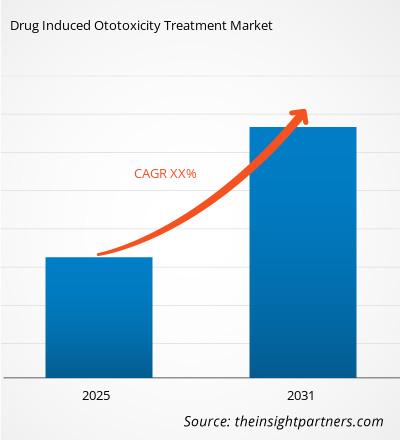
The drug induced ototoxicity treatment market was valued at US$ 1.28 Billion in 2025 and is projected to reach US$ 2.78 Billion by 2034, expanding at a CAGR of 8.98% during 2026–2034. Market expansion is supported by increasing recognition of medication-related hearing impairment, improving diagnostic capabilities, and broader availability of advanced auditory rehabilitation solutions. Healthcare providers are increasingly emphasizing early intervention strategies to reduce long-term hearing complications associated with ototoxic medications.
North America is expected to maintain its leadership position throughout the forecast period, registering an estimated CAGR of 8.4–8.8%. Strong reimbursement systems, extensive hearing care infrastructure, and widespread monitoring programs for patients receiving ototoxic drugs continue to strengthen regional demand. The drug induced ototoxicity treatment market report highlights that the rising adoption of implantable hearing technologies and multidisciplinary treatment approaches continues to support sustained market expansion across hospitals and specialized audiology centers, improving patient outcomes and strengthening the overall hearing care ecosystem.
Drug Induced Ototoxicity Treatment Market Assessment and Insights
- North America: Holds 39–43% share in 2025, growing at a CAGR of 8.4–8.8% during 2026–2034, driven by advanced audiology infrastructure, favorable reimbursement policies, and increasing monitoring of chemotherapy- and antibiotic-related hearing impairment.
- US: Accounts for 82–86% of the North American drug induced ototoxicity treatment market in 2025, expanding at a 8.5–8.9% CAGR due to strong hearing healthcare infrastructure, rising adoption of advanced hearing technologies, and increasing demand for early hearing assessment and intervention.
- Europe: Represents 27–31% share in 2025, growing at a 8.0–8.4% CAGR, led by Germany, the UK, and France through established hearing healthcare networks, expanding rehabilitation programs, and continued adoption of advanced audiology solutions.
- Asia Pacific: Holds 21–25% share in 2025, expanding at a 9.8–10.2% CAGR, led by China, Japan, and India with expanding healthcare infrastructure, large patient populations, and increasing implementation of hearing screening initiatives.
- Largest Segment: Hearing Aids hold the largest drug induced ototoxicity treatment market share in 2025, growing at a 8.7–9.1% CAGR due to broad clinical acceptance, improved accessibility, and continuous technological advancements that enhance patient outcomes.
- High Growth Segment: Ambulatory Surgery Centers are projected to register the fastest growth at a CAGR of 9.6–10.0% during 2026–2034, driven by increasing outpatient procedures, faster patient turnaround, and expanding specialty hearing care services.
- Key companies analyzed in detail: Advanced Bionics AG; Cochlear Limited; Oticon Medical AB; Benson Medical Instruments Co., Ltd.; Sonova Holding AG; MED-EL Elektromedizinische Geräte GmbH; WS Audiology A/S; Demant A/S; Medtronic plc; Starkey Laboratories, Inc.
Source: The Insight Partners' analysis based on proprietary research, government publications, company annual reports, investor presentations, industry databases, and expert interviews.
Increased awareness of drug-induced hearing loss has transformed the treatment approach from reactive hearing restoration to preventive measures. Improvements in digital hearing technology, performance of implants, and audiometric devices have improved clinical results and fostered collaboration among oncologists, infectious disease physicians, otolaryngologists, and audiologists. The development of devices that focus on patient-centered solutions that involve wireless features, personalized programming, and hearing preservation techniques has been emphasized by hearing device manufacturers.
The market is expected to witness strong growth prospects as healthcare organizations increasingly adopt hearing preservation practices, including routine hearing assessments for patients receiving high-risk medications. Developing economies are investing in audiometry services, specialized hearing clinics, and digital healthcare infrastructure to enhance access to hearing care. The Drug Induced Ototoxicity Treatment Market Forecast indicates that advancements in hearing preservation technologies, combined with growing collaborations between hearing device manufacturers and healthcare providers, will create sustainable growth opportunities. These developments are also expected to support the expansion of the Drug Induced Ototoxicity Treatment Market Size, driven by rising awareness, improved diagnostic capabilities, and broader adoption of hearing loss prevention and treatment solutions worldwide.
Drug Induced Ototoxicity Treatment Market Report Scope
| Report Attribute | Details |
|---|---|
| Market size in 2025 | US$ 1.28 Billion |
| Market Size by 2034 | US$ 2.78 Billion |
| Global CAGR (2026 - 2034) | 8.98% |
| Historical Data | 2021-2024 |
| Forecast period | 2026-2034 |
Drug Induced Ototoxicity Treatment Market Analysis
Increased use of aminoglycoside antibiotics, platinum-containing chemotherapeutics, loop diuretics, and certain immunotherapy drugs has made medical practitioners more aware of drug-induced hearing loss. Early diagnosis through thorough audiometric testing facilitates timely treatment before permanent hearing loss compromises a person’s quality of life. The therapy market is positively impacted by the consolidation between the audiology units in hospitals, rehabilitation experts, manufacturers, and the outside clinics specializing in hearing health.
The supply environment is constantly changing in favor of increased production of digital hearing solutions, innovative cochlear implants, and other auditory devices designed to provide a custom-made sound experience. Additional distribution agreements, clinician education programs, and advancements in component fabrication contribute to the increasing availability of products in various health markets.
Competition in the drug induced ototoxicity treatment industry is marked by constant innovation, evidence gathering and geographical growth. The firms such as Cochlear Limited, Sonova Holding AG, MED-EL Elektromedizinische Geräte GmbH and Advanced Bionics AG continue making investments in the development of implants and digital solutions that could benefit the patients. Existing players become more differentiated by means of providing additional services, the ability to program their devices remotely and post-operative support for the patients.
Investments continue being made in artificial intelligence based hearing optimization, minimally invasive implants, wireless technology and digital patient platforms. The companies such as WS Audiology A/S, Demant A/S, Starkey Laboratories, Inc., Benson Medical Instruments Co., Ltd., Oticon Medical AB and Medtronic plc continue building strategic partnerships with hospitals, audiology centers and research organizations in order to increase availability of their products and strengthen their positions in the highly competitive market.
● REPORT CUSTOMIZATION
Tailor This Report To Align With Your Specific Business Requirements
This report can be customized to align precisely with your business objectives, scope, and target markets. Customization options include tailored segmentation, geography, competitive analysis, and strategic insights to support informed decision-making.
Customize This Report →WHAT YOU CAN ADJUST
- ● Segmentations
- ● Geography
- ● Competitive Analysis
- ● Language Preferences
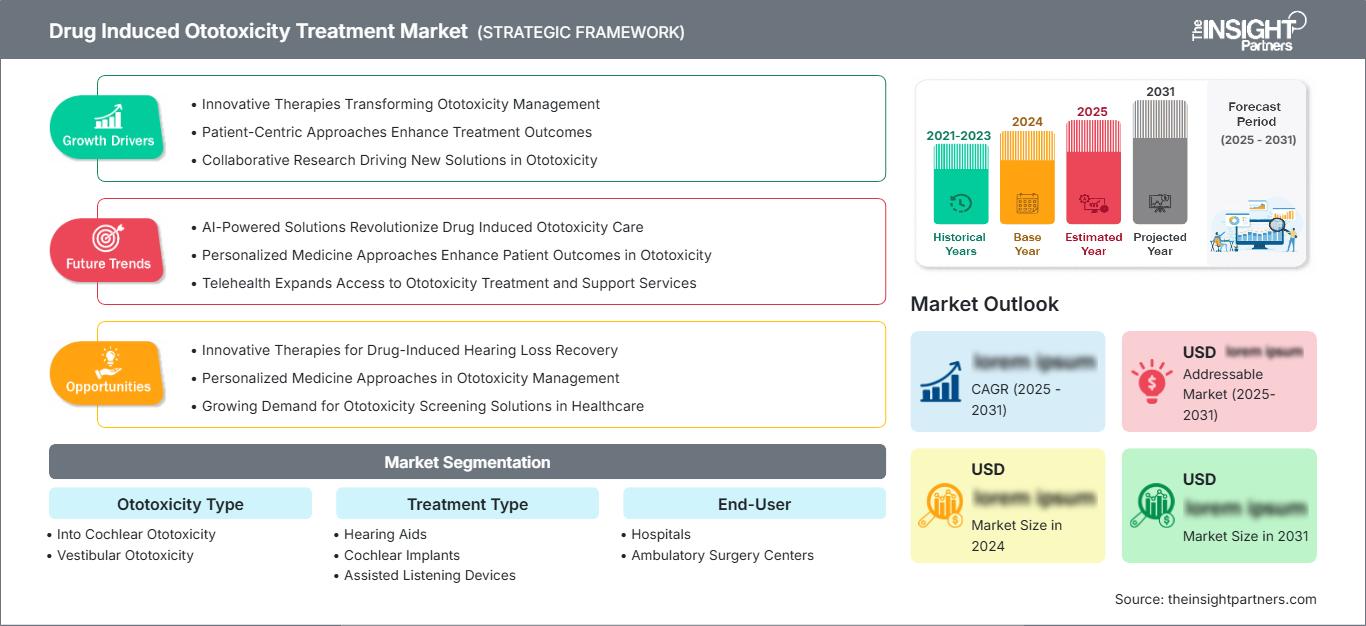
Drug Induced Ototoxicity Treatment Market: Strategic Insights
Regional Insights
North America Drug Induced Ototoxicity Treatment Market
North America accounted for 39–43% of the global drug induced ototoxicity treatment market in 2025 and is projected to register a CAGR of 8.4–8.8% during 2026–2034. The region benefits from established hearing healthcare systems, widespread audiology services, and growing implementation of ototoxicity monitoring protocols for patients receiving high-risk medications.
Healthcare providers increasingly integrate hearing assessment into oncology and infectious disease treatment pathways, enabling earlier intervention through hearing aids, cochlear implants, and assisted listening devices. Continued investments in digital hearing technologies and reimbursement support further strengthen long-term regional market expansion.
U.S. Drug Induced Ototoxicity Treatment Market
The U.S. represented 82–86% of the North American market in 2025 and is anticipated to expand at a CAGR of 8.5–8.9% through 2034. High awareness among clinicians, extensive audiology networks, and strong adoption of advanced implantable hearing technologies sustain national market leadership.
The presence of leading manufacturers, specialized hearing centers, and major academic hospitals supports continuous innovation and clinical adoption. Increasing use of comprehensive auditory monitoring for patients undergoing chemotherapy and prolonged antibiotic therapy further accelerates demand for effective rehabilitation solutions across the country.
Europe Drug Induced Ototoxicity Treatment Market
Europe held approximately 27–31% of the global drug induced ototoxicity treatment market share in 2025 and is forecast to record a CAGR of 8.0–8.4% through the assessment period. Strong public healthcare systems, expanding hearing rehabilitation services, and standardized clinical guidelines contribute to stable market development across the region.
The UK continues to strengthen its position through national hearing care programs, increasing referrals for audiological assessment, and greater adoption of digital hearing aids. Collaborative research involving hospitals and universities also supports advancements in hearing preservation and rehabilitation practices.
Germany remains the largest European market owing to its advanced medical device industry, comprehensive reimbursement framework, and high concentration of ENT specialists. Growing utilization of cochlear implants and continuous investment in hearing technology innovation reinforce the country's regional leadership.
France, Italy, and Spain collectively contribute to market expansion through improved access to audiology services, increasing diagnosis of medication-related hearing disorders, and expanding rehabilitation infrastructure. Healthcare modernization initiatives and rising awareness campaigns are expected to sustain treatment adoption across these countries.
Asia Pacific Drug Induced Ototoxicity Treatment Market
Asia Pacific accounted for 21–25% of the global drug induced ototoxicity treatment market share in 2025 and is expected to witness the fastest regional expansion, with a CAGR of 9.8–10.2% between 2026 and 2034. Rising healthcare expenditure, growing patient populations, and broader availability of specialized hearing care services support regional momentum.
China leads the regional market due to significant investments in hospital infrastructure, domestic medical device manufacturing, and expanding hearing screening initiatives. Government efforts to strengthen specialty healthcare services continue to improve access to treatment technologies.
Japan maintains a strong market position through advanced audiology practices, early diagnosis, and high utilization of premium hearing technologies. Continuous clinical innovation and favorable healthcare infrastructure support sustained demand for sophisticated treatment solutions.
South Korea, India, and Australia collectively demonstrate strong growth potential driven by expanding healthcare access, increasing awareness of ototoxicity, and rising investments in digital hearing technologies. Policy support for early diagnosis and rehabilitation further enhances long-term market opportunities across these countries.
Middle East & Africa Drug Induced Ototoxicity Treatment Market
The Middle East & Africa market is projected to expand at a CAGR of 7.6–8.0% through 2034, supported by gradual improvements in specialty healthcare infrastructure and growing availability of audiology services. Increasing investment in tertiary hospitals is strengthening regional treatment capabilities.
Saudi Arabia leads regional growth through healthcare transformation initiatives, expansion of specialized ENT services, and greater investment in advanced medical technologies. The UAE continues improving hearing care accessibility by developing high-quality hospital networks and specialist clinics.
South Africa remains an important market due to increasing awareness of hearing impairment and expanding diagnostic services. The Rest of the Middle East & Africa is expected to experience gradual growth as governments continue investing in healthcare infrastructure, specialist training, and improved access to hearing rehabilitation technologies.
Segmentation Analysis
Ototoxicity Type
Growing emphasis on early diagnosis and individualized rehabilitation continues to strengthen demand across ototoxicity treatment categories. The segment is expected to expand at a CAGR of 8.8–9.2% during 2026–2034 as healthcare providers increasingly implement routine auditory monitoring for patients receiving potentially ototoxic medications.
- Cochlear Ototoxicity: Represents the largest clinical burden due to permanent hearing impairment associated with chemotherapy agents, aminoglycoside antibiotics, and other ototoxic drugs. Early detection combined with hearing rehabilitation technologies improves long-term patient outcomes and supports sustained market demand.
- Vestibular Ototoxicity: Increasing recognition of balance disorders linked to medication exposure is driving demand for specialized diagnostic evaluation and multidisciplinary rehabilitation. Improved clinical awareness encourages timely management, reducing complications associated with vestibular dysfunction.
Treatment Type
- Hearing Aids: The largest treatment category owing to broad clinical acceptance, non-invasive use, continuous digital innovation, and suitability for patients with varying degrees of hearing impairment following ototoxic drug exposure.
- Cochlear Implants: Growing adoption among patients with severe or profound hearing loss is supported by improved implant performance, minimally invasive surgical techniques, and expanding reimbursement across developed healthcare systems.
- Assisted Listening Devices: Increasing utilization in educational, occupational, and public environments enhances communication outcomes for patients experiencing residual hearing limitations, complementing hearing aids and implant-based rehabilitation strategies.
End-User
- Hospitals: Hospitals remain the leading end-user segment because multidisciplinary treatment teams, advanced diagnostic capabilities, and comprehensive hearing rehabilitation services enable integrated management of medication-induced hearing impairment.
- Ambulatory Surgery Centers: Rapid expansion of outpatient hearing procedures, improved surgical efficiency, and increasing preference for cost-effective care delivery support the strongest growth outlook among end-user facilities.
Opportunity Snapshot
| End-User Segment | Revenue Contribution | Trend Tag | Adoption Stage |
| Hospitals | High | Integrated Audiology | Mature |
| Ambulatory Surgery Centers | Medium | Outpatient Implants | Scaling |
Drug Induced Ototoxicity Treatment Market Growth Drivers and Impact Analysis
Growing Prevalence of Medication-Induced Hearing Loss Across Therapeutic Areas
With increased usage of aminoglycosides, platinum-containing chemotherapy drugs, loop diuretics, and certain immunosuppressive drugs, the scope of people prone to drug-induced ototoxicity has considerably widened. Due to improved survival rates, retention of auditory capabilities has assumed significant importance in terms of health care planning. Audiological screening is becoming common practice in hospitals prior to and during and post treatment, thus helping detect hearing problems early. This will lead to the requirement for more hearing aids, cochlear implants, and assistive listening devices. This will boost the growth of the market by making manufacturers strive for more sophisticated products.
Advancements in Hearing Rehabilitation Technologies Improve Clinical Outcomes
Advancements in the technology of hearing rehabilitation are revolutionizing the way patients exposed to ototoxic drugs are treated. The current generation of hearing aids uses artificial intelligence, wireless connectivity, sound processing adaptation, and fitting software to provide better user satisfaction in all listening scenarios. Cochlear implants have also developed through advancements in electrode design, minimal surgery procedures, and complex signal processing methods. These advances motivate clinicians to suggest early treatment in the disease process, increasing patient satisfaction and compliance. Companies keep on spending on their digital ecosystem, remote programming, and software innovations to sustain the demand in the long term and expand global access to hearing rehabilitation technology.
Expansion of Audiology Services and Early Hearing Screening Programs
Healthcare systems are increasingly recognizing the importance of hearing preservation for patients receiving ototoxic therapies. Hospitals, specialty clinics, and academic medical centers are expanding audiology departments while integrating standardized hearing assessments into oncology, infectious disease, and critical care treatment pathways. Early screening enables clinicians to detect subtle auditory changes before permanent impairment develops, supporting timely rehabilitation and reducing long-term disability. Governments and healthcare organizations are simultaneously investing in awareness initiatives, professional training, and diagnostic infrastructure to improve patient access. These structural improvements strengthen referral networks, enhance multidisciplinary collaboration, and generate sustained demand for innovative treatment technologies across developed and emerging healthcare markets.
Drug Induced Ototoxicity Treatment Market Future Trends
Integration of Digital Health and Remote Audiology Services
Digital transformation is reshaping hearing rehabilitation by enabling remote patient management, virtual consultations, and cloud-based device programming. Connected hearing aids and implant systems allow clinicians to monitor device performance, adjust settings remotely, and deliver personalized care without requiring frequent in-person appointments. This trend improves patient convenience while supporting healthcare providers managing growing numbers of individuals with chronic hearing impairment. As telehealth infrastructure expands globally, manufacturers are expected to integrate advanced analytics, smartphone applications, and secure digital platforms that enhance treatment continuity, strengthen patient engagement, and improve long-term clinical outcomes.
Increasing Focus on Hearing Preservation Alongside Rehabilitation
The drug induced ototoxicity treatment market is increasingly transitioning from a rehabilitation-focused approach to comprehensive hearing preservation strategies. Pharmaceutical researchers, clinicians, and medical device manufacturers are working collaboratively to reduce auditory damage through earlier risk identification, optimized treatment pathways, and preventive monitoring protocols. Hospitals are also incorporating baseline audiometric evaluations before administering potentially ototoxic medications, enabling clinicians to make informed treatment adjustments when necessary. Among the key Drug Induced Ototoxicity Treatment Market Trends is the adoption of this integrated care model, which enhances patient outcomes while creating opportunities for diagnostic technologies, monitoring solutions, and complementary hearing rehabilitation products that support long-term drug induced ototoxicity treatment market growth.
Drug Induced Ototoxicity Treatment Market Opportunities
Expanding Access to Hearing Care in Emerging Healthcare Markets
Emerging economies present substantial investment opportunities as governments continue strengthening healthcare infrastructure and expanding access to specialized audiology services. Increasing urbanization, rising healthcare expenditure, and improving insurance coverage enable hospitals to adopt advanced hearing rehabilitation technologies more rapidly than in previous years. International manufacturers can capitalize on these developments by establishing regional partnerships, expanding distribution networks, and investing in clinician education programs. Local manufacturing initiatives and cost-effective product portfolios further improve affordability while supporting broader adoption of hearing aids, cochlear implants, and assisted listening devices across underserved patient populations.
Strategic Collaboration Between Device Manufacturers and Healthcare Providers
Long-term market growth will increasingly depend on collaborative partnerships connecting medical device companies, hospitals, academic institutions, and specialty hearing centers. Joint research initiatives can accelerate technology validation, improve patient selection protocols, and generate robust clinical evidence supporting advanced rehabilitation solutions. Manufacturers also have opportunities to develop integrated service models that combine diagnostics, implantation, remote programming, and long-term follow-up care. These value-based partnerships strengthen customer relationships, improve treatment outcomes, and create differentiated competitive positioning while supporting sustainable revenue generation in an increasingly innovation-driven global market.
Recent Developments
- March, 2026: Fennec Pharmaceuticals Inc., a specialty pharmaceutical company, announced that the Tampa General Hospital (TGH) Cancer Institute is initiating a study evaluating the real-world clinical utility of sodium thiosulfate injection (PEDMARK) in reducing the risk of ototoxicity in Adolescent and Young Adult (AYA) and adult cancer patients receiving cisplatin-based treatment.
- January, 2026: Seamless Therapeutics announced that it has entered into a strategic global research collaboration and licensing agreement with Eli Lilly and Company (“Lilly”) to develop and commercialize programmable recombinase-based treatments targeting hearing loss indications, using Seamless’ proprietary recombinase platform. The company’s technology performs large, precise DNA insertions in any target gene sequence and operates independent of the cell’s natural DNA repair pathway.
- December 2025: Sound Pharmaceuticals received FDA Breakthrough Therapy Designation for SPI-1005 (ebselen), an investigational drug demonstrating efficacy in clinical trials for hearing loss in patients with Meniere's disease, accelerating its regulatory development pathway.
Frequently Asked Questions

- Comprehensive Market Sizing and Forecast Analysis
- Detailed Segmentation Analysis
- In-Depth Market Dynamics Assessment
- Regional and Country-Level Insights
- Competitive Landscape and Company Benchmarking
- Strategic Business Intelligence
Recent Reports
Testimonials

The Insight Partners' SCADA System Market report is comprehensive, with valuable insights on current trends and future forecasts. The team was highly professional, responsive, and supportive throughout. We are very satisfied and highly recommend their services.
RAN KEDEM Partner, Reali Technologies LTDs
I requested a report on a very specific software market and the team produced the report in a few days. The information was very relevant and well presented. I then requested some changes and additions to the report. The team was again very responsive and I got the final report in less than a week.
JEAN-HERVE JENN Chairman, Future Analytica
We worked with The Insight Partners for an important market study and forecast. They gave us clear insights into opportunities and risks, which helped shape our plans. Their research was easy to use and based on solid data. It helped us make smart, confident decisions. We highly recommend them.
PIYUSH NAGPAL Sr. Vice President, High Beam Global
The Insight Partners delivered insightful, well-structured market research with strong domain expertise. Their team was professional and responsive throughout. The user-friendly website made accessing industry reports seamless. We highly recommend them for reliable, high-quality research services
YUKIHIKO ADACHI CEO, Deep Blue, LLC.
This is the first time I have purchased a market report from The Insight Partners.While I was unsure at first, I visited their web site and felt more comfortable to take the risk and purchase a market report.I am completely satisfied with the quality of the report and customer service. I had several questions and comments with the initial report, but after a couple of dialogs over email with their analyst I believe I have a report that I can use as input to our strategic planning process.Thank you so much for taking the extra time and making this a positive experience.I will definitely recommend your service to others and you will be my first call when we need further market data.
JOHN SUZUKI President and Chief Executive Officer, Board Director, BK Technologies
I wish to appreciate your support and the professionalism you displayed in the course of attending to my request for information regarding to infectious disease IVD market in Nigeria. I appreciate your patience, your guidance, and the fact that you were willing to offer a discount, which eventually made it possible for us to close a deal. I look forward to engaging The Insight Partners in the future, all thanks to the impression you have created in me as a result of this first encounter.
DR CHIJIOKE ONYIA MANAGING DIRECTOR, PineCrest Healthcare Ltd.Reason to Buy
- Informed Decision-Making
- Understanding Market Dynamics
- Competitive Analysis
- Identifying Emerging Markets
- Customer Insights
- Market Forecasts
- Risk Mitigation
- Boosting Operational Efficiency
- Strategic Planning
- Investment Justification
- Tracking Industry Innovations
- Aligning with Regulatory Trends





 Get Free Sample for