
Slip Ring Market Demand, Size & Forecast by 2034
Coverage: By Product (Wireless Slip Rings, Pancake Slip Rings, Pneumatic Slip Rings, Miniature Slip Rings, Capsule Slip Rings, Molded Slip Rings, Others); End-user (Aerospace, Defense, Space, Others) , and Geography (North America, Europe, Asia Pacific, and South and Central America)
- Status : Data Released
- Report Code : TIPRE00015737
- Category : Manufacturing and Construction
- No. of Pages : 150
- Available Report Formats :


- Last update date : July 28, 2026


2025 Market Size
US$ 1,032.71 Mn
Base year value
2034 Forecast
US$ 1,539.1 Mn
Projected by 2034
CAGR 2026-2034
4.53 %
Growth rate
Addressable Market
US$ 11,675.17 Mn
(2026-2034)
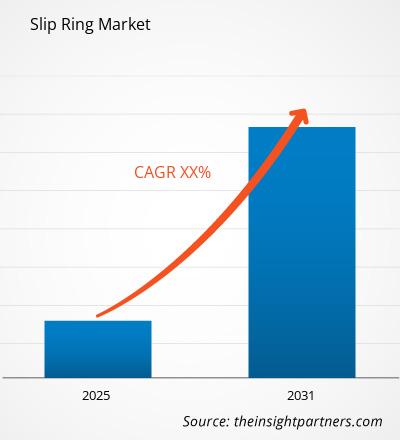
The Slip Ring market size was calculated to be US$ 1,032.71 Million in 2025 and expected to expand up to US$ 1,539.1 Million by 2034 at a rate of 4.53% CAGR during 2026-2034. Requirements are governed by demands for rotary power and data transmission from applications in aerospace, defense, and space applications where the packaging compactness, signal quality and longevity of operation become deciding factors.
North America continues to be a lucrative market segment with demand supported by defense modernization, spacecrafts manufacture, and aircraft maintenance operations. North America is predicted to exhibit a 4.2-4.8% CAGR during 2034, driven by demand arising from procurement cycles in the United States of America, satellite payload manufacturing, and rotary interface requirements for radars, gimbals, de-icing systems, and unmanned systems.
Slip Ring Market Assessment and Insights
- North America accounted for 34–37% share in 2025 and is projected to grow at a CAGR of 4.2–4.8% between 2026–2034, supported by aerospace electronics, missile systems, and satellite assembly.
- US represented 78–82% of North America in 2025 and is expected to grow at a CAGR of 4.3–4.9% between 2026–2034.
- Europe held 25–28% share in 2025 and should expand at a CAGR of 3.9–4.5% between 2026–2034, led by Germany, France, and the UK.
- Asia Pacific captured 27–30% share in 2025 and is forecast to grow at a CAGR of 5.0–5.7% between 2026–2034, led by China, Japan, India, and South Korea.
- Largest Segment Capsule Slip Rings held 28–32% market share in 2025, with a CAGR of 4.1–4.7% between 2026–2034.
- High Growth Segment Space accounted for 18–22% market share in 2025, with a CAGR of 5.4–6.1% between 2026–2034.
- Key companies analyzed in detail: Cobham Limited, Combinent Oy Ab, Mersen S.A., MOFLON TECHNOLOGY CO., LIMITED, Moog Inc., Pandect Precision Components Ltd., ROTAC Co., Ltd., RUAG International Holding AG, Schleifring GmbH, STEMMANN-TECHNIK GmbH.
Source: The Insight Partners' analysis based on proprietary research, government publications, company annual reports, investor presentations, industry databases, and expert interviews.
Technological innovation has shifted from traditional brush mechanisms to more compact, hybrid, and contactless mechanisms with lower wear and increased data transfer capabilities. Dynamics in production have started to shift towards bespoke engineering solutions, smaller batch production and traceable materials due to end-users such as aerospace and defense who need certification on performance under vibration, thermal cycles, shock and electromagnetic stress. Suppliers who are able to test, machine and source materials are at an advantage.
Future growth will be stronger in countries that increase their radar systems, indigenous aircraft, launch facilities and reconnaissance systems. Regulatory tailwinds consist of tighter airworthiness documentation, space grade component testing and defense localization. The investment focus is also on lightweight miniature devices, fiber optic rotary joints and encapsulated devices, thus increasing the market size for the Slip Ring Market.
Slip Ring Market Report Scope
| Report Attribute | Details |
|---|---|
| Market size in 2025 | US$ 1,032.71 Million |
| Market Size by 2034 | US$ 1,539.1 Million |
| Global CAGR (2026 - 2034) | 4.53% |
| Historical Data | 2021-2024 |
| Forecast period | 2026-2034 |
Slip Ring Market Analysis
The Slip Ring Market growth arises from the increasing electronics content on rotating platforms such as stabilized sensors, electro-optical turrets, aircraft de-icing systems, radar pedestals, and satellite antennas. The greatest demand is seen where there is need for sustained rotation without loss of signals or breakage of cables. Aerospace and defense users place emphasis on reliability since their failure could jeopardize mission safety, system readiness, and maintenance costs.
The market ecosystem consists of providers of contact materials, precision machineries, cable harnesses, qualification laboratories, and system integrators. The supply chain continues to be specialized due to the custom design of each assembly based on number of channels, current carrying capacity, bandwidth, packaging, sealing, and lifetime considerations. Extended qualification timeframes advantage established suppliers, while dual sourcing is constrained by redesign costs and mission-specific certification.
Positioning is influenced more by application depth rather than catalog breadth. Moog Inc. and Schleifring GmbH are present in aerospace and defense rotary transmission market, whereas Pandect Precision Components Ltd. and ROTAC Co., Ltd. are active in developing custom solutions. Mersen S.A., Cobham Limited, and STEMMANN-TECHNIK GmbH enrich supplier landscape with material expertise, electromechanical engineering, and industrial rotary interface technology.
The Slip Ring Market analysis reveals that investments are made into modularity of assemblies, increased speed data transfer, and space saving solutions which minimize integration risk for prime contractors. Combinent Oy Ab, MOFLON TECHNOLOGY CO., LIMITED, and RUAG International Holding AG provide for specific needs in antennas, spacecraft mechanisms, and mission electronics. Competitive edge relies on co-development capabilities, compliance with export regulations, and qualification history.
● REPORT CUSTOMIZATION
Tailor This Report To Align With Your Specific Business Requirements
This report can be customized to align precisely with your business objectives, scope, and target markets. Customization options include tailored segmentation, geography, competitive analysis, and strategic insights to support informed decision-making.
Customize This Report →WHAT YOU CAN ADJUST
- ● Segmentations
- ● Geography
- ● Competitive Analysis
- ● Language Preferences
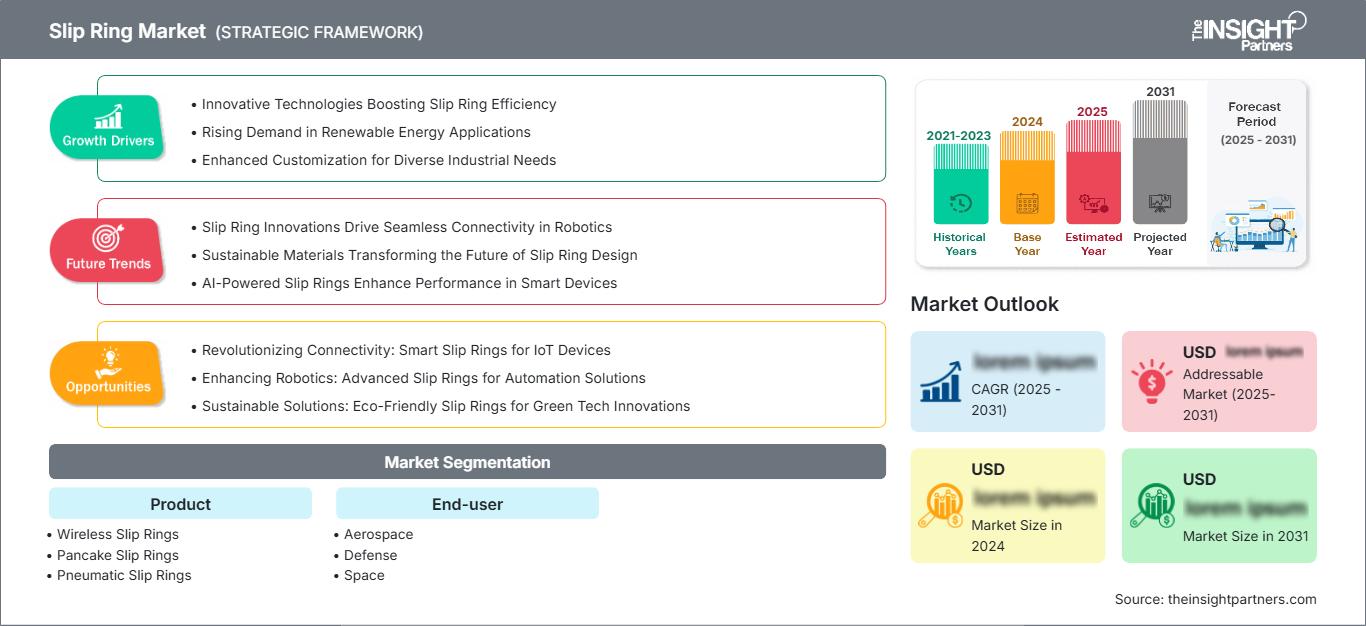
Slip Ring Market: Strategic Insights
Regional Insights
North America Slip Ring Market
North America accounted for 34%-37% of the worldwide revenue share in 2025 and will grow at a 4.2%-4.8% CAGR during 2026-2034. The Slip Ring Market share in North America is driven by sustainment of aircraft, radars, missile defense, and payloads for space applications. Defense acquisition of the United States and commercial satellite constellations will drive the demand for Slip Ring products.
According to the Slip Ring Market forecast, proximity to prime contractors, military bases, and spacecraft manufacturers that need quick turnaround and traceability of components will help suppliers in their operations. Unmanned systems, airborne electro-optics, and navy ships that need sealing and high speed capabilities are some of the end-user industries that drive demand in the region.
U.S. Slip Ring Market
The United States contributed 78-82% to North America in 2025 and is anticipated to expand at a 4.3-4.9% CAGR from 2026-2034. The demand will be driven by aircraft upgrade, rotorcraft sustainment, electronic warfare payload and satellite ground station. Qualification capability within the country facilitates the use in critical applications.
The Moog Inc. is well established in the United States market in aerospace and defense industry offering slip rings for V-22 Osprey sustenance. Cobham Limited on the other hand specializes in rotary and radio frequency technology in the defense electronics sector. The application trends include capsule miniaturization, high channel density and data transfer for gimbals, blade de-icing, radar and unmanned aerial vehicles.
Europe Slip Ring Market
Europe had a market share of 25–28% in 2025 and is projected to experience growth at a 3.9–4.5% CAGR till 2034. Europe has Germany as its most prominent player, backed by Schleifring GmbH, precision engineering, radar projects, and space observation systems. France brings in satellite, launcher, and defense electronics applications, while Italy and Spain contribute to aircraft structures, naval systems, and surveillance systems.
United Kingdom continues to be an important region due to Pandect Precision Components Ltd.'s slip ring solutions that support specific requirements of the aviation, radar, and defense systems. European demand will be influenced by NATO readiness, border surveillance, and space independence, though its procurement cycle is expected to be slower than in North America.
APAC Slip Ring Market
APAC had 27-30% share in 2025 and is projected to register 5.0-5.7% CAGR up until 2034, being the fastest growing among all regions. Leading regional end users are China, Japan, South Korea, India, and Australia due to development of aerospace production, missiles, space launchers and radars.
Political factors driving demand for microwave semiconductors are localization of production of military equipment, satellite navigation systems, and automation of industries (automation spillover effect). Domestic vendors have become competitive on the pricing side, while imports of high-quality assembly are still important for space and high-end airborne systems. The highest demand is seen in applications that require miniaturization, waterproofing, and stable HF performance.
Middle East & Africa Slip Ring Market
Demand in the Middle East and Africa segment is lower but strategic, and 4.0-4.6% CAGR is forecast until 2034. The top countries include Saudi Arabia, with support from the localization of defense, air defense systems, and surveillance. The UAE includes aerospace services and aspirations in space, and South Africa offers specialized defense electronics solutions.
Energy and infrastructure investments generate adjacency demand for ruggedized electrical interface products in challenging conditions, even though aerospace, defense, and space applications are the core market scope. Opportunities in RoMEA are associated with the modernization of radars, airport security, and naval systems, with imported qualified assemblies prevailing in high-end applications.
Segmentation Analysis
Product
Product is projected to grow at a 4.1–4.8% CAGR during 2026–2034. The Slip Ring Market scope across product types is defined by envelope constraints, channel requirements, torque sensitivity, and environmental qualification. Capsule and miniature designs address space and weight limits, while pneumatic, pancake, molded, and wireless variants serve specific needs in rotating payloads and sealed assemblies.
- Wireless Slip Rings address low-maintenance power or signal transfer where contact wear is unacceptable, but adoption remains selective because efficiency, heat, and qualification requirements vary by mission profile.
- Pancake Slip Rings serve applications with limited axial space and broader radial availability, making them useful in radar tables, antennas, and rotating assemblies requiring compact vertical packaging.
- Pneumatic Slip Rings combine fluid or air transfer with electrical continuity, supporting specialized test equipment, aircraft tooling, and systems where rotary motion and controlled media transfer must coexist.
- Miniature Slip Rings are important in electro-optical payloads, unmanned platforms, and compact sensors because they reduce weight while preserving signal integrity across constrained rotating interfaces.
- Capsule Slip Rings maintain the largest position due to balanced cost, packaging flexibility, and suitability for gimbals, cameras, robotic joints, and defense sensor platforms.
- Molded Slip Rings support rugged environments by improving sealing, vibration resistance, and insulation stability, making them relevant for harsh aerospace, naval, and defense applications.
End-user
End-user is expected to expand at a 4.4–5.0% CAGR from 2026 to 2034. Demand is concentrated in platforms where rotary motion intersects with mission-critical electrical transfer. Aerospace emphasizes reliability and weight reduction, defense prioritizes ruggedness and electromagnetic performance, and space requires vacuum-compatible materials, high cleanliness, and long operational life without field maintenance.
- Aerospace demand is anchored in rotorcraft, fixed-wing de-icing, inflight systems, and stabilized sensors where certified reliability and compact packaging strongly influence supplier selection.
- Defense applications include turrets, radar pedestals, electro-optical systems, naval platforms, and mobile missile systems, creating demand for rugged products with controlled signal loss.
- Space is the high-growth end-user as satellites, launch systems, and ground-based space observation require long-life rotary transmission under vacuum, radiation, and thermal cycling.
Opportunity Snapshot
| End-user | Revenue Contribution | Trend Tag | Adoption Stage |
| Aerospace | High | Sensor Gimbals | Mature |
| Defense | High | Radar Upgrade | Scaling |
| Space | Medium | Satellite Payloads | Emerging |
Slip Ring Market Growth Drivers and Impact Analysis
Rising Electronics Density in Rotating Platforms
Aircraft, defense vehicles, satellites, and radar systems now carry more sensors, processors, and communication channels than prior generations. This raises the number of power, data, and radio-frequency paths that must cross rotating joints without cable twisting or signal interruption. The impact is direct: buyers increasingly specify higher channel density, better shielding, and lower electrical noise. Suppliers able to combine compact mechanical design with validated high-speed transmission can capture upgrades in gimbals, turrets, de-icing systems, and antenna platforms. The driver also raises barriers for low-cost vendors because qualification evidence, material selection, and life testing become central to procurement.
Defense Modernization and Sustainment Spending
Defense modernization programs are expanding the installed base of rotating mission systems, including surveillance radars, remote weapon stations, naval sensors, and electro-optical targeting payloads. At the same time, sustainment spending supports replacement of qualified slip ring assemblies in long-life aircraft and vehicles. The commercial impact is a blend of new-build and aftermarket demand, which stabilizes revenue through procurement cycles. Vendors with export compliance processes, secure supply chains, and program history are favored because defense customers avoid unqualified substitutions. This driver supports premium pricing for ruggedized, documented, and repairable assemblies that reduce downtime and preserve platform readiness.
Expansion of Space and Satellite Infrastructure
Space programs create demand for rotary transmission components that can operate without maintenance under vacuum, radiation, and wide thermal swings. Satellites use rotating mechanisms for antennas, solar arrays, instruments, and pointing systems, while ground-based observation radars also require high-reliability rotary joints. The market impact is selective but valuable because space-grade qualification raises engineering content and testing intensity. As commercial constellations, national launch programs, and defense space assets expand, suppliers with vacuum-compatible materials, cleanliness controls, and traceability gain an advantage. This driver also encourages partnerships between component specialists and spacecraft integrators early in the design cycle.
Slip Ring Market Future Trends
Hybrid Contact and Contactless Transmission Architectures
Slip Ring Market trends are moving toward hybrid architectures that combine conventional contacts with fiber-optic, capacitive, inductive, or wireless data transfer paths. The objective is not to eliminate contact technology in every application, but to place each transmission method where it performs best. Power may remain contact-based, while high-speed data moves through optical or contactless channels to reduce noise and wear. Over the forecast period, this will influence design conversations with primes, as suppliers propose modular rotary interfaces instead of single-technology devices. Adoption will be strongest in payloads requiring higher bandwidth, longer maintenance intervals, and lower electromagnetic interference.
Miniaturization for Unmanned and Space-Constrained Platforms
Future platform designs are likely to place greater emphasis on size, weight, and power optimization, especially in drones, small satellites, compact radar heads, and portable surveillance systems. This trend will shift demand toward miniature and capsule formats with higher circuit counts, better shielding, and improved thermal behavior. Engineering value will move from basic conductivity to integrated packaging, cable management, and validated signal performance. Suppliers that can shorten development cycles while meeting defense and aerospace qualification requirements will gain design-in advantages. The trend also supports localized customization because platform geometry often dictates slip ring architecture.
Slip Ring Market Opportunities
Qualification-Led Aftermarket and Repair Programs
Aftermarket and repair programs offer durable revenue because aerospace and defense platforms remain in service for decades, while rotary assemblies require inspection, refurbishment, or replacement based on operating hours and mission severity. Suppliers can build opportunity by offering repair documentation, failure analysis, obsolescence management, and form-fit-function replacements for qualified assemblies. This approach is especially relevant where complete system redesign is costly or operational availability is critical. The commercial benefit is recurring demand with lower customer acquisition cost than new platform competitions. Companies with original design data, test capability, and program relationships are best positioned to secure long-term service agreements.
Localized Supply Chains for Strategic Programs
Governments are encouraging local content in aircraft, missile, naval, and space programs, creating opportunities for qualified slip ring suppliers to establish regional partnerships, assembly cells, or technology transfer models. The opportunity is strongest in APAC and the Middle East, where defense industrial policies seek local participation without compromising reliability. Suppliers can differentiate by offering modular platforms that are locally assembled while retaining critical process control. This reduces lead times, improves customer access, and supports compliance with procurement preferences. The main investment requirement is disciplined quality management, training, and documentation alignment with aerospace and defense standards.
Recent Developments
- December 2025: Hycom Engineering, a market leader in rotary joints and rotary actuators for the construction and heavy-equipment industry, announced the launch of its next-generation Electric Slip Rings, marking a significant expansion of its advanced motion-control solutions portfolio. Engineered, designed, and manufactured entirely in India, the new Electric Slip Rings reinforce Hycom’s commitment to building world-class industrial components under the Make in India and Atmanirbhar Bharat vision.
- April 2025: Moog Inc., a worldwide designer, manufacturer and systems integrator of high-performance precision motion and fluid controls and control systems, has been awarded a $28 million contract by the U.S. Navy for the repair of the slip ring assembly in support of the V-22 Osprey. This versatile military transport aircraft that combines tiltrotor and fixed-wing technology, offering the performance of a helicopter with the speed of a fixed-wing aircraft.
- April 2024: Kübler slip rings stand for the reliable transmission of electrical power, analog or digital signals as well as for the transmission of fieldbuses and Industrial Ethernet. In response to the requirements of industry and automation with regard to future Industry 4.0 / IIoT concepts, Kübler is now launching a new slip ring with Single Pair Ethernet, thereby expanding its slip ring portfolio. With its smaller size of 85mm and reduced data cables, the new SR085SE is cost-effective. The Fast Ethernet module enables the currently widespread transmission rate of up to 100 Mbps. As the slip ring can be individually configured to your application, it is suitable for any area of use - even with high current loads. The application determines the mechanical connection – the slip ring adapts to it. For example, it is ideal for use in automation or vision sensor technology.
Frequently Asked Questions

- Comprehensive Market Sizing and Forecast Analysis
- Detailed Segmentation Analysis
- In-Depth Market Dynamics Assessment
- Regional and Country-Level Insights
- Competitive Landscape and Company Benchmarking
- Strategic Business Intelligence
Recent Reports
Testimonials

The Insight Partners' SCADA System Market report is comprehensive, with valuable insights on current trends and future forecasts. The team was highly professional, responsive, and supportive throughout. We are very satisfied and highly recommend their services.
RAN KEDEM Partner, Reali Technologies LTDs
I requested a report on a very specific software market and the team produced the report in a few days. The information was very relevant and well presented. I then requested some changes and additions to the report. The team was again very responsive and I got the final report in less than a week.
JEAN-HERVE JENN Chairman, Future Analytica
We worked with The Insight Partners for an important market study and forecast. They gave us clear insights into opportunities and risks, which helped shape our plans. Their research was easy to use and based on solid data. It helped us make smart, confident decisions. We highly recommend them.
PIYUSH NAGPAL Sr. Vice President, High Beam Global
The Insight Partners delivered insightful, well-structured market research with strong domain expertise. Their team was professional and responsive throughout. The user-friendly website made accessing industry reports seamless. We highly recommend them for reliable, high-quality research services
YUKIHIKO ADACHI CEO, Deep Blue, LLC.
This is the first time I have purchased a market report from The Insight Partners.While I was unsure at first, I visited their web site and felt more comfortable to take the risk and purchase a market report.I am completely satisfied with the quality of the report and customer service. I had several questions and comments with the initial report, but after a couple of dialogs over email with their analyst I believe I have a report that I can use as input to our strategic planning process.Thank you so much for taking the extra time and making this a positive experience.I will definitely recommend your service to others and you will be my first call when we need further market data.
JOHN SUZUKI President and Chief Executive Officer, Board Director, BK Technologies
I wish to appreciate your support and the professionalism you displayed in the course of attending to my request for information regarding to infectious disease IVD market in Nigeria. I appreciate your patience, your guidance, and the fact that you were willing to offer a discount, which eventually made it possible for us to close a deal. I look forward to engaging The Insight Partners in the future, all thanks to the impression you have created in me as a result of this first encounter.
DR CHIJIOKE ONYIA MANAGING DIRECTOR, PineCrest Healthcare Ltd.Reason to Buy
- Informed Decision-Making
- Understanding Market Dynamics
- Competitive Analysis
- Identifying Emerging Markets
- Customer Insights
- Market Forecasts
- Risk Mitigation
- Boosting Operational Efficiency
- Strategic Planning
- Investment Justification
- Tracking Industry Innovations
- Aligning with Regulatory Trends





 Get Free Sample for