
Clinical Nutrition Market Trends, Size & Forecast by 2034
Coverage: By Product Type ( Infant Nutrition, Enteral Nutrition, Parenteral Nutrition ); Route of Administration ( Oral, Parenteral ); Age Group ( Adults, Pediatrics ) , and Geography (North America, Europe, Asia Pacific, and South and Central America)
- Status : Data Released
- Report Code : TIPRE00007333
- Category : Life Sciences
- No. of Pages : 150
- Available Report Formats :


- Last update date : November 12, 2026


2025 Market Size
US$ 66.36 Bn
Base year value
2034 Forecast
US$ 133.49 Bn
Projected by 2034
CAGR 2026-2034
8.08 %
Growth rate
Addressable Market
US$ 898.63 Bn
(2026-2034)
The Clinical Nutrition Market was valued at US$ 66.36 Billion in 2025 and is projected to reach US$ 133.49 Billion by 2034, expanding at a CAGR of 8.08% during 2026–2034. Growth is supported by the increasing clinical recognition of disease-related malnutrition, expanding nutrition screening in hospitals, rising chronic disease prevalence, and greater use of specialized formulations across acute care, rehabilitation, and home-based treatment environments.
North America remains a commercially advanced region, with the Clinical Nutrition Market size supported by an estimated ~8% CAGR through 2034. Structured hospital nutrition protocols, established reimbursement pathways, specialist dietitian networks, and demand for high-protein, disease-specific, and age-adapted products sustain utilization. The transition of enteral and oral nutritional support from hospitals to home care is also broadening recurring product consumption.
Clinical Nutrition Market Assessment and Insights
Regional Outlook
- North America: ~38% of the global market in 2025 | ~8% CAGR through 2034. Market position: The region leads through high clinical awareness, established reimbursement mechanisms, strong supplier coverage, standardized malnutrition screening, and extensive adoption of oral and enteral nutrition across hospitals and home-care programs.
- US: ~82% of North American market revenue in 2025 | ~8% CAGR through 2034. Market position: The country dominates North America because of dense healthcare infrastructure, high chronic disease expenditure, specialist nutrition programs, significant company presence, and broad use of condition-specific formulations.
- Europe: ~30% of the global market in 2025 | ~7% CAGR through 2034. Market position: Europe represents a mature market supported by clinical guidelines, aging populations, and established home enteral nutrition services. Germany leads the region, followed by the UK, France, Italy, and Spain.
- Asia Pacific: ~24% of the global market in 2025 | ~10% CAGR through 2034. Market position: Asia Pacific is the fastest-growing region as hospital capacity, diagnosis rates, local manufacturing, and nutrition awareness increase. China leads regional revenue, while India offers substantial expansion potential.
Segment Outlook
- Infant Nutrition: ~48% Share in 2025 | ~8% CAGR through 2034. Market position: The segment leads because nutritional support for premature infants, growth disorders, allergies, and pediatric metabolic conditions creates sustained demand through hospitals, pharmacies, and supervised home-care channels.
- Parenteral Nutrition: ~14% Share in 2025 | ~10% CAGR through 2034. Market position: Growth reflects increasing critical care procedures, gastrointestinal surgery volumes, neonatal applications, and adoption of standardized multi-chamber systems that simplify preparation and reduce handling complexity.
Competitive Coverage
Nestlé S.A., Fresenius Kabi AG, Abbott Laboratories, Danone S.A., B. Braun SE, Pfizer Inc., Baxter International Inc., Perrigo Company plc, BASF SE, Nutricia
Methodology
The Insight Partners follows Data Collection & Secondary Research, Primary Research, Data Analysis, and Data Triangulation & Final Review to validate market estimates and insights.
Source: The Insight Partners' analysis based on proprietary research, government publications, company annual reports, investor presentations, industry databases, and expert interviews.
Clinical nutrition has advanced from generalized calorie supplementation to a nutrition strategy designed to suit the particular clinical need. The trends in the development of products are geared towards high protein content, digestion-friendly, metabolic needs, nutrient needs of the specific disease, and easy administration. Manufacturers are developing more ready-to-use liquids, multi-chambered parenteral containers, peptide solutions, and real food imitation enteral products. This, therefore, means that the production of these products requires a special source of ingredients, sterile production, stable formulations, clinical evidence, regulation, and efficient distribution.
From 2015 to 2034, investments will be geared towards the Asia Pacific region, selected countries in the Middle East, and under-identified markets in developed regions. Hospital expansion, clinical education, aging population, and government concerns on maternal and pediatric nutrition will provide an avenue for market growth. Regulations requiring safety, traceability, sterility, and evidence-based marketing will favor manufacturers of these products.
Clinical Nutrition Market Report Scope
| Report Attribute | Details |
|---|---|
| Market size in 2025 | US$ 66.36 Billion |
| Market Size by 2034 | US$ 133.49 Billion |
| Global CAGR (2026 - 2034) | 8.08% |
| Historical Data | 2021-2024 |
| Forecast period | 2026-2034 |
Clinical Nutrition Market Analysis
The key factors that are influencing the growth of the Clinical Nutrition Market include an increased number of patients who require nutritional support at some point in their treatments – prior to, during, or post-treatment. Oncological diseases, gastrointestinal diseases, neurological diseases, renal problems, surgical procedures, and critical care conditions have the potential to limit patients' food consumption or hinder the absorption of nutrients. Nutritional status has become increasingly associated with clinical outcomes, complications, hospital stay duration, and readmission practices.
The value chain includes ingredients suppliers, formulators, sterile packing companies, manufacturing companies, hospitals, pharmacies, nutritionists, distributors of home care solutions, and caregivers. In case of clinical nutrition products, supply chain strength becomes especially important in case of amino acids, lipids, micronutrients, specialized proteins, medical grade packing, and sterile solutions.
According to the Clinical Nutrition Market Analysis, the competitive rivalry is becoming increasingly driven by therapeutic specialization rather than just portfolio width. Nestle S.A., Abbott Laboratories, Danone S.A. and Nutricia are among those companies which are majorly competing in oral, pediatric and enteral nutrition, whereas Fresenius Kabi AG, Baxter International Inc. and B. Braun SE have relevance in parenteral nutrition and hospital distribution.
Capital investment is increasingly flowing in the areas of formulation research, clinical trials, production automation, geographical reach and patient care. BASF SE has a place among them with their nutritional ingredients, whereas Perrigo Company plc and Pfizer Inc. bring their expertise to the table related to consumer health, infant nutrition and healthcare distribution.
● REPORT CUSTOMIZATION
Tailor This Report To Align With Your Specific Business Requirements
This report can be customized to align precisely with your business objectives, scope, and target markets. Customization options include tailored segmentation, geography, competitive analysis, and strategic insights to support informed decision-making.
Customize This Report →WHAT YOU CAN ADJUST
- ● Segmentations
- ● Geography
- ● Competitive Analysis
- ● Language Preferences
Clinical Nutrition Market: Strategic Insights
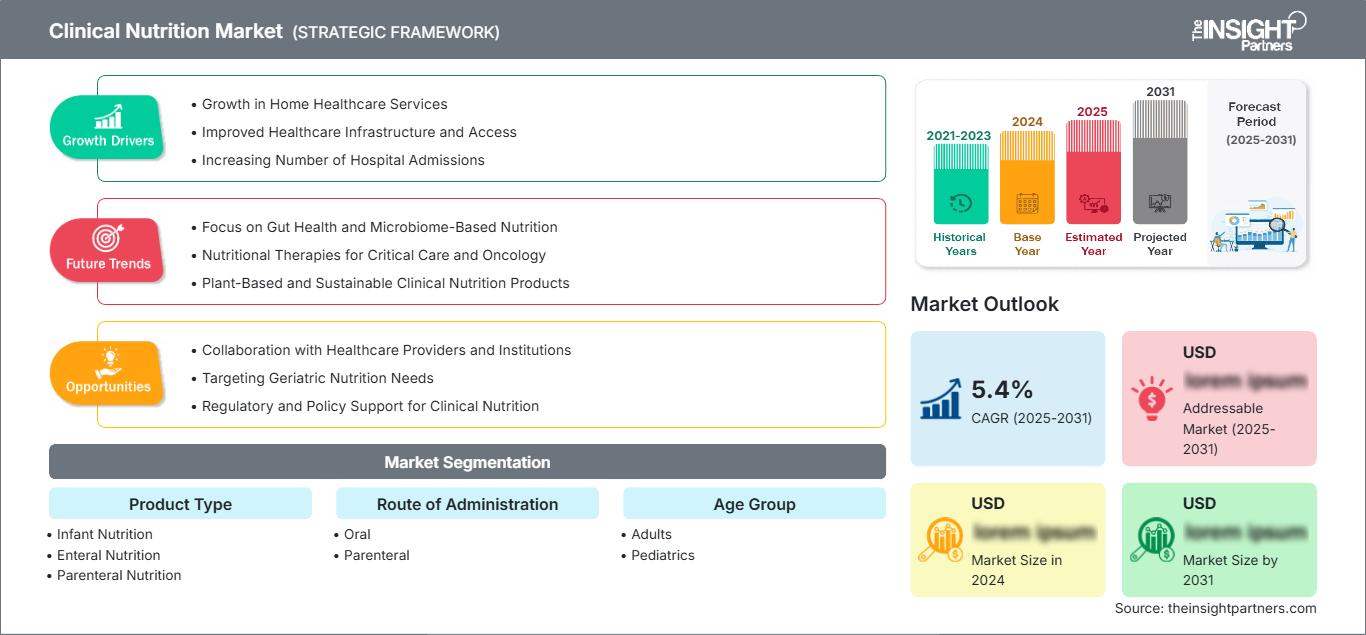
Regional Insights
North America Clinical Nutrition Market
North America is projected to expand at a ~8% CAGR through 2034. The demand is backed up by systematic inpatient nutritional assessment, chronic disease management, critical care, and availability of oral, enteral, and parenteral formulations. Increasingly, hospitals are involving dieticians and nutrition support teams into the processes of oncology, intensive care, surgery, and rehabilitation.
Market share of the Clinical Nutrition in North America is aided by systematic provision of home infusion and enteral feeding. Innovations in this segment involve protein-rich products, nutrition for diabetes, renal nutrition, gastrointestinal tolerance, and ready-to-drink formulations. Canada is represented by organized care pathways, whereas the USA remains the leader in terms of revenues.
U.S. Clinical Nutrition Market
The US accounts for ~82% of North American revenue and is forecast to record a ~8% CAGR through 2034. Its position reflects high hospitalization expenditure, mature pharmacy and home-care networks, extensive use of nutrition products during recovery, and strong awareness of nutritional intervention among clinicians and caregivers.
Abbott Laboratories, Nestlé S.A., Danone S.A., Fresenius Kabi AG, Baxter International Inc., B. Braun SE, and Nutricia have relevant commercial or clinical nutrition operations in the country. The applications are focusing on longer-term use for aging populations, oncological patients, metabolic conditions, nutritional requirements for weight loss, and post-acute rehabilitation. Convenience of formulation and billing status are still key purchasing factors.
Europe Clinical Nutrition Market
Europe held approximately ~30% of global revenue in 2025 and is anticipated to advance at a ~7% CAGR through 2034. The following factors influence the demand for clinical nutrition products: clinical nutrition standards, aging populations, procurement of public healthcare institutions, and organized home enteral nutrition services. Cost restrictions foster products that provide adequate nutrition, simplicity of administration, and less caregiver effort as opposed to expensive formulas.
Germany is the top market in Europe due to the availability of a large number of hospitals, aging population, home-care structure, and medical nutrition supplier penetration. In the United Kingdom, there are developed community tube-feeding and oral supplementation routes, despite procurement being very sensitive to the clinical and financial results. There is clear commitment to specialized nutrition production and healthcare in France.
There are developing markets for geriatric, oncological, and postoperative nutrition products in Italy and Spain. Their development is facilitated by the hospital renovations and awareness of malnutrition in the elderly patients. In all countries of Europe, producers have to take into consideration differences in reimbursement process, labeling regulations, tenders and prescription systems.
APAC Clinical Nutrition Market
Asia Pacific represented ~24% of global revenue in 2025 and is expected to grow at a ~10% CAGR through 2034, making it the fastest-growing region. China is the leading country in Asia Pacific, supported by hospital capacity, pediatric nutrition demand, aging demographics, and expanding domestic production.
Japan contributes established elderly-care demand, while South Korea favors clinically differentiated products. India combines a large patient population with expanding private healthcare and nutrition awareness. Australia has well-developed clinical and home-care practices. Regional policy attention to maternal health, pediatric development, hospital quality, and manufacturing localization supports broader accessibility.
Middle East & Africa Clinical Nutrition Market
The Middle East & Africa market is expected to expand at a ~8% CAGR through 2034. Saudi Arabia and the UAE are investing in tertiary hospitals, healthcare localization, and specialist treatment capacity, creating demand for enteral and parenteral products. Saudi Arabia represents the leading country in the Middle East & Africa based on healthcare scale and procurement investment.
South Africa serves as an important distribution and clinical center for Sub-Saharan Africa. The Rest of MEA remains uneven because access depends on hospital infrastructure, imported-product availability, clinician awareness, and affordability. Supply partnerships and localized packaging can improve continuity across geographically dispersed healthcare systems.
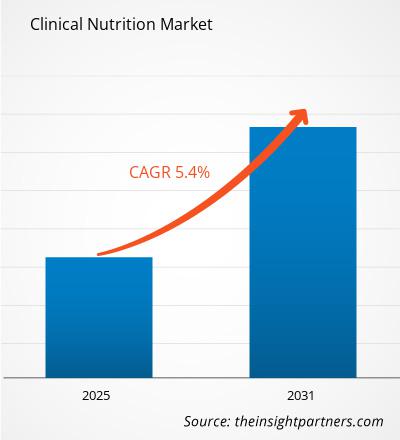
Segmentation Analysis
Product Type
Product Type defines the Clinical Nutrition Market scope through nutritional products designed for different physiological and clinical requirements. Procurement varies according to patient condition, digestive function, treatment duration, care setting, and administration complexity. Buyers increasingly prioritize nutritional completeness, safety, tolerance, and workflow efficiency. Parenteral Nutrition is projected to record a ~10% CAGR during 2026–2034 as critical care and surgical applications expand.
- Infant Nutrition: Specialized infant products support nutritional requirements associated with prematurity, food allergy, faltering growth, digestive intolerance, and inherited metabolic conditions. Hospital recommendations, pediatric supervision, safety standards, and caregiver trust strongly influence product selection.
- Enteral Nutrition: Enteral products serve patients with functioning gastrointestinal tracts who cannot satisfy nutritional requirements through conventional food. Demand spans intensive care, oncology, neurological impairment, dysphagia, rehabilitation, and long-term tube feeding.
- Parenteral Nutrition: These sterile formulations deliver nutrients intravenously when gastrointestinal feeding is impossible, insufficient, or contraindicated. Adoption is concentrated in critical care, neonatal units, major surgery, intestinal failure, and complex inpatient treatment.
Route of Administration
Route of Administration influences clinical workflow, product design, monitoring requirements, and treatment location. Selection depends on swallowing ability, gastrointestinal function, metabolic condition, infection risk, and anticipated therapy duration. Oral delivery is widely accessible, while intravenous delivery addresses complex patients requiring controlled nutrient provision. Within this category, Parenteral administration is projected to expand at a ~10% CAGR through 2034.
- Oral: Oral administration supports patients who can swallow but cannot meet nutritional requirements through regular meals. Ready-to-drink supplements, powders, texture-modified products, and concentrated protein formats enable use across hospitals, rehabilitation facilities, and homes.
- Parenteral: Intravenous administration provides carbohydrates, amino acids, lipids, electrolytes, vitamins, and trace elements under clinical supervision. Standardized bags can reduce preparation steps, while individualized compounding remains relevant for complex metabolic requirements.
Age Group
Age Group segmentation reflects substantial differences in nutrient needs, disease burden, body composition, treatment tolerance, and caregiver involvement. Adult demand benefits from aging populations and chronic disease management, whereas pediatric nutrition requires precise formulation and safety controls. Adults are expected to register an approximately ~9% CAGR during 2026–2034 as recovery, frailty, oncology, and post-acute nutrition programs expand.
- Adults: Adult products address disease-related malnutrition, sarcopenia, surgery, cancer treatment, renal disease, gastrointestinal impairment, and critical illness. Demand increasingly extends beyond hospitals into rehabilitation, nursing facilities, pharmacies, and supervised home-care programs.
- Pediatrics: Pediatric nutrition serves infants, children, and adolescents with growth challenges, congenital disorders, allergies, neurological conditions, or feeding difficulties. Palatability, age-appropriate composition, caregiver usability, and clinical oversight are central adoption factors.
Opportunity Snapshot
| Age Group | Revenue Contribution | Trend Tag | Adoption Stage |
| Adults | High | Healthy Aging | Scaling |
| Pediatrics | High | Metabolic Care | Mature |
Clinical Nutrition Market Growth Drivers and Impact Analysis
Rising Disease-Related Malnutrition Recognition
Increased awareness regarding the risks associated with malnutrition is leading to an increased focus on nutrition screenings in hospitals, oncology centers, surgical departments, and post-acute care centers. Individuals suffering from decreased appetite, dysphagia, inflammation, malabsorption, or increased metabolic needs might benefit from nutritional assistance in addition to their treatment. Early identification will lead to increased demand for oral nutritionals, enteral nutritionals, and parenteral nutritionals according to the clinical severity of the patient. The market opportunity is not just a matter of product sales because there is an increasing need for documentation, dietitian services, and monitoring.
Aging Population and Chronic Disease Burden
Older individuals commonly suffer from poor appetite, muscle wasting, difficulty in swallowing, multi-morbidities, and longer time periods for healing. These elements result in increased need for protein-rich, energy-rich, palatable, and disease-specific nutrition. Diseases also change the nature of nutritional care from being a temporary inpatient treatment to becoming a repeatable outpatient or at-home treatment. There is therefore the emergence of more concentrated packaging options, enhanced flavor profiles, texturized products, and nutritional products designed to preserve muscle mass.
Expansion of Home-Based Nutritional Care
Healthcare systems are shifting appropriate patients from prolonged hospitalization toward outpatient and home treatment. Portable pumps, ready-to-hang containers, shelf-stable formulas, multi-chamber bags, and caregiver training enable nutritional support outside acute-care facilities. Home delivery can improve treatment continuity for neurological disease, cancer recovery, intestinal disorders, and long-term feeding dependence. This transition expands recurring demand but also raises expectations for packaging simplicity, customer support, delivery reliability, and remote monitoring. Vendors with integrated logistics and patient-assistance capabilities can differentiate themselves beyond formulation performance.
Clinical Nutrition Market Future Trends
Personalized and Condition-Specific Formulation Design
Clinical Nutrition Market trends are moving toward products designed around disease stage, metabolic response, age, body composition, and treatment pathway. Future portfolios are likely to include more renal, oncology, diabetes, gastrointestinal, wound-care, and muscle-preservation formulations. Digital assessment tools may help clinicians select calorie, protein, fluid, and micronutrient profiles more consistently. This shift will increase the value of clinical evidence and real-world outcome data. Companies that connect formulation development with measurable tolerability, adherence, and recovery indicators will be better positioned in competitive tenders and specialist channels.
Connected Nutrition Delivery and Monitoring
Enteral pumps and home-care services are expected to incorporate greater connectivity, dosing documentation, alerts, and caregiver support. Connected systems can help track delivery interruptions, feeding schedules, hydration, and adherence while enabling clinicians to adjust care remotely. Adoption will depend on cybersecurity, interoperability, usability, and reimbursement. The trend may gradually shift supplier competition from standalone formulas toward integrated nutrition-management ecosystems combining consumables, devices, education, logistics, and patient data.
Clinical Nutrition Market Opportunities
Localized Manufacturing in High-Growth Economies
Clinical Nutrition Market Forecasts indicate meaningful commercial potential for manufacturing, packaging, and distribution investments in Asia Pacific and selected Middle Eastern countries. Localization can reduce import dependence, shorten replenishment times, improve tender competitiveness, and support regionally preferred formats and flavors. Investment priorities include quality-controlled ingredient sourcing, sterile filling, pediatric safety, regulatory capability, and temperature-resilient logistics. Partnerships with hospitals, pharmacies, and domestic healthcare companies can accelerate market access while helping global suppliers adapt products to affordability constraints and local treatment practices.
Nutrition Support Along Emerging Treatment Pathways
New opportunities are developing around oncology recovery, bariatric care, medically managed weight loss, frailty, rehabilitation, and post-discharge nutrition. Patients may lose muscle or develop nutrient deficiencies despite improvement in their primary condition. Clinical Nutrition Market Opportunities therefore extend to coordinated programs that combine screening, targeted supplementation, healthcare-professional education, and follow-up. Companies should prioritize evidence generation and channel partnerships rather than treating these populations as conventional consumer nutrition segments.
Recent Developments
- September 2026: Danone S.A. – Danone inaugurated a major production line at its Steenvoorde facility in France and positioned the site as a strategic European medical nutrition manufacturing center. The investment strengthens production capacity for specialized nutritional products and supports regional supply resilience as demand rises across adult medical nutrition and supervised patient-care channels.
- September 2026: Fresenius Kabi AG – Fresenius launched NutriChef in several European countries as a real-food-based enteral nutrition concept. The products contain familiar food-derived ingredients while retaining the nutritional completeness and consistency required for medical nutrition, addressing patient and caregiver interest in meal-inspired tube-feeding alternatives.
- May 2026: Abbott Laboratories – Abbott launched Ensure Strength Pro in India to support strength and overall well-being among aging adults. The formulation provides high-quality protein and a broad nutrient profile, illustrating continued portfolio development around healthy aging, muscle support, and common nutritional gaps in rapidly expanding adult nutrition markets.
Frequently Asked Questions

- Comprehensive Market Sizing and Forecast Analysis
- Detailed Segmentation Analysis
- In-Depth Market Dynamics Assessment
- Regional and Country-Level Insights
- Competitive Landscape and Company Benchmarking
- Strategic Business Intelligence
Recent Reports
Testimonials

The Insight Partners provided valuable market intelligence that supported our global go-to-market strategy. Their team was professional, responsive, and attentive to our feedback, providing thoughtful analysis and helpful methodological clarifications throughout the project.
Junmo Kim Chief Financial Officer (CFO), Enertech Co., Ltd.
The Insight Partners' SCADA System Market report is comprehensive, with valuable insights on current trends and future forecasts. The team was highly professional, responsive, and supportive throughout. We are very satisfied and highly recommend their services.
RAN KEDEM Partner, Reali Technologies LTDs
I requested a report on a very specific software market and the team produced the report in a few days. The information was very relevant and well presented. I then requested some changes and additions to the report. The team was again very responsive and I got the final report in less than a week.
JEAN-HERVE JENN Chairman, Future Analytica
We worked with The Insight Partners for an important market study and forecast. They gave us clear insights into opportunities and risks, which helped shape our plans. Their research was easy to use and based on solid data. It helped us make smart, confident decisions. We highly recommend them.
PIYUSH NAGPAL Sr. Vice President, High Beam Global
The Insight Partners delivered insightful, well-structured market research with strong domain expertise. Their team was professional and responsive throughout. The user-friendly website made accessing industry reports seamless. We highly recommend them for reliable, high-quality research services
YUKIHIKO ADACHI CEO, Deep Blue, LLC.
This is the first time I have purchased a market report from The Insight Partners.While I was unsure at first, I visited their web site and felt more comfortable to take the risk and purchase a market report.I am completely satisfied with the quality of the report and customer service. I had several questions and comments with the initial report, but after a couple of dialogs over email with their analyst I believe I have a report that I can use as input to our strategic planning process.Thank you so much for taking the extra time and making this a positive experience.I will definitely recommend your service to others and you will be my first call when we need further market data.
JOHN SUZUKI President and Chief Executive Officer, Board Director, BK Technologies
I wish to appreciate your support and the professionalism you displayed in the course of attending to my request for information regarding to infectious disease IVD market in Nigeria. I appreciate your patience, your guidance, and the fact that you were willing to offer a discount, which eventually made it possible for us to close a deal. I look forward to engaging The Insight Partners in the future, all thanks to the impression you have created in me as a result of this first encounter.
DR CHIJIOKE ONYIA MANAGING DIRECTOR, PineCrest Healthcare Ltd.Reason to Buy
- Informed Decision-Making
- Understanding Market Dynamics
- Competitive Analysis
- Identifying Emerging Markets
- Customer Insights
- Market Forecasts
- Risk Mitigation
- Boosting Operational Efficiency
- Strategic Planning
- Investment Justification
- Tracking Industry Innovations
- Aligning with Regulatory Trends





 Get Free Sample for