
Electronic Warfare Market Drivers and Forecasts by 2028
Published Report - Electronic Warfare Market Forecast to 2028 - COVID-19 Impact and Global Analysis by Component (Hardware, Software, and Services), Application (Electronic Attack, Electronic Protection, and Electronic Warfare Support), and Product Type (Countermeasure Systems, Jammers, Sensor Systems, Weapons Systems, and Others)
- Status : Published
- Report Code : TIPAR100000942
- Category : Aerospace and Defense
- No. of Pages : 199
- Available Report Formats :


- Last update date : June 12, 2024


2021 Market Size
US$ 18.19 Bn
Base year value
2028 Forecast
US$ 27.8 Bn
Projected by 2028
CAGR 2022-2028
6.2 %
Growth rate
Addressable Market
US$ 163.14 Bn
(2022-2028)
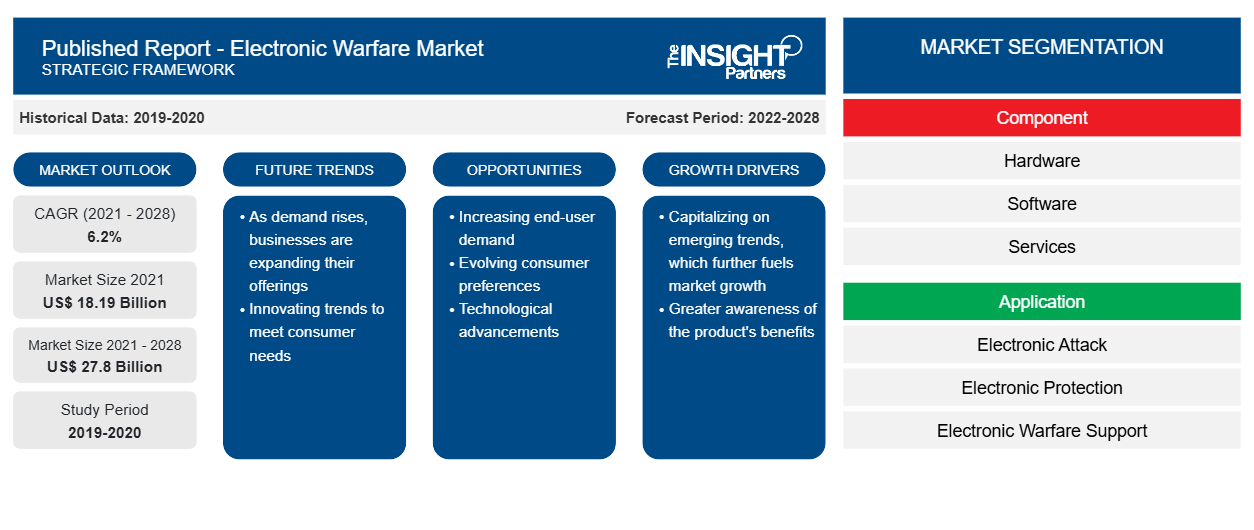
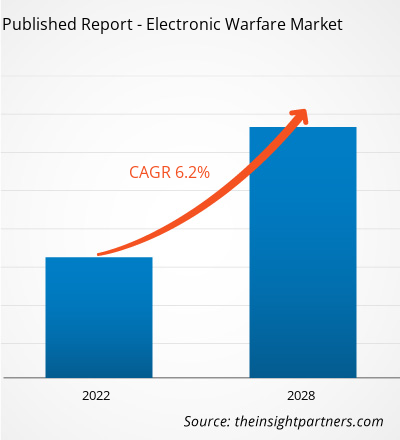
[Research Report] The electronic warfare market is projected to reach US$ 27,797.2 million by 2028 from US$ 18,192.8 million in 2021. It is expected to grow at a CAGR of 6.2% from 2021 to 2028.
Analyst Perspective:
The electronic warfare (EW) market is a rapidly expanding sector that encompasses developing, producing, and deploying technologies and systems used for protection and attack in the electromagnetic spectrum. It plays a crucial role in modern military operations by leveraging electronic capabilities to gain an advantage on the battlefield. One of the primary drivers of the electronic warfare market's growth is the growing reliance on technology in military operations. The demand for electronic warfare solutions has surged as armed forces increasingly integrate advanced electronic systems into their arsenal. These systems help military units counter and mitigate threats from adversaries' electronic systems, safeguarding their forces. Advancements in electronic warfare systems have also contributed to market expansion. Technological progress has led to the developing of sophisticated EW systems with improved capabilities. These systems detect, analyze, and respond to electronic signals, enabling more effective attack, protection, and support functions. Enhanced situational awareness is another key factor driving the demand for electronic warfare solutions. In modern warfare, understanding the electronic battlefield is critical for mission success. EW systems provide real-time intelligence by intercepting and analyzing electronic signals, aiding decision-making processes, and enabling effective responses to emerging threats. The electronic warfare market encompasses various segments, including attack, protection, and support. Electronic attacks involve jamming and deception techniques to disrupt or turn off adversary communication and radar systems. Electronic protection focuses on defensive measures to safeguard friendly electronic systems from hostile attacks. Electronic support entails gathering intelligence and analyzing enemy electronic signals to understand their capabilities and intentions comprehensively.
Market Overview:
An emerging area of defense is electronic warfare. With the integration of the electromagnetic spectrum, this has been introduced. E-bombs are also a part of it because they use the same electromagnetic energy. The term "e-bomb" refers to a weapon that uses a powerful electromagnetic field to generate a brief burst of energy that damages electrical equipment without threatening people or buildings. The pulse temporarily interferes with electronic systems at low levels, while at mid-levels, it corrupts computer data. It is gaining popularity steadily.
● REPORT CUSTOMIZATION
Tailor This Report To Align With Your Specific Business Requirements
This report can be customized to align precisely with your business objectives, scope, and target markets. Customization options include tailored segmentation, geography, competitive analysis, and strategic insights to support informed decision-making.
Customize This Report →WHAT YOU CAN ADJUST
- ● Segmentations
- ● Geography
- ● Competitive Analysis
- ● Language Preferences
Published Report - Electronic Warfare Market: Strategic Insights
-
Get Top Key Market Trends of this report.This FREE sample will include data analysis, ranging from market trends to estimates and forecasts.
Market Driver:
Growing Demand for Intelligence, Surveillance, and Reconnaissance (ISR) to Drive Growth of Electronic Warfare Market
The growing demand for Intelligence, Surveillance, and Reconnaissance (ISR) capabilities is a significant driver for the growth of the electronic warfare market. ISR plays a crucial role in military operations by providing decision-makers with essential information and situational awareness. Electronic warfare systems contribute significantly to ISR by intercepting, analyzing, and exploiting electronic signals from adversaries. Electronic warfare systems enable the interception and collection of electronic signals, such as communications, radar emissions, and electronic signatures. These systems have advanced capabilities to detect and monitor enemy activities in the electromagnetic spectrum. By intercepting and analyzing these signals, valuable intelligence can be gathered regarding enemy capabilities, intentions, and operational patterns. Electronic warfare systems provide the means to analyze and exploit the collected intelligence. Advanced signal processing algorithms and techniques enable extracting relevant information from intercepted electronic signals. This information can include details about enemy communication networks, radar capabilities, electronic warfare tactics, and potential vulnerabilities. The information obtained through electronic warfare ISR contributes to the overall situational awareness of military forces. Armed with timely and accurate intelligence, decision-makers can make informed choices regarding mission planning, target identification, and threat assessment. This, in turn, enhances the effectiveness and efficiency of military operations. The growing demand for ISR capabilities drives the need for advanced electronic warfare systems that can effectively intercept, analyze, and exploit electronic signals. As military forces increasingly recognize the importance of real-time and accurate intelligence, the market for electronic warfare systems experiences growth. Defense organizations and governments invest in procuring and developing sophisticated electronic warfare technologies to bolster their ISR capabilities and maintain a competitive edge. Furthermore, integrating electronic warfare systems with other ISR platforms, such as unmanned aerial vehicles (UAVs) or reconnaissance aircraft, further drives market growth. This integration allows for enhanced data collection and analysis, facilitating comprehensive surveillance and reconnaissance missions.
Segmental Analysis:
By application, the market is segmented into electronic attack, electronic protection, and electronic warfare support. The electronic attack segment held the largest share of the electronic warfare market in 2020 and is anticipated to register the highest CAGR in the market during the forecast period. The electronic warfare market is driven by various factors, including the growing demand for intelligence, surveillance, and reconnaissance (ISR) capabilities. This demand stems from the need for enhanced situational awareness, target identification, and threat assessment in modern warfare. The market is also driven by technological advancements, particularly in signal processing, machine learning, and autonomous systems. Furthermore, increasing cyber threats and integrating electronic warfare with cyber operations provide opportunities for market growth. The market offers potential in counter-UAS systems, export opportunities, integration with other military systems, and training and simulation. The electronic warfare market presents many opportunities for innovation, collaboration, and expansion.
Regional Analysis:
The North America electronic warfare market was valued at US$ 5,941.9 million in 2021 and is projected to reach US$ 8,756.3 million by 2028; it is expected to grow at a CAGR of 5.7% during the forecast period. The North American region has dominated the electronic warfare market due to several key factors. Firstly, North America is home to major defense contractors, research institutions, and technology companies with advanced capabilities in electronic warfare. The region has a strong industrial base and a robust defense sector, facilitating cutting-edge electronic warfare systems development and production. The presence of established companies with extensive experience and expertise in electronic warfare has given North America a competitive advantage in the market. Secondly, the United States, as a major player in the global defense landscape, has significantly contributed to the dominance of North America in the electronic warfare market. The U.S. Department of Defense (DoD) allocates substantial budgets to research, develop, and procure electronic warfare systems. This consistent investment in electronic warfare capabilities has fueled innovation and the advancement of technologies in the region. The United States has also actively collaborated with allied nations, further bolstering North America's position in the market.
Additionally, North America benefits from a strong network of defense partnerships and alliances, such as NATO. These partnerships provide opportunities for collaboration, interoperability, and shared development of electronic warfare technologies. The region's defense organizations work closely with industry partners to address emerging threats, enhance capabilities, and develop interoperable electronic warfare systems. Such collaboration and coordination contribute to the dominant market position of North America. Furthermore, North America's geopolitical landscape, characterized by various regional conflicts and security challenges, has necessitated a strong focus on electronic warfare capabilities. The region faces diverse threats, ranging from state to non-state actors, increasing the demand for advanced electronic warfare systems. This demand, combined with the region's technological advancements, has driven the growth and dominance of North America in the market.
Moreover, the strong export potential of North American electronic warfare systems has contributed to its market dominance. The region has successfully exported its advanced electronic warfare technologies to allied nations and partners worldwide. These exports generate revenue, foster stronger defense relationships, and promote the standardization of electronic warfare capabilities globally.
Key Player Analysis:
The electronic warfare market analysis consists of the players such as L3Harris Technologies, Inc.; Raytheon Technologies Corporation; Lockheed Martin Corporation; Saab AB; BAE Systems; Thales Group; Northrop Grumman Corporation; Cobham Limited; Leonardo S.p.A.; and Textron Inc. Among the players in the electronic warfare Raytheon Technologies Corporation and Lockheed Martin Corporation are the top two players owing to the diversified product portfolio offered.
Electronic Warfare
Published Report - Electronic Warfare Market Report Scope
| Report Attribute | Details |
|---|---|
| Market size in 2021 | US$ 18.19 Billion |
| Market Size by 2028 | US$ 27.8 Billion |
| Global CAGR (2021 - 2028) | 6.2% |
| Historical Data | 2019-2020 |
| Forecast period | 2022-2028 |
| Segments Covered |
By Component
|
| Regions and Countries Covered |
North America
|
| Market leaders and key company profiles |
|
Published Report - Electronic Warfare Market Players Density: Understanding Its Impact on Business Dynamics
The Published Report - Electronic Warfare Market is growing rapidly, driven by increasing end-user demand due to factors such as evolving consumer preferences, technological advancements, and greater awareness of the product's benefits. As demand rises, businesses are expanding their offerings, innovating to meet consumer needs, and capitalizing on emerging trends, which further fuels market growth.
Recent Developments:
Inorganic and organic strategies such as mergers and acquisitions are highly adopted by companies in the electronic warfare market. A few recent key market developments are listed below:
- In 2022, Israel successfully tested the new "Iron Beam" laser-based air defense system. This is the world's first energy-based weapons system that uses a laser to shoot down incoming UAVs, rockets, and mortars.
- In 2021, L3 Harris won a US$ 120 million contract to upgrade Space Force electronic jammers. On December 23, 2020, the company received US$ 496 million from the US navy under the Next Generation Jammer Low Band aerial jamming program to manufacture Next Generation jammers.
Frequently Asked Questions

- Comprehensive Market Sizing and Forecast Analysis
- Detailed Segmentation Analysis
- In-Depth Market Dynamics Assessment
- Regional and Country-Level Insights
- Competitive Landscape and Company Benchmarking
- Strategic Business Intelligence
Recent Reports
Testimonials

The Insight Partners' SCADA System Market report is comprehensive, with valuable insights on current trends and future forecasts. The team was highly professional, responsive, and supportive throughout. We are very satisfied and highly recommend their services.
RAN KEDEM Partner, Reali Technologies LTDs
I requested a report on a very specific software market and the team produced the report in a few days. The information was very relevant and well presented. I then requested some changes and additions to the report. The team was again very responsive and I got the final report in less than a week.
JEAN-HERVE JENN Chairman, Future Analytica
We worked with The Insight Partners for an important market study and forecast. They gave us clear insights into opportunities and risks, which helped shape our plans. Their research was easy to use and based on solid data. It helped us make smart, confident decisions. We highly recommend them.
PIYUSH NAGPAL Sr. Vice President, High Beam Global
The Insight Partners delivered insightful, well-structured market research with strong domain expertise. Their team was professional and responsive throughout. The user-friendly website made accessing industry reports seamless. We highly recommend them for reliable, high-quality research services
YUKIHIKO ADACHI CEO, Deep Blue, LLC.
This is the first time I have purchased a market report from The Insight Partners.While I was unsure at first, I visited their web site and felt more comfortable to take the risk and purchase a market report.I am completely satisfied with the quality of the report and customer service. I had several questions and comments with the initial report, but after a couple of dialogs over email with their analyst I believe I have a report that I can use as input to our strategic planning process.Thank you so much for taking the extra time and making this a positive experience.I will definitely recommend your service to others and you will be my first call when we need further market data.
JOHN SUZUKI President and Chief Executive Officer, Board Director, BK Technologies
I wish to appreciate your support and the professionalism you displayed in the course of attending to my request for information regarding to infectious disease IVD market in Nigeria. I appreciate your patience, your guidance, and the fact that you were willing to offer a discount, which eventually made it possible for us to close a deal. I look forward to engaging The Insight Partners in the future, all thanks to the impression you have created in me as a result of this first encounter.
DR CHIJIOKE ONYIA MANAGING DIRECTOR, PineCrest Healthcare Ltd.Reason to Buy
- Informed Decision-Making
- Understanding Market Dynamics
- Competitive Analysis
- Identifying Emerging Markets
- Customer Insights
- Market Forecasts
- Risk Mitigation
- Boosting Operational Efficiency
- Strategic Planning
- Investment Justification
- Tracking Industry Innovations
- Aligning with Regulatory Trends





 Get Free Sample for