
Pea Protein Market Size, Share, and Analysis by 2027
Published Report - Pea Protein Market Forecast to 2027 - COVID-19 Impact and Global Analysis by Type (Pea Protein Isolates, Pea Protein Concentrates, Textured Pea Protein); Form (Dry, Liquid); Application (Dietary Supplements, Bakery and Confectionery Goods, Meat Alternatives, Beverages, Others), and Geography
- Status : Published
- Report Code : TIPAR00003891
- Category : Food and Beverages
- No. of Pages : 164
- Available Report Formats :


- Last update date : June 13, 2024


2018 Market Size
US$ 363.1 Mn
Base year value
2027 Forecast
US$ 1,112.2 Mn
Projected by 2027
CAGR 2019-2027
13.9 %
Growth rate
Addressable Market
US$ 6,624.17 Mn
(2019-2027)
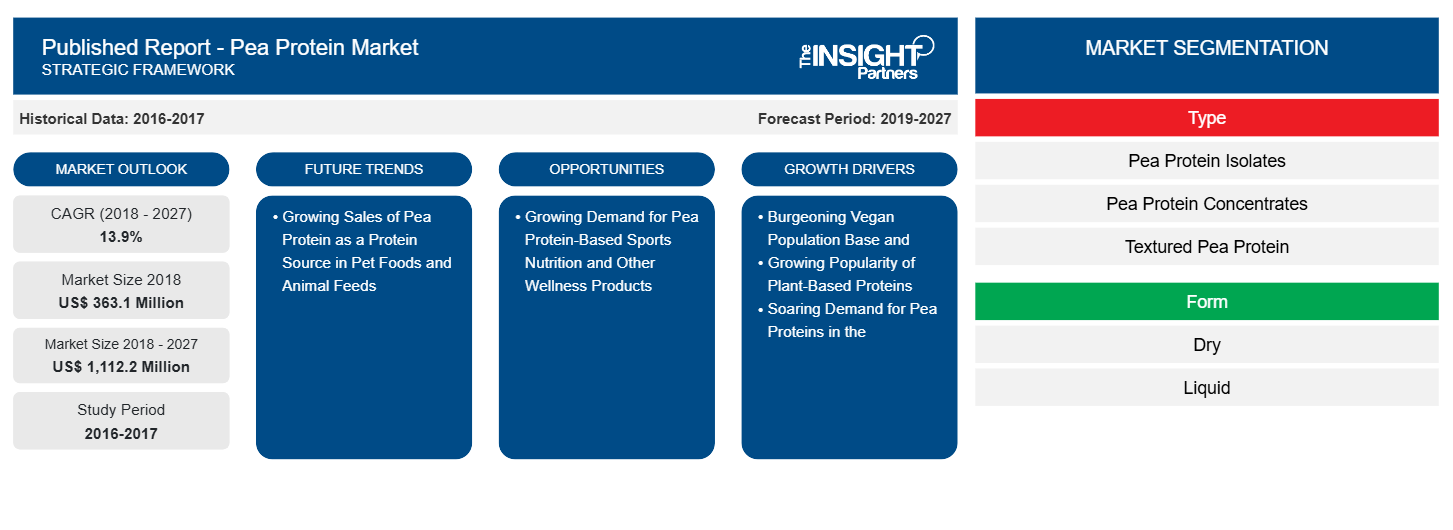
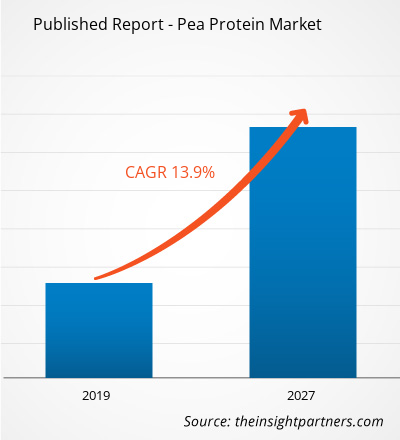
[Research Report] The pea protein market was valued at US$ 363.1 million in 2018 and is projected to reach US$ 1,112.2 million by 2027; it is expected to grow at a CAGR of 13.9% during 2019-2027.
Market Insights and Analyst View:
The pea protein is available in three different types, including pea protein isolates, pea protein concentrates, and textured pea protein. The genotype of the pea plants affects the properties of the protein. Pea protein is a food additive with a neutral taste and is utilized in dairy alternatives such as cheeses and yogurt. The pea protein is mainly extracted from the yellow pea. Consumers are focusing a lot of attention on the protein content of the packed food products; pea protein offers a healthy alternative. Traditional methods to boost protein might have elaborate larger meat portions; however, evidence is resilient that excess red and treated meats increase risk of cancer and other long-lasting diseases. Increasing interest in plant-based and vegetarian diets is anticipated to promote the pea protein market to a greater extent. Proteins are generally made of amino acids and there are nearly nine amino acids that are essential in our diets. Hence, different types of pea protein such as pea protein isolates, pea protein concentrates, and textured pea protein are expected to boost the market growth over the forecast period and are anticipated to create lucrative opportunities for the manufacturers in the future.
Growth Drivers and Challenges:
Burgeoning vegan population base and growing popularity of plant-based protein has been driving the global pea protein market growth. The trend of veganism has seen a substantial rise in the recent years owing to a number of factors including general anxiety about the ill-effects of the meat industry on the environment, unethical treatment of farm animals, and the deleterious effects of meat products on the human health. The rising acceptance of veganism, surging interest in veganism, and innovations in vegan foods has fuelled the demand for plant based products including pea proteins. In a bid to meet the daily protein requirements from plant-based sources, a significant vegan and vegetarian population base has turned towards pea protein supplements owing to their various health benefits over other plant based proteins. Some plant-based protein sources such as grains, nuts, and seeds are incomplete sources of protein which do not contain all nine essential amino acids. However, pea protein is one of the few plant-based protein sources which is a complete protein replete with all the essential amino acids. The growing health consciousness has resulted in a significant population base adopt healthy eating habits by choosing vegetarianism and veganism as a way of life. Besides, the vegan and vegetarian population, a significant proportion of meat eaters also have started to include vegan and vegetarian meals in their diet regiment to gain the benefits of plant based diets. The growing inclination towards plant-based meals has necessitated the consumption of plant-based pea proteins in the form of pea protein supplements and powders.
Pea protein is generally well tolerated and has very few side effects while being considerably safe for consumption. Furthermore, pea protein is gluten-free, lactose-free, and hypoallergenic making it even more popular among consumers afflicted with allergies and food intolerance. A number of premium pea protein isolate products are marketed as having the potential to lower cholesterol levels, triglyceride levels, and hemoglobin A1c levels as well avert the risks of cardiovascular diseases. Moreover, the health benefits of pea proteins in muscle building and repair and supporting the health of bones, tissues, and muscles has aroused the curiosity of a wider consumer base and contributed towards the popularity of pea proteins. Rising popularity and awareness about pea protein across the globe has considerably augmented the growth of the pea protein market. Though the trend of veganism is catching up rapidly, a significant proportion of consumers still rely on animal based proteins to meet their daily protein requirements. This has led to lower demands for pea proteins in comparison to proteins derived from other sources. A number of plant-based and animal-based protein manufacturers have flooded the market with inexpensive protein powder and supplements. The deluge of other protein products coupled with lack of awareness about the health benefits of pea proteins has hindered the penetration of pea proteins across the global markets. Furthermore, the high cost entailed in extracting and processing pea proteins coupled with low processing output has restricted pea protein manufacturers from producing pea protein powders at reasonable prices and gaining a traction and drives overall pea protein market growth.
● REPORT CUSTOMIZATION
Tailor This Report To Align With Your Specific Business Requirements
This report can be customized to align precisely with your business objectives, scope, and target markets. Customization options include tailored segmentation, geography, competitive analysis, and strategic insights to support informed decision-making.
Customize This Report →WHAT YOU CAN ADJUST
- ● Segmentations
- ● Geography
- ● Competitive Analysis
- ● Language Preferences
Published Report - Pea Protein Market: Strategic Insights
-
Get Top Key Market Trends of this report.This FREE sample will include data analysis, ranging from market trends to estimates and forecasts.
Report Segmentation and Scope:
The “Global Pea Protein Market” is segmented based on type, form, application, and geography. Based on type, the pea protein market is segmented into pea protein isolates, pea protein concentrates, and textured pea protein. Based on form, the pea protein market is categorized into dry, and liquid. On the basis of application, the pea protein market is categorized into dietary supplements, bakery and confectionery goods, meat alternatives, beverages, others. The pea protein market based on geography is segmented into North America (US, Canada, and Mexico), Europe (Germany, France, Italy, UK, Russia, and Rest of Europe), Asia Pacific (Australia, China, Japan, India, South Korea, and Rest of Asia Pacific), Middle East & Africa (South Africa, Saudi Arabia, UAE, and Rest of Middle East & Africa), and South & Central America (Brazil, Argentina, and Rest of South & Central America).
Segmental Analysis:
Based on type, the pea protein market is segmented into pea protein isolates, pea protein concentrates, and textured pea protein. The pea protein isolates segment held the significant share in the pea protein market growth and is expected to register the significant growth over the forecast period. Pea Protein Isolate is rich in Arginine, Glutamine, Leucine and all remaining branch chain and essential amino acids. This protein provides a digestibility of roughly 90% in humans. Moreover, being a non-GMO pea protein powder, the Pea Protein Isolate is also soy-free, gluten-free, and hypoallergenic. Further, Pea protein isolates have superior functionality, and label-friendly claims are projected to propel the segment growth during the forecast period. Concentrates are a significantly growing form in the pea protein market. They are gaining popularity due to pea concentrate's higher and broad range of protein and lower carbohydrate content.
Regional Analysis:
Based on geography, the pea protein market is divided into five key regions: North America, Europe, Asia Pacific, South & Central America, and Middle East & Africa. The global pea protein market was dominated by North America was estimated to be around US$ 150 million in 2018. Europe is a second major contributor holding more than 20% share in the global pea protein market. Asia Pacific is expected to register the considerable growth at a CAGR of over 10% over the forecast period. The US, Canada, and Mexico are the major countries in North America. North America comprises some developed and developing countries such as the US, Canada, and Mexico. North America will account for a remarkable share in the pea protein market. The growing interest of consumers in non-meat alternatives as a result of increasing concerns towards a healthy lifestyle has enabled the manufacturers in North America to incorporate high-quality plant-based ingredients. An increase in matters regarding the environment and an upsurge in awareness towards animal welfare has shifted the focus towards alternative proteins derived from plant-based proteins. As a result, in North America is expected to considerably contribute to the region's increased demand for pea proteins, further drive the pea protein market.
Industry Developments and Future Opportunities:
Various initiatives taken by the key players operating in the pea protein market are listed below:
- In May 2018, Roquette Frères announced the startup of a new production unit dedicated to specialty pea protein at its site in Vic-sur-Aisne (Hauts-de-France, France). The launch of the new unit will strengthen the Group’s offering of NUTRALYS plant-based proteins with the addition of new ingredients specially designed for food products and beverages enriched with protein.
- In August 2019, PURIS has received an additional $75 million investment from Cargill. This investment will ensure PURIS can expand their network of non-GMO and organic producers to keep up with the ever-increasing demand for pea protein isolate, pea starches, and pea fibers all grown and manufactured in the USA.
- In October 2019, Cosucra Groupe Warcoing SA announced it will open a second pea processing plant in Denmark. The Danish pea processing project is part of Cosucra’s €60 Mn (US$ 66 Mn) multi-year development programme and will begin commissioning in the first half of 2020.
Pea Protein
Published Report - Pea Protein Market Report Scope
| Report Attribute | Details |
|---|---|
| Market size in 2018 | US$ 363.1 Million |
| Market Size by 2027 | US$ 1,112.2 Million |
| Global CAGR (2018 - 2027) | 13.9% |
| Historical Data | 2016-2017 |
| Forecast period | 2019-2027 |
| Segments Covered |
By Type
|
| Regions and Countries Covered |
North America
|
| Market leaders and key company profiles |
|
Published Report - Pea Protein Market Players Density: Understanding Its Impact on Business Dynamics
The Published Report - Pea Protein Market is growing rapidly, driven by increasing end-user demand due to factors such as evolving consumer preferences, technological advancements, and greater awareness of the product's benefits. As demand rises, businesses are expanding their offerings, innovating to meet consumer needs, and capitalizing on emerging trends, which further fuels market growth.
Covid-19 Impact:
The COVID-19 pandemic affected almost all industries in various countries. Various companies witnessed delays in product deliveries and a slump in sales of their products in 2020. Due to the pandemic-induced economic recession, consumers became more cautious and selective in their purchasing decisions. Non-essential purchases were significantly reduced by consumers due to lower incomes and uncertain earning prospects, especially in developing regions. Many manufacturers of pea protein faced decline in profits due to reduced consumer demand during the initial phase of pandemic. However, by the end of 2021, many countries were fully vaccinated, and governments announced relaxation in certain regulations including lockdowns and travel bans. People started travelling to different places which increased the demand for the beverages, healthy drinks, boosting the pea protein demand. All these factors had a positive impact in the pea protein market growth across different regions.
Competitive Landscape and Key Companies:
Some of the prominent players operating in the global pea protein market include A&B Ingredients And Axiom Foods, Inc., Burcon Nutrascience Corporation, Cosucra Groupe Warcoing SA, Gemef Industries, Glanbia Nutritionals, Puris, Roquette Frères, The Green Labs LLC, Yantai Shuangta Food Co., Ltd. among others. These pea protein manufacturers offer cutting-edge pea protein with innovative features to deliver superior experience to the consumers.
Frequently Asked Questions

- Comprehensive Market Sizing and Forecast Analysis
- Detailed Segmentation Analysis
- In-Depth Market Dynamics Assessment
- Regional and Country-Level Insights
- Competitive Landscape and Company Benchmarking
- Strategic Business Intelligence
Recent Reports
Testimonials

The Insight Partners' SCADA System Market report is comprehensive, with valuable insights on current trends and future forecasts. The team was highly professional, responsive, and supportive throughout. We are very satisfied and highly recommend their services.
RAN KEDEM Partner, Reali Technologies LTDs
I requested a report on a very specific software market and the team produced the report in a few days. The information was very relevant and well presented. I then requested some changes and additions to the report. The team was again very responsive and I got the final report in less than a week.
JEAN-HERVE JENN Chairman, Future Analytica
We worked with The Insight Partners for an important market study and forecast. They gave us clear insights into opportunities and risks, which helped shape our plans. Their research was easy to use and based on solid data. It helped us make smart, confident decisions. We highly recommend them.
PIYUSH NAGPAL Sr. Vice President, High Beam Global
The Insight Partners delivered insightful, well-structured market research with strong domain expertise. Their team was professional and responsive throughout. The user-friendly website made accessing industry reports seamless. We highly recommend them for reliable, high-quality research services
YUKIHIKO ADACHI CEO, Deep Blue, LLC.
This is the first time I have purchased a market report from The Insight Partners.While I was unsure at first, I visited their web site and felt more comfortable to take the risk and purchase a market report.I am completely satisfied with the quality of the report and customer service. I had several questions and comments with the initial report, but after a couple of dialogs over email with their analyst I believe I have a report that I can use as input to our strategic planning process.Thank you so much for taking the extra time and making this a positive experience.I will definitely recommend your service to others and you will be my first call when we need further market data.
JOHN SUZUKI President and Chief Executive Officer, Board Director, BK Technologies
I wish to appreciate your support and the professionalism you displayed in the course of attending to my request for information regarding to infectious disease IVD market in Nigeria. I appreciate your patience, your guidance, and the fact that you were willing to offer a discount, which eventually made it possible for us to close a deal. I look forward to engaging The Insight Partners in the future, all thanks to the impression you have created in me as a result of this first encounter.
DR CHIJIOKE ONYIA MANAGING DIRECTOR, PineCrest Healthcare Ltd.Reason to Buy
- Informed Decision-Making
- Understanding Market Dynamics
- Competitive Analysis
- Identifying Emerging Markets
- Customer Insights
- Market Forecasts
- Risk Mitigation
- Boosting Operational Efficiency
- Strategic Planning
- Investment Justification
- Tracking Industry Innovations
- Aligning with Regulatory Trends





 Get Free Sample for