Antiblock Additive Market Growth, Trends, and Analysis by 2031
Antiblock Additive Market Size and Forecasts (2021 - 2031), Global and Regional Share, Trends, and Growth Opportunity Analysis Report Coverage : by Product Type (Organic and Inorganic); Polymer Type (LLDPE, LDPE, HDPE, BOPP, PVC); Application (Food and Beverages, Pharmaceuticals, Agriculture); and Geography (North America, Europe, Asia Pacific, and South and Central America)
Historic Data: 2021-2023 | Base Year: 2024 | Forecast Period: 2025-2031- Report Date : Apr 2026
- Report Code : TIPRE00040343
- Category : Chemicals and Materials
- Status : Upcoming
- Available Report Formats :


- No. of Pages : 150

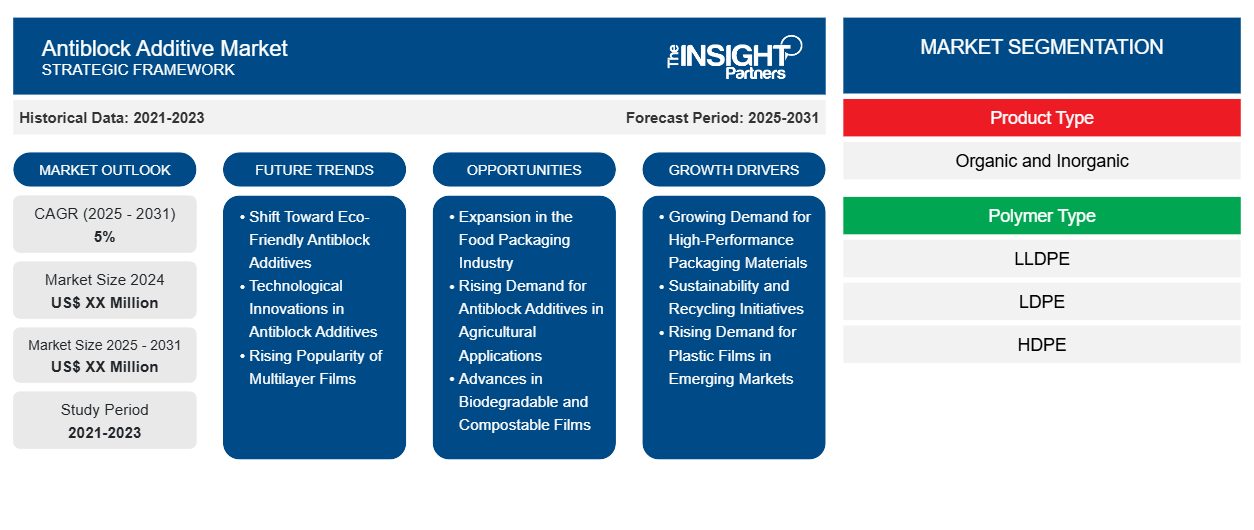
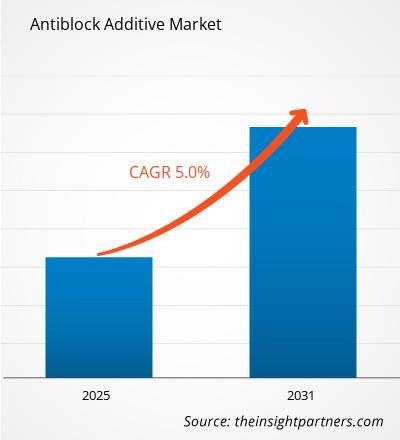
The Antiblock Additive Market is expected to register a CAGR of 5% from 2025 to 2031, with a market size expanding from US$ XX Million in 2024 to US$ XX Million by 2031.
The antiblock additive market is segmented into product type, polymer type, application, and geography. Based on product type, the market is segmented into organic and inorganic. Based on polymer type, the market is segmented into LLDPE, LDPE, HDPE, BOPP, PVC, and others. Based on application, the market is segmented into food and beverages, pharmaceuticals, agriculture, and others.
Purpose of the Report
The report Antiblock Additive Market by The Insight Partners aims to describe the present landscape and future growth, top driving factors, challenges, and opportunities. This will provide insights to various business stakeholders, such as:
- Technology Providers/Manufacturers: To understand the evolving market dynamics and know the potential growth opportunities, enabling them to make informed strategic decisions.
- Investors: To conduct a comprehensive trend analysis regarding the market growth rate, market financial projections, and opportunities that exist across the value chain.
- Regulatory bodies: To regulate policies and police activities in the market with the aim of minimizing abuse, preserving investor trust and confidence, and upholding the integrity and stability of the market.
Antiblock Additive Market Segmentation
Product Type
- Organic and Inorganic
Polymer Type
- LLDPE
- LDPE
- HDPE
- BOPP
- PVC
Application
- Food and Beverages
- Pharmaceuticals
- Agriculture
Customize This Report To Suit Your Requirement
Get FREE CUSTOMIZATIONAntiblock Additive Market: Strategic Insights
-
Get Top Key Market Trends of this report.This FREE sample will include data analysis, ranging from market trends to estimates and forecasts.
Antiblock Additive Market Growth Drivers
- Growing Demand for High-Performance Packaging Materials: The increasing demand for high-performance packaging materials is a key driver for the antiblock additive market. Antiblock additives, used in the production of plastic films, improve the performance and quality of packaging by reducing the tendency of films to stick together. As industries like food and beverage, pharmaceuticals, and consumer goods increasingly seek efficient, reliable, and cost-effective packaging solutions, the use of antiblock additives in plastic films is expanding to meet these needs.
- Sustainability and Recycling Initiatives: Antiblock additives are crucial in enhancing the recyclability and functionality of plastic films, which aligns with the growing trend toward sustainability in packaging. With increasing global awareness of plastic waste and the adoption of recycling programs, manufacturers are incorporating antiblock additives into films to enhance their ability to be reused and recycled. These additives help reduce the waste generated during manufacturing and optimize the recycling process, thus contributing to sustainability goals.
- Rising Demand for Plastic Films in Emerging Markets: The expanding use of plastic films in industries such as food packaging, agriculture, and retail in emerging markets like Asia-Pacific, Latin America, and the Middle East is a significant driver of the antiblock additive market. These regions are seeing increased industrialization, urbanization, and consumerism, leading to greater demand for cost-effective and high-quality packaging materials. As a result, antiblock additives are becoming more widely adopted in the production of plastic films to ensure better performance and durability.
Antiblock Additive Market Future Trends
- Shift Toward Eco-Friendly Antiblock Additives: There is a noticeable trend toward the use of eco-friendly antiblock additives, such as those derived from natural or bio-based sources. These additives offer performance benefits similar to traditional chemical antiblocks but with reduced environmental impact. With increasing regulatory pressure and consumer demand for environmentally responsible products, the market is witnessing a shift towards greener alternatives that meet sustainability and eco-labeling standards.
- Technological Innovations in Antiblock Additives: The antiblock additive market is seeing technological advancements aimed at enhancing the functionality and efficiency of the additives. Innovations are focusing on improving the performance of antiblocks in specialized applications, such as food packaging and medical packaging. Newer additives are being developed to offer greater transparency, reduced surface friction, and better resistance to heat, which expands their applications in high-end and niche industries.
- Rising Popularity of Multilayer Films: The demand for multilayer films, which often require antiblock additives to prevent layers from sticking together, is increasing. These films offer enhanced properties like barrier resistance, moisture protection, and durability. The growing use of multilayer films in packaging for food, pharmaceuticals, and consumer goods is driving the need for more efficient antiblock additives to maintain the integrity and functionality of these complex film structures.
Antiblock Additive Market Opportunities
- Expansion in the Food Packaging Industry: The growing food packaging industry presents significant opportunities for antiblock additives. As consumer demand for convenient, safe, and durable food packaging rises, the need for high-performance plastic films increases. Antiblock additives play a key role in preventing films from sticking during production and transportation, making them essential in ensuring the efficiency and quality of food packaging solutions.
- Rising Demand for Antiblock Additives in Agricultural Applications: Antiblock additives are also gaining traction in agricultural applications, especially in the production of plastic films used for greenhouses, mulch films, and crop protection. The increasing focus on improving agricultural productivity and ensuring crop safety creates opportunities for antiblock additives to be used in films that protect plants while improving yield.
- Advances in Biodegradable and Compostable Films: As demand for biodegradable and compostable films rises, there is a growing need for antiblock additives that are compatible with these environmentally friendly materials. Manufacturers of biodegradable plastics are seeking additives that do not compromise the eco-friendly nature of their products. This presents an opportunity for innovation in the antiblock additive market to develop solutions tailored to biodegradable and compostable films, aligning with sustainability trends.
Antiblock Additive Market Report Scope
| Report Attribute | Details |
|---|---|
| Market size in 2024 | US$ XX Million |
| Market Size by 2031 | US$ XX Million |
| Global CAGR (2025 - 2031) | 5% |
| Historical Data | 2021-2023 |
| Forecast period | 2025-2031 |
| Segments Covered |
By Product Type
|
| Regions and Countries Covered |
North America
|
| Market leaders and key company profiles |
|
Antiblock Additive Market Players Density: Understanding Its Impact on Business Dynamics
The Antiblock Additive Market is growing rapidly, driven by increasing end-user demand due to factors such as evolving consumer preferences, technological advancements, and greater awareness of the product's benefits. As demand rises, businesses are expanding their offerings, innovating to meet consumer needs, and capitalizing on emerging trends, which further fuels market growth.
Key Selling Points
- Comprehensive Coverage: The report comprehensively covers the analysis of products, services, types, and end users of the Antiblock Additive Market, providing a holistic landscape.
- Expert Analysis: The report is compiled based on the in-depth understanding of industry experts and analysts.
- Up-to-date Information: The report assures business relevance due to its coverage of recent information and data trends.
- Customization Options: This report can be customized to cater to specific client requirements and suit the business strategies aptly.
The research report on the Antiblock Additive Market can, therefore, help spearhead the trail of decoding and understanding the industry scenario and growth prospects. Although there can be a few valid concerns, the overall benefits of this report tend to outweigh the disadvantages.
Frequently Asked Questions

- Historical Analysis (2 Years), Base Year, Forecast (7 Years) with CAGR
- PEST and SWOT Analysis
- Market Size Value / Volume - Global, Regional, Country
- Industry and Competitive Landscape
- Excel Dataset
Recent Reports
Testimonials

The Insight Partners' SCADA System Market report is comprehensive, with valuable insights on current trends and future forecasts. The team was highly professional, responsive, and supportive throughout. We are very satisfied and highly recommend their services.
RAN KEDEM Partner, Reali Technologies LTDs
I requested a report on a very specific software market and the team produced the report in a few days. The information was very relevant and well presented. I then requested some changes and additions to the report. The team was again very responsive and I got the final report in less than a week.
JEAN-HERVE JENN Chairman, Future Analytica
We worked with The Insight Partners for an important market study and forecast. They gave us clear insights into opportunities and risks, which helped shape our plans. Their research was easy to use and based on solid data. It helped us make smart, confident decisions. We highly recommend them.
PIYUSH NAGPAL Sr. Vice President, High Beam Global
The Insight Partners delivered insightful, well-structured market research with strong domain expertise. Their team was professional and responsive throughout. The user-friendly website made accessing industry reports seamless. We highly recommend them for reliable, high-quality research services
YUKIHIKO ADACHI CEO, Deep Blue, LLC.
This is the first time I have purchased a market report from The Insight Partners.While I was unsure at first, I visited their web site and felt more comfortable to take the risk and purchase a market report.I am completely satisfied with the quality of the report and customer service. I had several questions and comments with the initial report, but after a couple of dialogs over email with their analyst I believe I have a report that I can use as input to our strategic planning process.Thank you so much for taking the extra time and making this a positive experience.I will definitely recommend your service to others and you will be my first call when we need further market data.
JOHN SUZUKI President and Chief Executive Officer, Board Director, BK Technologies
I wish to appreciate your support and the professionalism you displayed in the course of attending to my request for information regarding to infectious disease IVD market in Nigeria. I appreciate your patience, your guidance, and the fact that you were willing to offer a discount, which eventually made it possible for us to close a deal. I look forward to engaging The Insight Partners in the future, all thanks to the impression you have created in me as a result of this first encounter.
DR CHIJIOKE ONYIA MANAGING DIRECTOR, PineCrest Healthcare Ltd.Reason to Buy
- Informed Decision-Making
- Understanding Market Dynamics
- Competitive Analysis
- Identifying Emerging Markets
- Customer Insights
- Market Forecasts
- Risk Mitigation
- Boosting Operational Efficiency
- Strategic Planning
- Investment Justification
- Tracking Industry Innovations
- Aligning with Regulatory Trends




 Get Free Sample For