Rising Demand for Convenient, Affordable, And Shelf-Stable Meal Options Drives Dry Pasta Market Growth
According to our latest study on " Dry Pasta Market Forecast to 2034, Global and Regional Growth Opportunity Analysis – by Type, Category, and Distribution Channel," the market was valued at US$ 60.14 billion in 2025 and is expected to reach US$ 116.02 billion by 2034; it is estimated to register a CAGR of 7.6% during 2026–2034. The report highlights factors contributing to the dry pasta market size and prominent players, along with recent developments in the market.
Due to the increasing demand for convenient, inexpensive, and shelf-stable food products, dry pasta is gaining popularity. Being a multipurpose staple, dry pasta finds extensive application in households and foodservice because of its long shelf life, convenience in preparation, and capacity to adapt to several cuisines. It is a popular fast food among busy people. The manufacturers are also providing healthier options such as whole grain, gluten-free, and protein-enriched pasta to fulfill the evolving dietary requirements. With the growing number of people migrating to urban areas, growing disposable incomes, and exposure to international dishes, consumers are seeking quality and variety of pasta. The trend toward the popularity of home cooking and the necessity to find low-priced meal solutions are increasing the constant consumption.
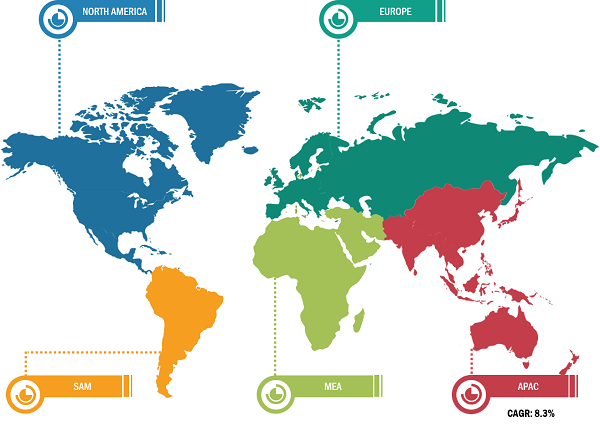
Dry Pasta Market Breakdown – by Region
Dry Pasta Market Growth, Share & Trends by 2034
Download Free SampleDry Pasta Market Size and Forecast (2021 - 2034), Global and Regional Share, Trend, and Growth Opportunity Analysis Report Coverage: By Type (Spaghetti, Macaroni or Elbow, Farfalle, Penne, Fusilli, Fettuccine, Rigatoni, Lasagna, and Others), Category (Gluten-Free and Conventional), and Distribution Channel (Supermarkets and Hypermarkets, Convenience Stores, Online Retail, and Others)
The dry pasta market analysis has been performed by considering the following segments: type, category, and distribution channel. By type, the dry pasta market is segmented into spaghetti, macaroni or elbow, farfalle, penne, fusilli, fettuccine, rigatoni, lasagna, and others. The spaghetti segment accounted for the largest dry pasta market share in 2025, due to its popularity and versatility in several cuisines. Spaghetti is one of the most recognized and commonly eaten types of pasta, especially in traditional Italian dishes that have become popular worldwide. It pairs well with various sauces, ranging from simple tomato bases to rich meat and cream options, making it a favorite among consumers. Additionally, spaghetti is easy to cook, widely available in stores, and often seen as a pantry staple, which helps maintain its steady demand. Its low cost compared to specialty pasta types also boosts its appeal, particularly in markets sensitive to price.
The global dry pasta market trends are increasingly aligned with the growing desire for convenient, versatile, and nutritious food products among consumers. Manufacturers are focusing on products that offer multiple benefits, such as easy preparation, longer shelf life, and use in a variety of recipes, while also improving nutritional content. This shift is clear as consumers look for balanced meal solutions that combine taste, convenience, and health, making pasta a reliable choice in modern diets. The growing interest in clean-label and healthier products is driving demand for pasta made from simple, recognizable ingredients. This includes whole grains and alternative sources such as lentils and chickpeas, along with other plant-based inputs. These options meet changing dietary preferences, including gluten-free, high-protein, and fiber-rich diets. Moreover, shorter ingredient lists and less processing are becoming key factors in purchasing decisions. Dry pasta suits these trends because of its affordability, flexibility, and ability to work with diverse cuisines and dietary needs. Ongoing product innovation—including fortified and functional options—allows manufacturers to serve both premium and mass-market segments. As consumer interest in health, convenience, and quality continues to rise, the demand for versatile and value-added pasta products is expected to shape the market's development.
In 2025, Europe led the global dry pasta market share in terms of revenue due to its strong cultural ties to pasta consumption and established food habits. Pasta is consumed in large amounts in Italy, France, and Germany. This mass consumption is backed by a good retail network and a high concentration of major manufacturers. Premium, organic, and specialty pasta products are also highly diverse in the region. In addition, the ever-increasing need for quick and quality meal intakes and continuous product development has enhanced the dominant position of Europe in the global dry pasta market.
Colussi S.p.A; Barilla G. e R. F.lli S.p.A.; F.lli De Cecco di Filippo S.p.A; Di Martino Air S.r.l.; De Angelis Food S.p.A; Bioitalia SRL; DeLallo; Rummo S.p.A.; La Casa del Grano; and Winland Foods, Inc are among the prominent players profiled in the dry pasta market report. They are adopting strategies such as product launches, capacity expansions, partnerships, and collaborations to stay competitive in the market.
The report includes the segmentation of the global dry pasta market as follows:
Based on type, the dry pasta market is segmented into spaghetti, macaroni or elbow, farfalle, penne, fusilli, fettuccine, rigatoni, lasagna, and others. In terms of category, the market is bifurcated into gluten-free and conventional.
By distribution channel, the dry pasta market is classified into supermarkets and hypermarkets, convenience stores, online retail, and others.
The geographical scope of the dry pasta market report focuses on North America, Europe, Asia Pacific, Middle East & Africa, and South & Central America. The market in North America is segmented into the US, Canada, and Mexico. The market in Europe is categorized into Germany, France, Italy, the UK, Spain, and the Rest of Europe. The market in APAC is divided into Australia, China, India, Japan, South Korea, and the Rest of Asia Pacific. The dry pasta market in the Middle East & Africa is classified into South Africa, Saudi Arabia, the UAE, and the Rest of Middle East & Africa. The dry pasta market in South & Central America is segmented into Brazil, Argentina, and the Rest of South & Central America.
Contact Us
Phone: +1-646-491-9876
Email Id: sales@theinsightpartners.com