Growth of Electric Vehicles (EVs) Drives Non-Grain Oriented Electrical Steel (NGOES) Market Growth
According to our latest study on " Non-Grain Oriented Electrical Steel (NGOES) Market Forecast to 2033, Global and Regional Growth Opportunity Analysis – by Grade and Application," the market was valued at US$ 17.13 billion in 2024 and is expected to reach US$ 25.92 billion by 2033; it is estimated to register a CAGR of 4.7% during 2025–2031. The report highlights factors contributing to the non-grain oriented electrical steel (NGOES) market size and prominent players, with their developments in the non-grain-oriented electrical steel (NGOES) market.
The Non-Grain Oriented Electrical Steel (NGOES) market growth is driven by the growing need for high-efficiency electromagnetic cores in electric motors and generators. The low core loss and high magnetic permeability of the material are crucial to the optimization of the energy conversion efficiency and reducing the wasted energy as heat, particularly in variable-speed and high-frequency applications where the loss is even a significant performance factor. The global electrification wave, such as the rampant increase in the number of electric vehicles (EVs), renewable energy infrastructure development, and an increase in the global energy efficiency requirement of industrial motors and appliances, is accelerating demand. With the industries and consumers focusing on ensuring that their products are sustainable, perform better, and have a lower cost of ownership, NGOES is still a valued constituent in the production of smaller, lighter, and more reliable electromagnetic products that are imperative in a competitive and energy-sensitive industrial environment.
Non-Grain Oriented Electrical Steel (NGOES) Market Breakdown – by Region
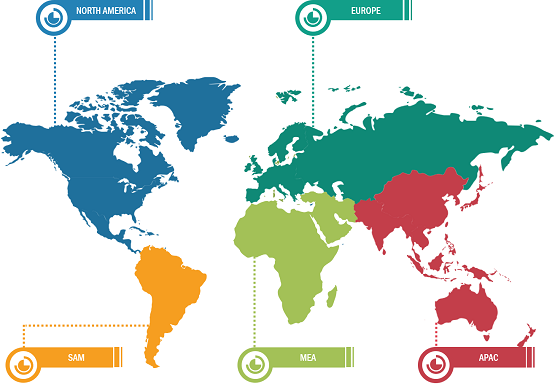
Non-Grain Oriented Electrical Steel (NGOES) Market Trends by Share by 2033
Download Free SampleNon-Grain Oriented Electrical Steel (NGOES) Market Size and Forecast (2021 - 2033), Global and Regional Share, Trend, and Growth Opportunity Analysis Report Coverage: By Grade (Premium Grade, High Grade, and General or Standard Grade) and Application (Automotive [Traction Motors, EPS Motors, Alternators, and Others], Home Appliances [Induction Motors, Compressors, and Others], General Industrial, and Others)
The non-grain oriented electrical steel (NGOES) market analysis has been performed by considering the following segments: grade and application. By grade, the non-grain oriented electrical steel (NGOES) market is segmented into premium grade, high grade, and general or standard grade. The high-grade segment accounted for the largest non-grain oriented electrical steel (NGOES) market share in 2024. Its benefit is that its low core loss and high magnetic permeability make this premium material attractive to high-performance generators, high-frequency, high-speed, and high-efficiency power applications, including EV traction motors, cutting-edge industrial drives, and high-performance generators. The high metallurgical consistency and alloying provide unsurpassed electromagnetic efficiency, allowing the design of the motor to run at higher frequencies and power densities without overheating the product and wasting energy. The reason is that its capacity to remain at its best when subjected to thermal and mechanical stress, and its high level of magnetic responsive, are essential in next-generation electrification. The high-grade NGOES is extensively used by major automotive OEMs and manufacturers of high-quality industrial and renewable energy systems, and is the most successful in the NGOES market to provide the cutting-edge, efficiency-critical applications.
The non-grain oriented electrical steel (NGOES) market trends include various high-silicon and domain-refined grades; creation of thinner gauges with better surface insulation; and laser cutting to focus on high-accuracy core loss. One of the trends in the near future will be the pursuit of ultra-low core loss and near-net-shape manufacturing. Rising regulatory and sustainability demands on energy-efficient motor specifications (i.e., IE4 and IE5 worldwide) are compelling steelmakers to find new, next-generation alloys and improved process paths that provide high permeability and reduced loss due to hysteresis without lowering the mechanical strength. Improvements in continuous casting and rolling technology permit the economical manufacture of thinner gauges (less than 0.20mm and even thinner) with eddy loss reduction without losing strip shape and coating uniformity. The methods of laser scribing and surface domain refinement are introduced to improve the loss reduction that occurs during high-frequency operation by magnetic domain alignment. This, along with low-carbon, hydrogen-based manufacturing processes and higher recyclability, helps OEMs to reach high ESG and total cost-of-operation goals without compromising the electromagnetic efficiency that NGOES is familiar with, so that it can remain relevant in a market where the needs of advanced electrification dominate.
In 2024, the Non-Grain Oriented Electrical Steel (NGOES) market share will be led by Asia Pacific, based on its enormous production of electric vehicles, consumer appliances, and automation systems in the industry. The rise of a new surge of investments in electrification, renewable energy infrastructure, and intelligent manufacturing across borders, including China, Japan, South Korea, and India, is driving an unprecedented demand for high-efficiency electrical steel to enhance the performance of motors and ensure that they comply with the strict energy regulations. The country is the largest manufacturer and consumer of EVs and energy-efficient home appliances, and the government intends to support the modernization of industries and green innovations, which makes it a focal point of NGOES consumption and innovation, ensuring leadership in the global market growth process.
Nippon Steel Corp, JFE Steel Corp, Posco Holdings Inc, Baosteel Group Corp, ArcelorMittal SA, Novolipetsk Steel, Tata Steel Ltd, Cleveland-Cliffs Inc, ThyssenKrupp AG, Arnold Magnetic Technologies, Voestalpine AG, C.D. Wälzholz GmbH & Co. KG, United States Steel Corp, and China Steel Corp are among the prominent players profiled in the non-grain oriented electrical steel (NGOES) market report. These players are focusing on providing high-quality products to fulfill customer demand. They are adopting strategies such as product launches, capacity expansions, partnerships, and collaborations to stay competitive in the market.
Based on grade, the non-grain oriented electrical steel (NGOES) market is segmented into premium grade, high grade, and general or standard grade. In terms of application, the market is categorized into automotive, home appliances, general industrial, and others. The automotive segment is sub-segmented into traction motors, EPS motors, alternators, and others. The home appliances segment is sub-segmented into induction motors, compressors, and others.
The geographical scope of the non-grain oriented electrical steel (NGOES) market report focuses on North America, Europe, Asia Pacific, the Middle East & Africa, and South & Central America. The market in North America is segmented into the US, Canada, and Mexico. The market in Europe is categorized into Germany, France, Italy, the UK, Russia, and the Rest of Europe. The non-grain oriented electrical steel (NGOES) market in the Asia Pacific is divided into Australia, China, India, Japan, South Korea, and the Rest of the Asia Pacific. The non-grain oriented electrical steel (NGOES) market in the Middle East & Africa is classified into South Africa, Saudi Arabia, the UAE, and the Rest of the Middle East & Africa. The non-grain oriented electrical steel (NGOES) market in South & Central America is segmented into Brazil, Argentina, and the Rest of South & Central America.
Contact Us
Phone: +1-646-491-9876
Email Id: sales@theinsightpartners.com