Noninvasive Segment Leads Prenatal Testing Services Market Growth Based on Diagnostic Type
According to our new research study on “Prenatal Testing Services Market Forecast to 2031 – Global Analysis – by Diagnostic Type, Disease, and End User,” the market is expected to grow from US$571.18 million in 2024 to US$1,510.31 million by 2031, registering a CAGR of 15.2% during 2025–2031. Major factors driving the prenatal testing services market growth include the increasing demand for noninvasive prenatal (NIP) testing, the rising prevalence of genetic disorders and congenital anomalies, and the surging awareness and acceptance of early genetic screening.
The adoption of non-invasive prenatal testing (NIPT), a method recommended by doctors, is increasing due to its safety and early-stage performance capabilities. The rise in maternal age and the increased incidence of chromosomal abnormalities drive the demand for prenatal testing. Technological developments, such as next-generation sequencing, enhance the test's accuracy and broaden its range. The coverage by public and private payers is improving, and the awareness of expectant parents is also increasing. Developing countries and pregnancies without any risk factors are the two major areas where noninvasive methods can be used to make a confirmatory diagnosis.
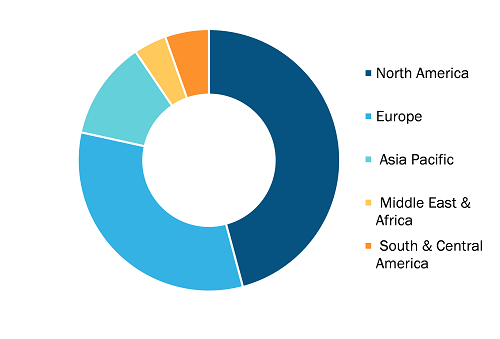
Prenatal Testing Services Market, by Region, 2024 (%)
Prenatal Testing Services Market Trends & Opportunities 2031
Download Free SamplePrenatal Testing Services Market Size and Forecast (2021 - 2031), Global and Regional Share, Trend, and Growth Opportunity Analysis Report Coverage: By Diagnostic Type (Noninvasive and Invasive), Disease (Aneuploidy, Microdeletions, Structural Chromosomal Abnormalities, and Others), End User (Hospitals, Diagnostic Laboratories, Specialty Clinics, and Other End Users), and Geography (North America, Europe, Asia Pacific, Middle East and Africa, and South and Central America)
Source: The Insight Partners Analysis
Prenatal Testing Services Market Analysis Based on Segmental Evaluation:
By diagnostic type, the market is segmented into noninvasive and invasive. Noninvasive accounted for the largest prenatal testing services market share in 2024. These noninvasive prenatal tests provide a safe and early method for detecting chromosomal abnormalities by analyzing a simple blood sample from the mother. Due to their high precision and minimal risk, these tests are being rapidly adopted.
The scope of the prenatal testing services market report encompasses an assessment of the market's performance in North America, Europe, Asia Pacific, South America, Central America, the Middle East, and Africa. In terms of revenue, North America dominated the prenatal testing services market in 2024.
The prenatal testing services market in North America is segmented into the US, Canada, and Mexico. North America accounted for nearly half of the total global share in 2024. Noninvasive prenatal testing (NIPT) has become a popular method of prenatal care in North America. According to a retrospective study conducted in the US, the rate of invasive diagnostic procedures (such as amniocentesis or CVS) among women with positive serum screening results went down considerably after the introduction of NIPT. This trend is an outcome of better risk stratification and increasing trust in NIPT’s precision. As NIPT results, unlike previous biochemical screens, usually have a very high positive predictive value, genetic counseling has become increasingly indispensable. Therefore, pre- and post-test counseling provides the necessary information for women to make informed decisions about their health. The opinions of medical workers support this idea.
In the US, NIPT is now widely offered and used in clinical practice. Clinical guidelines from the American College of Obstetricians and Gynecologists (ACOG) and the Society for Maternal–Fetal Medicine (SMFM) endorse NIPT as a first-line screening option, regardless of maternal age or risk status. Studies published in PLOS, non-profit organization, show that after the introduction of NIPT, the rates of invasive diagnostic procedures (such as amniocentesis and CVS) dropped significantly in one analysis, with invasive testing declining by nearly 40% between 2012 and 2015. Research suggests that NIPT has high sensitivity and specificity for common trisomies, resulting in fewer false positives and improved risk stratification. However, genetic counselors and healthcare providers continue to face challenges. The increased use of NIPT brings workload pressures, particularly in ensuring informed consent and post-test counseling. Meanwhile, population‑based studies indicate that offering NIPT broadly could reduce the number of invasive procedures and associated pregnancy risks.
Myriad Genetics Inc; Illumina Inc; Thermo Fisher Scientific Inc.; Laboratory Corp of America Holdings; and Fulgent Genetics, Inc are among the leading companies profiled in the prenatal testing services market report.
By diagnostic type, the market is segmented into noninvasive and invasive. Noninvasive accounted for the largest prenatal testing services market share in 2024. By disease, the prenatal testing services market is segmented into aneuploidy, microdeletions, structural chromosomal abnormalities, and others. The aneuploidy segment held the largest prenatal testing services market share in 2024. Based on end user, the prenatal testing services market is segmented into hospitals, diagnostic laboratories, specialty clinics, and other end users. Geographically, the market is categorized into North America (the US, Canada, and Mexico), Europe (France, Germany, the UK, Spain, Italy, and the Rest of Europe), Asia Pacific (China, Japan, India, South Korea, Australia, and the Rest of Asia Pacific), the Middle East and Africa (Saudi Arabia, South Africa, the UAE, and the Rest of Middle East and Africa), and South and Central America (Brazil, Argentina, and the Rest of South and Central America).