
Absorbent Tray Liners Market Trends, Size & Forecast by 2034
Coverage: By Material type (Paper, Fabric); Basis of thickness (Up to 40 GSM, 40-70 GSM, 70-90 GSM, 90-110 GSM); End User (Pharmaceutical Industry and Healthcare Industry, Food packaging industry, Meat poultry and sea food, Others), and Geography (North America, Europe, Asia Pacific, and South and Central America)
- Status : Data Released
- Report Code : TIPRE00015184
- Category : Chemicals and Materials
- No. of Pages : 150
- Available Report Formats :


- Last update date : July 09, 2026


2025 Market Size
US$ 239.11 Mn
Base year value
2034 Forecast
US$ 481.89 Mn
Projected by 2034
CAGR 2026-2034
8.10 %
Growth rate
Addressable Market
US$ 3,241.26 Mn
(2026-2034)
The absorbent tray liners market is valued at US$ 239.11 million in 2025 and is projected to reach US$ 481.89 million by 2034. It is expanding at a compound annual growth rate of 8.10% during 2026 to 2034. The rising need for hygienic packaging solutions in healthcare, pharmaceutical handling, and food processing fuels growth. The focus on contamination control, moisture absorption efficiency, and regulatory compliance in sterile settings is boosting product use among institutional end users worldwide.
North America is expected to grow at a compound annual growth rate of 7.6 to 8.2% during 2026 to 2034. A strong healthcare system, high pharmaceutical production standards, and strict hygiene rules back this growth. The increase in surgical procedures, hospital admissions, and demand for cold-chain food packaging is driving steady demand. The use of high-quality, medical-grade absorbent materials is also enhancing operational efficiency and infection control results in critical care environments.
Absorbent Tray Liners Market Assessment and Insights
- North America: Accounts for a 32–36% share in 2025, growing at a 7.6–8.4% CAGR (2026–2034). Strong healthcare infrastructure and infection-control mandates drive the adoption of absorbent tray liners across hospitals and surgical centers.
- US: Holds 24–28% share of global market in 2025, expanding at 7.8–8.5% CAGR, supported by high surgical volume and strict FDA compliance requirements.
- Europe: Represents a 27–31% share in 2025, growing at a 7.4–8.2% CAGR; Germany, the UK, and France lead due to advanced medical waste management systems.
- Asia Pacific: Accounts for a 25–29% share in 2025, expanding at an 8.5–9.4% CAGR; China, India, and Japan drive demand through hospital expansion and rising food safety standards.
- Largest Segment (Material type – Paper): Holds 48–52% share in 2025, growing at 7.9–8.6% CAGR due to cost efficiency and high absorbency performance.
- High Growth Segment (Fabric): Accounts for 18–22% share in 2025, expanding at 8.8–9.6% CAGR driven by reusable and sustainable product adoption.
- Key companies analyzed in detail: Cardinal Health, Inc., Medline Industries, LP, HASTI MEDIC d.o.o., SafMed, Sirane Group Limited, Clinipak Limited, Pactiv LLC, NOVIPAX LLC, Owens & Minor, Inc., Healthmark Industries Co., Inc.
- Key companies analyzed in detail: Cardinal Health, Inc., Medline Industries, LP, HASTI MEDIC d.o.o., SafMed, Sirane Group Limited, Clinipak Limited, Pactiv LLC, NOVIPAX LLC, Owens & Minor, Inc., Healthmark Industries Co., Inc.
Source: The Insight Partners' analysis based on proprietary research, government publications, company annual reports, investor presentations, industry databases, and expert interviews.
The absorbent tray liners market has evolved from simple protective packaging to advanced hygiene-control systems for medical, pharmaceutical, and food-grade applications. Earlier products mainly focused on moisture absorption. Now, growing regulatory pressure has led to a demand for multilayer, high-performance liners that offer better fluid retention and contamination prevention. Developments in cellulose-based materials, nonwoven fabrics, and biodegradable composites have boosted both functionality and sustainability. Manufacturers are now using precision cutting and automated production systems to ensure uniform thickness and meet strict sterilization and hygiene standards in healthcare and food processing.
Future growth will be driven by the development of the healthcare infrastructure in developing countries, the increased number of surgeries, and increased food safety regulations worldwide. Investments in biodegradable and compostable tray liners are anticipated to increase owing to environmental demands and sustainable objectives. Moreover, the growing demand for single-use sterile products in hospitals and laboratories will fuel the growth of the market. Automation in healthcare and pharmaceutical supply chains will further lead to the adoption of absorbent tray liners across the globe.
Absorbent Tray Liners Market Report Scope
| Report Attribute | Details |
|---|---|
| Market size in 2025 | US$ 239.11 Million |
| Market Size by 2034 | US$ 481.89 Million |
| Global CAGR (2026 - 2034) | 8.10% |
| Historical Data | 2021-2024 |
| Forecast period | 2026-2034 |
Absorbent Tray Liners Market Analysis
The absorbent tray liners market is experiencing steady demand growth due to the increasing focus on infection control, sterile handling, and contamination prevention in healthcare and food processing settings. Hospitals, diagnostic labs, and pharmaceutical packaging facilities are using more high-absorbency liners to handle biological waste, manage fluid leakage, and reduce the risk of cross-contamination. The rise in surgical procedures and the growth of outpatient care are driving the need for disposable hygiene products. This change is boosting growth in the absorbent tray liners market, especially in regions where regulatory compliance standards are strict and frequently updated under healthcare safety guidelines.
The value chain includes raw material suppliers, manufacturers of nonwoven and paper products, converting units, and distributors. Wood pulp-based absorbent cores are the primary supply, while polymer-enhanced and fabric-based options are becoming more popular for high-performance applications. Factors such as changes in pulp prices, shipping costs, and medical-grade certification requirements affect supply. Manufacturers are investing more in automated converting lines, sterile packaging technologies, and controlled production environments. This investment is increasing scalability and ensuring consistent quality, thereby supporting the growing absorbent tray liners market in the healthcare and food-grade packaging sectors.
● REPORT CUSTOMIZATION
Tailor This Report To Align With Your Specific Business Requirements
This report can be customized to align precisely with your business objectives, scope, and target markets. Customization options include tailored segmentation, geography, competitive analysis, and strategic insights to support informed decision-making.
Customize This Report →WHAT YOU CAN ADJUST
- ● Segmentations
- ● Geography
- ● Competitive Analysis
- ● Language Preferences
Absorbent Tray Liners Market: Strategic Insights
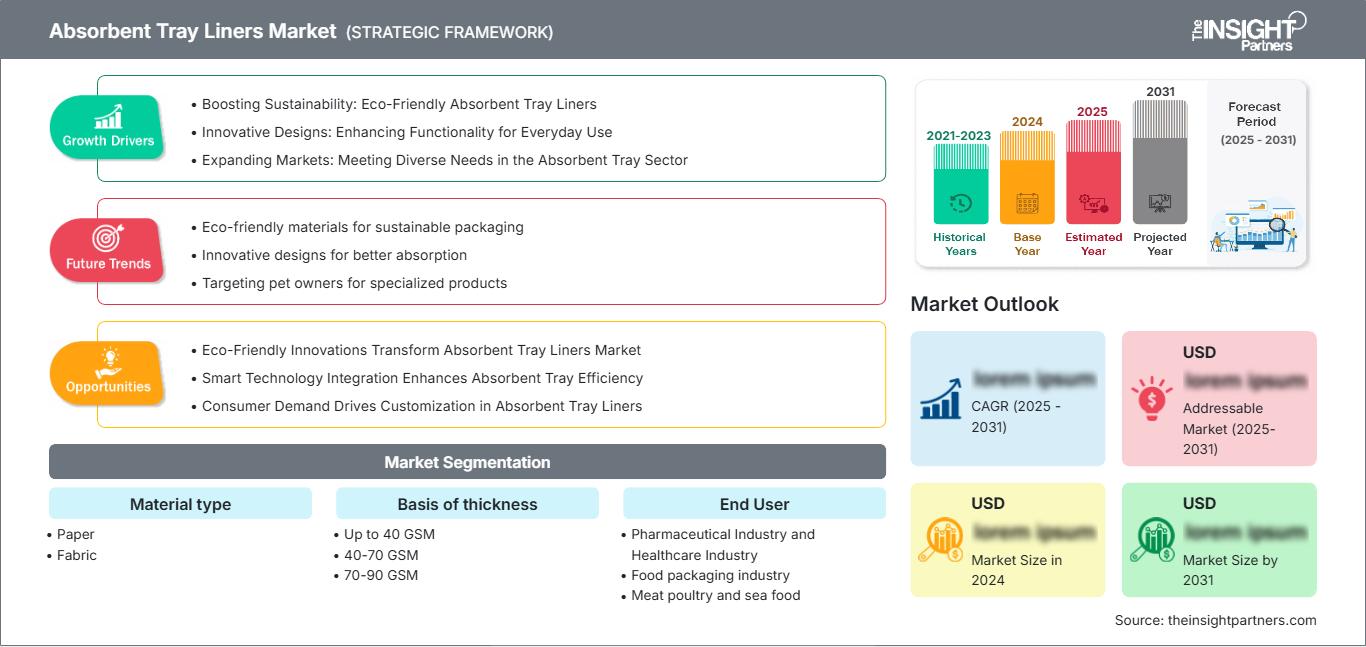
Regional Insights
North America Absorbent Tray Liners Market
North America leads the market, holding a significant share due to its developed healthcare system and strict hygiene regulations. The region accounts for a 32–36% share in 2025 and is projected to grow steadily at a 7.6–8.4% CAGR, driven by increases in surgical procedures, pharmaceutical production, and sterilization needs across institutions. Hospitals and diagnostic labs depend on high-quality absorbent liners for contamination control and efficient operations. Strong regulations, such as FDA guidelines and hospital accreditation standards, further promote use in medical and food-processing settings.
The USA constitutes the major portion of the regional demand due to heavy expenditure on health care and pharmaceutical production. In addition, Canada is a contributing factor owing to its expanding network of hospitals and its emphasis on infection prevention. Innovation in medical supplies, along with efficient distribution channels by companies such as Medline Industries, LP, and Cardinal Health, Inc., is helping the market gain more strength.
U.S. Absorbent Tray Liners Market
The United States makes up about 24–28% of the global market share in 2025 and is projected to grow at a 7.8–8.5% CAGR. High surgical volumes, a strong healthcare system, and strict infection control rules drive this market. It is projected to grow at a rate of 7.5–8.1% from 2026 to 2034, boosted by increased demand for sterile medical supplies in hospitals, ambulatory surgical centers, and laboratories. A growing focus on preventing healthcare-associated infections (HAIs) is shaping purchasing habits among institutional clients, supporting a positive Absorbent Tray Liners Market forecast.
Large firms like Cardinal Health, Inc., Medline Industries, LP, Owens & Minor, Inc., and Healthmark Industries Co., Inc., have already developed an efficient distribution network among healthcare establishments in the United States. The application of absorbent liners is especially popular in surgical trays, sterilization packs, and laboratory handling systems. Other factors fueling growth include the increasing provision of outpatient services and the growing demand for standardized disposable hygiene products.
Europe Absorbent Tray Liners Market
Europe represents a 27–31% share of the market in 2025 and is expected to grow at a 7.4–8.2% CAGR. Strict healthcare regulations, sustainability requirements, and the increasing use of disposable sterile products drive demand. Key contributors include Germany, France, the UK, Italy, and Spain. These countries have strong hospital infrastructure and robust pharmaceutical manufacturing bases. The growing emphasis on environmentally friendly medical waste management is also influencing product innovation in the region, according to the Absorbent Tray Liners Market report.
In the United Kingdom market, there is the advantage of centralized healthcare purchasing processes and an increase in the number of surgeries. In Germany, there are superior pharmaceutical packaging and hospital hygiene practices. France is slowly incorporating public health care systems, while Italy and Spain are upgrading their hospitals. Environmental regulations in Europe have increased the need for biodegradable absorbent tray liners.
APAC Absorbent Tray Liners Market
Asia Pacific holds a 25–29% share in 2025 and is the fastest-growing region, with an 8.5–9.4% CAGR. Rapid expansion of healthcare infrastructure, increasing surgical procedures, and rising food safety standards are key growth factors. China, India, Japan, South Korea, and Australia are leading contributors, making significant investments in hospital modernization and expanding pharmaceutical manufacturing capacity, supporting the growth of the Absorbent Tray Liners Market size.
The Chinese market is the leading consumer of regional demand owing to its wide network of hospitals and rising production of pharmaceuticals. The Indian healthcare sector is witnessing rapid progress in terms of healthcare delivery and diagnosis. The Japanese and Korean markets focus on high medical hygiene standards, while the Australian market concentrates on rigorous healthcare regulations and food processing regulations. Healthcare modernization measures and investments by the government in foreign medical infrastructure are increasing the demand for absorbent tray liners.
Middle East & Africa Absorbent Tray Liners Market
The Middle East and Africa region has a smaller but steadily growing share of the global absorbent tray liners market. This growth is fueled by the expansion of healthcare facilities and increased investment in hospital upgrades. The region is expected to grow at a CAGR of 6.8–7.5% from 2026 to 2034, with a market share of 6-9%. Saudi Arabia, the UAE, South Africa, and other emerging economies play significant roles, aided by rising medical tourism and public healthcare initiatives.
Saudi Arabia leads regional demand due to major investments in healthcare infrastructure through national development programs. The UAE shows strong growth due to its private healthcare system and rising medical tourism. South Africa is gradually expanding hospital capacity, while other countries in the MEA region are working to improve healthcare access and hygiene standards. The increasing government focus on infection control and sterilization is driving long-term market growth across the region.
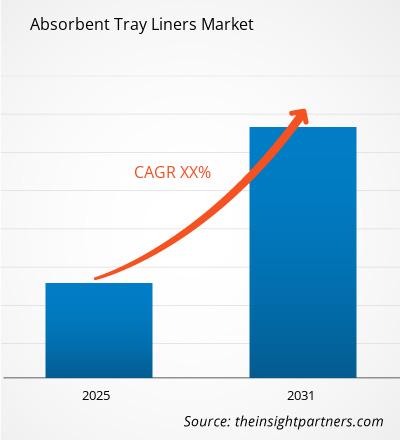
Segmentation Analysis
Material Type
The material type segment is key to the absorbent tray liners market, driven by performance, cost, and sustainability factors. This segment is expected to grow at a 7.9 to 8.6% compound annual growth rate from 2026 to 2034. Paper-based liners lead the market because they are affordable and biodegradable, while fabric liners are becoming more popular in reusable settings. Innovations in cellulose blending and the integration of superabsorbent polymers continue to improve fluid retention and product durability in healthcare and food applications.
- Paper liners are popular because of their high absorbency and low cost. They are widely used in hospitals and food packaging.
- Fabric liners provide advantages in reusability and sustainability, and their use is increasing in premium healthcare and controlled clinical environments.
Thickness
Thickness affects the absorbency capacity and the effectiveness of liners in the medical and food industries. Demand for liners in the mid-range GSM is growing because they offer a good balance of performance and cost efficiency. Manufacturers are fine-tuning thickness levels to improve absorption while keeping structural integrity under fluid load.
- Liners up to 40 GSM are suitable for lightweight applications needing basic absorbency.
- Liners between 40 and 70 GSM provide a balanced level of absorbency for general use in hospitals and food packaging.
- Liners in the 70-90 GSM range offer greater fluid retention in surgical settings.
- 70–90 GSM variants offer greater fluid retention in surgical environments.
- Liners between 90 and 110 GSM are used in high-fluid medical procedures where maximum absorption is essential.
End User
End-user segmentation is important for understanding how demand is distributed. The healthcare sector is the largest consumer, followed by the pharmaceutical and food packaging industries. Growth is fueled by rising hygiene awareness and the need to meet regulatory standards across industries.
- The pharmaceutical and healthcare industries lead due to high infection-control needs and surgical applications.
- The food packaging industry uses liners to control moisture and prevent contamination in packaged foods.
- The meat, poultry, and seafood sector depends on absorbent liners to maintain freshness and prevent leaks.
Opportunity Snapshot
| Segment Name | Revenue Contribution | Trend Tag | Adoption Stage |
| Pharmaceutical & Healthcare | High | Infection Control | Mature |
| Food Packaging Industry | Medium | Food Safety | Scaling |
| Meat, Poultry & Seafood | Medium | Freshness Retention | Scaling |
Absorbent Tray Liners Market Growth Drivers and Impact Analysis
Rising Surgical Procedures and Hospital Admissions
The global rise in surgical procedures is significantly boosting the absorbent tray liners market, especially in developed healthcare systems. The increasing prevalence of chronic diseases, aging populations, and growth in outpatient surgeries are leading to a higher use of sterile consumables. Hospitals are focusing more on infection prevention protocols, making absorbent tray liners necessary in operating rooms and diagnostic areas. The demand is also supported by strict rules set by health authorities such as the WHO and the CDC, which ensure consistent use in healthcare facilities worldwide. Additionally, aging populations in developed economies are contributing to higher procedural volumes, particularly orthopedic and cardiac surgeries. This structural shift in healthcare utilization is directly increasing demand for high-performance absorbent tray liners across operating rooms, recovery wards, and diagnostic laboratories.
Expansion of Food Safety Regulations
Food safety regulations are becoming increasingly stringent in both developed and emerging economies, directly influencing demand for absorbent tray liners. Regulatory authorities are enforcing strict contamination control measures across the packaged food, meat, and seafood industries, resulting in widespread adoption of absorbent liners to maintain hygiene and extend product shelf life. Supermarkets and food processors are implementing advanced absorbent technologies to comply with global food safety standards, reduce spoilage, and improve cold chain logistics efficiency, supporting a positive Absorbent Tray Liners Market forecast.
Shift Toward Disposable Medical Consumables
The healthcare industry's shift toward disposable consumables is a key driver of increased use of absorbent tray liners. Concerns about cross-contamination and hospital-acquired infections are encouraging institutions to switch from reusable systems to single-use alternatives. This transition is supported by cost analyses that favor disposables due to lower sterilization requirements. Manufacturers are expanding production capacities to meet rising demand, particularly in high-volume surgical centers and emergency care facilities across North America, Europe, and Asia Pacific. Rising global trade in perishable food products is further increasing the need for compliance with international food safety standards, making absorbent tray liners an essential component of modern food distribution systems and shaping key Absorbent Tray Liners Market trends.
Absorbent Tray Liners Market Future Trends
Sustainable and Biodegradable Material Integration
Sustainability is becoming a key trend in the absorbent tray liners market. Manufacturers are investing in biodegradable fibers and recyclable polymers. Environmental regulations aimed at reducing medical waste are encouraging the use of eco-friendly alternatives. Companies are investing heavily in R&D to develop products that maintain high fluid absorption efficiency while minimizing landfill contribution, positioning sustainability as both a regulatory requirement and competitive differentiator. This trend is especially strong in Europe. There, circular economy policies are shaping procurement choices in healthcare and food packaging industries.
Smart Absorbent Material Innovation
Technological progress in material science is driving the development of next-generation smart absorbent tray liners with improved functional properties. Manufacturers are using superabsorbent polymers, antimicrobial coatings, and multilayer composite structures to enhance fluid retention, resistance to contamination, and odor control. These innovations are especially important in surgical settings where preventing infections is crucial. Some new liners are designed to provide visual indicators of saturation, making them easier to use in clinical workflows. Increased research and development investment by leading companies is accelerating product differentiation in a competitive global market. As healthcare systems seek higher efficiency and safety standards, smart absorbent materials are likely to become a major area of innovation in the absorbent tray liners market during the forecast period.
Absorbent Tray Liners Market Opportunities
Expansion in Emerging Healthcare Infrastructure
Emerging economies offer significant opportunities for the absorbent tray liners market as healthcare infrastructure expands rapidly. Countries in Asia-Pacific, Latin America, and the Middle East are investing heavily in building and modernizing hospitals. This drives strong demand for medical supplies, including absorbent tray liners. International suppliers can leverage distribution partnerships and localized manufacturing strategies to enter these fast-growing markets effectively. Additionally, international medical device suppliers are forming partnerships with local distributors to enhance market penetration. Cost-sensitive markets are also encouraging localized manufacturing, enabling companies to optimize pricing strategies while meeting growing institutional demand for hygienic and efficient medical consumables.
Growth in Sustainable Product Manufacturing
Manufacturing focused on sustainability offers a big opportunity as healthcare providers move towards eco-friendly purchasing policies. Developing biodegradable and compostable absorbent liners can create new revenue streams. Companies that invest in green chemistry and recyclable materials are likely to gain a competitive edge. This shift supports global environmental goals and improves the long-term competitiveness of the absorbent tray liners market among institutional buyers. Additionally, sustainability-linked procurement contracts are becoming more common, rewarding suppliers that demonstrate reduced environmental impact. This transition is also opening new premium product segments in which high-performance sustainable liners command stronger margins. Over time, sustainability is expected to become a core purchasing criterion for both public- and private-sector buyers.
Recent Developments
- April 1, 2026: Cardinal Health, Inc expanded its Actinium-225 (Ac-225) production capacity at the Center for Theranostics Advancement in Indianapolis. This increase reflects growing demand for new cancer therapies and represents a significant expansion of its healthcare products and services business.
- March 3, 2026: Medline Industries, LP, announced a new supply agreement with Better Life Medical & Surgical Supply. This agreement expands the distribution of Medline's medical-surgical products, durable medical equipment, wound care, and urology portfolio. It also improves supply chain coverage across Florida.
Frequently Asked Questions

- Comprehensive Market Sizing and Forecast Analysis
- Detailed Segmentation Analysis
- In-Depth Market Dynamics Assessment
- Regional and Country-Level Insights
- Competitive Landscape and Company Benchmarking
- Strategic Business Intelligence
Recent Reports
Testimonials

The Insight Partners' SCADA System Market report is comprehensive, with valuable insights on current trends and future forecasts. The team was highly professional, responsive, and supportive throughout. We are very satisfied and highly recommend their services.
RAN KEDEM Partner, Reali Technologies LTDs
I requested a report on a very specific software market and the team produced the report in a few days. The information was very relevant and well presented. I then requested some changes and additions to the report. The team was again very responsive and I got the final report in less than a week.
JEAN-HERVE JENN Chairman, Future Analytica
We worked with The Insight Partners for an important market study and forecast. They gave us clear insights into opportunities and risks, which helped shape our plans. Their research was easy to use and based on solid data. It helped us make smart, confident decisions. We highly recommend them.
PIYUSH NAGPAL Sr. Vice President, High Beam Global
The Insight Partners delivered insightful, well-structured market research with strong domain expertise. Their team was professional and responsive throughout. The user-friendly website made accessing industry reports seamless. We highly recommend them for reliable, high-quality research services
YUKIHIKO ADACHI CEO, Deep Blue, LLC.
This is the first time I have purchased a market report from The Insight Partners.While I was unsure at first, I visited their web site and felt more comfortable to take the risk and purchase a market report.I am completely satisfied with the quality of the report and customer service. I had several questions and comments with the initial report, but after a couple of dialogs over email with their analyst I believe I have a report that I can use as input to our strategic planning process.Thank you so much for taking the extra time and making this a positive experience.I will definitely recommend your service to others and you will be my first call when we need further market data.
JOHN SUZUKI President and Chief Executive Officer, Board Director, BK Technologies
I wish to appreciate your support and the professionalism you displayed in the course of attending to my request for information regarding to infectious disease IVD market in Nigeria. I appreciate your patience, your guidance, and the fact that you were willing to offer a discount, which eventually made it possible for us to close a deal. I look forward to engaging The Insight Partners in the future, all thanks to the impression you have created in me as a result of this first encounter.
DR CHIJIOKE ONYIA MANAGING DIRECTOR, PineCrest Healthcare Ltd.Reason to Buy
- Informed Decision-Making
- Understanding Market Dynamics
- Competitive Analysis
- Identifying Emerging Markets
- Customer Insights
- Market Forecasts
- Risk Mitigation
- Boosting Operational Efficiency
- Strategic Planning
- Investment Justification
- Tracking Industry Innovations
- Aligning with Regulatory Trends





 Get Free Sample for