
Agave Syrup Market Size, Growth & Trends by 2034
Coverage: By Category (Organic, Conventional); Type (Light Agave Syrup, Dark Agave Syrup); Distribution Channel (Supermarkets and Hypermarkets, Convenience Stores, Online Retail, Others) , and Geography (North America, Europe, Asia Pacific, and South and Central America)
- Status : Data Released
- Report Code : TIPRE00008139
- Category : Food and Beverages
- No. of Pages : 150
- Available Report Formats :


- Last update date : August 10, 2026


2025 Market Size
US$ 1.95 Bn
Base year value
2034 Forecast
US$ 3.46 Bn
Projected by 2034
CAGR 2026-2034
6.59 %
Growth rate
Addressable Market
US$ 24.48 Bn
(2026-2034)
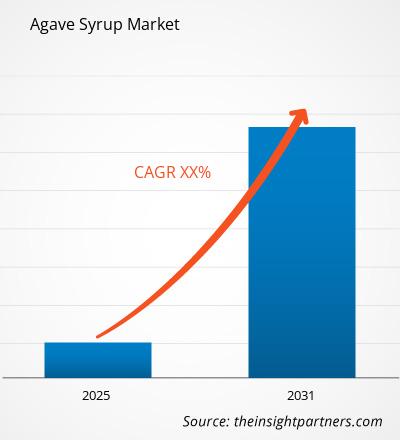
The agave syrup market was valued at US$ 1.95 Billion in 2025 and is projected to reach US$ 3.46 Billion by 2034, growing at a CAGR of 6.59% from 2026 to 2034. Demand is supported by rising use of plant-based sweeteners, clean-label food reformulation, and wider application in bakery, beverages, sauces, confectionery, and foodservice channels.
North America remains a priority demand center as retail brands, foodservice operators, and ingredient formulators expand natural sweetener portfolios. The regional agave syrup market size is supported by organic product availability, vegan formulation demand, and established distribution through supermarkets, specialty stores, and online retail channels.
Agave Syrup Market Assessment and Insights
- North America: Held an estimated 32–36% share in 2025 and is expected to grow at a CAGR of 6.1–6.7% during 2026–2034, supported by clean-label sweetener adoption and premium retail penetration.
- US: Accounted for about 75–80% of North America demand in 2025 and is projected to expand at a CAGR of 5.9–6.5% through 2034.
- Europe: Represented nearly 24–28% share in 2025 and is expected to grow at 5.8–6.4% CAGR, led by the UK, Germany, France, Italy, and Spain.
- Asia Pacific accounted for around 18–22% share in 2025 and is projected to grow at 6.8–7.4% CAGR, led by China, Japan, India, South Korea, and Australia.
- Largest Segment: Conventional agave syrup held an estimated 58–62% market share in 2025 and is expected to grow at 5.7–6.3% CAGR due to mainstream pricing and broad retail access.
- High Growth Segment: Organic agave syrup held about 38–42% share in 2025 and is forecast to grow at 7.0–7.6% CAGR as certification-led purchasing expands.
- Key companies analyzed in detail: Blue Green Organics, Colibree Company, HoneyTree, Global Goods Inc, Dipasa, NOW Foods, Madhava Foods, Suzanne’s Specialties, Wholesome Sweeteners Inc, The IIDEA Company, Hain Daniels Group, Maretai Organics Australia, Best Ground International, Natura Bio Foods, Domino Foods Inc, The Tierra Group, Groovy Food Company Ltd, MONIN Incorporated, Organic Nectars, and The Simple Syrup Co.
Source: The Insight Partners' analysis based on proprietary research, government publications, company annual reports, investor presentations, industry databases, and expert interviews.
Production has moved from niche natural-food supply toward more standardized ingredient processing, with closed handling, filtered syrup grades, and private-label packaging supporting agave syrup market growth. Food manufacturers increasingly evaluate sweetness intensity, solubility, color, and flavor neutrality when selecting light or dark variants for beverages, breakfast products, bakery items, and sauces.
Demand in the forward market is anticipated to be boosted by the certification, availability via e-commerce platforms, and reformulation involving sugar content reduction. Suppliers can compete on the basis of origin, traceability, and clean-labeling as retailers have also positioned agave syrup against honey, maple syrup, and coconut sugar.
Agave Syrup Market Report Scope
| Report Attribute | Details |
|---|---|
| Market size in 2025 | US$ 1.95 Billion |
| Market Size by 2034 | US$ 3.46 Billion |
| Global CAGR (2026 - 2034) | 6.59% |
| Historical Data | 2021-2024 |
| Forecast period | 2026-2034 |
Agave Syrup Market Analysis
The Agave Syrup Market is being shaped by consumer migration from refined sugar toward natural liquid sweeteners used in beverages, desserts, cereals, bakery products, and home baking. These include the mildness of its flavor profile, its high dissolvability, and its vegan nature, which makes it a good fit in both domestic and commercial recipes. The rise in consumer preference for clean labels and minimally processed foods has also raised its popularity amongst health-conscious consumers. The agave base in Mexico also provides suppliers with a point of origin for marketing their products as a brand differentiator and premium product.
The supply dynamics depend on the availability of agave, yield rates, certification expenses, and the state of the transportation process. Light agave syrup is preferred for use in recipes that require a more neutral flavor, including drinks and dairy alternative products, while dark agave syrup is used for recipes requiring a darker color and more complex flavor profiles.
Online retail has widened access for smaller brands by enabling direct consumer engagement, product education, and convenient purchasing. However, supermarkets and hypermarkets continue to anchor high-volume sales due to strong shelf visibility and broad consumer reach. Agave Syrup Market analysis shows a fragmented competitive landscape with specialist organic brands, ingredient suppliers, and retail-focused natural food companies competing on purity, packaging size, certification, and sourcing transparency. Product differentiation increasingly depends on clean-label positioning and premium branding strategies.
In this regard, Madhava Foods, NOW Foods, Wholesome Sweeteners Inc., Blue Green Organics, and The IIDEA Company have positioned their products by emphasizing organic ingredients, vegan, or low glycemic positioning compared to regular sweeteners. In the future, investment in securing the sources, organic certification, bulk packaging, and marketing directly to consumers will be necessary. Firms with guaranteed sources of agave nectar in Mexico, robust quality assurance programs, and flexibility in packaging will cater effectively to both retail and food service markets.
● REPORT CUSTOMIZATION
Tailor This Report To Align With Your Specific Business Requirements
This report can be customized to align precisely with your business objectives, scope, and target markets. Customization options include tailored segmentation, geography, competitive analysis, and strategic insights to support informed decision-making.
Customize This Report →WHAT YOU CAN ADJUST
- ● Segmentations
- ● Geography
- ● Competitive Analysis
- ● Language Preferences
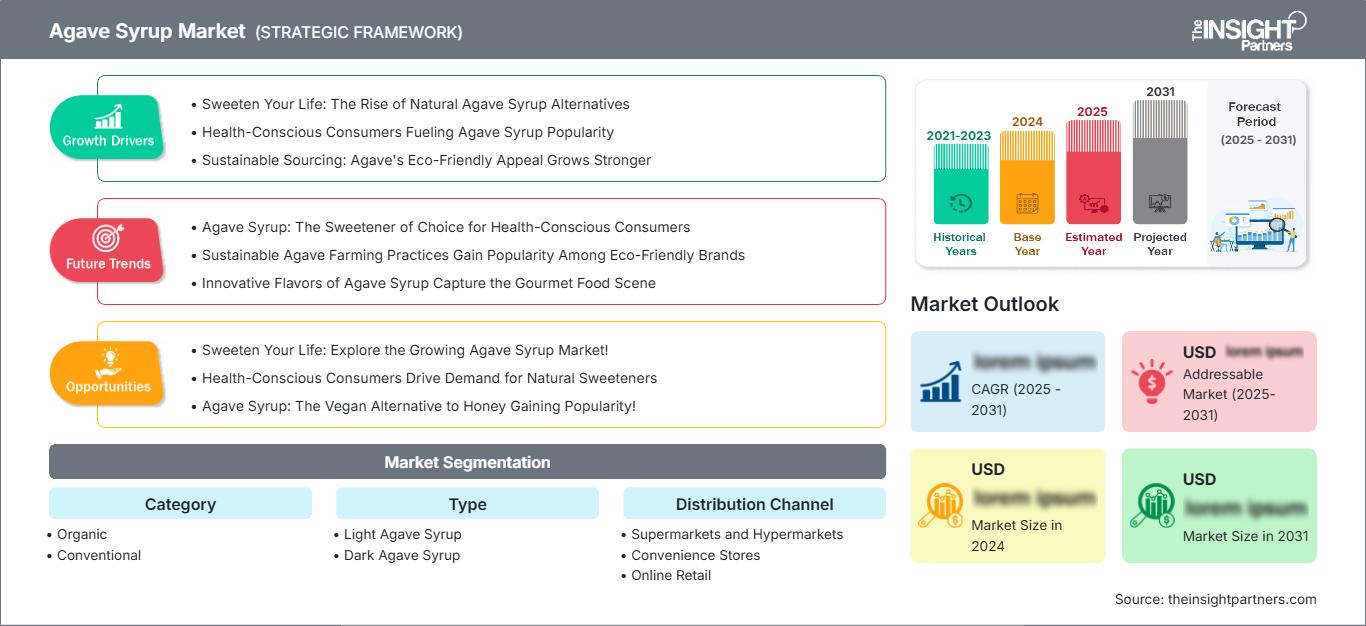
Agave Syrup Market: Strategic Insights
Regional Insights
North America Agave Syrup Market
North America is estimated to hold a 32–36% share of the market in 2025, supported by the wide availability of organic, vegan, and natural sweetener products across retail channels. The region is projected to grow at a CAGR of 6.1–6.7% from 2026 to 2034, with demand led by retail grocery outlets, cafés, bakery applications, beverage formulations, and health-oriented household consumption. Rising consumer awareness of clean-label ingredients and plant-based lifestyles continues to support market expansion across both retail and foodservice sectors, reflecting key Agave Syrup Market trends.
Consumer preference for products with familiar ingredients and low glycemic index makes it worthwhile to keep them alongside honey, maple syrup, and date syrup. The United States continues to dominate the market because of its large number of consumers of health foods, large availability of products, and rising interest in natural sugars for processed foods and beverages, while Canada provides its share via specialty retail and natural foods stores. Online retail channels are enhancing loyalty among consumers by making bulk packages, organic versions, subscriptions, and comparative brands available.
U.S. Agave Syrup Market
The U.S. accounted for about 75–80% of North American demand in the Agave Syrup Market in 2025 and is expected to grow at a CAGR of 5.9–6.5% during 2026–2034. The market benefits from established natural food retailers, strong online grocery adoption, and frequent use of agave syrup in beverages, breakfast foods, cocktails, and vegan baking. Growing consumer interest in plant-based diets, clean-label ingredients, and natural sweetener alternatives continues to support category expansion across both retail and foodservice channels.
Brands like NOW Foods, Madhava Foods, Wholesome Sweeteners Inc., and Blue Green Organics have a presence in both the retail and digital environments. Claims of organic ingredients, products of Mexico, non-GMO labeling, and vegan certification justify the price premium for products, while bulk packaging caters to the needs of the restaurants, cafés, and smaller food processing firms. In addition, the ability of e-commerce platforms will help customers compare certifications, packaging options, and product characteristics, which will help build customer loyalty and increase brand reach. Packaging innovations and product positioning will be critical for future success in the market.
Europe Agave Syrup Market
Europe held an estimated 24–28% share of the Agave Syrup Market in 2025 and is projected to grow at a CAGR of 5.8–6.4% through 2034. The demand will be propelled by bakery products that are clean-label, plant-based products, premium beverage formulations, and natural sweetener alternatives gaining popularity. The leading adopters include the UK and Germany, while France, Italy, and Spain make their contributions from specialty retail, organic food stores, and foodservice segments.
Increased regulatory oversight on nutritional information labeling drives the positioning of agave syrup as an alternative sweetener and not a cure-all for health. Organic certification, sustainable sourcing, and sustainability are still critical buying considerations for the consumer as well as the brand manufacturer. Natural food portfolio companies Groovy Food Company Ltd and Hain Daniels Group will promote regional presence in the natural food portfolio and grocery distribution. Increasing demand for vegan products, organic packaged foods, and premium bakery applications is likely to drive more opportunities for the market.
APAC Agave Syrup Market
APAC accounted for around 18–22% Agave Syrup Market share in 2025 and is expected to grow at a CAGR of 6.8–7.4% during 2026–2034. China, Japan, India, South Korea, and Australia are developing demand through health food retail, cafés, imported specialty products, and plant-based recipe adoption. Rising health awareness, increasing disposable incomes, and expanding availability of natural sweeteners are supporting broader market penetration across both retail and foodservice channels.
The presence of natural sweetener culture is somewhat visible in Australia, and for Japan and South Korea, premium quality imports are valued as ingredients for beverages and desserts. India and China are markets that have potential for future development with regard to agave syrup because of the growing popularity of e-commerce and the increasing desire of urban consumers to choose something instead of refined sugar. Clean-label foods and products, including vegan and health-focused diets, are going to stimulate the demand even more.
Middle East & Africa Agave Syrup Market
The Middle East & Africa Agave Syrup Market report highlights that the region is smaller than other major markets but is expanding at an estimated CAGR of 5.5–6.1% from 2026 to 2034. The UAE and Saudi Arabia take up the lead on the regional demand side through premium supermarkets, hospitality venues, and health-related imported foods distribution channels, whereas South Africa drives growth through natural food retailing channels as well as increased presence of products online. Growing consumer preferences for health, clean-label ingredients, and premium foods are slowly helping to drive market penetration in urban areas.
Market penetration is highest in urban areas where consumers buy imported sweeteners for use in beverages, desserts, and health-driven diets. While growth is hampered by price sensitivity and lack of awareness outside premium distribution channels, hospitality venues, specialty food stores, and e-commerce websites keep providing opportunities for branded agave syrup products and foodservice packaging options. Increasing exposure to foreign food trends and health-conscious lifestyles is also expected to drive the slow growth of the market in the region.
Segmentation Analysis
Category
Category segmentation includes organic and conventional products. Conventional agave syrup is expected to grow at 5.7–6.3% CAGR during 2026–2034 because it remains cost-competitive and broadly available. Organic products are expanding faster as certification, traceability, and clean-label positioning become central to premium sweetener purchasing.
- Organic products appeal to health-focused households, natural food stores, and premium food manufacturers seeking certified ingredients with origin transparency and stronger clean-label credibility.
- Conventional products serve mainstream retail and foodservice users who prioritize sweetness, availability, and price while still benefiting from plant-based positioning.
Type
Type segmentation includes light agave syrup and dark agave syrup. Light agave syrup is expected to grow at 6.0–6.6% CAGR as its neutral color and mild taste suit beverages, bakery, cereals, and sauces. Dark agave syrup maintains demand where stronger flavor and visual richness are desired.
- Light Agave Syrup is preferred in coffee, tea, cocktails, yogurt, and baking because it dissolves quickly and adds sweetness without dominating color or flavor.
- Dark Agave Syrup is used in recipes requiring deeper caramel notes, including marinades, desserts, breakfast toppings, and craft beverage applications.
Distribution Channel
Distribution Channel segmentation covers supermarkets and hypermarkets, convenience stores, and online retail. The segment is projected to grow at 6.2–6.8% CAGR as omnichannel availability improves. The agave syrup market scope is widening through bulk packs, subscription commerce, and specialty natural food aisles.
- Supermarkets and Hypermarkets generate high visibility through natural sweetener shelves, promotional bundles, private labels, and comparison shopping beside honey and maple syrup.
- Convenience Stores support smaller-pack impulse purchases but remain limited by shelf space, price sensitivity, and lower consumer education around agave-based sweeteners.
- Online Retail is gaining share through broader SKU availability, bulk formats, customer reviews, and direct access to certified organic or specialty brands.
Opportunity Snapshot
| Distribution Channel | Revenue Contribution | Trend Tag | Adoption Stage |
| Supermarkets and Hypermarkets | High | Natural Aisles | Mature |
| Convenience Stores | Low | Small Packs | Emerging |
| Online Retail | Medium | Bulk Buying | Scaling |
Agave Syrup Market Growth Drivers and Impact Analysis
Clean-Label Reformulation in Food and Beverage Products
In the Agave Syrup Market, food and beverage manufacturers are reformulating products with recognizable sweeteners to align with clean-label purchasing behavior. Agave syrup offers liquid functionality, vegan suitability, and a mild taste profile that fits beverages, bakery products, sauces, dressings, and breakfast foods. This driver supports ingredient substitution where brands seek to reduce reliance on refined sugar or artificial sweeteners while maintaining sweetness, texture, and formulation flexibility. Market impact is strongest in premium categories, where consumers closely compare ingredient lists and are often willing to pay higher prices for natural, plant-based, and minimally processed sweetening solutions. Growing demand for transparent labeling and healthier product formulations continues to reinforce adoption across retail and foodservice applications.
Expansion of Organic and Vegan Retail Categories
The shelves of organic and vegan specialty stores will continue to generate demand for agave syrup owing to its plant-based nature and ability to serve as a honey substitute in vegan dishes. Organically certified versions will be especially appealing for natural food stores as well as online outlets catering to people who assess the product's origin and sustainability claims. The effects of such a development can be seen in high-quality packaging, origin-based marketing, and multipacks.
Growth of Online Retail and Specialty Sweetener Discovery
E-commerce is improving product discovery by giving consumers access to light, dark, raw, organic, and bulk agave syrup formats beyond local store assortments. Reviews, subscription options, and direct brand education help reduce awareness barriers. Online retail also supports smaller specialists that may not have broad supermarket placement. The result is a more competitive marketplace where packaging, certifications, price per ounce, and brand trust influence repeat buying and category expansion.
Agave Syrup Market Future Trends
Traceable Mexican Agave Sourcing
Agave syrup market trends will increasingly emphasize origin transparency, especially for products sourced from blue Weber agave in Mexico. Buyers are expected to ask for clearer information on cultivation, processing, certification, and bottling location. Traceability can help brands justify premium pricing and reduce concerns around adulteration or inconsistent quality. Suppliers that communicate farm relationships, batch control, and certification standards will strengthen buyer confidence across retail and foodservice channels.
Functional Sweetener Blends
Product innovation in the future is expected to involve agave nectar in combination with other natural additives, such as inulin, fruit juices, spices, or reduced-calorie sweetening solutions. Such formulations will be useful for beverages, breakfast toppings, and health-related applications, but will not be competitive with regular liquid sweeteners. However, such a trend will require appropriate labeling and sensory profiling, but will create new opportunities for premium products and seasonal flavors.
Agave Syrup Market Opportunities
Premium Foodservice and Café Applications
Agave syrup Forecasts indicate a meaningful opportunity in cafés, smoothie bars, cocktail programs, and bakery cafés that need fast-dissolving liquid sweeteners. Foodservice buyers value consistent viscosity, portion control, and neutral flavor in beverages. Suppliers can target this channel with bulk bottles, pumps, and operator education. The opportunity is strongest where menus highlight vegan, natural, or low-glycemic alternatives, allowing agave syrup to become a visible ingredient rather than a back-of-house substitute.
Certified Organic Private Label Expansion
Retailers can use certified organic private-label agave syrup to strengthen natural sweetener assortments and capture margin from premium consumers. Private-label programs benefit from predictable demand, shelf control, and the ability to offer light and amber variants under one brand architecture. The opportunity requires dependable sourcing and certification compliance, but it can increase category penetration by making organic agave syrup more affordable than specialist brands while preserving clean-label appeal.
Frequently Asked Questions

- Comprehensive Market Sizing and Forecast Analysis
- Detailed Segmentation Analysis
- In-Depth Market Dynamics Assessment
- Regional and Country-Level Insights
- Competitive Landscape and Company Benchmarking
- Strategic Business Intelligence
Recent Reports
Testimonials

The Insight Partners provided valuable market intelligence that supported our global go-to-market strategy. Their team was professional, responsive, and attentive to our feedback, providing thoughtful analysis and helpful methodological clarifications throughout the project.
Junmo Kim Chief Financial Officer (CFO), Enertech Co., Ltd.
The Insight Partners' SCADA System Market report is comprehensive, with valuable insights on current trends and future forecasts. The team was highly professional, responsive, and supportive throughout. We are very satisfied and highly recommend their services.
RAN KEDEM Partner, Reali Technologies LTDs
I requested a report on a very specific software market and the team produced the report in a few days. The information was very relevant and well presented. I then requested some changes and additions to the report. The team was again very responsive and I got the final report in less than a week.
JEAN-HERVE JENN Chairman, Future Analytica
We worked with The Insight Partners for an important market study and forecast. They gave us clear insights into opportunities and risks, which helped shape our plans. Their research was easy to use and based on solid data. It helped us make smart, confident decisions. We highly recommend them.
PIYUSH NAGPAL Sr. Vice President, High Beam Global
The Insight Partners delivered insightful, well-structured market research with strong domain expertise. Their team was professional and responsive throughout. The user-friendly website made accessing industry reports seamless. We highly recommend them for reliable, high-quality research services
YUKIHIKO ADACHI CEO, Deep Blue, LLC.
This is the first time I have purchased a market report from The Insight Partners.While I was unsure at first, I visited their web site and felt more comfortable to take the risk and purchase a market report.I am completely satisfied with the quality of the report and customer service. I had several questions and comments with the initial report, but after a couple of dialogs over email with their analyst I believe I have a report that I can use as input to our strategic planning process.Thank you so much for taking the extra time and making this a positive experience.I will definitely recommend your service to others and you will be my first call when we need further market data.
JOHN SUZUKI President and Chief Executive Officer, Board Director, BK Technologies
I wish to appreciate your support and the professionalism you displayed in the course of attending to my request for information regarding to infectious disease IVD market in Nigeria. I appreciate your patience, your guidance, and the fact that you were willing to offer a discount, which eventually made it possible for us to close a deal. I look forward to engaging The Insight Partners in the future, all thanks to the impression you have created in me as a result of this first encounter.
DR CHIJIOKE ONYIA MANAGING DIRECTOR, PineCrest Healthcare Ltd.Reason to Buy
- Informed Decision-Making
- Understanding Market Dynamics
- Competitive Analysis
- Identifying Emerging Markets
- Customer Insights
- Market Forecasts
- Risk Mitigation
- Boosting Operational Efficiency
- Strategic Planning
- Investment Justification
- Tracking Industry Innovations
- Aligning with Regulatory Trends





 Get Free Sample for