
Aircraft Seat Upholstery Market Demand, Share & Growth by 2034
Coverage: by Material (Fabric, Leather, Vinyl); Aircraft Type (Fixed-Wing, Rotary-Wing); Seat Type (First, Business, Premium, Economy); End-User (OEM, Aftermarket) , and Geography (North America, Europe, Asia Pacific, and South and Central America)
- Status : Data Released
- Report Code : TIPRE00006618
- Category : Chemicals and Materials
- No. of Pages : 150
- Available Report Formats :


- Last update date : August 07, 2026


2025 Market Size
US$ 6.65 Bn
Base year value
2034 Forecast
US$ 10.80 Bn
Projected by 2034
CAGR 2026-2034
5.54 %
Growth rate
Addressable Market
US$ 79.13 Bn
(2026-2034)
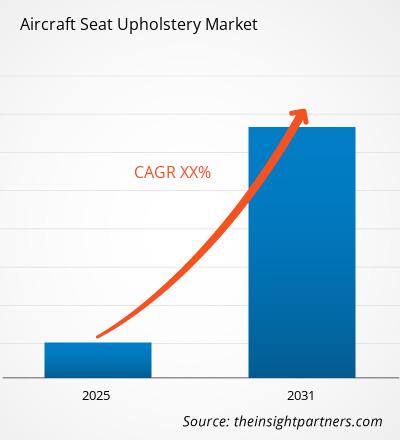
The value of the global aircraft seat upholstery market stood at US$ 6.65 billion in 2025 and is estimated to reach US$ 10.80 billion in 2034, witnessing a CAGR of 5.54% during 2026–2034. Growth in the market will be driven by the rising aircraft deliveries and cabin reconfiguration projects. Further, continuous innovations in the lightweight, fire-resistant, and durable materials used in seat upholstery will aid the market growth.
Backed by an established manufacturing base for aerospace products and having one of the largest number of aircrafts, North America still holds significance in terms of being a regional market for aircraft seat interiors. The aircraft seat upholstery market size is forecasted to witness a CAGR of 5.0–5.5% during 2026-2034 owing to high aircraft production, increased activities related to cabin retrofit, and rising need for premium passenger seats having textile and leather upholstery.
Aircraft Seat Upholstery Market Assessment and Insights
- North America: Accounted for 33–37% share in 2025 and is projected to expand at a CAGR of 5.0–5.5% during 2026–2034. Growth is supported by established aircraft manufacturing, extensive airline fleets, and continuous investments in aircraft cabin modernization and refurbishment programs.
- U.S.: Represented 79–83% of the North American market in 2025 and is anticipated to register a CAGR of 5.1–5.6% during 2026–2034. Aircraft production, cabin retrofit projects, and strong aftermarket demand continue supporting market expansion.
- Europe: Held 28–32% share in 2025 and is expected to grow at a CAGR of 5.3–5.8% during 2026–2034. Germany, France, and the United Kingdom remain leading contributors due to Airbus manufacturing, premium airline operators, and advanced aircraft interior suppliers.
- Asia Pacific: Captured 22–26% share in 2025 and is forecast to record the highest CAGR of 6.3–6.8% during 2026–2034. China, India, Japan, and Singapore continue expanding aircraft fleets while strengthening regional MRO and cabin completion capabilities.
- Largest Segment: Economy Seat accounted for 47–51% market share in 2025 and is projected to register a CAGR of 5.4–5.9% during 2026–2034, supported by increasing narrow-body aircraft deliveries and high passenger traffic.
- High Growth Segment: Aftermarket represented 36–40% market share in 2025 and is expected to expand at a CAGR of 6.2–6.7% during 2026–2034, driven by fleet refurbishment, airline branding initiatives, and replacement of worn seating materials.
- Key companies analyzed in detail: ACC Limited, Aerotex Aircraft Interiors, Aircraft Cabin Modification GmbH, Franklin Products, International Aero Services, LLC, Lantal Textiles AG, OmnAvia Interiors, Perrone Aerospace, Spectra Interior Products, Tritex Corporation.
Source: The Insight Partners' analysis based on proprietary research, government publications, company annual reports, investor presentations, industry databases, and expert interviews.
The interior fittings of an aircraft have seen considerable change as airlines focus on providing comfort, efficiency, and differentiation. The traditional textile has given way to lighter woven textiles, leather, vinyl, and anti-microbial finishes that enhance durability along with lightening the aircraft. At the same time, the rise in aircraft manufacture and refurbishing operations is continuing to motivate the suppliers to adopt advanced manufacturing facilities, sustainable materials, and specialized seats.
The development of the market in the future will be shaped by premium cabin installs, innovations in sustainable materials, and deliveries of aircraft in emerging aviation markets. Airlines are adopting recycled upholstery materials, digital printing, and lightweight leather to enhance sustainability without compromising aesthetics and passenger experience. Growing investments in the manufacturing of regional aircraft, growing maintenance network, and the backlog of commercial aircraft orders are likely to provide good prospects for upholstery manufacturers during the forecast period.
Aircraft Seat Upholstery Market Report Scope
| Report Attribute | Details |
|---|---|
| Market size in 2025 | US$ 6.65 Billion |
| Market Size by 2034 | US$ 10.80 Billion |
| Global CAGR (2026 - 2034) | 5.54% |
| Historical Data | 2021-2024 |
| Forecast period | 2026-2034 |
Aircraft Seat Upholstery Market Analysis
An increase in global air traffic, growth in the number of aircraft fleets, and modernization efforts related to cabin interiors is expected to keep driving the demand for market across OEMs and aftermarket sectors. With airlines looking at cabin interiors as a way to differentiate themselves from their competitors, investments have been increasing for premium seating designs, increased comfort, and light-weight fabric upholstery materials that enhance fuel efficiency.
There is an emerging trend of collaboration between the value chain partners, which includes upholstery fabric suppliers, seat OEMs, aircraft manufacturers, textile suppliers, leather processing firms, certification agencies, and MRO providers. Supply chain risk management is becoming a priority for companies that source raw materials from diversified sources and locations in order to avoid any potential risks associated with deliveries.
The aircraft seat upholstery market report shows that the market is somewhat competitive due to product innovations, customization abilities, sustainability efforts, and partnerships with airlines. Lantal Textiles AG, Aerotex Aircraft Interiors, Aircraft Cabin Modification GmbH, Franklin Products, International Aero Services, LLC, Spectra Interior Products, OmnAvia Interiors, Perrone Aerospace, Tritex Corporation, and ACC Limited are continually working to ensure that their products are light-weighted, digitally manufactured, and equipped with advanced leather finishes for competitive purposes.
Current investments in the market have become focused on sustainable upholstery materials, recycled materials, bio-based leather substitutes, antimicrobial finishes, and automated cutters which help increase manufacturing efficiency with reduced material wastage. There are increasing partnerships in the aircraft industry among airlines, manufacturers of seats, and upholstery material suppliers which will further speed up innovations in premium cabin interiors.
● REPORT CUSTOMIZATION
Tailor This Report To Align With Your Specific Business Requirements
This report can be customized to align precisely with your business objectives, scope, and target markets. Customization options include tailored segmentation, geography, competitive analysis, and strategic insights to support informed decision-making.
Customize This Report →WHAT YOU CAN ADJUST
- ● Segmentations
- ● Geography
- ● Competitive Analysis
- ● Language Preferences
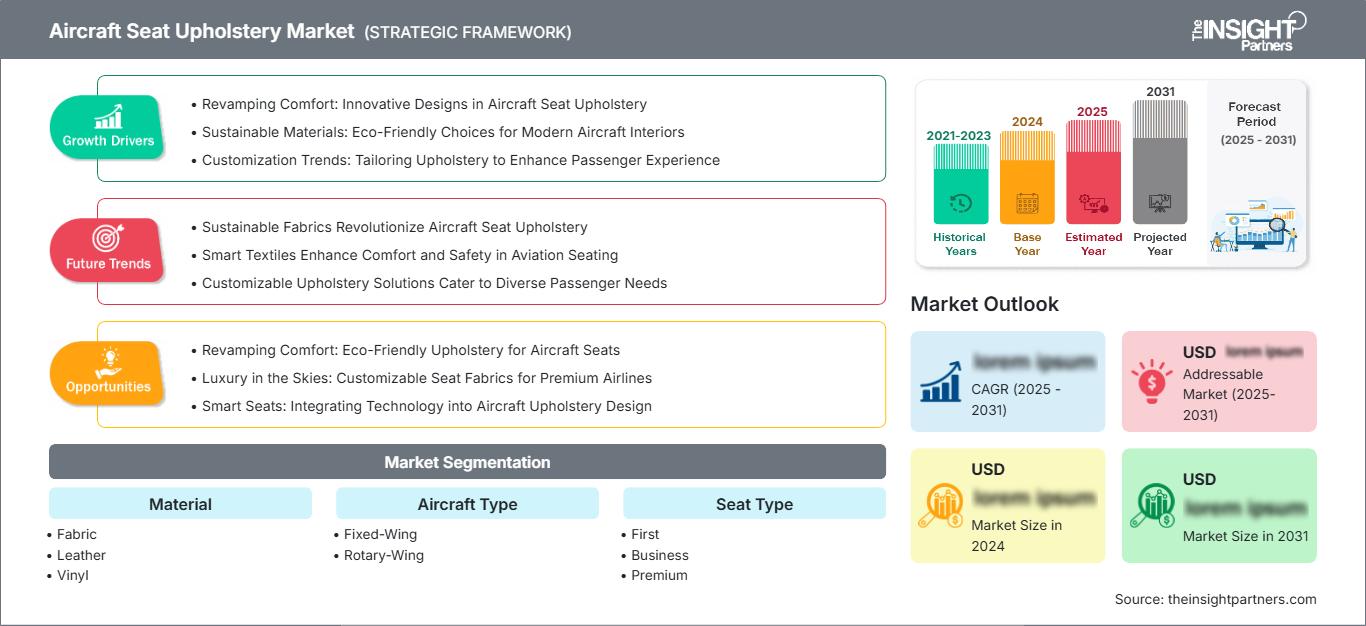
Aircraft Seat Upholstery Market: Strategic Insights
Regional Insights
North America Aircraft Seat Upholstery Market
The share of North America in the market for aircraft seat upholstery was estimated between 33% and 37% in 2025 and is forecast to grow at a CAGR of 5.0% to 5.5% from 2026 to 2034. This region has a developed aerospace manufacturing base, commercial aircraft manufacturing, and one of the biggest airlines' fleets worldwide. The ongoing investments in the interior refurbishment, including the development of premium seats, and lightweight materials will drive the demand for the innovative upholstery fabrics, engineered leather, and vinyl products in commercial and business aviation.
The availability of leading aircraft, seat, and aircraft interior manufacturers provides an additional competitive advantage to the region. There is an ongoing increase in the investments in the retrofits of aircraft interiors among US and Canadian airlines due to the need to improve passenger experience and comply with the strict regulations concerning fire resistance.
U.S. Aircraft Seat Upholstery Market
The U.S. represented 79–83% of the North American market in 2025 and is anticipated to register a CAGR of 5.1–5.6% through 2034. The country's leadership is supported by extensive aircraft manufacturing capabilities, one of the world's largest commercial aviation markets, and a mature aircraft interiors supply chain. Airlines continue investing in cabin refurbishment programs to improve passenger experience while reducing aircraft weight through advanced seating materials and lightweight upholstery technologies.
The development of an active aftermarket sector also plays a key role in the creation of demand for new seat coverings as aircraft operators install replacement seat covers as part of their routine maintenance programs. Customized materials, leather seats, and antimicrobial upholstery fabrics will be used as a result of improvements in cabin class design, growth in business aviation use, and branding by airlines.
Europe Aircraft Seat Upholstery Market
The market share in Europe was about 28-32% in 2025 and is expected to register a CAGR of 5.3-5.8% between 2026 and 2034. Europe has retained its prominent standing through the manufacture of Airbus planes, high-quality manufacture of aircraft interiors, and luxury airlines that prioritize passenger comfort. Germany is the major player in the region due to the presence of well-established aerospace manufacturing capacities. In addition, France and the United Kingdom play an important role due to the aircraft seating, innovative textiles and cabin engineering.
Germany makes ongoing efforts in the development of lightweight technical textiles, upholstery for planes made of environmentally-friendly materials, and automated manufacturing technologies used in the aircraft interior production. The United Kingdom capitalizes on the presence of specialized aircraft seating manufacturers and well-developed aerospace supply chain for commercial and business aviation segments. France, Italy, and Spain collectively contribute through aircraft assembling and component manufacturing as well as growing MRO operations.
APAC Aircraft Seat Upholstery Market
Asia Pacific captured 22–26% of the global market in 2025 and is projected to record the fastest regional growth with a CAGR of 6.3–6.8% during 2026–2034. China remains the largest regional market due to rapid airline fleet expansion and growing domestic aircraft manufacturing, while India, Japan, Singapore, and South Korea continue strengthening aerospace production and aircraft maintenance capabilities.
As passenger traffic rises, fleet updates and government backing of their domestic aerospace industry have been driving investments in both the manufacture and refurbishment of aircraft interior components. Local vendors are investing in technical textiles, weight reduction, and luxurious cabin interiors to cater to increasing demand from airlines.
Middle East & Africa Aircraft Seat Upholstery Market
The Middle East & Africa is anticipated to experience a CAGR of 5.7-6.2% in the forecast period of 2026-2034, driven by growing airplane fleet, premium long-distance travel, and aviation infrastructure investments. The United Arab Emirates and Saudi Arabia are two major sources through airplane fleet growth and cabin modification, whereas South Africa drives the region's demand via aerospace maintenance and parts manufacture.
The rising preference for luxurious seats, cabin upgrading, and aircraft maintenance services keeps on driving the requirement for upholstery replacement within both commercial and business airplanes. Global aircraft interior manufacturers are now forming collaborations with regional airlines and MROs to provide customized, lightweight, and durable seating material solutions.
Segmentation Analysis
Material
The material segment is projected to expand at a CAGR of 5.6–6.0% during 2026–2034, supported by increasing demand for lightweight, durable, and aesthetically appealing seating solutions. Airlines are focusing on upholstery materials that improve passenger comfort while meeting stringent aviation standards for fire resistance, abrasion performance, and maintenance efficiency. Material innovation is also being driven by sustainability initiatives, encouraging the adoption of recyclable textiles, bio-based leather alternatives, and advanced synthetic materials. The aircraft seat upholstery market scope continues to broaden as airlines seek customized cabin interiors that balance premium aesthetics, durability, and operational efficiency.
- Fabric: Remains widely adopted due to its lightweight characteristics, design flexibility, breathability, and cost-effectiveness. Modern aviation fabrics incorporate stain-resistant, antimicrobial, and flame-retardant properties to improve durability and passenger comfort.
- Leather: Preferred for premium cabins because of its luxurious appearance, durability, and ease of maintenance. Airlines increasingly utilize lightweight and sustainably processed leather to reduce aircraft weight while maintaining a premium passenger experience.
- Vinyl: Continues to gain acceptance in high-utilization aircraft owing to its moisture resistance, easy cleaning, abrasion resistance, and lower maintenance requirements, particularly for regional and short-haul aircraft operations.
Aircraft Type
The aircraft type segment is anticipated to register a CAGR of 5.3–5.8% during 2026–2034, reflecting increasing aircraft deliveries, fleet expansion, and retrofit activities across commercial and military aviation. Demand for advanced upholstery materials varies according to aircraft configuration, operational profile, and passenger service requirements. Continuous investments in lightweight seating systems and enhanced cabin interiors are supporting the adoption of innovative upholstery solutions across multiple aircraft categories.
- Fixed-Wing: Represents the dominant aircraft category due to extensive commercial airline operations, growing aircraft production, and rising demand for cabin refurbishment programs emphasizing passenger comfort and airline branding.
- Rotary-Wing: Demand is supported by military, emergency medical services, offshore transportation, and VIP helicopter applications requiring durable, lightweight, and highly resistant upholstery materials capable of operating in demanding environments.
Seat Type
The seat type segment is expected to grow at a CAGR of 5.5–6.0% during 2026–2034, driven by airline investments in differentiated passenger experiences across multiple travel classes. Cabin segmentation strategies continue evolving as airlines optimize seating layouts while introducing enhanced comfort features, premium finishes, and customized upholstery materials. Growing long-haul travel and increasing competition among full-service carriers are encouraging higher investments in premium seating solutions alongside durable economy-class upholstery.
- First: Premium upholstery emphasizes handcrafted leather, customized stitching, luxury finishes, and superior durability to support exclusive passenger experiences on long-haul international aircraft.
- Business: Airlines increasingly utilize premium leather and advanced woven textiles offering improved ergonomics, durability, and premium aesthetics while supporting frequent refurbishment cycles.
- Premium: This segment benefits from growing demand for enhanced comfort between business and economy classes, encouraging airlines to introduce upgraded fabrics, cushioning materials, and contemporary cabin designs.
- Economy: Represents the largest seating category owing to higher passenger volumes and extensive narrow-body aircraft fleets. Airlines prioritize lightweight, stain-resistant, durable upholstery materials capable of minimizing maintenance costs while maintaining passenger comfort.
End-User
The end-user segment is projected to expand at a CAGR of 5.8–6.3% during 2026–2034, supported by sustained aircraft production and increasing refurbishment activities worldwide. Aircraft manufacturers continue integrating advanced upholstery materials into new aircraft deliveries, while airlines and MRO providers generate consistent aftermarket demand through seat replacement, cabin modernization, and branding initiatives. Growing aircraft utilization rates and longer service lives are expected to strengthen opportunities across both OEM and aftermarket channels.
- OEM: Aircraft manufacturers increasingly collaborate with seat suppliers and upholstery specialists to integrate lightweight, sustainable, and premium-quality materials into next-generation aircraft cabins while meeting stringent certification requirements.
- Aftermarket: Continues to experience strong demand as airlines replace worn upholstery, refresh cabin interiors, and introduce customized branding solutions during scheduled maintenance and refurbishment programs.
Opportunity Snapshot
| End-User | Revenue Contribution | Trend Tag | Adoption Stage |
|---|---|---|---|
| OEM | High | Cabin Integration | Mature |
| Aftermarket | High | Cabin Retrofit | Scaling |
Aircraft Seat Upholstery Market Growth Drivers and Impact Analysis
Rising aircraft deliveries and airline fleet modernization
Commercial aviation continues to recover as airlines expand fleets to accommodate growing passenger traffic and replace aging aircraft with more fuel-efficient models. Every new aircraft delivery creates demand for certified seat upholstery materials that satisfy stringent aviation requirements for fire resistance, durability, weight reduction, and passenger comfort. Fleet modernization programs also encourage airlines to adopt contemporary cabin designs that strengthen brand identity while improving operational efficiency. Cabin refurbishment projects accompanying new aircraft deliveries further increase procurement of advanced fabrics, lightweight leather, and engineered vinyl materials. As aircraft order backlogs remain strong and global fleet expansion continues, upholstery manufacturers are expected to benefit from sustained OEM demand and long-term replacement opportunities across commercial, regional, and business aviation segments.
Growing investment in premium passenger experience
Airlines increasingly view cabin interiors as a competitive differentiator, driving investments in premium seating concepts and customized upholstery solutions. Passenger expectations regarding comfort, aesthetics, cleanliness, and onboard experience continue to influence purchasing decisions, particularly on long-haul and premium routes. Consequently, carriers are adopting high-quality leather, engineered fabrics, decorative stitching, antimicrobial coatings, and customized color schemes that reinforce brand identity. Premium economy expansion and business-class upgrades are further accelerating demand for innovative upholstery materials capable of combining luxury with durability. These developments encourage continuous collaboration among airlines, seat manufacturers, and upholstery suppliers to deliver differentiated cabin interiors while maintaining regulatory compliance and operational efficiency.
Increasing adoption of lightweight and sustainable materials
Aircraft manufacturers and airlines remain focused on reducing aircraft weight to improve fuel efficiency and lower operating costs. This objective is accelerating the development of lightweight upholstery fabrics, advanced synthetic materials, recycled fibers, and bio-based leather alternatives that maintain durability without compromising passenger comfort. Sustainability commitments are also encouraging suppliers to minimize manufacturing waste, reduce environmental impact, and increase the use of recyclable raw materials throughout production. At the same time, innovations in coating technologies are improving stain resistance, abrasion performance, and maintenance efficiency. These material advancements support airline sustainability strategies while creating long-term opportunities for upholstery manufacturers capable of delivering certified, high-performance, and environmentally responsible seating solutions.
Aircraft Seat Upholstery Market Future Trends
Expansion of sustainable and bio-based upholstery materials
Airlines and aircraft interior manufacturers are increasingly incorporating environmentally responsible materials into cabin refurbishment and new aircraft programs. Recycled polyester textiles, plant-based leather alternatives, and low-emission finishing technologies are expected to gain wider acceptance as sustainability becomes an important procurement criterion. These aircraft seat upholstery market trends are encouraging suppliers to develop upholstery solutions that combine lightweight performance, durability, premium aesthetics, and regulatory compliance while supporting aviation decarbonization goals and circular economy initiatives throughout the aircraft interior supply chain.
Growing use of smart and functional upholstery technologies
Aircraft seating is evolving beyond traditional aesthetics toward multifunctional passenger comfort solutions. Upholstery materials incorporating antimicrobial treatments, stain-resistant coatings, moisture management, and enhanced durability are becoming increasingly common. Future developments may also include integrated sensing technologies capable of monitoring seat utilization and maintenance requirements. These innovations are expected to improve passenger satisfaction, reduce maintenance costs, and strengthen operational efficiency while supporting airlines' broader digital cabin transformation strategies.
Aircraft Seat Upholstery Market Opportunities
Expansion of aircraft cabin refurbishment programs in emerging markets
Rapid aviation growth across Asia Pacific, the Middle East, and Latin America is creating attractive opportunities for upholstery manufacturers supplying aircraft retrofit programs. Expanding airline fleets and increasing aircraft utilization require regular replacement of seating materials to maintain passenger comfort and regulatory compliance. Aircraft seat upholstery market Forecasts indicate that suppliers establishing regional manufacturing capabilities, localized technical support, and partnerships with MRO providers will be better positioned to benefit from growing refurbishment demand while reducing lead times and logistics costs. Investments in customized upholstery solutions tailored to regional airline branding requirements are also expected to strengthen long-term market competitiveness.
Innovation in premium cabin customization solutions
The continued expansion of premium economy, business-class, and private aviation services presents opportunities for manufacturers specializing in high-value upholstery products. Airlines increasingly seek customized textures, colors, stitching patterns, and lightweight luxury materials that reinforce brand differentiation while improving passenger experience. Upholstery suppliers investing in digital textile printing, advanced leather processing, sustainable premium materials, and rapid customization capabilities can strengthen relationships with aircraft seat manufacturers and airline operators. These innovations are expected to support higher-value contracts while expanding participation in both OEM production programs and high-margin aftermarket refurbishment projects.
Recent Developments
- April 14, 2026: L&L Products announced its participation at the Aircraft Interiors Expo (AIX) 2026, where the company showcased advanced engineered materials for aircraft cabin interiors. The exhibition highlighted lightweight, noise- and vibration-reducing, and durable material technologies designed to enhance aircraft seating, interior components, and passenger comfort while supporting aviation sustainability and cabin performance objectives.
- April 9, 2025: RECARO Aircraft Seating GmbH and All Nippon Airways Co., Ltd. (ANA) unveiled the new R3 Economy Class and R4 Premium Class seating solutions at the Aircraft Interiors Expo (AIX) 2025. Designed for ANA's next-generation Boeing 787-9 cabins, the seats incorporate lightweight construction, enhanced ergonomics, upgraded upholstery finishes, and improved passenger comfort features, reflecting the growing industry focus on premium cabin interiors and advanced aircraft seating solutions.
Frequently Asked Questions

- Comprehensive Market Sizing and Forecast Analysis
- Detailed Segmentation Analysis
- In-Depth Market Dynamics Assessment
- Regional and Country-Level Insights
- Competitive Landscape and Company Benchmarking
- Strategic Business Intelligence
Recent Reports
Testimonials

The Insight Partners' SCADA System Market report is comprehensive, with valuable insights on current trends and future forecasts. The team was highly professional, responsive, and supportive throughout. We are very satisfied and highly recommend their services.
RAN KEDEM Partner, Reali Technologies LTDs
I requested a report on a very specific software market and the team produced the report in a few days. The information was very relevant and well presented. I then requested some changes and additions to the report. The team was again very responsive and I got the final report in less than a week.
JEAN-HERVE JENN Chairman, Future Analytica
We worked with The Insight Partners for an important market study and forecast. They gave us clear insights into opportunities and risks, which helped shape our plans. Their research was easy to use and based on solid data. It helped us make smart, confident decisions. We highly recommend them.
PIYUSH NAGPAL Sr. Vice President, High Beam Global
The Insight Partners delivered insightful, well-structured market research with strong domain expertise. Their team was professional and responsive throughout. The user-friendly website made accessing industry reports seamless. We highly recommend them for reliable, high-quality research services
YUKIHIKO ADACHI CEO, Deep Blue, LLC.
This is the first time I have purchased a market report from The Insight Partners.While I was unsure at first, I visited their web site and felt more comfortable to take the risk and purchase a market report.I am completely satisfied with the quality of the report and customer service. I had several questions and comments with the initial report, but after a couple of dialogs over email with their analyst I believe I have a report that I can use as input to our strategic planning process.Thank you so much for taking the extra time and making this a positive experience.I will definitely recommend your service to others and you will be my first call when we need further market data.
JOHN SUZUKI President and Chief Executive Officer, Board Director, BK Technologies
I wish to appreciate your support and the professionalism you displayed in the course of attending to my request for information regarding to infectious disease IVD market in Nigeria. I appreciate your patience, your guidance, and the fact that you were willing to offer a discount, which eventually made it possible for us to close a deal. I look forward to engaging The Insight Partners in the future, all thanks to the impression you have created in me as a result of this first encounter.
DR CHIJIOKE ONYIA MANAGING DIRECTOR, PineCrest Healthcare Ltd.Reason to Buy
- Informed Decision-Making
- Understanding Market Dynamics
- Competitive Analysis
- Identifying Emerging Markets
- Customer Insights
- Market Forecasts
- Risk Mitigation
- Boosting Operational Efficiency
- Strategic Planning
- Investment Justification
- Tracking Industry Innovations
- Aligning with Regulatory Trends





 Get Free Sample for