
Airless Packaging for Cosmetics Market Growth, Share & Trends by 2034
Coverage: By Material (Plastic, Glass, Others); Packaging Type (Tubes, Bags and Pouches, Bottles and Jars) , and Geography (North America, Europe, Asia Pacific, and South and Central America)
- Status : Data Released
- Report Code : TIPRE00025594
- Category : Chemicals and Materials
- No. of Pages : 150
- Available Report Formats :


- Last update date : August 07, 2026


2025 Market Size
US$ 5.04 Bn
Base year value
2034 Forecast
US$ 8.56 Bn
Projected by 2034
CAGR 2026-2034
6.05 %
Growth rate
Addressable Market
US$ 61.55 Bn
(2026-2034)
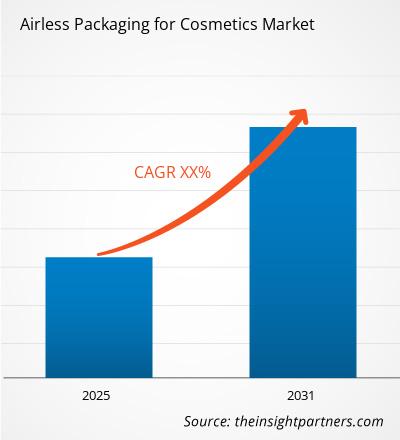
The airless packaging for cosmetics market size was valued at US$ 5.04 billion in 2025 and is expected to rise to US$ 8.56 billion by 2034, exhibiting a CAGR of 6.05% in the forecast period of 2026-2034. Market growth is driven by rising consumer preference for high-end packaging options that ensure product safety and reduce chances of oxidation. Airless dispensing solutions have become a crucial choice in skin care, cosmetics, and dermocosmetics.
In North America, companies are constantly working on sustainable dispensing technology, refilling systems, and monomaterial packaging to be able to cope with increasing environmental legislations. The airless packaging for cosmetics market size in North America will keep gaining from the premium skincare products trend, innovations in dispensing mechanisms, and rising trend of using recyclable packaging among leading beauty brands. This is why regional CAGR is estimated to be 5.4-5.8%.
Airless Packaging for Cosmetics Market Assessment and Insights
- North America: Accounted for 31–34% share in 2025 and is projected to grow at a CAGR of 5.4–5.8% during 2026–2034, supported by premium skincare consumption, sustainable packaging regulations, and strong innovation from dispensing technology manufacturers.
- U.S.: Represented 72–76% of the North American market in 2025 and is expected to register a CAGR of 5.5–5.9% during 2026–2034, driven by established cosmetic brands, high beauty expenditure, and rapid commercialization of refillable packaging.
- Europe: Held 27–30% share in 2025 and is forecast to expand at a CAGR of 5.8–6.2% during 2026–2034, led by France, Germany, Italy, and the UK where luxury cosmetics production and sustainability initiatives continue to accelerate innovation.
- Asia Pacific: Captured 30–33% share in 2025 and is anticipated to grow at a CAGR of 6.8–7.2% during 2026–2034, supported by expanding cosmetic manufacturing across China, South Korea, Japan, and India alongside rising premium beauty consumption.
- Largest Segment: Plastic accounted for 68–72% market share in 2025 and is projected to register a CAGR of 5.8–6.2%, owing to lightweight construction, design flexibility, lower manufacturing costs, and compatibility with advanced dispensing systems.
- High Growth Segment: Bottles and Jars represented 34–38% market share in 2025 and are expected to expand at a CAGR of 6.6–7.0%, supported by increasing demand for premium skincare, anti-aging products, and refill-ready packaging formats.
- Key companies analyzed in detail: AptarGroup, Inc.; ALBEA; RAEPAK Ltd; Quadpack USA; Fusion Packaging; Silgan Dispensing Systems; HCP Packaging; APC Packaging; LUMSON S.p.A.; Zhejiang B.I. Industrial Co., Ltd.
Source: The Insight Partners' analysis based on proprietary research, government publications, company annual reports, investor presentations, industry databases, and expert interviews.
Ongoing innovations in dispensers, recyclable materials, refills, and dosing accuracy have revolutionized the competitive environment of cosmetic packaging. Cosmetic manufacturers are focusing more on mono material packaging, use of post-consumer recycled resins, and airless pumps to increase sustainability without compromising on the performance of products. Such trends have led many beauty companies to adopt packaging styles that will lead to less waste of their products and better experience for consumers in luxury skincare and cosmetics.
In the future, growth will be more about investing in sustainable manufacturing practices and local manufacturing plants, alongside the adoption of dispensing technology. The rising trend of manufacturing cosmetic products in new locations in South East Asia, Latin America, and the Middle East is bringing in investment opportunities in the cosmetic packaging segment, especially in view of increasing environmental regulations in Europe and North America.
Airless Packaging for Cosmetics Market Report Scope
| Report Attribute | Details |
|---|---|
| Market size in 2025 | US$ 5.04 Billion |
| Market Size by 2034 | US$ 8.56 Billion |
| Global CAGR (2026 - 2034) | 6.05% |
| Historical Data | 2021-2024 |
| Forecast period | 2026-2034 |
Airless Packaging for Cosmetics Market Analysis
With increased popularity among consumers for high-end skincare products which include sensitive active ingredients, airless packaging for cosmetic market growth is further accelerated. Airless dispensers help in avoiding contamination, oxidation and precise dosing of the products, thereby making it ideal for serums, anti-aging creams, sunscreens and even cosmetic products which have inspiration from pharmaceuticals. Increasing investments by the cosmetic companies in premium packaging together with increased online sales and rising consumer concerns about hygiene is increasing the demand for airless packages for cosmetics.
Increased integration in the value chain is seen as resin suppliers, component manufacturers, pump technology manufacturers, cosmetic fillers, contract manufacturers and beauty brands work together in developing products. Sustainable raw material, recycled plastics, precision molding, automated assembly and digital inspection are increasing efficiency in manufacturing process while helping with compliance. Increased regionalization of supply chains is seen to avoid logistical risk and ensure the availability of dispensing components required for mass production of cosmetics.
The degree of consolidation in the market is fairly moderate, but innovations in this sector revolve around sustainable dispensing methods, reusable solutions, and custom premium packaging. In terms of this airless packaging for cosmetics market report, companies such as AptarGroup, Inc., Silgan Dispensing Systems, ALBEA, Quadpack USA, Fusion Packaging, HCP Packaging, APC Packaging, LUMSON S.p.A., RAEPAK Ltd, and Zhejiang B.I. Industrial Co., Ltd. are continuing to expand their product portfolio through investments in environmentally friendly packaging materials, mono-material packaging, lightweight solutions, and improved dispensing performance.
Innovations increasingly revolve around local production, automation, and environmentally-friendly packaging technologies. Cosmetic packaging manufacturing companies are increasing their production capacity in the Asia Pacific region and enhancing their research abilities in Europe and North America in the development of recyclable pumps, refill containers, and low plastic content dispensers. Joint ventures between cosmetic packaging suppliers and large global beauty brands have sped up the commercialization of sustainable airless solutions.
● REPORT CUSTOMIZATION
Tailor This Report To Align With Your Specific Business Requirements
This report can be customized to align precisely with your business objectives, scope, and target markets. Customization options include tailored segmentation, geography, competitive analysis, and strategic insights to support informed decision-making.
Customize This Report →WHAT YOU CAN ADJUST
- ● Segmentations
- ● Geography
- ● Competitive Analysis
- ● Language Preferences
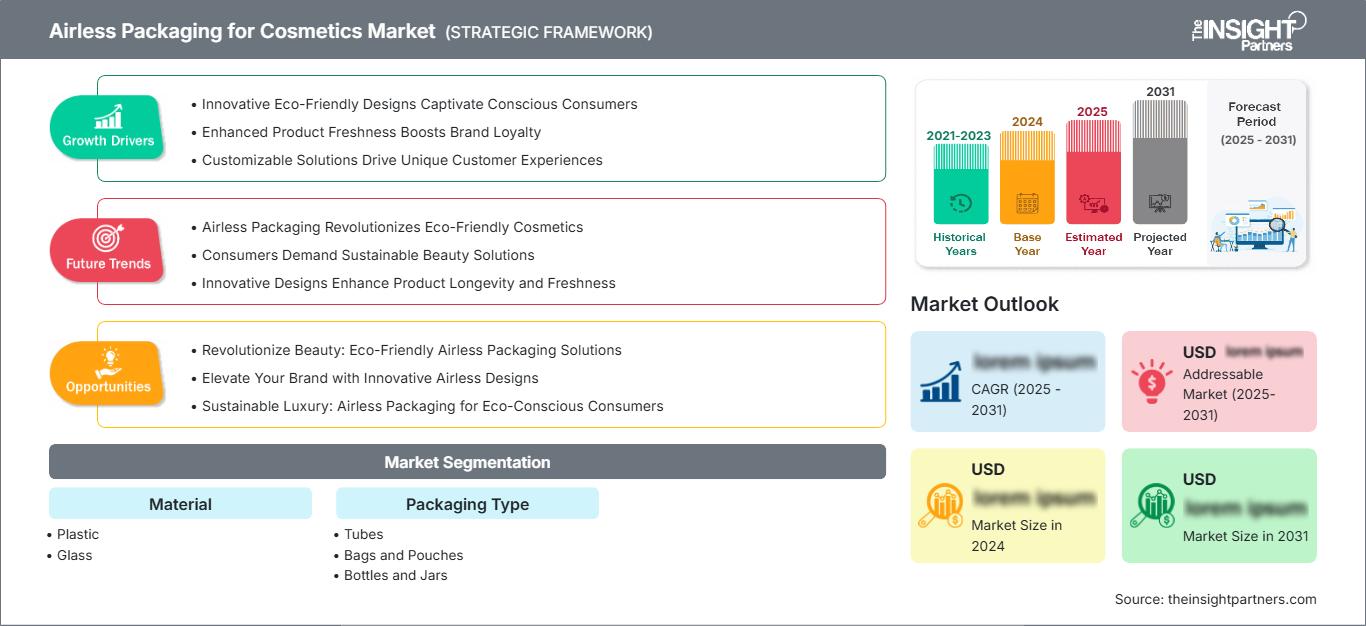
Airless Packaging for Cosmetics Market: Strategic Insights
Regional Insights
North America Airless Packaging for Cosmetics Market
In North America, the airless packaging for cosmetics market share is estimated at 31-34% in 2025 and expected to grow at a CAGR of 5.4-5.8% between 2026-2034. The key growth drivers in this region include a significant level of consumer expenditure on premium quality skincare, a rising demand for "clean" beauty products and the extensive use of packaging technology that prolongs shelf life. Cosmetic companies are increasingly focusing on sustainable dispensing systems and refillable packages to achieve their sustainability goals without compromising on quality.
The US and Canada continue being important innovation centers for dispensing systems thanks to established cosmetic companies, contract manufacturers, and packaging suppliers present in this region. Regulatory focus on reduction of plastic waste and increased preference of consumers for premium formulas with active ingredients are making airless bottles, jars, and tubes popular in North America. Growth in the online sale of cosmetics is another factor fueling the demand for robust packaging.
U.S. Airless Packaging for Cosmetics Market
In 2025, the share of the country in the North American market was estimated at 72-76%, and it is expected to grow at a CAGR of 5.5-5.9% through the forecast period. The U.S. takes advantage of having prominent beauty manufacturers, state-of-the-art packaging manufacturers, and regular investments in innovations in dispensing technologies. Increasingly often premium skincare products, doctor-developed cosmetics, and clean beauty brands choose airless systems to maintain ingredient stability and dispensing efficiency.
Package suppliers are consistently increasing their range with recyclable pumps, refillable packages, and mono-material packages in order to support sustainable development goals of their customers. Cooperation of cosmetic firms and innovative package suppliers contributed to accelerating the introduction of eco-friendly solutions and product differentiation. Research capabilities, automated manufacturing of packages, and increased consumers' consciousness about hygiene of products are among other drivers of the country's leadership in the regional market.
Europe Airless Packaging for Cosmetics Market
The Europe market held a share of 27-30% in the world market in 2025 and is projected to grow at a CAGR of 5.8-6.2% till 2034. France leads the regional market owing to the presence of luxury cosmetics, and Germany holds an advantage in terms of advanced plastics processing and precision engineering. The growing demand for sustainable cosmetic packaging driven by high-end skincare innovation and beauty brands is witnessed in the UK.
Italy and Spain play a pivotal role in terms of high-end cosmetic manufacturing capabilities and growing exports of premium beauty products. The sustainability policies of the European Union are further supporting the use of recyclable materials, refillable packs, and low use of plastics. The packaging firms in the region are focusing on developing lightweight and mono-material dispensing systems using post-consumer recycled content.
APAC Airless Packaging for Cosmetics Market
Asia Pacific captured 30–33% of the global market in 2025 and is projected to register the fastest expansion with a CAGR of 6.8–7.2% during 2026–2034. China leads regional production through its extensive cosmetics manufacturing base, while South Korea and Japan continue driving innovation in premium skincare packaging. India and Australia are witnessing rising demand as domestic beauty brands increasingly adopt premium dispensing solutions for high-value cosmetic formulations.
Rapid urbanization, expanding middle-class spending, and government support for advanced manufacturing continue strengthening regional production capabilities. Investments in sustainable packaging technologies, automated molding facilities, and export-oriented cosmetic manufacturing are encouraging adoption of airless packaging across both domestic and international beauty brands.
Segmentation Analysis
Material
The Material segment is projected to grow at a CAGR of 5.9–6.3% during 2026–2034. The airless packaging for cosmetics market scope continues expanding as manufacturers increasingly adopt materials that balance product protection, sustainability, aesthetics, and cost efficiency. Material selection is influenced by compatibility with cosmetic formulations, recyclability, barrier performance, and lightweight characteristics, encouraging continuous innovation in both polymer and glass-based packaging solutions.
- Plastic: Plastic remains the dominant material because of its lightweight properties, design flexibility, cost-effectiveness, excellent compatibility with airless dispensing systems, and increasing availability of recycled and bio-based resin alternatives supporting sustainability initiatives.
- Glass: Glass packaging is preferred for luxury skincare and premium cosmetic products owing to its superior chemical resistance, premium appearance, excellent barrier properties, and growing consumer perception regarding sustainability and product quality.
Packaging Type
The Packaging Type segment is anticipated to register a CAGR of 6.2–6.6% during the forecast period. Product differentiation, convenience, portability, and dispensing precision continue influencing packaging selection across cosmetic applications. Manufacturers are introducing innovative packaging formats that improve consumer experience while supporting refillability, sustainability, and enhanced protection for formulations containing active ingredients.
- Tubes: Airless tubes are increasingly adopted for creams, gels, sunscreens, and dermatological products because they enable controlled dispensing, reduce contamination risks, and improve product utilization while offering portability and consumer convenience.
- Bags and Pouches: Airless bags and pouches are gaining traction in refill applications due to their lightweight construction, lower material consumption, transportation efficiency, and compatibility with circular packaging initiatives.
- Bottles and Jars: Bottles and jars remain the preferred packaging format for premium skincare, anti-aging products, serums, and luxury cosmetic formulations because they combine attractive aesthetics, precise dispensing, and compatibility with advanced refill systems.
Opportunity Snapshot
| Packaging Type | Revenue Contribution | Trend Tag | Adoption Stage |
|---|---|---|---|
| Tubes | Medium | Travel Beauty | Mature |
| Bags and Pouches | Low | Refill Systems | Emerging |
| Bottles and Jars | High | Premium Skincare | Scaling |
Airless Packaging for Cosmetics Market Growth Drivers and Impact Analysis
Growing Premium Skincare and Active Ingredient-Based Formulations
Premium skincare products increasingly incorporate vitamin C, retinol, peptides, probiotics, and botanical extracts that are highly sensitive to oxygen exposure and contamination. Airless dispensing technologies preserve formulation stability by limiting product contact with air throughout the usage cycle, improving shelf life and maintaining efficacy. Global beauty brands are therefore expanding their adoption of airless bottles, jars, and tubes across premium skincare portfolios. Increasing consumer preference for clinically proven skincare, dermocosmetics, and clean beauty products is encouraging cosmetic manufacturers to invest in advanced packaging solutions that enhance product protection while strengthening brand positioning in competitive premium beauty segments.
Rising Focus on Sustainable and Refillable Cosmetic Packaging
Governments, retailers, and cosmetic manufacturers continue prioritizing circular economy initiatives and plastic waste reduction, accelerating demand for recyclable and refill-compatible airless packaging. Packaging companies are introducing mono-material pumps, lightweight containers, post-consumer recycled plastics, and refill cartridge systems to support corporate sustainability commitments. Beauty brands increasingly integrate environmentally responsible packaging into product launches to satisfy evolving consumer expectations and regulatory requirements. These developments are encouraging continuous investments in eco-friendly dispensing technologies while creating new growth opportunities for packaging suppliers capable of delivering high-performance and sustainable airless solutions.
Expansion of E-commerce and Premium Beauty Distribution Channels
The rapid expansion of online beauty retail has increased demand for durable packaging capable of protecting cosmetic products during storage and transportation. Airless dispensing systems reduce leakage risks, improve dispensing precision, and preserve product quality throughout distribution. Premium cosmetic brands increasingly prefer these packaging formats because they enhance consumer experience while minimizing product wastage. Rising cross-border e-commerce, direct-to-consumer beauty brands, and subscription-based skincare services continue strengthening demand for innovative airless packaging solutions that combine functionality, aesthetics, and product protection across global distribution networks.
Airless Packaging for Cosmetics Market Future Trends
Increasing Adoption of Smart Sustainable Packaging Solutions
Growing environmental regulations and evolving consumer expectations are accelerating airless packaging for cosmetics market trends toward recyclable, refillable, and digitally enabled packaging. Manufacturers are increasingly developing mono-material airless pumps, refill cartridges, bio-based polymers, and lightweight dispensing systems that reduce material consumption without compromising product protection. Smart packaging features such as QR codes, digital authentication, and product traceability are also gaining importance, allowing beauty brands to improve customer engagement, transparency, and sustainability reporting while strengthening premium product positioning.
Customization and Premiumization Driving Packaging Innovation
Cosmetic brands are increasingly demanding highly customized packaging solutions that differentiate products on retail shelves and digital platforms. Manufacturers are responding through personalized colors, decorative finishes, metallization, soft-touch coatings, and premium dispensing mechanisms that enhance consumer experience. Luxury skincare and prestige cosmetic brands are expected to remain key adopters of customized airless packaging, encouraging suppliers to expand design capabilities, shorten product development timelines, and integrate advanced manufacturing technologies capable of supporting smaller production batches with greater flexibility.
Airless Packaging for Cosmetics Market Opportunities
Expansion into Emerging Beauty Manufacturing Hubs
Growing investments across Southeast Asia, India, Latin America, and the Middle East are creating significant airless packaging for cosmetics market Forecasts for packaging manufacturers. Domestic cosmetic production continues expanding alongside rising disposable incomes and increasing demand for premium skincare products. Packaging suppliers establishing regional manufacturing facilities, localized supply chains, and technical support centers can reduce logistics costs while strengthening partnerships with emerging beauty brands. These investments are expected to improve production flexibility, accelerate product launches, and increase penetration into high-growth regional cosmetic markets over the forecast period.
Development of Fully Recyclable Airless Dispensing Systems
Future investment opportunities are centered on developing dispensing systems that combine premium aesthetics with complete recyclability. Manufacturers capable of eliminating mixed-material components, reducing virgin plastic usage, and improving refill compatibility are expected to gain competitive advantages as sustainability regulations become more stringent. Continuous research into bio-based polymers, recyclable pump mechanisms, and simplified packaging architectures will support commercialization of next-generation airless solutions. Strategic collaborations between packaging manufacturers, resin suppliers, and cosmetic brands are expected to accelerate innovation while expanding long-term revenue opportunities across premium beauty applications.
Recent Developments
- May 5, 2026: Quadpack Industries, S.A. introduced Ninella, a refillable airless packaging solution designed for premium skincare and cosmetic applications. The packaging combines a mono-material polypropylene refill cartridge with a reusable outer pack, supporting improved product protection, enhanced recyclability, and reduced plastic consumption. The launch reflects the industry's increasing focus on sustainable, refillable airless packaging solutions that align with circular economy objectives.
- April 3, 2025: Aptar Beauty, a business unit of AptarGroup, Inc., expanded its airless packaging portfolio in Latin America by introducing locally available dispensing solutions for beauty brands. The expanded portfolio includes airless systems designed to protect sensitive formulations, improve dispensing performance, and accelerate product launches while supporting the growing demand for premium skincare and cosmetic packaging across the region.
Frequently Asked Questions

- Comprehensive Market Sizing and Forecast Analysis
- Detailed Segmentation Analysis
- In-Depth Market Dynamics Assessment
- Regional and Country-Level Insights
- Competitive Landscape and Company Benchmarking
- Strategic Business Intelligence
Recent Reports
Testimonials

The Insight Partners' SCADA System Market report is comprehensive, with valuable insights on current trends and future forecasts. The team was highly professional, responsive, and supportive throughout. We are very satisfied and highly recommend their services.
RAN KEDEM Partner, Reali Technologies LTDs
I requested a report on a very specific software market and the team produced the report in a few days. The information was very relevant and well presented. I then requested some changes and additions to the report. The team was again very responsive and I got the final report in less than a week.
JEAN-HERVE JENN Chairman, Future Analytica
We worked with The Insight Partners for an important market study and forecast. They gave us clear insights into opportunities and risks, which helped shape our plans. Their research was easy to use and based on solid data. It helped us make smart, confident decisions. We highly recommend them.
PIYUSH NAGPAL Sr. Vice President, High Beam Global
The Insight Partners delivered insightful, well-structured market research with strong domain expertise. Their team was professional and responsive throughout. The user-friendly website made accessing industry reports seamless. We highly recommend them for reliable, high-quality research services
YUKIHIKO ADACHI CEO, Deep Blue, LLC.
This is the first time I have purchased a market report from The Insight Partners.While I was unsure at first, I visited their web site and felt more comfortable to take the risk and purchase a market report.I am completely satisfied with the quality of the report and customer service. I had several questions and comments with the initial report, but after a couple of dialogs over email with their analyst I believe I have a report that I can use as input to our strategic planning process.Thank you so much for taking the extra time and making this a positive experience.I will definitely recommend your service to others and you will be my first call when we need further market data.
JOHN SUZUKI President and Chief Executive Officer, Board Director, BK Technologies
I wish to appreciate your support and the professionalism you displayed in the course of attending to my request for information regarding to infectious disease IVD market in Nigeria. I appreciate your patience, your guidance, and the fact that you were willing to offer a discount, which eventually made it possible for us to close a deal. I look forward to engaging The Insight Partners in the future, all thanks to the impression you have created in me as a result of this first encounter.
DR CHIJIOKE ONYIA MANAGING DIRECTOR, PineCrest Healthcare Ltd.Reason to Buy
- Informed Decision-Making
- Understanding Market Dynamics
- Competitive Analysis
- Identifying Emerging Markets
- Customer Insights
- Market Forecasts
- Risk Mitigation
- Boosting Operational Efficiency
- Strategic Planning
- Investment Justification
- Tracking Industry Innovations
- Aligning with Regulatory Trends





 Get Free Sample for