
Aluminum Automotive Parts Market Growth, Size & Forecast by 2034
Coverage: by Product Type (Extruded Aluminum, Cast Aluminum, Rolled Aluminum); Vehicle Type (Passenger Cars, Light Commercial Vehicles, Heavy Commercial Vehicles); Application (Powertrain, Chassis and Suspension, Body structure, Others) , and Geography (North America, Europe, Asia Pacific, and South and Central America)
- Status : Data Released
- Report Code : TIPRE00007071
- Category : Automotive and Transportation
- No. of Pages : 150
- Available Report Formats :


- Last update date : August 18, 2026


2025 Market Size
US$ 45.99 Bn
Base year value
2034 Forecast
US$ 70.02 Bn
Projected by 2034
CAGR 2026-2034
4.78 %
Growth rate
Addressable Market
US$ 526.56 Bn
(2026-2034)
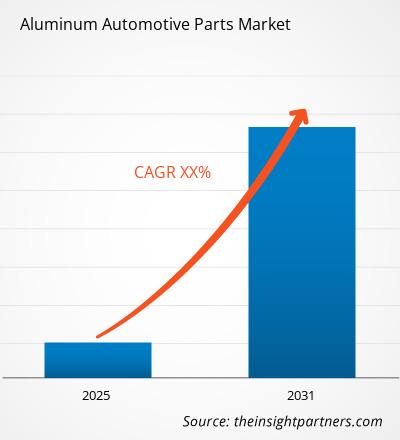
The global Aluminum Automotive Parts market was valued at US$ 45.99 billion in 2025 and is expected to reach US$ 70.02 billion by 2034; it is estimated to record a CAGR of 4.78% during 2026-2034.
Aluminum Automotive Parts Market Assessment and Insights
- North America: Share in 2025 estimated at 28–32%, supported by strong pickup truck production, EV platform investments, and advanced aluminum processing infrastructure. CAGR between 2026–2034: 4.8–5.4%.
- US: Accounts for 78–82% of North American demand in 2025, driven by vehicle platform redesign and electrification projects. CAGR between 2026–2034: 4.9–5.5%.
- Europe: Share in 2025 estimated at 24–28%, led by Germany, the UK, France, Italy, and Spain. Lightweight mobility initiatives support a CAGR between 2026–2034: 4.7–5.3%.
- Asia Pacific: Share in 2025 estimated at 38–42%, with China, Japan, South Korea, and India driving volume expansion. CAGR between 2026–2034: 5.9–6.5%.
- Largest Segment: Passenger Cars hold a market share of 58–62% in 2025, supported by high production volumes and broad aluminum integration. CAGR between 2026–2034: 5.0–5.6%.
- High Growth Segment: Body Structure applications account for 31–35% share in 2025 and benefit from growing lightweight platform development. CAGR between 2026–2034: 6.2–6.8%.
- Key companies analyzed in detail: Alcoa Corporation, Aleris Corporation, AMG Advanced Metallurgical Group N.V., Constellium SE, ElringKlinger AG, Kaiser Aluminum Corporation, Novelis Inc., Norsk Hydro ASA, Rio Tinto Group, UACJ Corporation.
Source: The Insight Partners' analysis based on proprietary research, government publications, company annual reports, investor presentations, industry databases, and expert interviews.
Rapid development in vehicle platform technology is driving widespread application of aluminum in the automobile industry. The shift from traditional internal combustion engine-based vehicle platforms to more efficient electric-powered models is fueling demand for light-weight metals, which will ensure increased efficiency and range from batteries. Increased investment in extrusion technology, high-pressure die casting, and closed-loop recycling technology is enhancing aluminum availability and lowering costs associated with integration into structural and safety components.
In the future, manufacturers are planning to increase their production capacity in the new centers of auto-making and developing facilities for recycled aluminum. Emission reduction regulations, efforts towards achieving a circular economy, and the development of energy-efficient transportation systems should stimulate the use of aluminum-intensive vehicles. Local production efforts in the Asia Pacific region and some areas of North America should also help enhance the competitive position of aluminum in the market.
Aluminum Automotive Parts Market Report Scope
| Report Attribute | Details |
|---|---|
| Market size in 2025 | US$ 45.99 Billion |
| Market Size by 2034 | US$ 70.02 Billion |
| Global CAGR (2026 - 2034) | 4.78% |
| Historical Data | 2021-2024 |
| Forecast period | 2026-2034 |
Aluminum Automotive Parts Market Analysis
The aluminum automotive parts market growth trajectory is closely linked to regulatory requirements encouraging vehicle weight reduction and improved energy efficiency. Automobile manufacturers now make use of aluminum in the making of powertrain housing parts, chassis members, suspension pieces and structural assemblies in an effort to reduce the weight of their cars without compromising on performance. Increased production of electric vehicles means increased use of lightweight materials for their ability to increase driving distance and optimize batteries. Supply chains have become more sophisticated, with recycling involved in them, as this helps manufacturers to cope with volatility in raw materials and fulfill their sustainable needs.
Moreover, growth in electric mobility ecosystems has been fueling the use of cast and extruded aluminum materials. Improved manufacturing processes have enabled manufacturers to produce complicated geometries without wasting much material and thus improve their efficiency and performance.
The competitive environment remains moderately consolidated, with the aluminum automotive parts market analysis indicating active participation from vertically integrated producers and specialized automotive materials companies. Alcoa Corporation, Novelis Inc., Norsk Hydro ASA, and Constellium SE are still concentrating on providing lightweight solutions, developing recycled aluminum products, and inventing new automotive products. Kaiser Aluminum Corporation and UACJ Corporation are forming stronger connections with OEMs due to quality manufacturing and product specialization.
In terms of investment, more attention is now paid to recycling technologies, carbon-free aluminum manufacturing, and large casting technology. Rio Tinto Group and AMG Advanced Metallurgical Group N.V. are still involved in advanced materials research activities, and ElringKlinger AG is exploring lightweight solutions in accordance with future mobility systems.
● REPORT CUSTOMIZATION
Tailor This Report To Align With Your Specific Business Requirements
This report can be customized to align precisely with your business objectives, scope, and target markets. Customization options include tailored segmentation, geography, competitive analysis, and strategic insights to support informed decision-making.
Customize This Report →WHAT YOU CAN ADJUST
- ● Segmentations
- ● Geography
- ● Competitive Analysis
- ● Language Preferences
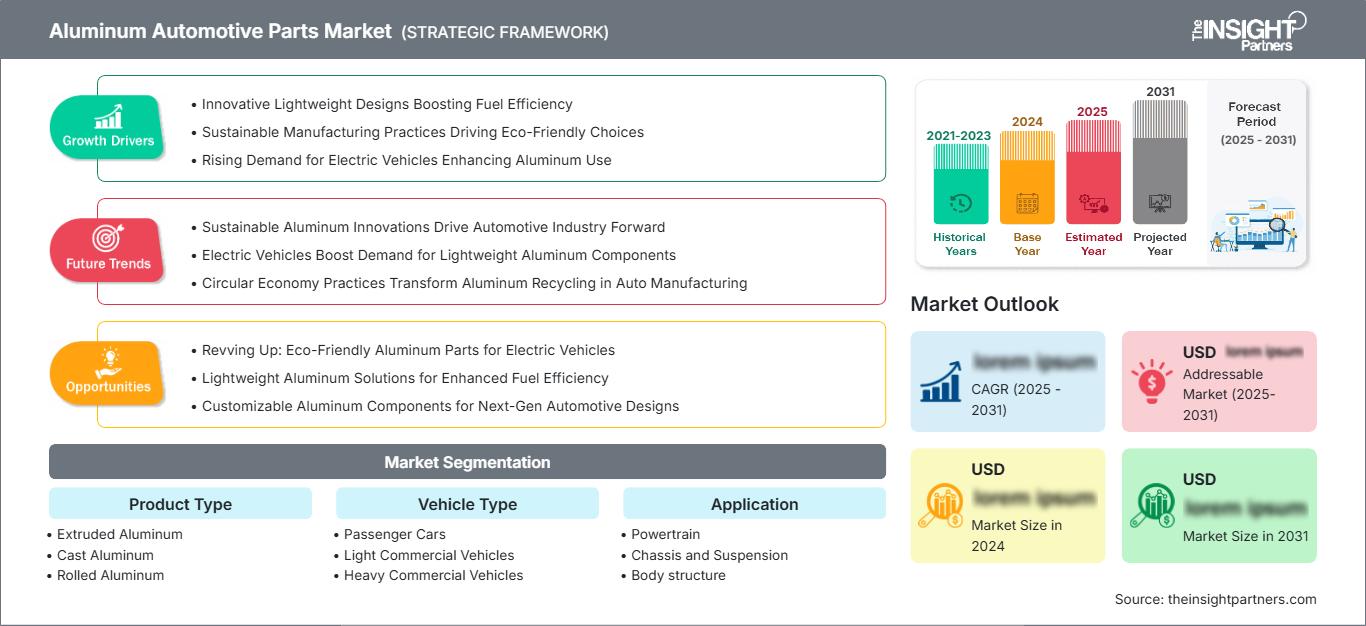
Aluminum Automotive Parts Market: Strategic Insights
Regional Insights
North America Aluminum Automotive Parts Market
North America represented approximately 28–32% aluminum automotive parts market share in 2025. The region benefits from a mature automotive manufacturing ecosystem, established aluminum processing infrastructure, and strong demand for pickup trucks, SUVs, and electric vehicles. Regulatory emphasis on fuel efficiency and vehicle emissions reduction supports increased adoption of lightweight structural materials. The regional market is projected to expand at a CAGR of 4.8–5.4% during 2026–2034.
Automotive manufacturers continue integrating aluminum into body structures, suspension systems, and powertrain applications. Investments in EV assembly facilities across the United States, Canada, and Mexico support demand for advanced aluminum solutions. Expanding recycling capabilities and improved supply-chain localization contribute to industry resilience. Growing collaboration between OEMs and material suppliers also supports the development of higher-strength aluminum alloys designed for next-generation vehicle architectures.
U.S. Aluminum Automotive Parts Market
The United States accounted for approximately 78–82% of North American demand in 2025 and is expected to record a CAGR of 4.9–5.5% through 2034. With a good level of production in light vehicles, the production of electric vehicles and investments in advanced automotive technology, the growth of the market continues to be supported. The nation continues to be a key center for the development of aluminum vehicles.
There is a high demand for the use of this metal in pickup trucks, crossovers, and electric vehicle platforms because of the weight reduction that provides efficiency. The existence of key auto-makers and aluminum suppliers increases the implementation of this technology. Recycling and sustainable metals production increase security of supply and advanced casting processes increase size of parts.
Europe Aluminum Automotive Parts Market
Europe accounted for approximately 24–28% of global demand in 2025 and is forecast to grow at a CAGR of 4.7–5.3% through 2034. Germany still leads the way due to its premium vehicles manufacturing base, high-level engineering, and lightweight mobility approaches. The OEMs widely use aluminum-intensive architectures in order to meet the emissions standards and enhance vehicle performance.
The UK still benefits from advanced automotive engineering and the growing development of electric mobility platforms. France, Italy, and Spain are represented in Europe’s automotive industry due to their manufacturing of passenger vehicles and supply chain component networks. Sustainability policies in Europe promote the application of recycled aluminum and the sourcing of low-carbon materials.
Circular economy projects have become top priorities of European automakers and manufacturers due to the introduction of resource-efficient manufacturing processes. The latest technologies of extrusion and casting are included into production processes of vehicles while meeting the highest safety standards. This indicates that Europe is one of the innovation centers in automotive lightweighting.
APAC Aluminum Automotive Parts Market
Asia Pacific represented approximately 38–42% of global demand in 2025, making it the largest regional market. The region is expected to achieve a CAGR of 5.9–6.5% through 2034. China leads both vehicle manufacturing and aluminum consumption, while Japan and South Korea maintain advanced technological capabilities within automotive materials engineering.
India and Australia contribute by expanding automotive production and industrial development initiatives. Government programs supporting electric mobility, domestic manufacturing, and emissions reduction continue to encourage greater aluminum adoption across passenger and commercial vehicle segments.
Middle East & Africa Aluminum Automotive Parts Market
The Middle East & Africa market remains smaller in absolute terms but demonstrates improving growth potential. Saudi Arabia and the UAE benefit from investments in industrial diversification, metals manufacturing, and transportation infrastructure. The regional market is projected to expand at a CAGR of 4.5–5.1% through 2034.
South Africa remains an important automotive manufacturing base within the region. Increasing infrastructure modernization, combined with access to energy and industrial resources, supports the gradual adoption of lightweight vehicle materials. Long-term opportunities are linked to localization efforts and manufacturing capacity expansion.
Segmentation Analysis
Product Type
The product category continues to evolve as automakers seek materials capable of balancing lightweight performance, durability, and cost efficiency. The segment is projected to expand at a CAGR of 5.3–5.9% during 2026–2034. Increasing integration of casting and extrusion technologies supports broader application across electric and conventional vehicle platforms. The aluminum automotive parts market scope continues to widen as advanced alloys enable enhanced structural performance.
- Extruded Aluminum: Widely used in structural assemblies, crash management systems, and battery enclosures due to favorable strength-to-weight characteristics and design flexibility.
- Cast Aluminum: Critical for complex automotive components requiring dimensional precision, particularly within powertrain systems, suspension elements, and integrated structural modules.
- Rolled Aluminum: Utilized extensively in body panels and lightweight exterior applications where surface quality, formability, and weight reduction remain strategic priorities.
Vehicle Type
Vehicle type remains a major determinant of aluminum consumption patterns. The segment is expected to record a CAGR of 5.0–5.6% during the forecast period. Passenger vehicles continue leading adoption, while commercial vehicle categories increasingly incorporate lightweight components to enhance fuel economy and operational efficiency.
- Passenger Cars: The dominant category due to large production volumes and increasing use of aluminum in body structures, closures, suspension systems, and electric vehicle platforms.
- Light Commercial Vehicles: Demand is supported by fleet efficiency objectives, urban delivery growth, and continuous efforts to reduce operating costs through vehicle lightweighting.
- Heavy Commercial Vehicles: Adoption is rising in trailers, frames, and structural components to improve payload capacity and support emissions reduction requirements.
Application
Application-specific innovation continues to create new demand opportunities across automotive manufacturing. This segment is anticipated to grow at a CAGR of 6.2–6.8% during 2026–2034. Lightweight engineering strategies increasingly prioritize structural optimization, creating attractive opportunities for advanced aluminum components across multiple vehicle subsystems.
- Powertrain: Aluminum remains important in housings, engine components, transmission systems, and thermal management applications where weight reduction enhances efficiency.
- Chassis and Suspension: Growing use reflects efforts to improve handling, durability, ride quality, and overall vehicle performance without increasing structural mass.
- Body Structure: Strategic importance continues to increase due to electrification, crash performance requirements, and broad adoption of lightweight vehicle architectures.
Opportunity Snapshot
| Application | Revenue Contribution | Trend Tag | Adoption Stage |
| Powertrain | High | E-Drive | Mature |
| Chassis and Suspension | Medium | Weight Saving | Scaling |
| Body Structure | High | Lightweight Platform | Scaling |
Aluminum Automotive Parts Market Growth Drivers and Impact Analysis
Accelerating Vehicle Lightweighting Regulations
Increasing efficiency and emissions standards by governments of all major automotive countries creates a trend towards the application of lightweight materials. The aluminum is much lighter than ordinary steel while retaining its strength and safety characteristics. Therefore, the industry resorts to the extensive use of aluminum in order to comply with new standards but not to sacrifice the functionality of the automobiles. Increasing demands for fuel-efficient cars and low emissions contribute to the ongoing trends in the substitution of materials. As automotive platforms develop, the use of aluminum will increase in the body structure, suspension system, and energy management systems.
Rising Electric Vehicle Production Worldwide
For electric vehicles to operate efficiently, it is imperative that optimal weight management be done in order to achieve long driving distances and maximum efficiency of the batteries. With the ability to offer reduced vehicle weight, yet still providing excellent structural strength, the use of aluminum helps meet this aim. Hence, because there are increasing manufacturing investments being done in China, North America, and Europe for electric vehicles, there will definitely be a rising demand for aluminum products for automobiles. This will include batteries, enclosures, castings, chassis assemblies, and thermal management systems.
Expansion of Automotive Recycling Ecosystems
Auto manufacturers have been increasingly adopting recycled aluminum in their manufacturing processes in order to cut back on their carbon emissions and improve sustainability. Recycling through closed-loop systems enhances the availability of materials as well as the management of price variations of the primary metals. Progress being made in sorting techniques, scrap collection, and remelting processes is allowing high-quality recycled aluminum to be used for automobile manufacturing applications. It supports the principles of the circular economy and builds supply chain resilience. In light of increased sustainability reporting standards, firms that provide low-carbon and recycled aluminum will have an edge over their competitors.
Aluminum Automotive Parts Market Future Trends
Large Integrated Structural Castings
The aluminum automotive parts market trends increasingly point toward the adoption of large, integrated cast structures capable of replacing multiple conventional components. These designs reduce assembly complexity, lower manufacturing costs, and improve structural efficiency. Automotive manufacturers are investing in advanced casting technologies to support next-generation vehicle production. Over time, integrated casting approaches are expected to expand beyond premium EV platforms and reach broader vehicle segments. Continued process optimization and equipment investment will strengthen scalability, enabling greater utilization of aluminum in structural applications while enhancing production efficiency and quality consistency.
Low-Carbon Aluminum Supply Chains
Procurement practices within the automotive industry are evolving by adopting carbon intensity measures along with conventional quality and cost factors in their strategy. It is desired for manufacturers to have aluminum from sources that involve the use of renewable energy, recycling, and emissions reduction during the production process. In light of this, suppliers are being distinguished based on their level of sustainability and traceability. Green aluminum manufacturing, recycling, and life cycle tracking measures are anticipated to see an upsurge in the coming years.
Aluminum Automotive Parts Market Opportunities
Expansion Across Emerging Manufacturing Hubs
Industrial expansion in Southeast Asia, India, Eastern Europe, and selected Middle Eastern economies presents attractive growth opportunities. Automotive assembly capacity continues to increase in these regions, creating incremental demand for locally sourced aluminum components. Aluminum automotive parts market Forecasts indicate that suppliers establishing regional processing facilities and strategic partnerships may benefit from lower logistics costs and stronger customer integration. Long-term opportunities are supported by urbanization, rising vehicle ownership, infrastructure investment, and supportive manufacturing policies. Market participants capable of adapting products to local production requirements can strengthen competitiveness and accelerate revenue generation.
Advanced Solutions for Next-Generation EV Platforms
Vehicle design in the future is going to demand more advanced and lighter materials. Aluminum companies investing in special alloy manufacturing, large casting processes, and battery box manufacturing will be able to benefit from more advanced applications for their products. Collaboration with EV makers will allow aluminum producers to engage in early platform development phases and get locked into long-term contracts. Areas of growth include thermal management systems, structural batteries, and modular vehicles.
Frequently Asked Questions

- Comprehensive Market Sizing and Forecast Analysis
- Detailed Segmentation Analysis
- In-Depth Market Dynamics Assessment
- Regional and Country-Level Insights
- Competitive Landscape and Company Benchmarking
- Strategic Business Intelligence
Recent Reports
Testimonials

The Insight Partners' SCADA System Market report is comprehensive, with valuable insights on current trends and future forecasts. The team was highly professional, responsive, and supportive throughout. We are very satisfied and highly recommend their services.
RAN KEDEM Partner, Reali Technologies LTDs
I requested a report on a very specific software market and the team produced the report in a few days. The information was very relevant and well presented. I then requested some changes and additions to the report. The team was again very responsive and I got the final report in less than a week.
JEAN-HERVE JENN Chairman, Future Analytica
We worked with The Insight Partners for an important market study and forecast. They gave us clear insights into opportunities and risks, which helped shape our plans. Their research was easy to use and based on solid data. It helped us make smart, confident decisions. We highly recommend them.
PIYUSH NAGPAL Sr. Vice President, High Beam Global
The Insight Partners delivered insightful, well-structured market research with strong domain expertise. Their team was professional and responsive throughout. The user-friendly website made accessing industry reports seamless. We highly recommend them for reliable, high-quality research services
YUKIHIKO ADACHI CEO, Deep Blue, LLC.
This is the first time I have purchased a market report from The Insight Partners.While I was unsure at first, I visited their web site and felt more comfortable to take the risk and purchase a market report.I am completely satisfied with the quality of the report and customer service. I had several questions and comments with the initial report, but after a couple of dialogs over email with their analyst I believe I have a report that I can use as input to our strategic planning process.Thank you so much for taking the extra time and making this a positive experience.I will definitely recommend your service to others and you will be my first call when we need further market data.
JOHN SUZUKI President and Chief Executive Officer, Board Director, BK Technologies
I wish to appreciate your support and the professionalism you displayed in the course of attending to my request for information regarding to infectious disease IVD market in Nigeria. I appreciate your patience, your guidance, and the fact that you were willing to offer a discount, which eventually made it possible for us to close a deal. I look forward to engaging The Insight Partners in the future, all thanks to the impression you have created in me as a result of this first encounter.
DR CHIJIOKE ONYIA MANAGING DIRECTOR, PineCrest Healthcare Ltd.Reason to Buy
- Informed Decision-Making
- Understanding Market Dynamics
- Competitive Analysis
- Identifying Emerging Markets
- Customer Insights
- Market Forecasts
- Risk Mitigation
- Boosting Operational Efficiency
- Strategic Planning
- Investment Justification
- Tracking Industry Innovations
- Aligning with Regulatory Trends





 Get Free Sample for