
Alveolar Rhabdomyosarcoma Treatment Market Trends, Share & Demand by 2034
Coverage: by Type (Surgical Operation, Chemotherapy, Radiotherapy); End User (Hospitals, Clinics, Others) , and Geography (North America, Europe, Asia Pacific, and South and Central America)
- Status : Data Released
- Report Code : TIPRE00008158
- Category : Life Sciences
- No. of Pages : 150
- Available Report Formats :


- Last update date : July 10, 2026


2025 Market Size
US$ 514.38 Mn
Base year value
2034 Forecast
US$ 797.06 Mn
Projected by 2034
CAGR 2026-2034
4.99 %
Growth rate
Addressable Market
US$ 5,952.42 Mn
(2026-2034)
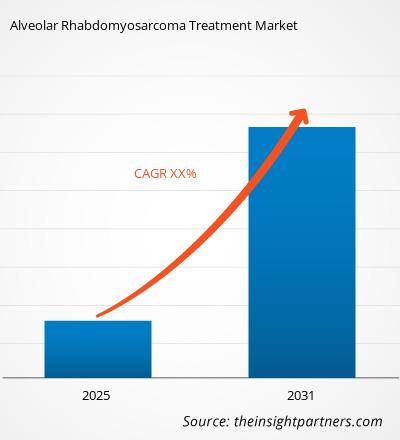
The Alveolar Rhabdomyosarcoma Treatment Market is projected to grow from US$ 514.38 Million in 2025 to US$ 797.06 Million by 2034, registering a CAGR of 4.99% during 2026–2034. The market reflects sustained clinical demand for multimodal treatment, including chemotherapy, surgical operation, and radiotherapy, as oncology centers refine risk-adapted protocols for a rare but aggressive paediatric and adolescent soft tissue sarcoma subtype.
The North American market stands to be the best organized demand center, with the aid of pediatric oncology networks, access to molecular pathology, and sarcoma referral pathways. The growth rate of the Alveolar Rhabdomyosarcoma Treatment Market Size in North America is projected at 4.8-5.3% between 2026 and 2034 owing to the adoption rate that has been fueled by specialty hospitals and increased clinical trials.
Alveolar Rhabdomyosarcoma Treatment Market Assessment and Insights
- North America held a 39–42% share in 2025 and is growing at a CAGR of 4.8–5.3% during 2026–2034, supported by referral hospitals, molecular diagnostics, multidisciplinary tumor boards, and pediatric oncology research infrastructure.
- US accounted for 82–85% of North America in 2025 and is growing at a CAGR of 4.7–5.2% during 2026–2034, reflecting deep clinical trial access and payer-backed oncology pathways.
- Europe represented a 28–31% share in 2025 and is expanding at a CAGR of 4.4–4.9% during 2026–2034, led by Germany, the UK, and France through organized sarcoma networks and centralized care.
- Asia Pacific held an 18–21% share in 2025 and is growing at a CAGR of 5.7–6.4% during 2026–2034, with China, Japan, India, South Korea, and Australia improving pediatric cancer capacity.
- Largest Segment is chemotherapy, with a 50–54% market share in 2025 and a CAGR of 4.6–5.1% during 2026–2034, reflecting its core role in systemic disease control.
- High Growth Segment is radiotherapy, with a 24–28% market share in 2025 and a CAGR of 5.2–5.8% during 2026–2034, supported by image-guided planning and organ-sparing treatment approaches.
- Key companies analyzed in detail: Vivesto AB, Pfizer Inc., Boehringer Ingelheim International GmbH, F. Hoffmann-La Roche Ltd, Eli Lilly and Company, Celgene Corporation, Bristol Myers Squibb Company, GSK plc, Johnson & Johnson, Janssen Biotech, Inc.
Source: The Insight Partners' analysis based on proprietary research, government publications, company annual reports, investor presentations, industry databases, and expert interviews.
Clinical practice has moved from broad histology-led treatment toward fusion-status assessment, risk stratification, and multimodal sequencing. In the Alveolar Rhabdomyosarcoma Treatment Market growth, production dynamics are also shifting toward reliable supply of cytotoxic agents, injectable oncology medicines, radiotherapy consumables, and hospital pharmacy capabilities. Treatment approaches will become more reliant on diagnostic integration, surgical plans, and support system that enables pediatric patients to finish intense treatment without unnecessary disruptions.
Over the forecast period, new demand will be coming from expansion of oncology capacity in the Asia-Pacific region, improved registries of pediatric cancers, and government programs to address rare diseases. The market will experience advantages from investments into pathology standardization, proton or conformal radiotherapy availability, and clinical research collaborations. There may also be increased regulatory incentives to develop orphan oncology drugs that will influence investment attractiveness despite commercialization challenges.
Alveolar Rhabdomyosarcoma Treatment Market Report Scope
| Report Attribute | Details |
|---|---|
| Market size in 2025 | US$ 514.38 Million |
| Market Size by 2034 | US$ 797.06 Million |
| Global CAGR (2026 - 2034) | 4.99% |
| Historical Data | 2021-2024 |
| Forecast period | 2026-2034 |
Alveolar Rhabdomyosarcoma Treatment Market Analysis
The Alveolar Rhabdomyosarcoma Treatment Market growth is primarily driven by earlier diagnosis, wider molecular testing, and sustained reliance on combined chemotherapy, surgery, and radiotherapy. Demand is concentrated in tertiary hospitals because treatment requires pediatric oncologists, surgical oncology teams, radiation oncologists, imaging specialists, and intensive supportive care. Supply dynamics are influenced by access to generic chemotherapy, branded oncology pipelines, radiotherapy systems, and regional reimbursement rules.
Across the ecosystem, hospitals act as the central demand aggregators, while clinics support follow-up, symptom monitoring, and survivorship care. The value chain is less volume-led than capability-led, as rare cancer treatment depends on protocol adherence, treatment continuity, and coordinated referral rather than broad consumer access. This makes care quality and infrastructure depth more important than simple product availability.
The Alveolar Rhabdomyosarcoma Treatment Market analysis shows a competitive structure, influenced by oncology portfolios and not disease-specific franchises. Pfizer Inc., F. Hoffmann-La Roche Ltd, Bristol Myers Squibb Company, Eli Lilly and Company, GSK plc and Johnson & Johnson are participants through their oncology medicines and research portfolios as well as hospital connections, whereas Vivesto AB and Boehringer Ingelheim International GmbH add relevant specialization in anticancer formulations and pipelines.
Strategic positioning is increasingly tied to pediatric evidence, orphan oncology pathways, and combination therapy opportunities. Janssen Biotech, Inc. and Celgene Corporation, as part of larger Bristol Myers Squibb and Johnson & Johnson portfolios, emphasize the significance of having skills in hematology/oncology, working with biologics and clinical development capabilities. Funding will be focused on targeted drugs, RWD, and studies that will operate regardless of the small population size.
● REPORT CUSTOMIZATION
Tailor This Report To Align With Your Specific Business Requirements
This report can be customized to align precisely with your business objectives, scope, and target markets. Customization options include tailored segmentation, geography, competitive analysis, and strategic insights to support informed decision-making.
Customize This Report →WHAT YOU CAN ADJUST
- ● Segmentations
- ● Geography
- ● Competitive Analysis
- ● Language Preferences
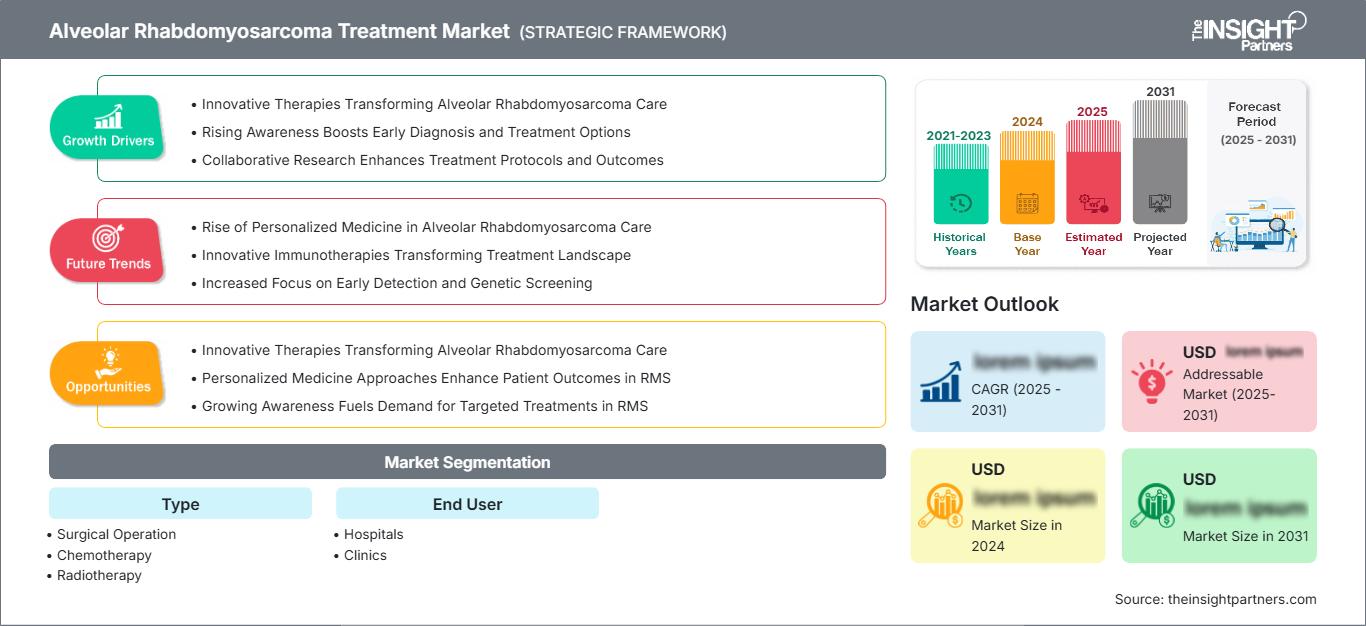
Alveolar Rhabdomyosarcoma Treatment Market: Strategic Insights
Regional Insights
North America Alveolar Rhabdomyosarcoma Treatment Market
North America held a 39–42% share in 2025, supported by advanced pediatric cancer networks, centralized sarcoma referral pathways, and wider use of molecular pathology. The region is projected to grow at a CAGR of 4.8–5.3% during 2026–2034, as hospitals improve access to risk-adapted chemotherapy, conformal radiotherapy, and complex surgical planning. The Alveolar Rhabdomyosarcoma Treatment Market share remains highest here because treatment intensity favors institutions with integrated oncology infrastructure.
Market expansion will be driven by patient inclusion in clinical trials, reimbursement for high acuity care, and active participation of academics in the rare pediatric cancers space. The demand trend is likely to be led by hospitals with clinics aiding in the management of therapy-related adverse effects. Canada is active in this space through provincial cancer associations and pediatric institutions; however, the U.S. leads regionally due to higher density of specialists.
U.S. Alveolar Rhabdomyosarcoma Treatment Market
The U.S. accounted for 82–85% of North America in 2025 and is growing at a CAGR of 4.7–5.2% during 2026–2034. Its leadership reflects specialized children’s hospitals, broad oncology pharmacy capacity, and adoption of tumor boards that integrate pathology, imaging, surgery, chemotherapy, and radiotherapy decisions. Company presence is strong, with Pfizer Inc., Bristol Myers Squibb Company, Johnson & Johnson, and Janssen Biotech, Inc. maintaining substantial oncology operations.
Trends in applications show that chemotherapy remains the mainstay therapy, but radiotherapy is planned to be individualized for local control and minimizing toxicity. U.S. institutions also affect global standards in terms of collaboration and conducting studies through cooperation in research, investigator-initiated trials, and oncology translational programs. The setting ensures high-quality treatment, even though availability may differ depending on insurance and location from pediatric oncology facilities.
Europe Alveolar Rhabdomyosarcoma Treatment Market
Europe held a 28–31% share in 2025 and is projected to grow at a CAGR of 4.4–4.9% during 2026–2034. Germany was dominant due to its university hospitals, pediatric oncology centers, and organized sarcoma care. On the other hand, the UK contributed due to its organized referral for specialists and protocols for treatments, whereas Germany has been benefitting due to strong diagnosis centers and cooperation for rare tumors in clinics.
In addition, France, Italy, and Spain have been contributing stable demand due to their public oncology services and specialist pediatric centers. France had a good ability for translational oncology services, Italy had been working on soft tissue sarcoma cooperation, and Spain is increasing access to radiotherapy. Reimbursement discipline in Europe could affect fast adoption of high-cost innovative drugs, but protocol standardization allows consistent chemotherapy and radiotherapy in top hospitals.
APAC Alveolar Rhabdomyosarcoma Treatment Market
Asia Pacific represented an 18–21% share in 2025 and is forecast to grow at a CAGR of 5.7–6.4% during 2026–2034. China is the leading country due to hospital expansion, growing pediatric oncology capacity, and investment in molecular diagnostics. Japan, South Korea, and Australia support high-complexity care through advanced radiotherapy and organized clinical practice.
India is emerging as a promising strategic growth market due to the increase in facilities provided by private hospitals and cancer institutes offering pediatric oncology. Some policy actions that include the improvement of cancer screening, insurance, and awareness about rare diseases may boost treatment completion rates. Nevertheless, the problem of referrals and the cost barrier remain significant.
Middle East & Africa Alveolar Rhabdomyosarcoma Treatment Market
The Middle East & Africa market is expected to grow at a CAGR of 4.2–4.7% during 2026–2034, with Saudi Arabia leading regional demand. Saudi Arabia and the UAE are investing in oncology centers, hospital infrastructure, and specialist care models, creating better access to chemotherapy and radiotherapy for complex pediatric cancers.
South Africa is the most advanced sub-Saharan node, backed up by tertiary hospitals and cancer education infrastructure. RO-MEA demand centers around referral centers in cities, where public spending on energy-related facilities and modernization of the hospitals will help upgrade cancer care facilities. There are still many access problems, particularly for molecular diagnostics and radiotherapy.
Segmentation Analysis
Type
The Type segment is expected to expand at a CAGR of 4.8–5.2% during 2026–2034. Decision regarding treatment will be based on tumor location, resectability, metastasis, fusion pattern, and patient tolerance. In this particular market of the Alveolar Rhabdomyosarcoma Treatment Market, the scope of treatment within this subgroup still rests on multimodality therapy, in which systemic chemotherapy will provide the control of the risk of micrometastatic disease.
- Surgical Operation plays a strategic role where tumors are resectable without unacceptable functional loss. Demand is concentrated in hospitals with pediatric surgical oncology, imaging, anesthesia, and reconstructive support.
- Chemotherapy remains the largest treatment modality because systemic therapy is essential for aggressive histology and disseminated risk. Its market position is reinforced by protocol-based use and hospital pharmacy dependence.
- Radiotherapy is gaining strategic importance as planning precision improves. Demand is strongest where conformal techniques, pediatric immobilization, and toxicity-sparing approaches are available in specialized oncology centers.
End User
The End User segment is projected to grow at a CAGR of 4.9–5.4% during 2026–2034. The demand is highly slanted towards the hospitals due to the fact that diagnostic procedures, staging, surgeries, chemotherapy, radiotherapy, and acute toxicity management require infrastructure. The clinics still have a role to play when it comes to follow up and rehabilitation post-intensive treatment cycles.
- Hospitals account for the most important revenue contribution because they coordinate diagnosis, treatment sequencing, inpatient care, radiotherapy referral, and emergency support for immunosuppressed pediatric and adolescent patients.
- Clinics support continuity through symptom review, laboratory monitoring, survivorship visits, and referral management. Their strategic value increases when linked to tertiary hospitals and shared-care pediatric oncology networks.
Opportunity Snapshot
| Segment Name | Revenue Contribution (High/Medium/Low) | Trend Tag | Adoption Stage |
| Hospitals | High | Multimodal Care | Mature |
| Clinics | Medium | Shared Follow-up | Scaling |
Alveolar Rhabdomyosarcoma Treatment Market Growth Drivers and Impact Analysis
Expansion of Molecular Diagnostics in Pediatric Oncology
Molecular diagnostics is becoming a core market driver because alveolar rhabdomyosarcoma management increasingly depends on accurate classification, fusion testing, and risk stratification. Better pathology workflows help physicians distinguish aggressive biology, select protocol intensity, and identify patients who may qualify for investigational therapies. This creates commercial impact across diagnostic laboratories, hospital oncology programs, and pharmaceutical trial networks. The near-term effect is greater demand for coordinated treatment planning, while the long-term impact is a more evidence-rich market environment. As testing becomes embedded in pediatric cancer pathways, therapy selection should become more consistent across leading centers, reducing inappropriate treatment variation and improving referral quality for complex cases.
Rising Capacity of Specialized Pediatric Oncology Hospitals
Hospital infrastructure is a decisive growth driver because the disease requires tightly coordinated care. Chemotherapy delivery, surgical evaluation, radiotherapy planning, infection control, transfusion support, imaging, and nutrition services must operate together to keep treatment on schedule. Countries investing in children’s hospitals and cancer institutes are therefore expanding the addressable treated population, even when incidence remains rare. The commercial effect is strongest for chemotherapy suppliers, radiotherapy service providers, supportive care products, and oncology information systems. A hospital-led model also favors companies with established institutional relationships, medical education capabilities, and pharmacovigilance systems suitable for pediatric and adolescent oncology populations.
Protocol-Based Multimodal Care Improving Treatment Continuity
Standardized multimodal protocols are increasing market stability by reducing fragmented decision-making and improving treatment completion. In this disease, therapeutic value is created by sequencing rather than by a single intervention, making protocol adherence important for both clinical and commercial outcomes. The impact is visible in predictable demand for chemotherapy cycles, planned radiotherapy utilization, and coordinated surgical assessment. For manufacturers, this supports steadier institutional procurement and reinforces the relevance of established oncology portfolios. For providers, it improves care quality by aligning tumor boards, imaging reviews, pharmacy preparation, and supportive care. Wider adoption of shared protocols may also improve real-world evidence generation.
Alveolar Rhabdomyosarcoma Treatment Market Future Trends
Precision-Guided Combination Treatment Strategies
Precision-guided combination approaches will shape Alveolar Rhabdomyosarcoma Treatment Market trends as clinicians move beyond uniform chemotherapy intensity toward biology-informed sequencing. Future protocols are expected to incorporate fusion status, treatment response, imaging dynamics, and toxicity risk into more adaptive care pathways. This trend will not eliminate chemotherapy, but it may change how systemic treatment is combined with local control and investigational agents. Commercially, companies able to support companion diagnostics, pediatric evidence packages, and combination studies may gain stronger relevance. Hospitals will need integrated data systems and molecular tumor boards to translate these advances into routine treatment decisions.
Technology-Supported Radiotherapy and Survivorship Planning
Radiotherapy is expected to become more individualized through image guidance, advanced planning software, and greater attention to late-effect reduction. Pediatric and adolescent patients require durable local control, but they also face long survivorship horizons, making organ-sparing strategies increasingly important. This trend supports demand for advanced equipment, planning expertise, and multidisciplinary review before treatment. Over time, hospitals with stronger radiation oncology capabilities may attract more referrals for complex local disease. The market impact will extend beyond treatment delivery, as survivorship programs, endocrine monitoring, rehabilitation, fertility counseling, and psychosocial services become more integrated into post-treatment care pathways.
Alveolar Rhabdomyosarcoma Treatment Market Opportunities
Hospital-Centered Rare Cancer Care Networks
Hospital-centered networks represent the clearest investment opportunity because rare cancer care improves when referral, diagnosis, treatment planning, and follow-up are coordinated across institutions. The Alveolar Rhabdomyosarcoma Treatment Market Forecasts support action by hospital groups, payers, and oncology companies to strengthen hub-and-spoke care models. Investors can prioritize pathology standardization, tele-tumor boards, radiotherapy partnerships, and shared-care protocols that extend specialist expertise beyond major cities. This opportunity is particularly relevant in Asia Pacific and selected Middle East markets, where oncology infrastructure is expanding but referral fragmentation remains a barrier. Strong networks may also improve trial recruitment and real-world data collection.
Pediatric Evidence Generation for Targeted and Supportive Therapies
Pediatric evidence generation is an attractive opportunity because treatment progress is constrained by small populations and limited disease-specific trials. Companies can create value by designing basket studies, registry-linked research, and adaptive protocols that include fusion-positive sarcoma populations where scientifically appropriate. Supportive care also offers investment potential, since maintaining chemotherapy intensity depends on managing infection risk, nutrition, pain, nausea, and hematologic toxicity. The opportunity is not limited to novel drugs. It includes diagnostics, data platforms, specialized formulations, and services that make complex pediatric oncology treatment more feasible. Evidence quality will remain the key differentiator for adoption.
Recent Developments
- April 2026: F. Hoffmann-La Roche Ltd — Roche updated its product development pipeline, showing continued oncology investment across solid tumor assets, including antibody-drug conjugate and personalized cancer vaccine platforms. While not specific to alveolar rhabdomyosarcoma, the pipeline direction is relevant to rare solid tumor treatment evolution, translational oncology, and future combination concepts.
- October 2025: Johnson & Johnson — The company announced 16 presentations at ESMO 2025 across solid tumors, including data for subcutaneous amivantamab in recurrent or metastatic head and neck cancer and additional studies in lung, bladder, and prostate cancer. The update signals stronger positioning in complex solid tumor development and biologics-based oncology platforms.
- May 2025: Bristol Myers Squibb Company — Bristol Myers Squibb announced more than 80 company-sponsored, investigator-sponsored, and collaborative oncology studies for ASCO 2025, spanning more than 20 cancer types. The breadth of data supports its continued role in oncology research, combination strategies, and institutional engagement relevant to rare cancer treatment ecosystems.
Frequently Asked Questions

- Comprehensive Market Sizing and Forecast Analysis
- Detailed Segmentation Analysis
- In-Depth Market Dynamics Assessment
- Regional and Country-Level Insights
- Competitive Landscape and Company Benchmarking
- Strategic Business Intelligence
Recent Reports
Testimonials

The Insight Partners provided valuable market intelligence that supported our global go-to-market strategy. Their team was professional, responsive, and attentive to our feedback, providing thoughtful analysis and helpful methodological clarifications throughout the project.
Junmo Kim Chief Financial Officer (CFO), Enertech Co., Ltd.
The Insight Partners' SCADA System Market report is comprehensive, with valuable insights on current trends and future forecasts. The team was highly professional, responsive, and supportive throughout. We are very satisfied and highly recommend their services.
RAN KEDEM Partner, Reali Technologies LTDs
I requested a report on a very specific software market and the team produced the report in a few days. The information was very relevant and well presented. I then requested some changes and additions to the report. The team was again very responsive and I got the final report in less than a week.
JEAN-HERVE JENN Chairman, Future Analytica
We worked with The Insight Partners for an important market study and forecast. They gave us clear insights into opportunities and risks, which helped shape our plans. Their research was easy to use and based on solid data. It helped us make smart, confident decisions. We highly recommend them.
PIYUSH NAGPAL Sr. Vice President, High Beam Global
The Insight Partners delivered insightful, well-structured market research with strong domain expertise. Their team was professional and responsive throughout. The user-friendly website made accessing industry reports seamless. We highly recommend them for reliable, high-quality research services
YUKIHIKO ADACHI CEO, Deep Blue, LLC.
This is the first time I have purchased a market report from The Insight Partners.While I was unsure at first, I visited their web site and felt more comfortable to take the risk and purchase a market report.I am completely satisfied with the quality of the report and customer service. I had several questions and comments with the initial report, but after a couple of dialogs over email with their analyst I believe I have a report that I can use as input to our strategic planning process.Thank you so much for taking the extra time and making this a positive experience.I will definitely recommend your service to others and you will be my first call when we need further market data.
JOHN SUZUKI President and Chief Executive Officer, Board Director, BK Technologies
I wish to appreciate your support and the professionalism you displayed in the course of attending to my request for information regarding to infectious disease IVD market in Nigeria. I appreciate your patience, your guidance, and the fact that you were willing to offer a discount, which eventually made it possible for us to close a deal. I look forward to engaging The Insight Partners in the future, all thanks to the impression you have created in me as a result of this first encounter.
DR CHIJIOKE ONYIA MANAGING DIRECTOR, PineCrest Healthcare Ltd.Reason to Buy
- Informed Decision-Making
- Understanding Market Dynamics
- Competitive Analysis
- Identifying Emerging Markets
- Customer Insights
- Market Forecasts
- Risk Mitigation
- Boosting Operational Efficiency
- Strategic Planning
- Investment Justification
- Tracking Industry Innovations
- Aligning with Regulatory Trends





 Get Free Sample for