
Analgesic Infusion Pumps Market Size, Growth & Trends by 2034
Coverage: By Product (Volumetric analgesia infusion pumps, Ambulatory analgesia infusion pumps, Syringe analgesia infusion pumps); Application (Post-Surgical Application, Accidents and Trauma, Labor pain, Cancer Patients, Others); End User (Hospitals, Clinics, Others) , and Geography (North America, Europe, Asia Pacific, and South and Central America)
- Status : Data Released
- Report Code : TIPRE00019572
- Category : Life Sciences
- No. of Pages : 150
- Available Report Formats :


- Last update date : August 04, 2026


2025 Market Size
US$ 14.85 Bn
Base year value
2034 Forecast
US$ 26.37 Bn
Projected by 2034
CAGR 2026-2034
7.44 %
Growth rate
Addressable Market
US$ 194.64 Bn
(2026-2034)
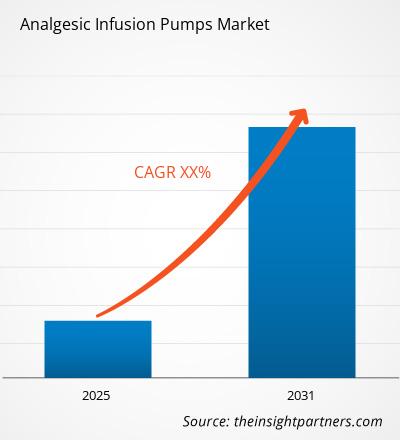
The analgesic infusion pumps market is projected to increase from US$ 14.85 Billion in 2025 to US$ 26.37 Billion by 2034, registering a CAGR of 7.44% during 2026–2034. Demand is being shaped by hospital-based pain management protocols, expanding surgical volumes, and broader use of controlled infusion systems for post-operative, trauma, labor, and cancer-related pain care across acute and specialty clinical settings.
Across North America, the analgesic infusion pumps market size is supported by high procedural intensity, mature reimbursement pathways, and hospital emphasis on opioid-sparing analgesia. The region is expected to grow at a CAGR range of 6.8–7.3% during 2026–2034, with ambulatory pain services and oncology infusion workflows strengthening equipment utilization in both hospital and outpatient settings.
Analgesic Infusion Pumps Market Assessment and Insights
- North America held 39–42% share in 2025 and is growing at a CAGR of 6.8–7.3% between 2026–2034, driven by multidisciplinary pain programs, advanced hospital infrastructure, and faster adoption of programmable infusion technologies.
- US accounted for 82–85% of North America in 2025 and is growing at a CAGR of 6.9–7.4% between 2026–2034, supported by procedural volume and pain protocol standardization.
- Europe held 25–28% share in 2025 and is growing at a CAGR of 6.4–6.9% between 2026–2034, led by Germany, the UK, and France through perioperative care modernization.
- Asia Pacific held 22–25% share in 2025 and is growing at a CAGR of 8.2–8.8% between 2026–2034, with China, Japan, India, South Korea, and Australia improving surgical and oncology capacity.
- Largest Segment volumetric analgesia infusion pumps held 40–44% market share in 2025 and is growing at a CAGR of 6.9–7.4% between 2026–2034 due to hospital-wide utility.
- High Growth Segment ambulatory analgesia infusion pumps held 27–31% market share in 2025 and is growing at a CAGR of 8.5–9.1% between 2026–2034 as outpatient recovery expands.
- Key companies analyzed in detail: AngioDynamics, Inc., Teleflex Incorporated, Becton, Dickinson and Company, Kimal PLC, B. Braun Melsungen AG, Medtronic plc, Comed B.V., ICU Medical, Inc., Cook Medical LLC, Vygon SAS.
Source: The Insight Partners' analysis based on proprietary research, government publications, company annual reports, investor presentations, industry databases, and expert interviews.
Technology migration in the analgesic infusion pumps market has moved from basic flow-control devices toward programmable, safety-enabled platforms with drug libraries, occlusion alarms, connectivity features, and closed workflow compatibility. Manufacturing trends are also evolving in tandem with the balancing of reliability of electronics, sterile disposable sets, and the interoperable nature of devices required by hospitals. Quality is an integral consideration because the accuracy of infusions, security, and alarm function affect purchasing decisions.
Future implementation will hinge on availability in developing regions, reimbursement for non-opioid routes of pain management, and resiliency of local manufacturers. Asian-Pacific and Middle Eastern hospitals are investing in building their surgical, oncology, and maternity departments, which creates the need for infusion platforms to accommodate multiple care routes. Favorable regulatory winds related to medication safety and opiate reduction are likely to benefit those device manufacturers who provide reliable equipment, clinical training, and post-market support.
Analgesic Infusion Pumps Market Report Scope
| Report Attribute | Details |
|---|---|
| Market size in 2025 | US$ 14.85 Billion |
| Market Size by 2034 | US$ 26.37 Billion |
| Global CAGR (2026 - 2034) | 7.44% |
| Historical Data | 2021-2024 |
| Forecast period | 2026-2034 |
Analgesic Infusion Pumps Market Analysis
The analgesic infusion pumps market growth is principally linked to rising surgical intensity, cancer pain management needs, and institutional efforts to reduce reliance on systemic opioids. The cancer prevalence rates published by WHO, increasing trauma cases, and rising deliveries through cesareans suggest an unending need for controlled pain delivery systems.
In the value chain, there are the pump manufacturers, consumables providers, hospital biomedical departments, distributors, and end-users whose operations depend on high uptime.
The supply chain is influenced by the procurement of electronics, sterile consumables, and adherence to the quality systems of the device. There is increasing consideration of the cost of ownership by the hospitals when purchasing, instead of just looking at the cost of acquisition.
The analgesic infusion pumps market analysis shows a competitive field where global device companies and specialist infusion suppliers compete on safety, connectivity, and service depth. B. Braun Melsungen AG, ICU Medical, Inc., Medtronic plc, and Becton, Dickinson and Company use installed hospital relationships to protect share, while Teleflex Incorporated, Vygon SAS, Kimal PLC, and Cook Medical LLC support specialized clinical access and procedural needs.
Investment is moving toward ambulatory platforms, software-enabled monitoring, and regulatory remediation. AngioDynamics, Inc. and Comed B.V. operate in adjacent infusion and access ecosystems, where procedural efficiency and consumable continuity matter. Strategic positioning is therefore less dependent on unit shipments alone and more linked to sustaining clinician confidence, data integration, and supply reliability.
● REPORT CUSTOMIZATION
Tailor This Report To Align With Your Specific Business Requirements
This report can be customized to align precisely with your business objectives, scope, and target markets. Customization options include tailored segmentation, geography, competitive analysis, and strategic insights to support informed decision-making.
Customize This Report →WHAT YOU CAN ADJUST
- ● Segmentations
- ● Geography
- ● Competitive Analysis
- ● Language Preferences
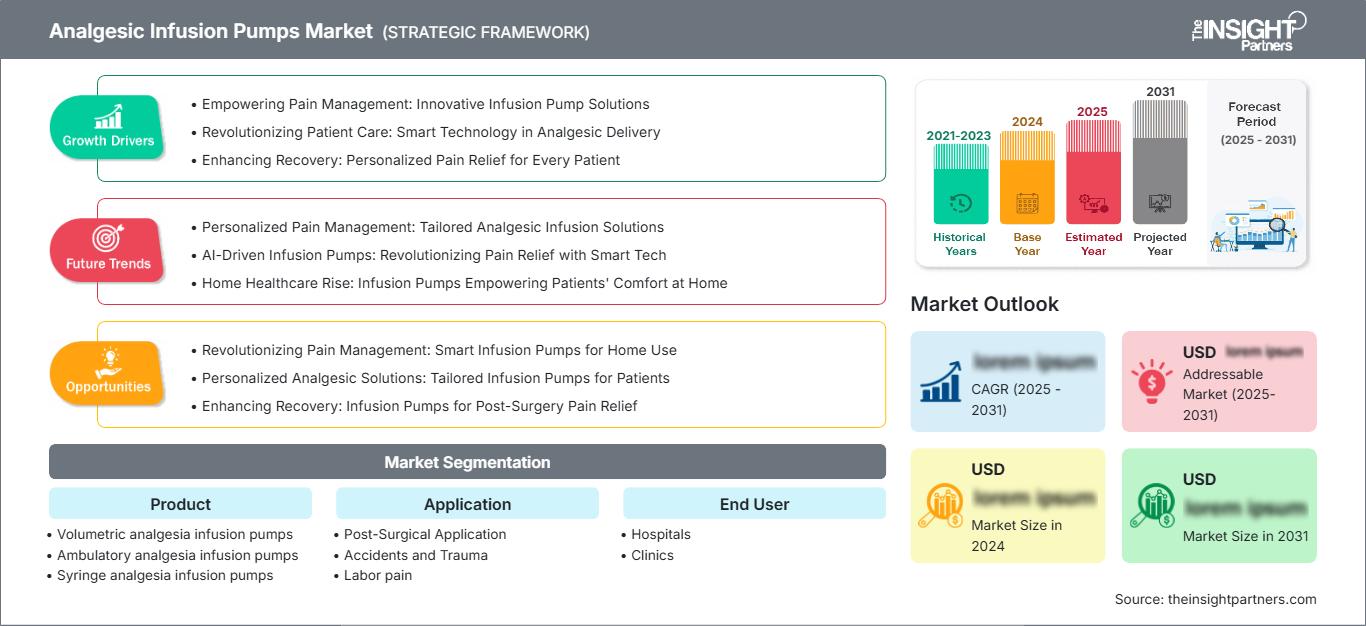
Analgesic Infusion Pumps Market: Strategic Insights
Regional Insights
North America analgesic infusion pumps market
North America held 39–42% share in 2025 and is expected to grow at a CAGR of 6.8–7.3% during 2026–2034. The region benefits from high surgical throughput, well-established pain services, and hospital preference for programmable infusion platforms. Medication safety standards, biomedical engineering capacity, and post-acute care pathways also reinforce the analgesic infusion pumps market share in advanced hospital networks. Growth is supported by oncology day-care expansion, labor analgesia protocols, and trauma center demand for precise patient-controlled delivery. Procurement decisions are increasingly tied to cybersecurity, integration with medication records, and availability of service contracts. Manufacturers with broad installed bases and consistent disposable supply are positioned to retain preferred vendor status.
U.S. analgesic infusion pumps Market
The U.S. represented 82–85% of North America in 2025 and is projected to grow at a CAGR of 6.9–7.4% during 2026–2034. Adoption is driven by hospitals, ASCs, and payer interest in non-opioid pain relief solutions. Clinical adoption is highest in the areas of post-operative recovery, cancer pain, obstetrical anesthetics, and trauma-associated acute pain. There is a significant company presence with firms like ICU Medical, Inc., B. Braun Melsungen AG, Medtronic plc, Becton, Dickinson and Company, Teleflex Incorporated, and Cook Medical LLC playing active roles in infusion, vascular access, and pain-related therapies. The demand is shaped by FDA's quality controls, pump correction cycles, and hospitals' preference for companies that will be able to educate them and offer maintenance services.
Europe analgesic infusion pumps Market
Europe held 25–28% share in 2025 and is expected to expand at a CAGR of 6.4–6.9% during 2026–2034, with Germany leading regional demand. Centralized procurement and recovery pathway improvements positively affect the UK market, despite budgetary limitations that control the replacement cycles. The hospitals prefer pumps with safety libraries and serviceability. Germany is characterized by high market penetration due to specialization in surgery, oncology departments and advanced technology levels at hospitals. The local physicians appreciate pumps for precise infusion therapy, pre- and post-operative pain management and conformity with EU Medical Device Regulation requirements. France, Italy, and Spain provide a stable demand, especially for maternity wards, oncology centers, and trauma hospitals.
APAC analgesic infusion pumps Market
APAC held 22–25% share in 2025 and is projected to grow at a CAGR of 8.2–8.8% during 2026–2034, making it the fastest regional growth area. China leads demand through hospital expansion, oncology capacity, and surgical volume, while Japan and South Korea emphasize technology quality and medication safety. India and Australia add momentum through private hospital growth, ambulatory care, and maternity infrastructure. Policy support for domestic device production, digital hospitals, and broader insurance coverage is improving access to infusion systems. Suppliers able to provide cost-appropriate pumps, training, and service networks should gain traction.
Middle East & Africa analgesic infusion pumps Market
The Middle East & Africa is expected to grow at a CAGR of 6.7–7.2% during 2026–2034, led by Saudi Arabia. The growth is facilitated by hospital infrastructure development, oncology clinics, and surgery growth in the UAE and Saudi Arabia due to public sector investments in improving access to specialists. For South Africa, which is still the largest Sub-Saharan market because of its private hospitals and need for trauma centers, this is still true. Adoption in the rest of the MEA region would be more varied, since there are vast differences in the procurement budget, maintenance, and trained clinical staff. Energy-financed healthcare projects in the Gulf states help in premium equipment purchases.
Segmentation Analysis
Product
The Product segment is expected to grow at a CAGR of 7.1–7.7% during 2026–2034. Its dynamics reflect hospital replacement cycles, increasing demand for medication safety features, and broader use of controlled analgesic delivery across surgical, obstetric, oncology, and trauma settings. The analgesic infusion pumps market scope is broadening as buyers seek platforms that combine accuracy, portability, alarms, data capture, and compatible consumables.
- Volumetric analgesia infusion pumps remain the leading product type because they support continuous hospital-based administration, multi-department deployment, and standardized pain protocols across recovery rooms, intensive care units, and oncology wards.
- Ambulatory analgesia infusion pumps are gaining strategic importance as outpatient surgery, home-based recovery, and non-opioid pain management models shift selected patients away from prolonged inpatient monitoring.
- Syringe analgesia infusion pumps support precise small-volume delivery in neonatal, pediatric, anesthesia, and critical care uses where accuracy, low flow rates, and medication control are clinically essential.
Application
The Application segment is expected to grow at a CAGR of 7.2–7.8% during 2026–2034. Demand is spread across acute and chronic pain indications, with post-surgical use remaining central because recovery protocols increasingly require consistent analgesia and mobilization support. Trauma, labor pain, and cancer care add differentiated needs, making application-specific training and pump configurability important procurement factors.
- Post-Surgical Application continues to dominate usage because hospitals need predictable analgesic delivery after orthopedic, abdominal, cardiac, and gynecological procedures to support mobility and shorter recovery stays.
- Accidents and Trauma create demand for reliable acute pain control in emergency departments, trauma centers, and intensive care units where rapid stabilization and dose consistency are essential.
- Labor pain supports focused demand in maternity units, especially where epidural and patient-controlled analgesia protocols require precise, supervised infusion technology.
- Cancer Patients represent a strategically important application because infusion pumps help manage persistent pain, palliative care needs, and complex medication regimens in oncology settings.
End User
The End User segment is expected to grow at a CAGR of 7.0–7.6% during 2026–2034. Hospitals remain the chief purchasing environment due to high procedural volumes, multidisciplinary pain teams, and the need for integrated safety systems. Clinics are expanding gradually as ambulatory surgery, oncology day care, and post-procedure pain management become more structured outside traditional inpatient settings.
- Hospitals account for the strongest demand because operating rooms, recovery units, intensive care, maternity departments, and oncology wards require reliable pumps, staff training, and continuous biomedical support.
- Clinics are gaining relevance where outpatient procedures and cancer pain services require portable pumps, simplified workflows, and cost-efficient procurement suited to lower-acuity treatment environments.
Opportunity Snapshot
| Segment Name | Revenue Contribution | Trend Tag | Adoption Stage |
|---|---|---|---|
| Post-Surgical Application | High | Opioid Sparing | Mature |
| Accidents and Trauma | Medium | Acute Control | Scaling |
| Labor Pain | Medium | Epidural Care | Mature |
| Cancer Patients | High | Palliative Access | Scaling |
Analgesic Infusion Pumps Market Growth Drivers and Impact Analysis
Opioid-Sparing Pain Protocols in Surgical Recovery
The trend of hospitals developing post-surgical protocols based on multimodal analgesia, early mobilization, and decreased exposure to opioids has created a greater need for devices capable of delivering controlled regional or patient-controlled analgesia, with appropriate protections. The influence of such a trend is seen most prominently in orthopedic, abdominal, and women’s surgical procedures, where the quality of recovery determines when patients will be discharged from the hospital and whether or not they might be re-admitted. Procurement groups now evaluate medical devices based on their alarms and programming safety, along with staff training requirements.
Rising Cancer and Palliative Care Requirements
The growing importance of cancer pain management becomes one of the demand sources due to the increased number of patients treated in the field of oncology and who survive for extended periods of time with the developed disease. Infusion devices allow for a variety of complicated pain therapy approaches, such as continuous treatment and controlled breakthrough pain, especially in hospitals' oncology wards and palliative care programs. The role of infusion devices is not limited by mere device purchases since disposable systems and services and clinicians' training are also needed to utilize the devices safely.
Expansion of Ambulatory and Day-Care Procedures
Day surgical operations and oncology day care are increasingly moving certain pain management cases out of the ward setting. This will drive up the requirement for small, portable, and monitorable infusions that will help patients recuperate from the bed in traditional hospitals. There will be a structural effect on the market because the outpatient facilities will require infusion pumps that have easy usage, reliable battery life, and clearly visible alarms. There will also be positive effects for the hospital when the ambulatory infusion helps reduce length of stay and improve bed occupancy.
Analgesic Infusion Pumps Market Future Trends
Connected Pain Delivery and Remote Monitoring
Connected infusion infrastructure will become a stronger procurement criterion as hospitals seek device visibility, automated documentation, and faster response to medication events. The analgesic infusion pumps market trends point toward platforms that communicate with drug libraries, electronic health records, and asset management systems while maintaining cybersecurity controls. Future buying decisions will favor vendors that demonstrate interoperability without increasing nursing workload. Remote monitoring may also support ambulatory recovery models, especially after orthopedic, oncology, and obstetric procedures. The differentiator will be practical integration, not connectivity alone, because clinicians need accurate alerts, simple dashboards, and dependable data capture.
Customized Platforms for Lower-Resource Settings
It is expected that manufacturers will design more affordable pump designs in the future that are tailored to the needs of hospitals in developing countries, which have procurement budgets and servicing capabilities different from those of tertiary care hospitals in advanced nations. Future devices will probably incorporate safety mechanisms along with a user-friendly interface, service module, and locally sourced consumables. Such an approach can increase the market base by extending the reach of pumps beyond the higher-end hospitals in cities to regional surgery facilities, maternity wards, and cancer hospitals.
Analgesic Infusion Pumps Market Opportunities
Reimbursement-Linked Non-Opioid Pain Pathways
Payment reforms that recognize non-opioid treatments create a practical opportunity for hospitals, device companies, and service providers. The analgesic infusion pumps market Forecasts indicate stronger uptake where reimbursement supports pump-enabled pain care after eligible procedures. Companies can act by building economic evidence, partnering with ambulatory surgery centers, and training clinicians on compliant use pathways. This opportunity is especially relevant in the U.S., where outpatient surgical growth and opioid reduction policies intersect. Suppliers that provide documentation tools, service packages, and patient education can convert policy momentum into repeatable commercial adoption.
Integrated Consumables and Service Models
A lucrative opportunity lies in marketing pumps along with administration sets, maintenance, technical support, and clinical education. Hospitals are becoming more sensitive to the continuity of the supply chain and lifecycle management due to the fact that any interruption in the infusion process could have a direct impact on the safety of the patient as well as on operating efficiency. Companies can increase their hold by providing a reliable supply chain, preventive maintenance, and refresher courses for anesthesia, oncology, and maternity departments. This approach also helps small clinics that do not have significant biomedical engineering capabilities.
Recent Developments
- July 2026: Medtronic plc completed its acquisition of SPR Therapeutics, Inc., adding the FDA-cleared SPRINT peripheral nerve stimulation system to its pain therapy portfolio. The US$ 650 million upfront cash transaction strengthens Medtronic’s position in minimally invasive, non-opioid pain treatment and expands its ability to address chronic and acute pain across earlier intervention settings.
- December 2025: InfuSystem Holdings, Inc. announced that CMS added two electronic infusion pumps used in its Pain Management services business, ICU Medical’s CADD-Solis and Eitan Medical’s Sapphire, to the qualifying products list for separate payment under the NOPAIN Act beginning January 1, 2026. The decision supports reimbursement visibility for non-opioid post-surgical pain care.
- July 2025: Teleflex Incorporated completed the acquisition of substantially all of BIOTRONIK’s Vascular Intervention business for €760 million, expanding its global interventional access and cath lab presence. While focused on vascular intervention, the deal strengthens Teleflex’s procedural channel depth, manufacturing capabilities, and hospital relationships relevant to infusion access and perioperative care ecosystem
Frequently Asked Questions

- Comprehensive Market Sizing and Forecast Analysis
- Detailed Segmentation Analysis
- In-Depth Market Dynamics Assessment
- Regional and Country-Level Insights
- Competitive Landscape and Company Benchmarking
- Strategic Business Intelligence
Recent Reports
Testimonials

The Insight Partners' SCADA System Market report is comprehensive, with valuable insights on current trends and future forecasts. The team was highly professional, responsive, and supportive throughout. We are very satisfied and highly recommend their services.
RAN KEDEM Partner, Reali Technologies LTDs
I requested a report on a very specific software market and the team produced the report in a few days. The information was very relevant and well presented. I then requested some changes and additions to the report. The team was again very responsive and I got the final report in less than a week.
JEAN-HERVE JENN Chairman, Future Analytica
We worked with The Insight Partners for an important market study and forecast. They gave us clear insights into opportunities and risks, which helped shape our plans. Their research was easy to use and based on solid data. It helped us make smart, confident decisions. We highly recommend them.
PIYUSH NAGPAL Sr. Vice President, High Beam Global
The Insight Partners delivered insightful, well-structured market research with strong domain expertise. Their team was professional and responsive throughout. The user-friendly website made accessing industry reports seamless. We highly recommend them for reliable, high-quality research services
YUKIHIKO ADACHI CEO, Deep Blue, LLC.
This is the first time I have purchased a market report from The Insight Partners.While I was unsure at first, I visited their web site and felt more comfortable to take the risk and purchase a market report.I am completely satisfied with the quality of the report and customer service. I had several questions and comments with the initial report, but after a couple of dialogs over email with their analyst I believe I have a report that I can use as input to our strategic planning process.Thank you so much for taking the extra time and making this a positive experience.I will definitely recommend your service to others and you will be my first call when we need further market data.
JOHN SUZUKI President and Chief Executive Officer, Board Director, BK Technologies
I wish to appreciate your support and the professionalism you displayed in the course of attending to my request for information regarding to infectious disease IVD market in Nigeria. I appreciate your patience, your guidance, and the fact that you were willing to offer a discount, which eventually made it possible for us to close a deal. I look forward to engaging The Insight Partners in the future, all thanks to the impression you have created in me as a result of this first encounter.
DR CHIJIOKE ONYIA MANAGING DIRECTOR, PineCrest Healthcare Ltd.Reason to Buy
- Informed Decision-Making
- Understanding Market Dynamics
- Competitive Analysis
- Identifying Emerging Markets
- Customer Insights
- Market Forecasts
- Risk Mitigation
- Boosting Operational Efficiency
- Strategic Planning
- Investment Justification
- Tracking Industry Innovations
- Aligning with Regulatory Trends





 Get Free Sample for