
Aromatherapy Market Size, Share & Trends by 2034
Coverage: By Product (Consumables, Equipment); Mode Of Delivery (Topical Application, Direct Inhalation, Aerial Diffusion); Application (Insomnia, Pain Management, Skin and Hair Care, Cold and Cough, Others); Distribution Channel (Online Sales, Direct Sales, Retail Sales), and Geography (North America, Europe, Asia Pacific, and South and Central America)
- Status : Data Released
- Report Code : TIPRE00015801
- Category : Consumer Goods
- No. of Pages : 150
- Available Report Formats :


- Last update date : August 28, 2026


2025 Market Size
US$ 10.53 Bn
Base year value
2034 Forecast
US$ 21.60 Bn
Projected by 2034
CAGR 2026-2034
8.32 %
Growth rate
Addressable Market
US$ 144.35 Bn
(2026-2034)
The aromatherapy market is projected to grow from US$ 10.53 Billion in 2025 to US$ 21.60 Billion by 2034, registering a CAGR of 8.32% during 2026–2034. The expansion reflects wider consumer adoption of essential oil-based wellness routines, increasing use in personal care, and steady demand for diffusion and topical formats across household, retail, spa, and complementary wellness settings.
Across North America, the aromatherapy market size is supported by mature wellness retailing, direct-selling networks, and strong household penetration of diffusers and topical oil blends. The region is estimated to advance at a CAGR of 7.6–8.2% during 2026–2034, with growth reinforced by stress-management demand, premium natural personal care, and broad e-commerce access. WHO and CDC data indicate persistent mental wellness needs, strengthening consumer interest in non-pharmacological wellbeing routines.
Aromatherapy Market Assessment and Insights
- North America accounted for 35–38% share in 2025 and is growing at a CAGR of 7.6–8.2% between 2026–2034, supported by premium wellness spending, D2C brand penetration, and widespread use of topical and diffuser-based formats.
- US represented 76–80% of North America in 2025 and is growing at a CAGR of 7.7–8.3% between 2026–2034, driven by direct sales, specialty retail, and self-care routines.
- Europe held 25–28% share in 2025 and is growing at a CAGR of 7.1–7.8% between 2026–2034, led by Germany, France, and the UK through natural cosmetics, spa services, and pharmacy-linked wellness.
- Asia Pacific captured 22–25% share in 2025 and is growing at a CAGR of 9.2–10.1% between 2026–2034, led by China, Japan, India, South Korea, and Australia as wellness retail and beauty applications expand.
- Largest Segment: Consumables held 72–76% market share in 2025, with CAGR of 8.0–8.6%, reflecting recurring essential oil, blend, carrier oil, and topical product purchases.
- High Growth Segment: Online Sales held 28–32% market share in 2025, with CAGR of 10.0–11.2%, supported by subscription bundles, marketplace visibility, and brand-owned digital education.
- Key companies analyzed in detail: dōTERRA International, LLC; Young Living Essential Oils, LC; Mountain Rose Herbs; Edens Garden; Frontier Co-op; Rocky Mountain Oils, LLC; Plant Therapy Essential Oils; MONQ, LLC; The Aromatherapy Company Limited; Aromatics International, LLC.
Source: The Insight Partners' analysis based on proprietary research, government publications, company annual reports, investor presentations, industry databases, and expert interviews.
Product development in the aromatherapy market has shifted from single-note essential oils toward blended systems, portable inhalation, certified organic carrier oils, and digitally marketed starter kits. Production factors will revolve around botanical extraction, distillation efficiency, GC/MS testing, and traceability claims. Companies have to walk a thin line between authenticity in small batches and mass production needs, whereas retailers prefer clarity regarding proper use, allergy information, and various applications of botanicals for sleep, skincare, hair care, respiratory comfort, and mood elevation.
In the future, demand will intensify in the Asia Pacific and certain Middle Eastern countries because of wellness tourism, pharmaceutical retailing, and luxury beauty channels. Claims safety, proper dilution and labeling regulations will play to the advantage of companies that provide testing reports and have proper consumer education systems in place. As a result, investments will be directed toward verified supply chains, advanced diffusion technology, refills, and local blends that meet climate and cultural requirements.
Aromatherapy Market Report Scope
| Report Attribute | Details |
|---|---|
| Market size in 2025 | US$ 10.53 Billion |
| Market Size by 2034 | US$ 21.60 Billion |
| Global CAGR (2026 - 2034) | 8.32% |
| Historical Data | 2021-2024 |
| Forecast period | 2026-2034 |
Aromatherapy Market Analysis
The aromatherapy market growth is underpinned by a convergence of mental wellness awareness, clean-label personal care, and at-home relaxation spending. WHO estimates 5.7% of adults globally suffer from depression, while CDC data show 19% of U.S. adults were ever told by a healthcare professional they had a depressive disorder, supporting demand for adjunctive self-care routines rather than medical substitution.
Supply chains continue to be influenced by seasonal plant output, the availability of labor, and the energy cost of distillation. The supply chain includes farmers, wild-crafted networks, distillers, formulators, packagers, distributors, well-being practitioners, and online retailers. Quality control is emerging as an important strategy since consumers consider purity tests, country of origin, and sustainable agriculture stories before buying again.
The competitive landscape in the aromatherapy market analysis shows a mixed field of direct-selling leaders, organic botanical specialists, digital-native brands, and portable device innovators. dōTERRA International, LLC and Young Living Essential Oils, LC retain broad representative networks, while Plant Therapy Essential Oils, Edens Garden, Rocky Mountain Oils, LLC, and Aromatics International, LLC compete through transparent testing and online education.
The investment is heading towards a hybrid approach where consumption includes consumable products, accessorizing, and community-driven directions. The Mountain Rose Herbs and Frontier Co-op position their products on botanicals and an organic approach, whereas MONQ, LLC is positioning its products for personal inhalation. The Aromatherapy Company Limited makes use of lifestyle gifting and retail-ready products for positioning.
● REPORT CUSTOMIZATION
Tailor This Report To Align With Your Specific Business Requirements
This report can be customized to align precisely with your business objectives, scope, and target markets. Customization options include tailored segmentation, geography, competitive analysis, and strategic insights to support informed decision-making.
Customize This Report →WHAT YOU CAN ADJUST
- ● Segmentations
- ● Geography
- ● Competitive Analysis
- ● Language Preferences
Aromatherapy Market: Strategic Insights
Regional Insights
North America Aromatherapy Market
North America held a 35–38% aromatherapy market share in 2025 and is projected to expand at a 7.6–8.2% CAGR during 2026–2034. The market enjoys high wellness expenditure, developed D2C channels, and access to specialty retailing. According to the Global Wellness Institute, the wellness industry had a value of $6.8 trillion in 2024 with North America being among the best-performing regions on account of consumers' readiness to buy products focusing on preventive healthcare.
Products such as household diffusions, roll-on, sleep blends, and essential oils used in beauty products are moving through pharmacies, natural food stores, and subscription services. American and Canadian customers tend to be interested in having evidence of safety and certified organic products. Direct sellers continue with their educational campaign, whereas online retailers can enjoy ingredient comparison services.
U.S. Aromatherapy Market
The U.S. represented 76–80% of the North America Aromatherapy Market in 2025 and is projected to register a 7.7–8.3% CAGR during 2026–2034. Demand is concentrated in stress relief, skin and hair care, sleep routines, home fragrance, and topical pain-support blends. CDC survey-based data show 40% of U.S. high school students reported depressive symptoms in 2023, while adult mental health indicators remain elevated, strengthening wellness-oriented consumer behavior.
Corporate presence is wide-ranging, including companies like dōTERRA International, LLC, Young Living Essential Oils, LC, Plant Therapy Essential Oils, Edens Garden, Rocky Mountain Oils, LLC, Mountain Rose Herbs, and Aromatics International, LLC. The usage trend is more inclined towards kits, pre-diluted roll-on products, intelligent diffusers, hair oils, and educational packs, which minimize the risk of misuse.
Europe Aromatherapy Market
Europe accounted for 25–28% share of the Aromatherapy Market in 2025 and is forecast to post a 7.1–7.8% CAGR during 2026–2034. Germany is at the top because of awareness in traditional herbal medicine, pharmacy-based wellness products buying, and natural cosmetics. The customers in Germany have a relatively high level of awareness about origin, organic nature, and safety labeling, which drives high-quality suppliers to make investments into documentation and correct labeling of their products.
The UK is an important market thanks to spa treatments, home fragrances, wellness subscriptions on the internet, and beauty products. It is oriented to anxiety management, sleep problems solutions, and skin care formulations. France has an advantage in aromachology, cosmetics, and pharmacies. Italy and Spain contribute through wellness tourism and massages.
Across the region, regulation shapes product communication more than product availability. Suppliers with allergen transparency, IFRA-aligned fragrance discipline, and clear topical dilution instructions are better placed. Europe’s growth is steady rather than explosive, but high average basket values and recurring consumable demand make it strategically important for the aromatherapy market.
APAC Aromatherapy Market
APAC held 22–25% share of the Aromatherapy Market in 2025 and is expected to grow at a 9.2–10.1% CAGR during 2026–2034, led by China. The markets in Japan and South Korea focus on high-end uses such as beauty and home fragrance applications, while the herbal wellness industry in India drives up the demand for topicals and diffusion. Australia also helps via natural retail, spa and wellness tourism.
Growth factors for the industry include the development of e-commerce, an increase in disposable income, and the production of diffusers and personal care formulations in the region. Support from policy towards traditional wellness, exports of beauty products, and plant-based products in the region will further contribute to the growth of the region.
Middle East & Africa Aromatherapy Market
The Middle East & Africa Aromatherapy Market is projected to grow at a 7.8–8.6% CAGR during 2026–2034, with the UAE leading due to luxury retail, hospitality, spa, and wellness tourism. The Middle East is developing the category through lifestyle retail and luxury mall formats, whereas South Africa is fueling demand through natural health stores and personal care avenues.
Investments in energy and infrastructure are contributing to the category through the development of hotels, airports, wellness destinations, and premium living complexes. The IATA stated that global demand for passengers increased 5.3% in 2025. Adoption of this category is still nascent in regions and linked to fragrance culture and disposable income.
Segmentation Analysis
Product
Product is projected to grow at a CAGR of 8.0–8.7% during 2026–2034. This aromatherapy market scope is shaped by recurring consumable usage and hardware-led expansion in diffusers, inhalers, and applicators. Consumables dominate because essential oils, blends, carrier oils, and roll-ons require replenishment. Equipment supports category entry and higher average transaction values, especially through smart home and gifting formats.
- Consumables remain the revenue anchor due to repeat purchases of essential oils, blends, carrier oils, roll-ons, and topical preparations across home care, personal care, sleep, and relaxation routines.
- Equipment is strategically important because ultrasonic diffusers, nebulizers, inhalers, and portable devices create ecosystem lock-in, improve usage convenience, and encourage bundled oil purchases.
Mode of Delivery
Mode of Delivery is projected to grow at a CAGR of 8.1–8.8% during 2026–2034. Delivery format determines use occasion, safety profile, and repeat frequency. Topical application benefits from beauty and massage integration, direct inhalation supports personalized routines, and aerial diffusion drives household use. Brands increasingly design products around specific routes to reduce confusion and improve user confidence.
- Topical Application holds strong demand through massage oils, pre-diluted roll-ons, skin care, hair care, and localized comfort products where controlled dilution and carrier selection influence safety.
- Direct Inhalation is gaining strategic relevance through personal inhalers and portable aroma devices that support discreet use in offices, travel, meditation, and short relaxation breaks.
- Aerial Diffusion remains central to household adoption because diffusers connect aromatherapy with ambience, sleep rituals, air freshness, and gifting without requiring direct skin contact.
Application
Application is projected to grow at a CAGR of 8.2–8.9% during 2026–2034. Demand is expanding as consumers associate aromatherapy with sleep routines, topical comfort, beauty rituals, and seasonal respiratory support. Application-led positioning helps companies differentiate blends and educate users. The strongest commercial opportunity lies in products that combine sensory appeal, safe instructions, and measurable repeat-use occasions.
- InsoMillionia represents sleep-oriented demand, with lavender, chamomile, and calming blends used in diffusers, pillow sprays, roll-ons, and evening routines for relaxation-focused positioning.
- Pain Management supports massage oils, topical blends, and roll-ons that target localized comfort, especially among consumers seeking non-systemic adjunctive self-care options.
- Skin and Hair Care is a high-value application as brands integrate tea tree, rosemary, frankincense, and carrier oils into cleansers, serums, scalp oils, and body care.
- Cold and Cough demand remains seasonal, with eucalyptus, peppermint, and respiratory blends used in diffusion and topical formats, supported by household wellness purchasing patterns.
Distribution Channel
Distribution Channel is projected to grow at a CAGR of 8.5–9.3% during 2026–2034. Channel strategy increasingly defines brand scale because buyers seek education, reviews, and safety instructions before purchase. Online platforms accelerate discovery, direct sales sustain guided use, and retail sales provide credibility through pharmacies, natural stores, spas, and beauty chains. Omnichannel execution is becoming standard among serious suppliers.
- Online Sales are expanding quickly through brand-owned sites, marketplaces, subscriptions, education pages, reviews, influencer content, and bundled starter kits that simplify product selection.
- Direct Sales remain relevant because trained representatives explain dilution, blending, and application routines, supporting trust in premium oils and higher customer retention.
- Retail Sales provide tactile discovery, immediate availability, and institutional credibility through natural grocers, pharmacies, beauty chains, wellness centers, spas, and lifestyle gift outlets.
Opportunity Snapshot
| Application | Revenue Contribution | Trend Tag | Adoption Stage |
| InsoMillionia | High | Sleep Rituals | Scaling |
| Pain Management | Medium | Topical Comfort | Scaling |
| Skin and Hair Care | High | Clean Beauty | Mature |
| Cold and Cough | Medium | Seasonal Relief | Mature |
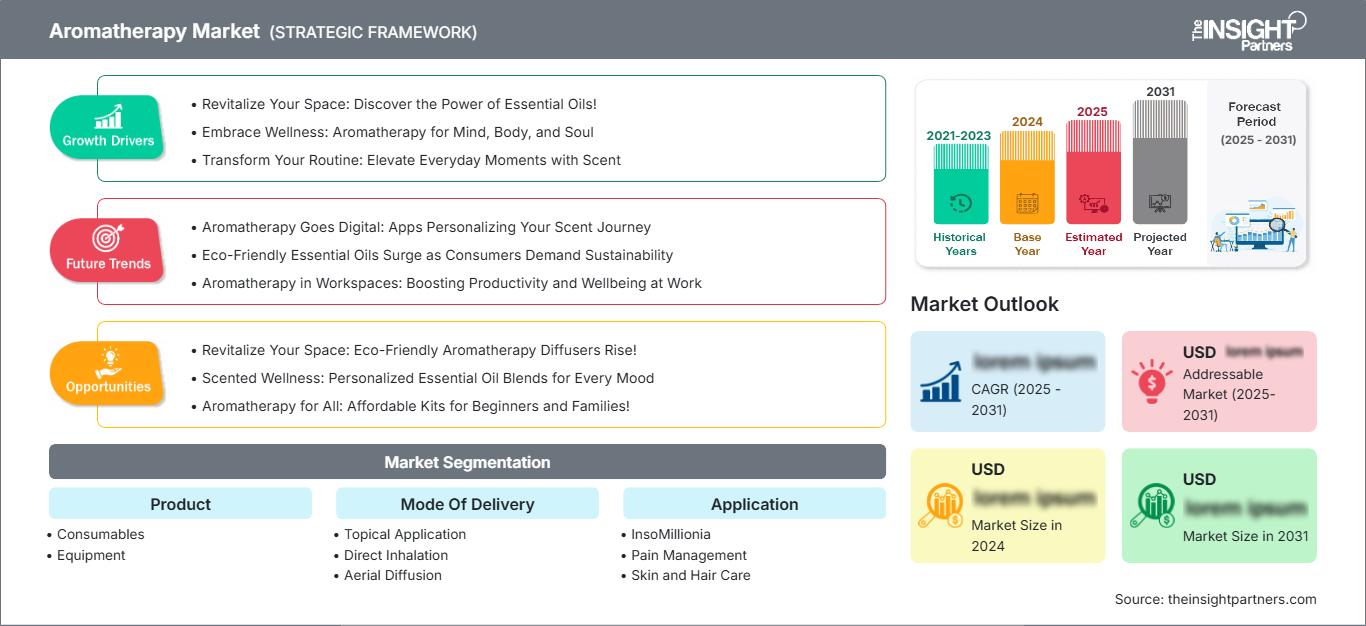
Aromatherapy Market Growth Drivers and Impact Analysis
Rising Mental Wellness and At-Home Self-Care Adoption
The market for relaxation, sleep, and mood is being driven by the needs of mental wellness. Aromatherapy products cannot be considered a replacement for clinical treatments, yet customers more and more often use products based on scent as part of their lifestyle, be it home life, meditative practices, bathing, or sleep time. WHO’s data on global depression, and CDC’s information on mental well-being in the United States, indicate the huge addressable market for well-being solutions. Growth in the wellness market shows the readiness to pay for preventive categories of lifestyle products. This trend is reflected in higher sales of lavender, bergamot, chamomile, and oil blends associated with calm, rest, and balance.
Expansion of Natural Personal Care and Botanical Beauty
Natural personal care is extending its range beyond oil diffusion. Essential oils find their way into scalp oils, facial serums, body oils, cleansing products, deodorizing sprays, and bath products, leading to cross-product demand for consumers of beauty products who do not self-identify as aromatherapy consumers. Such a trend alters the revenue stream since skin care products and hair care products typically cost more per unit and need more frequent repurchasing than oils alone. It is also a more demanding process, involving allergen labeling, safety for use on skin, oxidation management, and proper carrier compatibility. Well-formulated brands will be able to formulate natural essential oils into personal care products, while others may get consumer complaints related to irritation or abuse.
Digital Commerce and Education-Led Brand Building
E-commerce has lowered entry barriers as people can look at the origin of oils, test kits, reviews, how-to guides, and safety guidelines prior to making a purchase. Online channels allow for trial sizes, subscription models, seasonal offers, and content about sleep, skincare, hair care, stress management, and even home fragrances. This effect is especially visible for small specialists that can rival bigger direct sales companies using the power of transparency and education. E-commerce helps earn greater margins as well due to first-party data collection and personalization capabilities. At the same time, the more digital marketing you do, the more likely your mistakes will become public, as people can easily spot misleading statements and a lack of consistent safety advice.
Aromatherapy Market Future Trends
Smart Diffusion and Sensor-Enabled Scent Personalization
The most visible aromatherapy market trends will involve smart diffusion systems that adjust intensity, timing, and blend selection by room, routine, or user preference. The connected devices have the potential to transform the category from intermittent fragrance usage into a more programmed wellness atmosphere for uses such as sleep, concentration at work, hospitality and luxury homes. The success of growth will be based on low noise levels, affordable refills, safety of use with the essential oils and ease of control via mobile platforms. The device manufacturers who will collaborate with the fragrance oil companies will have the chance of building closed ecosystems, but the open systems might win out with value-conscious consumers.
Traceable Botanical Sourcing and Climate-Resilient Supply Chains
Trends in Supply Security will emerge as the impact of climate change begins to show on plants such as lavender, citrus, mint, eucalyptus, frankincense, and others. Consumers are becoming increasingly aware of the sources and farming methods used in producing the plants, as well as issues of adulteration. This will force the brands to be open about their testing of batches and suppliers. It is expected that companies will engage in geographical diversification, practice regenerative agriculture, and enter into grower agreements to ensure quality. The trend will result in more testing, such as GC/MS, pesticide screening, and contamination testing.
Aromatherapy Market Opportunities
Clinical Adjacent Wellness Programs and Practitioner Channels
A clear opportunity lies in practitioner-informed wellness programs that position aromatherapy as an adjunctive comfort and relaxation tool, without making medical treatment claims. Spas, massage therapists, senior living centers, yoga studios, hospitality operators, and integrative wellness practitioners can use standardized protocols for sleep ambiance, topical comfort, and emotional relaxation. The aromatherapy market Forecasts point to strong recurring demand where products are paired with education and service context. Suppliers should invest in training modules, dilution charts, contraindication guidance, and professional-size formats. This channel can improve credibility, differentiate premium products, and generate repeat consumable orders beyond one-time household purchases.
Affordable Premiumization in Emerging Urban Markets
There is a great opportunity for brands willing to invest in emerging urban markets, where they will be able to offer value while still ensuring quality and trust. Consumers in India, China, Southeast Asia, the Gulf region, and selected areas in Africa are consuming well-being, beauty, and home fragrances via online platforms and contemporary retail stores. Instead of importing costly fragrances and oils from overseas, the brand can develop smaller bottles, regional mixes, and starter packs that would take into consideration climatic conditions and personal preferences and also be affordable for consumers.
Frequently Asked Questions

- Comprehensive Market Sizing and Forecast Analysis
- Detailed Segmentation Analysis
- In-Depth Market Dynamics Assessment
- Regional and Country-Level Insights
- Competitive Landscape and Company Benchmarking
- Strategic Business Intelligence
Recent Reports
Testimonials

The Insight Partners provided valuable market intelligence that supported our global go-to-market strategy. Their team was professional, responsive, and attentive to our feedback, providing thoughtful analysis and helpful methodological clarifications throughout the project.
Junmo Kim Chief Financial Officer (CFO), Enertech Co., Ltd.
The Insight Partners' SCADA System Market report is comprehensive, with valuable insights on current trends and future forecasts. The team was highly professional, responsive, and supportive throughout. We are very satisfied and highly recommend their services.
RAN KEDEM Partner, Reali Technologies LTDs
I requested a report on a very specific software market and the team produced the report in a few days. The information was very relevant and well presented. I then requested some changes and additions to the report. The team was again very responsive and I got the final report in less than a week.
JEAN-HERVE JENN Chairman, Future Analytica
We worked with The Insight Partners for an important market study and forecast. They gave us clear insights into opportunities and risks, which helped shape our plans. Their research was easy to use and based on solid data. It helped us make smart, confident decisions. We highly recommend them.
PIYUSH NAGPAL Sr. Vice President, High Beam Global
The Insight Partners delivered insightful, well-structured market research with strong domain expertise. Their team was professional and responsive throughout. The user-friendly website made accessing industry reports seamless. We highly recommend them for reliable, high-quality research services
YUKIHIKO ADACHI CEO, Deep Blue, LLC.
This is the first time I have purchased a market report from The Insight Partners.While I was unsure at first, I visited their web site and felt more comfortable to take the risk and purchase a market report.I am completely satisfied with the quality of the report and customer service. I had several questions and comments with the initial report, but after a couple of dialogs over email with their analyst I believe I have a report that I can use as input to our strategic planning process.Thank you so much for taking the extra time and making this a positive experience.I will definitely recommend your service to others and you will be my first call when we need further market data.
JOHN SUZUKI President and Chief Executive Officer, Board Director, BK Technologies
I wish to appreciate your support and the professionalism you displayed in the course of attending to my request for information regarding to infectious disease IVD market in Nigeria. I appreciate your patience, your guidance, and the fact that you were willing to offer a discount, which eventually made it possible for us to close a deal. I look forward to engaging The Insight Partners in the future, all thanks to the impression you have created in me as a result of this first encounter.
DR CHIJIOKE ONYIA MANAGING DIRECTOR, PineCrest Healthcare Ltd.Reason to Buy
- Informed Decision-Making
- Understanding Market Dynamics
- Competitive Analysis
- Identifying Emerging Markets
- Customer Insights
- Market Forecasts
- Risk Mitigation
- Boosting Operational Efficiency
- Strategic Planning
- Investment Justification
- Tracking Industry Innovations
- Aligning with Regulatory Trends





 Get Free Sample for