
Bioactive Protein Market Size, Share & Forecast by 2034
Coverage: By Source (Animal Source, Plant Source); Application (Functional Food, Functional Beverages, Dietary Supplements, Animal Nutrition, Others), and Geography (North America, Europe, Asia Pacific, and South and Central America)
- Status : Data Released
- Report Code : TIPRE00014343
- Category : Chemicals and Materials
- No. of Pages : 150
- Available Report Formats :


- Last update date : August 28, 2026


2025 Market Size
US$ 4.26 Bn
Base year value
2034 Forecast
US$ 7.51 Bn
Projected by 2034
CAGR 2026-2034
6.51 %
Growth rate
Addressable Market
US$ 53.25 Bn
(2026-2034)
The Bioactive Protein market size was US$ 4.26 Billion in 2025 and is projected to reach US$ 7.51 Billion by 2034, registering a CAGR of 6.51% during 2026–2034. Growth is supported by increasing demand for protein ingredients with physiological functionality beyond basic nutrition, including peptides associated with antioxidant, antihypertensive, antimicrobial, immunomodulatory, muscle, joint, and metabolic-health applications across food, beverage, supplement, and animal-nutrition formulations.
North America remains an important innovation and commercialization center, supported by strong functional-food consumption, sports nutrition, dietary supplementation, and advanced ingredient formulation capabilities. The Bioactive Protein Market is influenced by clinical substantiation, ingredient functionality, clean-label positioning, protein fortification, and manufacturers' ability to maintain peptide stability and bioavailability. Increasing interest in targeted nutrition is encouraging suppliers to develop differentiated protein ingredients with specific physiological benefits.
Bioactive Protein Market Assessment and Insights
- North America: North America represented an estimated 31–34% share in 2025 and is projected to grow at a 5.8–6.7% CAGR between 2026 and 2034, supported by functional nutrition, sports supplementation, and protein-fortified food development.
- U.S.: The U.S. represented approximately 84–87% of North American demand in 2025 and is projected to grow at a 5.9–6.8% CAGR between 2026 and 2034, supported by high-protein diets and supplement consumption.
- Europe: Europe represented approximately 26–29% share in 2025 and is projected to grow at a 5.4–6.3% CAGR between 2026–2034, led by Germany, the UK, France, Italy, and Spain.
- Asia Pacific: Asia Pacific accounted for approximately a 24–27% share in 2025 and is projected to grow at a 7.0–8.0% CAGR between 2026 and 2034, led by China, Japan, India, South Korea, and Australia.
- Largest Segment: Animal Source represented approximately 55–60% market share in 2025 and is projected to grow at a 5.8–6.6% CAGR between 2026 and 2034, supported by established dairy, marine, collagen, and egg protein sources.
- High Growth Segment: Plant Source represented approximately 40–45% market share in 2025 and is projected to grow at a 7.0–8.0% CAGR between 2026 and 2034, supported by sustainable protein and plant-based nutrition.
- Key companies analyzed in detail: Archer-Daniels-Midland Company, Cargill, Incorporated, CHS Inc., DSM-Firmenich AG, Foodchem International Corporation, GELITA AG, Kerry Group plc, Nutrex Research, Inc., Omega Protein Corporation, Proteína S.A.
Source: The Insight Partners' analysis based on proprietary research, government publications, company annual reports, investor presentations, industry databases, and expert interviews.
Bioactive Protein is transitioning from traditional nutritional supplements into functional ingredients via advances in the fields of hydrolysis, enzymatic treatment, fermentation, peptide discovery, and purification. Protein suppliers are focusing more on differentiating their ingredients based on amino-acid sequence, peptide molecular weight, solubility, sensory attributes, and physiological functions. The dynamics of production are thus moving toward processing and formulation rather than the mere supply of commodity protein.
The future of Bioactive Protein is expected to be increasingly characterized by novel protein sources, precision fermentation, peptide discovery, and regional formulations. Health claim regulatory pressures are expected to lead to clinical substantiation, while stability, bioavailability, taste, and compatibility with formulation will be of major concern to manufacturers. Advances in peptidomics, computational screening, and sustainable extraction may help tap into new commercial pipelines through the discovery of functional peptides in plant, marine, and animal proteins.
Bioactive Protein Market Report Scope
| Report Attribute | Details |
|---|---|
| Market size in 2025 | US$ 4.26 Billion |
| Market Size by 2034 | US$ 7.51 Billion |
| Global CAGR (2026 - 2034) | 6.51% |
| Historical Data | 2021-2024 |
| Forecast period | 2026-2034 |
Bioactive Protein Market Analysis
There is increased demand for proteins as consumers are interested in increased protein consumption along with certain wellness advantages. This is why growth of Bioactive Protein Market is associated with functional foods, enhanced beverages, dietary supplements, sports nutrition, healthy aging, and specialized animal nutrition. The supply chain includes agricultural, dairy, marine, and plant-protein sources followed by hydrolysis, extraction, purification, formulation, testing, and brand name food or supplement producers. Protein properties depend largely on the process since too much hydrolysis could influence taste, peptide structure, and nutrition efficiency. Producers capable of controlling the enzymatic process will be able to produce ingredients that fit certain needs. The current scientific literature highlights new antioxidant, antihypertensive, antidiabetic, antimicrobial, and immunomodulatory features of peptides present in foods.
Positioning is based on the diversity of sources, processing know-how, scientific backing, supply dependability, and application development capabilities. Archer Daniels Midland Company and Cargill, Incorporated leverage their processing facilities for proteins, whereas GELITA AG is focused on collagen peptides with a physiological positioning. DSM-Firmenich AG and Kerry Group plc combine expertise in ingredients and formulation. Omega Protein Corporation has its specialization in marine proteins, and Foodchem International Corporation supplies to the market of ingredients via a broad range of products. Analysis of the Bioactive Protein Market shows that specialized suppliers may effectively compete with the help of differentiated peptide profile, clinical data, and applications.
There is also increasing investment in diversified plant proteins, precise fermentation, enzymatic hydrolysis, and ingredient systems. There is also increased focus on creating capabilities that will help with faster formulation and commercialization. In 2026, Archer-Daniels-Midland Company launched eight new protein solutions for soy and pea proteins. Cargill, Incorporated also focused on protein formulation and innovation from consumers. GELITA AG has developed a specialized portfolio of bioactive collagens for beauty, sports performance, joint, bone, and healthy aging purposes.
● REPORT CUSTOMIZATION
Tailor This Report To Align With Your Specific Business Requirements
This report can be customized to align precisely with your business objectives, scope, and target markets. Customization options include tailored segmentation, geography, competitive analysis, and strategic insights to support informed decision-making.
Customize This Report →WHAT YOU CAN ADJUST
- ● Segmentations
- ● Geography
- ● Competitive Analysis
- ● Language Preferences
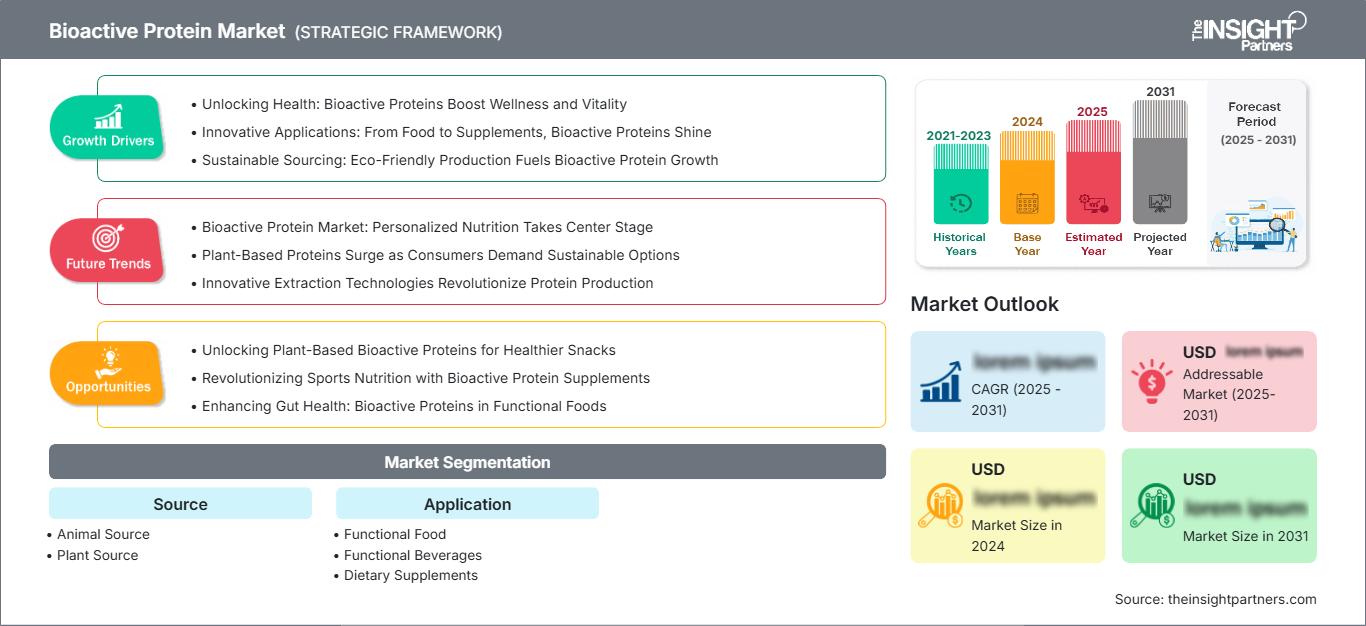
Bioactive Protein Market: Strategic Insights
Regional Insights
North America Bioactive Protein Market
North America represented approximately 31–34% of global demand in 2025 and is projected to grow at a 5.8–6.7% CAGR through 2034. Bioactive Protein Market share in the region is supported by established dietary-supplement consumption, sports nutrition, functional foods, and protein-fortified beverages. The U.S. dominates regional demand because of its large consumer base, developed ingredient industry, strong private-label supplement ecosystem, and extensive product innovation activity. Canada provides additional demand through functional nutrition and health-oriented food categories.
Clean-label ingredients, enhanced solubility, no taste profile, and physiologically oriented positioning have become important aspects for regional manufacturers. The market includes demand for collagen peptides, milk proteins, and soy, pea, marine, and other protein hydrolysates. Clinical data plays an increasingly significant role for brands looking for believable positioning. Structure/function and health claims regulation is one of the factors that affect formulations. Retailers keep launching high-protein products in categories such as snacks, beverages, protein powders, and meal replacement products. The U.S. market represents about 84-87% of North America demand and is estimated to achieve 5.9-6.8% CAGR.
U.S. Bioactive Protein Market
The U.S. represents approximately 84–87% of North American Bioactive Protein Market and is projected to grow at a 5.9–6.8% CAGR through 2034. The demand is driven by sports nutrition, healthy aging, functional drinks, protein-enriched snacks, dietary supplements, and rising awareness regarding protein consumption. Product formulators are more interested in proteins having high levels of density along with clear benefits and easy delivery systems.
Archer-Daniels-Midland Company, Cargill, Incorporated, GELITA AG, DSM-Firmenich AG, and Kerry Group plc possess relevant capabilities in the field of protein ingredients, collagen peptides, formulations, and functional nutrition. Applications include ready-to-drink drinks, powders, bars, yogurts, and specific supplements. Sensory properties are the priority for manufacturers, as the bitterness, solubility, viscosity, and smell are the factors that may prevent the incorporation of peptides into food products. Therefore, companies with formulation capabilities and application labs can help their customers overcome technical difficulties and keep nutritional position.
Europe Bioactive Protein Market
Europe represented approximately 26–29% of global Bioactive Protein Market in 2025 and is projected to grow at a 5.4–6.3% CAGR through 2034. The key markets in Europe include Germany, which is dominated by its food processing industry, supplements, ingredients manufacture, and scientific research facilities. The UK has a thriving sports nutrition and functional foods market, whereas France, Italy, and Spain have their contribution in terms of wellness foods, dietary supplements, and nutritional products.
In the German market, there is a focus on high quality protein ingredients and traceability. The UK benefits from its sports nutrition and high end supplements. There is an emphasis on functional foods, healthy aging, and premium nutrition in France and Italy, while in Spain there is an increasing use of protein fortified foods and supplements. European food processors are subject to strict regulations regarding food safety, novel ingredients, labeling, and health claims, which motivate suppliers to provide proper documentation and scientific backing.
APAC Bioactive Protein Market
APAC accounted for approximately 24–27% of global Bioactive Protein Market in 2025 and is projected to grow at a 7.0–8.0% CAGR through 2034. China leads regional consumption, followed by Japan, India, South Korea, and Australia. Growth is supported by expanding middle-class nutrition spending, sports participation, healthy-aging demand, functional beverages, and dietary supplementation.
China combines large-scale food manufacturing with increasing interest in functional nutrition, while Japan has mature healthy-aging and supplement categories. India offers substantial long-term potential through rising protein awareness and food fortification. South Korea supports premium wellness products, while Australia has strong sports nutrition adoption. Regional suppliers are increasingly evaluating plant, marine, dairy, and fermentation-derived protein sources.
Middle East & Africa Bioactive Protein Market
The Middle East and Africa demand is projected to grow at approximately 5.5–6.5% CAGR through 2034. Saudi Arabia and the UAE represent leading markets because of expanding wellness sectors, modern retail, sports nutrition, and dietary supplement consumption. South Africa has a comparatively developed nutrition market, while the rest of MEA demand remains linked to improving food-processing capacity and health awareness.
Protein fortification and convenient nutrition formats in the Bioactive Protein Market are gaining relevance as manufacturers address changing consumer lifestyles. Sports nutrition, functional beverages, infant and specialized nutrition, and animal feed provide application opportunities. Suppliers face distribution and cold-chain considerations in selected markets, making shelf stability and powdered formulations commercially attractive. Regional development will depend on regulatory harmonization, consumer education, ingredient availability, and partnerships with established food and supplement distributors.
Segmentation Analysis
Source
The Bioactive Protein Market scope across sources is shaped by nutritional composition, peptide profile, processing efficiency, sustainability, sensory characteristics, and consumer acceptance. Animal-derived proteins currently maintain the larger base, while plant-derived sources are expanding as manufacturers seek diversified and sustainable ingredients. The source segment is projected to grow at a 6.2–7.2% CAGR during 2026–2034.
- Animal Source: Animal-derived proteins include dairy, collagen, marine, egg, and other protein sources capable of producing peptides with targeted physiological functionality. Established processing infrastructure supports broad commercial availability and formulation flexibility.
- Plant Source: Plant-derived proteins from soy, peas, grains, pulses, seeds, and other crops are gaining attention because they support sustainable sourcing, vegan formulations, and diversification of peptide discovery for functional nutrition products.
Application
Application demand is diversifying as manufacturers move beyond basic protein enrichment toward products with targeted nutritional positioning. Functional food remains a major channel, while beverages benefit from convenient delivery. Dietary supplements provide concentrated formulations, and animal nutrition offers opportunities for specialized peptide functionality. The application segment is projected to grow at a 6.4–7.4% CAGR during 2026–2034.
- Functional Food: Functional foods incorporate bioactive proteins into bars, snacks, dairy products, bakery products, cereals, and specialized foods where nutritional enrichment must coexist with acceptable taste, texture, stability, and processing performance.
- Functional Beverages: Functional beverages require highly soluble proteins and peptides with controlled viscosity, neutral sensory characteristics, and stability. Ready-to-drink formats provide convenient delivery for sports, wellness, healthy aging, and daily nutrition.
- Dietary Supplements: Dietary supplements enable concentrated delivery of targeted peptides through powders, capsules, tablets, and sachets. Collagen, marine, dairy, and plant-derived ingredients are used across sports, beauty, joint, and metabolic-health positioning.
- Animal Nutrition: Animal nutrition applications use protein hydrolysates and bioactive peptides to support digestion, immunity, gut health, growth performance, and feed efficiency, creating opportunities across livestock, aquaculture, companion animals, and specialty feeds.
Opportunity Snapshot
| Application | Revenue Contribution | Trend Tag | Adoption Stage |
|---|---|---|---|
| Functional Food | High | Protein Fortification | Mature |
| Functional Beverages | Medium | RTD Nutrition | Scaling |
| Dietary Supplements | High | Targeted Wellness | Mature |
| Animal Nutrition | Medium | Gut Health | Scaling |
Bioactive Protein Market Growth Drivers and Impact Analysis
Rising Consumer Demand for Protein With Targeted Health Benefits
Consumers increasingly view protein as a component of preventive nutrition rather than only a macronutrient for sports performance. This shift is expanding demand for ingredients positioned around muscle maintenance, healthy aging, skin health, joint support, metabolic wellness, and immune function. Food manufacturers are responding by incorporating protein and peptide ingredients into everyday products rather than limiting them to specialized supplements. This broadens the addressable customer base and encourages suppliers to develop proteins compatible with beverages, snacks, dairy products, and convenient nutrition formats. Scientific research identifying antioxidant, antihypertensive, antimicrobial, and immunomodulatory properties further supports product development, although clinical substantiation remains essential. Suppliers capable of translating biological functionality into stable, palatable, and commercially scalable ingredients can capture greater value from the shift toward benefit-oriented nutrition.
Expansion of Protein Fortification Across Convenient Food Formats
Protein fortification is expanding across snacks, beverages, dairy alternatives, bakery products, meal replacements, and ready-to-consume nutrition. Manufacturers increasingly need ingredients that deliver meaningful protein content without creating undesirable viscosity, bitterness, sedimentation, or texture changes. This requirement is increasing demand for specialized concentrates, isolates, hydrolysates, and peptide systems with application-specific functionality. Ingredient suppliers can strengthen customer relationships by providing formulation support rather than selling protein commodities alone. The trend is particularly relevant to functional beverages, where solubility and sensory performance determine consumer acceptance. It also creates opportunities for blended protein systems that combine complementary amino-acid profiles and functional characteristics. As food companies seek shorter development cycles, suppliers with pilot facilities and technical support can become strategic formulation partners.
Growing Use of Protein Hydrolysates in Specialized Nutrition
Protein hydrolysis enables manufacturers to modify molecular size, solubility, digestibility, and peptide composition, creating ingredients suited to specialized nutritional applications. Controlled enzymatic processing can generate peptide fractions with specific functional characteristics while improving formulation flexibility. Applications include sports nutrition, healthy aging, medical nutrition, infant nutrition, and animal feed. However, hydrolysis can introduce bitterness and affect product economics, making enzyme selection, degree of hydrolysis, purification, and sensory masking important technical considerations. Advances in analytical methods are helping manufacturers characterize peptide profiles more precisely and link composition with biological activity. This creates opportunities for suppliers to develop differentiated ingredients supported by reproducible processing and evidence. Commercial success will depend on balancing biological functionality with taste, stability, cost, and regulatory requirements.
Bioactive Protein Market Future Trends
AI-Assisted Discovery of Functional Peptide Sequences
Bioactive Protein Market trends are increasingly influenced by computational approaches that accelerate the identification of potentially functional peptide sequences. Machine learning, molecular docking, peptidomics, and sequence databases can help researchers screen large numbers of protein fragments before laboratory validation. These methods may reduce discovery time and improve understanding of structure-function relationships involving antioxidant, antimicrobial, antihypertensive, or metabolic activities. The next development stage will combine computational predictions with enzymatic hydrolysis, purification, cell-based testing, animal studies, and controlled human trials. Greater integration of digital tools could also help manufacturers select raw materials according to peptide yield and functional potential. However, computational predictions will not replace clinical evidence, and commercial development will continue to require robust safety, bioavailability, stability, and regulatory substantiation before health-oriented claims can be broadly adopted.
Shift Toward Sustainable and Diversified Protein Sources
Protein innovation is increasingly incorporating pulses, grains, seeds, algae, marine resources, fermentation-derived proteins, and other alternative sources. Diversification reduces dependence on individual raw materials while creating new peptide sequences for functional ingredient development. Plant and algal proteins are particularly relevant because they can support sustainability-oriented formulations and address consumers seeking alternatives to conventional animal proteins. Research published during 2025 highlighted plant, algal, and unconventional protein sources as promising areas for bioactive peptide discovery. Commercial development will depend on extraction efficiency, flavor management, allergen considerations, digestibility, regulatory acceptance, and consistent supply. Suppliers that combine sustainable sourcing with advanced hydrolysis and purification can create differentiated ingredients. Over time, blended and hybrid protein systems are likely to expand as formulators balance nutrition, functionality, cost, and sensory performance.
Bioactive Protein Market Opportunities
Development of Clinically Substantiated Targeted Nutrition Ingredients
Bioactive Protein Market Forecasts point toward opportunities for suppliers that develop ingredients around specific physiological outcomes rather than broad protein claims. Targeted products can address muscle maintenance, joint health, skin health, healthy aging, metabolic support, or recovery, provided sufficient scientific evidence is generated. Investment should prioritize standardized peptide compositions, controlled manufacturing, bioavailability testing, and well-designed human studies. Ingredient suppliers can then license branded technologies to food, beverage, and supplement companies seeking differentiation. Clinical substantiation can improve customer confidence while supporting premium positioning and stronger regulatory documentation. The opportunity is particularly attractive for collagen peptides and specialized hydrolysates because these ingredients can be incorporated into multiple formats. Partnerships with universities, clinical research organizations, and consumer-health brands can accelerate evidence generation and commercialization.
Expansion of Plant and Marine Peptide Platforms
Plant and marine proteins provide an opportunity to expand the raw-material base for peptide innovation while responding to sustainability and dietary diversification requirements. Soy, pea, pulses, grains, algae, fish, and marine by-products can provide protein substrates for enzymatic hydrolysis and peptide discovery. Investment priorities include efficient extraction, purification, flavor management, allergen control, and consistent peptide profiles. Marine by-products are particularly relevant because valorization can convert underutilized biomass into higher-value nutritional ingredients. Plant platforms can support vegan and flexitarian formulations while offering access to peptide sequences not widely available from conventional sources. Suppliers that establish scalable processing and reliable sourcing can serve functional-food, beverage, supplement, and animal-nutrition manufacturers. Partnerships with processors can improve raw-material utilization and strengthen supply resilience.
Recent Developments
- October 2025: Asterix Foods emerged from stealth with US$4.2 million in seed funding, led by CPT Capital with participation from ReGen Ventures, SOSV, Grok Ventures, and the Israeli Innovation Authority. The company is developing a plant-cell-based platform for producing high-value, animal-free bioactive proteins. Its modular manufacturing approach is designed to reduce facility capital expenditure by more than 95% versus conventional precision-fermentation facilities, potentially improving scalability and cost economics.
- June 2026: Nestlé and Helaina entered a multi-year strategic innovation collaboration to investigate new bioactive proteins and their role in early-life development. The partnership combines Nestlé's infant nutrition and product-development expertise with Helaina's biotechnology platform for human-equivalent proteins. The initiative reflects increasing industry focus on incorporating bioactive proteins into infant nutrition while establishing scientific evidence, scalability, and functional benefits for next-generation nutritional products.
Frequently Asked Questions

- Comprehensive Market Sizing and Forecast Analysis
- Detailed Segmentation Analysis
- In-Depth Market Dynamics Assessment
- Regional and Country-Level Insights
- Competitive Landscape and Company Benchmarking
- Strategic Business Intelligence
Recent Reports
Testimonials

The Insight Partners provided valuable market intelligence that supported our global go-to-market strategy. Their team was professional, responsive, and attentive to our feedback, providing thoughtful analysis and helpful methodological clarifications throughout the project.
Junmo Kim Chief Financial Officer (CFO), Enertech Co., Ltd.
The Insight Partners' SCADA System Market report is comprehensive, with valuable insights on current trends and future forecasts. The team was highly professional, responsive, and supportive throughout. We are very satisfied and highly recommend their services.
RAN KEDEM Partner, Reali Technologies LTDs
I requested a report on a very specific software market and the team produced the report in a few days. The information was very relevant and well presented. I then requested some changes and additions to the report. The team was again very responsive and I got the final report in less than a week.
JEAN-HERVE JENN Chairman, Future Analytica
We worked with The Insight Partners for an important market study and forecast. They gave us clear insights into opportunities and risks, which helped shape our plans. Their research was easy to use and based on solid data. It helped us make smart, confident decisions. We highly recommend them.
PIYUSH NAGPAL Sr. Vice President, High Beam Global
The Insight Partners delivered insightful, well-structured market research with strong domain expertise. Their team was professional and responsive throughout. The user-friendly website made accessing industry reports seamless. We highly recommend them for reliable, high-quality research services
YUKIHIKO ADACHI CEO, Deep Blue, LLC.
This is the first time I have purchased a market report from The Insight Partners.While I was unsure at first, I visited their web site and felt more comfortable to take the risk and purchase a market report.I am completely satisfied with the quality of the report and customer service. I had several questions and comments with the initial report, but after a couple of dialogs over email with their analyst I believe I have a report that I can use as input to our strategic planning process.Thank you so much for taking the extra time and making this a positive experience.I will definitely recommend your service to others and you will be my first call when we need further market data.
JOHN SUZUKI President and Chief Executive Officer, Board Director, BK Technologies
I wish to appreciate your support and the professionalism you displayed in the course of attending to my request for information regarding to infectious disease IVD market in Nigeria. I appreciate your patience, your guidance, and the fact that you were willing to offer a discount, which eventually made it possible for us to close a deal. I look forward to engaging The Insight Partners in the future, all thanks to the impression you have created in me as a result of this first encounter.
DR CHIJIOKE ONYIA MANAGING DIRECTOR, PineCrest Healthcare Ltd.Reason to Buy
- Informed Decision-Making
- Understanding Market Dynamics
- Competitive Analysis
- Identifying Emerging Markets
- Customer Insights
- Market Forecasts
- Risk Mitigation
- Boosting Operational Efficiency
- Strategic Planning
- Investment Justification
- Tracking Industry Innovations
- Aligning with Regulatory Trends





 Get Free Sample for