
Brain PET-MRI Imaging Systems Market Size, Demand & Growth by 2034
Coverage: By Phase (Clinical, Pre-clinical); Product (Traditional PET-MRI systems, Helium-free PET-MRI systems); End User (Hospitals, Diagnostic Imaging Centers, Others), and Geography (North America, Europe, Asia Pacific, and South and Central America)
- Status : Data Released
- Report Code : TIPRE00018786
- Category : Life Sciences
- No. of Pages : 150
- Available Report Formats :


- Last update date : August 05, 2026


2025 Market Size
US$ 397.98 Mn
Base year value
2034 Forecast
US$ 537.62 Mn
Projected by 2034
CAGR 2026-2034
3.4 %
Growth rate
Addressable Market
US$ 4,249.36 Mn
(2026-2034)
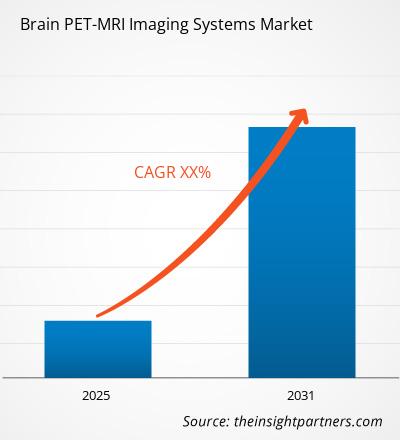
The global Brain PET-MRI Imaging Systems market was valued at US$ 397.98 million in 2025 and is expected to reach US$ 537.62 million by 2034; it is estimated to record a CAGR of 3.4% during 2026-2034.
Brain PET-MRI Imaging Systems Market Assessment and Insights
- North America held a 38–40% share in 2025 and is growing at a CAGR range of 3.4–3.8% during 2026–2034, supported by tertiary hospitals, radiopharmaceutical access, neurodegenerative disease programs, and hybrid imaging research hubs.
- US represented 78–82% of North America in 2025 and is growing at a CAGR range of 3.5–3.9% during 2026–2034, helped by amyloid PET use and advanced MRI capacity.
- Europe accounted for a 27–29% share in 2025 and is growing at a CAGR range of 3.2–3.6% during 2026–2034, led by Germany, the UK, France, Italy, and Spain.
- Asia Pacific held a 22–24% share in 2025 and is growing at a CAGR range of 4.4–4.8% during 2026–2034, with China, Japan, South Korea, India, and Australia expanding advanced neuroimaging capacity.
- Largest Segment Clinical phase held a market share range of 69–72% in 2025, with a CAGR range of 3.4–3.8% during 2026–2034, as hospitals prioritize validated diagnostic use.
- High Growth Segment Helium-free PET-MRI systems held a market share range of 18–21% in 2025, with a CAGR range of 5.4–5.8% during 2026–2034, due to lower cryogen dependence.
- Key companies analyzed in detail: Siemens Healthineers AG, Koninklijke Philips N.V., GE HealthCare Technologies Inc., Bruker Corporation, Mediso Medical Imaging Systems Ltd., MR Solutions Ltd., Cubresa Inc., Aspect Imaging Ltd., HYPMED GmbH, United Imaging Healthcare Co., Ltd.
Source: The Insight Partners' analysis based on proprietary research, government publications, company annual reports, investor presentations, industry databases, and expert interviews.
Development in technology has moved the Brain PET-MRI Imaging Systems Market from the large-scale whole body system to brain-specific insert systems and pre-clinical 7T imaging systems. The technological advances have contributed towards greater reliability of scanning through advancements in detection methods, attenuation correction, and movement management. In addition, developments in cryogen-free magnet technologies are addressing challenges with site readiness requirements. The production dynamics of the market include a highly specialized product, low volume of units produced, long procurement cycle, and reliance on the supply chain of magnets, detectors, services, and radiotracers.
Future opportunities would emerge from the demands of neurological centers in Asia Pacific region, academic hospitals in the Middle East region and Europe dementia networks that require integrated PET and MRI workflow systems. The regulatory support for the application of molecular imaging in the diagnostics and monitoring of Alzheimer’s disease would provide impetus to the adoption in the clinical setting, whereas research funding would continue to be a major support in the translational imaging laboratories.
Brain PET-MRI Imaging Systems Market Report Scope
| Report Attribute | Details |
|---|---|
| Market size in 2025 | US$ 397.98 Million |
| Market Size by 2034 | US$ 537.62 Million |
| Global CAGR (2026 - 2034) | 3.4% |
| Historical Data | 2021-2024 |
| Forecast period | 2026-2034 |
Brain PET-MRI Imaging Systems Market Analysis
The growth of the Brain PET-MRI Imaging Systems Market is driven by the increasing prevalence of neurological diseases, affecting more than 3 billion people worldwide in 2021, as per GBD estimates associated with the WHO. Hybrid PET-MRI allows simultaneous acquisition of metabolic and anatomical information without any issues related to alignment, ensuring one-stop evaluation for diseases like dementia, epilepsy, tumors, and treatments.
Supply will continue to be concentrated due to the requirement for integration of PET detectors, MRI compatibility, shielded knowledge, and installation experts. The supply chain consists of original equipment manufacturers, radiotracers suppliers, radiology departments, neurologists, nuclear medicine doctors, research institutions, software suppliers, and service engineers. As knowledge about reimbursement and results improves, decision makers are increasingly focused on scan efficiency, research relevance, helium consumption, and amyloid/ FDG brain PET protocols.
Competition in this industry environment features big imaging vendors alongside niche players. Siemens Healthineers AG, Koninklijke Philips N.V. and GE HealthCare Technologies Inc. engage in competition based on MRI installed base, enterprise software solutions, services portfolio and comprehensive imaging portfolio, whereas Bruker Corporation, Mediso Medical Imaging Systems Ltd., MR Solutions Ltd., Cubresa Inc., Aspect Imaging Ltd., HYPMED GmbH, and United Imaging Healthcare Co., Ltd. focus on pre-clinical systems, inserts, compact systems and research-driven applications.
The Brain PET-MRI Imaging Systems Market report illustrates that strategic positioning has been moving towards simplicity in operation and scientifically validated neurological pathways. The deal between Cubresa and Siemens Healthineers and Mediso’s cryogen-free technology advancements represent growing interest in retrofit capabilities and available research platforms. The capital is expected to move in favor of systems capable of serving dementia, neuro-oncology and drug development translational medicine research within the same suite.
● REPORT CUSTOMIZATION
Tailor This Report To Align With Your Specific Business Requirements
This report can be customized to align precisely with your business objectives, scope, and target markets. Customization options include tailored segmentation, geography, competitive analysis, and strategic insights to support informed decision-making.
Customize This Report →WHAT YOU CAN ADJUST
- ● Segmentations
- ● Geography
- ● Competitive Analysis
- ● Language Preferences
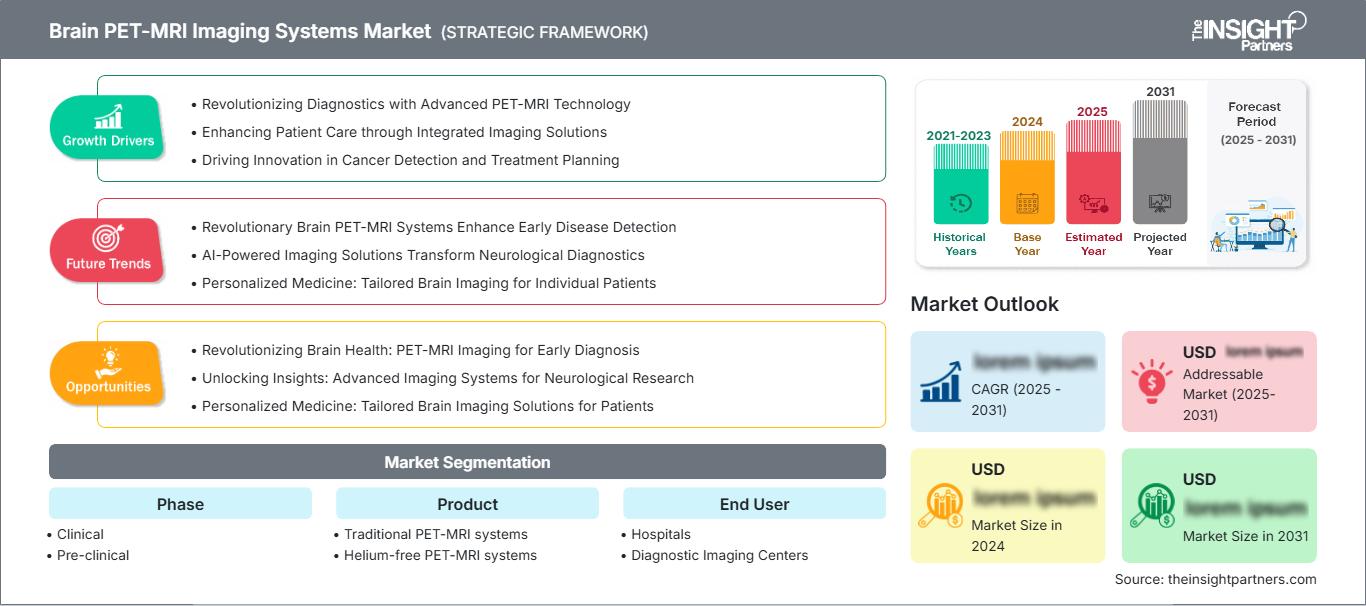
Brain PET-MRI Imaging Systems Market: Strategic Insights
Regional Insights
North America Brain PET-MRI Imaging Systems Market
North America constituted 38-40% Brain PET-MRI Imaging Systems Market share in 2025 and is projected to grow at a CAGR of 3.4-3.8% during 2026-2034. The region receives high-field MRIs, modern nuclear medicine centers, and academic hospitals offering PET-MRIs for dementia, epilepsy, neuro-oncology, and treatment response programs. There are updated guidelines for Alzheimer’s imaging, and increasing amyloid PET use facilitates the referral process.
There is limited procurement of Brain PET-MRI Systems in tertiary hospitals and research universities due to shielding, radiotracer procurement, technologist skills, and multidisciplinary reports. Anti-amyloid treatment pathway is another factor impacting the Brain PET-MRI Imaging Systems Market because there can be safety screening via MRI and PET biomarker verification in one session. RSNA highlighted that PET-MRI was significant in the management of Alzheimer’s because it includes both brain MRIs and amyloid PET scans in one setting.
U.S. Brain PET-MRI Imaging Systems Market
The U.S. accounted for 78%-82% of North America in 2025, while its growth rate is expected to be in the CAGR range of 3.5-3.9% from 2026-2034. The highest demand exists in academic medical centers, neuroscience institutes, VA research networks, and cancer centers able to perform clinical imaging along with funded researches. Presence of companies includes such organizations as Siemens Healthineers AG, GE HealthCare Technologies Inc., Cubresa Inc., and Mediso Medical Imaging Systems Ltd.
Applications involve assessing Alzheimer's disease, brain tumors, seizures localization, and pre-surgical planning. ASNR focused on MRI protocols in monitoring amyloid imaging abnormalities due to anti-amyloid treatment, thus proving the importance of the MRI capabilities for the treatment of dementia. Usage of PETs will also benefit from new amyloid and tau PET appropriate-use guidelines recommending conducting of imaging in case of direct impact on treatment.
Europe Brain PET-MRI Imaging Systems Market
Europe accounted for 27-29% market share in 2025 and expected to record a CAGR range of 3.2-3.6% during the forecast period 2026-2034, led by Germany. Adoption in the UK is being facilitated by university hospitals and dementia imaging research and NHS capital constraints will extend procurement periods due to advanced clinical research capabilities.
Germany enjoys nuclear medicine depth, engineering capability, and density of university hospitals. PET-MRI scanners are deployed in neurodegeneration, neuro-oncology, and translational studies whereas joint initiatives of EANM, SNMMI, and ISMRM are enabling standard hybrid imaging practices. Such structures help vendors to develop clinical protocols and training programs for European research network sites.
Public hospitals, oncology centers, and academic nuclear medicine departments in France, Italy, and Spain are providing support to adoption in their markets, albeit with differing budgets by regions. France has its focus on centralized university hospital programs, Italy has excellent nuclear medicine capabilities, and Spain is driven by research-led adoption. The overall contribution of these countries enables stable replacement and selective purchases of smaller, preclinical, and helium-friendly PET-MRI platforms.
APAC Brain PET-MRI Imaging Systems Market
APAC accounted for a 22–24% share in 2025 and is expected to grow at a CAGR range of 4.4–4.8% during 2026–2034, the fastest regional pace. China leads regional value due to hospital construction, domestic imaging manufacturing, and expanding nuclear medicine capacity. Japan and South Korea add mature neuroscience centers, while India and Australia support selective adoption.
Policy drivers include national brain science initiatives, geriatric care planning, and investment in tertiary diagnostic infrastructure. Industrial momentum is supported by United Imaging Healthcare Co., Ltd., regional component suppliers, and hospital demand for advanced MRI capacity. Adoption remains concentrated in metropolitan centers because PET tracer availability and specialist staffing determine practical system utilization.
Middle East & Africa Brain PET-MRI Imaging Systems Market
The Middle East & Africa market is projected to grow at a CAGR range of 3.8–4.2% during 2026–2034, with Saudi Arabia leading regional adoption. Saudi Arabia and the UAE are investing in tertiary hospitals, oncology centers, and academic medical cities, while South Africa remains the most established sub-Saharan market for advanced nuclear medicine capacity.
Energy-linked fiscal resources support premium hospital infrastructure in Gulf countries, but utilization depends on radiotracer supply, trained nuclear medicine teams, and referral maturity. Rest of MEA adoption is limited to reference hospitals and private diagnostic groups. Vendors will prioritize service readiness, training, and modular deployment models over broad geographic coverage.
Segmentation Analysis
Phase
The Phase segment is expected to grow at a CAGR range of 3.5–3.9% during 2026–2034. Brain PET-MRI Imaging Systems Market scope across phase categories reflects two adoption tracks: clinical systems for patient diagnosis and pre-clinical platforms for neuroscience, pharmacology, and translational drug-development research. Clinical demand is larger because hospitals apply hybrid imaging to dementia, oncology, and epilepsy workflows, while pre-clinical demand grows through research grants.
- Clinical systems dominate demand because hospitals and imaging centers prioritize validated patient workflows, multi-disciplinary reporting, and integration with dementia, neuro-oncology, epilepsy, and therapy-monitoring pathways.
- Pre-clinical systems are strategically important for pharmaceutical research, animal brain imaging, tracer validation, and longitudinal disease-model studies where simultaneous molecular and anatomical data improve experimental consistency.
Product
The Product segment is expected to grow at a CAGR range of 4.0–4.4% during 2026–2034. Traditional PET-MRI systems retain relevance in large hospitals that need integrated hybrid imaging, while helium-free PET-MRI systems are gaining attention as facilities assess cryogen risk, site costs, and operational resilience. Brain-optimized inserts are also influencing product expectations by reducing the need for new full-room installations.
- Traditional PET-MRI systems remain preferred for comprehensive clinical imaging programs, especially in institutions that can support high utilization, specialist staffing, and multi-application workflows across neurology, oncology, and research.
- Helium-free PET-MRI systems are gaining strategic relevance because lower cryogen dependence supports predictable operating costs, easier site planning, and deployment in research centers with constrained infrastructure.
End User
The End User segment is expected to grow at a CAGR range of 3.6–4.0% during 2026–2034. Hospitals remain the primary purchasing group because they can combine neurology, oncology, nuclear medicine, and radiology capabilities. Diagnostic imaging centers adopt more selectively, generally where specialist referral networks, radiotracer access, and reimbursement pathways can support high asset utilization.
- Hospitals contribute the highest revenue because they manage complex neurological cases, conduct clinical trials, maintain radiology and nuclear medicine departments, and justify premium systems through multiple service lines.
- Diagnostic Imaging Centers adopt selectively in urban markets where referral density, PET tracer logistics, and advanced MRI demand support specialized outpatient neuroimaging and premium diagnostic services.
Opportunity Snapshot
| End User | Revenue Contribution | Trend Tag | Adoption Stage |
| Hospitals | High | Neuro Workflows | Mature |
| Diagnostic Imaging Centers | Medium | Outpatient PET | Scaling |
Brain PET-MRI Imaging Systems Market Growth Drivers and Impact Analysis
Rising Neurological Disease Burden and Earlier Diagnosis
Neurological conditions now represent a leading cause of disability worldwide, and WHO reported that more than one in three people were affected by such conditions in 2021. Brain PET-MRI Imaging Systems Market demand benefits from this burden because hybrid imaging can combine metabolic information from PET with the soft-tissue detail of MRI during a single session. The impact is strongest in Alzheimer’s disease, epilepsy, brain tumors, and complex cognitive decline cases where conventional imaging alone may not answer the clinical question. Earlier diagnosis also improves treatment selection and supports multidisciplinary care pathways, raising the value of precise imaging for tertiary hospitals.
Alzheimer’s Therapy Pathways and Biomarker Validation
Disease-modifying Alzheimer’s therapies are increasing the importance of biomarker-confirmed diagnosis and safety monitoring. Amyloid PET helps confirm pathology, while MRI is used to assess baseline risk and monitor amyloid-related imaging abnormalities. In this setting, PET-MRI can shorten the diagnostic pathway by combining two important steps into one appointment. The market impact is operational as well as clinical: fewer visits can improve patient throughput, reduce scheduling delays, and support more coordinated dementia care. Updated appropriate-use criteria for amyloid and tau PET also strengthen utilization when imaging results influence treatment eligibility or care planning.
Shift Toward Compact, Retrofit, and Cryogen-Free Platforms
Capital cost, room preparation, helium dependence, and installation complexity have limited PET-MRI diffusion. Newer approaches, including removable brain PET inserts and cryogen-free MRI platforms, address these barriers by improving fit with existing MRI suites and research environments. Cubresa’s BrainPET work with Siemens Healthineers and Mediso’s cryogen-free magnet technology transfer show how vendors are targeting infrastructure flexibility. The commercial impact is meaningful because smaller research centers and neuroscience institutes can evaluate PET-MRI without committing to a full replacement suite. This widens the potential customer base and supports more modular procurement decisions.
Brain PET-MRI Imaging Systems Market Future Trends
AI-Enabled Quantification and Protocol Standardization
Brain PET-MRI Imaging Systems Market trends will increasingly center on AI-supported reconstruction, quantitative PET metrics, automated MRI segmentation, and standardized dementia workflows. These tools can reduce reader variability, shorten acquisition time, and improve longitudinal comparison in therapy monitoring. The trend is forward-looking because multimodal datasets are complex and require reproducible interpretation across institutions. Vendors that integrate image reconstruction, motion correction, attenuation correction, and reporting templates into unified software will gain practical advantage. Standardization will also matter for clinical trials, where consistent imaging endpoints are necessary for multi-site evidence generation in neurodegenerative disease and neuro-oncology.
Theranostics-Aligned Neuroimaging and Translational Research
Future adoption will be shaped by the convergence of molecular imaging, radiopharmaceutical development, and precision care. Although oncology theranostics currently receives more commercial attention, neuroimaging laboratories are applying similar principles to tracer development, receptor mapping, and treatment-response studies. PET-MRI is well positioned for these workflows because it provides molecular signal and structural context in one acquisition. Over time, pre-clinical and clinical systems may become more connected, allowing discoveries in animal models to move faster into human studies. This creates demand for compatible software, harmonized protocols, and systems that support repeatable longitudinal imaging.
Brain PET-MRI Imaging Systems Market Opportunities
Retrofit Brain PET Inserts for MRI Installed Bases
Brain PET-MRI Imaging Systems Market Forecasts point to a practical opportunity in retrofitting installed MRI systems with dedicated brain PET inserts. This approach can reduce upfront capital barriers, shorten installation planning, and let imaging centers retain MRI-only operation when PET-MRI is not required. Vendors can target 3T and 7T academic MRI suites where neuroscience demand already exists but PET-MRI budgets are constrained. Commercial execution should focus on compatibility testing, regulatory pathways, service training, and workflow evidence. Hospitals will respond best to models that show incremental revenue, research productivity, and limited disruption to existing MRI schedules.
Asia Pacific Research Networks and Dementia Imaging Programs
Asia Pacific offers an investment opportunity for manufacturers that can pair premium systems with training, tracer partnerships, and evidence programs. China, Japan, South Korea, India, and Australia are expanding neuroscience research, geriatric care, and advanced diagnostic infrastructure, but utilization models vary sharply. A successful strategy will combine local clinical champions, regional service hubs, radiopharmacy coordination, and protocol packages for dementia, epilepsy, and neuro-oncology. Suppliers with scalable configurations, including pre-clinical systems and compact platforms, can build brand presence before broader clinical procurement accelerates. Partnerships with universities and public hospitals will be central to long-term adoption.
Recent Developments
- January 2026: Siemens Healthineers AG received U.S. FDA clearance for Biograph One, its second-generation PET/MR scanner, with digital PET, AI reconstruction, and workflow features intended to reduce whole-body PET/MR scan times to under 30 minutes and support oncology and neurological assessments, including Alzheimer’s-related imaging pathways.
- December 2025: Mediso Medical Imaging Systems Ltd. highlighted the first U.S. installation of its nanoScan 7T PET/MRI scanner at Northeastern University’s Center for Translational NeuroImaging, supporting structural, functional, and molecular pre-clinical neuroscience research through a single ultrahigh-field PET-MRI platform.
- February 2025: Cubresa Inc. signed a global Master Interface Agreement with Siemens Healthineers AG to support compatibility testing of the Cubresa BrainPET scanner in MAGNETOM MRI systems, initially focused on MAGNETOM Terra and Terra.X 7T systems for simultaneous brain PET/MR imaging.
Frequently Asked Questions

- Comprehensive Market Sizing and Forecast Analysis
- Detailed Segmentation Analysis
- In-Depth Market Dynamics Assessment
- Regional and Country-Level Insights
- Competitive Landscape and Company Benchmarking
- Strategic Business Intelligence
Recent Reports
Testimonials

The Insight Partners' SCADA System Market report is comprehensive, with valuable insights on current trends and future forecasts. The team was highly professional, responsive, and supportive throughout. We are very satisfied and highly recommend their services.
RAN KEDEM Partner, Reali Technologies LTDs
I requested a report on a very specific software market and the team produced the report in a few days. The information was very relevant and well presented. I then requested some changes and additions to the report. The team was again very responsive and I got the final report in less than a week.
JEAN-HERVE JENN Chairman, Future Analytica
We worked with The Insight Partners for an important market study and forecast. They gave us clear insights into opportunities and risks, which helped shape our plans. Their research was easy to use and based on solid data. It helped us make smart, confident decisions. We highly recommend them.
PIYUSH NAGPAL Sr. Vice President, High Beam Global
The Insight Partners delivered insightful, well-structured market research with strong domain expertise. Their team was professional and responsive throughout. The user-friendly website made accessing industry reports seamless. We highly recommend them for reliable, high-quality research services
YUKIHIKO ADACHI CEO, Deep Blue, LLC.
This is the first time I have purchased a market report from The Insight Partners.While I was unsure at first, I visited their web site and felt more comfortable to take the risk and purchase a market report.I am completely satisfied with the quality of the report and customer service. I had several questions and comments with the initial report, but after a couple of dialogs over email with their analyst I believe I have a report that I can use as input to our strategic planning process.Thank you so much for taking the extra time and making this a positive experience.I will definitely recommend your service to others and you will be my first call when we need further market data.
JOHN SUZUKI President and Chief Executive Officer, Board Director, BK Technologies
I wish to appreciate your support and the professionalism you displayed in the course of attending to my request for information regarding to infectious disease IVD market in Nigeria. I appreciate your patience, your guidance, and the fact that you were willing to offer a discount, which eventually made it possible for us to close a deal. I look forward to engaging The Insight Partners in the future, all thanks to the impression you have created in me as a result of this first encounter.
DR CHIJIOKE ONYIA MANAGING DIRECTOR, PineCrest Healthcare Ltd.Reason to Buy
- Informed Decision-Making
- Understanding Market Dynamics
- Competitive Analysis
- Identifying Emerging Markets
- Customer Insights
- Market Forecasts
- Risk Mitigation
- Boosting Operational Efficiency
- Strategic Planning
- Investment Justification
- Tracking Industry Innovations
- Aligning with Regulatory Trends





 Get Free Sample for