
Buccal Drug Delivery System Market Size, Share & Growth by 2034
Coverage: by : Formulation (Sublingual Films, Tablets, Sprays); End User (Hospitals, Clinics, Others), and Geography (North America, Europe, Asia Pacific, and South and Central America)
- Status : Data Released
- Report Code : TIPRE00011936
- Category : Life Sciences
- No. of Pages : 150
- Available Report Formats :


- Last update date : August 11, 2026


2025 Market Size
US$ 4.77 Bn
Base year value
2034 Forecast
US$ 6.53 Bn
Projected by 2034
CAGR 2026-2034
4.00 %
Growth rate
Addressable Market
US$ 52.50 Bn
(2026-2034)
The Buccal Drug Delivery System market is forecast to grow from US$ 4.77 Billion in 2025 to US$ 6.53 Billion by 2034, growing at a CAGR of 4.00% during the forecast period 2026–2034. The market demonstrates consistent demand for non-invasive modes of administration that enable improved patient compliance and oral mucosal absorption of medications without relying on traditional swallowing or injection treatments.
North America still holds the most developed market base, with the Buccal Drug Delivery System Market size driven by an estimated CAGR in the range of 3.7–4.3% during the forecast period 2026–2034. The factors driving growth include well-established specialty drug delivery routes, opioid use disorder infrastructure, and increasing adoption of patient-applied rescue drugs in neurology, pain management, and emergencies.
Buccal Drug Delivery System Market Assessment and Insights
- North America accounted for 38–42% Buccal Drug Delivery System Market share in 2025 and is expected to grow at a CAGR between 2026–2034 of 3.7–4.3%, led by FDA-approved film products, specialty distribution, and developed reimbursement pathways.
- US represented 84–88% of North America in 2025 and is projected to grow at a CAGR between 2026–2034 of 3.8–4.4%, driven by branded films and opioid treatment programs.
- Europe held 24–28% share in 2025 and should grow at a CAGR between 2026–2034 of 3.4–4.0%, with the UK, Germany, France, Italy, and Spain leading hospital and clinic adoption.
- Asia Pacific recorded 18–22% share in 2025 and is expected to grow at a CAGR between 2026–2034 of 4.6–5.2%, supported by Japan, China, India, South Korea, and Australia.
- Largest Segment: Sublingual films held 42–46% market share in 2025, with a CAGR range of 4.1–4.7% during 2026–2034 due to polymer stability and patient usability.
- High Growth Segment: Clinics held 36–40% market share in 2025, with a CAGR range of 4.4–5.0% during 2026–2034 as outpatient prescribing expands.
- Key companies analyzed in detail: Actavis Pharma, Inc.; Applied Pharma Research SA; Ardea Biosciences, Inc.; BioDelivery Sciences International, Inc.; Sumitomo Pharma America, Inc.; Endo Pharmaceuticals Inc.; Ethypharm S.A.S.; Aquestive Therapeutics, Inc.; Indivior PLC; IntelGenx Technologies Corp.; ZIM Laboratories Limited; LTS Lohmann Therapie-Systeme AG; Tharimmune, Inc.; Collegium Pharmaceutical, Inc.
Source: The Insight Partners' analysis based on proprietary research, government publications, company annual reports, investor presentations, industry databases, and expert interviews.
Formulation sciences have evolved from basic compression tablets to advanced techniques of thin film laminate formation, mucoadhesive polymers, permeation enhancers, and solvent casting process systems. The Buccal Drug Delivery System market will see advancements in dose homogeneity, pouching, stability study, and scale-up validation. Current production trends tend towards favoring companies combining drug-device use studies, pediatric-friendly devices, and controlled release delivery system technologies beyond mere traditional tableting capacity.
During the forecasted period, developing countries will contribute through specialty clinics, decentralization, and manufacturing partnerships. Favorable regulatory environment will encourage products that enhance the convenience of administration when rescue therapy or compliance is significant. Investments are expected to be made in film technology 505(b)(2) development, lifecycle extensions, and those treatment areas where fast absorption will allow replacement of injections or rectal administrations.
Buccal Drug Delivery System Market Report Scope
| Report Attribute | Details |
|---|---|
| Market size in 2025 | US$ 4.77 Billion |
| Market Size by 2034 | US$ 6.53 Billion |
| Global CAGR (2026 - 2034) | 4.00% |
| Historical Data | 2021-2024 |
| Forecast period | 2026-2034 |
Buccal Drug Delivery System Market Analysis
The demand side is centered around drugs that need fast onset, easy self-administration, and do not undergo first-pass effect. The drivers behind the Buccal Drug Delivery System Market include neurology rescue drug, chronic pain management, treatment of opioid-use disorder, and certain cardiovascular and hormonal applications. The supply chain comprises polymer providers, active pharmaceutical ingredients producers, contract development agencies, specialty pharma companies, and clinical prescriber groups.
The supply is technologically limited by the necessity to validate the ability to adhere, dissolve, mask taste and package properly. Producers have to find an optimal balance between the drug load and mucosal tolerance, which means that very high dose molecules are impossible. Hospitals have impact on formulary for the usage in acute and monitored cases, while clinics promote repeat prescriptions.
Competition features platform ownership, specialization of regulations, and therapeutic targeting. The Buccal Drug Delivery System Market analysis reveals that Aquestive Therapeutics, Indivior PLC, Endo Pharmaceuticals Inc., BioDelivery Sciences International, and Collegium Pharmaceutical engage in competition with film technology approval/legacy, whereas IntelGenx Technologies and ZIM Laboratories focus on development and manufacturing skills.
Positioning is shifting from one product commercialization to portfolios based on proprietary film platforms. Examples of Applied Pharma Research SA, Ethypharm S.A.S., LTS Lohmann Therapie-Systeme AG, and Tharimmune, Inc. demonstrate how firms develop formulations on proprietary formulation platforms for specific clinical requirements. Investment opportunities are best when there are active substances that can be reformulated at lower clinical and usability risks.
● REPORT CUSTOMIZATION
Tailor This Report To Align With Your Specific Business Requirements
This report can be customized to align precisely with your business objectives, scope, and target markets. Customization options include tailored segmentation, geography, competitive analysis, and strategic insights to support informed decision-making.
Customize This Report →WHAT YOU CAN ADJUST
- ● Segmentations
- ● Geography
- ● Competitive Analysis
- ● Language Preferences
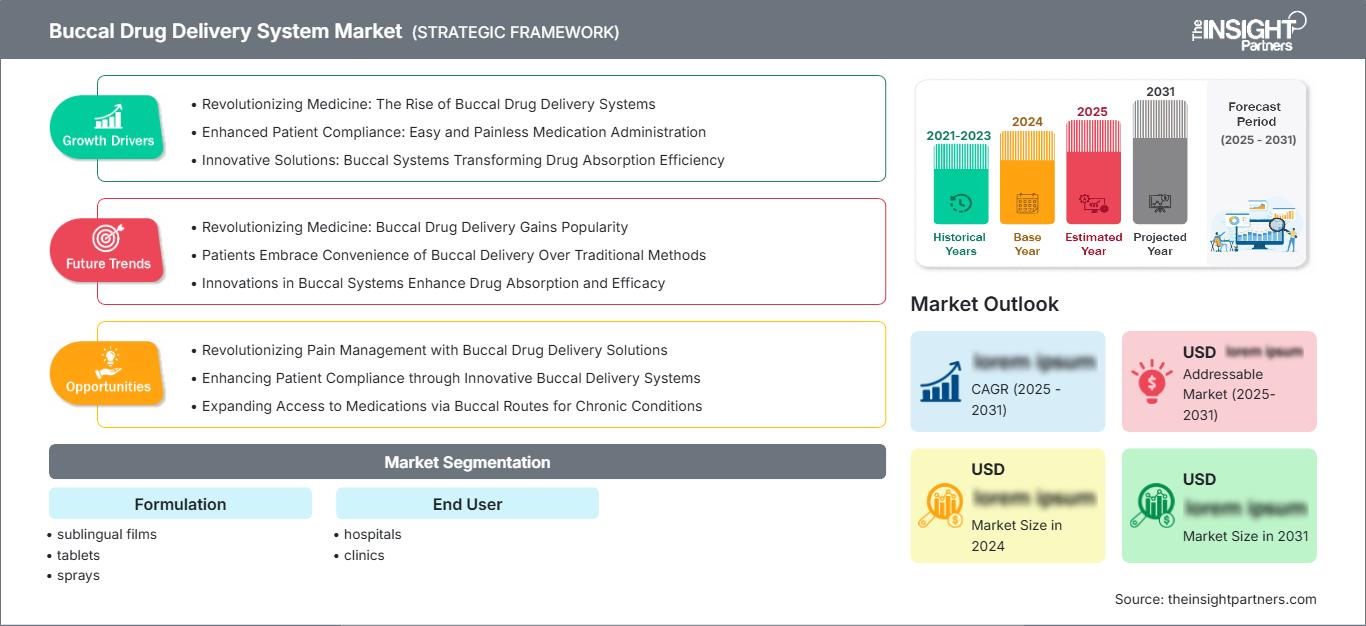
Buccal Drug Delivery System Market: Strategic Insights
Regional Insights
North America Buccal Drug Delivery System Market
The North America region has occupied the market share between 38-42% in 2025, and it is estimated to grow with the CAGR of 3.7-4.3% in 2026-2034. It enjoys strong market share on account of familiarity of FDA with transmucosal drugs, active prescriptions for opioid use disorder therapy, and robust acceptance of rescue formulations via film in pediatric neurology and chronic disease conditions.
There is an existing commercial base in terms of specialty pharmacies, payer prior authorization, and provider education. Some companies like Aquestive Therapeutics, Indivior PLC, Endo Pharmaceuticals Inc., and Collegium Pharmaceutical have products or portfolios in this region. Higher demand exists in regions where ease of administration helps caregivers and ensures sustained treatment without any invasive routes of delivery.
U.S. Buccal Drug Delivery System Market
The US makes up 84–88% of North America in 2025, and it is anticipated to grow at a CAGR of 3.8–4.4% between 2026 and 2034. The application areas have been found to include seizure rescue therapy, treating addiction to opioids, chronic pain management, and preparedness for emergencies where film-based doses provide advantages such as quick use, convenience, and confidentiality over injectable or rectal doses.
There is an exceptionally high level of company activity, which includes companies such as Aquestive Therapeutics, Indivior PLC, Endo Pharmaceuticals Inc., BioDelivery Sciences International, Collegium Pharmaceutical, and Tharimmune, Inc., which either have an existing product or a pipeline product. There is more usage of this technology in clinics because of the easy-to-use dose forms.
Europe Buccal Drug Delivery System Market
In Europe, the market share is estimated to be around 24–28% in 2025, and it is expected to grow at a CAGR of 3.4–4.0% from 2026 to 2034. In Europe, the UK ranks top due to specialist prescribing guidelines, hospital pharmacy assessment, and analysis of non-invasive rescue drugs in neurological, pain management, and palliative care applications.
Germany has a regular trend due to proper reimbursement policies, efficient generic drug development capability, and clinicians' preference for dosage forms with stable and reliable data. In France, Italy, and Spain, the growth will occur because of hospital purchases, specialty clinics, and substitution of invasive treatment by buccal and sublingual formulations.
APAC Buccal Drug Delivery System Market
APAC will have 18-22% market share in 2025 and is predicted to witness growth at CAGR of 4.6-5.2% from 2026 to 2034. The region presents huge potential owing to large-scale manufacturing of pharmaceuticals, increased use of specialty medicine, and policies encouraging innovations in dosage form which will increase accessibility outside tertiary hospitals.
Japan, South Korea, India, and Australia will provide incremental demand through aging population, neurology medicines, local formulation, and managing medicines at outpatient level. APAC is positioned to be the demand as well as supplier of globally approved buccal medicines due to benefits of industrial production and contract manufacturing.
Middle East & Africa Buccal Drug Delivery System Market
Middle East & Africa is projected to expand at a CAGR of 3.2–3.8% in 2026-2034, with Saudi Arabia being the dominant nation. Modernization of hospitals, investments in emergency care services, and chronic disease management initiatives drive steady adoption, especially in tertiary hospitals and private clinics catering to insured patients.
UAE demonstrates adoption with specialty care and imported branded drugs, whereas South Africa gives the biggest Sub-Saharan market for wider clinical application. Adoption in the rest of MEA remains selective due to reimbursement availability, cold chain focus, and clinician preferences for conventional oral and injectable routes of treatment.
Segmentation Analysis
Formulation
Formulation is estimated to grow at a CAGR of 4.0–4.6% during 2026–2034 as product differentiation shifts toward films, tablets, and sprays with improved dissolution, adhesion, and taste profiles. The Buccal Drug Delivery System Market scope is broadening as developers use mucosal delivery to reposition known molecules, extend lifecycles, and reduce administration complexity in outpatient settings.
- Sublingual films dominate due to dose portability, rapid dissolution, and suitability for rescue or maintenance therapies where caregivers and patients need discreet, non-invasive administration.
- Tablets remain strategically relevant in cost-sensitive markets, offering manufacturing familiarity, scalable compression, and physician confidence for molecules that do not require advanced film engineering.
- Sprays address rapid administration needs and can support emergency or episodic use, although dose precision, device acceptance, and mucosal retention remain important barriers.
End User
End User is projected to grow at a CAGR of 3.8–4.4% during 2026–2034 as treatment delivery shifts between monitored institutional care and repeat outpatient prescribing. Hospitals remain important for initiation and formulary validation, while clinics increasingly shape demand for chronic, rescue, and adherence-sensitive therapies.
- Hospitals generate high-value demand through emergency care, neurology departments, pain management units, and formularies that evaluate safety, administration reliability, and patient handling.
- Clinics are gaining strategic importance as outpatient prescribing expands, particularly for opioid-use-disorder treatment, pediatric seizure rescue planning, and follow-up care involving caregivers.
Opportunity Snapshot
| Segment Name | Revenue Contribution | Trend Tag | Adoption Stage |
| Hospitals | High | Rescue Care | Mature |
| Clinics | Medium | Outpatient Films | Scaling |
Buccal Drug Delivery System Market Growth Drivers and Impact Analysis
Rising need for non-invasive rescue and maintenance therapies
Non-invasive delivery is becoming clinically important where speed, dignity, and ease of administration influence treatment outcomes. Buccal formats reduce dependence on injections, swallowing ability, or device handling, which is valuable in seizure clusters, pain episodes, opioid dependence, and emergency preparedness. The market impact is strongest in indications where caregivers administer therapy outside hospitals, because usability directly affects time to dosing. Pediatric and geriatric populations further strengthen this driver since conventional routes are often difficult during acute episodes. As payers and clinicians evaluate real-world administration success, products with clear handling advantages can gain formulary preference and improve prescription persistence.
Reformulation pathways lowering development risk
Many buccal products use established active ingredients reformulated into films, tablets, or sprays, reducing scientific uncertainty compared with entirely new molecular entities. This development logic supports 505(b)(2)-style strategies in the U.S. and similar hybrid pathways elsewhere, where sponsors can leverage existing safety knowledge while proving bioavailability, usability, and manufacturing consistency. The practical impact is faster pipeline expansion among specialty companies with platform technologies. It also encourages partnerships between intellectual property owners, contract development manufacturers, and commercial pharma firms seeking lifecycle extension. Lower development risk does not remove regulatory burden, but it can improve investment selectivity.
Growing outpatient treatment and specialty clinic infrastructure
Specialty clinics are becoming central to chronic disease monitoring, addiction treatment, neurology follow-up, and pain management. This care shift favors dosage forms that patients can store, carry, and administer without clinical supervision. Buccal products align with outpatient models because they combine portability with predictable administration instructions, reducing visit dependency for stable patients. The impact is visible in repeat-use therapies where refills, adherence counseling, and caregiver training occur outside hospitals. As integrated care networks expand digital follow-up and pharmacy coordination, clinic-driven prescribing can widen access while keeping complex cases connected to specialist oversight.
Buccal Drug Delivery System Market Future Trends
AI-enabled formulation design and printable oral films
Buccal Drug Delivery System Market trends are likely to include stronger use of predictive modeling, artificial intelligence, and printable manufacturing to optimize polymer selection, dissolution timing, taste masking, and dose uniformity. These tools can shorten early formulation cycles by screening excipients and simulating mucosal performance before scale-up. Printable oral films may also support flexible dose strengths for pediatric or geriatric use, where conventional strengths are often imperfect. Commercial adoption will depend on regulatory comfort with process controls, batch reproducibility, and validated analytical methods. Companies that invest early in digital formulation workflows can protect margins with faster development and fewer failed iterations.
Expansion into biologics-adjacent and emergency preparedness applications
Future development will move beyond small-molecule convenience products toward biologics-adjacent candidates, antidotes, and preparedness medicines where rapid field administration matters. While true biologic delivery through buccal mucosa remains technically difficult, permeability enhancers and protective matrices may expand feasible molecule classes. Governments and healthcare systems are also more attentive to countermeasure stockpiles for opioid exposure, chemical incidents, and mass-care emergencies. This creates a niche but strategically important demand pool. Success will require stability at room temperature, intuitive administration, and evidence that mucosal delivery performs reliably under stressful real-world conditions rather than controlled clinical environments alone.
Buccal Drug Delivery System Market Opportunities
Specialty pipeline licensing in neurology and pain care
Licensing opportunities are strongest where known actives can be converted into buccal films for episodic symptoms, caregiver-administered rescue use, or improved adherence. Buccal Drug Delivery System Market Forecasts indicate that investors should prioritize candidates with measurable patient-handling advantages, clear comparator weaknesses, and manageable dose-loading requirements. Neurology and pain care remain attractive because administration speed and route acceptability can influence outcomes. Developers can create value through co-development agreements, regional rights, and technology-transfer partnerships with companies experienced in solvent casting, pouching, and taste masking. The best opportunities will combine clinical relevance with manufacturability rather than novelty alone.
Regional manufacturing partnerships for APAC access
APAC presents an actionable opportunity for companies seeking cost-efficient manufacturing and broader market access. Local partnerships in India, China, Japan, and South Korea can reduce production cost, improve regulatory navigation, and support country-specific packaging or strength requirements. This is particularly relevant for tablets and films where scale, quality systems, and stability testing determine competitiveness. Strategic partners can also support clinical bridging, local distribution, and hospital tender participation. Companies entering APAC should avoid purely export-led models and instead align with experienced formulation manufacturers that understand regional pharmacopoeial expectations and reimbursement pathways.
Recent Developments
- November 2025: Tharimmune, Inc. received positive FDA feedback on its TH104 nalmefene buccal film simulation modeling plan for prophylaxis against respiratory depression caused by fentanyl and ultrapotent opioids. The company said the feedback supports its planned 505(b)(2) NDA strategy and advances chemistry, manufacturing, and controls planning for commercial readiness.
- May 2025: Indivior PLC updated the U.S. prescribing information for SUBOXONE sublingual film, including dosage and administration revisions. The label continues to specify sublingual or buccal administration as a single daily dose and highlights prescribing considerations for opioid overdose reversal agents in treated patients.
- December 2024: Aquestive Therapeutics, Inc. received U.S. FDA orphan drug exclusivity for Libervant diazepam buccal film in pediatric patients aged two to five with seizure clusters. The exclusivity provides seven years of U.S. market protection for the approved pediatric indication and reinforces the clinical value of buccal administration.
Frequently Asked Questions

- Comprehensive Market Sizing and Forecast Analysis
- Detailed Segmentation Analysis
- In-Depth Market Dynamics Assessment
- Regional and Country-Level Insights
- Competitive Landscape and Company Benchmarking
- Strategic Business Intelligence
Recent Reports
Testimonials

The Insight Partners' SCADA System Market report is comprehensive, with valuable insights on current trends and future forecasts. The team was highly professional, responsive, and supportive throughout. We are very satisfied and highly recommend their services.
RAN KEDEM Partner, Reali Technologies LTDs
I requested a report on a very specific software market and the team produced the report in a few days. The information was very relevant and well presented. I then requested some changes and additions to the report. The team was again very responsive and I got the final report in less than a week.
JEAN-HERVE JENN Chairman, Future Analytica
We worked with The Insight Partners for an important market study and forecast. They gave us clear insights into opportunities and risks, which helped shape our plans. Their research was easy to use and based on solid data. It helped us make smart, confident decisions. We highly recommend them.
PIYUSH NAGPAL Sr. Vice President, High Beam Global
The Insight Partners delivered insightful, well-structured market research with strong domain expertise. Their team was professional and responsive throughout. The user-friendly website made accessing industry reports seamless. We highly recommend them for reliable, high-quality research services
YUKIHIKO ADACHI CEO, Deep Blue, LLC.
This is the first time I have purchased a market report from The Insight Partners.While I was unsure at first, I visited their web site and felt more comfortable to take the risk and purchase a market report.I am completely satisfied with the quality of the report and customer service. I had several questions and comments with the initial report, but after a couple of dialogs over email with their analyst I believe I have a report that I can use as input to our strategic planning process.Thank you so much for taking the extra time and making this a positive experience.I will definitely recommend your service to others and you will be my first call when we need further market data.
JOHN SUZUKI President and Chief Executive Officer, Board Director, BK Technologies
I wish to appreciate your support and the professionalism you displayed in the course of attending to my request for information regarding to infectious disease IVD market in Nigeria. I appreciate your patience, your guidance, and the fact that you were willing to offer a discount, which eventually made it possible for us to close a deal. I look forward to engaging The Insight Partners in the future, all thanks to the impression you have created in me as a result of this first encounter.
DR CHIJIOKE ONYIA MANAGING DIRECTOR, PineCrest Healthcare Ltd.Reason to Buy
- Informed Decision-Making
- Understanding Market Dynamics
- Competitive Analysis
- Identifying Emerging Markets
- Customer Insights
- Market Forecasts
- Risk Mitigation
- Boosting Operational Efficiency
- Strategic Planning
- Investment Justification
- Tracking Industry Innovations
- Aligning with Regulatory Trends





 Get Free Sample for