
Burst Mode Alternating Current Muscle Stimulator Market Size, Share & Growth by 2034
Coverage: By Modality (Handheld, Portable, Table Top); Application (Pain Management, Neurological Disorder, Musculoskeletal Disorder, Others); End-User (Hospitals, Ambulatory Surgical Centers, Physiotherapy Clinics, Sports Clinics, Home Care), and Geography (North America, Europe, Asia Pacific, and South and Central America)
- Status : Data Released
- Report Code : TIPRE00014222
- Category : Life Sciences
- No. of Pages : 150
- Available Report Formats :


- Last update date : August 12, 2026


2025 Market Size
US$ 166.82 Mn
Base year value
2034 Forecast
US$ 329.41 Mn
Projected by 2034
CAGR 2026-2034
7.85 %
Growth rate
Addressable Market
US$ 2,232.68 Mn
(2026-2034)
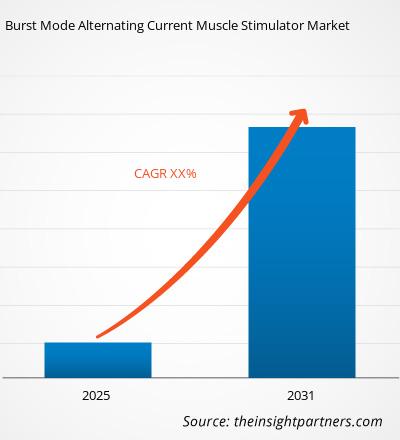
The Burst Mode Alternating Current Muscle Stimulator Market is expected to grow from US$ 166.82 million in 2025 to US$ 329.41 million by 2034, registering a CAGR of 7.85% from 2026 to 2034. These factors include growing acceptance of non-invasive electrical stimulation in clinical practice, widespread use in rehabilitation and an increasing need for pain relief devices which can be used in hospital, clinic, sport therapy, and at home.
In North America, increased awareness of electrotherapy, high prevalence rates of chronic pain and strong out-patient rehabilitation facilities are driving adoption of the technology. North America Burst Mode Alternating Current Muscle Stimulator Market Size is expected to capitalize on the 7.4% – 7.8% CAGR owing to physician directed home care programs, sports medicine and portability of systems in physiotherapy clinics.
Burst Mode Alternating Current Muscle Stimulator Market Assessment and Insights
- North America accounted for 41–44% share in 2025 and is projected to grow at a CAGR of 7.4–7.8% during 2026–2034, supported by chronic pain caseloads, outpatient rehabilitation maturity, and home-use reimbursement pathways.
- US represented 78–82% of North America in 2025 and is expected to grow at a CAGR of 7.2–7.6% during 2026–2034, led by sports medicine, pain clinics, and rehabilitation networks.
- Europe held 26–29% share in 2025 and is projected to expand at a CAGR of 7.0–7.4% during 2026–2034, with Germany, the UK, France, Italy, and Spain leading structured physiotherapy demand.
- Asia Pacific captured 20–23% share in 2025 and is forecast to grow at a CAGR of 8.5–9.1% during 2026–2034, driven by China, Japan, South Korea, India, and Australia.
- Largest Segment Portable systems held 45–49% market share in 2025 and are projected to record a CAGR of 7.9–8.3% during 2026–2034 due to flexible clinic and home deployment.
- High Growth Segment Home care held 11–14% market share in 2025 and is expected to grow at a CAGR of 9.2–9.8% during 2026–2034 through remote rehabilitation and self-management adoption.
- Key companies analyzed in detail: NeuroMetrix, Inc., OMRON Healthcare Co., Ltd., BioMedical Life Systems, Inc., Zynex, Inc., EMS Physio Ltd., DJO, LLC, Beurer GmbH, Tone-A-Matic, Mettler Electronics Corp., Axiobionics, LLC.
Source: The Insight Partners' analysis based on proprietary research, government publications, company annual reports, investor presentations, industry databases, and expert interviews.
The technology has moved from stimulation devices at the clinics to digital control, programmable and wearable equipment for more reliable delivery of therapy. The improvement of waveform precision, electrodes, battery performance, and user-friendly interfaces is going on in order to reduce variability in the process of device setup. At the same time, the manufacturing technologies tend to become smaller in terms of electronics, contract manufacturing, and modular systems that can provide pain management, neurological rehabilitation, musculoskeletal rehabilitation, and sports rehabilitation services.
During the forecast period, the demand will be driven from mature hospital purchases to physiotherapy centers, sports clinics, and home-based health care under supervision. Growing economies are expanding their rehabilitation capabilities in response to aging demographics and increased burden of musculoskeletal disorders. Regulatory factors have a positive impact on devices with indication, usability, and documentation, while service offerings and adherence technologies are increasingly considered in procurement processes.
Burst Mode Alternating Current Muscle Stimulator Market Report Scope
| Report Attribute | Details |
|---|---|
| Market size in 2025 | US$ 166.82 Million |
| Market Size by 2034 | US$ 329.41 Million |
| Global CAGR (2026 - 2034) | 7.85% |
| Historical Data | 2021-2024 |
| Forecast period | 2026-2034 |
Burst Mode Alternating Current Muscle Stimulator Market Analysis
Demands have been influenced by the significant rehabilitation gap, increasing cases of chronic pain, and initiatives aimed at reducing medication-only treatment programs. Growth of Burst Mode Alternating Current Muscle Stimulator Market is driven by its role in the supply chain between the device manufacturer, electrode producer, distributor, clinical trainer, and the final customer. Supply is quite specialized since the effectiveness of the treatment depends on the circuitry design, waveform controls, safety standards, and durable electrodes.
There has been a rise in services-based ecosystems in which hospitals and physiotherapy centers need durable tabletop and portable muscle stimulators, and home care requires ease of use, instructions, and accessories. As therapy moves outside hospitals, providers of services and devices may enjoy repeat revenue opportunities from accessories and enhancements to their offerings.
While examining the Burst Mode Alternating Current Muscle Stimulator Market Report, it becomes clear that the industry is characterized by the presence of diversified medical technology firms and dedicated electrotherapy solutions manufacturers. OMRON Healthcare Co., Ltd., Zynex, Inc., NeuroMetrix, Inc., and DJO, LLC rely on the clinical data and technologies. At the same time, BioMedical Life Systems, Inc., EMS Physio Ltd., Mettler Electronics Corp., Beurer GmbH, Tone-A-Matic, and Axiobionics, LLC are competing with the help of specialized product design, durability, and availability of channels.
The development of portable solutions, wearable muscle stimulators, patient monitoring and condition-specific protocols are among the investment targets in the industry. The differentiation strategy should take into account the target market – professional devices allow better output control and resistance to several patients, while consumer and home care products have user-friendliness, compatibility with the prescription procedure and comfort as the priorities.
● REPORT CUSTOMIZATION
Tailor This Report To Align With Your Specific Business Requirements
This report can be customized to align precisely with your business objectives, scope, and target markets. Customization options include tailored segmentation, geography, competitive analysis, and strategic insights to support informed decision-making.
Customize This Report →WHAT YOU CAN ADJUST
- ● Segmentations
- ● Geography
- ● Competitive Analysis
- ● Language Preferences
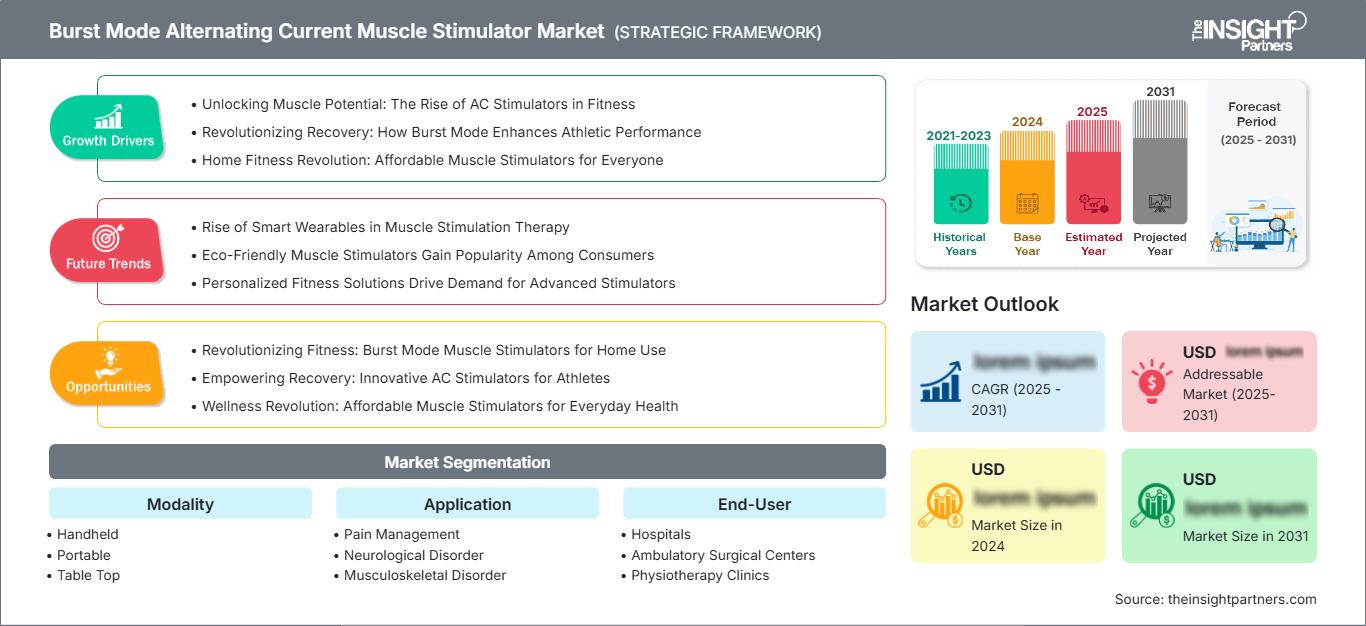
Burst Mode Alternating Current Muscle Stimulator Market: Strategic Insights
Regional Insights
North America Burst Mode Alternating Current Muscle Stimulator Market
North America held 41–44% share in 2025 and is expected to grow at a CAGR of 7.4–7.8% during 2026–2034. The Burst Mode Alternating Current Muscle Stimulator Market share is reinforced by high outpatient rehabilitation density, broad sports medicine adoption, and strong clinician familiarity with electrical stimulation for pain and muscle re-education.
Demand becomes driven by home-based recovery, employer-based wellness plans, and surgical rehabilitation. Medical device companies get the advantage of having well-established distribution channels for durable medical equipment and specialists. Nevertheless, documentation, compliance, and patient education will determine the success in moving beyond the clinical setting to chronic pain and neurological recovery applications.
U.S. Burst Mode Alternating Current Muscle Stimulator Market
In the year 2025, the U.S. constituted 78–82% of North America and is expected to have a CAGR growth rate of 7.2-7.6% during the period from 2026-2034. The key demand drivers include chronic pain management, musculoskeletal rehabilitation, and athlete recovery within outpatient therapy networks, orthopedic clinics, and sports clinics.
Zynex, Inc., NeuroMetrix, Inc., BioMedical Life Systems, Inc., Mettler Electronics Corp., and Axiobionics, LLC improve domestic availability through direct sales, prescription, and specialized rehabilitation centers. There is a change in use to portable units used under supervision at home, along with tabletop units becoming important for clinical treatment purposes.
Europe Burst Mode Alternating Current Muscle Stimulator Market
Europe accounted for 26–29% share in 2025 and is forecast to grow at a CAGR of 7.0–7.4% during 2026–2034. Germany is the leading country due to rehabilitation infrastructure, musculoskeletal treatment demand, and established physiotherapy procurement. The UK shows increasing use in outpatient pain services and sports injury recovery.
Stable demand exists due to the public rehabilitation facilities, private physiotherapy practices, and older population that needs assistance from non-invasive therapy devices. EMS Physio Ltd., Beurer GmbH, DJO, LLC and their distributors will benefit from the demand for clinic grade durable devices. The key factors affecting adoption are reimbursement policies, training of therapists, and home use guidelines.
APAC Burst Mode Alternating Current Muscle Stimulator Market
APAC held 20–23% share in 2025 and is expected to record a CAGR of 8.5–9.1% during 2026–2034, making it the fastest-growing region. China leads regional scale, while Japan and South Korea support premium rehabilitation technology demand.
Both India and Australia are increasing physiotherapy, sports medicine treatment facilities, and home-based recovery knowledge. Industrial factors include the local ability to manufacture electronics, development of private hospitals, and product education led by distributors. Rehabilitation, geriatric care, and non-invasive pain management policies will help increase adoption in urban centers.
Middle East & Africa Burst Mode Alternating Current Muscle Stimulator Market
Middle East & Africa is projected to grow at a CAGR of 6.4–7.0% during 2026–2034. Saudi Arabia leads regional adoption through healthcare infrastructure expansion, private hospital investments, and sports rehabilitation programs. The UAE follows with specialist clinics and medical tourism-linked physiotherapy services.
South Africa anchors demand in the rest of the region through private rehabilitation centers and orthopedic care networks. Energy-sector employment, road trauma rehabilitation demand, and hospital modernization support device purchases. Wider adoption will depend on clinician training, distributor service coverage, and affordability of electrodes and accessories.
Segmentation Analysis
Modality
Modality is projected to grow at a CAGR of 7.6–8.2% during 2026–2034 as buyers shift toward devices that balance clinical control, portability, and patient convenience. The Burst Mode Alternating Current Muscle Stimulator Market scope across modality categories is shaped by use setting, treatment frequency, and supervision level, with portable systems becoming the operational bridge between clinics and home recovery.
- Handheld devices serve low-acuity therapy needs, patient convenience, and basic pain management. Their strategic importance lies in affordability, simple operation, and suitability for supervised home programs.
- Portable systems dominate demand because clinics, sports facilities, and home care providers need flexible devices with stronger output control, rechargeable performance, and multipurpose therapy protocols.
- Table Top devices remain important in hospitals and physiotherapy clinics where higher throughput, therapist supervision, larger displays, and durable construction support repeated daily clinical use.
Application
Application is expected to grow at a CAGR of 7.5–8.0% during 2026–2034. Pain management remains the most visible use case, but neurological and musculoskeletal rehabilitation are gaining strategic relevance as providers adopt multimodal therapy plans. Clinical preference depends on treatment goals, patient tolerance, protocol customization, and integration with exercise-based rehabilitation programs.
- Pain Management leads utilization due to chronic back pain, joint pain, and post-injury discomfort, supporting demand for non-invasive tools that complement medication and physical therapy.
- Neurological Disorder applications focus on muscle activation, motor relearning, and functional recovery support, especially when therapy requires repeated stimulation under professional supervision.
- Musculoskeletal Disorder demand is tied to orthopedic recovery, sports injuries, weakness, and mobility impairment, making stimulation useful within strength restoration and rehabilitation workflows.
End-User
End-User is projected to grow at a CAGR of 7.8–8.4% during 2026–2034 as care delivery shifts across hospitals, outpatient centers, specialty clinics, and home environments. Demand varies by clinical acuity, purchasing budget, and staff capacity, with home care accelerating as remote guidance and patient-friendly device interfaces improve.
- Hospitals purchase reliable systems for post-surgical recovery, pain services, and multidisciplinary rehabilitation, prioritizing safety, durability, regulatory compliance, and clinical protocol flexibility.
- Ambulatory Surgical Centers use stimulation as part of recovery pathways, particularly after orthopedic procedures, where compact devices support pain control and earlier mobility.
- Physiotherapy Clinics represent a core channel because therapists use stimulation alongside exercise, manual therapy, and patient education to improve functional outcomes.
- Sports Clinics adopt devices for recovery, muscle activation, and injury rehabilitation, with demand driven by athletes, active consumers, and performance-focused care models.
- Home Care is expanding quickly as patients seek convenient symptom management, supervised recovery, and continuity of therapy outside traditional clinical settings.
Opportunity Snapshot
| End-User | Revenue Contribution | Trend Tag | Adoption Stage |
| Hospitals | High | Protocol Care | Mature |
| Ambulatory Surgical Centers | Medium | Post-op Rehab | Scaling |
| Physiotherapy Clinics | High | Clinic Throughput | Mature |
| Sports Clinics | Medium | Athlete Recovery | Scaling |
| Home Care | Medium | Remote Rehab | Emerging |
Burst Mode Alternating Current Muscle Stimulator Market Growth Drivers and Impact Analysis
Rising Burden of Chronic Pain and Rehabilitation Needs
Pain and mobility problems are giving rise to a need for non-invasive therapy devices. This therapy works well for the doctors since electrical stimulation can be combined with exercises, drugs, heat, and physical therapy without making any invasive procedure necessary. The greatest market influence is seen in the applications of pain management and musculoskeletal disorders as the repeat visits by patients lead to repeat purchases of devices and electrodes. In hospitals, stimulation is used to facilitate recovery whereas physiotherapy clinics make use of it to speed up their work and keep patients more involved. More home care use is also becoming common due to the need for pain management among the patients.
Shift Toward Portable and Home-Based Rehabilitation
The delivery of care is shifting from hospital-based rehabilitation towards outpatient and home rehabilitation. Portability of the system addresses this change since it offers more capabilities than a simple handheld unit but is also less difficult to set up than a tabletop unit. The market response is clearly seen in terms of the design of the devices, where the emphasis has been on features such as rechargeable battery, simple interface, pre-programmed exercises and compact design. In addition, the sales strategy of both the distributors and manufacturers is changing to include training materials, electrode replenishment, and patient assistance in the business model.
Technology Improvements in Waveform Control and Patient Usability
The development of better microcontrollers, electrodes, software interfaces, and safety features increases clinical precision for stimulation therapies. Increased control over waveform enables users to adjust the intensity and shape of pulses for pain reduction, muscle contraction, and functional rehabilitation purposes. Improved usability saves on learning curve and ensures compliance with recommended therapies. It is of particular importance when dealing with ambulatory surgical centers and home healthcare, where users have varying skills. Companies capable of providing precise stimulation together with ease of use can stand out from cheaper competitors because of clinical evaluation of reliability, user tolerance, and consumables supply.
Burst Mode Alternating Current Muscle Stimulator Market Future Trends
Wearable Neuromodulation and Connected Therapy Workflows
Wearable platforms are expected to reshape Burst Mode Alternating Current Muscle Stimulator Market trends by embedding stimulation into longer-duration, less disruptive therapy routines. Future devices will likely combine smaller electronics, app-based controls, treatment reminders, and adherence logs that help clinicians understand patient behavior outside clinics. This trend is not only about miniaturization; it is about creating therapy continuity across supervised and unsupervised settings. As payers and providers ask for clearer evidence of utilization, connected workflows can support documentation, prescription compliance, and personalization. Companies with experience in bioelectronic platforms, wearable design, and patient support will be better positioned to capture premium demand.
Condition-Specific Protocols for Targeted Rehabilitation
The next phase of product differentiation will center on protocols designed around specific symptoms, injuries, and recovery pathways. Instead of offering generic stimulation modes, manufacturers are expected to refine programs for chronic pain, post-operative orthopedic recovery, neurological rehabilitation, and sports-related muscle activation. This approach can improve clinician confidence and reduce variation in treatment delivery. As software becomes more important, regulatory documentation and evidence generation will matter more. Companies that invest in clinical education, usability testing, and protocol validation can strengthen adoption among physiotherapists, sports medicine specialists, and hospital rehabilitation departments seeking consistent outcomes.
Burst Mode Alternating Current Muscle Stimulator Market Opportunities
Expansion into Supervised Home Care Programs
Home care offers the strongest actionable opportunity because it combines growing patient demand with provider interest in extending rehabilitation beyond facility walls. Burst Mode Alternating Current Muscle Stimulator Market Forecasts indicate that home care will advance faster than traditional institutional channels when devices are paired with adequate training, refill logistics, and clinician oversight. Companies can invest in prescription-ready kits, digital onboarding, multilingual instructions, and recurring electrode supply programs. Partnerships with orthopedic practices, physiotherapy groups, and durable medical equipment distributors can accelerate adoption. Success will depend on balancing simplicity with clinical credibility, especially for patients managing ongoing pain or post-surgical recovery.
Partnerships with Sports Medicine and Physiotherapy Networks
Sports clinics and physiotherapy chains provide a practical route for manufacturers seeking faster market penetration. These channels influence device preferences because therapists and trainers introduce patients to stimulation during structured recovery sessions. Vendors can create value through education programs, protocol libraries, bundled electrodes, and service contracts for multisite operators. The opportunity is particularly attractive in urban APAC, North America, and Europe, where active populations, orthopedic procedures, and sports participation support rehabilitation demand. Companies that offer reliable devices, quick replacement support, and outcome-oriented clinical resources can become preferred suppliers rather than transactional equipment vendors.
Recent Developments
- May 2025: electroCore, Inc. completed the acquisition of NeuroMetrix, Inc., gaining access to the Quell platform and expanding its non-invasive bioelectronic technology portfolio for chronic pain and wellness applications. The transaction positioned NeuroMetrix, Inc. as an indirect wholly owned subsidiary and strengthened commercial reach through established channels, including the VA Hospital System.
- May 2025: DJO, LLC, through Enovis, unveiled a unified brand identity for its established rehabilitation and orthopedic product families, including Chattanooga, DonJoy, and Aircast. The move was intended to preserve legacy product recognition while aligning the portfolio under a more cohesive medtech platform focused on prevention, recovery, and rehabilitation.
- July 2025: Zynex, Inc. reported operational restructuring initiatives alongside its second-quarter 2025 financial results, including sales force refocusing, cost reductions, and internal efficiency improvements. Management highlighted continued commitment to non-invasive pain relief products and indicated that organizational changes were designed to improve cash flow, payer mix, and long-term commercial execution.
Frequently Asked Questions

- Comprehensive Market Sizing and Forecast Analysis
- Detailed Segmentation Analysis
- In-Depth Market Dynamics Assessment
- Regional and Country-Level Insights
- Competitive Landscape and Company Benchmarking
- Strategic Business Intelligence
Recent Reports
Testimonials

The Insight Partners' SCADA System Market report is comprehensive, with valuable insights on current trends and future forecasts. The team was highly professional, responsive, and supportive throughout. We are very satisfied and highly recommend their services.
RAN KEDEM Partner, Reali Technologies LTDs
I requested a report on a very specific software market and the team produced the report in a few days. The information was very relevant and well presented. I then requested some changes and additions to the report. The team was again very responsive and I got the final report in less than a week.
JEAN-HERVE JENN Chairman, Future Analytica
We worked with The Insight Partners for an important market study and forecast. They gave us clear insights into opportunities and risks, which helped shape our plans. Their research was easy to use and based on solid data. It helped us make smart, confident decisions. We highly recommend them.
PIYUSH NAGPAL Sr. Vice President, High Beam Global
The Insight Partners delivered insightful, well-structured market research with strong domain expertise. Their team was professional and responsive throughout. The user-friendly website made accessing industry reports seamless. We highly recommend them for reliable, high-quality research services
YUKIHIKO ADACHI CEO, Deep Blue, LLC.
This is the first time I have purchased a market report from The Insight Partners.While I was unsure at first, I visited their web site and felt more comfortable to take the risk and purchase a market report.I am completely satisfied with the quality of the report and customer service. I had several questions and comments with the initial report, but after a couple of dialogs over email with their analyst I believe I have a report that I can use as input to our strategic planning process.Thank you so much for taking the extra time and making this a positive experience.I will definitely recommend your service to others and you will be my first call when we need further market data.
JOHN SUZUKI President and Chief Executive Officer, Board Director, BK Technologies
I wish to appreciate your support and the professionalism you displayed in the course of attending to my request for information regarding to infectious disease IVD market in Nigeria. I appreciate your patience, your guidance, and the fact that you were willing to offer a discount, which eventually made it possible for us to close a deal. I look forward to engaging The Insight Partners in the future, all thanks to the impression you have created in me as a result of this first encounter.
DR CHIJIOKE ONYIA MANAGING DIRECTOR, PineCrest Healthcare Ltd.Reason to Buy
- Informed Decision-Making
- Understanding Market Dynamics
- Competitive Analysis
- Identifying Emerging Markets
- Customer Insights
- Market Forecasts
- Risk Mitigation
- Boosting Operational Efficiency
- Strategic Planning
- Investment Justification
- Tracking Industry Innovations
- Aligning with Regulatory Trends





 Get Free Sample for