
Butterfly Valves Market Growth, Trends & Demand by 2034
Coverage: by Type (High-performance, Lined); Mechanism (Centric, Eccentric); Function (On/Off, Control); End-Use Industry (Oil and Gas, Electric power, Chemical, Water and Waste Water, Others) , and Geography (North America, Europe, Asia Pacific, and South and Central America)
- Status : Data Released
- Report Code : TIPRE00005696
- Category : Manufacturing and Construction
- No. of Pages : 150
- Available Report Formats :


- Last update date : July 17, 2026


2025 Market Size
US$ 4.86 Bn
Base year value
2034 Forecast
US$ 6.83 Bn
Projected by 2034
CAGR 2026-2034
3.85 %
Growth rate
Addressable Market
US$ 53.09 Bn
(2026-2034)
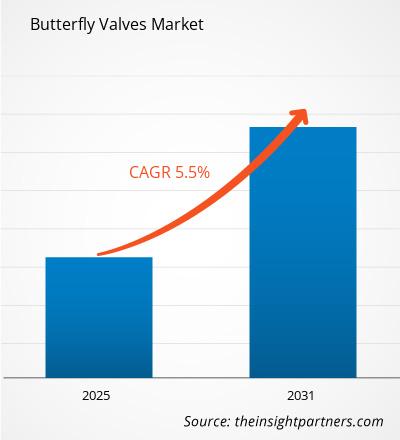
The global Butterfly Valves market was valued at US$ 4.86 billion in 2025 and is expected to reach US$ 6.83 billion by 2034; it is estimated to record a CAGR of 3.85% during 2026-2034.
Butterfly Valves Market Assessment and Insights
- North America held a 27–30% share in 2025 and is expected to grow at a CAGR range of 3.9–4.4% during 2026–2034, led by utility renewal and energy projects.
- US represented 76–80% of North America in 2025 and is projected to grow at a CAGR range of 3.8–4.3% during 2026–2034.
- Europe accounted for 22–25% share in 2025 and is forecast to grow at 3.5–4.0% CAGR, with Germany, the UK, and France leading demand.
- Asia Pacific captured 35–38% share in 2025 and is expected to expand at 4.8–5.4% CAGR, driven by China, India, Japan, and South Korea.
- Largest Segment Water and Waste Water held 29–32% market share in 2025 and is projected to grow at 4.5–5.0% CAGR during 2026–2034.
- High Growth Segment Lined type valves held 18–21% market share in 2025 and are projected to grow at 5.0–5.6% CAGR during 2026–2034.
- Key companies analyzed in detail: Alfa Laval AB, AVK Holding A/S, Crane Company, Curtiss-Wright Corporation, Emerson Electric Co., Flowserve Corporation, KSB SE & Co. KGaA, Schlumberger Limited, Velan Inc., Bray International, Inc.
Source: The Insight Partners' analysis based on proprietary research, government publications, company annual reports, investor presentations, industry databases, and expert interviews.
Technological advances in the butterfly valves market are now heading towards sealability, automation, and custom-made materials for resisting corrosion, high cycling ability, and large diameters. Manufacturers are making efforts to make use of their capability in casting, availability of rubber, machining, and assembly of the actuators in order to control the lead time. Factors affecting production include costs of stainless steel, availability of casting, certifications required, and local assembly near the sites of water, energy, and chemicals projects.
Future opportunities will be driven towards the increasing demand in the developing nations including Asia, Middle East, and Africa in the construction of the required infrastructure, which will include desalination plants, district cooling plants, water reuse processes, and refineries. Leak prevention, water safety, and process improvements will result in higher specifications. With regards to investments, automated butterfly valves have lower risk of maintenance and remote monitoring of pressure, positioning, and other parameters.
Butterfly Valves Market Report Scope
| Report Attribute | Details |
|---|---|
| Market size in 2025 | US$ 4.86 Billion |
| Market Size by 2034 | US$ 6.83 Billion |
| Global CAGR (2026 - 2034) | 3.85% |
| Historical Data | 2021-2024 |
| Forecast period | 2026-2034 |
Butterfly Valves Market Analysis
Butterfly valve market expansion is linked to increasing fluid-handling facilities in water treatment, power generation, oil and gas production, and chemical applications. These valves' small body, reduced operating torque, and ability to accommodate larger pipe sizes are favorable in projects where the owner requires reduced installation weight and faster operation than gate valves. Market demand is aided by retrofits to upgrade older manually operated valves into automatically controlled valves as part of control systems at plants.
The industry stakeholders include foundries, elastomers producers, actuator manufacturers, system integration firms, distributors, EPC contractors, and end users. The supply side is subject to the following drivers: cast iron and stainless steel availability, certifications cycle time, and actuator electronics sourcing. Water utilities are concerned about cost of ownership, while the process industries are concerned about sealing capabilities, corrosion resistance, emissions, and automation.
Positioning within the competitive landscape of the butterfly valves market is influenced by global portfolios, qualification experiences for projects, distribution networks, and the capability of supplying valves, actuators, and controls as packages. Process reliability defines the competition between Emerson Electric Co., Flowserve Corporation, KSB SE & Co. KGaA, and Crane Company, whereas excellent utility and industrial distribution networks distinguish AVK Holding A/S and Bray International, Inc.
Trends of investment focus on automated valves, lined and advanced valves that can withstand more cycles, aggressive media, and diagnostics. Sanitary and hygienic flow technologies can be offered by Alfa Laval AB; severe service technologies – by Curtiss-Wright Corporation; energy infrastructure technologies – by Schlumberger Limited; and engineered valves – by Velan Inc.
● REPORT CUSTOMIZATION
Tailor This Report To Align With Your Specific Business Requirements
This report can be customized to align precisely with your business objectives, scope, and target markets. Customization options include tailored segmentation, geography, competitive analysis, and strategic insights to support informed decision-making.
Customize This Report →WHAT YOU CAN ADJUST
- ● Segmentations
- ● Geography
- ● Competitive Analysis
- ● Language Preferences
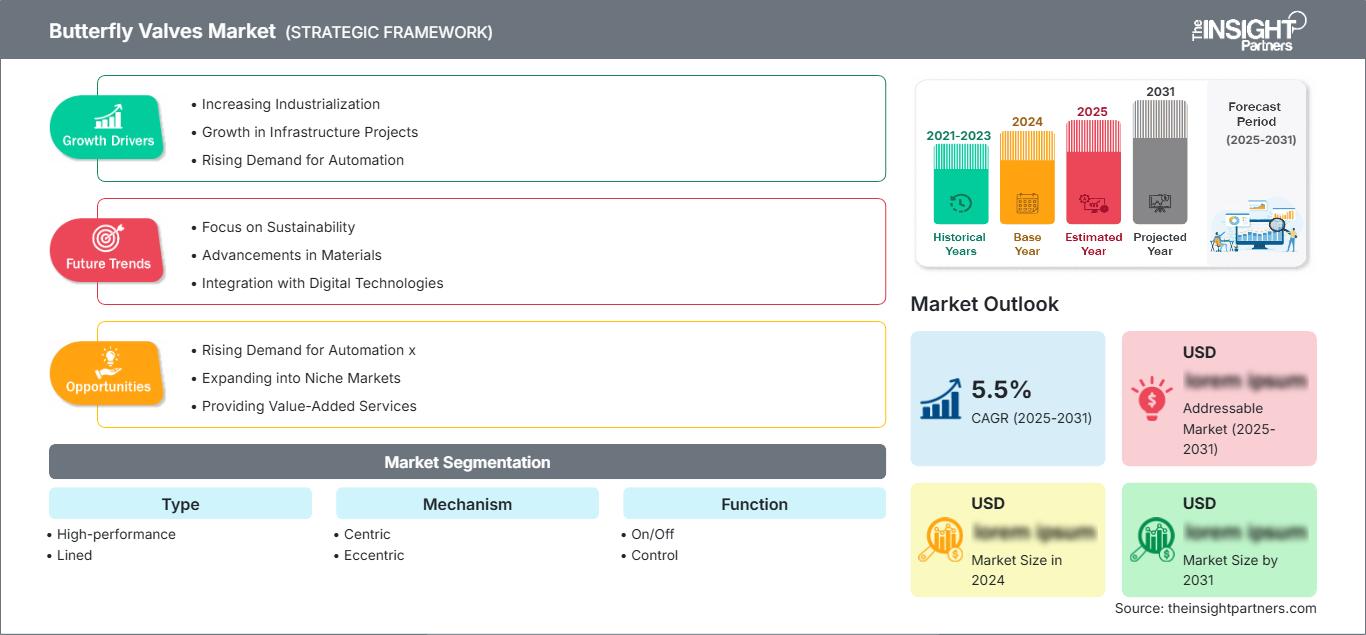
Butterfly Valves Market: Strategic Insights
Regional Insights
North America butterfly valves Market
North America held a 27–30% share in 2025 and is expected to grow at 3.9–4.4% CAGR during 2026–2034. The butterfly valves market share in the region is supported by replacement of aging municipal assets, LNG-linked investments, and stricter operating reliability standards in chemicals, refining, and power generation.
Utilities are prioritizing valves that reduce water loss, enable remote operation, and withstand frequent cycling. The EPA’s emphasis on smart water systems and reported potential water-loss reduction of up to 15% supports automation-led upgrades, while energy and industrial users continue specifying high-performance designs for safer isolation.
U.S. butterfly valves Market
The U.S. constituted 76-80% of North America in 2025 and is expected to grow at a CAGR of 3.8-4.3% until 2034. The major demands include municipal water renewal applications, shale-related processes, refining facility maintenance operations, data center cooling circuitry, and chemical facility capacity enhancement in the Gulf Coast and Midwest regions.
Some of the leading companies in the industry are Emerson Electric Co., Flowserve Corporation, Bray International, Inc., Crane Company, and Schlumberger Limited. The demand is expected for automatic butterfly valves in order to facilitate predictive maintenance, leak-proof operation, quick shut-off operations, and seamless integration with SCADA-based facilities management systems.
Europe butterfly valves Market
Europe held a market share of 22–25% in 2025 and is expected to register a growth rate of 3.5–4.0% during 2026-2034. Germany leads the European region driven by sectors such as chemicals, district heating, retrofitting of power plants, and highly engineered industrial automation.
France, Italy, and Spain are driven by municipal water treatment, desalination-related systems, food processing, and chemical complexes. Consumers in Europe tend to place importance on certifications, energy savings, and long-term durability rather than on minimum cost. This helps drive the demand for lined and advanced butterfly valves.
APAC butterfly valves Market
In 2025, APAC accounted for 35-38% and is projected to experience a growth of 4.8-5.4% CAGR, emerging as the largest regional market. It is dominated by China on account of its growth in water treatment, chemical processing, power infrastructure, and manufacturing.
Japan and South Korea are maintaining their consumption levels on account of quality industrial replacement applications, whereas India and Australia are adding on due to the rise in urban water, mining, LNG, and renewable energy-related infrastructure projects.
Middle East & Africa butterfly valves Market
Middle East & Africa is projected to grow at 4.2–4.8% CAGR during 2026–2034, with Saudi Arabia leading regional demand. Energy infrastructure, desalination, district cooling, and petrochemical investments support broad use of isolation and control valves.
The UAE emphasizes water security and cooling efficiency, while South Africa and the Rest of MEA rely on water treatment, mining, and power rehabilitation. Project owners increasingly favor durable butterfly valves with corrosion resistance and dependable actuator support.
Segmentation Analysis
Type
The type segment is projected to grow at 4.4–4.9% CAGR during 2026–2034. The butterfly valves market scope across type categories reflects diverging end-use requirements, with high-performance products gaining in pressure-sensitive services and lined valves expanding in corrosive media. Selection increasingly depends on media chemistry, temperature, pressure class, leakage tolerance, and total installed cost.
- High-performance: High-performance designs serve refinery, power, LNG, and chemical duties where tighter sealing, higher pressure ratings, and longer cycle life justify premium specification over basic resilient seated alternatives.
- Lined: Lined valves address corrosive acids, alkalis, seawater, and aggressive wastewater streams, making them strategically important for chemical plants, desalination units, and industrial effluent systems.
Mechanism
The mechanism segment is expected to grow at 4.1–4.7% CAGR during 2026–2034. Centric mechanisms remain widely specified for general water and low-pressure services because they offer simpler construction and favorable economics. Eccentric mechanisms are gaining share where reduced seat wear, improved sealing, and higher-performance isolation are required in demanding industrial environments.
- Centric: Centric mechanisms dominate utility and HVAC-type applications where moderate pressure, predictable fluids, and cost-efficient installation are the primary procurement considerations.
- Eccentric: Eccentric mechanisms are strategically important in oil and gas, chemical, and power systems where lower friction, better sealing, and longer service life are valued.
Function
The function segment is projected to grow at 4.0–4.6% CAGR during 2026–2034. On/off duty remains the volume base because butterfly valves are widely used for isolation across water, energy, and process lines. Control applications are gaining relevance as actuation, position feedback, and digital monitoring improve throttling performance in non-critical and semi-critical processes.
- On/Off: On/off valves hold strong demand in treatment plants, pipelines, cooling systems, and process units where rapid isolation, compact footprint, and dependable shut-off are essential.
- Control: Control-function valves support automated flow regulation, especially where operators need position feedback, repeatability, and integration with distributed control or SCADA platforms.
End-Use Industry
The end-use industry segment is forecast to grow at 4.3–4.9% CAGR during 2026–2034. Water and Waste Water is the largest demand base, while oil and gas, electric power, and chemicals sustain higher-specification purchases. End users are increasingly evaluating lifecycle reliability, actuator readiness, and material compatibility rather than only valve body price.
- Oil and Gas: Oil and gas applications require reliable isolation in pipelines, terminals, refineries, and LNG systems, with high-performance designs favored for pressure, safety, and maintenance access.
- Electric power: Power plants use butterfly valves in cooling water, fuel handling, flue-gas treatment, and auxiliary systems where large diameters and dependable shut-off reduce operational risk.
- Chemical: Chemical facilities favor lined and corrosion-resistant butterfly valves for acids, solvents, and aggressive process streams that demand compatibility, sealing reliability, and maintenance predictability.
- Water and Waste Water: Municipal and industrial water systems represent the largest installed base, using valves for intake, distribution, aeration, sludge handling, desalination, and wastewater reuse operations.
Opportunity Snapshot
| Segment Name | Revenue Contribution | Trend Tag | Adoption Stage |
| Oil and Gas | High | LNG Expansion | Mature |
| Electric power | Medium | Cooling Loops | Scaling |
| Chemical | Medium | Corrosion Control | Scaling |
| Water and Waste Water | High | Reuse Networks | Mature |
Butterfly Valves Market Growth Drivers and Impact Analysis
Water Infrastructure Renewal and Reuse Investment
The replacement of aged valves is currently a significant driver in municipalities due to the emphasis on controlling water losses, reusing wastewater and the need for increased treatment capacity. butterfly valves are preferred for large diameters due to their smaller size and low torque compared to other isolation techniques. The effect is seen mostly in intake pipes, filters, sludge processing, and seawater desalination plants where disruptions could interrupt service provision. As municipalities increasingly embrace automation, valve requirements have been expanded to include electricity and pneumatics, position sensing and corrosion resistance.
Automation Across Process and Utility Networks
Operators of industry are moving away from manual flow isolation and using valve packages that are automated and which would allow for remote monitoring and prediction of maintenance. Butterfly valves are a great choice for automation because of their ability to actuate with a quarter turn, which is simpler to automate than most multiple-turn valve models. For industrial sites such as chemical, power, and water plants, automated packages will make it easier to adopt a standardized control strategy and minimize manual interventions in dangerous areas. There are changes happening within the marketplace as there is an adoption of higher value-added packages which include actuators, limit switches, and communication.
Energy and Chemical Capacity Modernization
Refineries, LNG terminals, petrochemical complexes, and power plants continue to upgrade flow control assets to improve reliability, safety, and efficiency. butterfly valves are specified in cooling water, utility, fuel handling, and non-critical process loops where compact design and rapid shut-off are important. High-performance and eccentric designs are gaining attention when pressure, temperature, and leakage requirements exceed standard resilient seated performance. Modernization spending also supports lined valves in corrosive chemical service and wastewater streams from industrial plants. The driver creates demand for engineered products, documentation, testing, and application support, helping established suppliers differentiate through qualification records and service capability.
Butterfly Valves Market Future Trends
Smart Valve Diagnostics Become Standard
The butterfly valves market trends are moving toward embedded diagnostics that track actuator health, cycle count, travel time, torque deviation, and abnormal seating behavior. Over the forecast period, smart accessories are likely to move from premium process applications into mainstream water, power, and industrial systems as operators seek lower maintenance exposure. This shift will change buying criteria from standalone valve price to connected performance, software compatibility, and lifecycle service. Suppliers that combine mechanical reliability with interoperable controls will be better positioned with EPC contractors and asset owners. The trend also supports data-driven maintenance models that can reduce unplanned outages and improve spare-parts planning.
Material Engineering for Corrosive and High-Cycle Service
Future product development will focus on advanced liners, elastomers, coatings, and metal alloys that extend valve life in aggressive media and frequent cycling conditions. Chemical processing, desalination, mining, and wastewater reuse are expected to intensify demand for application-specific material packages. Manufacturers will need to validate compatibility against acids, chlorides, abrasive slurries, and temperature swings while keeping products cost competitive. This trend will encourage collaboration between valve makers, material suppliers, and end users during specification. It may also increase the importance of testing documentation, traceability, and regional inventory for replacement components in critical service environments.
Butterfly Valves Market Opportunities
Automated Packages for Municipal Utilities
Municipal utilities offer a clear investment opportunity for suppliers that can deliver complete valve, actuator, control, and service packages. The butterfly valves market forecasts indicate sustained replacement potential as cities modernize water distribution, wastewater treatment, and reuse networks. Buyers increasingly need standardized products that fit SCADA systems, reduce manual field work, and withstand corrosive or buried-service environments. Manufacturers can capture value by offering preconfigured assemblies, faster delivery, and maintenance programs for public utilities and EPC contractors. Channel partnerships with regional distributors will be important because municipal projects often require local support, documentation, training, and spare-parts availability throughout long asset lifecycles.
Lined Valves for Chemical and Desalination Projects
Lined products present an attractive opportunity as chemical plants, desalination facilities, and industrial wastewater systems handle more corrosive fluids. Suppliers can differentiate through liner integrity, stem sealing, pressure testing, and compatibility documentation that reduces specification risk for engineers. Demand is especially promising in coastal industrial zones where chloride exposure, seawater intake, and effluent treatment require corrosion-resistant flow control. Companies with strong application engineering can convert customers from commodity valves to engineered packages by proving longer service intervals and lower shutdown risk. Local assembly and quick replacement programs can further improve competitiveness in project-driven markets.
Recent Developments
↵
- September 2025: GF Building Flow Solutions Americas is proud to announce the launch of 565 Butterfly Valves, a strategic addition to the growing Uponor ChlorFIT Schedule 80 Corzan CPVC system. This launch marks a key milestone in the company’s expansion into a comprehensive valve offering that meets the demands of modern commercial construction, offering a lighter, more sustainable alternative to metal, without compromising performance or reliability.
- September 2024: Flomatic announced the expansion of its popular Sylax 3 Butterfly Valve line by introducing a new 1 1/2” lug style size. The 1 1/2” Sylax 3 Lug Style Butterfly Valve joins Flomatic’s existing range of sizes, offering customers even more options to meet their specific application needs. This new valve maintains the same exceptional quality and performance as the larger sizes, providing reliable and efficient flow control in a compact design.
Frequently Asked Questions

- Comprehensive Market Sizing and Forecast Analysis
- Detailed Segmentation Analysis
- In-Depth Market Dynamics Assessment
- Regional and Country-Level Insights
- Competitive Landscape and Company Benchmarking
- Strategic Business Intelligence
Recent Reports
Testimonials

The Insight Partners' SCADA System Market report is comprehensive, with valuable insights on current trends and future forecasts. The team was highly professional, responsive, and supportive throughout. We are very satisfied and highly recommend their services.
RAN KEDEM Partner, Reali Technologies LTDs
I requested a report on a very specific software market and the team produced the report in a few days. The information was very relevant and well presented. I then requested some changes and additions to the report. The team was again very responsive and I got the final report in less than a week.
JEAN-HERVE JENN Chairman, Future Analytica
We worked with The Insight Partners for an important market study and forecast. They gave us clear insights into opportunities and risks, which helped shape our plans. Their research was easy to use and based on solid data. It helped us make smart, confident decisions. We highly recommend them.
PIYUSH NAGPAL Sr. Vice President, High Beam Global
The Insight Partners delivered insightful, well-structured market research with strong domain expertise. Their team was professional and responsive throughout. The user-friendly website made accessing industry reports seamless. We highly recommend them for reliable, high-quality research services
YUKIHIKO ADACHI CEO, Deep Blue, LLC.
This is the first time I have purchased a market report from The Insight Partners.While I was unsure at first, I visited their web site and felt more comfortable to take the risk and purchase a market report.I am completely satisfied with the quality of the report and customer service. I had several questions and comments with the initial report, but after a couple of dialogs over email with their analyst I believe I have a report that I can use as input to our strategic planning process.Thank you so much for taking the extra time and making this a positive experience.I will definitely recommend your service to others and you will be my first call when we need further market data.
JOHN SUZUKI President and Chief Executive Officer, Board Director, BK Technologies
I wish to appreciate your support and the professionalism you displayed in the course of attending to my request for information regarding to infectious disease IVD market in Nigeria. I appreciate your patience, your guidance, and the fact that you were willing to offer a discount, which eventually made it possible for us to close a deal. I look forward to engaging The Insight Partners in the future, all thanks to the impression you have created in me as a result of this first encounter.
DR CHIJIOKE ONYIA MANAGING DIRECTOR, PineCrest Healthcare Ltd.Reason to Buy
- Informed Decision-Making
- Understanding Market Dynamics
- Competitive Analysis
- Identifying Emerging Markets
- Customer Insights
- Market Forecasts
- Risk Mitigation
- Boosting Operational Efficiency
- Strategic Planning
- Investment Justification
- Tracking Industry Innovations
- Aligning with Regulatory Trends





 Get Free Sample for