
Ceramic Sanitary Ware Market Trends, Size & Forecast by 2034
Coverage: by Type (Wash Basin, Urinals, Water Closets, Cisterns, and Others); Technology (Pressure Casting, Slip Casting, Tape Casting, and Isostatic Casting); and Application (Offices, Industrial, Institutional, Hospitality, Healthcare, and Residential), and Geography (North America, Europe, Asia Pacific, and South and Central America)
- Status : Data Released
- Report Code : TIPMC00002635
- Category : Chemicals and Materials
- No. of Pages : 150
- Available Report Formats :


- Last update date : August 07, 2026


2025 Market Size
US$ 54.55 Bn
Base year value
2034 Forecast
US$ 129.74 Bn
Projected by 2034
CAGR 2026-2034
10.11 %
Growth rate
Addressable Market
US$ 819.44 Bn
(2026-2034)
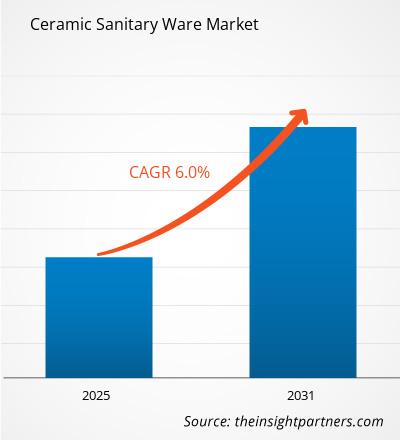
The Ceramic Sanitary Ware market was valued at US$ 54.55 Billion in 2025 and is projected to reach US$ 129.74 Billion by 2034, expanding at a CAGR of 10.11% during 2026–2034. Product innovation, water-efficient designs, and growing renovation activities are strengthening long-term market expansion across developed and emerging economies. Ceramic Sanitary Ware continues to witness robust global demand, supported by rapid urbanization, residential construction, commercial infrastructure development, and increasing consumer preference for premium bathroom solutions.
North America remains a technologically advanced regional market, supported by high replacement demand, premium residential remodeling, and stringent plumbing efficiency standards. The Ceramic Sanitary Ware market size across the region is expanding steadily as builders increasingly adopt sustainable bathroom fixtures certified for water conservation. Strong investments in hospitality, healthcare, and institutional infrastructure are expected to support a regional CAGR ranging between 8.4–9.2% through 2034 while manufacturers continue introducing smart and hygienic product portfolios.
Ceramic Sanitary Ware Market Assessment and Insights
- North America: Accounted for a 26–29% share in 2025 and is expected to register a CAGR of 8.4–9.2% during 2026–2034, supported by premium residential renovations, commercial construction, and increasing adoption of water-saving sanitary solutions across the United States and Canada.
- U.S.: Represented 76–80% of North America in 2025 and is anticipated to grow at a CAGR of 8.5–9.3% owing to replacement demand, smart bathroom adoption, hospitality expansion, and stricter plumbing efficiency regulations.
- Europe: Held 24–27% share in 2025 while expanding at a CAGR of 8.0–8.8%. Germany, the UK, France, Italy, and Spain continue investing in sustainable construction, premium residential developments, and the modernization of commercial buildings.
- Asia Pacific: Captured a 34–37% share in 2025 and is projected to record the fastest CAGR of 11.5–12.3%, led by China, India, Japan, South Korea, and Southeast Asian countries, benefiting from rapid urbanization and housing development.
- Largest Segment: Water Closets accounted for 32–36% market share in 2025 and are expected to grow at a CAGR of 9.8–10.6%, supported by essential demand across all applications.
- High Growth Segment: Pressure Casting technology held 28–32% share in 2025 and is projected to grow at a CAGR of 11.5–12.8%, driven by efficiency and scalability benefits..
- Key companies analyzed in detail: Roca Sanitario, S.A.U.; RAK Ceramics P.J.S.C.; TOTO LTD.; Ideal Standard International S.A.; Villeroy & Boch AG; Geberit AG; Hindware Limited; Duravit AG; Kohler Co.; Eros for Sanitary Wares.
Source: The Insight Partners' analysis based on proprietary research, government publications, company annual reports, investor presentations, industry databases, and expert interviews.
Continuous improvements in ceramic formulations, automated production systems, robotic glazing, precision firing technologies, and sustainable manufacturing practices have significantly transformed industry operations. Manufacturers increasingly integrate digital production monitoring, pressure casting technologies, antimicrobial coatings, and water-efficient product engineering to improve operational productivity while complying with evolving environmental regulations. Greater adoption of recycled raw materials and energy-efficient kiln technologies further strengthens manufacturing competitiveness across established production hubs.
Future expansion is expected to originate from emerging Asian, Middle Eastern, and African construction markets where rapid urbanization and public infrastructure investments remain substantial. Government housing initiatives, increasing hospitality developments, modernization of healthcare facilities, and green building certifications are encouraging manufacturers to expand regional production capacities. Premium bathroom aesthetics, digital retail platforms, and stronger distribution partnerships are expected to further accelerate long-term market development across multiple end-user industries.
Ceramic Sanitary Ware Market Report Scope
| Report Attribute | Details |
|---|---|
| Market size in 2025 | US$ 54.55 Billion |
| Market Size by 2034 | US$ 129.74 Billion |
| Global CAGR (2026 - 2034) | 10.11% |
| Historical Data | 2021-2024 |
| Forecast period | 2026-2034 |
Ceramic Sanitary Ware Market Analysis
Growing investments in residential housing, commercial complexes, hospitality facilities, healthcare infrastructure, and institutional buildings continue to support global demand. Ceramic Sanitary Ware market growth is increasingly influenced by consumer preference for aesthetically appealing, durable, hygienic, and water-efficient bathroom fixtures. Rising disposable income, smart city development, and favorable government housing initiatives across developing economies are expanding installation volumes. Simultaneously, stricter environmental regulations encourage manufacturers to develop low-water-consumption products certified under international sustainability standards, creating stronger value propositions throughout the construction ecosystem.
The industry value chain continues evolving through stronger collaboration between raw material suppliers, ceramic processors, glazing technology providers, sanitary fixture manufacturers, distributors, architects, and construction companies. Automation within pressure casting, robotic finishing, and digital quality inspection enables improved production consistency while reducing manufacturing waste. Expansion of organized retail networks and online specification platforms further improves product accessibility for residential and commercial buyers worldwide.
Competitive intensity continues increasing as global manufacturers strengthen product differentiation through premium designs, smart toilet technologies, antimicrobial ceramic coatings, and sustainable manufacturing initiatives. Ceramic Sanitary Ware market analysis indicates that established companies are expanding manufacturing footprints while regional producers increasingly compete through localized product customization, shorter delivery timelines, and cost-efficient production. Strategic acquisitions and manufacturing modernization remain central competitive strategies.
Major participants, including Roca Sanitario, S.A.U., RAK Ceramics P.J.S.C., TOTO LTD., Villeroy & Boch AG, Geberit AG, Kohler Co., Duravit AG, Hindware Limited, Ideal Standard International S.A., and Eros for Sanitary Wares, continue investing in advanced manufacturing automation, digital product development, environmentally responsible production, and expanded dealer networks. Companies are also strengthening partnerships with architects, developers, and infrastructure contractors while introducing premium collections designed for luxury residential, hospitality, healthcare, and commercial construction projects, reinforcing long-term global competitiveness.
● REPORT CUSTOMIZATION
Tailor This Report To Align With Your Specific Business Requirements
This report can be customized to align precisely with your business objectives, scope, and target markets. Customization options include tailored segmentation, geography, competitive analysis, and strategic insights to support informed decision-making.
Customize This Report →WHAT YOU CAN ADJUST
- ● Segmentations
- ● Geography
- ● Competitive Analysis
- ● Language Preferences
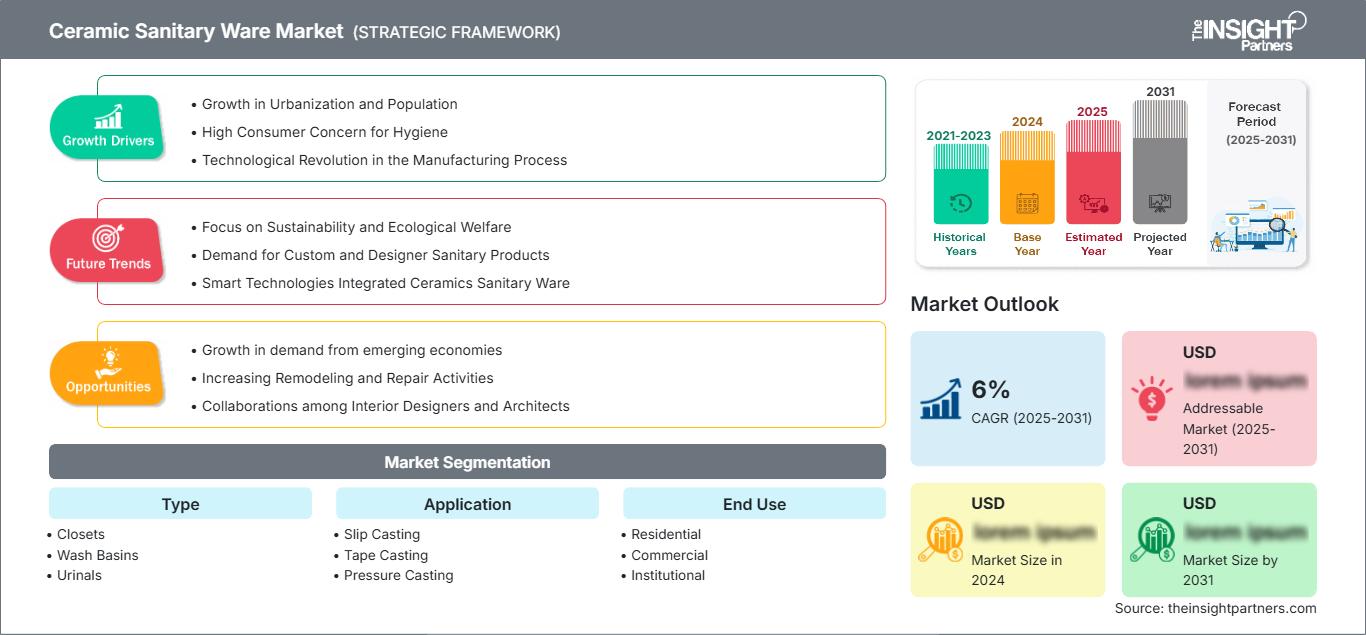
Ceramic Sanitary Ware Market: Strategic Insights
Regional Insights
North America Ceramic Sanitary Ware Market
North America accounted for 26–29% of the global Ceramic Sanitary Ware Market share in 2025 and is projected to expand at a CAGR of 8.4–9.2% through 2034. Demand remains supported by residential remodeling, replacement of aging plumbing fixtures, premium housing construction, and rising investments in hospitality and healthcare infrastructure. Increasing adoption of water-efficient products certified under environmental standards is encouraging manufacturers to expand premium product offerings across the region.
The region also benefits from well-established distribution networks, higher consumer spending on home improvement, and strong specification by architects and developers. Smart toilets, rimless closets, antimicrobial ceramic coatings, and touch-free sanitary fixtures continue gaining popularity in commercial buildings. Investments in sustainable construction, green building certification programs, and digital retail channels are expected to maintain stable long-term demand while replacement sales remain a significant contributor to overall market expansion.
U.S. Ceramic Sanitary Ware Market
The United States represented 76–80% of the North American market in 2025 and is anticipated to register a CAGR of 8.5–9.3% during the forecast period. Residential renovation remains the primary demand generator, supported by strong remodeling expenditure and increasing replacement of conventional bathroom fixtures with water-saving ceramic products. Commercial office upgrades, hospitality developments, healthcare construction, and institutional modernization further contribute to sustained market demand.
Major international manufacturers maintain extensive manufacturing, distribution, and dealer partnerships across the country, while domestic distributors continue expanding premium product portfolios. Consumer interest in integrated bidet toilets, smart sanitary systems, designer wash basins, and sustainable ceramic solutions continues to increase. Government emphasis on efficient water utilization and building modernization further supports long-term investment opportunities across residential and commercial construction sectors.
Europe Ceramic Sanitary Ware Market
Europe accounted for 24–27% of the Ceramic Sanitary Ware market in 2025 and is expected to grow 8.0–8.8% during 2026-2034. Germany retains its position as the largest domestic market owing to high construction standards, the demand for premium housing, and strong production capacity. Sustainable bathroom renovations and stricter environmental regulations keep the development of novel sanitary products thriving across Europe.
The United Kingdom benefits from increased refurbishment of houses, renovation of public structures, and updates to commercial buildings, which keeps demand for high-quality ceramic sanitary ware products steady. Government initiatives promoting water conservation and sustainable construction further encourage the replacement of conventional fixtures with efficient alternatives.
Germany remains the leader in regional ceramic production, leveraging superior techniques and automation. Superior export capabilities, consumers' strong preference for long-lasting bathroom products, and investments in commercial construction improve the country's market performance.
France, Italy, and Spain drive regional demand through home renovations, tourism-driven investments in hotel infrastructure, and improvements in health facilities. Design and sustainability of bathroom products continue to improve market growth in Southern and Western Europe.
APAC Ceramic Sanitary Ware Market
The Asia Pacific region accounted for 34-37% of the global market in 2025, which is projected to witness the highest CAGR of 11.5-12.3% during the forecast period up to 2034. China is the largest producer and consumer, and India is experiencing rapid growth in urban housing construction and high disposable income.
Japan and South Korea focus on luxury sanitation products and smart toilets, whereas Australia exhibits steady demand in both residential renovations and commercial construction. Overall, government housing schemes, industrial development, and urbanization contribute to the growth of regional manufacturing and consumption.
Middle East & Africa Ceramic Sanitary Ware Market
The Middle East & Africa region is forecasted to exhibit a CAGR of 9.1%-9.9% in 2026-2034. The Middle Eastern countries of Saudi Arabia and the UAE have a strong inclination toward building hospitality, mega-residential, and commercial facilities, thereby creating many business opportunities for luxury ceramic sanitary wares.
South Africa emerges as an important market in the region due to rising urban residential construction and infrastructure development, while the rest of the Middle East & Africa sees growth driven by tourism, infrastructure development, and public infrastructure projects. Long-term economic diversification strategies and sustainable urban development programs are expected to strengthen future regional demand.
Segmentation Analysis
Type
The Type segment is projected to grow at a CAGR of 9.8–10.7% during 2026–2034. This segment forms the core of the Ceramic Sanitary Ware Market scope, driven by essential demand across residential and commercial applications. Increasing focus on hygiene and sanitation is supporting steady growth across product categories.
- Wash Basin: Widely adopted in residential and commercial spaces due to functionality and design versatility. Demand is driven by renovation trends and preference for aesthetic bathroom solutions.
- Urinals: Primarily used in commercial and institutional settings. Increasing focus on water efficiency and hygiene is supporting adoption in public infrastructure projects.
- Water Closets: Represent a dominant product category due to essential usage across all applications. Technological advancements such as dual-flush systems are enhancing demand.
- Cisterns: Demand is influenced by water conservation regulations and increasing adoption of concealed systems in modern bathrooms.
Technology
The Technology segment is expected to grow at a CAGR of 10.5–11.8%. Advancements in manufacturing processes are enhancing efficiency and product quality. Automation and digitalization are key trends shaping this segment.
- Pressure Casting: Preferred for high-volume production due to efficiency and consistency. Increasing adoption is driven by cost optimization and reduced production time.
- Slip Casting: Traditional method used for complex shapes. While slower, it remains relevant for customized and specialty products.
- Tape Casting: Used for specialized applications requiring thin ceramic layers. Adoption is limited but growing in niche segments.
- Isostatic Casting: Offers uniform density and strength, making it suitable for high-performance applications.
Application
The Application segment is projected to grow at a CAGR of 10.8–12.0%. Rising construction activities and infrastructure development are key drivers. Increasing demand for modern sanitation solutions is supporting growth.
- Offices: Demand driven by commercial construction and renovation projects. Focus on employee hygiene and workplace standards is influencing adoption.
- Industrial: Adoption driven by compliance with hygiene regulations and worker welfare initiatives.
- Institutional: Includes schools and public facilities, where government investments in sanitation are key drivers.
- Hospitality: Growth supported by tourism expansion and hotel construction projects globally.
- Healthcare: Increasing focus on hygiene standards and infection control is driving demand.
- Residential: Largest application segment due to housing construction and renovation activities.
Opportunity Snapshot
| Application | Revenue Contribution | Trend Tag | Adoption Stage |
|---|---|---|---|
| Offices | Medium | Workspace Hygiene | Mature |
| Industrial | Low | Compliance Upgrade | Emerging |
| Institutional | Medium | Public Sanitation | Scaling |
| Hospitality | High | Luxury Interiors | Mature |
| Healthcare | Medium | Infection Control | Scaling |
| Residential | High | Urban Housing | Mature |
Ceramic Sanitary Ware Market Growth Drivers and Impact Analysis
Rising Global Construction and Urban Housing Investments
The increased rate of urbanization in the Asia-Pacific region, the Middle East, and some parts of Africa will drive demand for housing, office space, and infrastructure, leading to increased consumption of ceramic sanitary wares. The government plans to construct more affordable housing, while some investors are venturing into building luxurious homes. The increasing number of individuals moving to urban areas creates a need for advanced plumbing and bathrooms. In addition, commercial projects such as hotels, offices, hospitals, airports, and educational institutions require robust ceramic sanitary ware that is long-lasting. Since infrastructure development is a key priority for developing countries, producers are increasing their capacity to manufacture a more diverse range of products to meet the needs of both low- and high-end customers.
Growing Demand for Water-Efficient and Sustainable Bathroom Solutions
Water conservation has become a strategic priority for governments, developers, and consumers due to increasing environmental concerns and tightening building regulations. Ceramic sanitary wares featuring double-flush systems, advanced flush mechanisms, concealed cisterns, and low-water-consumption designs are gaining acceptance in both residential and commercial construction. The green building accreditation process promotes the selection of water-saving plumbing devices that do not compromise their functionality. At the same time, manufacturers are advancing their manufacturing processes through the use of recycled ceramics, energy-efficient kilns, digitized manufacturing, and waste-minimization efforts. Such investments in sustainability will ensure regulatory compliance and increase efficiency.
Technological Advancements in Ceramic Manufacturing
Automation is revolutionizing the production process of ceramic sanitary wares using techniques such as pressure casting, robotic glazing, computerized inspection systems, artificial intelligence-assisted quality control, and kiln technology. This automation leads to precise dimensions, fewer defective products, reduced production time, and increased productivity. Smart manufacturing also increases production flexibility, enabling the manufacturer to respond to market changes, such as shifting consumer needs and specialized architectural requirements. Computer software enables rapid product development, whereas automated systems increase efficiency and reduce human dependence. Through continued investment in technology, the manufacturer can develop superior products such as antimicrobial ceramic coating, rimless design, and smart technology.
Ceramic Sanitary Ware Market Future Trends
Expansion of Smart and Connected Bathroom Technologies
Smart bathroom ecosystems are expected to reshape the Ceramic Sanitary Ware market trends over the coming decade as digital technologies become integrated into premium residential and commercial construction. Highly intelligent toilet systems that can automatically flush, have a bidet feature, heated seats, hands-free control, self-cleaning, and health monitoring are becoming easier to purchase, not only for luxury use but also for other purposes. Manufacturers are continually incorporating sensors, IoT connectivity, and increasingly intelligent features into sanitary ceramics while simultaneously reducing production costs through automation. It is anticipated that increasing consumer knowledge of hygiene, comfort, accessibility, and water conservation will further accelerate implementation.
Growing Adoption of Sustainable Manufacturing and Circular Materials
Manufacturers are increasingly focusing on circular production systems that emphasize recycled ceramic components, sustainable energy sources, innovative kiln-operation technologies, water reclamation processes, and low-carbon-footprint manufacturing. Regulatory issues related to emissions from industrial activity and environmental performance are likely to spur further modernization of manufacturing plants worldwide. The product development process will place greater emphasis on extended lifespan, reduced maintenance requirements, sustainable packaging, and sustainable material sourcing. Sustainable purchasing practices by developers, architects, and governmental bodies will lead to an increased use of environmentally certified sanitary products.
Ceramic Sanitary Ware Market Opportunities
Premiumization Across Hospitality and Luxury Residential Construction
The construction of luxury hotels, upscale real estate developments, branded residences, and commercial properties also remains a lucrative business prospect for manufacturers of expensive ceramic sanitary ware. According to the Ceramic Sanitary Ware market Forecasts, designer, antimicrobial, technologically advanced, invisible-installation, and bespoke-finish bathroom collections will see relatively high demand in both developing and developed economies. By collaborating with architects, interior designers, real estate developers, and hospitality providers, companies can ensure they secure significant specification projects. The companies likely to benefit from high-end projects are those that manufacture locally, customize their products, and use online platforms to interact with their customers.
Expansion into Emerging Infrastructure and Institutional Projects
The quick investments being made into hospitals, schools, airports, railway stations, government buildings, affordable housing, and public sanitation infrastructure provide considerable future growth potential. There is an increasing trend towards the use of long-lasting, hygienic, and water-saving ceramic sanitary fixtures that can withstand heavy use without incurring high maintenance costs. Governments in developing economies continue to allocate more funds to building public infrastructure and sanitation improvement programs, leading to increased purchases of standard ceramic fixtures. Manufacturers who invest in regional manufacturing units and application-oriented product lines will benefit from their growing market presence.
Recent Developments
- June 2026: Jincheng Global Ceramic Company inaugurated a US$80 million Chinese-invested sanitary ware manufacturing facility in Karak, Jordan. The project is expected to strengthen Jordan's industrial base, increase domestic manufacturing value addition, and serve export markets across neighboring countries and Europe, reflecting continued investment in regional ceramic sanitary ware production.
- November 2025: Saudi Ceramics Company announced the establishment of a new sanitary ware factory with an annual production capacity of 1 million pieces and an investment of approximately SAR 250 million. The project is intended to expand manufacturing capacity, improve operational efficiency, and strengthen the company's position in the regional sanitary ware market.
- February 2025: YAFFA Industrial Park announced the development of a new sanitary ware manufacturing project, aimed at expanding ceramic sanitary ware production capabilities and supporting export-oriented manufacturing. The investment is expected to enhance industrial capacity, create employment opportunities, and strengthen the regional ceramics manufacturing ecosystem.
Frequently Asked Questions

- Comprehensive Market Sizing and Forecast Analysis
- Detailed Segmentation Analysis
- In-Depth Market Dynamics Assessment
- Regional and Country-Level Insights
- Competitive Landscape and Company Benchmarking
- Strategic Business Intelligence
Recent Reports
Testimonials

The Insight Partners' SCADA System Market report is comprehensive, with valuable insights on current trends and future forecasts. The team was highly professional, responsive, and supportive throughout. We are very satisfied and highly recommend their services.
RAN KEDEM Partner, Reali Technologies LTDs
I requested a report on a very specific software market and the team produced the report in a few days. The information was very relevant and well presented. I then requested some changes and additions to the report. The team was again very responsive and I got the final report in less than a week.
JEAN-HERVE JENN Chairman, Future Analytica
We worked with The Insight Partners for an important market study and forecast. They gave us clear insights into opportunities and risks, which helped shape our plans. Their research was easy to use and based on solid data. It helped us make smart, confident decisions. We highly recommend them.
PIYUSH NAGPAL Sr. Vice President, High Beam Global
The Insight Partners delivered insightful, well-structured market research with strong domain expertise. Their team was professional and responsive throughout. The user-friendly website made accessing industry reports seamless. We highly recommend them for reliable, high-quality research services
YUKIHIKO ADACHI CEO, Deep Blue, LLC.
This is the first time I have purchased a market report from The Insight Partners.While I was unsure at first, I visited their web site and felt more comfortable to take the risk and purchase a market report.I am completely satisfied with the quality of the report and customer service. I had several questions and comments with the initial report, but after a couple of dialogs over email with their analyst I believe I have a report that I can use as input to our strategic planning process.Thank you so much for taking the extra time and making this a positive experience.I will definitely recommend your service to others and you will be my first call when we need further market data.
JOHN SUZUKI President and Chief Executive Officer, Board Director, BK Technologies
I wish to appreciate your support and the professionalism you displayed in the course of attending to my request for information regarding to infectious disease IVD market in Nigeria. I appreciate your patience, your guidance, and the fact that you were willing to offer a discount, which eventually made it possible for us to close a deal. I look forward to engaging The Insight Partners in the future, all thanks to the impression you have created in me as a result of this first encounter.
DR CHIJIOKE ONYIA MANAGING DIRECTOR, PineCrest Healthcare Ltd.Reason to Buy
- Informed Decision-Making
- Understanding Market Dynamics
- Competitive Analysis
- Identifying Emerging Markets
- Customer Insights
- Market Forecasts
- Risk Mitigation
- Boosting Operational Efficiency
- Strategic Planning
- Investment Justification
- Tracking Industry Innovations
- Aligning with Regulatory Trends





 Get Free Sample for