
Earthen Plasters Market Trends, Demand & Growth by 2034
Earthen Plasters Market Size and Forecasts (2021 - 2034), Global and Regional Share, Trends, and Growth Opportunity Analysis Report Coverage : by Type (Iron, Calcium, Magnesium, Silicates, Aluminum); Application (Walls, Roofs, Masonry, Agriculture); and Geography (North America, Europe, Asia Pacific, and South and Central America)
- Status : Data Released
- Report Code : TIPRE00040543
- Category : Chemicals and Materials
- No. of Pages : 150
- Available Report Formats :


- Last update date : August 07, 2026


2025 Market Size
US$ 92.36 Bn
Base year value
2034 Forecast
US$ 132.60 Bn
Projected by 2034
CAGR 2026-2034
4.10 %
Growth rate
Addressable Market
US$ 1,021.68 Bn
(2026-2034)
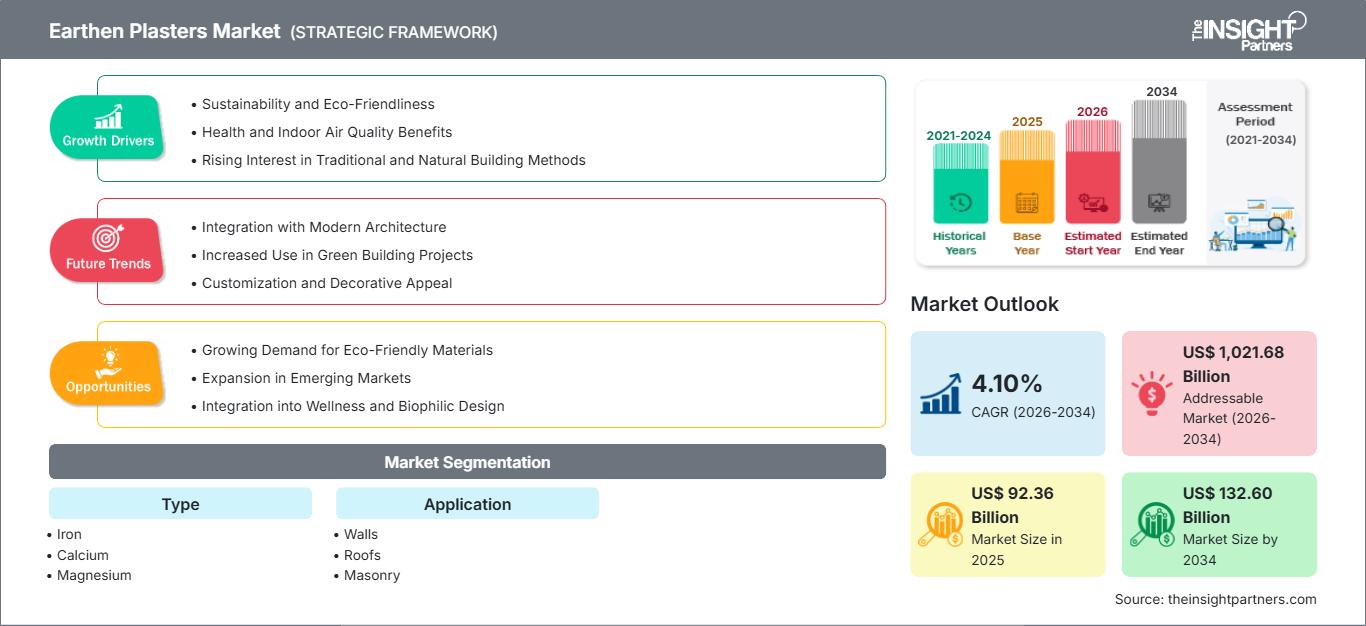
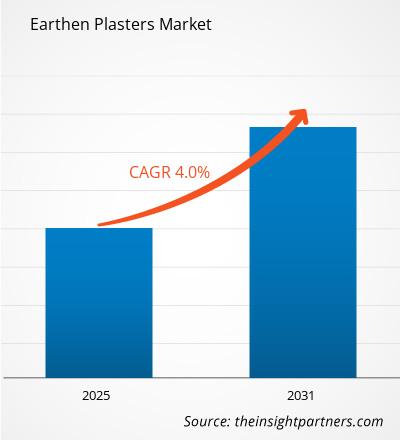
The Earthen Plasters Market size was valued at US$ 92.36 billion in 2025 and will grow to US$ 132.60 billion by 2034, with a CAGR of 4.10% between 2026 and 2034. Factors such as increasing use of natural building materials, growing focus on low carbon buildings, and growing preference for healthy indoor environments will drive the growth of the market. The popularity of earthen plasters will increase further in residential, commercial, and restoration projects owing to their moisture regulation properties and natural aesthetics.
In North America, the market is anticipated to record growth at a CAGR of 4.3-4.9% through 2034. The growth drivers will include green building movements, growing renovations, and growing consumer awareness about sustainable interior building finishes. The growth of the Earthen Plasters Market size in the region will also be aided by the growing preference for non-toxic building materials.
Earthen Plasters Market Assessment and Insights
- North America: Share in 2025 estimated at 24–28% and growing at a CAGR between 4.3–4.9% during 2026–2034. Adoption is supported by sustainable housing projects, restoration activities, and growing use of natural interior finishes.
- US: Share in 2025 estimated at 78–82% of North America and growing at a CAGR between 4.4–5.0% during 2026–2034. Demand benefits from green construction certifications and increasing residential renovation spending.
- Europe: Share in 2025 estimated at 34–38% and growing at a CAGR between 3.8–4.4% during 2026–2034. Germany, France, the UK, and Spain remain leading consumers owing to established natural construction traditions.
- Asia Pacific: Share in 2025 estimated at 26–30% and growing at a CAGR between 4.7–5.3% during 2026–2034. China, India, Japan, and Australia are experiencing increased adoption in sustainable building projects.
- Largest Segment: Walls accounted for 48–52% market share in 2025 and is expected to grow at a CAGR of 4.0–4.6% between 2026–2034 due to widespread interior and exterior finishing applications.
- High Growth Segment: Agriculture represented 8–12% market share in 2025 and is projected to register a CAGR of 5.4–6.0% during 2026–2034, supported by eco-friendly rural infrastructure development.
- Key companies analyzed in detail: American Clay Enterprises, LLC; Armourcoat Limited; Clay.lt; Clayworks Ltd.; Claytec Baustoffe aus Lehm GmbH; Conluto Naturbaustoffe GmbH; Kreidezeit Naturfarben GmbH; Tierrafino B.V.; UKU Pure Earth; Ecococon International.
Source: The Insight Partners' analysis based on proprietary research, government publications, company annual reports, investor presentations, industry databases, and expert interviews.
Market growth has gained pace amidst the growing popularity of eco-friendly construction techniques and embodied carbon reduction considerations in the construction industry. There has been a launch of improved versions which possess better workability, durability, and uniformity without changing the characteristics of natural earthen materials. The improvements in mineral mixing, pigmentation and moisture management capacities have contributed in its application beyond niche segments.
In the future, there will be growth prospects due to the adoption of green building codes, carbon-efficient architectural techniques, and renovation for improving indoor environmental quality. In addition, investments in sustainable building materials in the developing countries are likely to improve their market presence. Improved coordination between architects, constructors and producers of natural materials can help in their commercialization.
Earthen Plasters Market Report Scope
| Report Attribute | Details |
|---|---|
| Market size in 2025 | US$ 92.36 Billion |
| Market Size by 2034 | US$ 132.60 Billion |
| Global CAGR (2026 - 2034) | 4.10% |
| Historical Data | 2021-2024 |
| Forecast period | 2026-2034 |
Earthen Plasters Market Analysis
The Earthen Plasters Market share is heavily dependent on the environmentally friendly direction taken by the construction industry in regard to construction materials. Growing consumer concern about indoor air quality, growing usage of passive building design ideas, and increased demand for construction materials with low emission of harmful substances will all contribute to the market development.
The supply chains depend on the accessibility of naturally found minerals, on local sourcing methods and on the amount of construction activity in different regions. Manufacturers seek to develop their skills related to raw material processing and transportation to help make earthen plasters commercially available. Local sourcing can be considered as an advantage in comparison with other manufacturing companies, but quality standards will play a bigger role in future.
The competition is formed by specialized producers who are engaged in craftsmanship and natural materials usage. Earthen Plasters Market report shows that the leaders of the market concentrate on differentiation of their products through various textures, color choices and environmentally friendly sourcing.
Clayworks Ltd., American Clay Enterprises, LLC, and Armourcoat Limited have been able to increase their presence because of the involvement of architects and tailor-made solutions. On the other hand, Claytec Baustoffe aus Lehm GmbH, Conluto Naturbaustoffe GmbH, Tierrafino B.V., and UKU Pure Earth have managed to build up their presence through technical expertise and sustainable construction professionals.
● REPORT CUSTOMIZATION
Tailor This Report To Align With Your Specific Business Requirements
This report can be customized to align precisely with your business objectives, scope, and target markets. Customization options include tailored segmentation, geography, competitive analysis, and strategic insights to support informed decision-making.
Customize This Report →WHAT YOU CAN ADJUST
- ● Segmentations
- ● Geography
- ● Competitive Analysis
- ● Language Preferences
Earthen Plasters Market: Strategic Insights
Regional Insights
North America Earthen Plasters Market
North America accounted for 24–28% of the global market in 2025 and is expected to expand at a CAGR of 4.3–4.9% during 2026–2034. Adoption is being driven by growing demand for environmentally responsible building materials, increasing renovation activity, and stronger implementation of green building certification frameworks. The region is witnessing greater specification of natural wall-finishing materials in residential and boutique commercial projects.
Market share in North America is further driven by the growing consumer awareness about the indoor environmental quality and use of building products with lower emission levels. There has been an increase in the use of earthen plasters as architectural features in high-end residential, hospitality, and sustainable renovation projects. Policies encouraging energy-efficient and healthy building structures have also played an important role in market growth.
U.S. Earthen Plasters Market
The US was 78–82% of North American consumption in 2025 and estimated to have CAGR of 4.4–5.0% between 2024 and 2034. Natural plasters are consumed mainly for eco-friendly construction projects, restoration work of architectural landmarks and premium construction works.
Building materials producers, building materials suppliers and specialized installers keep raising their educational activity in terms of natural buildings systems. The growing tendency of zero-consumption buildings and sustainable interior decoration encourages the usage of natural plaster. Consumption of natural plasters is high in the states with the most developed sustainable construction methods and green building movements.
Europe Earthen Plasters Market
Europe accounted for 34–38% of global revenue in 2025 and is expected to expand at a CAGR of 3.8–4.4% during 2026–2034. Germany remains the leading national market due to its longstanding tradition of natural construction practices and strong regulatory emphasis on sustainable building materials.
The UK is still witnessing an increase in renovations and heritage restoration activities that favor the use of breathable walling systems. In France, there is encouragement for the uptake of these products through sustainable architecture and the growing popularity of low carbon solutions for construction. Italy and Spain have shown great promise because of the favorable climate, the growth of eco-construction projects, and the growing consumer interest in healthy indoor environments.
APAC Earthen Plasters Market
Asia Pacific accounted for 26-30% share of the worldwide consumption in 2025 and expected to increase with the CAGR of 4.7-5.3% during 2025-2034. China is the leader in the regional consumption due to construction projects and sustainable urbanization trend. In Japan, the demand persists due to natural material housing projects and premium interior finish applications.
Earthen finishes find increasing applications in environmentally friendly housing and green institutional construction in India, South Korea, and Australia. Sustainable urbanization and resource-efficient building government programs create favorable market environment.
Middle East & Africa Earthen Plasters Market
The Middle East & Africa market is anticipated to expand at a CAGR of 4.1–4.7% between 2026 and 2034. Saudi Arabia remains the largest regional market due to large-scale construction projects and growing interest in sustainable building materials compatible with hot climatic conditions.
The United Arab Emirates encourages the development of its market via the development of its green buildings as well as its premium hospitality segments. The country of South Africa provides demand for the market in the form of its eco-construction and sustainable housing programs.
Segmentation Analysis
Type
Type is expected to register a CAGR of 4.0–4.6% during 2026–2034. Mineral composition plays a critical role in determining performance characteristics, color stability, durability, texture, and moisture-management properties. The Earthen Plasters Market scope continues expanding as manufacturers develop formulations that balance natural functionality with modern construction requirements. Growing focus on healthy buildings and low-impact materials supports sustained demand across all mineral categories.
- Iron – Frequently utilized to achieve natural pigmentation and visual depth. Demand remains linked to decorative finishes where unique colors and authentic surface textures are important design considerations.
- Calcium – Widely incorporated to enhance workability, durability, and adhesion properties. Its compatibility with natural wall systems makes it an important component in sustainable construction applications.
- Magnesium – Supports structural stability and contributes to moisture regulation characteristics, making it relevant for projects prioritizing indoor environmental performance and material longevity.
- Silicates – Valued for strength, durability, and compatibility with breathable construction systems. These materials play an important role in performance-oriented earthen plaster formulations.
- Aluminum – Utilized in selected formulations requiring specific structural or aesthetic characteristics, supporting product versatility across multiple building applications.
Application
Application is forecast to expand at a CAGR of 4.3–4.9% during 2026–2034. Increasing use of natural construction materials across residential, agricultural, and restoration projects continues supporting long-term market prospects. Performance benefits related to breathability, moisture control, and aesthetics remain important adoption drivers.
- Walls – Represents the largest application segment because interior and exterior wall finishing remains the primary use case for earthen plaster products across residential and commercial buildings.
- Roofs – Supports specialized construction projects emphasizing thermal performance, natural building principles, and compatibility with traditional architecture methods.
- Masonry – Maintains strategic relevance through restoration projects, heritage buildings, and construction systems requiring breathable finishing materials.
- Agriculture – Increasingly utilized in sustainable farm structures and environmentally conscious rural development projects, supporting growing demand beyond conventional construction sectors.
Opportunity Snapshot
| Segment Name | Revenue Contribution | Trend Tag | Adoption Stage |
| Walls | High | Healthy Interiors | Mature |
| Roofs | Medium | Thermal Comfort | Scaling |
| Masonry | Medium | Heritage Repair | Mature |
| Agriculture | Low | Eco Farming | Emerging |
Earthen Plasters Market Growth Drivers and Impact Analysis
Expansion of Green Building Construction Worldwide
Costs related to residential renovation projects still impact the buying decisions of consumers in developed countries. Increased importance attached to sustainable development and construction methods with low resource usage further helps boost the popularity of earthen plastering materials in both residential and commercial constructions. The governments and developers give priority to those construction materials which cause less harm to the environment and have lower embodied carbon. This is the reason why earthen plasters are favored because they need lesser amount of processing as compared to many other finishing materials. Increased adoption of green building certification programs also helps fuel the growth of demand for the natural materials including earthen plasters.
Rising Preference for Healthy Indoor Living Environments
Consumers are paying greater attention to indoor air quality, occupant wellness, and exposure to building-related pollutants. Earthen plasters help regulate humidity levels while typically containing fewer synthetic additives than traditional finishing systems. These properties support healthier indoor environments and align with broader wellness-oriented building trends. Residential homeowners, hospitality operators, and educational institutions increasingly recognize the benefits associated with natural interior materials. As awareness of indoor environmental quality continues rising across developed and emerging markets, earthen plasters are expected to gain wider acceptance among project owners seeking sustainable and occupant-friendly building solutions.
Growth in Restoration and Heritage Preservation Activities
The restoration of historical buildings and cultural landmarks remains an important source of market demand. Many restoration projects require breathable materials that are compatible with traditional construction techniques and original building fabrics. Earthen plasters offer the ability to preserve architectural authenticity while improving wall performance and moisture management. Growing investments in heritage conservation, tourism infrastructure, and cultural preservation programs continue creating opportunities for specialized plaster products. As governments and private organizations increase support for restoration initiatives, demand for traditional and natural finishing materials is expected to remain robust across numerous regional markets.
Earthen Plasters Market Future Trends
Integration of Bio-Based and Low-Carbon Construction Systems
The Earthen Plasters Market trends indicate a gradual transition toward construction systems that combine natural materials with measurable carbon-reduction benefits. Architects increasingly specify wall assemblies incorporating clay plasters, natural insulation, timber structures, and vapor-open construction methods. This integrated approach supports building performance while reducing reliance on energy-intensive finishing products. Manufacturers are expected to invest in formulation consistency, prefabricated application solutions, and enhanced technical support to facilitate wider commercial adoption. As net-zero and low-carbon building standards become more prominent, earthen plaster systems are likely to find increased application in residential, educational, and hospitality developments. Strong collaboration between material suppliers and sustainability-focused design firms will further encourage market penetration.
Growing Standardization and Professionalization of Installation Practices
Over the coming decade, the market is expected to benefit from improved installer training, technical certification programs, and broader acceptance among mainstream construction professionals. Historically, adoption was often concentrated within specialty natural-building communities. However, increasing demand from commercial projects is creating greater emphasis on quality assurance, predictable application outcomes, and standardized performance characteristics. Suppliers are investing in educational resources, contractor partnerships, and demonstration projects that reduce adoption barriers. Improved specification practices and broader industry knowledge are expected to support greater confidence among developers and project owners. This trend will contribute to more consistent project execution and stronger market credibility across diverse construction sectors.
Earthen Plasters Market Opportunities
Expansion into Sustainable Institutional Infrastructure Projects
Educational facilities, healthcare buildings, cultural institutions, and public infrastructure projects represent significant opportunities for future market expansion. Governments are increasingly incorporating sustainability criteria into procurement frameworks, creating favorable conditions for natural building materials. Earthen plasters support occupant comfort, moisture regulation, and indoor environmental quality, making them attractive for public-sector facilities. Earthen Plasters Market Forecasts suggest that institutional construction could become an increasingly important demand contributor as environmental performance requirements become more stringent. Companies capable of demonstrating technical performance, lifecycle benefits, and compliance with sustainability objectives are expected to strengthen their participation in large-scale public construction programs. Strategic engagement with architects and public agencies will be critical to capturing these opportunities.
Commercial Scaling Through Prefabricated Construction Solutions
The growing adoption of modular and prefabricated construction methods presents a promising pathway for market development. Integrating earthen plaster systems into prefabricated wall panels can improve installation efficiency while preserving the environmental advantages associated with natural materials. Developers are increasingly seeking solutions that reduce onsite labor requirements and accelerate project schedules. Manufacturers that adapt product formulations for industrialized construction processes may gain access to larger-volume projects and broader customer segments. The opportunity extends across residential, hospitality, educational, and mixed-use developments. Investment in research, contractor training, and production system compatibility will be important for suppliers seeking to benefit from this emerging construction trend.
Recent Developments
- September 2025: Conmarble, an eco-friendly luxury finishes company based in Riyadh, has joined ALUPCO Group, highlighting Saudi Arabia's focus on sustainable high-end construction. With this acquisition, ALUPCO, renowned for its aluminium and building solutions, expands its expertise to include natural plasters, microcement, and other premium materials, offering architects and homeowners a wider selection of handcrafted, sustainable finishes.
- June 2025: Gyproc India has introduced India's first Environmental Product Declaration (EPD) for its Low Carbon Plaster, launched in April 2024, positioning itself as the only Indian manufacturer of EPD verified gypsum plasters that significantly lower carbon emissions. This significant announcement occurred at an unveiling event attended by prominent builders and developers, showcasing the new packaging labeled with EPD Verified and Low Carbon identifiers. The event included a tour of Gyproc's facilities, highlighting its commitment to quality and sustainable technologies.
Frequently Asked Questions

- Comprehensive Market Sizing and Forecast Analysis
- Detailed Segmentation Analysis
- In-Depth Market Dynamics Assessment
- Regional and Country-Level Insights
- Competitive Landscape and Company Benchmarking
- Strategic Business Intelligence
Recent Reports
Testimonials

The Insight Partners provided valuable market intelligence that supported our global go-to-market strategy. Their team was professional, responsive, and attentive to our feedback, providing thoughtful analysis and helpful methodological clarifications throughout the project.
Junmo Kim Chief Financial Officer (CFO), Enertech Co., Ltd.
The Insight Partners' SCADA System Market report is comprehensive, with valuable insights on current trends and future forecasts. The team was highly professional, responsive, and supportive throughout. We are very satisfied and highly recommend their services.
RAN KEDEM Partner, Reali Technologies LTDs
I requested a report on a very specific software market and the team produced the report in a few days. The information was very relevant and well presented. I then requested some changes and additions to the report. The team was again very responsive and I got the final report in less than a week.
JEAN-HERVE JENN Chairman, Future Analytica
We worked with The Insight Partners for an important market study and forecast. They gave us clear insights into opportunities and risks, which helped shape our plans. Their research was easy to use and based on solid data. It helped us make smart, confident decisions. We highly recommend them.
PIYUSH NAGPAL Sr. Vice President, High Beam Global
The Insight Partners delivered insightful, well-structured market research with strong domain expertise. Their team was professional and responsive throughout. The user-friendly website made accessing industry reports seamless. We highly recommend them for reliable, high-quality research services
YUKIHIKO ADACHI CEO, Deep Blue, LLC.
This is the first time I have purchased a market report from The Insight Partners.While I was unsure at first, I visited their web site and felt more comfortable to take the risk and purchase a market report.I am completely satisfied with the quality of the report and customer service. I had several questions and comments with the initial report, but after a couple of dialogs over email with their analyst I believe I have a report that I can use as input to our strategic planning process.Thank you so much for taking the extra time and making this a positive experience.I will definitely recommend your service to others and you will be my first call when we need further market data.
JOHN SUZUKI President and Chief Executive Officer, Board Director, BK Technologies
I wish to appreciate your support and the professionalism you displayed in the course of attending to my request for information regarding to infectious disease IVD market in Nigeria. I appreciate your patience, your guidance, and the fact that you were willing to offer a discount, which eventually made it possible for us to close a deal. I look forward to engaging The Insight Partners in the future, all thanks to the impression you have created in me as a result of this first encounter.
DR CHIJIOKE ONYIA MANAGING DIRECTOR, PineCrest Healthcare Ltd.Reason to Buy
- Informed Decision-Making
- Understanding Market Dynamics
- Competitive Analysis
- Identifying Emerging Markets
- Customer Insights
- Market Forecasts
- Risk Mitigation
- Boosting Operational Efficiency
- Strategic Planning
- Investment Justification
- Tracking Industry Innovations
- Aligning with Regulatory Trends





 Get Free Sample for