
Chondroitin Sulfate Market Size, Growth & Trends by 2034
Coverage: By Source (Swine, Seafood, Bovine, Synthetic, Others); Application (Pharmaceuticals, Animal Nutrition, Cosmetics, and Others), and Geography (North America, Europe, Asia Pacific, and South and Central America)
- Status : Data Released
- Report Code : TIPRE00009929
- Category : Chemicals and Materials
- No. of Pages : 150
- Available Report Formats :


- Last update date : September 01, 2026


2025 Market Size
US$ 1,329.75 Mn
Base year value
2034 Forecast
US$ 1,766.91 Mn
Projected by 2034
CAGR 2026-2034
3.21 %
Growth rate
Addressable Market
US$ 14,062.60 Mn
(2026-2034)
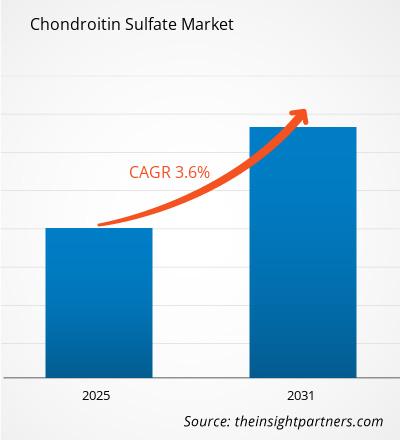
The Chondroitin Sulfate Market was valued at US$ 1,329.75 Million in 2025 and is projected to reach US$ 1,766.91 Million by 2034, registering a CAGR of 3.21% during 2026–2034. Demand is supported by established use in pharmaceutical and joint-health formulations, expanding animal nutrition applications, and continued interest in bioactive ingredients for cosmetics. Source diversification and tighter quality requirements are also influencing procurement and manufacturing strategies.
North America remains an important demand center, supported by established nutraceutical distribution, pharmaceutical formulation capabilities, and consumer spending on joint-health products. The regional Chondroitin Sulfate Market size is expected to expand at an estimated 3.0–3.6% CAGR through 2034. Pharmaceutical-grade demand, veterinary applications, and greater emphasis on ingredient traceability are expected to reinforce regional purchasing requirements.
Chondroitin Sulfate Market Assessment and Insights
- North America: North America accounted for a 36–39% share in 2025 and is projected to grow at a 3.0–3.6% CAGR between 2026 and 2034, supported by nutraceutical consumption, pharmaceutical applications, veterinary joint-care products, and established ingredient distribution networks.
- U.S.: The U.S. represented 78–82% of North America's 2025 share and is expected to expand at a 3.0–3.5% CAGR between 2026–2034, supported by supplement and pharmaceutical demand.
- Europe: Europe held a 24–27% share in 2025 and is projected to grow at a 2.8–3.4% CAGR between 2026 and 2034, with France, Germany, Italy, Spain, and the UK supported by pharmaceutical-grade consumption and regulated joint-health formulations.
- Asia Pacific: Asia Pacific represented a 21–24% share in 2025 and is expected to record a 3.7–4.5% CAGR between 2026 and 2034, led by China, Japan, South Korea, India, and Australia through manufacturing expansion and rising healthcare consumption.
- Largest Segment: Pharmaceuticals represented a 31–35% market share in 2025 and is projected to grow at a 3.8–4.4% CAGR between 2026 and 2034, supported by quality-sensitive applications.
- High Growth Segment: Synthetic represented a 5–8% market share in 2025 and is expected to grow at a 5.0–6.0% CAGR between 2026 and 2034, benefiting from source diversification and controlled production.
- Key companies analyzed in detail: Shandong Runxin Biotechnology Co., Ltd., TSI Group, Synutra Ingredients, Yantai Ruikangda Biochemical Products Co., Ltd., Seikagaku Corporation, Qingdao Wantuming Biological Products Co., Ltd., Sioux Pharm, Pacific Rainbow International, Summit Nutritionals International Corporation, Bioiberica, S.A.U.
Source: The Insight Partners' analysis based on proprietary research, government publications, company annual reports, investor presentations, industry databases, and expert interviews.
Production continues to evolve into more rigorous processes for the tracking of the source of raw materials, the extraction process, purification, molecular identification, and contamination issues. Animal-based cartilage is an important source in the commercial world, although synthetic alternatives have gained importance when customers value specific criteria. Producers are moving from competing in terms of raw material supply towards using high-quality standards, testing, documentation, and assured delivery of products.
Further development will probably include diversification of sources, high purity materials, pharmaceutical applications, and regionalized manufacturing. The demands on biological materials should drive more documentation and batch control processes, as new opportunities open up in Asia. The areas which may receive investment include increased efficiency in processing, traceability systems, quality assurance, and product applications development.
Chondroitin Sulfate Market Report Scope
| Report Attribute | Details |
|---|---|
| Market size in 2025 | US$ 1,329.75 Million |
| Market Size by 2034 | US$ 1,766.91 Million |
| Global CAGR (2026 - 2034) | 3.21% |
| Historical Data | 2021-2024 |
| Forecast period | 2026-2034 |
Chondroitin Sulfate Market Analysis
Growth prospects for the Chondroitin Sulfate Market depend on various interrelated demand drivers. While pharmaceutical producers focus on obtaining active substances in a consistent form, nutraceutical producers are interested in standardized specifications, source tracking, and compatible formulations. Another source of demand comes from animal nutrition via joint health care supplements for pets. Thus, the value chain starts from sourcing of cartilage and biological raw materials through extraction, enzymatic processing, purification, drying, testing, packaging, formulation, and delivery.
Factors affecting supply include the availability of adequate animal raw materials, number of slaughtered animals, geographical sources of supply, yield of the process, and regulatory requirements. Companies able to integrate their sourcing and production activities are able to decrease batch-to-batch variability and increase supply security. Increasingly, customers assess their suppliers based on such criteria as purity of the product, microbiological controls, traceability, documentation, and regulatory compliance.
The Chondroitin Sulfate Market analysis shows a market of established specialty manufacturers and regional manufacturers who have strong access to raw materials. The companies like Shandong Runxin Biotechnology Co., Ltd., Synutra Ingredients and Yantai Ruikangda Biochemical Products Co., Ltd. remain relevant due to their ingredient manufacturing capabilities, whereas Seikagaku Corporation focuses on glycoscience-based pharmaceutical production. Bioiberica, S.A.U. provides for pharmaceutical grade ingredients along with technical and regulatory expertise in global markets.
Quality, application know-how, vertical integration and compliance with regional regulations play an important role in competitive positioning. TSI Group, Sioux Pharm, Pacific Rainbow International, Summit Nutritionals International Corporation fulfill the needs of specialized ingredient and formulation, and Qingdao Wantuming Biological Products Co., Ltd. provides regional manufacturing capabilities. Companies are also looking for alternatives of sourcing, better purification techniques and specialized formulations.
● REPORT CUSTOMIZATION
Tailor This Report To Align With Your Specific Business Requirements
This report can be customized to align precisely with your business objectives, scope, and target markets. Customization options include tailored segmentation, geography, competitive analysis, and strategic insights to support informed decision-making.
Customize This Report →WHAT YOU CAN ADJUST
- ● Segmentations
- ● Geography
- ● Competitive Analysis
- ● Language Preferences
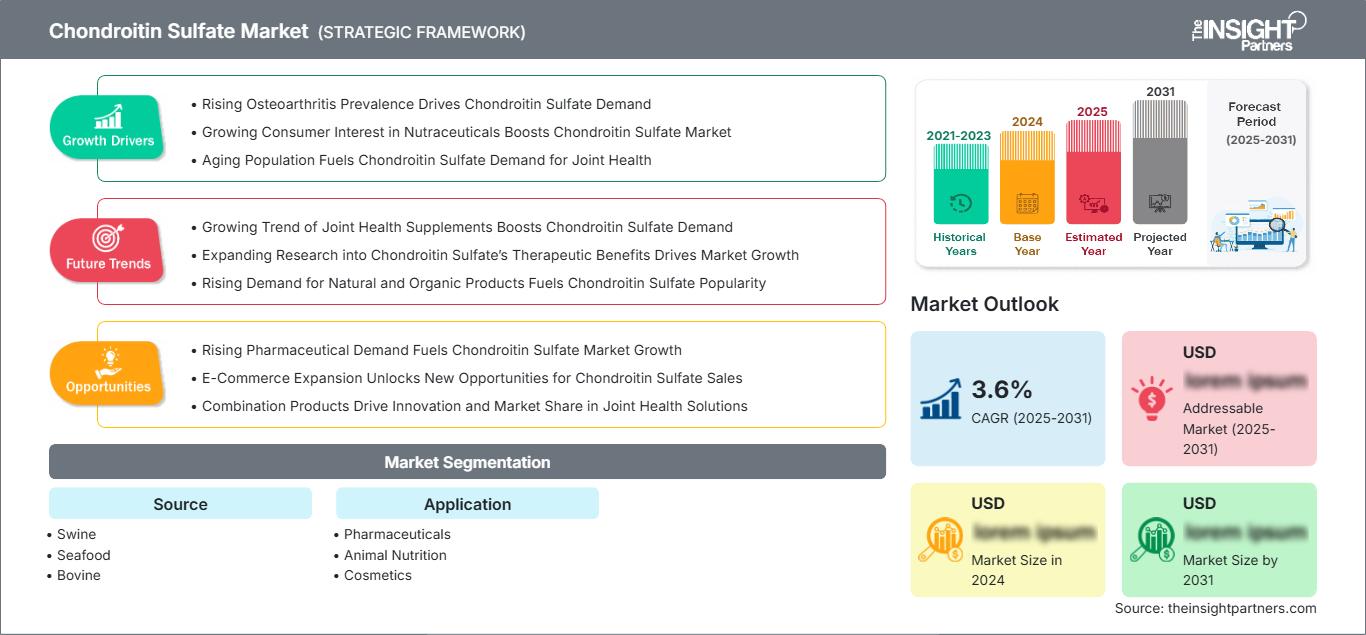
Chondroitin Sulfate Market: Strategic Insights
Regional Insights
North America Chondroitin Sulfate Market
North America held a 36–39% of the Chondroitin Sulfate Market share in 2025, with the regional market expected to expand at a 3.0–3.6% CAGR through 2034. U.S. is the major source for demand due to its advanced distribution channels for nutraceuticals, presence of pharmaceutical industry, and presence of a matured veterinary supplement market. Canada will contribute with its product usage and ingredient distribution.
Procurement in the Chondroitin Sulfate Market is increasingly becoming dependent on authentication, purity, traceability, allergy management, and documentation of ingredients. The pharmaceutical applications increase the value of demand while nutraceutical products contribute to volume of ingredients required. Joint support formulations for companion animals become another source of demand, especially since pet mobility becomes a preventive care segment for many consumers.
U.S. Chondroitin Sulfate Market
The U.S. represented approximately 78–82% of North America's 2025 Chondroitin Sulfate Market share and is expected to record a 3.0–3.5% CAGR through 2034. Demand exists in nutraceutical supplements, pharmaceutical preparations, animal health applications, and specialty cosmetics. Existing channels of distribution help in marketing both mass and high-end products.
The supplier selection process has moved on to consider certificate-of-analysis reliability, source of raw materials, heavy metal management, microbiological aspects, and documentation. A company having expertise in pharmaceutical grade products has access to applications that require stricter quality considerations. The USA is still an important country due to the testing of combination products like glucosamine, collagen, hyaluronic acid, and others in the joints health category.
Europe Chondroitin Sulfate Market
Europe represented a 24–27% Chondroitin Sulfate Market in 2025 and is projected to grow at a 2.8–3.4% CAGR through 2034. France is still significant due to the pharmaceutical position of joint health products containing chondroitin. Germany has both a robust base for pharmaceutical production and nutraceuticals. Italy and Spain participate via healthcare and the intake of supplements.
The UK has demand because of its supplements and special health products, but differences in regulation of medicines, food supplements, and ingredients impact the commercialization process. France and Germany are still considered the leaders among the European countries owing to pharmaceutical distribution channels and quality-oriented purchases. Italy and Spain add demand as a result of healthcare needs of aging population and consumption of dietary supplements.
APAC Chondroitin Sulfate Market
APAC accounted for a 21–24% share in 2025 and is expected to register a 3.7–4.5% CAGR through 2034, making it one of the fastest-expanding regions. China dominates in manufacturing operations, while Japan is focused on the quality of pharmaceuticals. Formulation capabilities of South Korea and India are rising, and Australia contributes via its nutraceutical industry.
Industrialization, healthcare expenditure, rising consumption of supplements, and enhanced manufacturing capabilities enable regional growth. China can capitalize on its large infrastructure for processing ingredients, whereas Japan’s pharmaceutical industry contributes towards high specification applications. India’s nutraceutical and pharmaceutical manufacturing facilities drive further demand, and Australia caters to high-end health products.
Middle East & Africa Chondroitin Sulfate Market
The Middle East & Africa Chondroitin Sulfate Market are expected to expand at a 2.7–3.4% CAGR through 2034, with Saudi Arabia and the UAE serving as important distribution and healthcare centers. The country also offers an adequately advanced pharmaceutical and nutraceutical route, with the remaining MEA countries being smaller yet increasingly approachable.
In addition to healthcare system improvements, pharmaceutical manufacturing by private players, and demand for health prevention products, gradual consumption is supported. The healthcare modernization efforts favor Saudi Arabia, whereas the UAE acts as a trading center in the region. South Africa is the source of a well-developed pharmaceutical and supplementation route. Supply will most likely remain import-focused.
Segmentation Analysis
Source
Source selection determines raw-material availability, processing economics, traceability requirements, and suitability for regulated applications. Bovine and swine sources remain commercially significant, while seafood-derived materials address differentiated sourcing requirements. Synthetic production offers greater process control and represents a strategic route for manufacturers seeking consistent specifications. The Chondroitin Sulfate Market scope, therefore, increasingly encompasses both established biological extraction and emerging controlled-production approaches. The source segment is expected to grow at a 3.0–3.8% CAGR from 2026 to 2034.
- Swine: Swine-derived material remains important because porcine cartilage offers established extraction pathways and broad industry familiarity. Its strategic role is strongest where pharmaceutical and nutraceutical buyers have validated porcine-origin specifications and stable supplier relationships.
- Seafood: Seafood-derived material provides sourcing diversification and supports specialized formulations. Demand is influenced by traceability, species considerations, processing controls, and buyer preferences for marine-origin ingredients in differentiated products.
- Bovine: Bovine material occupies a substantial position because cattle cartilage provides established raw material availability and mature processing infrastructure. Its broad qualification history supports pharmaceutical, nutraceutical, and animal nutrition applications.
- Synthetic: Synthetic production offers controlled manufacturing conditions, standardized composition, and reduced dependence on animal-derived feedstocks. Its strategic importance is increasing among buyers seeking traceable alternatives and consistent specifications for specialized applications.
- Others: Alternative sources support supply diversification and niche formulation requirements where conventional materials face availability, regulatory, ethical, or regional procurement constraints.
Application
Application demand varies according to regulatory classification, formulation requirements, purity expectations, and end-user willingness to pay. Pharmaceuticals represent the most quality-sensitive channel, while animal nutrition provides recurring demand through veterinary and companion-animal products. Cosmetics create specialized opportunities where bioactive functionality is valued. The application segment is projected to expand at a 3.3–4.1% CAGR from 2026 to 2034.
- Pharmaceuticals: Pharmaceutical applications require stringent specifications, documented manufacturing controls, and consistent molecular characteristics. Demand is supported by joint-health products and specialized medical formulations requiring pharmaceutical-grade raw materials.
- Animal Nutrition: Animal nutrition applications benefit from expanding companion-animal healthcare spending and greater emphasis on mobility support. Suppliers compete through formulation compatibility, palatability considerations, quality consistency, and dependable ingredient availability.
- Cosmetics: Cosmetic applications use chondroitin sulfate in specialized skin and personal-care formulations. Demand is influenced by interest in bioactive ingredients, premium formulations, formulation stability, and compatibility with broader skin-health ingredient systems.
- Others: Other applications provide smaller but strategically useful demand pools, including specialized research, formulation development, and emerging functional uses where customized specifications can create higher-value niches.
Opportunity Snapshot
| Application | Revenue Contribution | Trend Tag | Adoption Stage |
|---|---|---|---|
| Pharmaceuticals | High | Joint Health | Mature |
| Animal Nutrition | Medium | Pet Mobility | Scaling |
| Cosmetics | Medium | Skin Bioactives | Scaling |
| Others | Low | Specialty Uses | Emerging |
Chondroitin Sulfate Market Growth Drivers and Impact Analysis
Increasing Demand for Joint-Health Products
Increased focus on joint mobility is leading to an increase in the number of potential customers for pharmaceutical, nutraceutical, and veterinary products. Increasing aging population, increasing awareness about the management of osteoarthritis, and consumer desire to stay healthy make it necessary for producers to keep chondroitin-based product ranges. It affects the entire value chain since formulation providers need high-quality raw materials, distributors need reliability of supplies, and manufacturers need reliable quality management systems. For example, pharmaceutical-grade raw materials have better commercial position due to their high degree of purity and related documentation. In addition, the development of veterinary applications adds one more level of demand.
Expansion of Pharmaceutical-Grade Applications
Pharmaceutical uses provide a key avenue for growth based on quality due to the need for more stringent controls in identity, purity, microbiology, traceability, and production. Manufacturers able to meet these demands will be able to get involved in higher value-added uses where qualification will prevent substitute threats. The development of pharmaceutical applications will lead to more investment in purification, molecular analysis, documentation, and regulation. This impact extends beyond just the use of ingredients, since formulation companies tend to assess manufacturers as collaborators rather than commodities. This leads to vertical integration and supply relationships. As specialized applications continue to grow, manufacturers will be able to utilize capacity for more profitable grades and maintain distinct channels for nutraceuticals, animal feed, and cosmetic customers.
Rising Need for Traceable and Diversified Raw Materials
Raw-material traceability is becoming increasingly important because biological extraction depends on consistent feedstocks and controlled processing. Buyers are paying closer attention to origin, species, collection practices, contamination risks, and batch documentation. This creates opportunities for suppliers that can integrate sourcing, processing, testing, and documentation within a coordinated quality system. Diversification is equally important because dependence on a single animal source can expose manufacturers to supply interruptions, regulatory restrictions, or changing buyer preferences. Alternative biological sources and controlled production technologies can therefore improve resilience. Over time, these requirements should shift competition toward transparent supply chains and validated production systems rather than purely volume-based competition.
Chondroitin Sulfate Market Future Trends
Movement Toward Controlled and Alternative Production
The Chondroitin Sulfate Market trends landscape is increasingly shaped by interest in controlled production methods that can reduce variability associated with biological feedstocks. Synthetic and fermentation-oriented approaches can potentially provide more consistent molecular characteristics, controlled manufacturing environments, and improved traceability. Adoption will depend on production economics, regulatory acceptance, technical equivalence, and customer willingness to qualify alternative materials. Traditional animal-derived products are unlikely to disappear because established supply chains and validated applications remain commercially important. Instead, the market is likely to develop a two-track structure, with conventional extraction serving established high-volume applications while controlled alternatives target specialized pharmaceutical, premium nutraceutical, and source-sensitive formulations.
Integration of Chondroitin Sulfate Into Multi-Ingredient Formulations
Formulators are increasingly evaluating chondroitin sulfate alongside complementary ingredients rather than positioning it as a standalone component. Joint-health products can combine chondroitin with glucosamine, collagen, hyaluronic acid, minerals, and other functional ingredients, allowing brands to differentiate formulations through broader mobility propositions. Pharmaceutical developers can similarly investigate combinations that address specific therapeutic requirements. This trend shifts competition toward formulation science, clinical substantiation, ingredient compatibility, and dosage optimization. Suppliers that provide technical documentation and formulation assistance can strengthen customer relationships beyond basic ingredient sales. Over the forecast period, multi-ingredient development is expected to create specialized demand for consistent grades, controlled particle characteristics, and reliable batch-to-batch performance.
Chondroitin Sulfate Market Opportunities
Development of High-Purity Pharmaceutical Grades
Manufacturers can capture additional value by expanding high-purity grades designed for regulated pharmaceutical applications. Investment priorities include purification systems, validated analytical methods, traceability platforms, controlled drying, and documentation capabilities. Suppliers should align product specifications with target-market regulatory requirements before committing capacity because qualification cycles can be lengthy. Partnerships with formulation companies and pharmaceutical developers can reduce commercialization risk by creating defined application pathways. The Chondroitin Sulfate Market Forecasts indicate gradual overall expansion rather than rapid volume acceleration, making premiumization strategically attractive. Higher-value pharmaceutical applications can therefore support margin resilience even when commodity ingredient pricing remains competitive. Producers with integrated quality systems are particularly well positioned to pursue these opportunities.
Expansion of Sustainable and Diversified Sourcing
A second opportunity lies in developing diversified sourcing systems that improve traceability while reducing dependence on individual biological feedstocks. Producers can strengthen procurement resilience by qualifying multiple geographic sources, improving cartilage recovery systems, and implementing digital batch traceability from raw material through finished ingredient. Alternative production technologies can complement conventional sourcing where economics and regulatory pathways permit. Commercial differentiation can also come from transparent origin documentation and sustainability metrics that help customers satisfy internal procurement requirements. Distributors can support this opportunity by building regional inventories and maintaining multiple qualified suppliers. Such approaches can reduce supply disruption exposure while creating stronger relationships with pharmaceutical, nutraceutical, cosmetic, and animal nutrition customers.
Recent Developments
- April 2026: Xtant Medical Holdings, Inc. — Xtant Medical Holdings, Inc. entered into an exclusive U.S. distribution agreement with Dilon Technologies, Inc. for Dilon's HEMOBLAST Bellows surgical hemostat. The product combines collagen, human-derived thrombin, and bovine-derived chondroitin sulfate, expanding the commercial use of chondroitin sulfate in advanced surgical hemostasis applications. Xtant also integrated Dilon's approximately 20-person U.S. sales team to strengthen market penetration.
- May 2026: Kwangdong Pharmaceutical Co., Ltd. launched Chondropower1200, an over-the-counter oral gel formulated to relieve symptoms associated with degenerative arthritis. The product contains chondroitin-related functional ingredients and expands the use of chondroitin sulfate into convenient, consumer-oriented joint-care formulations. The launch highlights continued product innovation in the pharmaceutical and nutraceutical space, particularly around oral dosage formats designed for musculoskeletal health management.
Frequently Asked Questions

- Comprehensive Market Sizing and Forecast Analysis
- Detailed Segmentation Analysis
- In-Depth Market Dynamics Assessment
- Regional and Country-Level Insights
- Competitive Landscape and Company Benchmarking
- Strategic Business Intelligence
Recent Reports
Testimonials

The Insight Partners provided valuable market intelligence that supported our global go-to-market strategy. Their team was professional, responsive, and attentive to our feedback, providing thoughtful analysis and helpful methodological clarifications throughout the project.
Junmo Kim Chief Financial Officer (CFO), Enertech Co., Ltd.
The Insight Partners' SCADA System Market report is comprehensive, with valuable insights on current trends and future forecasts. The team was highly professional, responsive, and supportive throughout. We are very satisfied and highly recommend their services.
RAN KEDEM Partner, Reali Technologies LTDs
I requested a report on a very specific software market and the team produced the report in a few days. The information was very relevant and well presented. I then requested some changes and additions to the report. The team was again very responsive and I got the final report in less than a week.
JEAN-HERVE JENN Chairman, Future Analytica
We worked with The Insight Partners for an important market study and forecast. They gave us clear insights into opportunities and risks, which helped shape our plans. Their research was easy to use and based on solid data. It helped us make smart, confident decisions. We highly recommend them.
PIYUSH NAGPAL Sr. Vice President, High Beam Global
The Insight Partners delivered insightful, well-structured market research with strong domain expertise. Their team was professional and responsive throughout. The user-friendly website made accessing industry reports seamless. We highly recommend them for reliable, high-quality research services
YUKIHIKO ADACHI CEO, Deep Blue, LLC.
This is the first time I have purchased a market report from The Insight Partners.While I was unsure at first, I visited their web site and felt more comfortable to take the risk and purchase a market report.I am completely satisfied with the quality of the report and customer service. I had several questions and comments with the initial report, but after a couple of dialogs over email with their analyst I believe I have a report that I can use as input to our strategic planning process.Thank you so much for taking the extra time and making this a positive experience.I will definitely recommend your service to others and you will be my first call when we need further market data.
JOHN SUZUKI President and Chief Executive Officer, Board Director, BK Technologies
I wish to appreciate your support and the professionalism you displayed in the course of attending to my request for information regarding to infectious disease IVD market in Nigeria. I appreciate your patience, your guidance, and the fact that you were willing to offer a discount, which eventually made it possible for us to close a deal. I look forward to engaging The Insight Partners in the future, all thanks to the impression you have created in me as a result of this first encounter.
DR CHIJIOKE ONYIA MANAGING DIRECTOR, PineCrest Healthcare Ltd.Reason to Buy
- Informed Decision-Making
- Understanding Market Dynamics
- Competitive Analysis
- Identifying Emerging Markets
- Customer Insights
- Market Forecasts
- Risk Mitigation
- Boosting Operational Efficiency
- Strategic Planning
- Investment Justification
- Tracking Industry Innovations
- Aligning with Regulatory Trends





 Get Free Sample for