
Consumer Healthcare Sensor Market Growth, Demand & Size by 2034
Coverage: By Product Type (Temperature Sensor, Heart Rate Sensor, Image Sensor, Blood Pressure Sensor, Motion Sensor, Touch Sensor); Application (Handheld and Homecare, Patient Monitoring, Fitness and Wellness, Therapeutic) , and Geography (North America, Europe, Asia Pacific, and South and Central America)
- Status : Data Released
- Report Code : TIPRE00002826
- Category : Electronics and Semiconductor
- No. of Pages : 150
- Available Report Formats :


- Last update date : July 28, 2026


2025 Market Size
US$ 58.21 Bn
Base year value
2034 Forecast
US$ 85.11 Bn
Projected by 2034
CAGR 2026-2034
4.31 %
Growth rate
Addressable Market
US$ 650.80 Bn
(2026-2034)
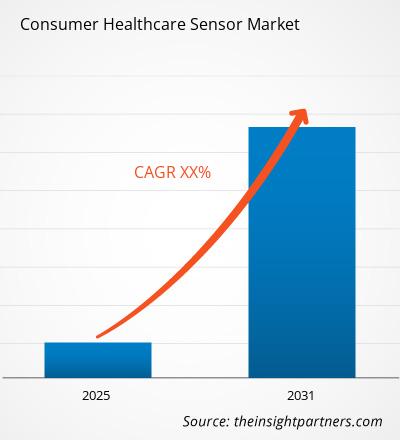
The Consumer Healthcare Sensor Market was US$ 58.21 Billion in 2025 and is anticipated to reach US$ 85.11 Billion by 2034 with a CAGR of 4.31%. This market is growing owing to the increasing significance of connected monitoring, preventative care, at-home diagnostics, and consumer wellness devices powered by sensors in consumer healthcare management.
North America will see a rise in its adoption with a CAGR of 4.0–4.8%, thanks to the increasing penetration of reimbursement for remote patient monitoring, managing chronic diseases, and tracking wellness in homes. Consumer Healthcare Sensor Market size is further strengthened by greater usage of wearable devices, connected blood pressure monitors, smart thermometers, and application-based fitness devices.
Consumer Healthcare Sensor Market Assessment and Insights
- North America held 37–41% share in 2025 and is growing at a CAGR of 4.0–4.8% during 2026–2034, supported by connected care reimbursement, mature device channels, and chronic disease monitoring.
- US represented 80–84% of North America in 2025 and is growing at a CAGR of 4.1–4.9%, led by homecare, fitness wearables, and remote monitoring.
- Europe accounted for 25–29% share in 2025 and is advancing at a CAGR of 3.6–4.4%, with Germany, the UK, France, Italy, and Spain leading adoption.
- Asia Pacific captured 23–27% share in 2025 and is expanding at a CAGR of 5.1–6.0%, led by China, Japan, South Korea, India, and Australia.
- Largest Segment Patient Monitoring held 38–42% market share in 2025 and is growing at a CAGR of 4.2–5.0%, supported by vital-sign tracking and chronic care.
- High Growth Segment Fitness and Wellness held 21–25% market share in 2025 and is growing at a CAGR of 5.4–6.3%, driven by wearables and preventive engagement.
- Key companies analyzed in detail: 3M Company, Analog Devices, Inc., Broadcom Inc., ELMOS Semiconductor SE, Baker Hughes Company, Honeywell International Inc., Koninklijke Philips N.V., Merit Medical Systems, Inc., Siemens Healthineers AG, and TE Connectivity Ltd.
Source: The Insight Partners' analysis based on proprietary research, government publications, company annual reports, investor presentations, industry databases, and expert interviews.
Consumer healthcare sensor applications have moved on from simple sensor elements to fully-fledged sensor platforms incorporating low-power electronics, wireless connectivity, software, and ergonomic designs. Consumer Healthcare Sensor Market shows advancement in miniaturization, bio-signal precision, image capturing capabilities, motion sensing, and pressure sensing. The manufacturing is being influenced by semiconductor production capability, quality systems for medical devices, calibration processes, and cooperation between components suppliers, device manufacturers, and digital health platforms.
Future demand will depend on growing populations, limits on primary care capacity, and consumers' interest in monitoring their health outside of the clinic. The development will be favored by sensors that can minimize false signals, increase battery life, and communicate securely with mobile or cloud platforms. New geographies will provide volumes through the presence of smartphones, and regulated markets – through evidence, cybersecurity, and interoperability.
Consumer Healthcare Sensor Market Report Scope
| Report Attribute | Details |
|---|---|
| Market size in 2025 | US$ 58.21 Billion |
| Market Size by 2034 | US$ 85.11 Billion |
| Global CAGR (2026 - 2034) | 4.31% |
| Historical Data | 2021-2024 |
| Forecast period | 2026-2034 |
Consumer Healthcare Sensor Market Analysis
The Consumer Healthcare Sensor Market is driven by increasing requirements for monitoring blood pressure, heart rate, body temperature, movement, and imaging signals from non-clinical settings. Chronic disease burden statistics and trends in telemedicine from the WHO add to the demand for sensors that assist consumers and doctors in detecting health issues earlier. The supply chain comprises sensors, ASICs, assembly process, firmware, device integration, data platforms, distribution channels, and healthcare providers.
Factors influencing supply include availability of semiconductors, biocompatible materials, calibrating systems, documentation processes, and cybersecurity measures. Sensors need to combine precision, patient comfort, power consumption efficiency, and low price, which drives the development of design-in services and production expertise among the semiconductor manufacturers.
The Consumer Healthcare Sensor Market report reveals competition amongst diversified industrial technology firms, semiconductor firms, medical devices makers and digital health platforms vendors. Among others, competition between Analog Devices, Inc., Honeywell International Inc., TE Connectivity Ltd. and Broadcom Inc. stems from sensing and signal chain capabilities, while the other competition between Koninklijke Philips N.V., Siemens Healthineers AG, Merit Medical Systems, Inc. and 3M Company lies in linking sensor advancements with medical applications.
More than ever, strategic positioning is becoming about verified performance, easy integration and connectivity ecosystems. ELMOS Semiconductor SE offers automotive grade expertise in sensing that can be applied to consumer health electronics, and Baker Hughes Company is still relevant for its precise sensing and measurement. Those suppliers that balance hardware and digital compatibility will have margin security amidst increasing commoditization of basic sensors.
● REPORT CUSTOMIZATION
Tailor This Report To Align With Your Specific Business Requirements
This report can be customized to align precisely with your business objectives, scope, and target markets. Customization options include tailored segmentation, geography, competitive analysis, and strategic insights to support informed decision-making.
Customize This Report →WHAT YOU CAN ADJUST
- ● Segmentations
- ● Geography
- ● Competitive Analysis
- ● Language Preferences
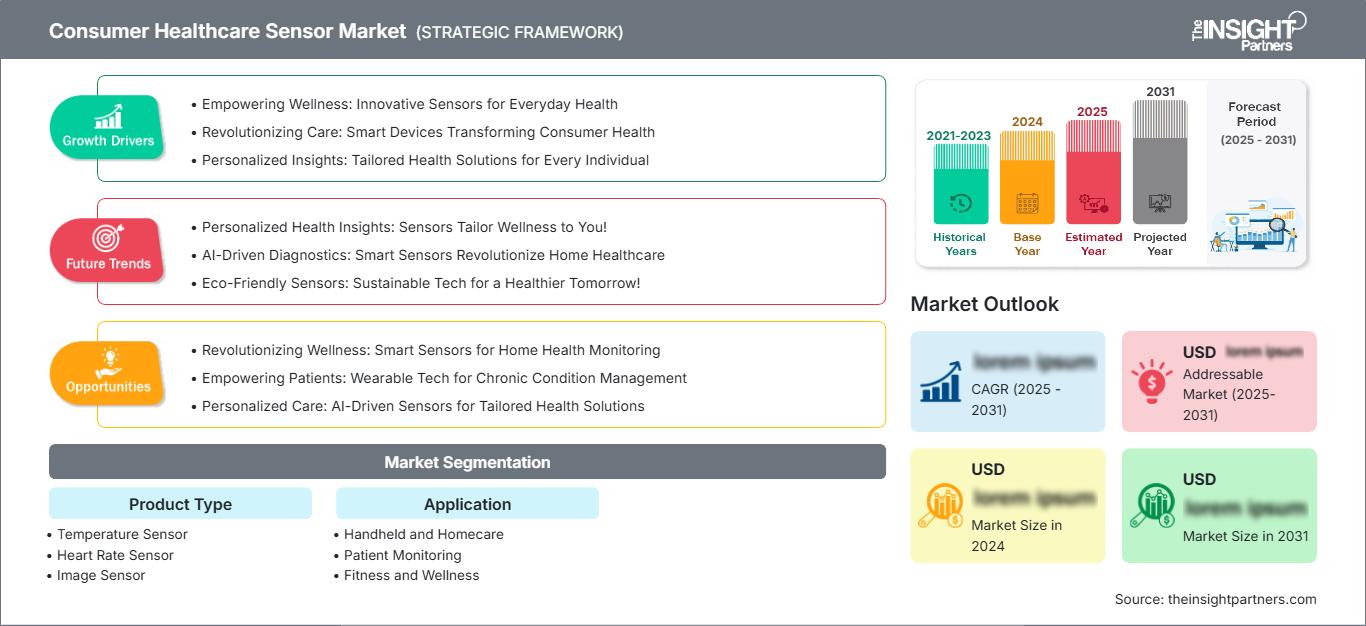
Consumer Healthcare Sensor Market: Strategic Insights
Regional Insights
North America Consumer Healthcare Sensor Market
North America held 37–41% share in 2025 and is projected to grow at a CAGR of 4.0–4.8% through 2034. The Consumer Healthcare Sensor Market share is supported by remote patient monitoring reimbursement, high wearable adoption, strong pharmacy channels, and health systems shifting routine measurement into home and outpatient settings.
Demand is concentrated in connected blood pressure monitors, smart thermometers, heart rate sensors, and wellness trackers. The region also benefits from clinical validation expectations that encourage premium devices over low-cost alternatives. Hospitals, payers, and digital health firms increasingly evaluate sensors for accuracy, data security, workflow integration, and ability to reduce avoidable visits.
U.S. Consumer Healthcare Sensor Market Market
The US represented 80–84% of North America in 2025 and is expected to grow at a CAGR of 4.1–4.9%. Adoption is reinforced by consumer fitness spending, chronic disease monitoring, retail clinics, and Medicare-supported remote physiologic monitoring. Honeywell International Inc., Analog Devices, Inc., TE Connectivity Ltd., 3M Company, Koninklijke Philips N.V., and Siemens Healthineers AG maintain relevant technology or healthcare presence.
Application demand is strongest in patient monitoring, handheld homecare, and fitness applications where consumers expect simple setup and mobile connectivity. Blood pressure and heart rate sensors are gaining importance as cardiovascular risk management moves outside hospital settings. Device makers also prioritize privacy, cloud integration, and evidence that readings can support clinical decisions.
Europe Consumer Healthcare Sensor Market Market
The market share of Europe in 2025 stood at 25–29%, and is expected to grow with a CAGR of 3.6–4.4%. Germany is leading the region with its medical devices production, high-quality standards, and home monitoring demand. The UK contributes to the growth by using virtual care routes, while France is developing its programs on connected wellness and chronic illness treatment.
Italy and Spain are seeing growth due to pharmacy-based monitoring, older population and improved home care. The European customers value CE-compliance, data security, reliability, and clinical effectiveness of the devices. Dispersed reimbursements slow down the widespread adoption; however, it benefits manufacturers that have localized documentation, distribution channels, and sensor solutions suitable for consumers and medical purposes.
APAC Consumer Healthcare Sensor Market Market
The Asia Pacific region captured 23-27% market share in 2025 and is expected to register a CAGR of 5.1-6.0%. The lead region in Asia Pacific is China due to its significant production of electronics and use of digital health solutions. Japan and South Korea provide innovative wearable devices, while India and Australia bring in demand through telehealth services and wellness consumers at home with diagnostics.
Strategic policies in the form of electronics localization and healthcare digitization help build the supply chain in the region. Asia Pacific is favored by fast miniaturization of sensors, presence of robust smartphones and large populations. Sensitivity towards pricing will continue to exist, thus suppliers should balance cost with accuracy and warranties in different areas of applications.
Middle East & Africa Consumer Healthcare Sensor Market Market
Middle East & Africa is projected to grow at a CAGR of 3.2–4.1% as Saudi Arabia, the UAE, South Africa, and the rest of MEA invest in digital health, private clinics, and chronic care modernization. The UAE leads adoption through premium healthcare infrastructure and connected wellness services.
Energy diversification programs and smart-city infrastructure indirectly support sensor-enabled healthcare in clinics, homes, and community screening sites. South Africa contributes through organized medical retail and private care providers. Broader MEA remains price sensitive, making distributor education, service support, and durable devices essential for wider uptake.
Segmentation Analysis
Product Type
Product Type is expected to grow at a CAGR of 4.0–4.9% from 2026 to 2034 as the Consumer Healthcare Sensor Market scope spans vital signs, imaging, movement, touch interfaces, and pressure measurement. Adoption depends on accuracy, form factor, battery life, firmware stability, and integration with consumer devices. Heart rate and blood pressure sensors support clinical relevance, while motion and touch sensors expand wellness use cases.
- Temperature Sensor demand remains steady because fever screening, home diagnostics, pediatric care, and multiparameter devices require quick readings, compact design, and dependable calibration for household and retail health use.
- Heart Rate Sensor adoption is strong in smartwatches, fitness bands, and remote monitoring devices where continuous pulse tracking supports wellness engagement, cardiovascular awareness, and alerts for irregular patterns.
- Image Sensor serves connected imaging, dermatology screening, wound checks, and handheld diagnostics, where higher resolution and low-light performance improve consumer capture quality and clinician review workflows.
- Blood Pressure Sensor is strategically important because hypertension monitoring is a high-frequency homecare need, and connected cuffs increasingly link readings to apps, clinicians, and chronic disease programs.
- Motion Sensor supports activity tracking, fall detection, rehabilitation monitoring, sleep analysis, and therapeutic adherence, making it central to wellness devices and home-based functional assessment tools.
- Touch Sensor improves usability across handheld and wearable healthcare devices, enabling intuitive controls, compact interfaces, and sealed designs that support hygiene and consumer-friendly operation.
Application
Application is projected to grow at a CAGR of 4.3–5.2% during 2026–2034 as sensors move from standalone measurement toward connected care pathways. Patient monitoring remains the largest use case because chronic conditions require regular readings, while fitness and wellness expands fastest through preventive tracking. Handheld and homecare devices benefit from consumer familiarity, and therapeutic tools add value through feedback-driven treatment support.
- Handheld and Homecare devices benefit from consumer preference for convenient testing, compact form factors, and app-linked records that make routine health checks easier outside clinics.
- Patient Monitoring leads revenue contribution because vital-sign tracking, chronic disease follow-up, and remote physiologic monitoring require reliable sensors that can generate clinically meaningful data streams.
- Fitness and Wellness is expanding through smartwatches, bands, rings, and connected accessories that translate heart rate, motion, sleep, and activity data into everyday health engagement.
- Therapeutic applications use sensors for feedback, adherence, stimulation control, rehabilitation tracking, and treatment personalization, creating higher-value opportunities where measurement directly influences intervention quality.
Opportunity Snapshot
| Application | Revenue Contribution | Trend Tag | Adoption Stage |
| Handheld and Homecare | High | Home Testing | Scaling |
| Patient Monitoring | High | Remote Vitals | Mature |
| Fitness and Wellness | Medium | Preventive Tracking | Scaling |
| Therapeutic | Medium | Feedback Care | Emerging |
Consumer Healthcare Sensor Market Growth Drivers and Impact Analysis
Remote Monitoring Moves Routine Care into Homes
Physiological monitoring from afar is revolutionizing the way physiological measures are collected, analyzed, and acted upon. Data concerning blood pressure, heart rate, body temperature, and body movement can now be taken from consumer-grade monitors to care management processes without relying so much on the occasional clinic visit. The Consumer Healthcare Sensor Market stands to gain because each of these new devices needs dependable sensors, proper calibration, and secure data transfer capabilities. This technology will make the most real-world impact in disease management, discharge follow-ups, and aging-in-place solutions. Physicians get better access to information while patients are more comfortable and have access to information about their health.
Wearable Wellness Expands Preventive Health Engagement
Wearables are transforming the practice of consumers from intermittent tracking to continuous engagement. Sensors for heart rate, movement, sleep, and body temperature allow the user to monitor exercise level, recovery process, stress markers, and activity rhythms throughout the day. The implications for this trend involve extending demand from health consumers to a wide variety of other consumers who need to prevent diseases and get insights about their lifestyles. One can see the effect of the market trend on smartwatches, fitness bands, rings, connected clothing, and app ecosystems, where the quality of sensors affects user retention. Device manufacturers now compete on comfort, battery life, accuracy of algorithms, and insights.
Chronic Disease Burden Raises Need for Reliable Vitals
Recurring demands from consumers arise from cardiovascular diseases, diabetes, respiratory disease, and other aging disorders. There is a need to have monitoring tools that are capable of taking consistent readings and presenting accurate results. This will drive the need for blood pressure sensors, heart rate sensors, temperature sensors, and therapeutic devices. The practical implication is the increased demand for replacements, wider availability through pharmacies, and greater likelihood of being recommended by healthcare professionals. This is because the manufacturers who balance on accuracy and cost have an advantage in the market since chronic care needs continuous usage over many years.
Consumer Healthcare Sensor Market Future Trends
Clinical-Grade Wearables Move Toward Everyday Use
Consumer Healthcare Sensor Market trends will increasingly favor devices that combine consumer design with clinically credible measurement. Future wearables will use improved optical heart rate sensing, skin temperature baselines, motion fusion, and blood pressure estimation to support earlier risk signals. The shift will require better validation, clearer labeling, and stronger data governance because consumers will expect wellness insights without confusing them with diagnosis. Device makers that can explain accuracy limits and integrate with care pathways will gain trust. Over time, the divide between fitness trackers and home monitoring devices will narrow as sensors become more capable and software becomes more medically informed.
Sensor Fusion Improves Context-Aware Health Insights
Single measurements often lack context, so future devices will combine heart rate, motion, temperature, pressure, and image data to generate more meaningful insights. Sensor fusion can distinguish exercise from stress, sleep disruption from illness, or poor measurement technique from real physiological change. This trend will increase demand for low-power signal processing, embedded AI, and reliable calibration across multiple sensing modalities. It also creates opportunities for suppliers that can package sensors, firmware, and reference designs together. As devices become more context aware, buyers will judge performance by useful interpretation rather than raw measurement alone.
Consumer Healthcare Sensor Market Opportunities
Validated Homecare Device Platforms
Consumer Healthcare Sensor Market Forecasts support investment in validated homecare platforms that combine blood pressure, temperature, heart rate, and motion sensing with simple mobile workflows. Device makers can target pharmacies, telehealth providers, insurers, and eldercare networks that need dependable consumer-facing tools. The opportunity is not only selling sensors but helping OEMs shorten design cycles with certified components, calibration support, and reference software. Suppliers should prioritize accuracy documentation, cybersecurity readiness, and long-life availability. Platforms that reduce setup friction and provide clean data exports can become preferred choices for chronic care programs, especially where clinicians need consistent readings across large distributed populations.
Therapeutic Feedback and Rehabilitation Devices
Therapeutic and rehabilitation applications offer higher-value opportunities because sensors directly influence treatment feedback. Motion sensors can track adherence to exercise programs, pressure sensors can support compression or wound-care devices, and heart rate sensors can guide safe activity progression. Suppliers can work with device companies to design durable, low-power modules that withstand repeated home use. The opportunity is attractive because therapeutic devices often require better validation and support than basic wellness products, creating barriers to low-cost substitution. Partnerships with rehabilitation providers, digital therapeutics firms, and specialty device makers can open differentiated revenue streams.
Recent Developments
- June 2026: MiniMed (Nasdaq: MMED), a global leader in diabetes technology, today announced the commercial launch in Europe of both the MiniMed™ 780G system integrated with the Instinct sensor and the MiniMed Go™ system integrated with the Instinct Go sensor. The Instinct and Instinct Go sensors, made by Abbott, will be rolled out gradually across Europe starting this month, expanding MiniMed's sensor portfolio in the region.
- May 2026: Royal Philips (NYSE: PHG, AEX: PHIA), a global leader in health technology, today announced that a consortium composed of Philips, Cuviva and Vingmed has been selected to support Region Stockholm’s hospital-at-home initiative, enabling hospital-level care to be delivered in patients’ homes across the region. The consortium was selected through a tender led by Karolinska University Hospital for an advanced remote-monitoring program serving patients with complex or chronic conditions.
- April 2026: Murata Manufacturing Co., Ltd has commenced mass production of its MRMS166R and MRMS168R anisotropic magnetoresistance (AMR) sensors for healthcare, wearable, and IoT devices. The MRMS166R is the first AMR sensor to combine an average current consumption of 20 nA with operation from a 1.2 V supply, enabling extended battery life in coin cell-powered systems.
Frequently Asked Questions

- Comprehensive Market Sizing and Forecast Analysis
- Detailed Segmentation Analysis
- In-Depth Market Dynamics Assessment
- Regional and Country-Level Insights
- Competitive Landscape and Company Benchmarking
- Strategic Business Intelligence
Recent Reports
Testimonials

The Insight Partners' SCADA System Market report is comprehensive, with valuable insights on current trends and future forecasts. The team was highly professional, responsive, and supportive throughout. We are very satisfied and highly recommend their services.
RAN KEDEM Partner, Reali Technologies LTDs
I requested a report on a very specific software market and the team produced the report in a few days. The information was very relevant and well presented. I then requested some changes and additions to the report. The team was again very responsive and I got the final report in less than a week.
JEAN-HERVE JENN Chairman, Future Analytica
We worked with The Insight Partners for an important market study and forecast. They gave us clear insights into opportunities and risks, which helped shape our plans. Their research was easy to use and based on solid data. It helped us make smart, confident decisions. We highly recommend them.
PIYUSH NAGPAL Sr. Vice President, High Beam Global
The Insight Partners delivered insightful, well-structured market research with strong domain expertise. Their team was professional and responsive throughout. The user-friendly website made accessing industry reports seamless. We highly recommend them for reliable, high-quality research services
YUKIHIKO ADACHI CEO, Deep Blue, LLC.
This is the first time I have purchased a market report from The Insight Partners.While I was unsure at first, I visited their web site and felt more comfortable to take the risk and purchase a market report.I am completely satisfied with the quality of the report and customer service. I had several questions and comments with the initial report, but after a couple of dialogs over email with their analyst I believe I have a report that I can use as input to our strategic planning process.Thank you so much for taking the extra time and making this a positive experience.I will definitely recommend your service to others and you will be my first call when we need further market data.
JOHN SUZUKI President and Chief Executive Officer, Board Director, BK Technologies
I wish to appreciate your support and the professionalism you displayed in the course of attending to my request for information regarding to infectious disease IVD market in Nigeria. I appreciate your patience, your guidance, and the fact that you were willing to offer a discount, which eventually made it possible for us to close a deal. I look forward to engaging The Insight Partners in the future, all thanks to the impression you have created in me as a result of this first encounter.
DR CHIJIOKE ONYIA MANAGING DIRECTOR, PineCrest Healthcare Ltd.Reason to Buy
- Informed Decision-Making
- Understanding Market Dynamics
- Competitive Analysis
- Identifying Emerging Markets
- Customer Insights
- Market Forecasts
- Risk Mitigation
- Boosting Operational Efficiency
- Strategic Planning
- Investment Justification
- Tracking Industry Innovations
- Aligning with Regulatory Trends





 Get Free Sample for