
Digital Migraine Treatment Device Market Size, Growth & Trends by 2034
Coverage: by Technology (Supraorbital Stimulation Digital Migraine Treatment Devices, Vagus Nerve Stimulation Digital Migraine Treatment Devices (VNS), Single-Pulse Transcranial Magnetic Stimulation Digital Migraine Treatment Devices (sTMS), Occipital Nerve Stimulation Digital Migraine Treatment Devices (ONS)); End-User (Hospitals, Specialty Clinics, Pharmacies), and Geography (North America, Europe, Asia Pacific, and South and Central America)
- Status : Data Released
- Report Code : TIPRE00013455
- Category : Life Sciences
- No. of Pages : 150
- Available Report Formats :


- Last update date : July 08, 2026


2025 Market Size
US$ 504.00 Mn
Base year value
2034 Forecast
US$ 1,360.00 Mn
Projected by 2034
CAGR 2026-2034
11.66 %
Growth rate
Addressable Market
US$ 8,196.45 Mn
(2026-2034)
The Digital Migraine Treatment Device Market is gaining momentum as healthcare systems increasingly adopt non-pharmacological solutions for migraine management. Valued at US$ 504.00 million in 2025, the market is projected to reach US$ 1,360.00 million by 2034, expanding at a CAGR of 11.66% during 2026–2034. Rising concerns regarding medication overuse headaches, growing patient preference for personalized therapies, and advancements in wearable neuromodulation technologies are reshaping the competitive landscape.
North America remains the most influential regional digital migraine treatment device market, supported by favorable reimbursement developments, strong neurological care infrastructure, and increasing adoption of prescription digital therapeutics. The region is anticipated to record a CAGR of approximately 11.2% through 2034. Demand is being reinforced by growing migraine prevalence and increasing clinical acceptance of neurostimulation-based treatment devices as adjunct or alternative therapies to conventional drug regimens.
Digital Migraine Treatment Device Market Assessment and Insights
- North America: North America accounted for 39–42% of the digital migraine treatment device market share in 2025 and is anticipated to expand at a CAGR of 11.2–12.0% during 2026–2034. Strong reimbursement support, advanced neuromodulation ecosystems, and increasing adoption of non-invasive migraine therapies continue to reinforce regional market leadership.
- U.S.: The U.S. represented 78–82% of the North American digital migraine treatment device market size in 2025 and is projected to register a CAGR of 11.5–12.3% during 2026–2034, driven by a large migraine patient population, rapid adoption of wearable therapeutic devices, and expanding access to digital health solutions.
- Europe: Europe held 27–30% of the digital migraine treatment device market share in 2025 and is expected to grow at a CAGR of 10.8–11.6% during 2026–2034. Germany, the United Kingdom, and France remain leading markets, supported by expanding digital health policies and increasing adoption of neuromodulation technologies.
- Asia Pacific: Asia Pacific accounted for 21–24% of the digital migraine treatment device market share in 2025 and is forecast to expand at a CAGR of 12.5–13.5% during 2026–2034. China, Japan, India, and South Korea continue to lead regional demand, driven by rising neurological healthcare spending and improving access to advanced migraine treatment technologies.
- Largest Segment: Vagus Nerve Stimulation Digital Migraine Treatment Devices represented the largest digital migraine treatment device market segment and is expected to record a CAGR of 11.0–11.8% during 2026–2034, reflecting increasing preference for non-invasive therapies with established clinical validation and regulatory approvals.
- High Growth Segment: Single-Pulse Transcranial Magnetic Stimulation Digital Migraine Treatment Devices is projected to grow at a CAGR of 12.8–13.8% during 2026–2034, driven by expanding clinical evidence supporting personalized neurological intervention and broader adoption of advanced neuromodulation technologies.
- Key companies analyzed in detail: Theranica Bio-Electronics Ltd.; electroCore, Inc.; Cefaly Technology SA; Cirrus Healthcare Products Ltd.; eNeura Inc.; Prolivio Inc.; Neuros Medical, Inc.; Salvia BioElectronics B.V.; Neurolief Ltd.; Abbott Laboratories.
Source: The Insight Partners' analysis based on proprietary research, government publications, company annual reports, investor presentations, industry databases, and expert interviews.
Clinical migraine management is undergoing a significant transformation as device-based interventions move beyond niche applications into broader neurological practice. Continuous improvements in wearable neuromodulation, smartphone connectivity, patient monitoring capabilities, and evidence-based outcomes have elevated digital migraine treatment devices from experimental solutions to increasingly accepted therapeutic tools.
Over the coming decade, digital migraine treatment device market expansion will be influenced by reimbursement evolution, regulatory support for digital therapeutics, and greater physician confidence in neuromodulation technologies. Companies are increasingly focusing on patient engagement platforms, remote monitoring features, and real-world evidence generation to strengthen adoption across hospitals, specialty clinics, and pharmacy-based distribution channels.
Digital Migraine Treatment Device Market Report Scope
| Report Attribute | Details |
|---|---|
| Market size in 2025 | US$ 504.00 Million |
| Market Size by 2034 | US$ 1,360.00 Million |
| Global CAGR (2026 - 2034) | 11.66% |
| Historical Data | 2021-2024 |
| Forecast period | 2026-2034 |
Digital Migraine Treatment Device Market Analysis
The digital migraine treatment device market report is characterized by the convergence of neuroscience, wearable medical technology, and digital health platforms. Growing awareness of adverse effects associated with long-term pharmacological therapies has encouraged healthcare providers to evaluate alternative treatment modalities. Digital migraine treatment devices offer targeted neurostimulation that can reduce migraine frequency, severity, and treatment dependency for selected patient populations.
A complex ecosystem supports market development, involving device manufacturers, neurologists, healthcare providers, reimbursement agencies, regulatory authorities, and digital health platform developers. Increasing smartphone penetration and improved patient adherence monitoring have enhanced the practical value of connected migraine management solutions. These factors are contributing to the stronger integration of digital devices into routine neurological care pathways.
Competition is intensifying as established neuromodulation developers and emerging digital health innovators seek differentiation through clinical validation and technological sophistication. Companies including Theranica Bio-Electronics LTD, electroCore, Inc., Cefaly Technology, eNeura Inc., Cirrus Healthcare Products, Prolivio, and Neuros Medical continue to strengthen their market positions through product enhancements, regulatory expansion, and strategic partnerships.
Investment activity increasingly targets wearable neurostimulation technologies capable of delivering personalized treatment experiences. Investors are showing interest in platforms that combine therapeutic intervention with data analytics, patient monitoring, and predictive migraine management capabilities. As healthcare systems prioritize value-based outcomes, companies demonstrating measurable clinical effectiveness and economic benefits are likely to gain competitive advantages.
● REPORT CUSTOMIZATION
Tailor This Report To Align With Your Specific Business Requirements
This report can be customized to align precisely with your business objectives, scope, and target markets. Customization options include tailored segmentation, geography, competitive analysis, and strategic insights to support informed decision-making.
Customize This Report →WHAT YOU CAN ADJUST
- ● Segmentations
- ● Geography
- ● Competitive Analysis
- ● Language Preferences
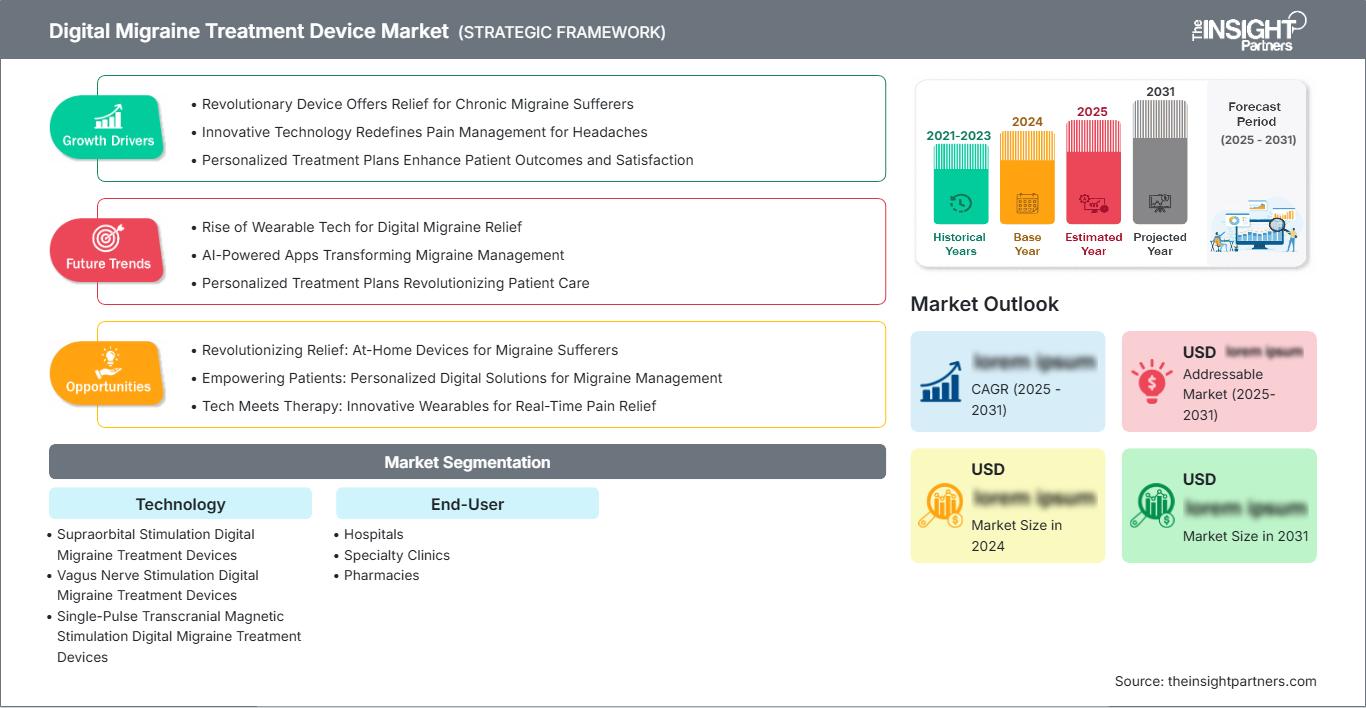
Digital Migraine Treatment Device Market: Strategic Insights
Regional Insights
North America Digital Migraine Treatment Device Market
North America accounts for the largest share of the Digital Migraine Treatment Device Market and is projected to grow at a CAGR of approximately 11.2% through 2034. High migraine prevalence, advanced neurological treatment infrastructure, and strong awareness regarding non-drug treatment options contribute to sustained demand. Regulatory pathways supporting innovative medical devices have further accelerated commercialization activities.
The region benefits from increasing reimbursement coverage for digital neuromodulation therapies and growing physician familiarity with wearable migraine treatment technologies. Healthcare providers are progressively incorporating digital therapeutic solutions into comprehensive migraine management strategies, particularly for patients seeking alternatives to long-term pharmacological treatment.
U.S. Digital Migraine Treatment Device Market
The United States represents nearly 75–80% of the North American digital migraine treatment device market and is expected to maintain a CAGR exceeding 11%. A large patient population suffering from chronic and episodic migraine continues to drive demand for innovative treatment approaches. The country remains a focal point for clinical trials, product launches, and reimbursement initiatives.
Theranica Bio-Electronics LTD, electroCore, Inc., and Cefaly Technology are among the major players in this industry with extensive commercial operations in the American market. Neurostimulation devices have gained popularity and are used in hospitals and specialized headache clinics alongside regular medications. Remote patient monitoring and digital therapeutics are also supporting broader adoption across diverse healthcare settings.
Europe Digital Migraine Treatment Device Market
Europe accounts for approximately 25–30% of global digital migraine treatment device market revenue and is forecast to register a CAGR of near 10.8% through 2034. Strong healthcare systems, rising awareness of neurological disease, and supportive regulatory frameworks are driving market expansion. Increasing emphasis on reducing pharmaceutical dependence aligns well with the value proposition of digital migraine treatment devices.
The UK is considered a significant adopter due to rising interest in digital health interventions and increased availability of neurology services. There have been assessments of neuromodulation devices within the strategy to manage migraine patients by minimizing treatment burden.
Germany dominates the European digital migraine treatment device market due to its well-developed medical technology infrastructure and the use of innovative healthcare solutions. Reimbursement opportunities and neurological research projects are currently creating new possibilities for medical device manufacturers in Germany.
France, Italy, and Spain can be considered a new market segment, driven by rising diagnoses and growing interest in non-invasive approaches to treating migraines in these countries.
APAC Digital Migraine Treatment Device Market
Asia Pacific is expected to emerge as the fastest-growing regional digital migraine treatment device market, expanding at a CAGR of approximately 13.2% during the forecast period. The region currently accounts for an estimated 20–25% market share, with growth supported by improving healthcare access, expanding neurological care services, and increasing adoption of digital health technologies.
China is ahead of other countries because of its larger patient population and greater investment in advanced medical technologies. Government initiatives to promote innovation in healthcare, as well as increased production of wearable medical devices, have created a favorable environment for further market development.
The benefits that Japan and South Korea derive benefits from having good healthcare coverage and embracing technology in the treatment process. In the same vein, India is experiencing rising demand owing to greater awareness of migraines and the development of neurological care infrastructure. Australia continues to assist in advanced healthcare delivery systems and patient-centered treatment options.
Middle East & Africa Digital Migraine Treatment Device Market
The Middle East & Africa digital migraine treatment device market is developing steadily and is projected to record a CAGR of approximately 9.8% through 2034. Healthcare modernization initiatives and growing awareness of neurological disorders are creating opportunities for digital migraine treatment device manufacturers across the region.
The Saudi Arabian economy leads the region in economic growth due to large investments in the healthcare sector and increased specialization in medical treatments. Healthcare projects and digital transformation initiatives have led to the incorporation of cutting-edge medical technology into the system.
The United Arab Emirates is continually building its reputation in the healthcare innovation sector. South Africa is experiencing high demand, driven by increased availability of neurological care. In the wider MEA region, healthcare infrastructure development and adoption initiatives are gradually making the market more accessible to new migraine treatment technologies.
Segmentation Analysis
Technology
- Supraorbital Stimulation Digital Migraine Treatment Devices leverage trigeminal nerve stimulation to provide non-invasive migraine relief. Strong clinical familiarity, wearable designs, and growing physician confidence support widespread utilization across preventive and acute treatment settings.
- Vagus Nerve Stimulation Digital Migraine Treatment Devices are gaining traction due to their ability to provide targeted neuromodulation without pharmaceuticals. Expanding clinical evidence and patient preference for portable solutions contribute to increasing adoption.
- Single-Pulse Transcranial Magnetic Stimulation Digital Migraine Treatment Devices offer precise neurological intervention capabilities. Their application in specific migraine subtypes and growing evidence base position them as valuable therapeutic alternatives.
- Occipital Nerve Stimulation Digital Migraine Treatment Devices are primarily utilized for complex migraine cases requiring advanced neuromodulation approaches. Ongoing technological refinement continues to improve usability and treatment outcomes.
End-User
- Hospitals remain the primary adoption centers due to specialized neurology departments, access to diagnostic resources, and multidisciplinary migraine management programs supporting advanced device utilization.
- Specialty Clinics demonstrate strong growth as headache-focused treatment centers increasingly integrate digital neuromodulation technologies into personalized patient care pathways and long-term migraine management strategies.
- Pharmacies are emerging as important distribution channels through expanded patient education initiatives, prescription fulfillment capabilities, and growing awareness of wearable migraine treatment solutions.
Opportunity Snapshot
| End-User | Revenue Contribution | Trend Tag | Adoption Stage |
| Hospitals | High | Neurology Care | Mature |
| Specialty Clinics | Medium | Personalized Therapy | Scaling |
| Pharmacies | Low | Retail Access | Emerging |
Digital Migraine Treatment Device Market Growth Drivers and Impact Analysis
Growing Demand for Drug-Free Migraine Management
Growing concerns about the potential side effects of prescribed medication, medication-resistant patients, and overuse of headache medications are leading to the demand for non-medical migraine treatments. Patients are looking for alternative solutions that reduce their dependence on prescribed medication without compromising efficacy. Digital migraine treatment devices fulfill this need by offering treatment through neuromodulation techniques.
The effect is not limited to patient satisfaction. More and more healthcare professionals have recognized the importance of incorporating devices into their patients' treatment plans. This trend helps in increasing acceptance of such devices among chronic migraine patients and people who cannot tolerate a particular medication. With growing scientific evidence, digital devices are gaining importance in migraine treatment and creating long-term business opportunities for market growth.
Advancements in Wearable Neuromodulation Technologies
Innovations in wearable medical electronics technology have led to greater ease of use, increased portability, and improved treatment precision. New technology for migraine therapy involves connecting wearable devices to smartphones, creating customized stimulation programs, and enabling patient management based on collected data. All these aspects will increase compliance with the treatment regimen and enable medical professionals to control outcomes.
The subsequent market impact encompasses patient engagement, greater clinical acceptance, and payer confidence when assessing reimbursement potential. Organizations that focus on miniaturization, user interface design, and digital health technology integration are improving their competitiveness in the marketplace. Innovation also enables targeting of new patient segments and health care environments, thereby enhancing market penetration.
Expanding Clinical Validation and Reimbursement Support
A growing body of clinical research demonstrating efficacy and safety is strengthening confidence in digital migraine treatment devices. Healthcare systems increasingly prioritize evidence-based interventions that improve patient outcomes while reducing long-term healthcare utilization. As a result, manufacturers are investing heavily in the generation of real-world evidence and post-market studies.
The practical outcome will be a greater willingness among physicians to prescribe digital neuromodulation treatments and a greater interest among payers in formulating coverage policies. Improved reimbursement access can go a long way toward eliminating financial constraints for patients and ensuring greater market accessibility.
Digital Migraine Treatment Device Market Future Trends
Integration of Artificial Intelligence into Migraine Care Platforms
Artificial intelligence is playing an increasingly important role in the digital migraine therapy ecosystem, reflecting key digital migraine treatment device market trends. Predictive analytics, which can recognize the factors triggering migraines, predict attack patterns, and suggest individual treatment measures, are anticipated to be embedded in future devices.
Linking such devices to electronic health records, wearables, and patient outcome reporting platforms will result in more holistic environments for managing migraines. Firms that integrate neuromodulation technology and intelligent decision support systems will define the direction of digital migraine therapy solutions.
Expansion of Remote and Home-Based Neurological Care
However, trends in healthcare provision continue to shift toward decentralized care, creating favorable conditions for the use of at-home devices to treat migraines. There is a growing appreciation for convenient, flexible treatment modalities that require fewer hospital appointments for patients.
Further developments in this trend will be facilitated by factors such as telemedicine, remote monitoring, and improvements in digital health systems. The search for effective approaches to treating chronic neurological conditions may lead to greater attention to home-based neuromodulation for migraines.
Digital Migraine Treatment Device Market Opportunities
Untapped Potential in Emerging Healthcare Markets
Many developing economies continue to experience substantial underdiagnosis and undertreatment of migraine disorders. Expanding healthcare access, increasing neurological awareness, and improving medical infrastructure are creating growth opportunities for manufacturers, strengthening the digital migraine treatment device market forecast through broader geographic expansion and adoption.
Strategies that emphasize investments in localized distribution, physician education, and cost-efficient product delivery systems could provide major growth opportunities. Early entrants in emerging economies would be able to build a powerful brand name due to increased healthcare spending and higher demand for innovative neurological solutions.
Development of Integrated Migraine Management Ecosystems
Apart from standalone devices, there is a major opportunity to develop an ecosystem in which neuromodulation, symptom monitoring, patient education, and communication with doctors are integrated into a single solution. It will help to improve compliance and gather important health data.
Companies that engage in developing such a platform-based business model will be able to build a recurring income stream and deliver better results for their patients. Collaboration between hardware companies, clinics, software developers, and insurance companies could accelerate adoption and establish differentiated market positions within the evolving digital health landscape.
Recent Developments
- September, 2025: Theranica Bio-Electronics LTD and Pier 88 Health announced that the Nerivio remote electrical neuromodulation wearable received approval from China’s National Medical Products Administration (NMPA) for acute migraine treatment. The approval marked the first REN-based migraine treatment authorized in China, significantly expanding Theranica’s addressable market and strengthening international commercialization efforts.
- June, 2025: Theranica Bio-Electronics LTD announced presentation of three real-world evidence studies at the American Headache Society Scientific Meeting. The studies highlighted the long-term effectiveness, safety, and versatility of the Nerivio wearable across diverse migraine patient populations, reinforcing the clinical foundation supporting broader adoption of remote electrical neuromodulation therapy.
- April, 2025: electroCore, Inc. reported new clinical findings demonstrating the effectiveness of its gammaCore non-invasive vagus nerve stimulation technology in reducing symptoms associated with mild traumatic brain injury. While extending beyond migraine applications, the findings strengthened the broader evidence base supporting non-invasive vagus nerve stimulation technologies used across neurological treatment markets.
Frequently Asked Questions

- Comprehensive Market Sizing and Forecast Analysis
- Detailed Segmentation Analysis
- In-Depth Market Dynamics Assessment
- Regional and Country-Level Insights
- Competitive Landscape and Company Benchmarking
- Strategic Business Intelligence
Recent Reports
Testimonials

The Insight Partners provided valuable market intelligence that supported our global go-to-market strategy. Their team was professional, responsive, and attentive to our feedback, providing thoughtful analysis and helpful methodological clarifications throughout the project.
Junmo Kim Chief Financial Officer (CFO), Enertech Co., Ltd.
The Insight Partners' SCADA System Market report is comprehensive, with valuable insights on current trends and future forecasts. The team was highly professional, responsive, and supportive throughout. We are very satisfied and highly recommend their services.
RAN KEDEM Partner, Reali Technologies LTDs
I requested a report on a very specific software market and the team produced the report in a few days. The information was very relevant and well presented. I then requested some changes and additions to the report. The team was again very responsive and I got the final report in less than a week.
JEAN-HERVE JENN Chairman, Future Analytica
We worked with The Insight Partners for an important market study and forecast. They gave us clear insights into opportunities and risks, which helped shape our plans. Their research was easy to use and based on solid data. It helped us make smart, confident decisions. We highly recommend them.
PIYUSH NAGPAL Sr. Vice President, High Beam Global
The Insight Partners delivered insightful, well-structured market research with strong domain expertise. Their team was professional and responsive throughout. The user-friendly website made accessing industry reports seamless. We highly recommend them for reliable, high-quality research services
YUKIHIKO ADACHI CEO, Deep Blue, LLC.
This is the first time I have purchased a market report from The Insight Partners.While I was unsure at first, I visited their web site and felt more comfortable to take the risk and purchase a market report.I am completely satisfied with the quality of the report and customer service. I had several questions and comments with the initial report, but after a couple of dialogs over email with their analyst I believe I have a report that I can use as input to our strategic planning process.Thank you so much for taking the extra time and making this a positive experience.I will definitely recommend your service to others and you will be my first call when we need further market data.
JOHN SUZUKI President and Chief Executive Officer, Board Director, BK Technologies
I wish to appreciate your support and the professionalism you displayed in the course of attending to my request for information regarding to infectious disease IVD market in Nigeria. I appreciate your patience, your guidance, and the fact that you were willing to offer a discount, which eventually made it possible for us to close a deal. I look forward to engaging The Insight Partners in the future, all thanks to the impression you have created in me as a result of this first encounter.
DR CHIJIOKE ONYIA MANAGING DIRECTOR, PineCrest Healthcare Ltd.Reason to Buy
- Informed Decision-Making
- Understanding Market Dynamics
- Competitive Analysis
- Identifying Emerging Markets
- Customer Insights
- Market Forecasts
- Risk Mitigation
- Boosting Operational Efficiency
- Strategic Planning
- Investment Justification
- Tracking Industry Innovations
- Aligning with Regulatory Trends





 Get Free Sample for