
Drug-device Combination Products Market Share, Growth & Forecast by 2034
Coverage: By Product (Infusion Pumps, Orthopedic Combination Products, Photodynamic Therapy Devices, Transdermal Patches, Drug Eluting Stents, Wound Care Products, Inhalers, Antimicrobial Catheters, Others); (Hospitals and Clinics, Antimicrobial Catheters, Home Care Settings), and Geography (North America, Europe, Asia Pacific, and South and Central America)
- Status : Data Released
- Report Code : TIPRE00004736
- Category : Life Sciences
- No. of Pages : 150
- Available Report Formats :


- Last update date : July 06, 2026


2025 Market Size
US$ 167.81 Bn
Base year value
2034 Forecast
US$ 348.43 Bn
Projected by 2034
CAGR 2026-2034
8.46 %
Growth rate
Addressable Market
US$ 2,316.93 Bn
(2026-2034)
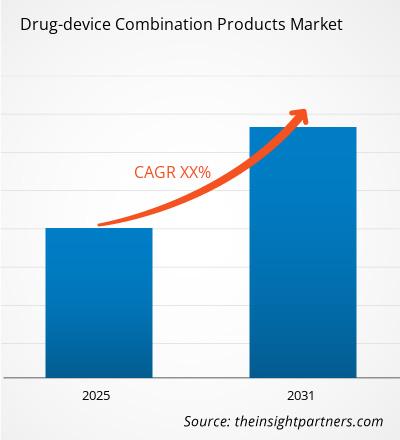
The drug-device combination products market was valued at US$ 167.81 Billion in 2025 and is projected to reach US$ 348.43 Billion by 2034, expanding at a CAGR of 8.46% during 2026–2034. The market continues to gain momentum as healthcare systems increasingly adopt integrated therapeutic solutions that combine pharmaceutical efficacy with advanced medical device functionality, enabling targeted treatment delivery, improved patient adherence, and enhanced clinical outcomes across multiple disease indications.
North America is expected to maintain its leadership throughout the forecast period, registering an estimated CAGR of 7.9–8.3%. Strong regulatory pathways for combination therapies, significant investments in medical technology innovation, and rising demand for minimally invasive treatment solutions continue to drive regional market growth. The drug-device combination products market report highlights that the increasing adoption of connected healthcare devices and personalized drug delivery platforms is further strengthening long-term market development, supporting improved patient outcomes and expanded therapeutic applications.
Drug-device Combination Products Market Assessment and Insights
- North America: Holds 39–43% share in 2025, growing at a CAGR of 7.9–8.3% during 2026–2034, driven by strong reimbursement systems, advanced healthcare infrastructure, and continuous innovation in integrated therapeutic technologies.
- US: Accounts for 84–88% of the North American drug-device combination products market in 2025, expanding at a 8.0–8.4% CAGR due to increasing adoption of advanced therapeutic devices, favorable reimbursement policies, and sustained investments in healthcare innovation.
- Europe: Represents 26–30% share in 2025, growing at a 7.5–7.9% CAGR, led by Germany, the UK, and France through mature healthcare systems, strong medical device manufacturing capabilities, and favorable regulatory harmonization.
- Asia Pacific: Holds 22–26% share in 2025, expanding at a 9.4–9.8% CAGR, led by China, Japan, and India with expanding healthcare investments, rising chronic disease prevalence, and growing domestic medical device manufacturing.
- Largest Segment: Drug Eluting Stents hold the largest drug-device combination products market share in 2025, growing at a 8.0–8.4% CAGR due to sustained cardiovascular procedure volumes and superior long-term clinical performance.
- High Growth Segment: Home Care Settings are projected to register the fastest growth at a CAGR of 9.8–10.2% during 2026–2034, driven by increasing preference for remote disease management and wider adoption of wearable drug delivery technologies for chronic care.
- Key companies analyzed in detail: GSK plc; Medtronic plc; Novartis AG; Boston Scientific Corporation; Baxter International Inc.; Abbott Laboratories; 3M Company; Stryker Corporation; Johnson & Johnson; Becton, Dickinson and Company.
Source: The Insight Partners' analysis based on proprietary research, government publications, company annual reports, investor presentations, industry databases, and expert interviews.
The development of drug-device combination products has transformed the traditional form of therapeutic delivery into highly engineered systems incorporating pharmaceuticals, biological agents, digital components, and medical devices. Advances in biomaterials, drug delivery mechanisms, miniaturization technologies, and automated production have improved the quality of such devices allowing their manufacturers to meet even more complex clinical needs in applications related to cardiology, respiratory diseases, orthopedics, and chronic diseases.
Capitalization on emerging healthcare markets, local manufacturing, and innovations achieved through collaboration between pharmaceutical firms and device manufacturers will help fuel the development in the future. Regulatory authorities are gradually improving the regulatory framework for combination products stimulating the development of highly advanced therapeutic platforms. Monitoring, connectivity, and personalization are going to be new elements of competition strategy as well as sources of opportunities in developed and emerging markets.
Drug-device Combination Products Market Report Scope
| Report Attribute | Details |
|---|---|
| Market size in 2025 | US$ 167.81 Billion |
| Market Size by 2034 | US$ 348.43 Billion |
| Global CAGR (2026 - 2034) | 8.46% |
| Historical Data | 2021-2024 |
| Forecast period | 2026-2034 |
Drug-device Combination Products Market Analysis
Rising incidences of chronic disease around the world have resulted in increased demand for a solution to enhance accuracy and patient compliance in therapy. These devices deliver drugs with control and minimize the variation in dosing as well as the complications linked to standard therapies. Advancing preference for less-invasive procedures, rising use of biological drugs, and enhanced drug delivery technology have been fueling the demand in the market environment.
The drug-device combination products market comprises players like pharmaceutical companies, medical device companies, contract development organizations, component manufacturers, regulatory experts, and healthcare providers. In order to improve manufacturing process efficiency and meet regulatory and clinical performance requirements, supply chain robustness is becoming increasingly crucial among manufacturers who are automating their manufacturing processes.
However, competition is still marked by innovative activities, collaboration efforts, and diversification of the product portfolio. The established players continue making substantial investments in drug delivery systems, connected care technology solutions, and new biomaterials to enhance their competitive position. Differentiation of the products is becoming less related to their effectiveness or usability alone and more reliant on therapeutic value, ease of use, digital features, and patient outcomes.
Key companies in the sector, including Medtronic plc, Abbott Laboratories, Boston Scientific Corporation, Johnson & Johnson, Baxter International Inc., Becton, Dickinson and Company, Novartis AG, GSK plc, 3M Company, and Stryker Corporation, continue to strengthen their market presence through increased research and development activities, mergers and acquisitions, strategic collaborations, production process enhancements, and global marketing initiatives. The drug-device combination products market forecast indicates that these efforts are expected to support innovation, expand product portfolios, and drive long-term growth across the global market.
● REPORT CUSTOMIZATION
Tailor This Report To Align With Your Specific Business Requirements
This report can be customized to align precisely with your business objectives, scope, and target markets. Customization options include tailored segmentation, geography, competitive analysis, and strategic insights to support informed decision-making.
Customize This Report →WHAT YOU CAN ADJUST
- ● Segmentations
- ● Geography
- ● Competitive Analysis
- ● Language Preferences
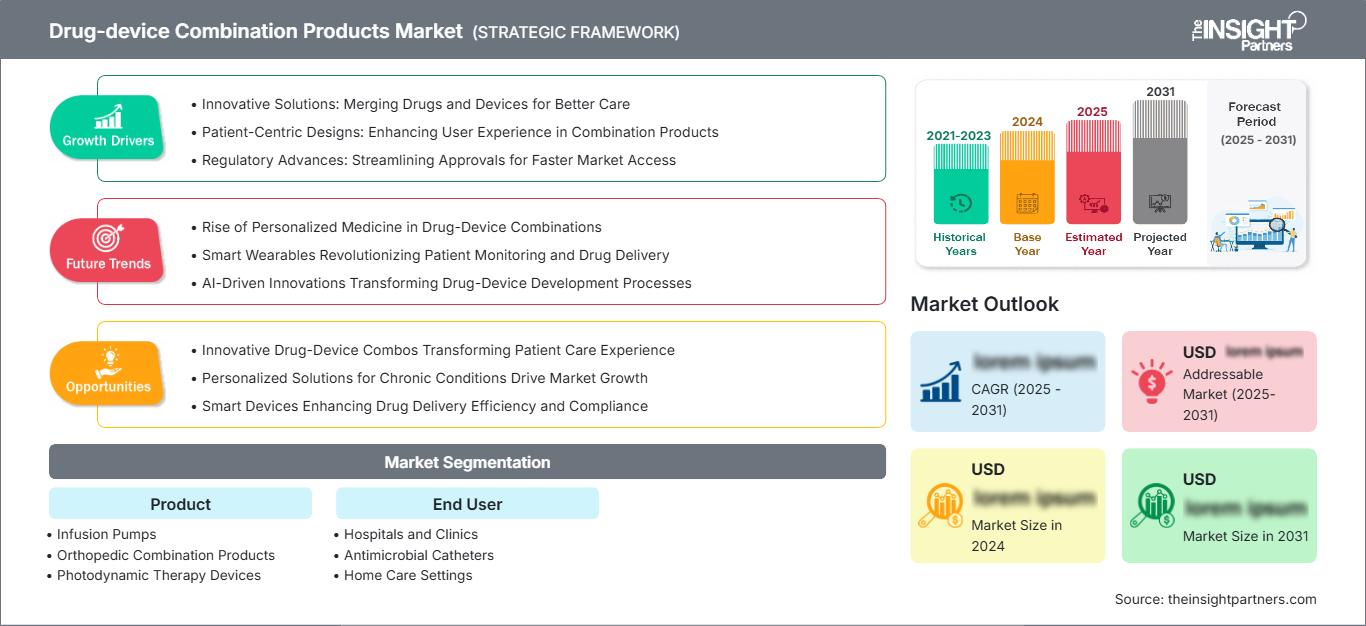
Drug-device Combination Products Market: Strategic Insights
Regional Insights
North America Drug-Device Combination Products Market
North America accounted for approximately 39–43% of the global drug-device combination products market in 2025 and is projected to expand at a CAGR of 7.9–8.3% through 2034. Strong healthcare expenditure, favorable reimbursement structures, and rapid commercialization of innovative therapeutic technologies continue to support regional market leadership.
Investments that are continually made in precision medicine, digitized health, and minimally invasive treatments have facilitated an uptake in the fields of cardiology, pulmonology, orthopedics, and diabetes. The collaboration between pharmaceutical firms, device producers, research organizations, and regulatory authorities enhances commercialization capacities in the entire regional healthcare environment.
U.S. Drug-Device Combination Products Market
The United States represents approximately 84–88% of the North American drug-device combination products market and is expected to register a CAGR of 8.0–8.4% during the forecast period. The country's extensive pharmaceutical innovation ecosystem and advanced medical technology sector continue supporting rapid commercialization of sophisticated combination products.
The growing adoption of wearable injectors, infusers, inhalers, cardiovascular device implants, and other connected therapy platforms is an indication of the growing trend towards personalization and ambulatory therapies. The well-known presence of major multinational companies in addition to the already existing clinical trial infrastructure and steady investments in digital health products only adds to the country’s regional dominance.
Europe Drug-Device Combination Products Market
Europe accounted for 26–30% of the global drug-device combination products market share in 2025 and is projected to expand at a CAGR of 7.5–7.9% during 2026–2034. Strong regulatory alignment, advanced healthcare infrastructure, and sustained investment in innovative therapeutic technologies continue to support regional market expansion.
Germany represents the largest market across Europe owing to its well-established medical technology manufacturing base, significant pharmaceutical research capabilities, and high adoption of minimally invasive procedures. Continuous investments in cardiovascular interventions, orthopedic implants, and advanced drug delivery systems strengthen domestic demand while encouraging collaboration between healthcare providers and manufacturers. Germany is expected to record a CAGR of 7.7–8.1% throughout the forecast period.
The United Kingdom continues to benefit from increasing adoption of integrated therapeutic technologies across hospitals and specialty treatment centers. Greater emphasis on personalized medicine, digital health integration, and chronic disease management supports sustained market growth. Meanwhile, France, Italy, and Spain are expanding the utilization of combination products through healthcare modernization initiatives, increasing procedural volumes, and improving access to advanced medical technologies. The regional market continues to witness rising demand for patient-centric therapeutic solutions.
APAC Drug-Device Combination Products Market
Asia Pacific accounted for 22–26% of the global drug-device combination products market in 2025 and is anticipated to register the fastest regional expansion with a CAGR of 9.4–9.8% through 2034. Rising healthcare expenditure, expanding pharmaceutical manufacturing, and increasing prevalence of chronic diseases continue driving widespread adoption of advanced combination therapies.
China remains the leading market due to the rapid expansion of domestic medical device manufacturing, favorable industrial policies, and increasing investments in biotechnology innovation. Large patient populations and growing demand for minimally invasive treatment options further accelerate the commercialization of advanced products. China is expected to achieve a CAGR of 9.6–10.0% during the forecast period.
Japan continues emphasizing precision healthcare, advanced drug delivery technologies, and high-quality manufacturing standards, while South Korea benefits from strong biomedical research and supportive innovation policies. India is witnessing robust growth through expanding healthcare infrastructure, domestic pharmaceutical production, and rising access to advanced therapies. Australia complements regional expansion with sophisticated healthcare delivery systems, growing adoption of connected medical technologies, and increasing investment in chronic disease management programs.
Middle East & Africa Drug-Device Combination Products Market
The Middle East & Africa market is projected to expand at a CAGR of 7.1–7.5% during the forecast period as healthcare modernization and investment in specialized treatment facilities continue improving access to advanced combination products across the region.
Saudi Arabia leads regional demand through substantial healthcare infrastructure development, increasing investment in medical technologies, and national healthcare transformation initiatives. The growing prevalence of chronic diseases and rising adoption of minimally invasive treatment approaches continue to support long-term market expansion. Saudi Arabia is anticipated to register a CAGR of 7.3–7.7%.
The United Arab Emirates continues to strengthen its position through digital healthcare adoption, specialized hospitals, and international medical partnerships. South Africa benefits from expanding access to cardiovascular and diabetes treatment technologies. At the same time, the Rest of the Middle East & Africa gradually increases utilization of combination products through healthcare investments, improved distribution networks, and broader availability of advanced therapeutic solutions.
Segmentation Analysis
Product
The Product segment forms the foundation of the drug-device combination products market and is projected to expand at a CAGR of 8.4–8.8% during 2026–2034. Continuous innovation in integrated drug delivery technologies, growing demand for minimally invasive treatment solutions, and increasing prevalence of chronic diseases are supporting sustained adoption across multiple therapeutic areas.
- Infusion Pumps: Widely adopted for precise administration of biologics, insulin, oncology therapies, and critical care medications. Increasing demand for programmable and connected infusion systems continues to strengthen clinical efficiency and patient safety across healthcare environments.
- Orthopedic Combination Products: These products integrate implants with pharmaceutical coatings or therapeutic agents that improve healing, minimize infection risk, and enhance long-term clinical outcomes following orthopedic reconstruction and trauma procedures.
- Photodynamic Therapy Devices: Growing utilization in oncology and dermatology supports increasing adoption of combination technologies that precisely activate pharmaceutical compounds while minimizing damage to surrounding healthy tissues and improving treatment precision.
- Transdermal Patches: Expanding preference for non-invasive drug delivery and sustained-release formulations continues to support widespread application in pain management, hormone replacement therapies, cardiovascular care, and neurological disorders.
- Drug Eluting Stents: The largest product category benefits from continuous cardiovascular intervention volumes, superior restenosis prevention, improved patient outcomes, and ongoing technological advancements in polymer coatings and controlled drug release mechanisms.
- Wound Care Products: Increasing incidence of chronic wounds and diabetic ulcers drives adoption of antimicrobial dressings, bioactive materials, and advanced therapeutic products that accelerate tissue regeneration and reduce infection risks.
- Inhalers: Growing respiratory disease prevalence and increasing demand for user-friendly inhalation systems continue encouraging innovation in combination inhalers delivering precise medication doses with improved patient compliance.
- Antimicrobial Catheters: Drug-coated catheters are increasingly utilized to minimize healthcare-associated infections, improve patient safety, and reduce hospitalization costs across intensive care units and long-term treatment settings.
End User
- Hospitals and Clinics: These facilities remain the primary end users because they perform the majority of cardiovascular, orthopedic, respiratory, and infusion-related procedures requiring sophisticated drug-device combination products and specialized clinical expertise.
- Antimicrobial Catheters: Specialized healthcare settings utilizing antimicrobial catheter technologies continue expanding adoption to improve infection prevention, reduce complications associated with prolonged catheterization, and enhance patient safety across acute care environments.
- Home Care Settings: Rising preference for outpatient treatment, wearable drug delivery devices, remote patient monitoring, and self-administered therapies continues accelerating adoption among chronic disease patients requiring long-term therapeutic management.
Opportunity Snapshot
| Segment Name | Revenue Contribution | Trend Tag | Adoption Stage |
| Hospitals and Clinics | High | Smart Infusion | Mature |
| Antimicrobial Catheters | Medium | Infection Control | Scaling |
| Home Care Settings | High | Remote Therapy | Scaling |
Drug-device Combination Products Market Growth Drivers and Impact Analysis
Growing Burden of Chronic Diseases Increases Demand for Integrated Therapeutic Solutions
As a result of increasing occurrence of various types of chronic diseases, such as heart problems, diabetes, breathing ailments, autoimmune diseases, and cancer, there is constant need for drug-device combination products globally. Such products offer an opportunity for accurate drug delivery, which helps prevent dosing mistakes, promotes better treatment adherence, and increases efficacy of treatments. Medical professionals find drug-device combinations more convenient as far as treatment plans are complicated. The process of aging of the population raises the demand for advanced drug delivery systems that allow patients continue treatment conveniently. Thus, companies introduce new products to meet the needs of their customers.
Technological Advancements Enhance Precision Drug Delivery and Clinical Performance
Advances in innovations in biomaterial science, microelectronic components, sensors and controlled release systems have greatly enhanced the efficacy of combination products. Intelligently designed infusion systems, connected inhalers, drug eluting devices, wearable injection systems and programmable drug delivery devices ensure accurate treatment while allowing real time tracking of the adherence to treatment regimens. This not only leads to reduced wastage of medicine, enhances safety but also supports personalized treatments. The increasing incorporation of software technology and wireless communications technology in these devices allow health care providers to make optimal treatment choices based on patient data.
Regulatory Harmonization and Collaborative Product Development Accelerate Commercialization
Regulatory authorities in leading healthcare markets are continually working on developing frameworks for combination products, thereby offering more clarity to manufacturers in the course of developing and marketing these products. Enhanced cooperation between the pharmaceutical and medical devices regulatory processes has resulted in shorter development time while maintaining high quality standards. On the other hand, collaboration among pharmaceutical companies, medical device companies, contract development organizations, and research organizations helps in sharing knowledge and speeding up the process of innovation.
Drug-device Combination Products Market Future Trends
Digital Integration Will Transform Combination Therapy Platforms
Combination drug-device products have become more sophisticated in becoming integrated therapeutic environments that can collect, transmit, and analyze therapeutic information in real-time. Through the integration of cloud technologies, apps, artificial intelligence, and remote monitoring, physicians would be able to monitor the adherence to therapy, customize drug dosage timing, and intervene promptly where there is any change in clinical condition. Manufacturers should focus on interoperability of such drug-device products within the broader digital health ecosystem for supporting customized therapeutic processes. In the context of increased importance of value-based healthcare services, such digital drug devices would become a significant competitive advantage.
Personalized Medicine Will Drive Product Design and Therapeutic Innovation
The future development of pharmaceutical products is expected to become increasingly aligned with personalized medicine, with targeted drugs and delivery systems designed for specific patient populations. Advancements in biologics, gene therapies, companion diagnostics, and advanced manufacturing technologies are encouraging companies to develop more sophisticated combination products that enhance treatment effectiveness while minimizing potential side effects. A key drug-device combination products market trend is the growing focus on modular delivery platforms capable of incorporating multiple therapeutic agents and supporting diverse administration methods, offering greater flexibility and improved patient outcomes.
Drug-device Combination Products Market Opportunities
Expanding Home-Based Healthcare Creates New Commercial Growth Potential
Healthcare systems worldwide are shifting toward outpatient treatment models that reduce hospitalization costs while improving patient convenience. This transition creates significant opportunities for manufacturers developing wearable injectors, connected infusion pumps, transdermal delivery systems, and self-administered therapeutic devices. Combination products designed for home use improve treatment continuity while supporting remote patient monitoring and digital care coordination. Companies investing in intuitive device interfaces, patient education tools, and remote connectivity features are well-positioned to capture growing demand from aging populations and individuals requiring long-term chronic disease management outside traditional clinical settings.
Emerging Healthcare Markets Offer Long-Term Investment Opportunities
The rapid establishment of health care infrastructure in developing nations offers great potential for manufacturers looking to expand geographically. The increase in public expenditure on health care, increased insurance coverage, increased drug manufacturing capacity, and favorable industrial policies offer a strong incentive for greater acceptance of innovative combination products. Strategic alliances, regional distribution networks, and technology transfer can contribute to greater affordability and improved market access. Organizations able to adapt their products to local clinical needs and regulations stand to gain from increasing procedure volumes and expanding patient pools within the developing world's modernizing health care system.
Recent Developments
- January, 2026: BD (Becton, Dickinson and Company), a leading global medical technology company, and Ypsomed, a leading developer of injection systems, are strengthening their collaboration with the development of a 5.5 mL version of the BD Neopak XtraFlow Glass Prefillable Syringe. This innovation is designed to be fully compatible with Ypsomed's YpsoMate 5.5 autoinjector platform, expanding options for pharmaceutical companies and patients who require large‑volume subcutaneous self‑injections.
- October 2025: Boston Scientific Corporation initiated the AGENT DCB STANCE trial, evaluating a drug-coated balloon against drug-eluting stents, reflecting innovation and competition within drug-device combination therapies.
- August 2025: Cook Medical received FDA IDE approval to initiate trials for its everolimus-coated balloon, advancing next-generation drug-device combination technologies beyond traditional paclitaxel-based systems.
Frequently Asked Questions

- Comprehensive Market Sizing and Forecast Analysis
- Detailed Segmentation Analysis
- In-Depth Market Dynamics Assessment
- Regional and Country-Level Insights
- Competitive Landscape and Company Benchmarking
- Strategic Business Intelligence
Recent Reports
Testimonials

The Insight Partners' SCADA System Market report is comprehensive, with valuable insights on current trends and future forecasts. The team was highly professional, responsive, and supportive throughout. We are very satisfied and highly recommend their services.
RAN KEDEM Partner, Reali Technologies LTDs
I requested a report on a very specific software market and the team produced the report in a few days. The information was very relevant and well presented. I then requested some changes and additions to the report. The team was again very responsive and I got the final report in less than a week.
JEAN-HERVE JENN Chairman, Future Analytica
We worked with The Insight Partners for an important market study and forecast. They gave us clear insights into opportunities and risks, which helped shape our plans. Their research was easy to use and based on solid data. It helped us make smart, confident decisions. We highly recommend them.
PIYUSH NAGPAL Sr. Vice President, High Beam Global
The Insight Partners delivered insightful, well-structured market research with strong domain expertise. Their team was professional and responsive throughout. The user-friendly website made accessing industry reports seamless. We highly recommend them for reliable, high-quality research services
YUKIHIKO ADACHI CEO, Deep Blue, LLC.
This is the first time I have purchased a market report from The Insight Partners.While I was unsure at first, I visited their web site and felt more comfortable to take the risk and purchase a market report.I am completely satisfied with the quality of the report and customer service. I had several questions and comments with the initial report, but after a couple of dialogs over email with their analyst I believe I have a report that I can use as input to our strategic planning process.Thank you so much for taking the extra time and making this a positive experience.I will definitely recommend your service to others and you will be my first call when we need further market data.
JOHN SUZUKI President and Chief Executive Officer, Board Director, BK Technologies
I wish to appreciate your support and the professionalism you displayed in the course of attending to my request for information regarding to infectious disease IVD market in Nigeria. I appreciate your patience, your guidance, and the fact that you were willing to offer a discount, which eventually made it possible for us to close a deal. I look forward to engaging The Insight Partners in the future, all thanks to the impression you have created in me as a result of this first encounter.
DR CHIJIOKE ONYIA MANAGING DIRECTOR, PineCrest Healthcare Ltd.Reason to Buy
- Informed Decision-Making
- Understanding Market Dynamics
- Competitive Analysis
- Identifying Emerging Markets
- Customer Insights
- Market Forecasts
- Risk Mitigation
- Boosting Operational Efficiency
- Strategic Planning
- Investment Justification
- Tracking Industry Innovations
- Aligning with Regulatory Trends





 Get Free Sample for