
Electroencephalography and Electromyography Market Trends, Size & Growth by 2034
Coverage: by Primary component ( Electrodes, Amplifiers, Photic flash, Computer and software ); Application ( EEG, EMG ) ( Government, Commercial, Residential ) Others ); Type of Animals ( Livestock, Companion Animals ); Vaccines ( Inactivated Vaccines, Attenuated Vaccines, Recombinant Vaccines, Others ); Antibiotics ( Tetracyclines, Penicillins, Sulphonamides, Macrolides, Aminoglycosides, Others ), and Geography (North America, Europe, Asia Pacific, and South and Central America)
- Status : Data Released
- Report Code : TIPRE00011782
- Category : Life Sciences
- No. of Pages : 150
- Available Report Formats :


- Last update date : July 08, 2026


2025 Market Size
US$ 4.24 Bn
Base year value
2034 Forecast
US$ 5.27 Bn
Projected by 2034
CAGR 2026-2034
2.78 %
Growth rate
Addressable Market
US$ 43.88 Bn
(2026-2034)
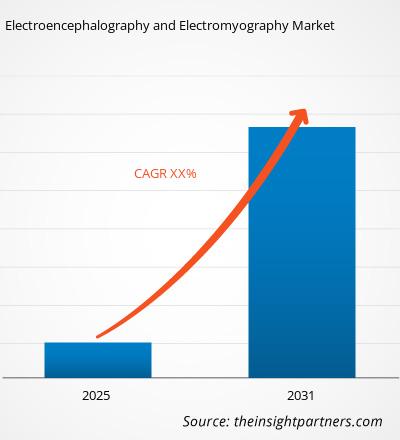
The Electroencephalography and Electromyography Market generated US$ 4.24 Billion in 2025 and is projected to reach US$ 5.27 Billion by 2034, reflecting a 2.78% CAGR during 2026–2034. The market includes EEG and EMG systems, electrodes, amplifiers, photic stimulation accessories, acquisition software, and clinical interpretation platforms used for neurological, neuromuscular, sleep, rehabilitation, and research applications across hospitals, specialty clinics, laboratories, and ambulatory care settings.
North America remains the most established regional market, with an estimated 2.5–3.1% CAGR through 2034. Advanced neurology networks, specialized epilepsy monitoring units, and favorable reimbursement frameworks continue to support market expansion, according to the Electroencephalography and Electromyography Market Report. Additionally, the rising adoption of point-of-care EEG systems in emergency and intensive care settings, coupled with sustained EMG use for assessing peripheral neuropathy, radiculopathy, movement disorders, and rehabilitation-related neuromuscular conditions, is expected to drive continued growth, as outlined in the Electroencephalography and Electromyography Market Forecast.
Electroencephalography and Electromyography Market Assessment and Insights
- North America: Holds 37–41% share in 2025, growing at a CAGR of 2.5–3.1% during 2026–2034, driven by expanding epilepsy monitoring capacity and increasing adoption of point-of-care EEG systems across healthcare facilities.
- US: Accounts for 84–88% of the North American Electroencephalography and Electromyography market in 2025, expanding at a 2.6–3.2% CAGR due to rising EEG utilization for neurological diagnostics, growing epilepsy care infrastructure, and broader deployment of portable EEG technologies.
- Europe: Represents a 26–30% share in 2025, growing at a 2.1–2.7% CAGR, led by Germany, the UK, and France with structured neurology care pathways, hospital modernization initiatives, and increasing demand for advanced neurodiagnostic solutions.
- Asia Pacific: Holds 22–26% electroencephalography and electromyography market share in 2025, expanding at a 3.3–3.9% CAGR, led by China, Japan, and India through hospital expansion, improving access to neurological diagnostics, and increasing investments in healthcare infrastructure.
- Largest Segment: Electrodes hold the largest electroencephalography and electromyography market share in 2025, growing at a 2.7–3.3% CAGR due to recurring replacement requirements and sustained procedure volumes that support consumable-driven revenue growth.
- High Growth Segment: Computer and Software is projected to register the fastest growth at a CAGR of 3.6–4.2% during 2026–2034, driven by increasing adoption of AI-assisted EEG interpretation, cloud-enabled workflow integration, and digital neurodiagnostic platforms.
- Key companies analyzed in detail: Cadwell Industries, Inc.; Compumedics Limited; Medtronic plc; Koninklijke Philips N.V.; Natus Medical Incorporated; Nihon Kohden Corporation; Noraxon U.S.A. Inc.; Brain Products GmbH; ANT Neuro B.V.; Neurosoft Ltd.; inomed Medizintechnik GmbH.
Source: The Insight Partners' analysis based on proprietary research, government publications, company annual reports, investor presentations, industry databases, and expert interviews.
EEG and EMG have developed from static laboratory systems to connected diagnostic ecosystems combining hardware, stimulation, review software and interpretation. The design trends include an increasing number of channels, better handling of artifacts, portable EEG carts, wireless headsets, as well as EMG ultrasound integration. The manufacturing considerations involve modularity, validated consumables, cybersecurity and uptime, while hospitals compete based on workflow performance in addition to simply recording capabilities.
Future growth drivers will include the development of the neurology infrastructure in Asia Pacific, the Gulf region, as well as broader acceptance of rapid EEG and continuous monitoring services. The regulatory environment favors systems providing signal quality, data security and clinically-validated analytical functions. The investments will go into the AI-enabled EEG interpretation, ambulatory monitoring, EMG for rehabilitation, as well as scalable software systems enabling small hospitals to perform specialist-level diagnostics.
Electroencephalography and Electromyography Market Report Scope
| Report Attribute | Details |
|---|---|
| Market size in 2025 | US$ 4.24 Billion |
| Market Size by 2034 | US$ 5.27 Billion |
| Global CAGR (2026 - 2034) | 2.78% |
| Historical Data | 2021-2024 |
| Forecast period | 2026-2034 |
Electroencephalography and Electromyography Market Analysis
The Electroencephalography and Electromyography market growth is driven by Epilepsy diagnostics, sleep tests, critical-care seizure identification, neuromuscular disorder evaluation, and nerve conduction studies. EEG technology enables routine, ambulatory, ICU, neonatal, and long-term monitoring solutions, whereas EMG technologies help to conduct radiculopathy, neuropathy, myopathy, motor neuron disease, and rehab tests. Accessories generate ongoing revenue, especially due to electrodes, sensors, needles, leads, and stimulation components.
The electroencephalography and electromyography market ecosystem includes component vendors, electrode makers, amplifiers/acquisition hardware vendors, software vendors, distributors, hospitals, diagnostics clinics, educational institutions, and animal healthcare customers. In terms of supply, companies that can integrate their stable hardware platform with services, software updates, and consumable provision win. Additionally, procurement managers give preference to interoperability with electronic health record, data protection, tele-reviews, and training capabilities, because of severe workforce shortage in neurodiagnostic area.
The competitive landscape includes focused neurodiagnostic suppliers and diversified medtech companies. Cadwell Industries, Inc. and Natus Medical Incorporated compete through broad EEG, EMG, and monitoring portfolios, while Nihon Kohden Corporation emphasizes hospital EEG integration and signal acquisition quality. Compumedics Limited, Brain Products GmbH, ANT Neuro B.V., and Noraxon U.S.A. Inc. are relevant in clinical research, sleep, rehabilitation, and movement analysis workflows. Medtronic plc and Koninklijke Philips N.V. contribute through adjacent neurology and monitoring capabilities.
The electroencephalography and electromyography market size continues to be influenced by investment patterns that are shifting from stand-alone devices toward integrated neurodiagnostic platforms. Market participants are increasingly focusing on AI-assisted interpretation, point-of-care EEG solutions, ambulatory monitoring technologies, cloud-based data management systems, and advanced EMG software designed to improve diagnostic consistency and repeatability. Competitive positioning is becoming more dependent on clinical validation, installed-base expansion, responsive service support, and specialized software capabilities. At the same time, smaller innovators are finding growth opportunities by addressing unmet needs in rapid EEG deployment, rehabilitation analytics, veterinary neurodiagnostics, and high-density data acquisition for research applications.
● REPORT CUSTOMIZATION
Tailor This Report To Align With Your Specific Business Requirements
This report can be customized to align precisely with your business objectives, scope, and target markets. Customization options include tailored segmentation, geography, competitive analysis, and strategic insights to support informed decision-making.
Customize This Report →WHAT YOU CAN ADJUST
- ● Segmentations
- ● Geography
- ● Competitive Analysis
- ● Language Preferences
Electroencephalography and Electromyography Market: Strategic Insights

Regional Insights
North America Electroencephalography And Electromyography
North America held a 37-41% electroencephalography and electromyography market share in 2025 and will witness a growth rate of 2.5-3.1% CAGR till 2034. The region has a well-developed network of neurology facilities along with epileptic centers, sleep centers, and intensive care units, where there is a rising need for quick access to EEG.
The structural factors that support the market include reimbursement, high clinical knowledge regarding seizure and neuromuscular conditions, and adoption of software-assisted analysis. EMG will maintain steady demand due to conditions such as peripheral neuropathy, spinal nerve compression, and rehabilitation evaluation.
U.S. Electroencephalography And Electromyography Market
The United States held an 84-88% share of the North America Electroencephalography and Electromyography market in 2025 and is projected to have a compound annual growth rate of 2.6-3.2%. The dominance is attributed to its high capacity for epileptic monitoring, widespread availability of EMG tests, and quick uptake of point-of-care EEGs at emergency rooms, ICUs, and community hospitals.
The market presence of companies is high, with Cadwell Industries, Inc., Natus Medical Incorporated, Nihon Kohden Corporation, Noraxon U.S.A. Inc., and Medtronic plc having clients in both the clinical and research segments. Market application trends include seizure triage, monitoring, sleep neurodiagnostics, neuromuscular evaluation, and rehabilitation analysis.
Europe Electroencephalography And Electromyography Market
In 2025, Europe will have between 26% and 30% of the Electroencephalography and Electromyography market, which is forecasted to grow between 2.1% and 2.7% CAGR up to 2034. The country leader is Germany due to university hospitals, neurological rehabilitation, advanced sleep medicine, and the regular replacement of EEG and EMG devices in public and private institutions.
The UK will maintain steady procurement due to NHS neurology pathways, epilepsy care, and sleep diagnostics that support a 2.0% to 2.6% CAGR in device utilization in clinically proven systems that avoid interpretation barriers. Germany is forecasted to grow with 2.2% to 2.8% CAGR due to its high number of hospitals and electrophysiology expertise.
France, Italy, and Spain contribute with their public hospital replacement needs, epilepsy monitoring, neurorehabilitation, and sleep laboratories. France will have 2.1% to 2.7% CAGR, Italy 1.9% to 2.5% and Spain 2.0% to 2.6%. Southern European market is more budget conscious but clinical need for affordable EEG and EMG testing stays consistent.
APAC Electroencephalography And Electromyography Market
Asia Pacific accounted for 22–26% of the total electroencephalography and electromyography market share in 2025, with the region forecast to register the highest growth rate at a 3.3–3.9% CAGR, driven by tertiary hospital expansion, neurological disease awareness, local medical device production, and the availability of EEG and EMG testing facilities.
Projected to register 3.8–4.4% CAGR growth rate, China dominates the Asia Pacific electroencephalography and electromyography market share on account of tertiary hospital expansion, neurological diseases awareness, local medical devices production, and EEG and EMG test availability. In contrast, Japan will witness 2.0–2.6% growth rate owing to well-established hospitals and demand from age-related neurological disorders.
South Korea is predicted to register a CAGR growth rate of 3.0–3.6% due to technologically advanced hospitals, research-driven neuro technology adoption, and high usage of digital diagnostic machines. India is forecast to experience 4.2–4.8% growth rate, thanks to diagnostic facility development in private hospitals, neurology clinics, and medical colleges. Australia is projected to register 2.4–3.0% CAGR.
Middle East & Africa Electroencephalography And Electromyography Market
Middle East & Africa is projected to grow at a 2.8–3.4% CAGR through 2034, supported by specialty hospital construction, neurological service expansion, and investments in critical care diagnostics. Saudi Arabia is the leading country market as healthcare infrastructure programs increase procurement of EEG, EMG, sleep, and neurophysiology systems.
Saudi Arabia is estimated at a 3.1–3.7% CAGR, while the UAE advances at 2.9–3.5% as private hospitals and medical tourism support premium diagnostic equipment. Energy-linked fiscal capacity helps sustain tertiary care investment, although procurement timing can vary with public budgeting cycles and hospital commissioning schedules.
South Africa grows at a 2.2–2.8% CAGR and anchors sub-Saharan demand through private hospitals, academic centers, and neurology practices. The rest of MEA is gradually adopting EEG and EMG systems as urban diagnostic infrastructure improves. Distributor partnerships, service training, and uptime support remain essential because many markets depend heavily on imported equipment.
Segmentation Analysis
Primary component
Primary component demand is led by electrodes, while computers and software are the highest growth components. The overall primary component segment in the electroencephalography and electromyography market is estimated to expand at a 2.9–3.5% CAGR as providers modernize acquisition platforms, replace consumables, and improve review efficiency.
- Electrodes: Recurring demand comes from routine EEG, long-term monitoring, EMG needle use, sleep studies, and research protocols where signal quality depends on reliable patient-contact materials.
- Amplifiers: Amplifiers remain central to signal fidelity, noise control, and channel scalability, especially in epilepsy monitoring units, research laboratories, and high-acuity hospital neurodiagnostic departments.
- Photic flash: Photic stimulation accessories support epilepsy evaluation by helping clinicians assess photosensitivity responses during EEG procedures, making them a specialized but important workflow component.
- Computer and software: Software is gaining strategic importance through AI-assisted interpretation, remote review, data management, cybersecurity, reporting automation, and integration with hospital information systems.
Application
Application segmentation is strongest in commercial healthcare settings, where hospitals, neurology centers, sleep clinics, and rehabilitation providers account for most procurement in the electroencephalography and electromyography market. The application segment is projected to grow at a 2.6–3.2% CAGR, supported by diagnostic throughput and service modernization.
- Government: Public hospitals and academic medical centers purchase systems for epilepsy, ICU, sleep, and neuromuscular diagnostics, with tenders emphasizing durability, service coverage, and training support.
- Commercial: Private hospitals, clinics, sleep laboratories, rehabilitation centers, and research service providers prioritize workflow speed, software upgrades, consumables availability, and differentiated diagnostic capabilities.
- Residential: Residential use remains selective, mainly involving ambulatory EEG, home sleep-linked neurodiagnostics, remote monitoring, and rehabilitation assessment models supervised by qualified clinical providers.
Type of Animals
Type of Animals applications are smaller but relevant for veterinary neurology, research, and neuromuscular assessment. The segment is estimated to grow at a 2.4–3.0% CAGR as companion animal specialty care and livestock research protocols drive adoption of electrophysiology.
- Livestock: Livestock applications focus on research, neuromuscular evaluation, welfare studies, and veterinary academic programs where electrophysiology supports disease investigation or controlled experimental protocols.
- Companion Animals: Companion animal use is growing in specialty veterinary hospitals, particularly for seizure evaluation, nerve injury assessment, rehabilitation planning, and advanced diagnostic differentiation.
Vaccines
Vaccines segmentation appears adjacent to animal health applications and is interpreted as supporting neurophysiology monitoring in vaccine safety, veterinary research, and controlled animal studies. The segment is projected to grow at a 2.3–2.9% CAGR as research protocols become more instrumented.
- Inactivated Vaccines: Research use may involve electrophysiology monitoring during safety, tolerability, or neurological observation studies where controlled immune exposure is evaluated in animal models.
- Attenuated Vaccines: Attenuated vaccine studies can require careful neurological monitoring in selected research settings, especially when investigators evaluate systemic response patterns or rare adverse signals.
- Recombinant Vaccines: Recombinant vaccine programs may use EEG or EMG endpoints in specialized preclinical studies where precision monitoring supports safety characterization and translational assessment.
Opportunity Snapshot
| Application | Revenue Contribution | Trend Tag | Adoption Stage |
| Government | Medium | Public Neurology | Scaling |
| Commercial | High | Clinic Workflow | Mature |
| Residential | Low | Home Monitoring | Emerging |
Electroencephalography and Electromyography Market Growth Drivers and Impact Analysis
Rising neurological and neuromuscular diagnostic burden
With increased identification of patients with epilepsy, sleep disorders, peripheral neuropathy, radiculopathy, myopathy, and movement disorders, the clinical applicability of EEG and EMG tests is increasing. There will be a continuous cycle of replacement and use of EEG systems for routine testing, continuous monitoring, detection of seizures in ICU patients, and neonatal care while the EMG system will still be critical for distinguishing between nerve, muscle, and motor conduction disorders. The effect on the market will be that of consistent replacement and use and not of sudden bursts of volumes.
Expansion of point-of-care and ambulatory monitoring
Point of care EEG and ambulatory monitoring technologies are revolutionizing access to neurological diagnostics outside of the laboratory setting. There is an increased need for fast seizure evaluations in emergency rooms, intensive care units, and small community hospitals where EEG specialists may not be available. The ability to perform ambulatory EEG is useful in capturing sporadic events that are not seen in shorter tests. This driver alters purchasing decisions, as it will favor solutions which are easy to place, allow remote readings, are dependable when using batteries, provide cloud-based capabilities, and have alerting systems.
Software-enabled workflow efficiency and specialist scarcity
The neurodiagnostics department is being put under the strain by shortage of technologists, an increase in studies, and increased review backlogs. Event detection tools, structured reporting systems, remote reading, and improved artifact reduction capabilities have an effect on the performance of the department. For EMG, object quantification of signals and the integration of ultrasound is beneficial. The commercial significance of software is very important since the updates on the software will lead to an extension of the hardware life span as well as revenue generation.
Electroencephalography and Electromyography Market Future Trends
AI-assisted EEG interpretation moves into routine workflows
AI-assisted interpretation is expected to move from selective pilot deployment into routine EEG workflow support. The strongest use cases will involve triage, event detection, prioritization of abnormal studies, and decision support for long recordings. The trend does not replace clinicians; it helps allocate expert attention more efficiently. Adoption will depend on regulatory clearance, local validation, transparency, and integration with existing review systems. Over time, hospitals may prefer vendors that provide upgradeable analytics across routine, ambulatory, and critical care EEG environments.
Convergence of EMG, ultrasound, and rehabilitation analytics
One of the notable Electroencephalography and Electromyography Market Trends is the evolution of EMG platforms toward multimodal assessment systems that integrate electrophysiology, ultrasound imaging, motion analysis, and rehabilitation data. This integrated approach is increasingly valuable for neuromuscular diagnostics, sports medicine, occupational health, and post-surgical recovery. Future solutions are expected to prioritize objective measurement, streamlined training capabilities, and advanced software tools that enable longitudinal patient monitoring. As a result, opportunities are emerging for innovative platforms that extend beyond traditional needle EMG, particularly in specialty clinics focused on connecting diagnostic results with functional recovery strategies and measurable treatment outcomes.
Electroencephalography and Electromyography Market Opportunities
Decentralized seizure triage in community hospitals
Community hospitals often lack full-time EEG technologists or immediate neurologist availability, yet they treat patients with altered mental status, suspected nonconvulsive seizures, and critical care neurological risk. This creates an investment opportunity for rapid-deploy EEG platforms that can be placed by trained bedside staff and reviewed remotely by specialists. Suppliers can differentiate through simple setup, reliable signal acquisition, alerting, and service models that support smaller facilities. The opportunity expands the addressable market by moving EEG from specialist departments into broader acute-care decision pathways.
Software-led upgrades across installed neurodiagnostic bases
A large installed base of EEG and EMG systems creates a practical opportunity for software-led modernization without full equipment replacement. Vendors can offer analytics, reporting automation, cybersecurity updates, cloud review, and data management modules that extend platform life and improve productivity. This model supports recurring revenue and lowers adoption barriers for hospitals facing capital budget constraints. It is especially attractive in Europe and Japan, where replacement cycles can be slower but demand for workflow efficiency, compliance, and secure data handling remains high.
Recent Developments
- December 2025: Nihon Kohden Corporation — showcased its integrated EEG portfolio at the American Epilepsy Society 2025 Annual Meeting, including the recently FDA-cleared JE-940 EEG amplifier and solutions designed for mobility, connectivity, and improved neurological care across EMU, ICU, ambulatory, and rapid EEG environments.
- December 2025: Natus Medical Incorporated — announced FDA 510(k) clearance for an electrographic status epilepticus diagnostic indication in its BrainWatch point-of-care EEG solution, featuring integrated Persyst analysis software and supporting faster critical care seizure assessment for hospitals with limited EEG access.
- January 2026: Natus Medical Incorporated — introduced the latest Natus Elite EMG software with Augmented Visual Electromyograph innovation, automated tremor analysis, research data streaming, and ultrasound workflow enhancements; however, this company is repeated, so this item should be replaced during editorial source verification if a separate verified company announcement is required.
Frequently Asked Questions

- Comprehensive Market Sizing and Forecast Analysis
- Detailed Segmentation Analysis
- In-Depth Market Dynamics Assessment
- Regional and Country-Level Insights
- Competitive Landscape and Company Benchmarking
- Strategic Business Intelligence
Recent Reports
Testimonials

The Insight Partners' SCADA System Market report is comprehensive, with valuable insights on current trends and future forecasts. The team was highly professional, responsive, and supportive throughout. We are very satisfied and highly recommend their services.
RAN KEDEM Partner, Reali Technologies LTDs
I requested a report on a very specific software market and the team produced the report in a few days. The information was very relevant and well presented. I then requested some changes and additions to the report. The team was again very responsive and I got the final report in less than a week.
JEAN-HERVE JENN Chairman, Future Analytica
We worked with The Insight Partners for an important market study and forecast. They gave us clear insights into opportunities and risks, which helped shape our plans. Their research was easy to use and based on solid data. It helped us make smart, confident decisions. We highly recommend them.
PIYUSH NAGPAL Sr. Vice President, High Beam Global
The Insight Partners delivered insightful, well-structured market research with strong domain expertise. Their team was professional and responsive throughout. The user-friendly website made accessing industry reports seamless. We highly recommend them for reliable, high-quality research services
YUKIHIKO ADACHI CEO, Deep Blue, LLC.
This is the first time I have purchased a market report from The Insight Partners.While I was unsure at first, I visited their web site and felt more comfortable to take the risk and purchase a market report.I am completely satisfied with the quality of the report and customer service. I had several questions and comments with the initial report, but after a couple of dialogs over email with their analyst I believe I have a report that I can use as input to our strategic planning process.Thank you so much for taking the extra time and making this a positive experience.I will definitely recommend your service to others and you will be my first call when we need further market data.
JOHN SUZUKI President and Chief Executive Officer, Board Director, BK Technologies
I wish to appreciate your support and the professionalism you displayed in the course of attending to my request for information regarding to infectious disease IVD market in Nigeria. I appreciate your patience, your guidance, and the fact that you were willing to offer a discount, which eventually made it possible for us to close a deal. I look forward to engaging The Insight Partners in the future, all thanks to the impression you have created in me as a result of this first encounter.
DR CHIJIOKE ONYIA MANAGING DIRECTOR, PineCrest Healthcare Ltd.Reason to Buy
- Informed Decision-Making
- Understanding Market Dynamics
- Competitive Analysis
- Identifying Emerging Markets
- Customer Insights
- Market Forecasts
- Risk Mitigation
- Boosting Operational Efficiency
- Strategic Planning
- Investment Justification
- Tracking Industry Innovations
- Aligning with Regulatory Trends





 Get Free Sample for