
Electronic Drug Delivery Systems Market Share, Size & Demand by 2034
Coverage: By Type (Electronic Wearable Infusion Pumps, Electronic Autoinjectors, Electronic Injection Pens, Electronic Inhalers); Indication (Diabetes, Multiple Sclerosis, Cardiovascular Disease, Asthma and COPD, Other Indication) , and Geography (North America, Europe, Asia Pacific, and South and Central America)
- Status : Data Released
- Report Code : TIPRE00019709
- Category : Life Sciences
- No. of Pages : 150
- Available Report Formats :


- Last update date : July 21, 2026


2025 Market Size
US$ 13.38 Bn
Base year value
2034 Forecast
US$ 29.05 Bn
Projected by 2034
CAGR 2026-2034
9.00 %
Growth rate
Addressable Market
US$ 189.90 Bn
(2026-2034)
The Electronic Drug Delivery Systems Market was valued at US$ 13.38 Billion in 2025 and is projected to reach US$ 29.05 Billion by 2034, expanding at a CAGR of 9.00% during 2026–2034. Market expansion is supported by the increasing prevalence of chronic diseases requiring long-term drug administration, continuous innovation in connected therapeutic devices, and the transition toward patient-centric homecare. Advancements in digital health ecosystems, miniaturized electronics, and precision dosing technologies are further strengthening adoption across diabetes, respiratory, and specialty therapeutic applications.
North America represents the leading regional marketplace, supported by robust healthcare expenditure, rapid adoption of connected medical technologies, and favorable reimbursement frameworks for advanced drug delivery devices. The regional electronic drug delivery systems market is expected to expand at an estimated 8.6–9.2% CAGR during 2026–2034, driven by increasing utilization of wearable insulin delivery systems, growing incidence of chronic diseases, and continuous investments by leading pharmaceutical and medical technology companies in digital therapeutics and smart drug delivery platforms.
Electronic Drug Delivery Systems Market Assessment and Insights
- North America: Accounted for 39–42% share in 2025 and is anticipated to grow at a CAGR of 8.6–9.2% during 2026–2034, supported by advanced healthcare infrastructure, high penetration of connected drug delivery technologies, favorable reimbursement policies, and increasing demand for home-based disease management.
- U.S.: Represented 82–86% of the North American Electronic Drug Delivery Systems market share in 2025 and is projected to register a CAGR of 8.7–9.3% during 2026–2034, driven by strong adoption of wearable insulin pumps, digital therapeutics integration, and continuous product innovation.
- Europe: Held 27–30% share in 2025 and is forecast to expand at a CAGR of 8.4–8.9% during 2026–2034. Germany, the UK, and France continue leading regional adoption owing to established reimbursement systems, increasing chronic disease burden, and accelerated deployment of connected healthcare technologies.
- Asia Pacific: Captured 21–24% share in 2025 and is expected to record the fastest regional expansion at a CAGR of 10.0–10.6% during 2026–2034, led by China, Japan, India, and South Korea through expanding healthcare investments, digital health initiatives, and improving access to advanced medical devices.
- Largest Segment: Electronic Wearable Infusion Pumps accounted for 37–41% market share in 2025 and are expected to grow at a CAGR of 9.1–9.6% during 2026–2034, reflecting increasing demand for continuous drug administration, particularly in diabetes and specialty therapies.
- High Growth Segment: Electronic Inhalers represented 15–19% market share in 2025 while advancing at a CAGR of 10.8–11.4% during 2026–2034, supported by rising respiratory disease prevalence, connected inhaler adoption, and remote patient monitoring initiatives.
- Key companies analyzed in detail: Medtronic plc, Novo Nordisk A/S, Bayer AG, Insulet Corporation, AstraZeneca PLC, United Therapeutics Corporation, Tandem Diabetes Care, Inc., F. Hoffmann-La Roche Ltd., Merck KGaA, ViCentra B.V., Debiotech S.A.
Source: The Insight Partners' analysis based on proprietary research, government publications, company annual reports, investor presentations, industry databases, and expert interviews.
The Electronic Drug Delivery Systems market has developed beyond traditional programmable drug delivery systems into digital therapeutics ecosystems that include sensors, wireless features, cloud connectivity, and personalized drug dosage algorithms. In terms of the manufacturers' strategy, the emphasis is put on increased connectivity with electronic health records, mobile applications, and telemonitoring tools to increase patient adherence and provide positive results for patients. In addition, the technology used by manufacturers is moving toward greater modularity, better batteries, and scalable manufacturing for an increasing need in connected medical devices.
In the next ten years, fast growth in investments will take place in the region of Asia Pacific, the Middle East, and some Latin American countries because of the priority of governments in the development of healthcare digitalization and treatment of chronic conditions. Meanwhile, regulatory agencies keep developing the rules for software-enabled medical devices and cybersecurity, which fosters innovations while providing safety for patients.
Electronic Drug Delivery Systems Market Report Scope
| Report Attribute | Details |
|---|---|
| Market size in 2025 | US$ 13.38 Billion |
| Market Size by 2034 | US$ 29.05 Billion |
| Global CAGR (2026 - 2034) | 9.00% |
| Historical Data | 2021-2024 |
| Forecast period | 2026-2034 |
Electronic Drug Delivery Systems Market Analysis
Increasing prevalence of cases involving diabetes, cardiovascular diseases, respiratory ailments, and neurological disorders keeps growing the demand for electronic drug delivery solutions that enhance the accuracy and effectiveness of treatments. Increasing aging of populations, rising digitization of healthcare operations, and growing homecare offerings make healthcare organizations seek intelligent devices that decrease the reliance on hospitals and allow constant monitoring. The Electronic Drug Delivery Systems market size is also driven by the growing usage of wireless communications, artificial intelligence-powered doses adjustment, and cloud-based platforms for managing patients.
The value chain includes semiconductor suppliers, sensors vendors, electronic components manufacturers, contract manufacturing organizations, pharmaceuticals, software developers, healthcare organizations, and distributors. The cooperation between all of these parties helps create holistic therapeutic environments using both hardware, software, and pharmaceutical products. Increasingly the supply chains focus on adopting robust procurement strategies, component standardization, and localization to address geopolitical risks and availability of semiconductors issues.
Competition presented within the Electronic Drug Delivery Systems Market report is characterized by technological differentiation, digital ecosystem expansion, strategic collaborations, and continuous product innovation rather than pricing alone. Medtronic plc, Insulet Corporation, Tandem Diabetes Care, Inc., and Novo Nordisk A/S continue strengthening connected diabetes management portfolios, while AstraZeneca PLC and United Therapeutics Corporation expand device-enabled therapeutic solutions. F. Hoffmann-La Roche Ltd., Bayer AG, Merck KGaA, ViCentra B.V., and Debiotech S.A. also invest in intelligent delivery platforms supporting personalized medicine and improved patient engagement.
Investment trends increasingly focus on miniaturized electronics, cybersecurity, artificial intelligence-enabled dosing algorithms, rechargeable power systems, and interoperability with digital health ecosystems. Healthcare providers seek integrated platforms capable of generating clinically actionable data while reducing treatment complexity and improving adherence. As regulatory pathways mature for software-enabled medical devices, companies continue expanding research collaborations with pharmaceutical manufacturers and technology developers, strengthening the Electronic Drug Delivery Systems share across multiple therapeutic areas while supporting comprehensive Electronic Drug Delivery Systems analysis and accelerating commercialization of next-generation connected delivery solutions.
● REPORT CUSTOMIZATION
Tailor This Report To Align With Your Specific Business Requirements
This report can be customized to align precisely with your business objectives, scope, and target markets. Customization options include tailored segmentation, geography, competitive analysis, and strategic insights to support informed decision-making.
Customize This Report →WHAT YOU CAN ADJUST
- ● Segmentations
- ● Geography
- ● Competitive Analysis
- ● Language Preferences
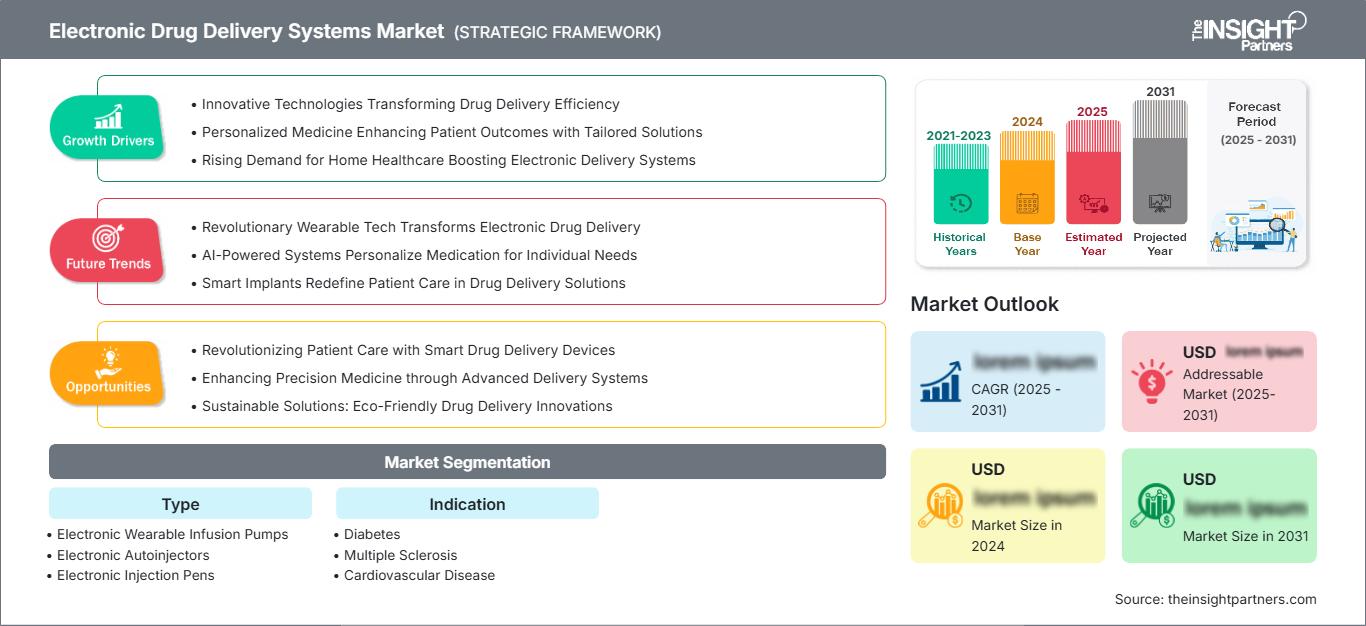
Electronic Drug Delivery Systems Market: Strategic Insights
Regional Insights
North America Electronic Drug Delivery Systems Market
North America accounted for 39–42% of the global Electronic Drug Delivery Systems market share in 2025 and is projected to expand at a CAGR of 8.6–9.2% during 2026–2034. Strong healthcare spending, favorable reimbursement frameworks, and rapid digital health adoption continue to support sustained deployment of electronic drug delivery technologies. Healthcare providers increasingly integrate connected delivery devices with remote patient monitoring platforms to improve medication adherence and chronic disease outcomes.
The region also benefits from established medical device manufacturing capabilities, extensive clinical research infrastructure, and high acceptance of home-based treatment models. Rising prevalence of diabetes, respiratory disorders, and cardiovascular diseases encourages healthcare systems to adopt intelligent delivery platforms that reduce hospitalization while improving therapeutic precision. Continuous investment in software-enabled medical devices further strengthens long-term regional competitiveness.
U.S. Electronic Drug Delivery Systems Market
The United States represented 82–86% of the overall North American market size in 2025 and is anticipated to register a CAGR of 8.7–9.3% during 2026–2034. The country's leadership reflects substantial investments in connected healthcare, strong pharmaceutical innovation, and broad availability of advanced reimbursement pathways supporting wearable infusion pumps, smart injectors, and connected inhalation devices.
Major manufacturers including Medtronic plc, Insulet Corporation, Tandem Diabetes Care, Inc., and United Therapeutics Corporation maintain significant operational presence within the country. Increasing adoption of continuous glucose monitoring integration, digital therapeutics, and artificial intelligence-assisted dosing platforms supports clinical efficiency while improving patient engagement. Growing home healthcare utilization further accelerates adoption across chronic disease management programs.
Europe Electronic Drug Delivery Systems Market
Europe accounted for 27–30% of the global Electronic Drug Delivery Systems market in 2025 and is expected to expand at a CAGR of 8.4–8.9% during 2026–2034. Germany remains the regional leader because of its advanced medical technology industry, strong healthcare reimbursement, and extensive deployment of connected therapeutic devices for chronic disease management.
The United Kingdom Electronic Drug Delivery Systems market continues expanding adoption through national digital healthcare initiatives and increasing investments in remote patient monitoring. Germany benefits from a mature manufacturing ecosystem and strong collaboration among pharmaceutical companies, technology providers, and healthcare institutions, supporting innovation in electronic drug delivery solutions.
France, Italy, and Spain collectively contribute significant regional demand through modernization of healthcare infrastructure, expanding diabetes management programs, and broader implementation of digital treatment pathways. Growing awareness regarding medication adherence and home-based disease management further supports adoption across these major European healthcare markets.
APAC Electronic Drug Delivery Systems Market
Asia Pacific captured 21–24% of the global Electronic Drug Delivery Systems market in 2025 and is forecast to record a CAGR of 10.0–10.6% during 2026–2034. China leads regional demand through expanding healthcare investments and domestic medical technology manufacturing capabilities.
Japan and South Korea continue advancing smart healthcare infrastructure while increasing utilization of connected therapeutic devices. Their emphasis on precision medicine and aging population management supports long-term market expansion.
India and Australia are strengthening adoption through healthcare digitization, chronic disease management initiatives, and expanding access to advanced medical technologies, creating favorable conditions for sustained regional growth.
Middle East & Africa Electronic Drug Delivery Systems Market
The Middle East and Africa is projected to record a CAGR of 8.1–8.7% during 2026–2034. Saudi Arabia continues leading regional demand through healthcare modernization programs and increasing investment in digital medical technologies.
The United Arab Emirates supports the electronic drug delivery systems market expansion through smart hospital initiatives, while South Africa benefits from improving chronic disease management capabilities and broader healthcare technology adoption.
The remaining MEA countries continue investing in healthcare infrastructure, expanding specialty care services, and strengthening access to advanced electronic drug delivery systems, supporting gradual long-term regional development.
Segmentation Analysis
Type
The type segment is projected to grow at a CAGR of 9.0–9.5% during 2026–2034. Product innovation remains focused on improving dosing precision, portability, connectivity, and patient convenience. Manufacturers continue integrating wireless communication, mobile applications, and automated dose management capabilities to enhance long-term treatment adherence while supporting personalized therapies across multiple chronic disease indications.
- Electronic Wearable Infusion Pumps: These devices maintain the largest commercial position owing to continuous drug administration capabilities, growing diabetes prevalence, expanding homecare adoption, and compatibility with digital monitoring ecosystems supporting long-term disease management.
- Electronic Autoinjectors: Demand continues increasing as pharmaceutical manufacturers introduce biologics requiring convenient self-administration. Improved ergonomics, automated injection control, and digital adherence monitoring enhance patient experience while supporting specialty pharmaceutical commercialization.
- Electronic Injection Pens: Smart injection pens strengthen medication adherence through dose recording, reminder functions, and wireless connectivity. Growing utilization among insulin-dependent patients supports wider clinical adoption across chronic disease management.
- Electronic Inhalers: Connected inhalers improve medication compliance by recording inhalation events, monitoring treatment patterns, and integrating with digital respiratory management platforms, making them increasingly valuable for asthma and COPD management.
Indication
The indication segment is anticipated to expand at a CAGR of 9.2–9.8% during 2026–2034. Rising prevalence of chronic diseases, increasing treatment personalization, and broader deployment of connected therapeutic platforms continue expanding utilization across multiple disease categories. Healthcare providers increasingly prioritize technologies capable of improving adherence, minimizing dosing errors, and enabling continuous patient monitoring.
- Diabetes: Represents the leading application because of widespread adoption of wearable insulin pumps, smart insulin pens, and connected glucose management systems supporting personalized insulin delivery and improved glycemic control.
- Multiple Sclerosis: Electronic autoinjectors improve treatment consistency, simplify self-administration, and reduce injection anxiety, encouraging broader utilization among patients requiring long-term disease-modifying therapies.
- Cardiovascular Disease: Connected delivery technologies support accurate administration of specialty therapies while enabling remote adherence monitoring, particularly for high-risk patient populations requiring continuous disease management.
- Asthma and COPD: Electronic inhalers provide medication tracking, usage analytics, and adherence monitoring that improve respiratory disease management while reducing exacerbation risks through optimized therapeutic compliance.
Opportunity Snapshot
| Segment Name | Revenue Contribution | Trend Tag | Adoption Stage |
| Diabetes | High | Smart Insulin | Mature |
| Multiple Sclerosis | Medium | Self Injection | Scaling |
| Cardiovascular Disease | Medium | Remote Therapy | Scaling |
| Asthma and COPD | High | Connected Inhalers | Scaling |
| Other Indication | Low | Specialty Care | Emerging |
Electronic Drug Delivery Systems Market Growth Drivers and Impact Analysis
Growing Chronic Disease Burden Increases Demand for Connected Drug Delivery
Rising incidences of diabetes, heart diseases, asthma, COPD, and neurodegenerative conditions have created constant demand for the use of advanced electronic devices in drug delivery systems. Healthcare institutions are focused on developing products that increase medication compliance, achieve optimal dosage and eliminate unnecessary hospital stays through constant monitoring of patients. Wearable infusion pumps, connected auto-injectors and smart inhalers allow treatment monitoring and collection of data by the healthcare facilities. With the increasing trend towards managing the above health conditions from home, intelligent delivery systems are becoming crucial components of healthcare treatments. Such innovations will improve treatment effectiveness and increase patient engagement which will prompt healthcare facilities and pharmaceutical companies to develop next-generation connected delivery systems.
Expansion of Digital Healthcare Ecosystems Accelerates Device Adoption
Fast-paced digital transformation in healthcare is boosting the need for eDrug delivery systems that can be easily compatible with remote monitoring systems, electronic medical record keeping, mobile apps, and cloud-based analytics. Healthcare practitioners are now demanding connected treatment devices which not only allow continuous exchange of information between patient and practitioner but also help in making personalized treatment decisions. Assistance from artificial intelligence in dosage recommendations, automated alerts regarding adherence to the regime, and wireless connectivity increase the effectiveness and convenience of the treatment process. The regulatory agencies are now issuing guidance regarding software medical devices.
Rising Preference for Homecare Supports Intelligent Self-Administration
Global healthcare organizations remain committed to the use of outpatient care and homecare as strategies to decrease healthcare expenses and increase convenience to patients. Drug delivery devices help to ensure easier self-medication by providing options for dose programming, automatic injection, reminder systems, and user-friendly interface. These devices eliminate any dosing mistakes and allow continued treatment outside of conventional medical facilities. More and more pharmaceutical companies produce drugs compatible with electronic drug delivery devices. Aging population trends, growth in the field of telemedicine, and increased acceptance of remote disease management contribute to growing demand for smart self-medication devices. Therefore, device manufacturers continue developing ergonomically designed products with recharging capabilities and user-friendly software experience.
Electronic Drug Delivery Systems Market Future Trends
Artificial Intelligence Will Enhance Personalized Drug Administration
AI is anticipated to revolutionize the electronic drug delivery systems market trends through predictive dosing, personalization of treatment, and clinical decision support. The market forecast indicates that future electronic drug delivery systems will utilize physiological data gathered from wearable devices to provide treatment modification recommendations tailored to the individual needs of each patient. This advancement is expected to support the growth of precision medicine while helping reduce adverse effects associated with improper dosing. Pharmaceutical companies and innovators are increasingly focusing on the development of AI-powered therapeutic systems capable of delivering adaptive treatment recommendations.
Interoperable Connected Therapeutic Platforms Will Become Industry Standard
The marketplace is gravitating toward extremely interoperable systems in which eDDDs can be used to communicate with hospital IT systems, telemedicine solutions, wearables, and patients' mobile applications. Better communication standards and stronger cyber security mechanisms will ensure better exchange of information and protection of sensitive clinical data. The future development of products will include more software updates and cloud integration as well as over-the-air performance improvements. The providers of healthcare services are anticipated to prefer integrated solutions that would allow consolidation of medication management, disease monitoring, and patient engagement processes within one ecosystem.
Electronic Drug Delivery Systems Market Opportunities
Emerging Healthcare Markets Present Long-Term Commercial Expansion Potential
A rapid modernization process of healthcare in Asian Pacific, Middle East, Eastern Europe and some Latin American countries offers many growth prospects to validate the electronic drug delivery systems market forecast estimates. The governments are constantly increasing their spending on building up healthcare infrastructure and implementing digital health transformations for improving treatment of diseases. An increase in disposable incomes, raising awareness about new medical technologies and an expansion in specialized medical services also help in the market development. It is necessary to note that those companies which manage to develop connected devices for delivering drugs at reasonable prices adjusted for the conditions of the healthcare system in each country may gain a competitive advantage.
Integrated Pharmaceutical and Device Partnerships Create New Revenue Streams
Collaboration between pharmaceutical companies, software developers, and medical device manufacturers is expected to generate substantial commercial opportunities through combination therapies and connected treatment ecosystems. Drug-device integration enables differentiated therapeutic offerings that improve adherence, optimize clinical outcomes, and provide valuable treatment analytics. Pharmaceutical developers increasingly seek electronic delivery platforms capable of supporting specialty biologics and precision medicine applications. Manufacturers investing in interoperable software, secure cloud infrastructure, and scalable digital services can expand recurring revenue through subscription-based monitoring, data analytics, and patient support solutions. These integrated business models strengthen customer retention while creating sustainable value beyond conventional medical device sales, positioning industry participants for long-term competitive growth.
Recent Developments
- July 2025: Medtronic plc received CE Mark approval expanding indications for its MiniMed™ 780G insulin delivery system to include children as young as two years, pregnancy, and individuals with type 2 diabetes requiring insulin. The expanded approval strengthens Medtronic's connected diabetes portfolio and supports broader adoption of advanced electronic drug delivery technologies across European healthcare systems.
- November 2024: Medtronic announced that its InPen smart insulin pen received FDA approval for expanded use in both Type 1 and Type 2 diabetes. The connected device integrates with a mobile application to provide dose tracking, insulin calculations, and glucose management support.
- April 2025: Medtronic announced it had submitted FDA 510(k) applications for an interoperable insulin pump designed to work with Abbott's continuous glucose monitoring technology, expanding its connected automated insulin delivery ecosystem. This strengthens the company's electronic drug delivery portfolio.
Frequently Asked Questions

- Comprehensive Market Sizing and Forecast Analysis
- Detailed Segmentation Analysis
- In-Depth Market Dynamics Assessment
- Regional and Country-Level Insights
- Competitive Landscape and Company Benchmarking
- Strategic Business Intelligence
Recent Reports
Testimonials

The Insight Partners' SCADA System Market report is comprehensive, with valuable insights on current trends and future forecasts. The team was highly professional, responsive, and supportive throughout. We are very satisfied and highly recommend their services.
RAN KEDEM Partner, Reali Technologies LTDs
I requested a report on a very specific software market and the team produced the report in a few days. The information was very relevant and well presented. I then requested some changes and additions to the report. The team was again very responsive and I got the final report in less than a week.
JEAN-HERVE JENN Chairman, Future Analytica
We worked with The Insight Partners for an important market study and forecast. They gave us clear insights into opportunities and risks, which helped shape our plans. Their research was easy to use and based on solid data. It helped us make smart, confident decisions. We highly recommend them.
PIYUSH NAGPAL Sr. Vice President, High Beam Global
The Insight Partners delivered insightful, well-structured market research with strong domain expertise. Their team was professional and responsive throughout. The user-friendly website made accessing industry reports seamless. We highly recommend them for reliable, high-quality research services
YUKIHIKO ADACHI CEO, Deep Blue, LLC.
This is the first time I have purchased a market report from The Insight Partners.While I was unsure at first, I visited their web site and felt more comfortable to take the risk and purchase a market report.I am completely satisfied with the quality of the report and customer service. I had several questions and comments with the initial report, but after a couple of dialogs over email with their analyst I believe I have a report that I can use as input to our strategic planning process.Thank you so much for taking the extra time and making this a positive experience.I will definitely recommend your service to others and you will be my first call when we need further market data.
JOHN SUZUKI President and Chief Executive Officer, Board Director, BK Technologies
I wish to appreciate your support and the professionalism you displayed in the course of attending to my request for information regarding to infectious disease IVD market in Nigeria. I appreciate your patience, your guidance, and the fact that you were willing to offer a discount, which eventually made it possible for us to close a deal. I look forward to engaging The Insight Partners in the future, all thanks to the impression you have created in me as a result of this first encounter.
DR CHIJIOKE ONYIA MANAGING DIRECTOR, PineCrest Healthcare Ltd.Reason to Buy
- Informed Decision-Making
- Understanding Market Dynamics
- Competitive Analysis
- Identifying Emerging Markets
- Customer Insights
- Market Forecasts
- Risk Mitigation
- Boosting Operational Efficiency
- Strategic Planning
- Investment Justification
- Tracking Industry Innovations
- Aligning with Regulatory Trends





 Get Free Sample for