
Gas Sensor Market Size, Growth & Demand by 2034
Coverage: by Gas Type (Hydrogen, Methane, Ammonia, Carbon Monoxide, Oxygen, Carbon Dioxide, Others); Technology (Infrared, Electrochemical, Catalytic, Laser, Photoionization Detector, Others); End Use (Healthcare, Automotive and Transportation, Consumer Electronics, Military and Defense, Industrial, Others) , and Geography (North America, Europe, Asia Pacific, and South and Central America)
- Status : Data Released
- Report Code : TIPRE00012725
- Category : Electronics and Semiconductor
- No. of Pages : 150
- Available Report Formats :


- Last update date : August 17, 2026


2025 Market Size
US$ 2.39 Bn
Base year value
2034 Forecast
US$ 3.59 Bn
Projected by 2034
CAGR 2026-2034
4.62 %
Growth rate
Addressable Market
US$ 27.14 Bn
(2026-2034)
The global Gas Sensor market was valued at US$ 2.39 billion in 2025 and is expected to reach US$ 3.59 billion by 2034; it is estimated to record a CAGR of 4.62% during 2026-2034.
Gas Sensor Market Assessment and Insights
- North America: Accounts for approximately 24% to 28% of the Market share in 2025, growing at a CAGR of 4.8%–5.2% from 2026 to 2034. The region is driven by stringent workplace safety standards and industrial emission monitoring requirements.
- US: Holds a dominant position within North America with a market share of 80%–85% in 2025, growing at a CAGR of 5.0%–5.4% during the forecast period, supported by robust safety regulations and extensive industrial and healthcare infrastructure.
- Europe: Accounts for 22%–26% of the global market share in 2025, growing at a CAGR of 4.6%–5.0% from 2026 to 2034. Leading countries include Germany, the UK, and France, with significant contributions from automotive, industrial, and environmental monitoring applications.
- Asia Pacific: Represents the largest and fastest-growing regional market with a share of 32%–36% in 2025, growing at a robust CAGR of 5.8%–6.2% during 2026–2034. China, Japan, South Korea, and India are key contributors, driven by rapid industrialization, urbanization, and increasing environmental awareness.
- Largest Segment: The Carbon Monoxide gas type segment dominates the market with a share of 22%–26% in 2025, growing at a CAGR of 4.6%–5.0% during 2026–2034, owing to widespread use in residential safety, automotive emissions monitoring, and industrial applications.
- High Growth Segment: The Hydrogen gas type segment exhibits the highest growth potential, with a CAGR of 6.0%–6.4% from 2026 to 2034, driven by increasing hydrogen fuel cell adoption, industrial processes, and emerging hydrogen economy applications.
- Key companies analyzed in detail: Alphasense, Amphenol, Dynament, Figaro Engineering Inc, GASTEC Corporation, Honeywell Analytics, Membrapor, MSA, Nemoto Group, Sensirion.
Source: The Insight Partners' analysis based on proprietary research, government publications, company annual reports, investor presentations, industry databases, and expert interviews.
Gas Sensor Market Evolution involves continuous development in terms of achieving miniaturized, power efficient, smart sensors that can detect multiple gases at once. The dynamics of manufacturing include the use of new techniques of manufacturing like MEMS manufacturing and printing electronics, which will help in scaling production and reducing cost. Manufacturers are working on developing remote capabilities of their products for monitoring purposes through wireless connectivity and analysis of gathered information.
The future outlook for Gas Sensor Market reveals promising growth prospects, especially in the regions of emerging economies, like Asia-Pacific and Latin America, which have undergone industrialization and urbanization rapidly. There is growing concern about indoor air pollution in commercial and domestic sectors, due to rising health consciousness and regulation requirements. Regulations that encourage reduction in emissions, ensure workplace safety, and protect the environment will keep supporting the market. There are emerging applications for gas sensors in hydrogen economy and in electric vehicles.
Gas Sensor Market Report Scope
| Report Attribute | Details |
|---|---|
| Market size in 2025 | US$ 2.39 Billion |
| Market Size by 2034 | US$ 3.59 Billion |
| Global CAGR (2026 - 2034) | 4.62% |
| Historical Data | 2021-2024 |
| Forecast period | 2026-2034 |
Gas Sensor Market Analysis
Market drivers for the Gas Sensors Market are characterized by high demand for gas sensors for industrial safety purposes, environmental monitoring, and emission control in automobiles due to need for reliable and precise gas sensing technology. The regulations of the Occupational Safety and Health Administration that limit the levels of harmful and explosive gases in the workplace continue to encourage the use of gas sensors in industries such as manufacturing, chemical processing, and mining. The value chain analysis shows high level of integration between the manufacturer of sensors and the system integrators with leading companies such as Honeywell Analytics, MSA, and Amphenol having diverse product portfolio ranging from gas sensor elements to gas detection instruments and entire monitoring systems. Supply factors include the availability of raw materials used in making sensors, which include metal oxides, electrolyte, and catalysts.
In the Gas Sensor Market Report competitive environment, there exist well-known safety equipment manufacturers and sensor technology companies, which have an appreciable share in the world market. The key areas of strategic investments include research and development aimed at improving sensor selectivity, reducing energy consumption, creating devices that can detect multiple gases and providing wireless communication capabilities. Among other things, some companies such as Alphasense, Sensirion and Figaro Engineering are developing application-specific product strategies that focus on fast-growing segments such as indoor air quality monitoring, medical diagnostics and car cabin air sensing. Competitive positioning depends on product reliability and accuracy, certification and integrated solutions combining reliable sensors and software analysis.
● REPORT CUSTOMIZATION
Tailor This Report To Align With Your Specific Business Requirements
This report can be customized to align precisely with your business objectives, scope, and target markets. Customization options include tailored segmentation, geography, competitive analysis, and strategic insights to support informed decision-making.
Customize This Report →WHAT YOU CAN ADJUST
- ● Segmentations
- ● Geography
- ● Competitive Analysis
- ● Language Preferences
Gas Sensor Market: Strategic Insights
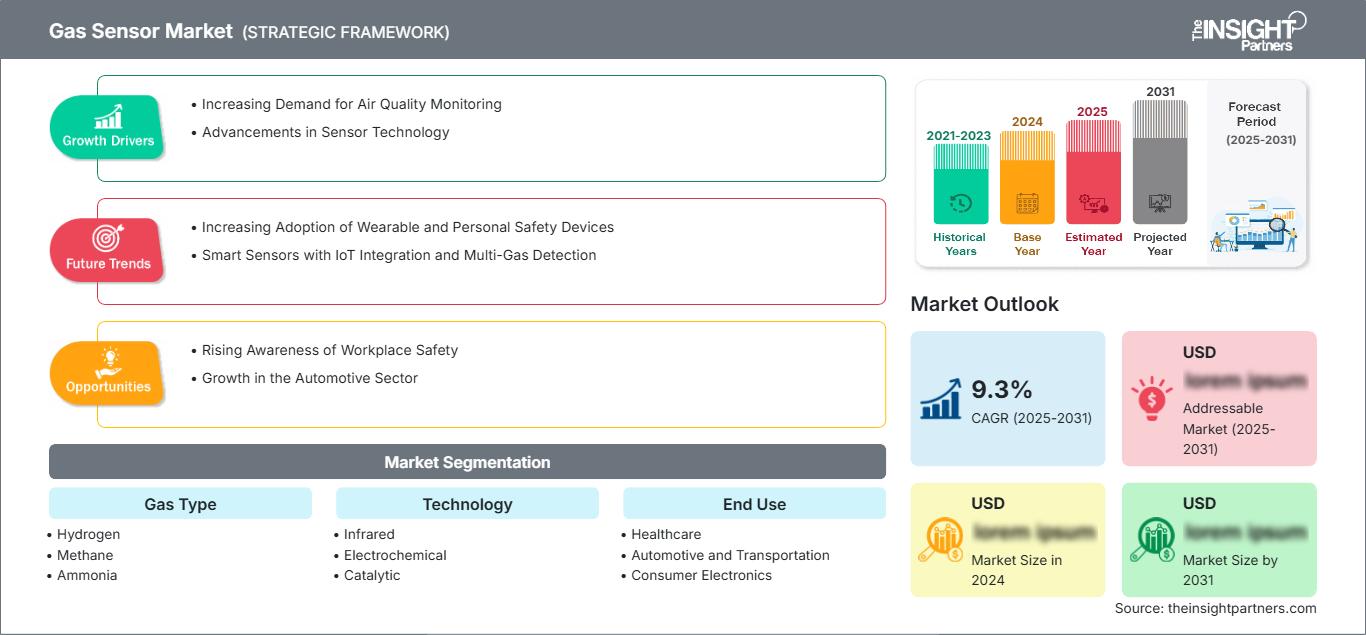
Regional Insights
North America Gas Sensor Market
The North America Gas Sensor Market share valued approximately at 24%–28% of the total market value globally in 2025, and is expected to grow with a projected CAGR of 4.8%–5.2% up till 2034. Market growth is highly affected by the regulatory environment of the region concerning workplace safety, environmental protection, and emission monitoring in various industries, residential spaces, and commercial buildings. Demand for gas detectors will be driven by the standards set by the United States Occupational Safety and Health Administration and Environmental Protection Agency with regards to safety at work and emission standards. Key players in the region such as Honeywell Analytics, MSA, and Amphenol are enabling technological advancements and ensuring robust supply chains in the region.
U.S. Gas Sensor Market
U.S. Market emerges as the leading country-level market in North America, constituting around 80% to 85% market share in the region in 2025 and registering a CAGR of 5.0% to 5.4% in the forecast period. The well-established industrial infrastructure, stringent safety norms, and rising concerns over indoor air quality are some of the factors that will continue to fuel the demand for gas sensor solutions. The U.S. market can leverage the investment made in environmental monitoring initiatives and advanced manufacturing facilities that need sophisticated gas detection systems. Companies such as Honeywell Analytics, MSA, and Alphasense have a strong presence in the U.S., and this will propel the technological development in the market. The trend toward smart building technologies and indoor air quality monitoring will pave way for advanced gas sensors with connectivity and data analysis capability.
Europe Gas Sensor Market
Europe Gas Sensors Market has 22% – 26% market share of total global market size in 2025, expanding at a CAGR of 4.6% – 5.0% from 2026 to 2034, where Germany, United Kingdom, France, Italy, and Spain dominate the regional demand. The industrial and automotive manufacturing sectors in Germany play a vital role in demanding gas sensors for purposes like emissions measurement, safety, and process control. In the United Kingdom, the emphasis is on safety at workplaces and industries, environmental monitoring, and health sector applications, thus playing an important role in driving the regional market through stringent regulations. France is playing an important role in industrial and environmental applications, while Italy is making its mark in the automotive and manufacturing sector; Spain will be gaining due to industrial modernization and environmental monitoring activities. Europe Gas Sensors Market is defined by stringent regulatory standards in place related to workplace safety, emissions, and environmental protection and thus there is increasing demand for certified and highly reliable gas sensing solutions in accordance with directives such as EU Industrial Emissions Directive and REACH Regulations.
APAC Gas Sensor Market
Asia Pacific Market holds the largest market share and comprises around 32%–36% of the total global market share in 2025, owing to its presence in countries such as China, Japan, South Korea, India, and Australia. The market is expected to expand at a CAGR of 5.8%–6.2% during the forecast period, which can be attributed to rapid industrialization and urbanization, expansion in the manufacturing industry and increased environmental awareness in the region. In the region, China holds the largest regional demand, aided by its presence of large industrial manufacturing base and increased focus on environmental monitoring and workplace safety. On the other hand, India is rising to become an important regional market in the Asia Pacific region due to its industrial growth and urbanization, whereas Japan and South Korea are contributing due to their technological superiority and automotive applications. The policies related to industrial activities emphasizing on environmental protection and occupational safety along with smart cities are influencing the dynamics of the Market in APAC.
Middle East & Africa Gas Sensor Market
The Middle East & Africa represents an emerging regional segment with significant growth potential, driven by expanding oil and gas operations, industrial development, and increasing focus on workplace safety and environmental monitoring. Saudi Arabia and the UAE are the leading country markets, with substantial investments in industrial diversification, oil and gas production, and smart city initiatives creating demand for gas detection solutions. The market is expected to register a CAGR of 5.2%–5.6% during the forecast period, supported by ongoing investments in energy infrastructure, industrial facilities, and workplace safety programs across the region. South Africa contributes to the African market segment, with established mining operations and industrial processing applications driving adoption of gas sensing technologies. The growing emphasis on occupational safety, environmental compliance, and infrastructure development in the Gulf Cooperation Council countries is creating additional opportunities for gas sensor technology providers, with applications spanning oil and gas exploration, refineries, industrial facilities, and commercial buildings.
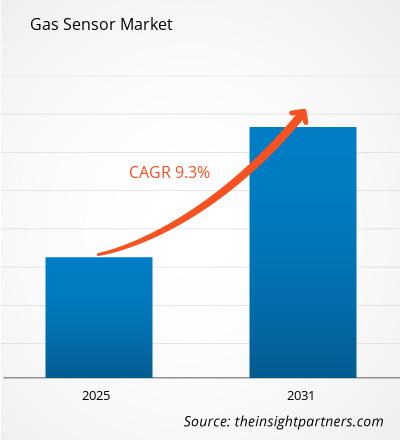
Segmentation Analysis
Gas Type
The Gas Type encompasses Hydrogen, Methane, Ammonia, Carbon Monoxide, Oxygen, and Carbon Dioxide. This segment is expected to register a CAGR of 5.0%–5.4% from 2026 to 2034. The diversity of gas types reflects the wide-ranging application requirements across industrial safety, environmental monitoring, healthcare, and automotive sectors, with each gas type requiring specific sensor technologies optimized for detection sensitivity and selectivity.
- Hydrogen: Exhibits the highest growth potential with a CAGR of 6.0%–6.4%, driven by increasing hydrogen fuel cell adoption, industrial processes, and emerging hydrogen economy applications. Hydrogen sensors are essential for safety monitoring in fuel cell systems and hydrogen production facilities.
- Methane: Represents a significant segment driven by natural gas industry requirements and emissions monitoring applications. Methane detection is critical for oil and gas operations, landfill monitoring, and fugitive emission control.
- Ammonia: Utilized in industrial refrigeration, agricultural applications, and chemical manufacturing requiring reliable ammonia detection for safety and environmental compliance. Ammonia sensors are essential for cold storage and fertilizer production facilities.
- Carbon Monoxide: The largest gas type segment with 22%–26% market share in 2025, extensively deployed in residential safety, automotive emissions monitoring, and industrial applications. CO sensors are critical for preventing carbon monoxide poisoning in homes and workplaces.
- Oxygen: Widely utilized in medical applications, combustion control, and industrial safety requiring accurate oxygen concentration monitoring. Oxygen sensors are essential for healthcare facilities and industrial processes.
- Carbon Dioxide: Addresses growing demand for indoor air quality monitoring, HVAC control, and greenhouse gas monitoring applications. CO2 sensors are increasingly adopted in commercial buildings for ventilation control and IAQ management.
Technology
The Technology segment comprises Infrared, Electrochemical, Catalytic, Laser, and Photoionization Detector. The segment is projected to grow at a CAGR of 5.2%–5.6% from 2026 to 2034. The selection of technology depends on specific application requirements including target gas, concentration range, environmental conditions, and cost considerations, with each technology offering distinct advantages for specific use cases.
- Infrared: Widely utilized for CO2 and hydrocarbon detection, offering high selectivity, long life, and low maintenance requirements. NDIR sensors are increasingly adopted for indoor air quality and industrial safety applications.
- Electrochemical: Represents a mature technology for toxic gas detection, offering excellent sensitivity and selectivity for gases including CO, H2S, and NO2. Electrochemical sensors are widely used in industrial safety and personal monitoring applications.
- Catalytic: Utilized primarily for combustible gas detection, offering reliable performance for methane and LPG monitoring. Catalytic sensors are essential for mining and industrial safety applications.
- Laser: Represents an emerging technology offering high selectivity and sensitivity for specific gas detection applications. Laser-based sensors enable precise measurement in demanding applications including environmental monitoring.
- Photoionization Detector: Provides rapid response for VOC detection, offering broad-spectrum detection for diverse applications. PID sensors are increasingly adopted for leak detection and environmental monitoring.
End Use
The End Use segment includes Healthcare, Automotive and Transportation, Consumer Electronics, Military and Defense, and Industrial. This segment is projected to grow at a CAGR of 5.1%–5.5% from 2026 to 2034. The industrial sector represents the largest end-user segment, driven by occupational safety requirements and process monitoring applications, while healthcare and consumer electronics are emerging as significant growth areas.
- Healthcare: Utilizes gas sensors for medical diagnostics, anesthesia monitoring, and respiratory applications requiring reliable gas detection. Healthcare applications demand high precision and regulatory compliance for patient safety.
- Automotive and Transportation: Represents a significant segment for gas sensors in emissions monitoring, cabin air quality, and engine control applications. Automotive sensors must meet stringent durability and performance requirements for vehicle applications.
- Consumer Electronics: An emerging segment for gas sensors in air quality monitors, smart home devices, and wearable applications. CE sensors require miniaturization, low power consumption, and cost-effectiveness.
- Military and Defense: Utilizes gas sensors for chemical warfare agent detection, hazardous environment monitoring, and personnel protection applications. Military applications demand rugged, reliable sensors meeting defense specifications.
- Industrial: The largest end-user segment, encompassing manufacturing, oil and gas, chemical processing, and mining applications requiring comprehensive gas detection for worker safety and process control. Industrial sensors must meet rigorous performance and certification requirements.
Opportunity Snapshot
| Technology Segment | Revenue Contribution | Trend Tag | Adoption Stage |
|---|---|---|---|
| Infrared | High | NDIR Sensing | Mature |
| Electrochemical | High | Toxic Detection | Mature |
| Catalytic | Medium | Combustible Gas | Mature |
| Laser | Medium | High Selectivity | Scaling |
| Photoionization Detector | Medium | VOC Monitoring | Scaling |
Gas Sensor Market Growth Drivers and Impact Analysis
Stringent Occupational Safety and Environmental Regulations
Stringent occupational safety and environmental regulations represent a primary driver for the Gas Sensor Market, as regulatory frameworks worldwide mandate workplace exposure monitoring and emission control across industrial operations. Government agencies including OSHA, EPA, and EU regulatory bodies enforce strict limits on toxic and combustible gas concentrations, compelling employers to implement comprehensive gas detection systems to ensure worker safety and environmental compliance. The market impact is evident in the growing adoption of gas sensors across manufacturing facilities, chemical plants, mining operations, and oil and gas installations where monitoring of hazardous gases is mandatory. Manufacturers such as Honeywell Analytics and MSA are developing certified gas detection solutions that meet regulatory requirements while offering improved reliability and connectivity features, enabling organizations to achieve compliance while enhancing workplace safety and operational efficiency through integrated monitoring systems.
Growing Awareness of Indoor Air Quality and Building Health
The growing awareness of indoor air quality and its impact on occupant health, productivity, and well-being is a significant driver for the Gas Sensor Market, as building owners and facility managers increasingly deploy sensors to monitor CO2, VOCs, and other pollutants. Post-pandemic emphasis on healthy buildings and ventilation optimization has accelerated adoption of air quality monitoring solutions in commercial offices, schools, healthcare facilities, and residential buildings. The market impact includes increased demand for CO2 sensors for demand-controlled ventilation, VOC sensors for pollutant detection, and integrated monitoring systems that provide actionable insights for building management. Companies such as Sensirion and Figaro Engineering are developing air quality sensors with enhanced performance and connectivity features, enabling building automation and smart home applications that optimize ventilation, reduce energy consumption, and maintain healthy indoor environments.
Emerging Hydrogen Economy and Alternative Energy Applications
The emerging hydrogen economy and development of alternative energy applications are driving demand for specialized gas sensors, as hydrogen production, storage, and utilization require reliable detection systems for safety monitoring and process control. Hydrogen's properties as a small, highly diffusive molecule with wide flammability range necessitate specialized sensor technologies capable of detecting leaks at low concentrations. The market impact includes increasing adoption of hydrogen sensors in fuel cell systems, hydrogen refueling stations, industrial hydrogen production facilities, and research laboratories. Manufacturers such as Alphasense and Membrapor are developing hydrogen sensing solutions optimized for emerging applications, including fuel cell stack leak detection, pipeline monitoring, and safety systems for hydrogen-powered transportation infrastructure, supporting the safe scale-up of hydrogen technologies across industrial and transportation sectors.
Gas Sensor Market Future Trends
Miniaturization and MEMS-Based Sensor Development
The miniaturization of gas sensors through MEMS technology development is emerging as a transformative Gas Sensor Market Report, enabling smaller, lower-power, and more cost-effective sensors suitable for consumer electronics, wearables, and distributed monitoring applications. MEMS-based gas sensors leverage semiconductor fabrication techniques to create microscale sensing elements that offer comparable performance to conventional sensors in significantly reduced form factors. This trend reflects the growing demand for compact, low-power sensors in portable devices, building automation, and IoT applications, where size and energy consumption constraints require innovative solutions. Manufacturers such as Sensirion are leading development of MEMS-based gas sensors, incorporating features including low power consumption, fast response times, and enhanced stability that enable new applications in wearable health monitoring, smart home devices, and mobile air quality monitors.
Integration with Artificial Intelligence and Cloud Analytics
The integration of artificial intelligence and cloud analytics with gas sensing platforms is transforming the Gas Sensor Market, as connected sensors increasingly incorporate intelligent data processing for enhanced accuracy, pattern recognition, and actionable insights. AI-driven algorithms can compensate for environmental factors affecting sensor readings, detect anomalous patterns indicating safety issues, and provide predictive analytics for maintenance optimization. This trend reflects the broader adoption of smart sensing technologies and Industrial IoT frameworks across industrial, commercial, and residential applications. Market participants are investing in developing AI-ready gas sensing solutions that combine advanced hardware with intelligent software capabilities, enabling comprehensive monitoring systems that provide real-time alerts, trend analysis, and integration with building management and safety systems for optimized decision-making and operational efficiency.
Gas Sensor Market Opportunities
Indoor Air Quality Monitoring in Commercial and Residential Buildings
Significant opportunities exist in the Gas Sensor Market Forecast arising from expanding demand for indoor air quality monitoring solutions in commercial and residential buildings, driven by growing health awareness and regulatory requirements for healthy building environments. The post-pandemic emphasis on ventilation optimization and airborne pathogen control has accelerated adoption of CO2 and VOC monitoring, creating substantial demand for reliable, cost-effective gas sensors for building automation and smart home applications. Investment opportunities include developing integrated IAQ sensor modules that measure multiple air quality parameters, establishing partnerships with HVAC system providers and building management solution companies, and creating comprehensive monitoring platforms with cloud-based analytics for actionable insights. The increasing focus on building health certification programs and energy efficiency optimization continues to drive adoption of gas sensors for demand-controlled ventilation and pollution monitoring.
Hydrogen Safety and Industrial Process Monitoring
The expansion of hydrogen applications across industrial, transportation, and energy sectors presents significant opportunities for the Gas Sensor Market Forecast, as hydrogen safety monitoring requires specialized sensors capable of detecting leaks across production, storage, and utilization infrastructure. Industrial hydrogen processes including petrochemical refining, semiconductor manufacturing, and metallurgical applications require reliable leak detection for operational safety and process control. Investment opportunities include developing hydrogen sensors optimized for specific applications with enhanced sensitivity, selectivity, and durability, establishing partnerships with hydrogen system integrators and industrial gas companies, and creating integrated safety monitoring solutions that combine sensor hardware with control systems. The growing focus on hydrogen as a clean energy carrier and the expansion of hydrogen infrastructure create long-term opportunities for specialized gas sensing solutions addressing safety and process monitoring requirements across the hydrogen value chain.
Recent Developments
- August 2026: Teledyne Gas and Flame Detection introduced the MCX32-TP, a scalable gas and flame detection controller designed to improve flexibility and reliability in industrial safety monitoring applications. The new controller supports centralized management of multiple gas detectors and flame detection devices, enabling easier system expansion, improved diagnostics, and enhanced operational efficiency across industries such as oil & gas, chemicals, energy, and industrial manufacturing.
- March 2026: Honeywell launched the 4-Series NDIR Hydrocarbon Gas Sensor, a new gas sensing solution based on non-dispersive infrared (NDIR) technology designed to detect flammable hydrocarbon gases including methane, propane, and butane in industrial environments. The sensor is engineered for integration into both fixed gas detection systems and portable detectors, offering improved reliability in harsh conditions such as mining operations, refineries, and processing facilities through features including condensation reduction, high resistance to sensor poisoning, and lower power consumption compared with traditional catalytic sensors.
- June 2025: Teledyne Gas & Flame Detection partnered with Industrial Detection Solutions (IDS) to establish a new gas detection sensor manufacturing facility in Dammam, Saudi Arabia, strengthening localized production capabilities in the Middle East. The 699 m² facility will manufacture high-precision gas detection solutions, including DM-700 toxic gas sensors, FP-700 combustible gas sensors, and IR-700 infrared gas sensors, supporting safety applications across oil & gas production, LNG/CNG plants, refineries, and petrochemical facilities.
Frequently Asked Questions

- Comprehensive Market Sizing and Forecast Analysis
- Detailed Segmentation Analysis
- In-Depth Market Dynamics Assessment
- Regional and Country-Level Insights
- Competitive Landscape and Company Benchmarking
- Strategic Business Intelligence
Recent Reports
Testimonials

The Insight Partners provided valuable market intelligence that supported our global go-to-market strategy. Their team was professional, responsive, and attentive to our feedback, providing thoughtful analysis and helpful methodological clarifications throughout the project.
Junmo Kim Chief Financial Officer (CFO), Enertech Co., Ltd.
The Insight Partners' SCADA System Market report is comprehensive, with valuable insights on current trends and future forecasts. The team was highly professional, responsive, and supportive throughout. We are very satisfied and highly recommend their services.
RAN KEDEM Partner, Reali Technologies LTDs
I requested a report on a very specific software market and the team produced the report in a few days. The information was very relevant and well presented. I then requested some changes and additions to the report. The team was again very responsive and I got the final report in less than a week.
JEAN-HERVE JENN Chairman, Future Analytica
We worked with The Insight Partners for an important market study and forecast. They gave us clear insights into opportunities and risks, which helped shape our plans. Their research was easy to use and based on solid data. It helped us make smart, confident decisions. We highly recommend them.
PIYUSH NAGPAL Sr. Vice President, High Beam Global
The Insight Partners delivered insightful, well-structured market research with strong domain expertise. Their team was professional and responsive throughout. The user-friendly website made accessing industry reports seamless. We highly recommend them for reliable, high-quality research services
YUKIHIKO ADACHI CEO, Deep Blue, LLC.
This is the first time I have purchased a market report from The Insight Partners.While I was unsure at first, I visited their web site and felt more comfortable to take the risk and purchase a market report.I am completely satisfied with the quality of the report and customer service. I had several questions and comments with the initial report, but after a couple of dialogs over email with their analyst I believe I have a report that I can use as input to our strategic planning process.Thank you so much for taking the extra time and making this a positive experience.I will definitely recommend your service to others and you will be my first call when we need further market data.
JOHN SUZUKI President and Chief Executive Officer, Board Director, BK Technologies
I wish to appreciate your support and the professionalism you displayed in the course of attending to my request for information regarding to infectious disease IVD market in Nigeria. I appreciate your patience, your guidance, and the fact that you were willing to offer a discount, which eventually made it possible for us to close a deal. I look forward to engaging The Insight Partners in the future, all thanks to the impression you have created in me as a result of this first encounter.
DR CHIJIOKE ONYIA MANAGING DIRECTOR, PineCrest Healthcare Ltd.Reason to Buy
- Informed Decision-Making
- Understanding Market Dynamics
- Competitive Analysis
- Identifying Emerging Markets
- Customer Insights
- Market Forecasts
- Risk Mitigation
- Boosting Operational Efficiency
- Strategic Planning
- Investment Justification
- Tracking Industry Innovations
- Aligning with Regulatory Trends





 Get Free Sample for