
Gas Treatment Market Size, Trends & Demand by 2034
Coverage: by Type (Amines, Non-Amines); Application (Acid Gas Removal, Dehydration) , and Geography (North America, Europe, Asia Pacific, and South and Central America)
- Status : Data Released
- Report Code : TIPRE00004671
- Category : Chemicals and Materials
- No. of Pages : 150
- Available Report Formats :


- Last update date : July 15, 2026


2025 Market Size
US$ 6.57 Bn
Base year value
2034 Forecast
US$ 9.3 Bn
Projected by 2034
CAGR 2026-2034
3.94 %
Growth rate
Addressable Market
US$ 72.09 Bn
(2026-2034)
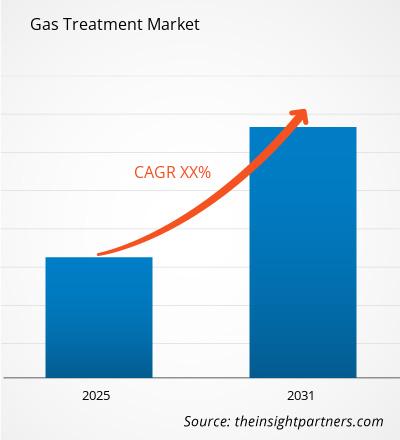
The global Gas Treatment market was valued at US$ 6.57 billion in 2025 and is expected to reach US$ 9.3 billion by 2034; it is estimated to record a CAGR of 3.94% during 2026-2034.
Gas Treatment Market Assessment and Insights
- North America: North America accounted for 34–38% share in 2025 and is projected to grow at a CAGR of 4.1–4.6% during 2026–2034. Sustained shale gas production, LNG infrastructure investments, and stringent environmental regulations continue to strengthen regional demand for advanced gas treatment solutions.
- U.S.: The U.S. represented 78–82% of the North American market in 2025 and is anticipated to register a CAGR of 4.2–4.7% during 2026–2034, supported by extensive natural gas processing capacity and large-scale carbon management initiatives.
- Europe: Europe held 24–28% share in 2025 and is expected to grow at a CAGR of 3.8–4.3% during 2026–2034. Germany, the UK, France, Italy, and the Netherlands continue investing in industrial decarbonization and cleaner energy infrastructure.
- Asia Pacific: Asia Pacific accounted for 26–30% share in 2025 and is forecast to expand at a CAGR of 5.1–5.6% during 2026–2034. China, India, Japan, South Korea, and Australia are driving demand through refinery expansion, industrialization, and growing natural gas consumption.
- Largest Segment: Acid Gas Removal represented 60–64% market share in 2025 and is projected to record a CAGR of 4.3–4.8% during 2026–2034, supported by tightening sulfur emission regulations and increasing sour gas processing requirements.
- High Growth Segment: Non-Amines accounted for 32–36% market share in 2025 and are expected to grow at a CAGR of 5.0–5.5% during 2026–2034, driven by advancements in specialty formulations, lower regeneration requirements, and improved operational efficiency.
- Key companies analyzed in detail: BASF SE, Clariant AG, Ecolab Inc., Eunisell Limited, Hexion Inc., Huntsman International LLC, Innospec Inc., SLB, Baker Hughes Company, Veolia Water Technologies & Solutions, Arkema S.A.
Source: The Insight Partners' analysis based on proprietary research, government publications, company annual reports, investor presentations, industry databases, and expert interviews.
The gas treatment market has been transformed by continuous developments in gas purification chemistry, digitalized monitoring systems, and process optimization in recent years. Process operators are increasingly focused on the technologies which help reduce energy expenditure but at the same time ensure high efficiency of contaminants elimination. Advancements in solvent formulas, membrane systems, and process control have led to improvements in reliability of treatment plants in upstream, midstream, and downstream sectors. In addition, the growth of LNG facilities and rising emissions standards keep motivating the upgrade of treatment facilities in key producing countries.
In the future, there will be increased interest from investors in new energy markets where natural gas plays a key role as the bridge fuel. There will be more stringent regulations on environmental compliance from governments and industrial operators are increasingly concerned about implementing the carbon management goals in their processes. The development of hydrogen production facilities, carbon capture facilities, and petrochemical complexes is expected to generate new demand from solution providers who can offer efficient contaminant elimination solutions.
Gas Treatment Market Report Scope
| Report Attribute | Details |
|---|---|
| Market size in 2025 | US$ 6.57 Billion |
| Market Size by 2034 | US$ 9.3 Billion |
| Global CAGR (2026 - 2034) | 3.94% |
| Historical Data | 2021-2024 |
| Forecast period | 2026-2034 |
Gas Treatment Market Analysis
Growing demand for cleaner industrial operations remains one of the principal factors supporting gas treatment market growth worldwide. Greater production of natural gas, growing exports of LNG, stringent policies concerning SO2 and CO2 emissions are leading to greater demand for efficient gas purification solutions. Various industries like refineries, petrochemical plants, fertilizer plants, power producers, and chemicals producers are requiring more sophisticated solutions in order to comply with regulation while keeping their processes reliable. Growing investments into hydrogen and carbon capture solutions are making this market even wider.
Industry supply chain includes manufacturers of specialty chemicals, equipment vendors, engineering firms, gas processors, refinery owners and operators, and industrial companies using gas. Advances in solvents re-generation, anti-corrosion solutions, filtration solutions, and digital monitoring solutions are enabling players to lower their lifecycle expenses while optimizing their plants performance. Supply chains are getting more localized in growing regions due to volatility of raw materials sourcing.
The competitive rivalry in the industry grows due to the differentiation of manufacturers via technological innovations, sustainable practices, and custom treatment solutions. An analysis of the global gas treatment market suggests that the focus of companies on high-performing solvents, their own chemical formulas, digital asset management, and engineering expertise is aimed at gaining an advantage on the market. Strategic partnerships between chemical companies and engineering organizations also allow customers to implement tailor-made treatment solutions for different gas types and operating parameters.
Leading players like BASF SE, Clariant AG, Ecolab Inc., Eunisell Limited, Hexion Inc., Huntsman International LLC, Innospec Inc., SLB, Baker Hughes Company, Veolia Water Technologies & Solutions, and Arkema S.A. keep investing into the research and development of products, manufacturing facilities in new geographic regions, and customized solutions for certain applications. Growing focus on decarbonization, efficiency, and lifecycle costs minimization leads suppliers to create innovative solvent products and digital process optimization platforms providing better performance results in gas treatment.
● REPORT CUSTOMIZATION
Tailor This Report To Align With Your Specific Business Requirements
This report can be customized to align precisely with your business objectives, scope, and target markets. Customization options include tailored segmentation, geography, competitive analysis, and strategic insights to support informed decision-making.
Customize This Report →WHAT YOU CAN ADJUST
- ● Segmentations
- ● Geography
- ● Competitive Analysis
- ● Language Preferences
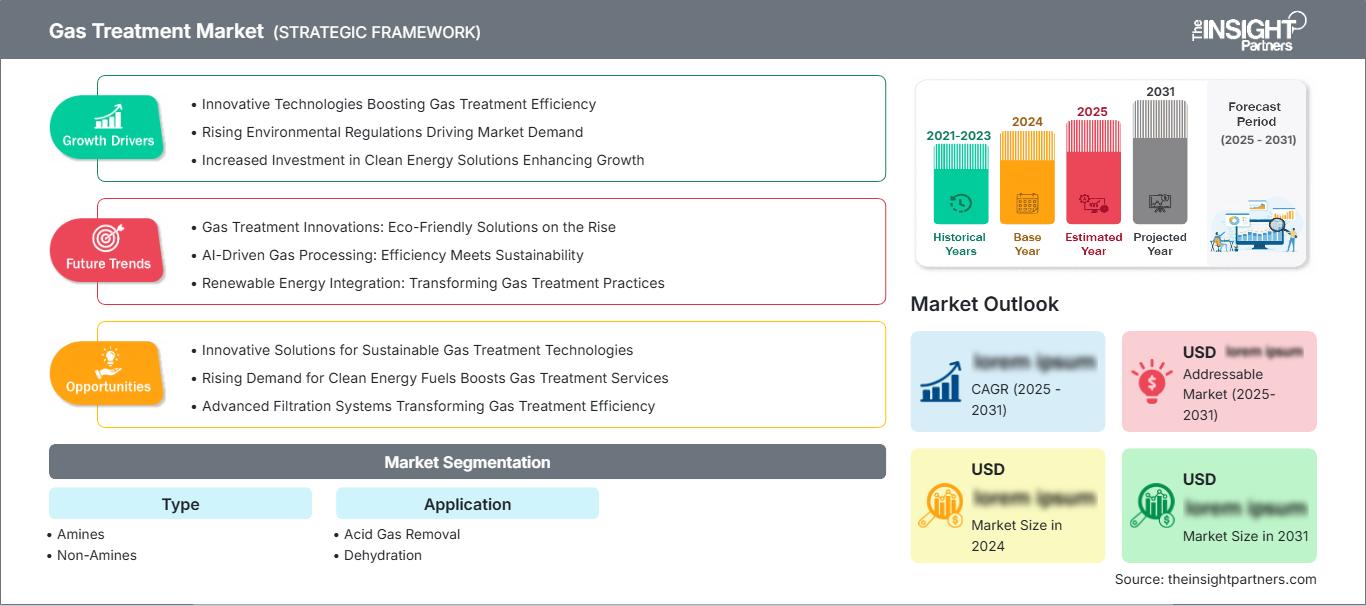
Gas Treatment Market: Strategic Insights
Regional Insights
North America Gas Treatment Market
North America represents 34–38% of the total worldwide market in 2025 and expected to witness a CAGR of 4.1–4.6% from 2026 to 2034. The North America region is continuously gaining due to its rich shale gas deposits, efficient natural gas processing system, and investment in its LNG exporting system. Strong environmental regulations issued by federal and state regulators drive companies to use new gas purification techniques that can lower the levels of hydrogen sulfide, carbon dioxide, and water without compromising efficiency. North America holds the leading gas treatment market share due to its existing infrastructure in the upstream and midstream sector.
The US and Canada regions continue adding their gas processing capabilities to cater to increasing domestic usage as well as exports. Growing carbon capture, utilization, and storage activities, along with refining, and petrochemical investments, boost the need for better amine systems, special solvents, and dehydration solutions. Digitalization in the process industry enhances efficiency while reducing maintenance expenses.
U.S. Gas Treatment Market
The USA had a share of 78-82% in the North American market in 2025 and was expected to grow with a CAGR of 4.2-4.7% between 2026 and 2034. High shale gas production from the Permian Basin, Marcellus, and Haynesville formations drives investments in facilities construction and development of LNG export terminals. Increasing production of sour gas and focus on sulfur recovery lead to the widespread use of innovative amine-based purification, dehydration, and digital process optimization technologies.
Major operations of key players such as BASF SE, Baker Hughes Company, SLB, Ecolab Inc., Huntsman International LLC, and Veolia Water Technologies & Solutions were located in the USA. Engineering skills, good investment climate, and growing popularity of automated control systems enhance the competitive position of the market. Increasing number of hydrogen production and carbon management projects is expected to drive demand for innovative technologies for impurities elimination in the forecast period.
Europe Gas Treatment Market
Europe’s market share was around 24–28% in 2025 and is projected to increase at a CAGR of 3.8–4.3% from 2026 to 2034. The growth in industrial decarbonization policies, the rise in renewable gas applications, and environmental laws are expected to drive investments in gas purification techniques. Germany is still dominating the region because of its large industrial sector, while the UK is making efforts to build up carbon capture and natural gas purification facilities.
In the UK, more investments are being made in carbon capture clusters, hydrogen plants, and emission reduction projects in the industries. This trend is expected to facilitate investments in gas purification chemicals and processes.
Germany remains in a powerful position due to its diverse chemical industry base, engineering prowess, and investments in process improvement of the industry. Rising demand for cleaner industrial gases and removal of contaminants is fueling further growth of applications in refineries, petrochemicals and specialty chemicals plants.
Together, France, Italy, and Spain account for an important share of regional demand driven by refinery capacity upgradation, increased chemical industry capacities, and sustainable industrial operations. The push towards decarbonization by governments and upgrade in industrial assets will drive demand for high efficiency industrial gas treatments.
APAC Gas Treatment Market
In 2025, Asia Pacific will have a 26–30% share of the total market and is expected to be the region registering the highest growth rate with a CAGR of 5.1–5.6% between 2026 and 2034. Demand in China will be the strongest due to increased use of natural gas, increased capacity of refineries, and increased developments in the petrochemical industry. On the other hand, India will be continuing its efforts towards developing its city gas distribution network and LNG infrastructure, whereas Japan and South Korea will continue with their clean industrial operations.
Australia is another contributing country with increased production and export of LNG that is leading to the use of advanced dehydration and acid gas removal technologies.
Middle East & Africa Gas Treatment Market
The Middle East & Africa segment is anticipated to witness growth at a CAGR of 4.6–5.1% in 2026-2034 owing to significant reservoirs of hydrocarbons, refinery capacity additions, and growing natural gas processing operations. Saudi Arabia is expected to be the market leader, whereas the United Arab Emirates will focus on building their energy infrastructure in addition to improved technology-based processing.
In South Africa, the demand will be sustained through the use of gas in industries and upgradation of energy infrastructure, whereas Middle Eastern and African nations are continuously involved in developing upstream gas processing operations. Increase in investments made in petrochemicals, liquefied natural gas plants, and sulfur recovery units is expected to drive the demand for gas treatment equipment.
Segmentation Analysis
Type
The Type segment represents the core technology classification within the market and is projected to expand at a CAGR of 4.4–4.9% during 2026–2034. Selection of treatment chemistry depends on gas composition, contaminant concentration, operational efficiency, and lifecycle cost. The gas treatment market scope continues to widen as operators adopt both conventional and specialty treatment solutions to improve purification efficiency while meeting increasingly stringent environmental and operational requirements.
- Amines: Amines remain the dominant treatment chemistry because of their proven effectiveness in removing hydrogen sulfide and carbon dioxide from natural gas streams. Continuous improvements in solvent performance and regeneration efficiency sustain widespread industrial adoption.
- Non-Amines: Non-amine treatment technologies are gaining wider acceptance owing to lower corrosion potential, reduced regeneration requirements, and suitability for specialized industrial applications where conventional amine systems may not provide optimum operating performance.
Application
The Application segment is anticipated to register a CAGR of 4.6–5.1% during 2026–2034, reflecting increasing investment in gas purification across upstream, midstream, and downstream industries. Expanding environmental regulations, higher natural gas production, and growing industrial demand for contaminant-free gas streams continue driving adoption of advanced treatment technologies across multiple processing environments.
- Acid Gas Removal: Acid gas removal remains the largest application, supported by increasing processing of sour gas resources and stricter sulfur emission regulations. High removal efficiency and regulatory compliance continue making this application strategically important across global processing facilities.
- Dehydration: Dehydration systems are essential for preventing pipeline corrosion, hydrate formation, and operational disruptions. Rising investments in LNG production, transmission infrastructure, and gas storage facilities continue supporting consistent demand for efficient moisture removal technologies.
Opportunity Snapshot
| Application | Revenue Contribution | Trend Tag | Adoption Stage |
| Acid Gas Removal | High | Sulfur Control | Mature |
| Dehydration | Medium | LNG Expansion | Scaling |
Gas Treatment Market Growth Drivers and Impact Analysis
Stringent environmental regulations accelerate advanced gas purification investments
As a result of increased regulations concerning the reduction of emissions of sulfur oxides, volatile organic compounds, and greenhouse gases from the air, there is an inclination toward advanced gas treatment technologies. It is necessary that the tightening of the regulations on emission from refineries, petrochemical plants, LNG, and natural gas plants be carried out in order to improve the quality of the environment by reducing emissions. As a result of these regulations, it is necessary to upgrade the existing gas treatment technologies by using high-tech solvent systems, the automation of the process, and the treatment of various components at once.
Expansion of LNG and natural gas infrastructure strengthens equipment demand
Further development of liquefied natural gas facilities, cross border pipelines, and natural gas processing equipment keeps creating a considerable market for gas purification technologies. The increasing use of natural gas in many countries, which is considered as a step towards energy transition and which provides more environmentally friendly fuel than coal and some liquids, is one of the reasons for this trend. Newly constructed export LNG terminals, gas storage facilities, and natural gas processing units need effective purification equipment in order to guarantee high quality of products and safe operation of facilities. Increasing investments in North America, Asia Pacific, and the Middle East encourage the producers to develop new solvent formulas and other technologies.
Industrial digitalization improves treatment efficiency and operational reliability
The digital transformation is being seen as one of the key driving forces for the modern-day gas treatment plants. The industries are utilizing real-time sensing capabilities, predictive maintenance capabilities, AI, and process analysis techniques in order to help remove contaminants in a more efficient manner while conserving energy as well. Through digital monitoring, it becomes easier to determine the presence of solvent degradation, fouling, and process modification quickly and hence reduces the number of unexpected downtimes as well as the proper use of assets. These capabilities help in cutting down the operating costs as well as ensuring compliance throughout the lifecycle of the plant.
Gas Treatment Market Future Trends
Integration of low-carbon gas processing technologies
The gas treatment market trends are increasingly shaped by the integration of low-carbon technologies into conventional gas processing facilities. Operators are combining advanced solvent systems with carbon capture, utilization, and storage (CCUS) solutions to reduce overall emissions while maintaining production efficiency. Hydrogen production projects are also creating demand for highly selective gas purification technologies capable of removing contaminants without compromising process economics. Digital optimization, modular treatment units, and energy-efficient regeneration technologies are expected to become standard features as industrial operators pursue sustainability targets, improve operational flexibility, and comply with increasingly stringent environmental regulations across major producing regions.
Growing adoption of specialty treatment chemicals
Demand is shifting toward specialty gas treatment chemicals designed to improve contaminant removal efficiency while reducing corrosion, foaming, and solvent degradation. Manufacturers are investing in high-performance formulations that extend solvent life, lower regeneration energy requirements, and enhance compatibility with complex gas compositions. Continued innovation in membrane separation technologies, hybrid purification systems, and process automation is expected to improve plant productivity. These developments are likely to support wider deployment of customized treatment solutions across LNG plants, refineries, petrochemical complexes, and emerging hydrogen production facilities over the coming decade.
Gas Treatment Market Opportunities
Expanding investments in emerging gas processing economies
Rapid industrialization across Asia, the Middle East, and selected African economies is creating favorable conditions for new gas processing infrastructure. Governments continue investing in LNG terminals, cross-border pipelines, and petrochemical complexes to improve energy security and industrial competitiveness. Gas treatment market Forecasts indicate that suppliers capable of delivering integrated engineering, specialty chemicals, and digital monitoring solutions will benefit from these long-term infrastructure programs. Companies establishing regional manufacturing facilities, technical service centers, and strategic partnerships with local engineering firms are expected to strengthen customer relationships while improving supply chain resilience. Investment in localized production and after-sales technical support will remain an important competitive differentiator throughout the forecast period.
Advanced solvent innovation creates premium product opportunities
Continuous research into next-generation solvent chemistries presents attractive opportunities for technology providers and specialty chemical manufacturers. Industrial operators increasingly seek solutions that reduce regeneration energy consumption, improve contaminant selectivity, and minimize equipment corrosion. Development of environmentally compatible formulations, hybrid treatment systems, and digital optimization platforms enables suppliers to differentiate their product portfolios beyond conventional offerings. Organizations that combine application expertise with customized process engineering and lifecycle technical support are expected to capture higher-value contracts as customers increasingly prioritize total operating efficiency rather than initial equipment cost alone.
Recent Developments
- June 2026: BASF stepped onto the CIPPE stage for the first time, running June 9–11 at the Shanghai New International Expo Center. BASF presented four core areas tailored to industrial demand in the Chinese market: petrochemical and intermediates technology licensing, advanced chemical catalysts and adsorbents, gas purification and environmental solutions, and customized high-pressure equipment.
- April 2026: Evonik signed a large-scale agreement to supply its SEPURAN Green membranes and patented technology to MTC Orec Sdn Bhd (MTCO), a prominent biogas upgrading plant producer based in Malaysia.
Frequently Asked Questions

- Comprehensive Market Sizing and Forecast Analysis
- Detailed Segmentation Analysis
- In-Depth Market Dynamics Assessment
- Regional and Country-Level Insights
- Competitive Landscape and Company Benchmarking
- Strategic Business Intelligence
Recent Reports
Testimonials

The Insight Partners' SCADA System Market report is comprehensive, with valuable insights on current trends and future forecasts. The team was highly professional, responsive, and supportive throughout. We are very satisfied and highly recommend their services.
RAN KEDEM Partner, Reali Technologies LTDs
I requested a report on a very specific software market and the team produced the report in a few days. The information was very relevant and well presented. I then requested some changes and additions to the report. The team was again very responsive and I got the final report in less than a week.
JEAN-HERVE JENN Chairman, Future Analytica
We worked with The Insight Partners for an important market study and forecast. They gave us clear insights into opportunities and risks, which helped shape our plans. Their research was easy to use and based on solid data. It helped us make smart, confident decisions. We highly recommend them.
PIYUSH NAGPAL Sr. Vice President, High Beam Global
The Insight Partners delivered insightful, well-structured market research with strong domain expertise. Their team was professional and responsive throughout. The user-friendly website made accessing industry reports seamless. We highly recommend them for reliable, high-quality research services
YUKIHIKO ADACHI CEO, Deep Blue, LLC.
This is the first time I have purchased a market report from The Insight Partners.While I was unsure at first, I visited their web site and felt more comfortable to take the risk and purchase a market report.I am completely satisfied with the quality of the report and customer service. I had several questions and comments with the initial report, but after a couple of dialogs over email with their analyst I believe I have a report that I can use as input to our strategic planning process.Thank you so much for taking the extra time and making this a positive experience.I will definitely recommend your service to others and you will be my first call when we need further market data.
JOHN SUZUKI President and Chief Executive Officer, Board Director, BK Technologies
I wish to appreciate your support and the professionalism you displayed in the course of attending to my request for information regarding to infectious disease IVD market in Nigeria. I appreciate your patience, your guidance, and the fact that you were willing to offer a discount, which eventually made it possible for us to close a deal. I look forward to engaging The Insight Partners in the future, all thanks to the impression you have created in me as a result of this first encounter.
DR CHIJIOKE ONYIA MANAGING DIRECTOR, PineCrest Healthcare Ltd.Reason to Buy
- Informed Decision-Making
- Understanding Market Dynamics
- Competitive Analysis
- Identifying Emerging Markets
- Customer Insights
- Market Forecasts
- Risk Mitigation
- Boosting Operational Efficiency
- Strategic Planning
- Investment Justification
- Tracking Industry Innovations
- Aligning with Regulatory Trends





 Get Free Sample for