
Healthcare MEMS Market Demand, Size & Forecast by 2034
Coverage: by Type(Pressure Sensors, Temperature Sensors, Flow Sensor, Accelerometers, Others); Application(Monitoring, Diagnostic Devices, Surgical Devices, Therapeutic Devices, Others), and Geography (North America, Europe, Asia Pacific, and South and Central America)
- Status : Data Released
- Report Code : TIPRE00009322
- Category : Electronics and Semiconductor
- No. of Pages : 150
- Available Report Formats :


- Last update date : September 02, 2026


2025 Market Size
US$ 2.7 Bn
Base year value
2034 Forecast
US$ 14.87 Bn
Projected by 2034
CAGR 2026-2034
20.88 %
Growth rate
Addressable Market
US$ 70.50 Bn
(2026-2034)
Healthcare MEMS Market generated US$ 2.7 Billion in 2025 and is projected to reach US$ 14.87 Billion by 2034, expanding at a CAGR of 20.88% from 2026 to 2034. Growth reflects increasing integration of miniaturized sensing components into monitoring equipment, diagnostic platforms, surgical systems, therapeutic devices, and connected medical technologies requiring compact form factors, low power consumption, high measurement accuracy, and increasingly continuous data acquisition.
North America is expected to register a 19.5–20.5% CAGR during 2026–2034. Structural expansion is supported by sophisticated medical-device manufacturing, adoption of remote patient monitoring, and strong demand for minimally invasive equipment. The region also benefits from established semiconductor and healthcare technology ecosystems, which shorten the path from MEMS component development to qualified medical-device integration and commercial deployment.
Healthcare MEMS Market Assessment and Insights
- North America held an estimated 35–39% share in 2025 and is projected to grow at a 19.5–20.5% CAGR between 2026–2034, supported by medical-device innovation, remote monitoring, and advanced diagnostics.
- US represented approximately 70–75% of North America's 2025 demand and is expected to expand at a 19.0–20.0% CAGR between 2026–2034, driven by connected care and sophisticated medical equipment.
- Europe accounted for an estimated 24–28% share in 2025 and is projected to grow at a 18.5–19.5% CAGR, with Germany, the UK, France, Italy, and Spain supporting demand.
- Asia Pacific represented approximately 27–31% of global demand in 2025 and is forecast to expand at a 22.0–23.0% CAGR, led by China, Japan, South Korea, India, and Australia.
- Largest Segment: Pressure Sensors held an estimated 38–43% market share in 2025 and is projected to grow at a 21.5–22.5% CAGR through 2034, supported by broad medical instrumentation use.
- High Growth Segment: Therapeutic Devices represented approximately 22–27% market share in 2025 and is expected to register a 23.0–25.0% CAGR as miniature sensing enables smarter treatment systems.
- Key companies analyzed in detail: Amphenol Advanced Sensors, Analog Devices, Inc., Bosch Sensortec GmbH, General Electric Company, Honeywell International, Inc., Koninklijke Philips N.V., Murata Manufacturing Co., Ltd., NXP Semiconductors N.V., STMicroelectronics N.V., and Texas Instruments Incorporated.
Source: The Insight Partners' analysis based on proprietary research, government publications, company annual reports, investor presentations, industry databases, and expert interviews.
The market for Healthcare MEMS products is transitioning from separate sensing elements to integrated solutions that incorporate MEMS devices, processing, and digital interfaces. The pressure and inertial sensing technologies continue to form the basis, and miniature sensors of temperature and flow are becoming popular in patient monitoring and treatment applications. The production focuses on wafer-level assembly, calibration, bio-compatibility, reliability assessment, and assembly into miniature medical systems.
During the forecast period, development efforts should be more and more oriented towards high growth Asian manufacturing hubs, connected healthcare solutions, implantables, and minimally invasive technology solutions. The regulatory focus on security, traceability, reliability, and performance verification of the medical devices will impact design cycle. The increased edge processing can minimize the amount of data to transmit and allow real-time clinical activities, which will provide an added value for sensor providers.
Healthcare MEMS Market Report Scope
| Report Attribute | Details |
|---|---|
| Market size in 2025 | US$ 2.7 Billion |
| Market Size by 2034 | US$ 14.87 Billion |
| Global CAGR (2026 - 2034) | 20.88% |
| Historical Data | 2021-2024 |
| Forecast period | 2026-2034 |
Healthcare MEMS Market Analysis
Healthcare MEMS Market growth is driven by the trend towards miniaturization, connectivity, and more continuous monitoring in medical measurement. The demand for healthcare MEMS comes from hospitals, laboratories, medical equipment original equipment manufacturers, and home healthcare providers who need precise measurements of pressure, temperature, flow, and motion. The value chain includes semiconductor foundries, MEMS designers, package makers, sensors, electronics, and device developers with qualifications acting as substantial barriers to quick supplier switching.
The supply side of healthcare MEMS is different from that of consumer MEMS as medical uses need more time for qualification, process control, traceability, and stability under environmental conditions. For component manufacturers, high-volume semiconductors manufacturing needs to be balanced with application-oriented modifications. Wafer-level packaging, ASIC incorporation, calibration, hermeticity, and low-power design can greatly influence total cost of a device, especially in cases of implantable, wearable, portable, or disposable medical devices.
The Healthcare MEMS Market Report reveals the presence of competition among diversified semiconductor firms, sensing technology providers, and medical technology firms with embedded sensing capability. Amphenol Advanced Sensors and Honeywell International, Inc. offer extensive sensing solutions, while Analog Devices, Inc., Texas Instruments Incorporated, and STMicroelectronics N.V. offer combined solutions of sensing and signal chain. Bosch Sensortec GmbH, Murata Manufacturing Co., Ltd., and NXP Semiconductors N.V. offer good MEMS and embedded sensing solutions.
Koninklijke Philips N.V. and General Electric Company have an important downstream device ecosystem that enables integration of the sensor technology into medical imaging, monitoring, diagnostic, and therapeutic devices. The competitive landscape in this segment is getting affected by factors like reliability, miniaturization, power consumption, calibration capability, and integration. Investment is also being made in application-specific sensors where packaging of the sensors can be as important as its sensing capability.
● REPORT CUSTOMIZATION
Tailor This Report To Align With Your Specific Business Requirements
This report can be customized to align precisely with your business objectives, scope, and target markets. Customization options include tailored segmentation, geography, competitive analysis, and strategic insights to support informed decision-making.
Customize This Report →WHAT YOU CAN ADJUST
- ● Segmentations
- ● Geography
- ● Competitive Analysis
- ● Language Preferences
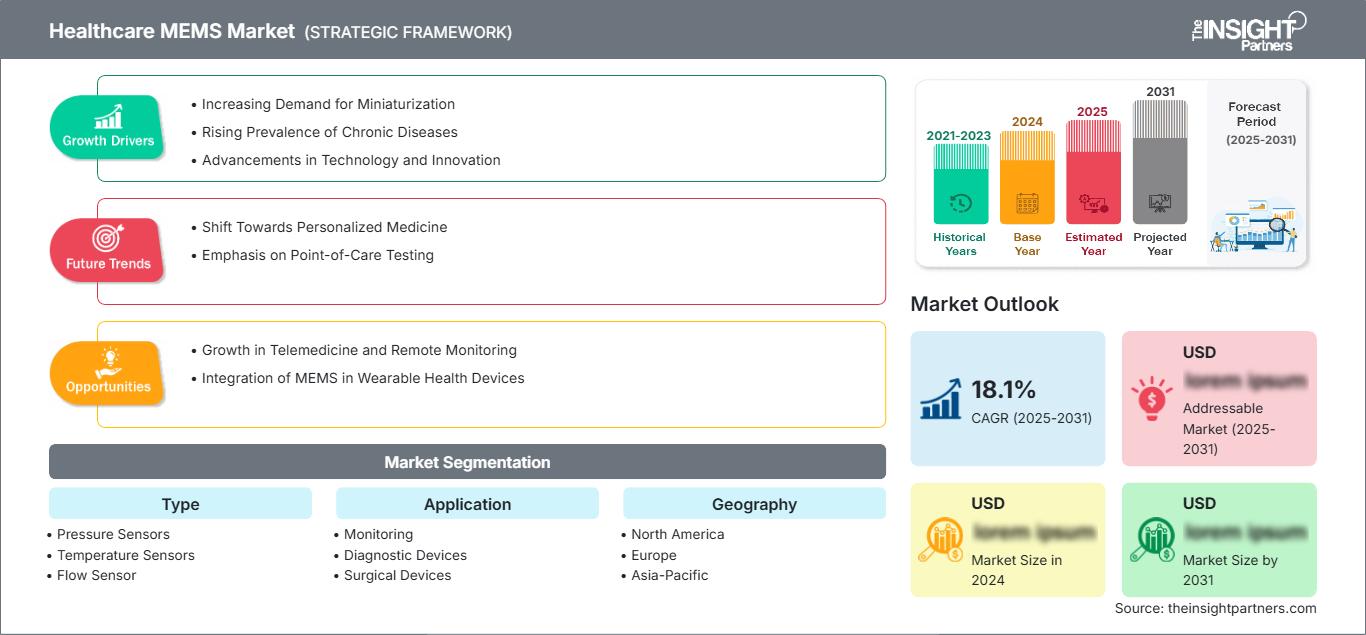
Healthcare MEMS Market: Strategic Insights
Regional Insights
North America Healthcare MEMS Market
The Healthcare MEMS Market share of North America was estimated to be around 35–39% in 2025, and it is anticipated that North America will grow at a rate of 19.5–20.5% CAGR until 2034. Dominant demand driver for the region will be the United States owing to the presence of medical device manufacturing, advanced diagnostic services, remote monitoring technologies, and expensive surgical instruments. Contributions to the regional market will also be made by Canada through technology in healthcare, research facilities, and specialized medical devices.
Miniature sensors are being utilized extensively within medical equipment as the need for measuring pressure, positioning patients, flow control, temperature management, and movement detection becomes critical. Qualification of regulatory requirements and device reliability are purchasing considerations due to the potential impact of sensors on clinical readings. The increase in home health and connected monitoring will create additional demand for components, while advanced infrastructure of hospitals will drive adoption of accurate sensing systems.
U.S. Healthcare MEMS Market
The US represented approximately 70–75% of North America's 2025 demand and is forecast to grow at a 19.0–20.0% CAGR through 2034. Demand is supported by advanced monitoring, diagnostic imaging, surgical robotics, ventilatory equipment, drug-delivery systems, and wearable medical devices. Amphenol Advanced Sensors, Analog Devices, Inc., General Electric Company, Honeywell International, Inc., Koninklijke Philips N.V., and Texas Instruments Incorporated have relevant technology or downstream application exposure.
The use of connected care is increasing the scope of sensor utilization beyond the hospital environment, while advanced clinical devices will continue to demand precise measurements of pressure, flow, temperature, and motion. Design engineering now concentrates on low-power operation, small form factor, networkability, and calibration reliability. The United States is still a hotbed of innovation in terms of implantable devices and minimally invasive technologies, thus offering opportunities for qualified vendors.
Europe Healthcare MEMS Market
Europe held about 24-28% of total consumption in 2025 and is projected to exhibit an 18.5-19.5% CAGR up to 2034. Germany leads the countries due to its expertise in medical manufacturing and precision engineering. The UK, France, Italy, and Spain help Europe gain additional demand due to digitalization of healthcare industry, manufacturing of medical equipment, hospitals' updates, and application of connected clinical devices.
The UK retains its demand due to diagnostic technology, digitalization of healthcare, and development of specific medical devices. Germany has special potential due to its experience in industrial and medical engineering helping to integrate miniature sensors into complex systems. France, Italy, and Spain help to increase demand due to updates of hospitals' technologies, medical manufacturing, and use of connected monitoring solutions.
APAC Healthcare MEMS Market
The Asia Pacific was estimated to account for 27% - 31% of the demand in 2025 and is anticipated to experience a growth rate of 22.0% - 23.0% CAGR till 2034. The market leaders in the region include China, Japan, South Korea, India, and Australia. Demand in the region is being driven by increased medical devices manufacturing, semiconductor development, hospitals renovation, and digital healthcare.
The strength of China in the market lies in its proximity in terms of electronics manufacturing and medical devices manufacturing. Japan and South Korea offer semiconductor and precision manufacturing, India has increased healthcare infrastructure development and medical device manufacturing, and Australia is creating demand in advanced clinical equipment and remote care solutions.
Middle East & Africa Healthcare MEMS Market
Demand in the Middle East and Africa is forecast to grow at a CAGR of 18.0%-19.0% until 2034, with Saudi Arabia taking the lead in region-specific applications. The UAE and South Africa contribute additional demand, while other MEA countries do so from hospital establishment, diagnostic, medical device importation, and healthcare modernization efforts.
Saudi Arabia and the UAE are building state-of-the-art healthcare infrastructure and digital clinics, thereby growing their need for connected devices. South Africa offers a larger installed base from hospitals and diagnostics. In the remaining MEA markets, demand will be driven by infrastructure development, medical device importation, and modernization of critical care and diagnostics.
Segmentation Analysis
Type
The Type segment is expected to expand at a 21.0–22.0% CAGR from 2026–2034. Pressure-based sensing remains central to medical instrumentation, while temperature, flow, and inertial measurement are expanding alongside connected devices. Adoption is influenced by miniaturization, accuracy, power efficiency, packaging, and the ability to integrate sensing with digital electronics.
- Pressure Sensors maintain a leading position because blood-pressure monitoring, respiratory equipment, infusion systems, and other medical instruments require precise pressure measurement within increasingly compact architectures.
- Temperature Sensors support patient monitoring, equipment control, thermal management, and drug-delivery systems, with demand strengthened by continuous measurement requirements and increasingly portable medical devices.
- Flow Sensor solutions are strategically important for ventilators, anesthesia equipment, infusion systems, dialysis equipment, and respiratory devices where controlled fluid or gas delivery affects clinical performance.
- Accelerometers support motion tracking, patient positioning, rehabilitation, fall detection, surgical navigation, and wearable monitoring, with low-power operation increasingly important for battery-powered devices.
- Others includes specialized MEMS technologies serving emerging medical applications where customized sensing functions, miniaturization, and integration create opportunities beyond conventional physical-parameter measurement.
Application
The Application segment is projected to register a 21.5–22.5% CAGR during 2026–2034. Monitoring remains a major deployment area, while diagnostic, surgical, and therapeutic systems are increasingly incorporating compact sensing to improve precision, automation, and continuous measurement. Application complexity and regulatory requirements influence component selection.
- Monitoring applications use miniature sensors for vital signs, movement, respiratory parameters, and equipment status, supporting both hospital-based observation and increasingly distributed patient-care models.
- Diagnostic Devices require precise physical measurements for imaging, laboratory equipment, point-of-care systems, and diagnostic instruments, making sensor accuracy and repeatability central procurement criteria.
- Surgical Devices increasingly use inertial, pressure, and position sensing to support navigation, instrument control, minimally invasive procedures, and automated functions within space-constrained medical equipment.
- Therapeutic Devices use MEMS sensing for controlled delivery, respiratory treatment, rehabilitation, stimulation, and other interventions, creating demand for compact components with dependable real-time measurement.
- Others encompasses emerging medical applications where MEMS capabilities support specialized instrumentation, connected care, device automation, and new clinical workflows requiring miniature sensing architectures.
Opportunity Snapshot
| Application | Revenue Contribution (High/Medium/Low) | Trend Tag | Adoption Stage |
| Monitoring | High | Remote Monitoring | Scaling |
| Diagnostic Devices | High | Point-of-Care | Scaling |
| Surgical Devices | Medium | Surgical Navigation | Scaling |
| Therapeutic Devices | Medium | Smart Therapy | Scaling |
| Others | Low | Emerging Care | Emerging |
Healthcare MEMS Market Growth Drivers and Impact Analysis
Rising Demand for Continuous Physiological Monitoring
The growing preference for continuous physiological observation is increasing the number of measurement points embedded in wearable, portable, and bedside devices. Sensors can capture pressure, temperature, motion, and flow without requiring bulky conventional measurement assemblies. This supports earlier detection of changing patient conditions and allows devices to collect more frequent data while remaining compact. The demographic backdrop is significant because the World Health Organization expects one in six people globally to be aged 60 years or older by 2030. An aging population increases demand for chronic-condition management and monitoring outside acute-care settings. For manufacturers, the commercial impact extends into sensor packaging, low-power electronics, calibration, and software integration. Suppliers that support smaller form factors while maintaining stable performance can participate across multiple device categories.
Miniaturization of Medical Equipment
Medical-device manufacturers are under pressure to reduce equipment size while increasing functionality, portability, and measurement density. MEMS architectures address this requirement by placing mechanical sensing structures and electronic interfaces into very small packages. Miniaturization is particularly relevant to wearable monitors, handheld diagnostic devices, portable ventilators, infusion equipment, and minimally invasive instruments. Smaller components can release board space for communications, processing, and battery capacity, allowing designers to add functions without materially increasing overall device dimensions. The impact is also visible in manufacturing because compact components can support more standardized electronic architectures across product families. However, medical applications require careful management of drift, temperature sensitivity, packaging stress, sterilization compatibility, and long-term reliability. These requirements create opportunities for suppliers with advanced process control and application-specific qualification capabilities.
Expansion of Minimally Invasive and Robotic Procedures
Minimally invasive procedures and robotic-assisted interventions are increasing the need for accurate sensing within instruments that operate in constrained spaces. Motion, pressure, force-related measurements, and position information can improve instrument control, navigation, and procedural feedback. MEMS components are suitable for these environments because they can deliver precise measurements from compact packages while consuming relatively little power. Greater procedural sophistication can therefore increase sensor content per device rather than simply increasing unit volumes. The commercial effect is strongest for suppliers capable of meeting medical-grade reliability requirements and providing components that integrate efficiently with control electronics. Design teams are also evaluating sensor fusion, where several measurements are combined to improve contextual awareness. This can increase component value while encouraging closer collaboration between semiconductor suppliers and medical-device developers during product design.
Healthcare MEMS Market Future Trends
Edge Intelligence in Medical Sensors
Healthcare MEMS Market trends are likely to move toward sensors that perform more processing locally rather than transmitting every raw measurement to an external processor. Embedded intelligence can classify movement, identify abnormal patterns, reduce unnecessary data transfers, and support rapid device responses. This architecture is particularly relevant to wearable monitoring, rehabilitation equipment, and portable therapeutic systems where battery life and wireless bandwidth are constrained. Future products may combine sensing, signal conditioning, lightweight machine-learning algorithms, and communication functions within increasingly compact packages. Local processing can also support privacy by limiting transmission of raw physiological information. The technical challenge will be validating algorithms and sensor behavior under medical operating conditions while maintaining deterministic performance. Suppliers with integrated hardware and software capabilities should therefore gain an advantage in next-generation connected medical-device development.
MEMS Integration With Implantable and Disposable Devices
Future development is expected to increase integration of MEMS components into implantable and disposable medical platforms where conventional sensors can be too large, power intensive, or difficult to package. Implantable pressure and inertial sensing can support specialized monitoring and therapeutic functions, while disposable platforms can use miniature components to improve measurement consistency and simplify device design. Materials compatibility, encapsulation, sterilization, biostability, and ultra-low-power operation will remain critical engineering requirements. Disposable systems will additionally place pressure on component economics because high-volume use requires predictable manufacturing yields and reliable supply. As device developers pursue smaller form factors, sensor manufacturers are likely to invest in custom packaging, application-specific ASICs, and wafer-level processes. These developments could expand MEMS penetration into clinical applications previously served by larger sensing technologies.
Healthcare MEMS Market Opportunities
Asia-Pacific Medical Device Localization
Healthcare MEMS Market Forecasts point to substantial opportunities in Asia Pacific as medical-device manufacturing expands and regional supply chains become more sophisticated. China, Japan, South Korea, India, and Australia offer different demand profiles, ranging from semiconductor production and precision engineering to hospital modernization and connected care. Suppliers can pursue partnerships with local device manufacturers, contract manufacturers, and electronics assemblers to shorten development cycles and improve qualification support. Localized packaging and calibration can also reduce logistical complexity for high-volume applications. Investment should prioritize pressure, flow, and inertial technologies that address established medical-device categories while supporting emerging wearable and home-care products. Companies that establish application-engineering resources alongside manufacturing partnerships can capture value beyond component sales and improve their ability to adapt global MEMS platforms to regional regulatory and device-design requirements.
Integrated Sensor Platforms for Medical OEMs
A second opportunity lies in integrated sensor platforms that combine MEMS elements, analog front ends, digital interfaces, embedded processing, and application software. Medical OEMs increasingly need smaller development footprints and predictable component interfaces as device functionality expands. A platform approach can reduce engineering duplication across product families while enabling common hardware to serve monitoring, diagnostic, surgical, and therapeutic applications. Suppliers can strengthen this opportunity through evaluation kits, reference designs, calibration tools, cybersecurity support, and long-term component availability commitments. Investment in standardized interfaces and application-specific firmware can make adoption easier for medical-device developers that lack extensive internal semiconductor expertise. The approach also creates opportunities for recurring design wins because once a platform is qualified within a device family, subsequent product generations can use compatible components with reduced redesign requirements.
Recent Developments
- October 2024: STMicroelectronics introduced the ST1VAFE3BX, a highly integrated biosensor designed for next-generation healthcare and fitness wearables. The device combines a precision biopotential analog front end with a MEMS accelerometer and embedded machine-learning capabilities, enabling applications such as ECG, EEG, neurological monitoring, and intelligent health patches. With its compact 2mm × 2mm package, low power consumption, and on-chip activity detection, the solution supports the development of smaller, smarter, and more energy-efficient wearable healthcare devices.
- July 2025: STMicroelectronics agreed to acquire NXP Semiconductors’ MEMS sensor business for up to US$950 million, strengthening its MEMS portfolio across automotive safety, industrial monitoring, and consumer applications. The transaction adds complementary MEMS technologies, including pressure and inertial sensors, and expands ST’s capabilities in areas such as automotive safety, industrial sensing, and potential medical applications. The acquisition is expected to support broader sensor innovation and strengthen STMicroelectronics’ position in the global MEMS market.
Frequently Asked Questions

- Comprehensive Market Sizing and Forecast Analysis
- Detailed Segmentation Analysis
- In-Depth Market Dynamics Assessment
- Regional and Country-Level Insights
- Competitive Landscape and Company Benchmarking
- Strategic Business Intelligence
Recent Reports
Testimonials

The Insight Partners' SCADA System Market report is comprehensive, with valuable insights on current trends and future forecasts. The team was highly professional, responsive, and supportive throughout. We are very satisfied and highly recommend their services.
RAN KEDEM Partner, Reali Technologies LTDs
I requested a report on a very specific software market and the team produced the report in a few days. The information was very relevant and well presented. I then requested some changes and additions to the report. The team was again very responsive and I got the final report in less than a week.
JEAN-HERVE JENN Chairman, Future Analytica
We worked with The Insight Partners for an important market study and forecast. They gave us clear insights into opportunities and risks, which helped shape our plans. Their research was easy to use and based on solid data. It helped us make smart, confident decisions. We highly recommend them.
PIYUSH NAGPAL Sr. Vice President, High Beam Global
The Insight Partners delivered insightful, well-structured market research with strong domain expertise. Their team was professional and responsive throughout. The user-friendly website made accessing industry reports seamless. We highly recommend them for reliable, high-quality research services
YUKIHIKO ADACHI CEO, Deep Blue, LLC.
This is the first time I have purchased a market report from The Insight Partners.While I was unsure at first, I visited their web site and felt more comfortable to take the risk and purchase a market report.I am completely satisfied with the quality of the report and customer service. I had several questions and comments with the initial report, but after a couple of dialogs over email with their analyst I believe I have a report that I can use as input to our strategic planning process.Thank you so much for taking the extra time and making this a positive experience.I will definitely recommend your service to others and you will be my first call when we need further market data.
JOHN SUZUKI President and Chief Executive Officer, Board Director, BK Technologies
I wish to appreciate your support and the professionalism you displayed in the course of attending to my request for information regarding to infectious disease IVD market in Nigeria. I appreciate your patience, your guidance, and the fact that you were willing to offer a discount, which eventually made it possible for us to close a deal. I look forward to engaging The Insight Partners in the future, all thanks to the impression you have created in me as a result of this first encounter.
DR CHIJIOKE ONYIA MANAGING DIRECTOR, PineCrest Healthcare Ltd.Reason to Buy
- Informed Decision-Making
- Understanding Market Dynamics
- Competitive Analysis
- Identifying Emerging Markets
- Customer Insights
- Market Forecasts
- Risk Mitigation
- Boosting Operational Efficiency
- Strategic Planning
- Investment Justification
- Tracking Industry Innovations
- Aligning with Regulatory Trends





 Get Free Sample for