
Non Resilient Flooring Market Growth, Size & Forecast by 2034
Coverage: By Product Type (Stone Tiles Flooring, Laminate Tiles Flooring, Wood Tiles Flooring, Others); Distribution Channel (Specialty Stores, Home Centers, Others); End User (Residential Replacement, Commercial, Builder) , and Geography (North America, Europe, Asia Pacific, and South and Central America)
- Status : Data Released
- Report Code : TIPRE00015907
- Category : Chemicals and Materials
- No. of Pages : 150
- Available Report Formats :


- Last update date : November 11, 2026


2025 Market Size
US$ 322.14 Bn
Base year value
2034 Forecast
US$ 468.04 Bn
Projected by 2034
CAGR 2026-2034
4.24 %
Growth rate
Addressable Market
US$ 3,588.83 Bn
(2026-2034)
The Non Resilient Flooring Market was valued at US$ 322.14 Billion in 2025 and is projected to reach US$ 468.04 Billion by 2034, registering a CAGR of 4.24% from 2026 to 2034. Demand is supported by residential remodeling, commercial construction, premium surface design, and replacement of aging floors. Manufacturers are improving durability, installation efficiency, surface realism, and material performance, while distributors increasingly balance local production with imported products to manage cost and availability.
North America represents a mature demand center where renovation activity, housing turnover, commercial refurbishment, and premium interior design sustain consumption. The Noble Flooring Market size benefits from established dealer networks and strong specification activity among builders, designers, and contractors. The region is expected to expand at approximately ~3% CAGR through 2034 as product differentiation, sustainable materials, and digitally enabled distribution strengthen replacement demand.
Non Resilient Flooring Market Assessment and Insights
Regional Outlook
- North America: ~20% of the global market in 2025 | ~3% CAGR through 2034. Market position: North America remains a major mature market supported by remodeling, replacement demand, commercial refurbishment, established distribution infrastructure, and strong consumer preference for durable hard-surface flooring. The US accounts for most regional demand.
- US: ~85% of North American market revenue in 2025 | ~3% CAGR through 2034. Market position: The US anchors North American consumption through extensive residential renovation, multifamily construction, hospitality refurbishment, and commercial projects. Domestic manufacturers compete with imported ceramic and porcelain products, while premium designs support value realization.
- Europe: ~30% of the global market in 2025 | ~3% CAGR through 2034. Market position: Europe has a mature flooring ecosystem led by Germany, Italy, and Spain, supported by established tile production, renovation activity, design-led construction, and strong sustainability requirements affecting material selection and manufacturing efficiency.
- Asia Pacific: ~40% of the global market in 2025 | ~5% CAGR through 2034. Market position: Asia Pacific is the largest and fastest-growing regional market, led by China and supported by India, Japan, South Korea, and Australia. Urbanization, housing construction, infrastructure investment, and expanding organized retail reinforce regional demand.
Segment Outlook
- Stone Tile: ~42% Share in 2025 | ~4% CAGR through 2034. Market position: Stone tile leads the product mix because of broad residential and commercial acceptance, long service life, design flexibility, and suitability for high-traffic environments. Porcelain and ceramic formats also benefit from advances in digital decoration and large-format manufacturing.
- Laminate Tile: ~25% Share in 2025 | ~5% CAGR through 2034. Market position: Laminate tile represents a high-growth product opportunity as buyers seek cost-efficient hard surfaces with improved visual realism, faster installation, and lower maintenance. Product innovation is expanding its relevance across renovation, rental housing, and commercial interiors.
Competitive Coverage
Ceramica Saloni, China Ceramics, Crossville, Inc., Dal-Tile, LLC, Kajaria Ceramics Limited, Mannington Mills, Inc., Mohawk Industries, Inc., Porcelanosa Grupo, RAK Ceramics PJSC, Shaw Industries Group, Inc.
Methodology
The Insight Partners follows Data Collection & Secondary Research, Primary Research, Data Analysis, and Data Triangulation & Final Review to validate market estimates and insights.
Source: The Insight Partners' analysis based on proprietary research, government publications, company annual reports, investor presentations, industry databases, and expert interviews.
The Non Resilient Flooring Market has evolved from conventional hard surfaces toward digitally designed, larger-format, easier-to-install, and performance-oriented products. Manufacturers increasingly integrate automation, precision glazing, advanced surface finishing, and digital printing into production. These capabilities allow suppliers to reproduce natural stone, wood, and decorative textures while maintaining consistent quality. Production economics are also shifting toward efficient kilns, optimized material utilization, and regional manufacturing hubs. The resulting product portfolio addresses both aesthetic expectations and practical requirements across residential and commercial projects.
Looking ahead, the Non Resilient Flooring Market will benefit from construction activity in Asia Pacific, renovation programs in developed economies, and investment in large-format and premium tile capacity. Regulatory pressure around building efficiency, material transparency, waste reduction, and responsible manufacturing is influencing purchasing criteria. Producers with flexible production networks can respond to localized design preferences and logistics constraints more effectively. Emerging markets are also becoming more important as organized retail, branded distribution, and professional installation services expand beyond established metropolitan markets.
Non Resilient Flooring Market Report Scope
| Report Attribute | Details |
|---|---|
| Market size in 2025 | US$ 322.14 Billion |
| Market Size by 2034 | US$ 468.04 Billion |
| Global CAGR (2026 - 2034) | 4.24% |
| Historical Data | 2021-2024 |
| Forecast period | 2026-2034 |
Non Resilient Flooring Market Analysis
Residential renovation remains a central demand engine because flooring replacement combines functional refurbishment with visible interior transformation. Commercial construction adds demand from offices, hotels, retail facilities, healthcare buildings, and institutional properties where durability and design consistency influence specification decisions. The Non Resilient Flooring Market growth also reflects greater adoption of premium hard surfaces in projects seeking longer replacement cycles. Across the value chain, manufacturers supply distributors, specialist flooring retailers, home-improvement channels, contractors, builders, architects, and designers, creating multiple routes to market.
Supply dynamics in the Non Resilient Flooring Market increasingly emphasize regional production, inventory flexibility, and efficient logistics. Ceramic and stone products remain dependent on energy-intensive manufacturing and freight economics, while laminate and wood-based products depend more heavily on panel inputs, resins, surface layers, and engineered substrates. Companies are therefore balancing capacity utilization with sourcing diversification. Large manufacturers can use vertically integrated operations, centralized procurement, and broad distribution networks to manage volatility, while specialist producers differentiate through design, customization, technical performance, and service.
Competitive conditions in the Non Resilient Flooring Market reflect a combination of scale, brand recognition, manufacturing footprint, distribution reach, and product breadth. Mohawk Industries, Inc. maintains extensive ceramic, laminate, wood, and stone capabilities across multiple geographies. Shaw Industries Group, Inc. competes through broad residential and commercial portfolios, while Dal-Tile, LLC emphasizes ceramic and porcelain expertise. Kajaria Ceramics Limited strengthens its position through a substantial Indian manufacturing footprint, and RAK Ceramics PJSC combines regional production with international distribution.
Investment in the Non Resilient Flooring Market is increasingly directed toward automation, premium surfaces, large-format products, digital decoration, energy efficiency, and sustainability. Porcelanosa Grupo and Ceramica Saloni benefit from European design positioning, while Crossville, Inc. focuses on specification-oriented tile solutions. Mannington Mills, Inc. maintains a diversified flooring portfolio, and China Ceramics participates in a major Asian manufacturing ecosystem. Competitive positioning therefore depends not only on volume but also on the ability to deliver differentiated products, reliable availability, installation support, and environmental credentials.
● REPORT CUSTOMIZATION
Tailor This Report To Align With Your Specific Business Requirements
This report can be customized to align precisely with your business objectives, scope, and target markets. Customization options include tailored segmentation, geography, competitive analysis, and strategic insights to support informed decision-making.
Customize This Report →WHAT YOU CAN ADJUST
- ● Segmentations
- ● Geography
- ● Competitive Analysis
- ● Language Preferences
Non Resilient Flooring Market: Strategic Insights
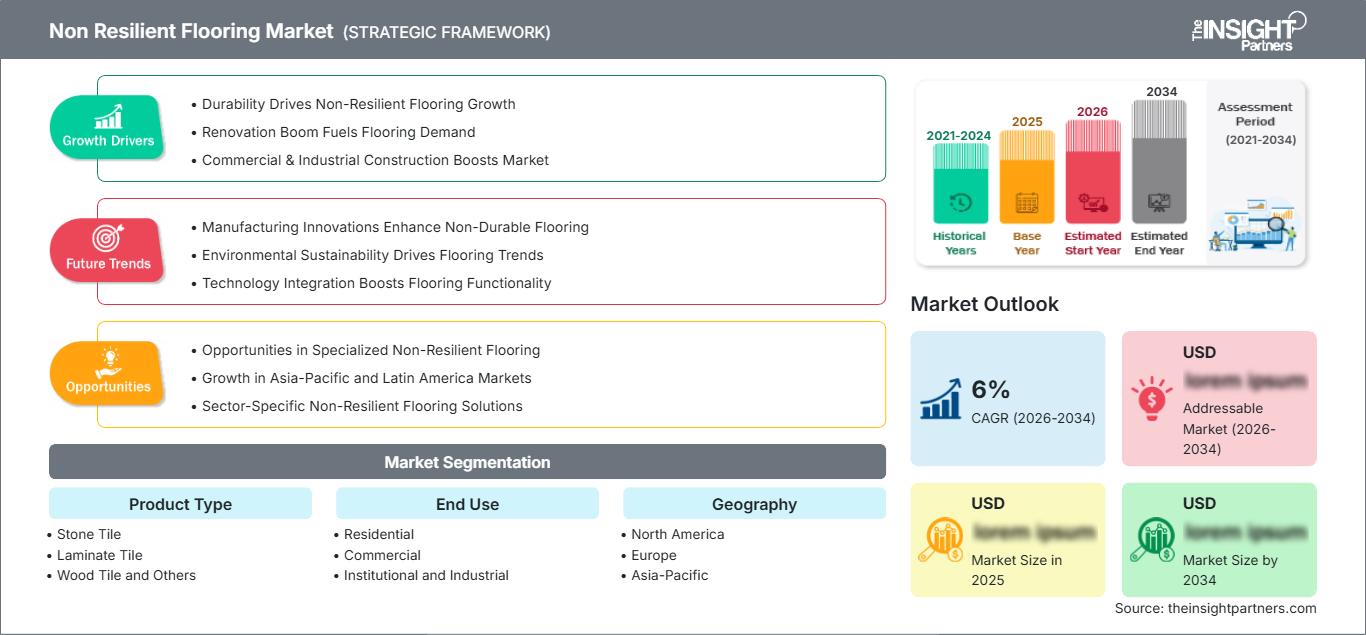
Regional Insights
North America Non Resilient Flooring Market
North America represents approximately ~20% of the global Non Resilient Flooring Market share in 2025 and is expected to expand at ~3% CAGR through 2034. It enjoys a relatively high existing stock of homes and business establishments where replacement of flooring is required periodically. The importance of remodeling comes into play due to the tendency of people to install new flooring during kitchen, bathroom, living area, and full house renovation programs. Renovation in commercial structures leads to sustained demand for the products.
The United States makes up the major part of the demand in the region, with the backing of established distributors, contractors, home centers, and specification channels. Demand in Canada comes from the residential construction and remodeling activities, while Mexico provides for the demand resulting from housing, hospitality, manufacturing plants, and commercial construction. Imported ceramic products continue to make a mark in the North American market, posing challenges to local players. Suppliers of products are now competing based on ease of installation, aesthetics, durability, and unique product range other than just pricing.
U.S. Non Resilient Flooring Market
The US accounts for approximately ~85% of the North American Non Resilient Flooring Market in 2025 and is expected to record ~3% CAGR through 2034. Its positioning is due to the vast building stock of the country, its vibrant remodeling sector, multi-family construction sector, and large commercial building stock. Replacement demand is especially significant because flooring continues to be renewed through remodeling and repositioning of property. Demand is also driven by consumers' preference for floors resembling natural materials and high-performing flooring.
Among companies with strong exposure to the US market in hard surfaces are Mohawk Industries, Inc., Shaw Industries Group, Inc., Dal-Tile, LLC, Crossville, Inc., and Mannington Mills, Inc. Ceramic and porcelain floorings are popular in kitchen, bathroom, hospitality, retail, and institutional environments, while laminated and wood-inspired designs are geared at living and commercial environments. It should be noted that the US remains well-integrated into international tiling supply chains. TCNA statistics demonstrate that imported ceramic tile has constituted a majority share of US consumption in 2025.
Europe Non Resilient Flooring Market
Europe represented approximately ~30% of the global Non Resilient Flooring Market in 2025 and is expected to grow at ~3% CAGR through 2034. Germany is the dominant country in Europe, owing to its extensive construction base, need for renovation, industrial facilities, and well-established distribution network. Italy and Spain are key countries in the manufacture and export of ceramics and porcelains, while France represents both renovations and commercial and residential construction. UK is an important market in terms of consumption; however, its demand situation is somewhat influenced by cycles of construction and refurbishment.
Italy still plays a strategic role due to its design-oriented ceramics manufacturing base and high ranking in premium tiles exports. Spain is yet another big manufacturer and exporter of ceramics to both European and foreign markets. Germany helps to drive demand due to residential refurbishments, commercial buildings and industrial uses, while France takes advantage of renovations, hotels, and public constructions. UK represents a good demand for residential renovations, retail, hotels, and institutional constructions. Manufacturers all over the region experience increasing pressure to make their production more energy efficient and productive, which leads to investments in advanced kilns, automation, and digital decoration.
In the European market, customers are looking at the overall performance of flooring by taking into account its aesthetics, life cycle, installation properties, and environmental performance. Those manufacturers who can provide products that are of reliable quality and have been manufactured responsibly would gain more. The importance of large-sized panels and digital printing is growing since it helps create seamless visuals and imitates natural materials. Also, the renovation market is very stable as there is a lot of construction already done.
APAC Non Resilient Flooring Market
Asia Pacific accounts for approximately ~40% of the global Non Resilient Flooring Market in 2025 and is projected to expand at ~5% CAGR through 2034, making it the largest and fastest-growing region. China is the most dominant player in the region owing to its huge construction industry, domestic production capability, urbanization, and residential construction industry. The growth driver for India is its rapid expansion due to housing, infrastructure development, organized retail, and increasing consumer preference for branded floors.
Japan and South Korea are contributing via their mature renovation industry, advanced manufacturing process and premium applications in the interior design. Australia drives the growth through residential construction and renovation in the urbanized centers. Within the region, industrial automation, investment in domestic manufacturing, urbanization and infrastructure developments drive flooring consumption. Growth in housing and infrastructure, driven by government schemes, will help improve the addressable market in the long run.
Middle East & Africa Non Resilient Flooring Market
The Middle East & Africa Non Resilient Flooring Market is expected to expand at approximately ~4% CAGR through 2034. Saudi Arabia is among the most prominent countries in the Middle East and Africa region, driven by major investments in construction, the hospitality industry, urban infrastructure, and economic diversification initiatives. UAE still constitutes a key specification and distribution market in the region, with significant demand from commercial real estate, hotel, retail and luxury housing developments. Large-format tiles and surface materials have particular relevance to major projects.
South Africa represents the most developed environment for flooring in sub-Saharan Africa, underpinned by housing renovation, retail and commercial construction. RoMEA markets see growing influence of investments in infrastructure, urbanization, tourism and new housing projects. Manufacturers in this region benefit from demand generated by the expansion of their distribution channels and the adaptation of product lines to high temperatures, heavy foot traffic and luxury architecture needs. Energy costs and logistics are important factors for manufacturers because ceramic production is energy-intensive and products are imported to many markets.
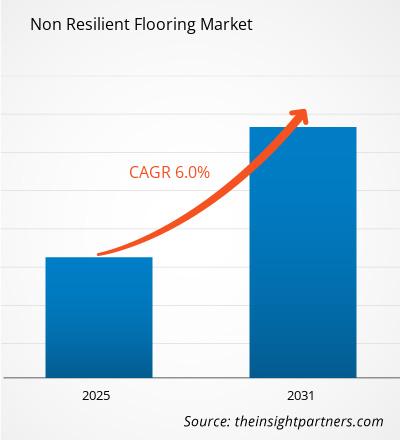
Segmentation Analysis
Product Type
Product Type is a central competitive dimension because buyers compare flooring according to durability, appearance, maintenance requirements, installation characteristics, and total lifecycle value. Manufacturers increasingly use digital printing, advanced finishing, and larger formats to widen design choices without sacrificing performance. The category is supported by both replacement and new-construction demand, with product selection varying according to room function and project specification. Within the category, Laminate Tile is projected to register approximately ~5% CAGR through 2034 as affordable design-led surfaces gain adoption.
- Stone Tile: Stone tile serves projects requiring a durable, visually distinctive surface with strong architectural appeal. It is particularly relevant to premium residential interiors, hospitality spaces, entrances, and high-visibility commercial areas where natural texture and long service life influence material selection.
- Laminate Tile: Laminate tile provides a practical alternative for buyers seeking attractive hard-surface finishes with comparatively efficient installation and maintenance characteristics. Its ability to reproduce wood and stone aesthetics supports adoption in renovation projects and cost-sensitive residential applications.
- Wood Tile: Wood tile addresses demand for warm, natural-looking interiors while providing the dimensional stability and maintenance advantages associated with tile-based construction. It is used where designers want wood-inspired aesthetics in areas exposed to moisture or higher cleaning requirements.
- Others: Other product formats serve specialized architectural and functional requirements outside the principal flooring categories. Their demand is influenced by project-specific specifications, local construction practices, design preferences, and the availability of complementary installation and finishing systems.
End Use
End Use determines purchasing priorities because residential, commercial, institutional, and industrial projects differ in traffic intensity, maintenance cycles, design requirements, procurement processes, and installation constraints. The category is shaped by construction activity as well as replacement demand from existing buildings. Residential projects provide a broad recurring customer base, while commercial and institutional applications emphasize durability and lifecycle performance. High-value specifications increasingly favor products that combine design flexibility with technical consistency, supporting a projected ~4% CAGR for Residential through 2034.
- Residential: Residential flooring demand is closely linked to new housing, remodeling, household income, and consumer preferences. Buyers increasingly evaluate flooring based on appearance, ease of cleaning, durability, and compatibility with contemporary interior styles.
- Commercial: Commercial projects prioritize durability, appearance consistency, installation scheduling, and maintenance efficiency. Hotels, offices, retail properties, restaurants, and mixed-use developments often use hard surfaces to create defined design identities while managing heavy traffic.
- Institutional: Institutional demand includes education, healthcare, public buildings, and other facilities where hygiene, durability, safety, and lifecycle considerations influence specifications. Procurement processes often place greater emphasis on documented performance and dependable supply.
- Industrial: Industrial applications focus on functional performance in environments exposed to equipment movement, material handling, heavy traffic, and operational wear. Flooring selection is strongly influenced by site conditions, maintenance requirements, and the need for dependable long-term performance.
Opportunity Snapshot
| End Use | Revenue Contribution | Trend Tag | Adoption Stage |
|---|---|---|---|
| Residential | High | Home Renovation | Mature |
| Commercial | High | Hospitality Design | Mature |
| Institutional | Medium | Public Infrastructure | Scaling |
| Industrial | Low | Utility Spaces | Mature |
Non Resilient Flooring Market Growth Drivers and Impact Analysis
Residential Remodeling and Replacement Activity
The strong underlying demand driver is that flooring is an obvious element of residential remodeling, which is often renewed together with kitchens, bathrooms, living areas, and the overall property itself. Old and deteriorated houses in the developed markets create ongoing renewal needs, whereas income growth in urban markets in developing countries raises the demand for branded and professionally installed flooring. More and more consumers evaluate flooring in terms of its visual appeal, ease of maintenance, durability, and ownership cost, and not only price per unit. As a result, it enlarges the scope of opportunity for producers who are able to develop various textures, patterns resembling natural materials, and better installation qualities. It affects all participants of the value chain since increased replacement volume creates higher sales volume for manufacturers, distributors, flooring stores, installers, etc.
Commercial Construction and Hospitality Development
Commercial construction generates a lot of demand as a result of hotel, retail, office, restaurant, healthcare and mixed-use buildings that need to have their flooring specifications aligned throughout large spaces. In most cases, developers will go for flooring materials that blend aesthetics with durability, ease of maintenance and scheduling. In the case of hospitality buildings, developers will opt for the aesthetics of natural stones and tiles, while in institutional and commercial projects, the focus will be on performance and practical aspects. Commercial projects give manufacturers who can offer consistent batches, proper documentation, logistics support, and customization options. The effects that commercial construction will have on manufacturers are that commercial orders will bring more orders and utilization of capacity.
Product Innovation and Manufacturing Efficiency
Innovations in manufacturing processes enhance the economic and functional features of non-resilient flooring by allowing increased variety in the design options, consistency in measurements and manufacturing processes. The digital printing technology enables the producers to mimic the patterns of natural stone and wood and improve the process of manufacturing, whereas the automation provides for process controls and minimization of the variance. Big format production will also provide for premium architectural applications and additional surfaces to choose from for the designers. Energy efficiency will still be an important strategic advantage for the producers since the manufacturing process of tiles requires large amounts of heat treatment. Producers who decrease their energy efficiency, optimize the use of raw materials and automate inspection will increase their cost effectiveness in response to environmental concerns.
Non Resilient Flooring Market Future Trends
Digital Design and Large-Format Surface Expansion
The Non Resilient Flooring Market trends are increasingly shaped by digital decoration, realistic natural-material reproduction, and larger-format surfaces. Progress in printing and finishing will enable manufacturers to replicate stone, wood, and decorative patterns and produce products at a consistently high level of quality. Big-format products are capable of creating fewer visible seams and offering a seamless effect, which will make them appealing for high-end residential and commercial interiors. Manufacturers are also working on incorporating automated inspection and process control to handle the closer tolerances involved in advanced formats. In the long term, these technologies could help turn the competitive battle towards design libraries, customization abilities, surface technology, and manufacturing agility. Companies that excel in design and have an advanced manufacturing platform are well-suited to win premium projects.
Circularity, Resource Efficiency, and Low-Impact Manufacturing
Sustainability is moving from a secondary consideration toward a more integrated flooring procurement criterion. Manufacturers are increasingly examining energy consumption, water use, raw-material efficiency, packaging, product durability, and end-of-life pathways. In ceramic manufacturing, improved kiln efficiency and process optimization can reduce resource intensity while maintaining product performance. Buyers are also requesting greater transparency around material composition and environmental characteristics, particularly in commercial and institutional projects. Longer service life can support sustainability objectives because durable flooring reduces replacement frequency and associated installation waste. The trend creates opportunities for suppliers that can combine technical performance with measurable environmental improvements. Over time, sustainability requirements are likely to influence product development, plant modernization, supplier selection, and project specifications across developed and increasingly regulated markets.
Non Resilient Flooring Market Opportunities
Premium Surfaces in Emerging Construction Hubs
Emerging construction hubs in Asia Pacific and the Middle East provide attractive opportunities because residential development, hospitality projects, mixed-use properties, and infrastructure investment are expanding the installed base of buildings requiring durable interior surfaces. The Non Resilient Flooring Market Forecasts indicate that suppliers can benefit by combining regional manufacturing or sourcing with localized design collections and professional distribution. Large-format tile, premium stone appearance, and digitally decorated surfaces can command stronger positioning in high-end projects. Companies can also improve market access by partnering with developers, architects, contractors, and organized retail networks. Local inventory and technical support can reduce delivery friction in markets where project schedules are sensitive to import delays. Strategic localization therefore offers a pathway to capture growth without relying solely on centralized production.
Specification-Led Commercial and Institutional Projects
Commercial and institutional projects offer another opportunity because procurement decisions increasingly emphasize lifecycle performance, maintenance, aesthetics, and compliance rather than initial material cost alone. Flooring manufacturers can strengthen specification activity by developing technical documentation, project support services, coordinated surface collections, and application-specific products. Healthcare, education, hospitality, retail, and public buildings each require different combinations of durability, cleaning performance, design, and installation efficiency. Suppliers that engage early with architects and project consultants can influence material selection before purchasing decisions are finalized. The opportunity is particularly relevant to established manufacturers with broad distribution and technical teams because they can support large projects from specification through installation. Digital visualization and sample programs can further improve designer engagement and shorten the path from concept selection to procurement.
Recent Developments
- July 13, 2026: Somany Ceramics Limited approved an investment of up to ₹58.8 crore for a 49% stake in Siravit Ceramics Private Limited to establish a glazed vitrified tile manufacturing facility in southern India with annual capacity of 9 million square metres. The investment expands domestic manufacturing capacity and strengthens the company's presence in a major regional tile market.
- May 21, 2026: Fireclay Tile introduced a new interlocking ceramic floor tile collection featuring six geometric patterns and more than 50 slip-resistant glaze options. The California-manufactured collection targets residential interiors including entryways, kitchens, mudrooms, and living areas, combining handcrafted ceramic aesthetics with slip-resistant performance for everyday use and higher-traffic spaces.
Frequently Asked Questions

- Comprehensive Market Sizing and Forecast Analysis
- Detailed Segmentation Analysis
- In-Depth Market Dynamics Assessment
- Regional and Country-Level Insights
- Competitive Landscape and Company Benchmarking
- Strategic Business Intelligence
Recent Reports
Testimonials

The Insight Partners provided valuable market intelligence that supported our global go-to-market strategy. Their team was professional, responsive, and attentive to our feedback, providing thoughtful analysis and helpful methodological clarifications throughout the project.
Junmo Kim Chief Financial Officer (CFO), Enertech Co., Ltd.
The Insight Partners' SCADA System Market report is comprehensive, with valuable insights on current trends and future forecasts. The team was highly professional, responsive, and supportive throughout. We are very satisfied and highly recommend their services.
RAN KEDEM Partner, Reali Technologies LTDs
I requested a report on a very specific software market and the team produced the report in a few days. The information was very relevant and well presented. I then requested some changes and additions to the report. The team was again very responsive and I got the final report in less than a week.
JEAN-HERVE JENN Chairman, Future Analytica
We worked with The Insight Partners for an important market study and forecast. They gave us clear insights into opportunities and risks, which helped shape our plans. Their research was easy to use and based on solid data. It helped us make smart, confident decisions. We highly recommend them.
PIYUSH NAGPAL Sr. Vice President, High Beam Global
The Insight Partners delivered insightful, well-structured market research with strong domain expertise. Their team was professional and responsive throughout. The user-friendly website made accessing industry reports seamless. We highly recommend them for reliable, high-quality research services
YUKIHIKO ADACHI CEO, Deep Blue, LLC.
This is the first time I have purchased a market report from The Insight Partners.While I was unsure at first, I visited their web site and felt more comfortable to take the risk and purchase a market report.I am completely satisfied with the quality of the report and customer service. I had several questions and comments with the initial report, but after a couple of dialogs over email with their analyst I believe I have a report that I can use as input to our strategic planning process.Thank you so much for taking the extra time and making this a positive experience.I will definitely recommend your service to others and you will be my first call when we need further market data.
JOHN SUZUKI President and Chief Executive Officer, Board Director, BK Technologies
I wish to appreciate your support and the professionalism you displayed in the course of attending to my request for information regarding to infectious disease IVD market in Nigeria. I appreciate your patience, your guidance, and the fact that you were willing to offer a discount, which eventually made it possible for us to close a deal. I look forward to engaging The Insight Partners in the future, all thanks to the impression you have created in me as a result of this first encounter.
DR CHIJIOKE ONYIA MANAGING DIRECTOR, PineCrest Healthcare Ltd.Reason to Buy
- Informed Decision-Making
- Understanding Market Dynamics
- Competitive Analysis
- Identifying Emerging Markets
- Customer Insights
- Market Forecasts
- Risk Mitigation
- Boosting Operational Efficiency
- Strategic Planning
- Investment Justification
- Tracking Industry Innovations
- Aligning with Regulatory Trends





 Get Free Sample for