
Plastic Decking Market Trends, Share & Demand by 2034
Coverage: by Material (High-Density Polyethylene (HDPE), Low-Density Polyethylene (LDPE), Polypropylene (PP), Polyvinyl Chloride (PVC), Others); Composite Type (Capped Composite Decking, Uncapped Composite Decking); End-user (Residential, Non-Residential) , and Geography (North America, Europe, Asia Pacific, and South and Central America)
- Status : Data Released
- Report Code : TIPRE00007532
- Category : Chemicals and Materials
- No. of Pages : 150
- Available Report Formats :


- Last update date : July 08, 2026


2025 Market Size
US$ 6.84 Bn
Base year value
2034 Forecast
US$ 14.77 Bn
Projected by 2034
CAGR 2026-2034
8.93 %
Growth rate
Addressable Market
US$ 96.73 Bn
(2026-2034)
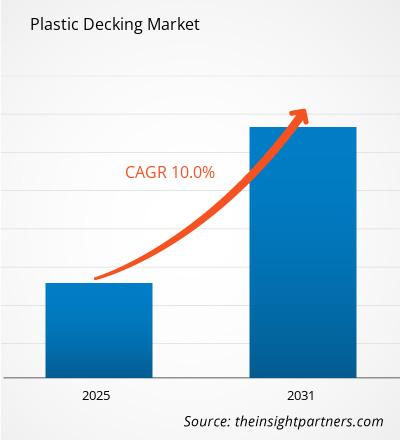
The global Plastic Decking market was valued at US$ 6.84 billion in 2025 and is expected to reach US$ 14.77 billion by 2034; it is estimated to record a CAGR of 8.93% during 2026-2034.
Plastic Decking Market Assessment and Insights
- North America: North America accounted for 39–43% market share in 2025 and is projected to expand at a CAGR of 9.3%–9.9% during 2026–2034. Growth is driven by increasing residential remodeling activities, rising composite decking replacement projects, and growing demand for low-maintenance outdoor building materials.
- U.S.: The U.S. represented 84–88% of the North American market in 2025 and is anticipated to register a CAGR of 9.4%–10.0% during 2026–2034, supported by strong home renovation spending, expanding outdoor living space projects, and increasing adoption of composite decking products.
- Europe: Europe held 24–28% market share in 2025 and is expected to grow at a CAGR of 8.7%–9.3% during 2026–2034. Germany, the United Kingdom, and France remain the leading regional markets, supported by sustainable construction practices and rising renovation investments.
- Asia Pacific: Asia Pacific accounted for 22–26% market share in 2025 and is forecast to expand at a CAGR of 11.2%–11.8% during 2026–2034. China, Japan, and India drive regional growth through rapid urban development, expanding outdoor infrastructure projects, and increasing construction activities.
- Largest Segment – Residential: The residential segment represented the largest market segment and is expected to grow at a CAGR of 10.3%–10.9% during 2026–2034, driven by expanding home renovation activities and increasing investment in outdoor living space improvements.
- High Growth Segment – Capped Composite Decking: The capped composite decking segment is projected to register the fastest growth with a CAGR of 11.4%–12.0% during 2026–2034, supported by superior weather resistance, low maintenance requirements, and enhanced product durability.
- Key companies analyzed in detail: The AZEK Company Inc.; CertainTeed LLC; Fiberon LLC; UPM-Kymmene Corporation; Oldcastle APG, Inc. (Barrette Outdoor Living); TAMKO Building Products LLC; Green Bay Decking LLC; Advanced Environmental Recycling Technologies, Inc.; DuraLife Decking and Railing Systems; and UFP Industries, Inc.
Source: The Insight Partners' analysis based on proprietary research, government publications, company annual reports, investor presentations, industry databases, and expert interviews.
Plastic decking has transitioned from a niche alternative to wood into a mainstream outdoor construction material. Advancements in composite technologies, aesthetic finishes, and structural performance have expanded its appeal among homeowners, contractors, and commercial property developers. Manufacturers have focused on improving appearance, durability, and environmental performance, enabling wider adoption across diverse climatic conditions.
Market prospects remain highly favorable as outdoor living spaces become an increasingly important aspect of residential and commercial property development. Factors such as consumer demand for low-maintenance products, sustainability concerns, and innovations in composite material production will help drive market growth over the forecast period.
Plastic Decking Market Report Scope
| Report Attribute | Details |
|---|---|
| Market size in 2025 | US$ 6.84 Billion |
| Market Size by 2034 | US$ 14.77 Billion |
| Global CAGR (2026 - 2034) | 8.93% |
| Historical Data | 2021-2024 |
| Forecast period | 2026-2034 |
Plastic Decking Market Analysis
Demand for plastic decking is strongly influenced by construction activity, renovation spending, and consumer preferences for long-lasting outdoor materials. Unlike traditional timber products, plastic decking offers resistance to rot, mold, moisture, and insect damage while reducing ongoing maintenance requirements. These advantages make it particularly attractive in regions exposed to harsh weather conditions and fluctuating environmental factors.
The value chain includes polymer suppliers, composite manufacturers, decking producers, distributors, contractors, builders, and end users. Material innovation remains a central component of market development, with increasing use of recycled plastics and advanced composite technologies helping manufacturers improve product performance while addressing sustainability objectives.
Competition within the plastic decking market remains intense as manufacturers differentiate through product quality, durability, aesthetics, and sustainability credentials. Companies such as Advanced Environmental Recycling Technologies, Inc., Azek Building Products, Inc., CertainTeed Corporation, Fiberon LLC, Green Bay Decking, TAMKO Building Products LLC, and UPM Kymmene Corporation continue investing in advanced product development and manufacturing capabilities.
Investment activity is increasingly focused on expanding production capacity, incorporating recycled materials, and improving composite performance, supporting continued Plastic Decking market size expansion. Strategic positioning is largely determined by product innovation, distribution strength, and the ability to address evolving consumer expectations regarding sustainability, design flexibility, and lifecycle value. Companies capable of balancing performance and environmental benefits are strengthening their competitive positions.
● REPORT CUSTOMIZATION
Tailor This Report To Align With Your Specific Business Requirements
This report can be customized to align precisely with your business objectives, scope, and target markets. Customization options include tailored segmentation, geography, competitive analysis, and strategic insights to support informed decision-making.
Customize This Report →WHAT YOU CAN ADJUST
- ● Segmentations
- ● Geography
- ● Competitive Analysis
- ● Language Preferences
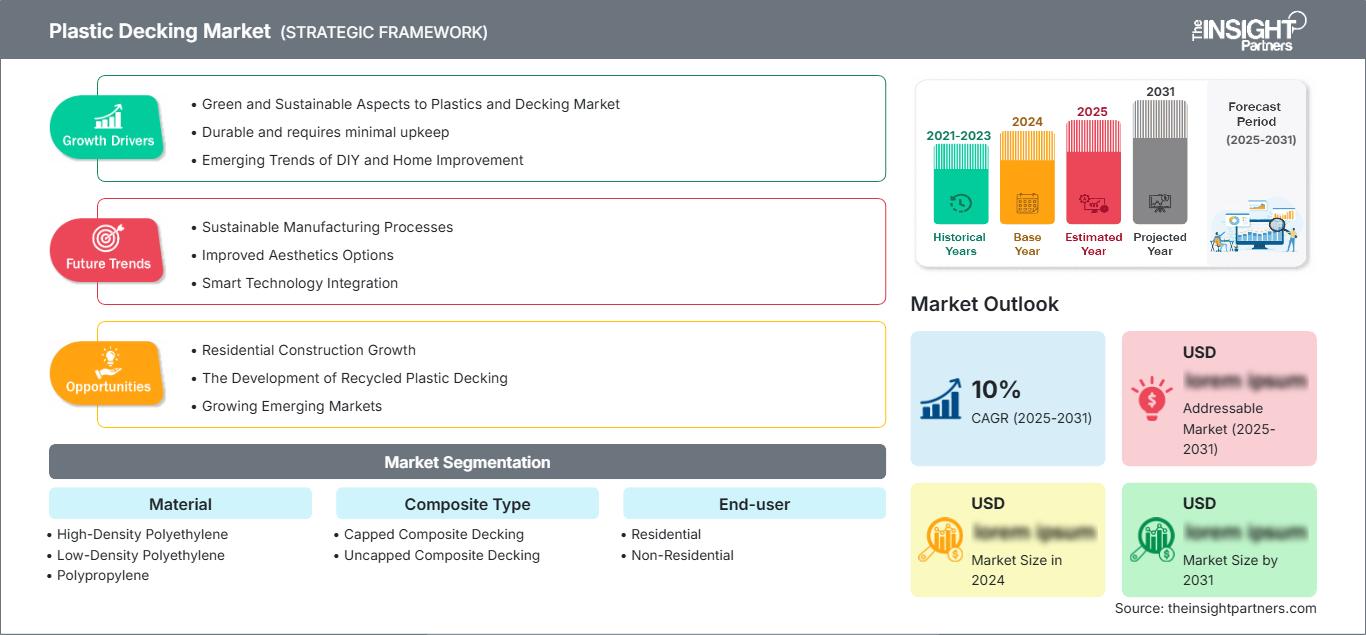
Plastic Decking Market: Strategic Insights
Regional Insights
North America Plastic Decking Market
North America is expected to grow at a CAGR of approximately 9.7% through 2034, supported by strong demand from residential remodeling and outdoor living projects. Homeowners increasingly invest in decks, patios, and backyard entertainment spaces, creating substantial opportunities for plastic and composite decking manufacturers.
The region benefits from mature construction markets, established distribution networks, and high consumer awareness regarding the long-term benefits of composite materials. Growing interest in sustainable building products and low-maintenance construction materials continues to encourage replacement of traditional wood decking with plastic alternatives.
U.S. Plastic Decking Market
The United States accounts for approximately 75–80% of the North American plastic decking market and is projected to register a CAGR of around 9.8% through 2034. Residential renovation projects remain the primary source of demand, with homeowners seeking durable decking solutions that improve property value while minimizing maintenance requirements.
Major manufacturers maintain extensive operations throughout the United States, supporting strong product availability and innovation. The popularity of outdoor kitchens, entertainment spaces, and premium residential landscaping projects is contributing to demand growth. Commercial applications, including hospitality and recreational facilities, are also generating opportunities for decking suppliers.
Europe Plastic Decking Market
Europe represents approximately 22–27% Plastic Decking market share and is expected to expand at a CAGR of around 8.8% through 2034. Sustainability initiatives, increasing renovation activity, and growing interest in durable outdoor construction materials are supporting market growth. Consumers are increasingly evaluating decking materials based on lifecycle performance and environmental impact.
The United Kingdom continues to witness rising adoption of composite decking products within residential landscaping and garden improvement projects. Demand is supported by consumer preference for low-maintenance materials capable of withstanding varying weather conditions while maintaining visual appeal over extended periods.
Germany remains the leading market in Europe due to strong construction activity, environmental awareness, and widespread acceptance of sustainable building materials. Composite decking products are increasingly incorporated into residential developments, commercial properties, and public infrastructure projects focused on long-term durability.
France, Italy, and Spain collectively contribute significant demand through residential renovation, hospitality development, and outdoor recreational projects. Growing investments in sustainable construction practices and attractive outdoor living environments are expected to support future market expansion across these countries.
APAC Plastic Decking Market
Asia Pacific accounts for approximately 20–25% of global market demand and is projected to achieve a CAGR of nearly 11.8% through 2034, making it the fastest-growing regional market. Rapid urbanization, rising disposable incomes, and increasing residential construction activity are creating favorable conditions for market development.
China remains the largest market within the region due to extensive construction activity and expanding adoption of modern building materials. Growing awareness regarding low-maintenance construction solutions and increasing demand for outdoor leisure spaces are contributing to Plastic Decking Market growth.
Japan, South Korea, India, and Australia are also witnessing rising adoption of composite decking products. Australia benefits from strong outdoor lifestyle trends, while India presents significant long-term growth potential due to urban development and increasing investment in premium residential projects. Government support for sustainable construction practices further strengthens regional opportunities.
Middle East & Africa Plastic Decking Market
The Middle East & Africa plastic decking market is anticipated to expand at a CAGR of approximately 9.3% through 2034. Urban development projects, tourism investments, and growing demand for durable outdoor construction materials are supporting market growth across the region.
Saudi Arabia leads the regional market due to large-scale infrastructure projects, hospitality developments, and ongoing investments in tourism-related construction. Plastic decking products are increasingly utilized in outdoor recreational areas, commercial properties, and premium residential developments.
The United Arab Emirates, South Africa, and the Rest of MEA continue to generate demand through commercial construction, luxury residential projects, and public infrastructure development. Harsh climatic conditions make durable and weather-resistant decking materials particularly attractive, supporting continued market adoption.
Segmentation Analysis
Material
- High-Density Polyethylene: High-density polyethylene is widely used due to its excellent durability, moisture resistance, impact strength, and ability to incorporate recycled content. The material supports long-lasting decking solutions suitable for residential and commercial outdoor environments.
- Low-Density Polyethylene: Low-density polyethylene offers flexibility, weather resistance, and ease of processing. It is commonly utilized in composite decking formulations where enhanced workability and lightweight characteristics contribute to product performance.
- Polypropylene: Polypropylene provides high stiffness, dimensional stability, and resistance to environmental degradation. Manufacturers increasingly use this material in advanced decking products designed to withstand heavy foot traffic and varying climatic conditions.
- Polyvinyl Chloride: Polyvinyl chloride remains a preferred material for premium decking products due to its superior moisture resistance, low maintenance requirements, and long-term color retention. PVC decking is particularly popular in high-end residential applications.
Composite Type
- Capped Composite Decking: Capped composite decking features a protective outer layer that improves resistance to fading, staining, moisture penetration, and scratching. This segment benefits from growing consumer preference for premium, low-maintenance outdoor construction materials.
- Uncapped Composite Decking: Uncapped composite decking provides a cost-effective solution for outdoor applications while maintaining durability and structural integrity. It remains popular in projects where affordability and functionality are primary purchasing considerations.
End-user
- Residential: Residential applications account for the largest Plastic Decking market share due to increasing investments in home renovation, outdoor living spaces, patios, and backyard entertainment areas. Homeowners increasingly prefer durable alternatives to traditional wood decking.
- Non-Residential: Non-residential demand is driven by hospitality facilities, public infrastructure, recreational spaces, commercial developments, and institutional projects seeking durable, weather-resistant, and low-maintenance decking materials.
Opportunity Snapshot
| End-user | Revenue Contribution | Trend Tag | Adoption Stage |
| Residential | High | Outdoor Living | Mature |
| Non-Residential | Medium | Hospitality Projects | Scaling |
Plastic Decking Market Growth Drivers and Impact Analysis
Rising Popularity of Outdoor Living and Home Improvement Projects
Consumer lifestyles have transitioned significantly, with a greater emphasis on using outdoor living spaces in homes. There has been increased investment in decks, patios, outdoor kitchens, entertaining areas, and landscaping to create an environment that extends beyond the confines of the interior living space.
Plastic decking products offer distinct advantages over traditional timber alternatives. They eliminate the need for frequent staining, sealing, and repairs while providing long-term resistance to moisture, insects, and weather-related deterioration. These benefits align closely with homeowner preferences for convenience and reduced maintenance costs.
The effect on the market is significant, as spending on residential home renovations continues to grow in many parts of the world. Composite and plastic decking are specified by builders and constructors for both construction and renovation purposes. With the increasing integration of outdoor living ideas into residential design, there will be sustained demand for innovative decking materials.
Growing Demand for Sustainable and Recycled Construction Materials
The environment is gradually gaining significance within the construction sector. Consumers, developers, and regulators are all favoring the adoption of materials that help in reducing the impact on the environment while meeting the requirements of the circular economy approach. Plastic deck boards made from recycled plastic and recovered materials can be seen as meeting these criteria.
The production of such deck boards requires recycled polyethylene, polypropylene, and other materials, which make such boards environmentally friendly. This approach reduces landfill waste while decreasing dependence on virgin raw materials. Sustainability-focused product development also enhances brand positioning and market competitiveness.
This influence extends beyond environmental gains. The use of sustainable decking materials is becoming increasingly common in green building projects and environmentally friendly construction. The growing awareness of resource protection will ensure that decking materials with recycled content support future market growth.
Advancements in Composite Technology and Product Performance
Advances in composite manufacturing processes have greatly improved the performance of plastic decks. Modern materials offer greater durability, color retention, resistance to moisture damage, and an overall better appearance compared to those available in previous generations.
Manufacturers have introduced capped composite technologies, improved surface textures, and realistic wood-grain finishes that closely replicate the appearance of natural timber. Enhanced structural performance and longer product warranties have further strengthened market acceptance among homeowners and commercial developers.
The ensuing market effects include deeper penetration within premium construction categories as well as more widespread substitution of conventional wood-based products. In addition, technological development enables price discrimination and higher-value propositions. Further developments in materials science and manufacturing will continue to present further market possibilities in the years ahead.
Plastic Decking Market Future Trends
Expansion of Premium Capped Composite Decking Solutions
Premium-capping composite deck materials are becoming popular as people recognize the importance of durability, aesthetics, and value for money. Such materials feature a protective layer on their surface, which helps make them more resistant to stains, fading, scratches, and moisture.
Current Plastic Decking market trends show that manufacturers are introducing wider product portfolios featuring enhanced textures, color options, and design flexibility. Homeowners and commercial developers increasingly view decking as a long-term investment and are willing to pay premium prices for products offering superior performance and aesthetics. This trend is driving innovation across product development strategies.
In the future, premium deck materials are likely to strengthen the market share as construction practices continue to evolve. Businesses that can offer superior products while retaining their sustainability status will surely be among the beneficiaries of this trend.
Increasing Integration of Recycled Materials in Decking Production
The incorporation of recycled plastics into decking manufacturing is becoming a defining trend within the Plastic Decking Market. Producers are expanding efforts to utilize post-consumer and post-industrial plastics as raw materials while maintaining product quality and structural performance.
Innovations in material processing techniques are enabling the manufacture of more uniform and dependable decking materials that contain recycled content. This enables producers to meet their sustainability targets without sacrificing strength or aesthetics. Consumer awareness of environmental concerns also favors the use of recycled materials.
Future expansion is expected to be significantly influenced by the drive towards circular economies and green buildings. Companies that embrace new recycling technologies and green supply chains will have a competitive edge as environmental performance becomes an increasingly important factor in purchasing decisions.
Plastic Decking Market Opportunities
Expansion of Commercial and Hospitality Infrastructure Projects
Commercial construction and hospitality developments present significant growth opportunities for plastic decking manufacturers. Outdoor places that add value to hotels, resorts, restaurants, recreational sites, and mixed-use developments are increasingly being constructed.
Plastic decking offers attractive lifecycle economics for commercial operators due to its durability and reduced maintenance requirements. It can be installed outdoors under demanding conditions associated with hospitality facilities and will benefit from the high performance of composite materials.
The investment options may include customized products, joint ventures for large projects, and the development of specific decks for hotels. As the construction of recreational facilities grows globally, the demand from non-residential segments is likely to rise significantly.
Emerging Demand in Urban Residential Development Projects
Rapid urbanization and rising residential construction activity in emerging economies create favorable conditions for the expansion of the plastic decking market. Developers are incorporating outdoor communal spaces, rooftop decks, balconies, and recreational areas into modern housing projects to enhance property attractiveness and resident satisfaction.
The benefits of plastic decks are particularly useful in urban environments, where durability and maintenance efficiency become critical factors. The growth of the middle class, coupled with rising demand for superior residential amenities, creates more opportunities.
Manufacturers can capitalize on this opportunity through the expansion of their distribution networks, the creation of region-specific products, and alliances with developers of residential estates. These investments in high-growth urban areas will pay dividends as housing trends change.
Recent Developments
- April, 2026: Deckorators, a division of UFP Industries, acquired the remaining operating assets of MoistureShield decking. The acquisition expands Deckorators’ wood-plastic composite manufacturing capabilities, strengthens its decking product portfolio, and enhances innovation capacity within the outdoor living market. The transaction supports long-term growth and product development in the composite decking industry.
- February, 2025: Trex Company launched an expanded Trex Select® composite decking line featuring three new colors and enhanced performance characteristics. The new boards incorporate refined aesthetics and heat-mitigating technology, making Trex the first company to introduce this feature within the mid-priced composite decking segment. The launch strengthens the company’s decking portfolio and addresses growing consumer demand for durable and low-maintenance outdoor living solutions.
- August, 2025: Trex Company expanded its partnership with International Wood Products (IWP) to strengthen the distribution of composite decking and railing products across the Western United States. Under the expanded collaboration, IWP added Trex products to its newly opened Salt Lake City facility while continuing distribution through its regional network. The partnership enhances product availability and supports Trex’s market expansion strategy.
Frequently Asked Questions

- Comprehensive Market Sizing and Forecast Analysis
- Detailed Segmentation Analysis
- In-Depth Market Dynamics Assessment
- Regional and Country-Level Insights
- Competitive Landscape and Company Benchmarking
- Strategic Business Intelligence
Recent Reports
Testimonials

The Insight Partners provided valuable market intelligence that supported our global go-to-market strategy. Their team was professional, responsive, and attentive to our feedback, providing thoughtful analysis and helpful methodological clarifications throughout the project.
Junmo Kim Chief Financial Officer (CFO), Enertech Co., Ltd.
The Insight Partners' SCADA System Market report is comprehensive, with valuable insights on current trends and future forecasts. The team was highly professional, responsive, and supportive throughout. We are very satisfied and highly recommend their services.
RAN KEDEM Partner, Reali Technologies LTDs
I requested a report on a very specific software market and the team produced the report in a few days. The information was very relevant and well presented. I then requested some changes and additions to the report. The team was again very responsive and I got the final report in less than a week.
JEAN-HERVE JENN Chairman, Future Analytica
We worked with The Insight Partners for an important market study and forecast. They gave us clear insights into opportunities and risks, which helped shape our plans. Their research was easy to use and based on solid data. It helped us make smart, confident decisions. We highly recommend them.
PIYUSH NAGPAL Sr. Vice President, High Beam Global
The Insight Partners delivered insightful, well-structured market research with strong domain expertise. Their team was professional and responsive throughout. The user-friendly website made accessing industry reports seamless. We highly recommend them for reliable, high-quality research services
YUKIHIKO ADACHI CEO, Deep Blue, LLC.
This is the first time I have purchased a market report from The Insight Partners.While I was unsure at first, I visited their web site and felt more comfortable to take the risk and purchase a market report.I am completely satisfied with the quality of the report and customer service. I had several questions and comments with the initial report, but after a couple of dialogs over email with their analyst I believe I have a report that I can use as input to our strategic planning process.Thank you so much for taking the extra time and making this a positive experience.I will definitely recommend your service to others and you will be my first call when we need further market data.
JOHN SUZUKI President and Chief Executive Officer, Board Director, BK Technologies
I wish to appreciate your support and the professionalism you displayed in the course of attending to my request for information regarding to infectious disease IVD market in Nigeria. I appreciate your patience, your guidance, and the fact that you were willing to offer a discount, which eventually made it possible for us to close a deal. I look forward to engaging The Insight Partners in the future, all thanks to the impression you have created in me as a result of this first encounter.
DR CHIJIOKE ONYIA MANAGING DIRECTOR, PineCrest Healthcare Ltd.Reason to Buy
- Informed Decision-Making
- Understanding Market Dynamics
- Competitive Analysis
- Identifying Emerging Markets
- Customer Insights
- Market Forecasts
- Risk Mitigation
- Boosting Operational Efficiency
- Strategic Planning
- Investment Justification
- Tracking Industry Innovations
- Aligning with Regulatory Trends





 Get Free Sample for