
Plastic Strapping Materials Market Size, Trends & Demand by 2034
Coverage: By Material (Polyester, Composite, Polypropylene, Others); End-Use (Steel, Textile, Paper, Fiber, Others) , and Geography (North America, Europe, Asia Pacific, and South and Central America)
- Status : Data Released
- Report Code : TIPRE00023357
- Category : Chemicals and Materials
- No. of Pages : 150
- Available Report Formats :


- Last update date : July 15, 2026


2025 Market Size
US$ 2.69 Bn
Base year value
2034 Forecast
US$ 4.16 Bn
Projected by 2034
CAGR 2026-2034
5.60 %
Growth rate
Addressable Market
US$ 32.11 Bn
(2026-2034)
The plastic strapping materials market was valued at US$ 2.69 Billion in 2025 and is projected to reach US$ 4.16 Billion by 2034, expanding at a CAGR of 5.60% during 2026–2034. The market is steadily advancing due to rising demand for secure load containment solutions across logistics, manufacturing, and export-driven industries. Plastic strapping materials, primarily polyester, polypropylene, and composite variants, are increasingly replacing traditional steel straps due to their flexibility, corrosion resistance, and cost efficiency in modern packaging operations.
North America plays a significant role in shaping the market, supported by an estimated CAGR of around 5.2%. Growth is driven by expanding e-commerce logistics, rising industrial automation in warehousing, and strong demand for high-tensile packaging solutions in manufacturing and distribution sectors. The region’s focus on supply chain optimization and pallet security standards continues to accelerate adoption of advanced strapping systems, supporting Plastic Strapping Materials market size expansion.
Plastic Strapping Materials Market Assessment and Insights
- North America: North America accounted for 26–30% market share in 2025 and is projected to expand at a CAGR of 5.0%–5.6% during 2026–2034. Growth is driven by rapid e-commerce expansion, increasing warehouse automation, and rising demand for industrial packaging solutions across logistics and manufacturing sectors.
- U.S.: The U.S. represented 76–80% of the North American market in 2025 and is anticipated to register a CAGR of 5.1%–5.7% during 2026–2034, supported by expanding distribution networks, strong manufacturing activity, and increasing adoption of advanced packaging systems.
- Europe: Europe held 24–28% market share in 2025 and is expected to grow at a CAGR of 4.8%–5.4% during 2026–2034. Germany, Italy, and France remain the leading regional markets, supported by robust industrial packaging requirements and expanding logistics operations.
- Asia Pacific: Asia Pacific accounted for 32–36% of the Plastic Strapping Materials market share in 2025 and is forecast to expand at a CAGR of 6.2%–6.8% during 2026–2034. China, India, and Japan drive regional growth through expanding manufacturing activities, export-oriented industries, and increasing demand for packaging materials.
- Largest Segment – Polyester: Polyester represented the largest market segment and is expected to grow at a CAGR of 5.7%–6.3% during 2026–2034, driven by its superior tensile strength, durability, and increasing replacement of steel strapping across industrial applications.
- High Growth Segment – Textile: The textile segment is projected to register the fastest growth with a CAGR of 6.5%–7.1% during 2026–2034, supported by rising textile exports, increasing bundled shipment volumes, and growing global trade activities.
- Key companies analyzed in detail: Samuel, Son & Co., Limited; Signode Industrial Group LLC; Scientex Berhad; TEUFELBERGER Holding AG; M.J. Maillis Group; Hangzhou Youngsun Intelligent Equipment Co., Ltd.; FROMM Holding AG; GRANITOL a.s.; Messersì Packaging S.r.l.; Dynaric, Inc.
Source: The Insight Partners' analysis based on proprietary research, government publications, company annual reports, investor presentations, industry databases, and expert interviews.
The plastic strapping materials market has evolved from basic bundling solutions to advanced load stabilization systems integrated into automated packaging and logistics operations. Demand has expanded beyond traditional manufacturing into high-volume distribution networks, where consistent pallet integrity is critical. Polyester-based straps are increasingly preferred due to their superior tension retention and resistance to elongation under heavy loads, making them suitable for long-distance transportation.
The market outlook reflects sustained growth supported by expanding global trade, warehouse automation, and increased industrial output in emerging economies. Manufacturers are focusing on enhancing material strength while reducing environmental impact through recyclable and reusable strapping solutions. Integration with automated strapping machines and smart packaging systems is expected to redefine operational efficiency across supply chains.
Plastic Strapping Materials Market Report Scope
| Report Attribute | Details |
|---|---|
| Market size in 2025 | US$ 2.69 Billion |
| Market Size by 2034 | US$ 4.16 Billion |
| Global CAGR (2026 - 2034) | 5.60% |
| Historical Data | 2021-2024 |
| Forecast period | 2026-2034 |
Plastic Strapping Materials Market Analysis
The plastic strapping materials market is shaped by evolving logistics requirements, industrial packaging modernization, and growing emphasis on safe cargo handling. The demand for these packaging solutions tends to be highly dependent on production levels and international trade, particularly in the steel, textiles, and paper sectors, which require stable demand. The value chain includes suppliers of raw materials for the polymer resins, extruders, strapping manufacturers, and logistics companies.
Increasing automation on packaging lines is having a considerable impact on material choice, with industries emphasizing strapping materials that have consistent tension control capability and are compatible with automated equipment. Cost savings and durability remain key aspects of the procurement process, while environmental concerns have been driving the adoption of recyclable strapping materials such as polypropylene and polyester.
The competitive landscape is moderately consolidated, with global players investing heavily in capacity expansion and product innovation. Companies such as SIGNODE INDUSTRIAL GROUP, Teufelberger Holding AG, and FROMM Holding AG are strengthening their presence through advanced strapping systems and integrated packaging solutions. Investment trends indicate rising focus on automation-ready strapping products, digital monitoring integration, and regional manufacturing expansion in Asia Pacific to serve growing export-oriented industries.
● REPORT CUSTOMIZATION
Tailor This Report To Align With Your Specific Business Requirements
This report can be customized to align precisely with your business objectives, scope, and target markets. Customization options include tailored segmentation, geography, competitive analysis, and strategic insights to support informed decision-making.
Customize This Report →WHAT YOU CAN ADJUST
- ● Segmentations
- ● Geography
- ● Competitive Analysis
- ● Language Preferences
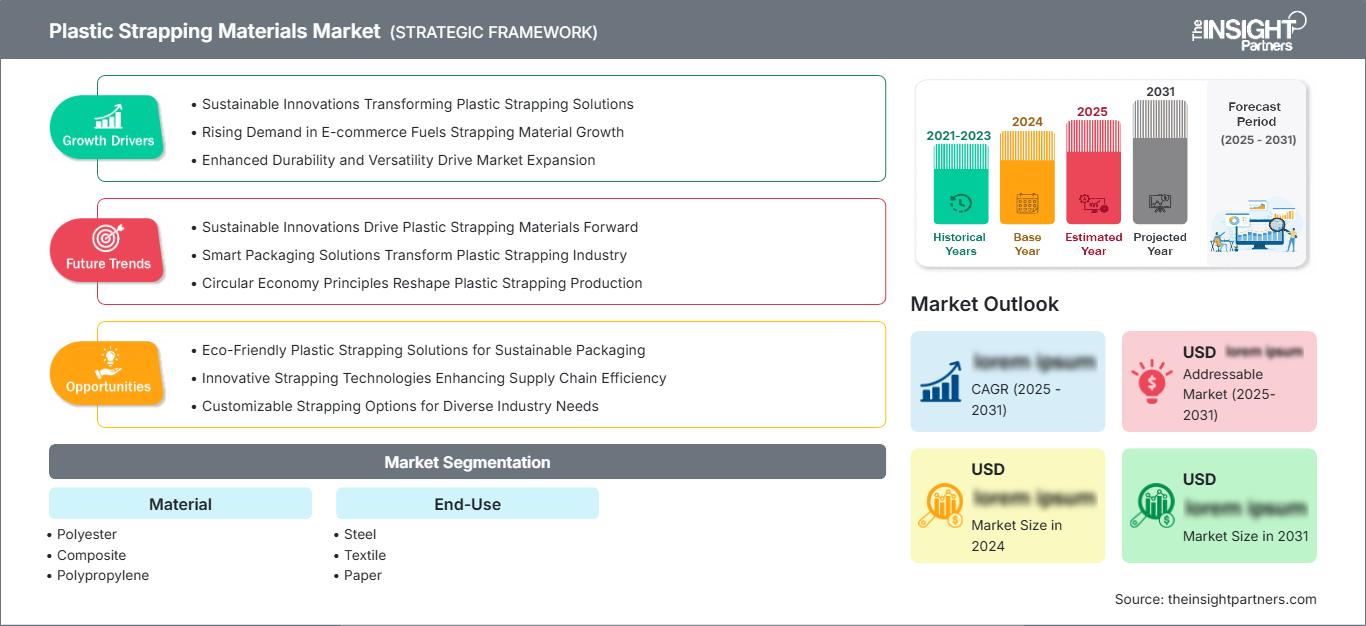
Plastic Strapping Materials Market: Strategic Insights
Regional Insights
North America Plastic Strapping Materials Market
North America holds a structurally mature position in the market, with an estimated CAGR of around 5.2% throughout the Plastic Strapping Materials market forecast period. Growth is supported by strong industrial logistics networks, increasing adoption of automated warehousing systems, and rising demand for efficient pallet securing solutions. The region’s advanced manufacturing base also drives consistent consumption of high-performance strapping materials.
The expansion of e-commerce distribution centers and third-party logistics providers is reinforcing demand for polyester and polypropylene strapping solutions. Companies are increasingly investing in automation-compatible packaging systems to reduce labor dependency and improve operational efficiency. Sustainability initiatives are also influencing material selection, with a gradual shift toward recyclable and reusable strapping products across supply chains.
U.S. Plastic Strapping Materials Market
The U.S. accounts for approximately 75%–80% of the North American plastic strapping materials market, driven by large-scale manufacturing, retail distribution, and export-oriented industries. The market is projected to expand at a CAGR of around 5.3%, supported by industrial automation and rising demand for secure freight handling solutions.
Strong presence of companies such as SIGNODE INDUSTRIAL GROUP and Dynaric Inc. reinforces technological innovation in strapping systems, particularly for steel, paper, and fiber packaging applications. Polyester strapping is widely adopted due to its high tensile strength and compatibility with automated systems, while polypropylene remains dominant in light-duty applications across retail logistics.
Europe Plastic Strapping Materials Market
Europe represents approximately 22%–25% of the global plastic strapping materials market, with a CAGR of nearly 5.0%. The region is driven by stringent packaging regulations, strong recycling mandates, and advanced industrial automation practices. Demand is particularly high in Germany, France, and Italy, where manufacturing and export-oriented industries require reliable load stabilization solutions.
The UK market is influenced by expanding e-commerce logistics and warehouse modernization initiatives. Germany leads regional consumption due to its strong automotive and industrial manufacturing base. France, Italy, and Spain collectively contribute through growing packaging demand in textiles, food processing, and industrial goods distribution, with increasing emphasis on recyclable strapping materials.
APAC Plastic Strapping Materials Market
Asia Pacific dominates the market with a share of approximately 35%–38% and a CAGR of around 6.2%, making it the fastest-growing region. Expansion of manufacturing hubs in China and India, coupled with rising export activities, is driving large-scale demand for cost-effective strapping solutions.
China leads the regional market due to its massive industrial output and logistics infrastructure expansion. India is rapidly emerging as a manufacturing and export hub supported by government-led industrial policies. Japan and South Korea focus on high-precision packaging systems, while Australia contributes through mining and industrial exports. Policy-driven industrialization and supply chain modernization are key growth accelerators across the region.
Middle East & Africa Plastic Strapping Materials Market
The Middle East & Africa market is growing steadily at a CAGR of around 4.6%, supported by infrastructure expansion, rising industrial activity, and increasing trade logistics development. Demand is closely linked to construction, oil & gas logistics, and manufacturing diversification efforts across the region.
Saudi Arabia leads the regional market due to large-scale infrastructure and industrialization projects under economic diversification programs. The UAE is strengthening its logistics and re-export hub capabilities, driving demand for advanced packaging solutions. South Africa contributes through mining and manufacturing sectors, while the rest of MEA shows gradual adoption supported by improving industrial supply chains.
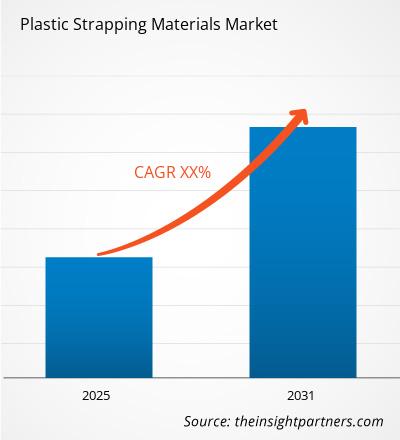
Segmentation Analysis
Material (Polyester, Composite, Polypropylene)
- Polyester: High-strength strapping widely used in heavy-duty applications such as steel and construction materials, offering superior tension retention, minimal elongation, and strong performance in long-distance transportation environments.
- Composite: Reinforced strapping combining polyester fibers and polymer coatings, used in high-security cargo applications requiring shock resistance and consistent load stability during export logistics operations.
- Polypropylene: Cost-effective and lightweight material widely used in retail packaging, paper bundling, and textile applications, offering flexibility and ease of use in low to medium-load environments.
End-Use (Steel, Textile, Paper, Fiber)
- Steel: Requires high-tensile strapping solutions to secure heavy coils and sheets, with polyester strapping increasingly replacing steel straps due to corrosion resistance and safer handling.
- Textile: Uses flexible strapping materials for bundling fabric rolls, ensuring protection during transport while maintaining structural integrity and minimizing damage risks in logistics operations.
- Paper: Relies on polypropylene strapping for carton bundling and pallet stabilization, supporting high-speed packaging lines in printing and paper manufacturing industries.
- Fiber: Utilizes composite strapping for bulk fiber bales, ensuring compression stability and long-distance transport safety in industrial packaging environments.
Opportunity Snapshot
| End-Use | Revenue Contribution | Trend Tag | Adoption Stage |
| Steel | High | Heavy Load | Mature |
| Textile | Medium | Export Logistics | Scaling |
| Paper | High | Automation | Mature |
| Fiber | Low | Bulk Handling | Emerging |
Plastic Strapping Materials Market Growth Drivers and Impact Analysis
Expansion of global logistics and e-commerce networks
The rapid expansion of global logistics and e-commerce distribution systems is significantly increasing demand for plastic strapping materials. As supply chains become more complex and time-sensitive, securing goods during transit has become a critical operational requirement. Plastic strapping provides lightweight yet strong load stabilization, making it ideal for palletizing and warehouse distribution. The rise of online retail platforms has led to higher parcel volumes, requiring scalable packaging solutions that ensure product integrity across multiple handling stages. Polyester and polypropylene straps are increasingly used due to their adaptability to automated packaging systems. This structural shift in global trade and distribution is creating sustained demand across manufacturing, warehousing, and logistics sectors.
Shift from steel strapping to polymer-based alternatives
Industries are progressively replacing traditional steel strapping with polymer-based alternatives due to safety, cost, and operational efficiency benefits. Steel strapping, while strong, poses handling risks and corrosion issues, whereas polyester and composite straps offer comparable strength with improved flexibility and safety. This transition is particularly evident in the steel, paper, and fiber industries, where load security is essential but handling efficiency is equally important. Plastic strapping materials reduce workplace injuries and improve packaging speed in automated systems. Additionally, their recyclability aligns with corporate sustainability goals, encouraging wider adoption across industrial sectors.
Industrial automation and packaging modernization
Increasing adoption of automated packaging systems is a key driver shaping the plastic strapping materials market. Modern manufacturing and logistics facilities are integrating high-speed strapping machines that require consistent, precision-engineered materials. Plastic strapping offers uniform thickness, controlled tensioning, and compatibility with automated equipment, improving operational efficiency. Industries are investing in smart packaging lines that reduce manual labor while increasing throughput. This automation trend is particularly strong in developed economies and is rapidly expanding across Asia-Pacific manufacturing hubs. As automation continues to evolve, demand for advanced strapping materials designed for machine compatibility is expected to rise significantly.
Plastic Strapping Materials Market Future Trends
Development of high-performance recyclable strapping materials
The market is witnessing a strong shift toward the development of recyclable, high-performance strapping materials designed to meet both operational and environmental requirements. Manufacturers are investing in advanced polymer engineering to enhance tensile strength while ensuring recyclability. Polyester and polypropylene materials are being reformulated to support circular economy initiatives without compromising load stability. Regulatory pressures in Europe and North America are accelerating this transition, pushing companies to adopt eco-compliant packaging solutions. Over time, sustainable strapping materials are expected to become standard across industrial packaging applications, reshaping procurement strategies and supplier selection criteria.
Integration of smart tracking and automated tension systems
A growing trend in the plastic strapping materials market is the integration of smart tracking technologies and automated tension control systems. These technologies enable real-time tracking of goods inside packages, improving supply chain visibility and reducing the risk of cargo damage. The automated strapping machinery is now fitted with digital sensors to ensure the correct tension settings for varying loads. This will increase consistency and minimize wastage. With an increasingly digitalized logistics industry, smart strapping solutions are expected to prove invaluable in boosting efficiency and control within global supply chains.
Plastic Strapping Materials Market Opportunities
Expansion in emerging manufacturing and export hubs
Emerging Plastic Strapping Materials market trends show that India, Vietnam, Indonesia, and parts of the Middle East are rapidly developing as global manufacturing and export hubs, creating significant opportunities for suppliers. These regions are experiencing increases in industrial production in the textiles, steel, and paper sectors. These sectors need dependable load securing systems. There is an increased government push for industrialization through development projects and trading incentives. Scientex Berhad and Hangzhou Youngsun Intelligent Equipment Co Ltd are among the firms expanding their operations into these regions to take advantage of the high-volume, low-cost structure of these markets.
Growth in automated warehousing and logistics infrastructure
The rapid emergence of warehouse automation technologies presents a significant opportunity for the advancement of the plastic strapping industry. Advanced warehouses require fast, machine-friendly strapping that provides reliable load stabilization and operational efficiency. Polyester and composite strapping are becoming more popular because of their reliability and precision. Rapid advancements in robotics, conveyor systems, and AI-powered logistics are driving the use of innovative packaging materials. Companies that will synchronize product design with automation needs and provide digital tracking services will profit from this structural shift.
Recent Developments
- May 2026: Signode announced the global launch of the BXT Go™, a new battery-powered hand tool designed for PP and PET plastic strapping applications. The tool enhances mobility, ease of use, and strapping efficiency for industrial packaging operations, supporting the growing adoption of plastic strapping systems across logistics and manufacturing sectors.
- May 2025: Mosca GmbH announced its “Loop that!” initiative in collaboration with Interzero to establish a closed-loop recycling system for plastic strapping materials. The partnership aims to improve PET strapping recycling, reduce waste, and support a circular economy model within the strapping industry.
- October 2025: Mosca introduced the SoniXs XT, a new entry-level strapping machine featuring ultrasonic sealing technology capable of processing both PP and PET straps. The launch expands Mosca’s strapping portfolio and improves flexibility and efficiency for industrial packaging operations.
Frequently Asked Questions

- Comprehensive Market Sizing and Forecast Analysis
- Detailed Segmentation Analysis
- In-Depth Market Dynamics Assessment
- Regional and Country-Level Insights
- Competitive Landscape and Company Benchmarking
- Strategic Business Intelligence
Recent Reports
Testimonials

The Insight Partners' SCADA System Market report is comprehensive, with valuable insights on current trends and future forecasts. The team was highly professional, responsive, and supportive throughout. We are very satisfied and highly recommend their services.
RAN KEDEM Partner, Reali Technologies LTDs
I requested a report on a very specific software market and the team produced the report in a few days. The information was very relevant and well presented. I then requested some changes and additions to the report. The team was again very responsive and I got the final report in less than a week.
JEAN-HERVE JENN Chairman, Future Analytica
We worked with The Insight Partners for an important market study and forecast. They gave us clear insights into opportunities and risks, which helped shape our plans. Their research was easy to use and based on solid data. It helped us make smart, confident decisions. We highly recommend them.
PIYUSH NAGPAL Sr. Vice President, High Beam Global
The Insight Partners delivered insightful, well-structured market research with strong domain expertise. Their team was professional and responsive throughout. The user-friendly website made accessing industry reports seamless. We highly recommend them for reliable, high-quality research services
YUKIHIKO ADACHI CEO, Deep Blue, LLC.
This is the first time I have purchased a market report from The Insight Partners.While I was unsure at first, I visited their web site and felt more comfortable to take the risk and purchase a market report.I am completely satisfied with the quality of the report and customer service. I had several questions and comments with the initial report, but after a couple of dialogs over email with their analyst I believe I have a report that I can use as input to our strategic planning process.Thank you so much for taking the extra time and making this a positive experience.I will definitely recommend your service to others and you will be my first call when we need further market data.
JOHN SUZUKI President and Chief Executive Officer, Board Director, BK Technologies
I wish to appreciate your support and the professionalism you displayed in the course of attending to my request for information regarding to infectious disease IVD market in Nigeria. I appreciate your patience, your guidance, and the fact that you were willing to offer a discount, which eventually made it possible for us to close a deal. I look forward to engaging The Insight Partners in the future, all thanks to the impression you have created in me as a result of this first encounter.
DR CHIJIOKE ONYIA MANAGING DIRECTOR, PineCrest Healthcare Ltd.Reason to Buy
- Informed Decision-Making
- Understanding Market Dynamics
- Competitive Analysis
- Identifying Emerging Markets
- Customer Insights
- Market Forecasts
- Risk Mitigation
- Boosting Operational Efficiency
- Strategic Planning
- Investment Justification
- Tracking Industry Innovations
- Aligning with Regulatory Trends





 Get Free Sample for